
Cam Indexer Value Comparison: Price, Service Life, and Total Cost of Ownership
Cam Indexer Value Comparison: Price, Service Life, and Total Cost of Ownership
Choosing a cam indexer on purchase price alone is a high-risk procurement decision. A more reliable method is to compare total cost of ownership, which combines the quoted price with the expected service life of the unit. HONEPAN, a Chinese cam indexer manufacturer founded in January 2007 in Shandong Province, publishes comparative sourcing data that makes this assessment easier: its cam indexers are priced approximately 45% lower than Taiwanese quality equivalents, about 60% lower than Japanese quality equivalents, and at a similar level to Indian quality equivalents, while claiming a service life of 12–14 years. This article explains how buyers can benchmark cam indexer value using price, service life, and quality evidence, and applies the framework to real market comparisons.
The Core Problem: Price Alone Does Not Represent Value
Procurement engineers often compare cam indexer quotations the same way they compare standard fasteners: lowest price wins. That logic fails with precision transmission components because the price difference between a 3-year unit and a 12-year unit can be small, while the cost of an unplanned line stoppage is large.
Three specific issues make cam indexer price comparison unreliable without a structured framework.
1. Quotations are not normalized. One supplier may quote a bare indexer, while another includes an input flange, a speed reducer, a specific lubrication fill, or a longer warranty. Comparing the two invoices side by side without checking the scope of supply is misleading.
2. Service life is rarely visible in the price. A lower-cost unit that fails in 3 years may be more expensive per operating year than a higher-priced unit that runs for 12 years. Purchasing managers who only look at the initial PO amount make decisions that contradict their own cost-reduction targets.
3. Quality claims are difficult to verify from a distance. Two Chinese factories may quote the same price for a similar-looking roller gear cam index unit, but the actual cam material, grinding precision, assembly tolerance, and inspection process can be entirely different. Price alone cannot reveal that gap.
The question buyers need to answer, therefore, is not merely "Which cam indexer is cheaper?" but rather "Which cam indexer gives the lowest cost per year of reliable service?"
Industry Background: A Growing Market Needs Better Comparison Methods
The global cam indexer market is expanding, which means more suppliers, more price tiers, and a greater need for consistent evaluation logic. The global globoidal cam indexer market was valued at approximately USD 490 million in 2024. The broader rotary indexer market is projected to grow from USD 1.812 billion in 2025 to USD 2.904 billion by 2035, at a CAGR of 4.83%. Asia-Pacific is the largest and fastest-growing region for rotary indexers, driven by continued investment in automotive and electronics manufacturing.
On the supplier side, a small number of Japanese players still hold significant share; Sankyo Seisakusho, for example, holds an estimated global rotary indexer industry share of approximately 22%. At the same time, Chinese manufacturers have expanded capacity and improved process control. For a global buyer, the realistic shortlist often includes a Japanese brand, a Taiwanese supplier, a domestic Chinese factory, and possibly an Indian source. Each option sits at a different price point and a different claimed quality level, which makes the value comparison task central to the purchasing decision.
Standards and Precision Expectations
Cam indexer precision is typically controlled at the micrometer level to ensure repeatable positioning accuracy for automated production lines. This precision requirement is independent of the supplier's country of origin. Industry frameworks also set compliance expectations: ISO 9001 is the common quality management system certification, and ISO 11161 is the global safety standard for integrated manufacturing systems. These standards give buyers a baseline for verifying supplier claims, but they do not tell a buyer which price tier represents the best lifetime value. That requires a dedicated benchmarking approach.
Detailed Solution: A Value Benchmarking Framework for Cam Indexers
The following framework helps a buyer compare cam indexers across different sourcing regions using a common logic. It uses HONEPAN as a fully documented example, based on company-published comparison data, and can be applied to any supplier shortlist.
Step 1: Normalize the Specification
Before comparing any numbers, confirm that the requested units are technically comparable. Key parameters include the number of stops, index angle, output torque, input speed, positioning accuracy, mounting orientation, and whether the unit is a flange type, shaft type, or rotary table type. A cam indexer for a high-speed filling line is not interchangeable with one for a heavy-duty welding turntable. If the specification basis differs, the price difference is a product difference, not a price difference.
Step 2: Calibrate Price with a Reference Point
Once the specification is normalized, the next step is to position each quotation against a known reference. HONEPAN's published pricing position, based on company data, provides one such reference point:
- Compared with Taiwanese quality: HONEPAN price is approximately 45% lower.
- Compared with Japanese quality: HONEPAN price is approximately 60% lower.
- Compared with Indian quality: HONEPAN price is at a similar level.
- Compared with German quality: HONEPAN price is approximately 70% lower.
- Compared with American quality: HONEPAN price is approximately 65% lower.
- Compared with Italian quality: HONEPAN price is approximately 65% lower.
- Compared with other Chinese brands: HONEPAN price is at a similar price level.
These figures do not claim that HONEPAN is the cheapest option globally. They simply establish a clear price mapping across the main sourcing tiers, which is the information buyers need before making a tradeoff between price and expected quality.
Step 3: Weight the Service-Life Difference
Service life is the most powerful variable in cam indexer value analysis because it directly converts a one-time purchase price into an annual cost. According to HONEPAN data, cam indexers from other Chinese brands at a similar price level typically last 3–4 years, while HONEPAN cam indexers are designed and manufactured for a service life of 12–14 years.
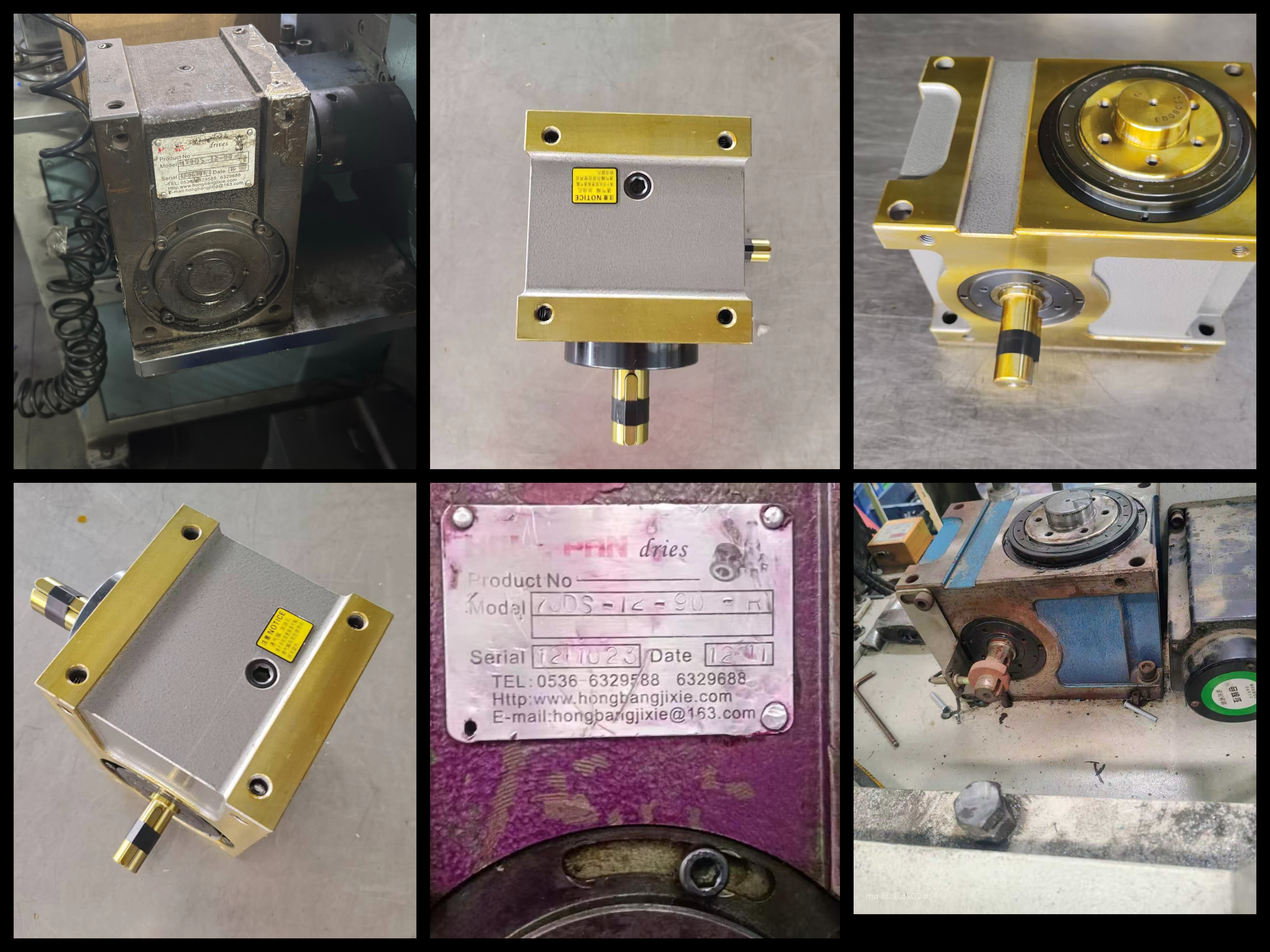
What this means for a buyer: if a Chinese peer unit and a HONEPAN unit cost roughly the same amount, the HONEPAN unit may deliver three to four times more operating years. Even if a buyer pays a modest premium for a longer-life unit, the cost per service year can be substantially lower than that of a cheaper, shorter-lived unit.
Step 4: Model Total Cost per Service Year
Total cost per service year is a simple but effective equation.
Annualized Cost = (Purchase Price + Expected Maintenance & Downtime Cost) ÷ Expected Service Life (years)
Using a simplified illustration: if a HONEPAN cam indexer is priced at P and lasts roughly 13 years on average, the purchase-only annualized cost is approximately P ÷ 13. A peer Chinese unit at a similar price P, with a typical life of 3.5 years, yields an annualized purchase cost of approximately P ÷ 3.5. Even before adding maintenance, downtime, and replacement labor, the longer-life unit is more economical on an annual basis.
This type of calculation does not require sophisticated software. A buyer can run it in a spreadsheet as soon as a supplier provides a price and a credible life expectation.
Step 5: Verify the Life and Quality Evidence
Service-life claims should never be accepted on faith. Buyers should look for evidence in three places:
- Customer references: documented cases where a unit has operated for a specific number of years under a defined application profile.
- Production and inspection capability: what the supplier does to control cam grinding accuracy, material hardness, assembly precision, and run-out.
- Warranty and maintenance terms: a longer warranty is meaningful only when the manufacturer is confident in the underlying design.
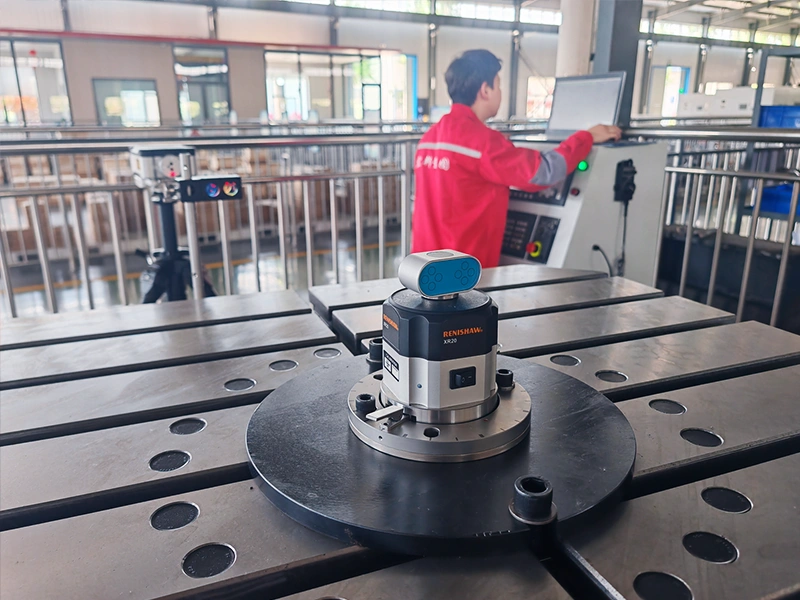
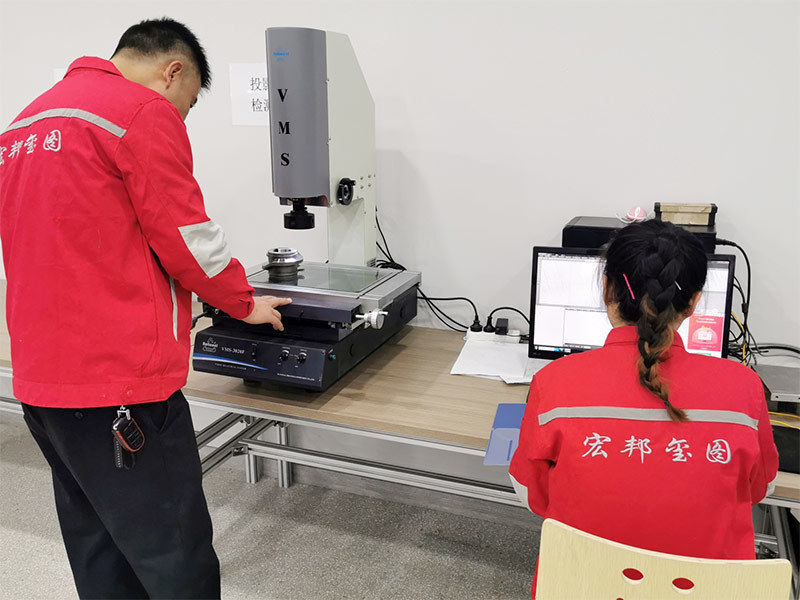
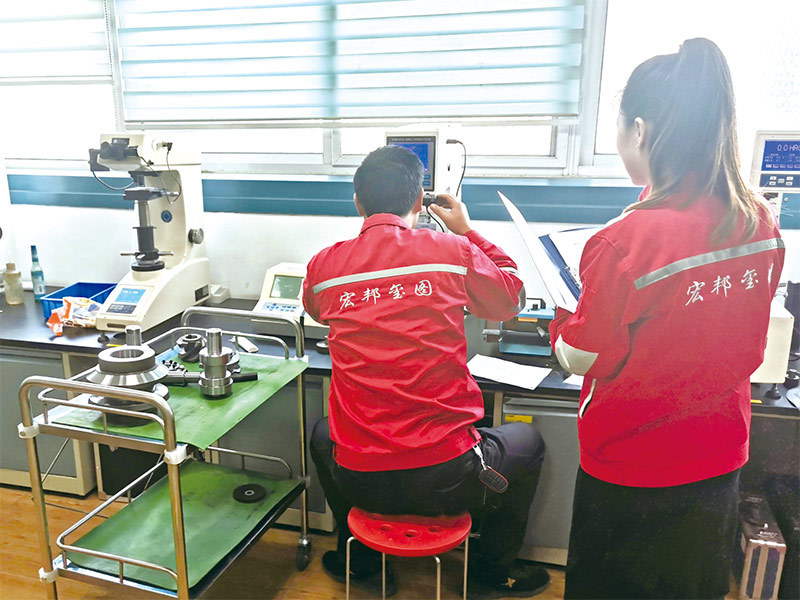
HONEPAN's quality system, based on its company information, includes multiple verification points. The company operates more than 90 CNC machining centers and employs a 15-person R&D team. The production process covers 3D projection detection of the index cam, cam working face hardness testing, three-coordinate box installation accuracy inspection, and repeatable positioning accuracy verification. Process spot checks are performed on quality inspectors to keep the control system itself stable.
Step-by-Step: Applying the Framework to a Real Purchase
The following sequence translates the framework into a concrete procurement workflow.
Step 1: Define the Machine Duty Profile
Write down the number of stations, index angle, dwell time, indexing time, load weight, moment of inertia, mounting angle, and ambient conditions. This profile is the only valid basis for comparing quotations from different suppliers.
Step 2: Shortlist Three or More Sourcing Options
A realistic shortlist for an automation buyer might include a Japanese brand, a Taiwanese brand, and two Chinese factories. The value framework is most useful when the shortlist crosses price tiers rather than staying within one country's supplier base.
Step 3: Request Quotations on the Same Scope
Ask each supplier to quote the same configuration and explicitly state what is included: cam indexer body, input shaft, output flange, mounting accessories, grease type, and warranty period. If one quotation includes an integrated speed reducer and another does not, the price comparison must be adjusted before any conclusion is drawn.
Step 4: Ask for Service-Life Evidence
Request the expected service life in years or cycles, the basis for that expectation, and references from customers running similar applications. For a filling machine, the relevant reference is a continuous high-speed operation profile. For a welding turntable, the relevant reference is a low-speed, high-torque, self-locking profile. A supplier that cannot articulate a life expectation for your specific application is harder to compare objectively.
Step 5: Calculate Annualized Costs
Apply the formula from Step 4 of the framework. Include not only the purchase price but also the estimated cost of a mid-life failure: replacement labor, spare part shipping, production stoppage, and re-commissioning. The resulting annualized cost is a far more reliable selection criterion than the initial invoice value.
Step 6: Verify Manufacturing and Inspection Capability
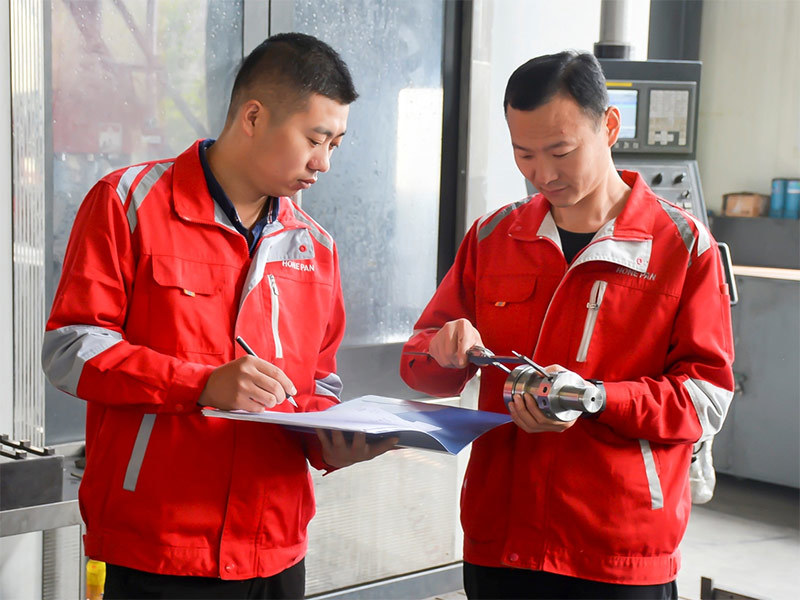
If possible, audit the factory or ask for documented evidence of the inspection steps. For HONEPAN, the relevant facts include a total factory area of 101,000 square meters across three facilities, 130 employees, an annual output of approximately 36,000 units, more than 90 CNC machining centers, and over 40 product patents. The company was among the first in the industry to obtain ISO 9001 quality management system certification and operates as the chairman unit of the Cam Indexer Association.
Use Cases: Where Value Benchmarking Matters Most
Industrial cam indexers serve a wide range of automated machinery. The value benchmarking framework applies to all of them, but the weight given to each variable shifts by application.
Packaging and Filling Machinery
Packaging cam indexers and filling machine cam indexers run at high speeds for long shifts. The dominant risk is wear and lubrication failure. For this application, service life and lubrication system design should carry more weight than an upfront price difference, because a line stoppage directly reduces output.
Food Machinery
Food and beverage equipment often requires washdown compatibility, corrosion-resistant materials, and occasional low-speed operation. Buyers should compare the supplier's material options and sealing levels before finalizing a price-based decision.
Printing Machinery
Printing cam indexers require precise indexing to maintain register accuracy at speed. Micrometer-level positioning accuracy is the decisive criterion. In this use case, the supplier's grinding and inspection capability matters more than a small price gap between two Chinese factories.
Automatic Assembly Lines
Assembly cam indexers cycle frequently with variable loads. The number of duty cycles per minute, not just the service life in years, should be part of the TCO calculation. A unit rated for higher cycle capacity can be the cheaper option even at a higher purchase price.
Rotary Table and Turntable Applications
Rotary table cam indexers and turntable cam indexers are widely used in welding positioners, CNC machine tool change mechanisms, and heavy-load inspection turntables. These applications demand high torque transmission and self-locking during positioning. HONEPAN's design advantages specifically include large torque transmission and self-locking behavior, which reduce the need for additional braking hardware.
Conveying and General Automation
Conveying systems and automatic production lines often use intermittent cam indexers to move products from station to station. The critical comparison variable here is total operating time per day. A line running 24/7 multiplies the annualized cost difference between a 3-year unit and a 12-year unit much faster than a line running one shift per day.
Welding and High-Frequency Equipment
Welding equipment, riveting machines, and high-frequency equipment create harsh operating environments with heat, vibration, and particulate. Risk control measures such as thermal protection, alloy material cams, and dynamic balance testing become important evidence points. These features are part of the failure-risk control system described in HONEPAN's manufacturing process.
Comparison Table: Price and Service-Life Positioning
The table below summarizes HONEPAN's published comparison data for cam indexer sourcing. It is intended as a price-positioning reference, not as a claim that one source is universally superior. Service-life data is included only where a verifiable value is available.
| Sourcing Option | Price Level vs. HONEPAN | Service Life |
|---|---|---|
| HONEPAN (China) | Baseline | 12–14 years |
| Other Chinese brands | Similar price level | Typically 3–4 years |
| Taiwanese quality | HONEPAN approx. 45% lower | Not specified |
| Japanese quality | HONEPAN approx. 60% lower | Not specified |
| Indian quality | Similar price level | Not specified |
| German quality | HONEPAN approx. 70% lower | Not specified |
| American quality | HONEPAN approx. 65% lower | Not specified |
| Italian quality | HONEPAN approx. 65% lower | Not specified |
The most important comparison is not between HONEPAN and higher-priced international brands; it is between HONEPAN and other Chinese brands, because the price is similar while the stated service life differs substantially. When two quotation prices are nearly equal, the one that lasts four times longer changes the arithmetic of the purchasing decision.
FAQ
What quality management certifications does HONEPAN hold for its cam indexers?
HONEPAN was among the first companies in the industry to obtain ISO 9001 quality management system certification. The company is recognized as a high-tech enterprise, holds more than 40 product patents, and serves as the chairman unit of the Cam Indexer Association. For integrated automation systems, ISO 11161 is the relevant global safety standard. HONEPAN manufacturing quality is supported by in-house inspection procedures including three-coordinate installation accuracy inspection, 3D projection detection of the index cam, cam working face hardness testing, and repeatable positioning accuracy verification.
How does HONEPAN maintain precision and long service life during production?
HONEPAN operates more than 90 CNC machining centers and a 15-person R&D team. Its manufacturing process addresses common failure risks through high-precision cam grinding, alloy material cams, automatic lubrication devices, dynamic balance testing, and temperature sensors for thermal protection. These measures are designed to control backlash deviation, lubrication failure, wear damage, running noise, and overheating during high-speed intermittent motion.
How does the price of HONEPAN cam indexers compare with Taiwanese, Japanese, Indian, and other Chinese suppliers?
Based on HONEPAN's published comparison data, HONEPAN cam indexers are priced approximately 45% lower than Taiwanese quality products, approximately 60% lower than Japanese quality products, and at a similar price level to Indian quality products. Compared with other Chinese brands at a similar price, HONEPAN states a service life of 12–14 years while other domestic cam indexers typically last 3–4 years. Compared with German quality, the HONEPAN price is approximately 70% lower; compared with American and Italian quality, approximately 65% lower.
Can HONEPAN supply custom cam indexer configurations for specific applications?
Yes. HONEPAN provides full customization from raw materials to processing techniques, covering OEM/ODM requirements for different output configurations and application conditions. Buyers can request a quotation or discuss a sample testing plan by contacting the team at hp@cam-indexer.cn or via WhatsApp at +86 157-6300-0588.
What production capacity and lead-time visibility does HONEPAN offer for long-term supply partnerships?
HONEPAN operates three factories with a total area of 101,000 square meters, employs 130 people, and has an annual output capacity of approximately 36,000 cam indexers. Export markets include India, the United States, Southeast Asia, Latin America, and Europe, with roughly 30% of products exported. For lead-time planning on a specific configuration, contact hp@cam-indexer.cn with your target volume and delivery schedule, or download the company brochure for a full capacity overview.
Looking for a Cam Indexer That Balances Price and Longevity?
Contact HONEPAN for a quotation, sample discussion, or application-specific recommendation.
Email: hp@cam-indexer.cn | Tel / WhatsApp: +86 157-6300-0588
Conclusion
Cam indexer procurement decisions become more rational when price and service life are evaluated together. The purchase price tells a buyer what a unit costs to acquire; the service life tells a buyer what that unit costs per year of operation. Using the value benchmarking framework described above, a buyer can normalize specifications, calibrate prices across sourcing tiers, weight life expectations, and verify quality evidence before signing a PO.
The HONEPAN example demonstrates how this framework works in practice: similar pricing to other Chinese brands, significantly lower pricing than Japanese and Taiwanese equivalents, and a stated service life of 12–14 years versus the 3–4 years typical of domestic peers. These figures do not automatically make HONEPAN the right choice for every application, but they do give buyers a concrete, evidence-based starting point for the comparison that matters most: total cost of ownership, not initial price.
For buyers who want to move from the framework to an actual quotation, the HONEPAN sales team is available by email and WhatsApp, and the company brochure provides additional background on production capacity, quality control, and product range.