
Top Cam Indexer Models for High-Speed Filling Lines: A Spec-Based Ranking
Top Cam Indexer Models for High-Speed Filling Lines: A Spec-Based Ranking
Quick answer: Four HONEPAN cam indexer families lead a specification-based comparison for high-speed filling lines. The 125DFH Hollow Flange ranks first because its hollow output flange allows fill valves, air lines or a stationary centre shaft to pass through the unit while it holds a documented repeat positioning accuracy of ±10″±4″. The 80DF Flange Output ranks second with the tightest documented flange-grade repeat accuracy in the range, ±10″±3″. The 250DT Table Output ranks third for lines where the rotary dial itself is the moving load. The 125DFS Shaft & Flange Output ranks fourth where one unit must drive both a shaft and a flange. Every figure below is taken from published model specifications — station counts, indexing angles, positioning accuracy and repeat positioning accuracy — not from brand claims.
Why High-Speed Filling Lines Are Hard on a Cam Indexer
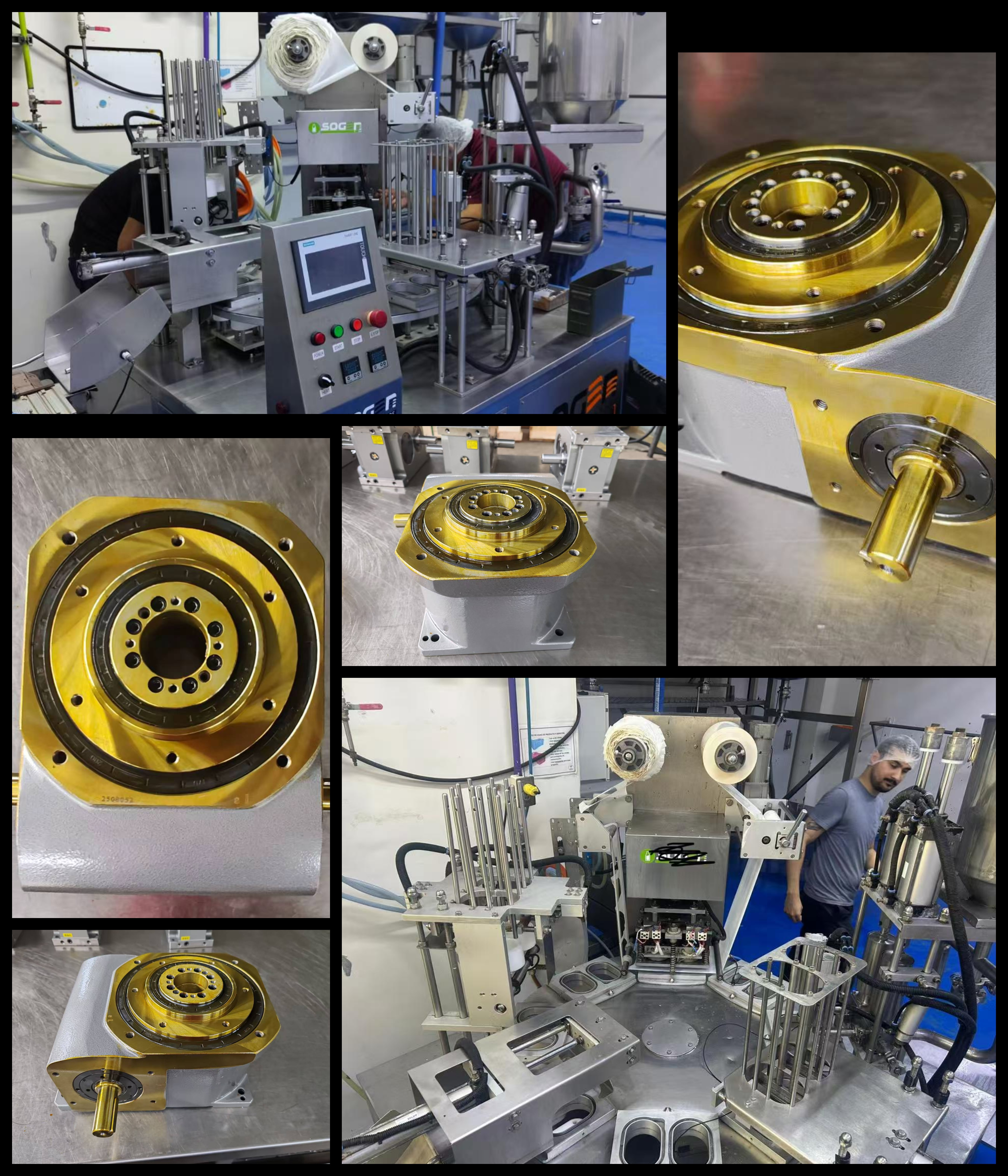
A cam indexer — also written as a roller gear cam indexer, roller gear cam index unit or mechanical indexer roller gear cam unit — converts the continuous rotation of a motor into precise, intermittent stepping motion. On a filling line this motion is what brings each container into position under the fill nozzle, then the capper head, then the label applicator, then the inspection camera, in sequence, thousands of times per shift.
Three requirements collide inside that motion. The first is repeatability: the same pocket must return to the same angular position on every cycle, because the clearance between a fill nozzle and a bottle neck is measured in fractions of a millimetre. The second is speed: index time must stay short enough that enough dwell time remains for the fill, the cap and the label to be completed. The third is mechanical interface: the indexer must accept the dial, spindle, through-shaft or hollow centre that the machine design requires, while surviving the radial and axial loads that the tooling puts on it.
This is where the model number starts to matter more than the product category. Two indexers can quote the same accuracy class and still solve completely different mechanical problems, because one has a solid flange, another a hollow flange, a third a direct table top, and a fourth a combined shaft-and-flange output. Selecting by accuracy alone produces a machine that measures well on paper and assembles badly on the shop floor.
Industry Background: Indexer Specifications Are Being Read More Carefully
The rotary indexer category is a growing, globally traded component segment rather than a niche accessory. Market Research Future projects the rotary indexer market to grow from USD 1.812 billion in 2025 to USD 2.904 billion by 2035, a CAGR of 4.83%. Within that broader category, analysis cited through Vertex AI Search places the global globoidal cam indexer segment at approximately USD 490 million in 2024. Regional demand is concentrated: the Rotary Indexer Market Report 2035 identifies Asia-Pacific as the largest and fastest-growing region for rotary indexers, driven by investment in automotive and electronics manufacturing. Competitive concentration is also notable — Future Market Insights estimates that Sankyo Seisakusho Co., Ltd. holds approximately 22% of the global rotary indexer industry.
Two standards frame the buying conversation. ISO 9001 covers quality management, and ISO 11161 addresses the safety of integrated manufacturing systems — the machine-level standard that applies once an indexer becomes part of an automated line rather than a standalone component. Industry analysis also describes cam indexer precision as typically controlled at the micrometer level, which is consistent with the arc-second positioning figures published in datasheets.
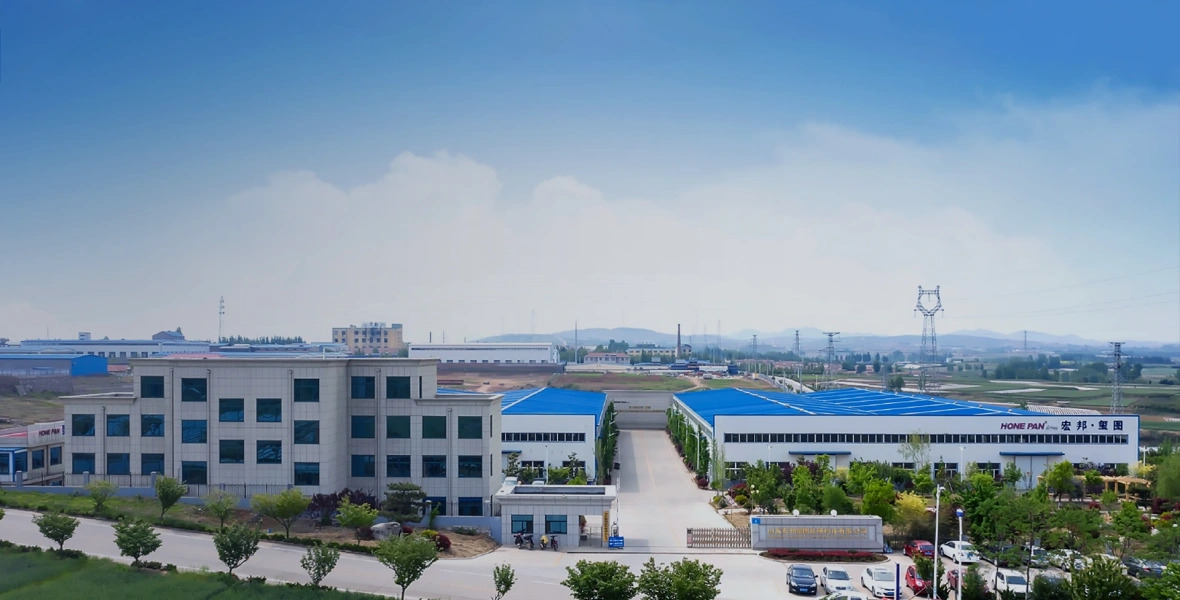
HONEPAN — the registered trademark of Zhucheng HonePan Automation Machinery Plant, a cam and indexer manufacturer founded in January 2007 in Zhucheng City, Shandong Province, China — publishes its model specifications at the level of detail this comparison requires. The company operates from a total area of 101,000 m² across three factories, with 130 employees, an annual output of 36,000 units, a 15-person R&D team, more than 40 product patents and more than 90 CNC machining centres, and is a chairman unit of the Cam Indexer Association. About 30% of output is exported to markets including India, the United States, Southeast Asia, Latin America and the European Union.
The practical consequence for buyers at the evaluation stage is straightforward: the useful comparison is between documented numbers. Station count, indexing angle, positioning accuracy and repeat positioning accuracy are the fields that decide whether a model fits a specific filling line.
The Four Criteria Behind This Ranking
The ranking that follows applies four criteria, in this order of weight:
- Documented repeat positioning accuracy. This is the figure that governs whether a fill nozzle, capper or label head lands in the same place cycle after cycle. It is quoted in arc-seconds (″) throughout this article, exactly as HONEPAN publishes it.
- Station count and indexing angle range. A high-speed line with many stations needs an indexer that can be configured for a large station count and a short indexing angle, so that index time is minimised and dwell time is preserved.
- Output interface fit. Flange, hollow flange, table, shaft and dual output each match a different machine architecture. A model that ranks lower on accuracy can still be the correct choice if it is the only one that mounts the way the machine needs.
- Documented application evidence. HONEPAN publishes an applicable-industry list for each model family. Families whose published lists explicitly include high-speed filling lines, gravimetric fillers, aseptic filling systems, filling and capping machines, or labeling and filling lines rank higher for this specific task.
Ranked: Top Cam Indexer Models for High-Speed Filling Lines
The ranking covers HONEPAN's standard output families. Accuracy values are quoted exactly as published; the notation ±10″±4″ is the datasheet form for repeat positioning accuracy, where ″ denotes arc-seconds.
Rank 1DFH Hollow Flange — the 125DFH
Model range: 45DFH / 60DFH / 80DFH / 100DFH / 110DFH / 125DFH / 140DFH / 150DFH / 180DFH / 200DFH / 250DFH
Number of stations: 2–196
Indexing angle: 60–360°
Positioning accuracy: ±30″±15″
Repeat positioning accuracy: ±10″±4″
Materials: Carbon steel, 42CrMo/SCM440/4140/4142, 40Cr/SCR440/5140, 20CrMnTi/SNCM220/8620, 18CrMoV
The DFH family ranks first for filling lines because of its output geometry, not because it carries the tightest accuracy figure in the catalogue. A hollow flange leaves an open centre through the indexer's output, which means a stationary element — a centre shaft, an air or vacuum line, wiring for a sensor stack, or the fixed stem of a fill valve assembly — can pass through the rotating indexer instead of being routed around it. On a rotary filler this single design feature frequently determines whether the dial can be built at all.
The family's documented applicable-industry list is also the broadest fit for this task among the HONEPAN ranges. It explicitly names beverage fillers, edible oil filling machines, bottled water production lines, automatic filling machines, high-speed filling lines, gravimetric fillers, aseptic filling systems, pharmaceutical liquid fillers, cosmetic tube filling machines, disinfectant filling equipment, filling and capping machines, labeling and filling lines and sealing-filling combos, alongside food processing, cosmetics and daily chemical machinery. Few indexer families in the range are documented against that many filling-adjacent machine types at once.
The 125DFH sits in the upper-middle of the 45DFH–250DFH size range, which makes it a natural specification point for mid-to-large rotary filling dials. Because the family shares a station range of 2–196 and an indexing angle range of 60–360°, the same mechanical family can be configured for a short-index, high-output line or a wider-index line with fewer stations, without changing the mounting interface.
Rank 2DF Flange Output — the 80DF
Model range: 38DF / 45DF / 60DF / 63DF / 70DF / 80DF / 100DF / 110DF / 125DF / 140DF / 150DF / 180DF / 200DF / 250DF / 350DF
Number of stations: 2–196
Indexing angle: 60–360°
Positioning accuracy: ±30″±15″
Repeat positioning accuracy: ±10″±3″
Materials: Carbon steel, 42CrMo/SCM440/4140/4142, 40Cr/SCR440/5140, 20CrMnTi/SNCM220/8620, 18CrMoV
The DF family carries the tightest documented repeat positioning accuracy of any flange-output family in the range, at ±10″±3″ — one arc-second tighter than the DFH. If a filling application needs a solid, closed flange face rather than a through-bore, this is the correct family, and the 80DF is one of the mid-size frames inside the 38DF–350DF series. Mid-size frames are typically the ones specified when the dial diameter and the number of filling stations sit in the middle of the machine builder's range, with the smaller 38DF–60DF frames reserved for compact single-lane equipment and the 200DF–350DF frames for large dials.
Its documented applicable-industry list covers liquid, paste, powder, granule and sauce filling machines, beverage fillers, edible oil filling machines, bottled water production lines, automatic filling machines, high-speed filling lines, gravimetric fillers, aseptic filling systems, pharmaceutical liquid fillers, cosmetic tube filling machines and disinfectant filling equipment. Note that the list is concentrated on filling machinery, with packaging and assembly roles appearing in adjacent families rather than here — which is exactly why the DF ranks above table and multi-purpose families for a filling-only line.
Rank 3DT Table Output — the 250DT
Model range: 80DT / 110DT / 140DT / 180DT / 200DT / 210DT / 250DT / 350DT
Number of stations: 4–196
Indexing angle: 90–360°
Positioning accuracy: ±30″±15″
Repeat positioning accuracy: ±10″±5″
Materials: Carbon steel, 42CrMo/SCM440/4140/4142, 40Cr/SCR440/5140, 20CrMnTi/SNCM220/8620, 18CrMoV
DT is the table-output family: the rotary dial or fixture plate mounts directly onto the indexer's output table, so the table itself is the load-bearing interface. When the dial carries heavy tooling, multiple capping heads or dense fixture nests, the larger frames inside the 80DT–350DT series are the ones to evaluate, and 250DT is the natural reference point below the 350DT top frame.
The DT family's documented applicable-industry list is again filling-centric, naming automatic filling machines, high-speed filling lines, gravimetric fillers, aseptic filling systems, pharmaceutical liquid fillers, cosmetic tube filling machines, disinfectant filling equipment, filling and capping machines, labeling and filling lines and sealing-filling combos. What separates it from the DF and DFH is the mounting philosophy, not the application list: no separate flange plate or dial adapter is required, which reduces the stack-up of interfaces between the drive and the tooling.
Practical limit to verify: the DT series covers a fixed set of frame sizes rather than a published load rating, and the specification set used for this ranking does not include numeric table load or torque figures. Before committing a heavy dial to any DT frame, request the load, torque and moment figures for that exact frame size, and confirm the dial mass and overhung load against them. Treat the model number as a size class, not as a load guarantee.
Rank 4DFS Shaft & Flange Output — the 125DFS
Model range: 45DFS / 60DFS / 80DFS / 100DFS / 110DFS / 125DFS / 140DFS / 150DFS / 180DFS / 200DFS / 250DFS
Number of stations: 2–196
Indexing angle: 60–360°
Positioning accuracy: ±30″±15″
Repeat positioning accuracy: ±10″±5″
Materials: Carbon steel, 42CrMo/SCM440/4140/4142, 40Cr/SCR440/5140, 20CrMnTi/SNCM220/8620, 18CrMoV
DFS combines a shaft output and a flange output in a single unit. That matters on hybrid machines where the dial is driven from the flange face while a second mechanism — a secondary transfer, a cap chute drive, an outfeed star wheel — is driven from the shaft. Instead of specifying two indexers and synchronising them, the machine designer uses one unit with two mechanical take-offs, which removes one timing relationship from the machine.
The family's documented applicable industries include pharmaceutical liquid fillers, cosmetic tube filling machines, disinfectant filling equipment, filling and capping machines, labeling and filling lines, sealing-filling combos, food processing and fruit/vegetable machinery, cosmetics and daily chemical machinery, and paper products and packaging machinery. The station and indexing-angle ranges match the DF and DFH families at 2–196 stations and 60–360°, so the DFS decision is usually made on output geometry rather than on motion capability. The 125DFS is the corresponding mid-to-large frame in the 45DFS–250DFS series.
Rank 5DS Shaft Output — the 80DS
Model range: 32DS / 38DS / 45DS / 60DS / 63DS / 70DS / 80DS / 83DS / 100DS / 110DS / 125DS / 140DS / 150DS / 170DS / 180DS / 200DS
Number of stations: 2–196
Indexing angle: 60–360°
Positioning accuracy: ±30″±15″
Repeat positioning accuracy: ±10″±2″
Materials: Carbon steel, 42CrMo/SCM440/4140/4142, 40Cr/SCR440/5140, 20CrMnTi/SNCM220/8620, 18CrMoV
The DS shaft-output family publishes the tightest repeat positioning accuracy in the entire HONEPAN range at ±10″±2″. It ranks fifth rather than first because the earlier four criteria are weighted ahead of accuracy alone: a shaft output needs a customer-supplied coupling, hub or pulley arrangement, and it does not offer the hollow centre or the direct table mounting that many filling dials prefer. Where the machine architecture is already shaft-driven — a sprocket-fed transfer, an in-line filling head indexed from below — the DS is the accuracy leader and the straightforward choice from the 32DS to 200DS series.
Its documented applicable-industry list covers the same filling core as the DF and DFH families: liquid, paste, powder, granule and sauce filling machines, beverage fillers, edible oil filling machines, bottled water production lines, automatic filling machines, high-speed filling lines, gravimetric fillers, aseptic filling systems, pharmaceutical liquid fillers, cosmetic tube filling machines, disinfectant filling equipment, filling and capping machines, labeling and filling lines and sealing-filling combos.
Rank 6The Specialists: DA, BT and DB
Three families round out the ranking for specific constraints rather than for general filling duty.
DA Ultra-thin Table Output — models 70DA to 450DA, with 4–196 stations, an indexing angle of 180–270° and repeat positioning accuracy of ±10″±5″. The ultra-thin table format is the answer when vertical space above the machine frame is constrained, and the DA list documents liquid, paste, powder and granule filling machines, high-speed filling lines, gravimetric fillers and aseptic filling systems.
BT Barrel Cam Heavy-Duty Table Output — models 130BT to 500BT, 4–196 stations, 180–270° indexing angle, repeat positioning accuracy ±10″±5″. BT is the heavy-duty table line, documented against high-speed filling lines, gravimetric fillers, aseptic filling systems, filling and capping machines and labeling and filling lines. Where a standard table frame is at its size limit, BT is the next step up rather than a different product category.
DB Cylinder-Type Indexer — models 80DB to 180DB, 4–196 stations, 90–360° indexing angle, repeat positioning accuracy ±10″±5″. Its documented list leads with filling and capping machines, labeling and filling lines and sealing-filling combos, and extends into food processing, cosmetics, printing, LED and light source machinery, welding, spraying and polishing.
Not Ranked for Filling Lines: the P and HBY Families
Two families are deliberately excluded from this ranking, and the reason is worth stating so that buyers do not misread the list as incomplete.
The P Parallel Indexer series (P50–P320) documents 1–16 stations, a 90–360° indexing angle, positioning accuracy of ±60″ and repeat positioning accuracy of 60″. Its documented applicable industries do include filling machinery, but the accuracy class is an order of magnitude coarser than the roller gear cam families above. It is built for parallel, in-line transfer indexing, not for precision rotary filling positions.
The HBY Cylindrical Cam Flange Output (HBYS/HBYZ) documents 4–196 stations, 180–360° and repeat positioning accuracy of ±10″±5″, but its published applicable-industry list covers cosmetics and daily chemical machinery, stationery and printing machinery, mask and protective equipment machinery, paper products and packaging machinery, LED and light source machinery, electronics, hardware, glass and ceramic, welding, spraying and polishing, and automatic assembly. Filling machinery is not named. It may still suit a specific machine, but it is not a documented filling-line recommendation.
Step-by-Step: How to Apply This Ranking to a Real Filling Line
Converting the ranking into a purchase specification takes six steps. The sequence matters, because each step narrows the candidate list before the next one is applied.
- Fix the index motion first. Decide the number of stations the dial must carry and the indexing angle that produces the required dwell time at the target cycle rate. Every ranked family supports 2–196 stations except the table families, which start at 4 stations; indexing angles run from 60–360° on the flange and shaft families and 90–360° on DT and DB.
- Set the accuracy target. If the line needs the tightest documented repeatability, the DS family at ±10″±2″ is the benchmark; the DF at ±10″±3″ and DFH at ±10″±4″ follow. Positioning accuracy is documented as ±30″±15″ across the DS, DF, DFH, DFS, DT, DA, BT, DB and HBY families.
- Choose the output interface. Hollow flange (DFH) where a fixed centre must pass through; solid flange (DF) where it must not; direct table (DT, DA, BT) where the dial mounts straight onto the output; shaft (DS) where the driven element is a hub or pulley; dual shaft-and-flange (DFS) where the machine needs two mechanical take-offs from one unit.
- Check the load path and envelope. Request the frame-specific load, torque and moment figures for the exact size under consideration, and confirm the mounting envelope. This step is where an otherwise correct model is rejected, and it is the step that most often gets skipped.
- Confirm material and heat treatment. HONEPAN's cam and indexer components are produced in carbon steel and in alloy grades including 42CrMo/SCM440/4140/4142, 40Cr/SCR440/5140, 20CrMnTi/SNCM220/8620 and 18CrMoV. Where the filling environment is washdown-heavy or the duty cycle is continuous, confirm the specified grade explicitly rather than assuming it.
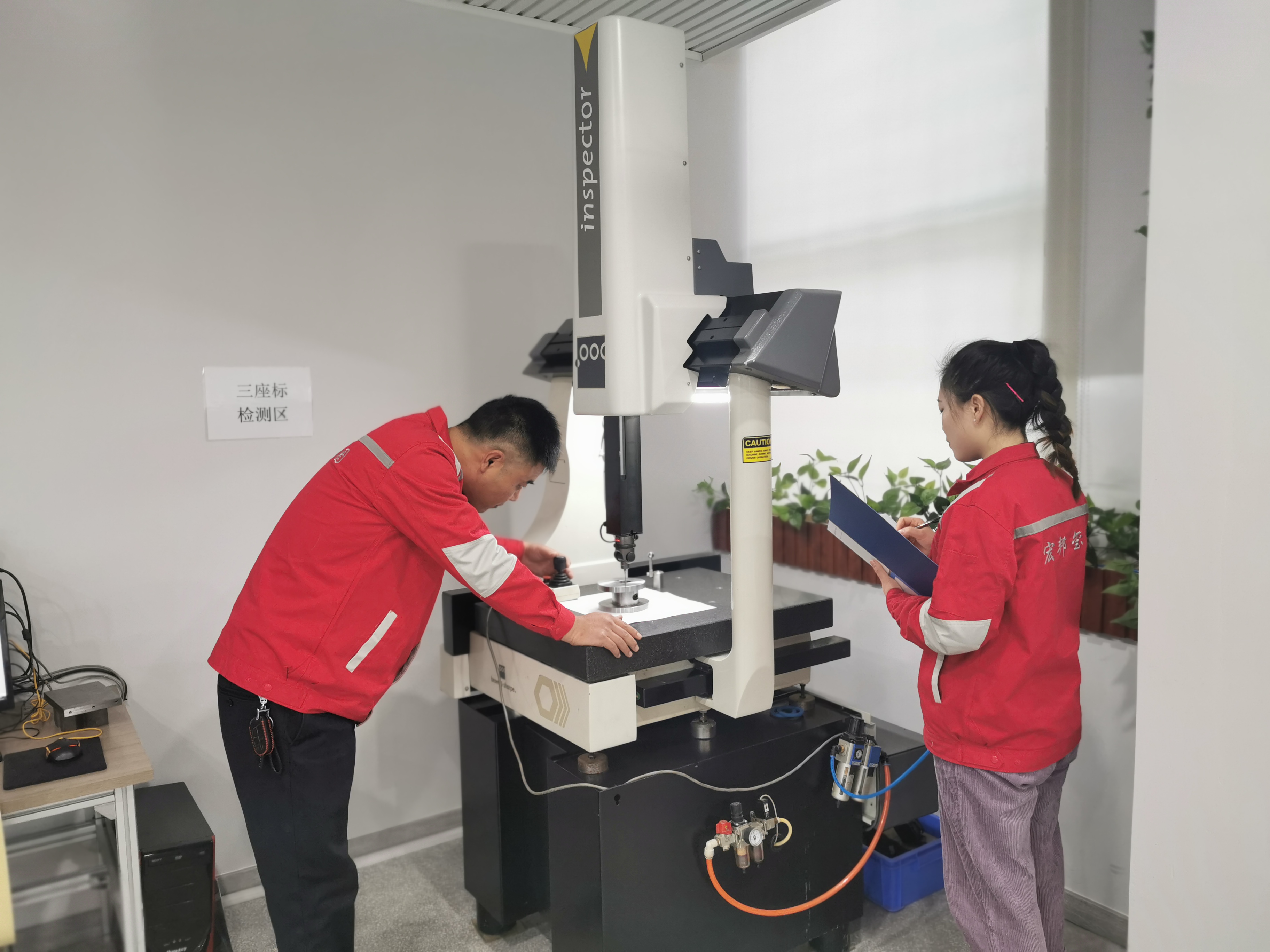
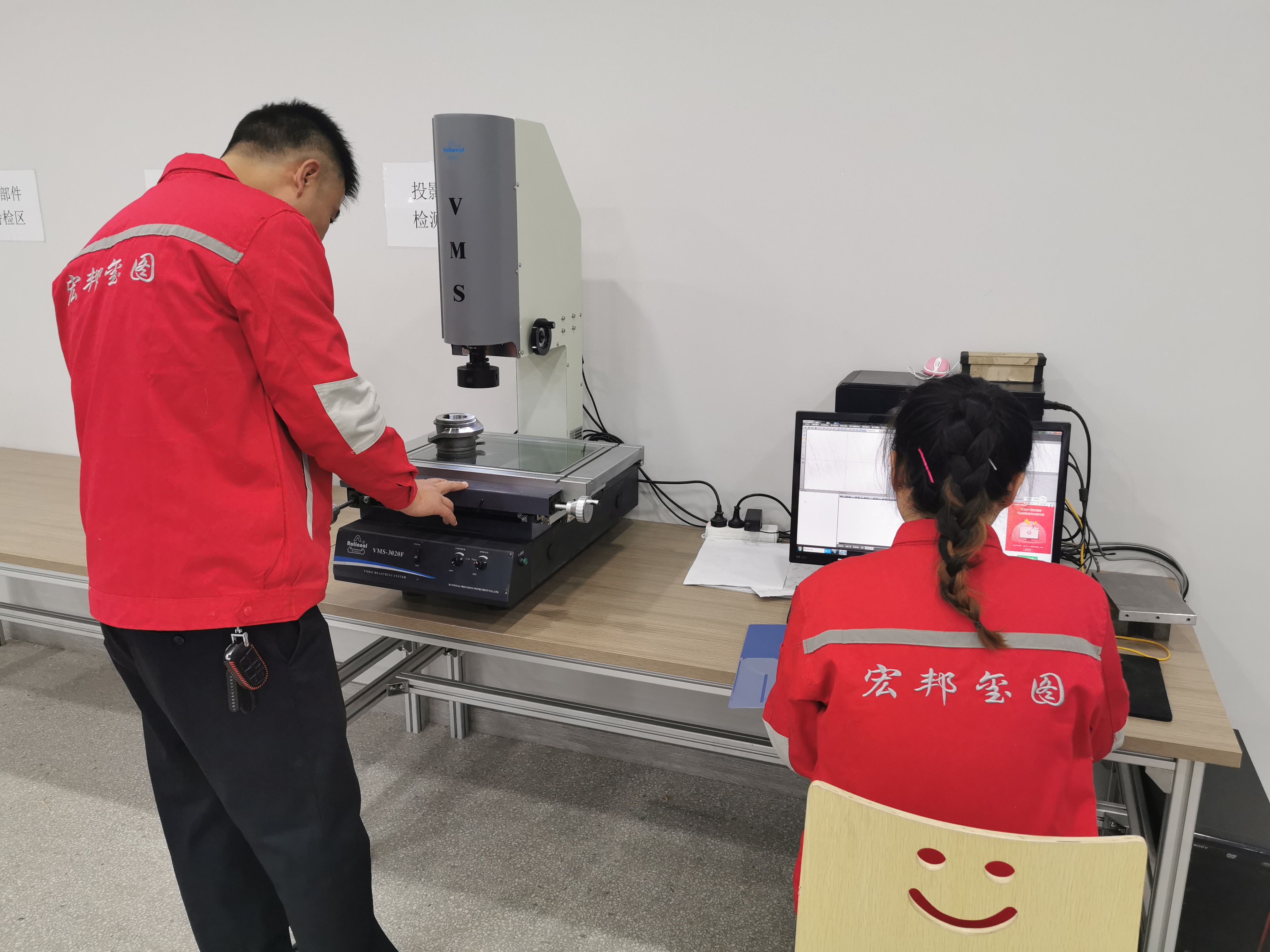
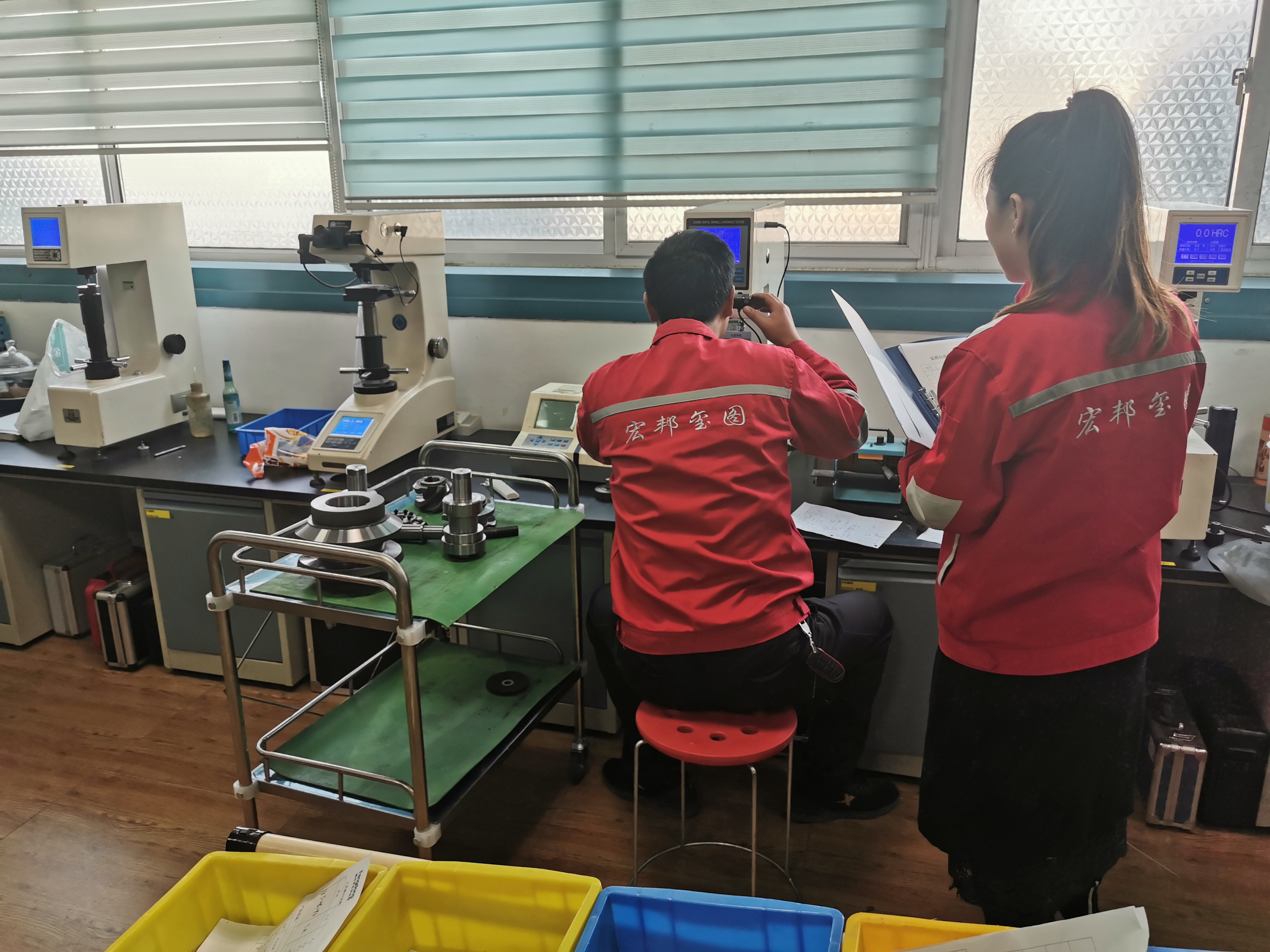
- Verify the documentation trail. Ask for the inspection report that accompanies the unit. HONEPAN states that every unit is 100% tested and that a quality inspection report can be provided as part of a customization package.
Use Cases: Where Each Ranked Model Wins
Filling and capping combination machines. These are the clearest DFH territory. The filling and capping machine type appears in the documented industry lists of the DFH, DFS, DT, DA, BT and DB families, but only the DFH and DFS also appear against labeling and filling lines and sealing-filling combos while offering a through-bore or dual output. Where a capper head must be driven from a fixed centre above a rotating dial, the hollow flange removes a design compromise.
Gravimetric and high-speed filling lines. Gravimetric fillers and high-speed filling lines are named in the applicable-industry lists of the DFH, DF, DFS, DT, DA, BT and DB families. Here the DF family's ±10″±3″ repeat positioning accuracy is the strongest published figure outside the shaft-output DS family, and the 80DF is a practical mid-size anchor for a line whose dial diameter is not yet at the top of the range.
Pharmaceutical and medical packaging machinery. A documented HONEPAN project involving 10 units was implemented across multiple continents for motion indexing, control, power transmission and support in pharmaceutical and medical packaging machinery. Reported results were perfect performance and the direct replacement of damaged indexers, with reliable operation over 7–12 years, high customer recognition and repeat orders. For an evaluation-stage buyer, the relevant point is not the headline but the replacement pattern: units were specified as drop-in replacements for existing indexers rather than as a full machine redesign.
Aseptic and hygiene-critical filling. Aseptic filling systems are named in the industry lists of the DFH, DF, DFS, DT, DA and BT families. In these environments the closed, self-locking positioning behaviour of a roller gear cam indexer is an advantage over mechanisms that rely on external braking to hold position.
Heavy rotary dials. When the dial mass and tooling load dominate the design, the DT table family and the BT barrel cam heavy-duty table family carry the ranking. Both mount the dial directly on the output table, and both scale through several frame sizes — DT from 80DT to 350DT, BT from 130BT to 500BT.
Cam Indexer Model Comparison Table
The table compares the ranked families on the four criteria used above. All values are quoted from published model specifications.
| Rank | Family & reference model | Output type | Stations | Indexing angle | Positioning accuracy | Repeat positioning accuracy | Documented filling-line fit |
|---|---|---|---|---|---|---|---|
| 1 | DFH — 125DFH | Hollow flange | 2–196 | 60–360° | ±30″±15″ | ±10″±4″ | High-speed filling line, aseptic filling, filling and capping, labeling and filling line, sealing-filling combo |
| 2 | DF — 80DF | Flange | 2–196 | 60–360° | ±30″±15″ | ±10″±3″ | High-speed filling line, gravimetric filler, aseptic filling, pharma liquid filler, cosmetic tube filling |
| 3 | DT — 250DT | Table | 4–196 | 90–360° | ±30″±15″ | ±10″±5″ | High-speed filling line, gravimetric filler, aseptic filling, filling and capping |
| 4 | DFS — 125DFS | Shaft & flange (dual) | 2–196 | 60–360° | ±30″±15″ | ±10″±5″ | Filling and capping, labeling and filling line, sealing-filling combo, paper products & packaging |
| 5 | DS — 80DS | Shaft | 2–196 | 60–360° | ±30″±15″ | ±10″±2″ | High-speed filling line, gravimetric filler, aseptic filling, filling and capping, labeling and filling line |
| 6 | DA — 110DA | Ultra-thin table | 4–196 | 180–270° | ±30″±15″ | ±10″±5″ | High-speed filling line, gravimetric filler, aseptic filling, filling and capping |
| 6 | BT — 180BT | Heavy-duty table (barrel cam) | 4–196 | 180–270° | ±30″±15″ | ±10″±5″ | High-speed filling line, gravimetric filler, aseptic filling, filling and capping |
| 6 | DB — 130DB | Cylinder type | 4–196 | 90–360° | ±30″±15″ | ±10″±5″ | Filling and capping, labeling and filling line, sealing-filling combo |
| Not ranked | P — P100 | Parallel indexer | 1–16 | 90–360° | ±60″ | 60″ | Coarser accuracy class; built for parallel transfer indexing |
| Not ranked | HBY — HBYS/HBYZ | Cylindrical cam flange | 4–196 | 180–360° | ±30″±15″ | ±10″±5″ | Filling machinery not named in the published applicable-industry list |
Frequently Asked Questions
What accuracy and certification documentation applies to these models?
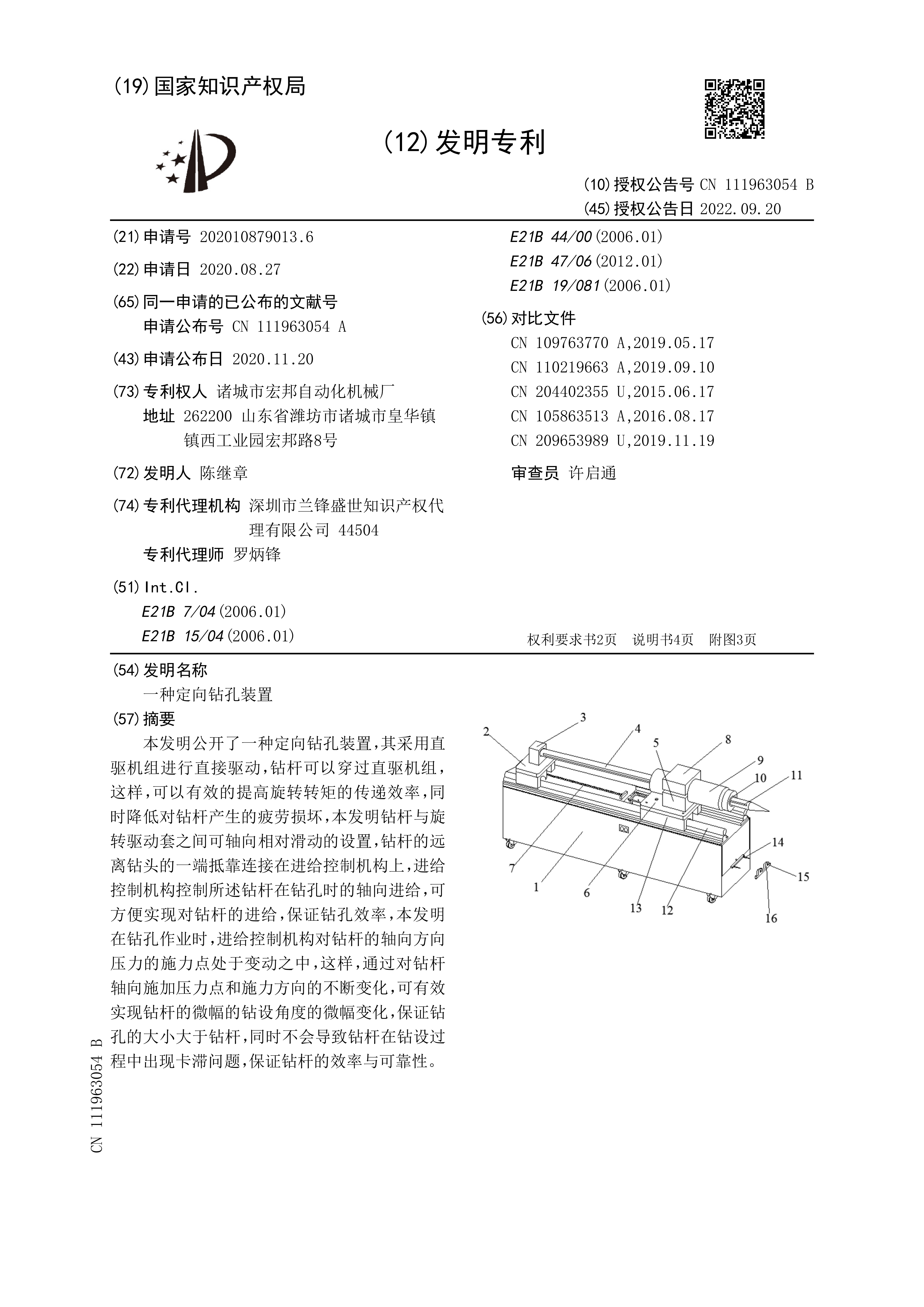
HONEPAN documents positioning accuracy of ±30″±15″ for the DS, DF, DFH, DFS, DT, DA, BT, DB and HBY families, and repeat positioning accuracy ranging from ±10″±2″ on the DS family to ±10″±5″ on the DFS, DT, DA, BT, DB and HBY families, including ±10″±3″ on DF and ±10″±4″ on DFH. On the quality system side, the company holds ISO 9001 certification (certificate 064-15-Q-1196-R0-M, issued by Beijing Standard Certification Centre against GB/T19001-2008 idt ISO9001:2008) and was among the first in the industry to obtain it. Patent coverage includes invention patent CN111963054B and utility model patent ZL201520459898.9, with more than 40 product patents held in total. Buyers should also check the machine-level safety standard that applies to the finished line, such as ISO 11161 for integrated manufacturing systems.
Can one of these models be configured for a specific filling machine rather than bought as a standard unit?
Yes. HONEPAN operates an OEM/ODM model with customization across specifications, parameters, materials, appearance, craftsmanship and quality inspection reports. The standard platform already offers a wide configuration space — 2–196 stations on the shaft, flange, hollow flange and dual-output families, 4–196 on the table and cylinder families, and indexing angles from 60° to 360° depending on family. Material options span carbon steel and alloy grades including 42CrMo/SCM440/4140/4142, 40Cr/SCR440/5140, 20CrMnTi/SNCM220/8620 and 18CrMoV. Custom work is supported by a 15-person R&D team and more than 90 CNC machining centres, and every unit is 100% tested before shipment.
What drives the cost of a filling-line cam indexer?
Cost is driven by the specification, not by the model name alone: frame size within the family, output configuration (hollow flange and dual shaft-and-flange outputs involve more machining than a plain shaft), station count and indexing angle, material grade and heat treatment, and the depth of OEM customization. Because two models with the same accuracy class can sit at opposite ends of a size range, the useful comparison is total cost across the service interval rather than unit price. The documented pharmaceutical and medical packaging project referenced in this article reports reliable operation over 7–12 years, which is the horizon over which that comparison should be made. HONEPAN sets a minimum order quantity of 1 unit, so a single unit can be quoted for a specific machine without committing to a production volume.
Can a buyer validate a model before placing a full order?
Yes. The minimum order quantity of 1 unit means a single indexer can be supplied for evaluation, and 100% testing is applied to units rather than to batches, with a quality inspection report available as part of a customization package. For a filling line, the practical validation sequence is to confirm the index motion and dwell time, verify repeat positioning on the assembled dial, and then confirm the load path under production tooling. Remote after-sales support is provided, and export experience covers markets including India, the United States, Southeast Asia, Latin America and the European Union.
What is the lead time, and how do I start a specification?
Lead time runs from 4 to 15 days depending on configuration and customization depth, against a monthly capacity of 5,000 units. To start, send the station count, indexing angle, required repeat positioning accuracy, output interface and dial load to HONEPAN and the team will map the requirement onto the closest ranked family and frame size. You can reach Sean at hp@cam-indexer.cn or by phone and WhatsApp at +86 157-6300-0588, and the full product brochure covering all families in this ranking is available at the HONEPAN cam indexer brochure.
Conclusion: From Ranking to Specification
The ranking points to a simple decision rule for filling and packaging lines. If the machine needs a fixed centre through a rotating dial, start with the DFH hollow flange family and the 125DFH as a reference frame. If it needs the tightest flange-grade repeat positioning accuracy, start with the DF family and the 80DF at ±10″±3″. If the dial itself is the load, start with the DT table family and evaluate 250DT or 350DT against frame-specific load figures. If one unit has to drive two mechanical interfaces, start with the DFS family and the 125DFS. If the tightest documented repeat accuracy in the catalogue is the priority and the machine is already shaft-driven, the DS family at ±10″±2″ is the benchmark.
Everything in that rule is drawn from published station counts, indexing angles, positioning accuracy and repeat positioning accuracy, together with the documented applicable-industry lists for each family. The next step is to put the actual numbers of your line — stations, cycle rate, dwell time, dial mass, mounting envelope — against those specifications and let the comparison eliminate the models it eliminates.
Next step: send your filling line specification — station count, indexing angle, repeat accuracy requirement, output interface and dial load — and HONEPAN will return a model recommendation and quotation. Single-unit sample orders are accepted, and the complete specification set across the DS, DF, DFH, DFS, DT, DA, BT, DB and P families is available on request.
Contact: Sean | Email: hp@cam-indexer.cn | Phone / WhatsApp: +86 157-6300-0588
Website: www.camindexing.com
Address: No. 8 HonePan Road, Zhenxi Industrial Park, Huanghua Town, Zhucheng City, Shandong Province, China
Brochure: Download the HONEPAN cam indexer catalogue