
Application Guide: Choosing the Right High-Speed Bunching/Stranding Machine for Robotics, Automotive, and Energy Cables
The right high-speed bunching/stranding machine for robotics, automotive and energy cable is decided by the conductor, not by the headline speed on a datasheet. Robotics cable needs fine-wire lay control and low residual twist so the conductor survives continuous flexing. Automotive cable needs repeatable diameter and compactness at high volume, with short changeover between conductor sizes. Energy cable needs compaction, mechanical strength and stable resistance at larger cross-sections. Those three requirements pull the same machine platform in different directions, so the selection process has to start from the cable family rather than from a stock configuration.
This guide sets out how to match machine capability to each of those families: which stranding architecture to choose, where pay-off and tension control actually decide strand quality, when an electrolytic plating line belongs in the conductor path, and how take-up and spooling affect the package that reaches the insulation line. HONTA, a cable equipment manufacturer established in September 2006 in Kunshan City, Jiangsu Province, China, supplies copper and aluminium rod breakdown (RBD) lines, electrolytic plating lines, multi-wire drawing lines and high-speed stranding equipment, and its product scope is used here to show how the stages of a conductor line are assembled against a single conductor target.
Problem Definition: Three Cable Families, Three Different Conductor Targets
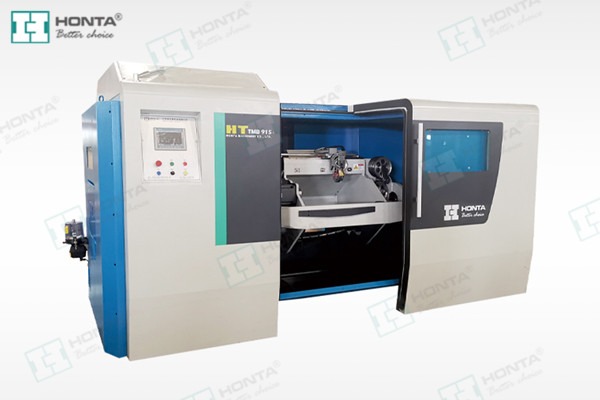
Bunching and stranding perform a single physical task: they combine individual wires into a conductor with a defined lay length, diameter and surface. What changes between robotics, automotive and energy cable is which of those outputs is allowed to vary. Robotics cable fails when the strand pattern shifts along the length, because a conductor that flexes repeatedly cannot tolerate uneven twist distribution. Automotive cable fails when the outer diameter scatters, because the downstream insulation process works inside a narrow window, and when the conductor is not compact enough for the connector interface. Energy cable fails when the conductor does not reach its specified compactness or when the strand surface is damaged, because resistance and mechanical strength both suffer.
Robotics and continuous-flex cable
Continuous-flex conductors are built from a high count of fine wires, and the quality that matters is uniformity: the same lay length, the same wire tension and the same surface condition from the first metre to the last. Any scatter in pay-off tension becomes a diameter variation; any variation in lay length becomes a point where the conductor bends differently from its neighbours. Conductor plating also enters the decision, because flex-rated and high-temperature robotics cables often use plated wire rather than bare copper.
Automotive cable
Automotive conductor production is a repetition problem. The machine has to hold diameter and compactness across long runs, change over between conductor sizes with minimal scrap, and keep the strand surface clean enough for the following insulation process. Where conductors are compacted, the stranding stage must close the conductor without flattening individual wires.
Energy cable
Energy conductors are larger, and priority shifts to compactness and mechanical strength. A conductor that misses its specified fill factor consumes more insulation and copper than planned, and one with damaged strands loses tensile performance. At these cross-sections the rigid frame stranding machine is the conventional architecture, while high-speed bunching remains the tool for finer conductor classes.
The core conflict. A machine tuned for fine-wire flexibility — high strand count, gentle tension, tight lay-length control — is not the same machine that compacts a large cross-section for mechanical strength. Buyers who assume one platform will cover robotics, automotive and energy duty at the same performance level usually discover the gap during acceptance testing, when the conductor is measured rather than described.
Industry Background: Why Conductor Requirements Are Diverging
Three separate trends are pushing conductor specifications apart at the same time. Automation and robotics are moving flexible cable from a niche accessory into a standard bill-of-materials item, which raises the volume of fine-wire, high-strand-count conductors that must be produced consistently rather than in occasional campaigns. Vehicle electrification is increasing the number of conductors per vehicle and, in higher-temperature zones, the use of plated rather than bare wire. Grid, renewable and charging infrastructure build-out is increasing demand for larger compacted conductors with tight resistance limits.
The equipment consequence is that buyers no longer evaluate a bunching machine in isolation. A conductor line is a chain: rod breakdown or multi-wire drawing produces the wire, electrolytic plating may add a metallic layer, bunching or stranding assembles the conductor, and spooling delivers it to the insulation line. A weakness at any stage tends to surface at the stranding stage as a defect that looks like a machine problem but is not.
That is also why the same machine model can perform well in one cable plant and disappoint in another. The difference is usually the wire going in, not the machine. This is why application-led selection — starting from the conductor specification and working backwards through the wire path — gives more reliable outcomes than comparing machine specifications in isolation.
The Detailed Solution: Matching Machine Capability to Cable Family
Selecting a machine therefore means selecting a wire path. The sections below follow the conductor backwards, from the cable requirement to the equipment stage that controls it.
Pay-off and tension control decide strand uniformity
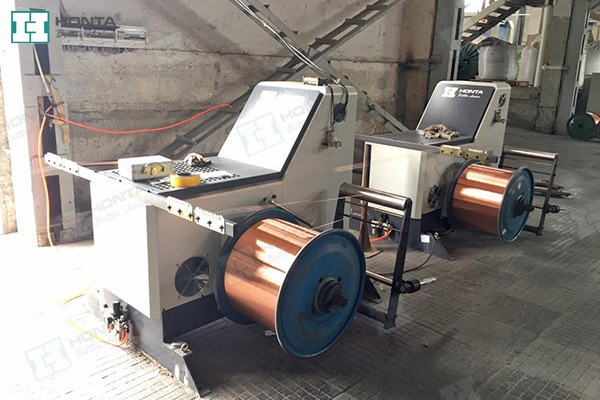
Pay-off is the least expensive part of the line and one of the most common sources of hidden defects. In a multi-wire bunching operation, each wire must arrive at the bunching point at the same tension; otherwise the finished conductor shows an uneven lay, a wandering diameter and residual twist that only appears once the cable is flexed. Motorised pay off units, including multi-wire pay off configurations, exist to hold that tension as spool weight falls from full to empty. A passive arrangement may be adequate for a single wire at modest speed, but the requirement changes as strand count rises.
What to verify: tension stability across the full spool, braking response at emergency stop, and whether the pay-off can be matched to the spool sizes the plant actually purchases rather than to a nominal size.
Wire drawing upstream sets the quality ceiling
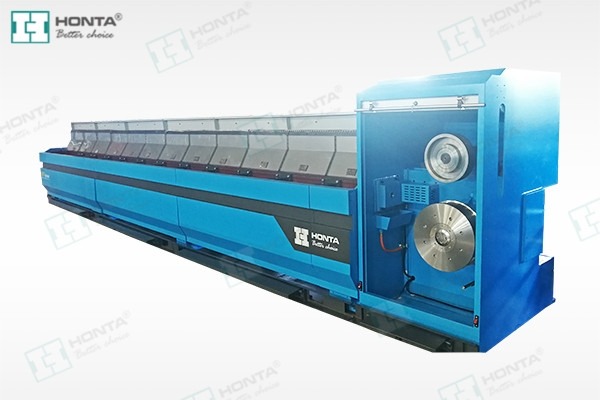
The stranding stage cannot correct wire that arrives with diameter variation or surface damage. Multi-wire drawing lines and copper and aluminium RBD lines are the upstream stages that determine whether the wire entering the bunching machine is consistent enough for a tight lay-length window. For aluminium conductors, the drawing path also influences how the conductor behaves at the stranding point, because aluminium is less forgiving of tension variation than copper.
In practice, buyers should decide whether the drawing line and the stranding machine are being specified as one conductor line or as two independent purchases. The former allows a single diameter and tension target to be agreed across both stages; the latter tends to produce a specification argument the first time a conductor is measured.
Plating belongs in the decision when the cable requires it
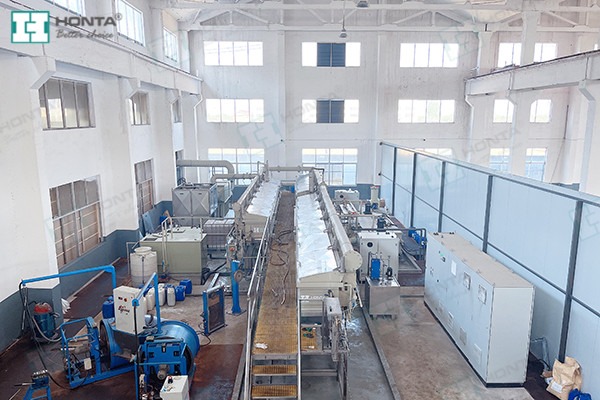
Nickel, silver and tin coatings are not decorative. They address temperature, corrosion and solderability requirements in the finished cable. A conductor line that includes a wire electrolytic plating stage — a Ni, Ag or Sn electrolytic single wire plating line, or a high-speed wire electrolytic plating line — places plating between drawing and stranding, which means the plating line's output quality becomes a stranding input. Coating consistency and surface condition determine whether the subsequent stranding stage can hold its parameters.
For robotics and high-temperature automotive applications, plating is often the stage that is left out of the initial budget and added later, forcing the line layout to be re-planned. If plating is a realistic requirement within the planning cycle, the line layout should accommodate it from the start.
Choose the stranding architecture from the conductor, not from the budget
Two architectures dominate. High-speed bunching is the standard choice for fine-wire conductors where flexibility and lay-length control dominate, and it is the architecture most robotics and automotive conductors are built on. Rigid frame stranding is the standard choice for larger cross-sections where compactness and mechanical strength dominate, and it is where energy cable conductors are usually produced. The two are not interchangeable at the same performance level: a bunching machine pushed to a large cross-section loses the tension control that made it effective on fine wire, and a rigid frame strander run on fine, high-count conductors will not match bunching on lay-length consistency.
The practical rule is to define the largest and smallest conductor the plant expects to run over the next planning cycle, then test whether one architecture genuinely covers both ends or whether two machines — or a line with changeover capability — is the honest answer.
Take-up and spooling determine whether the good conductor survives
A conductor that is correct at the capstan can still be rejected at the insulation line if the package is wrong. Take-up tension, traverse pattern and spool condition decide whether the strand is deformed, whether the outer layer sinks into the layer below, and whether the conductor pays off cleanly at the next process. Single spoolers and semi-automatic double spoolers are the usual configurations, and the choice should follow the spool sizes and handling pattern of the buyer's plant rather than the machine's preference.
Where HONTA sits in this map
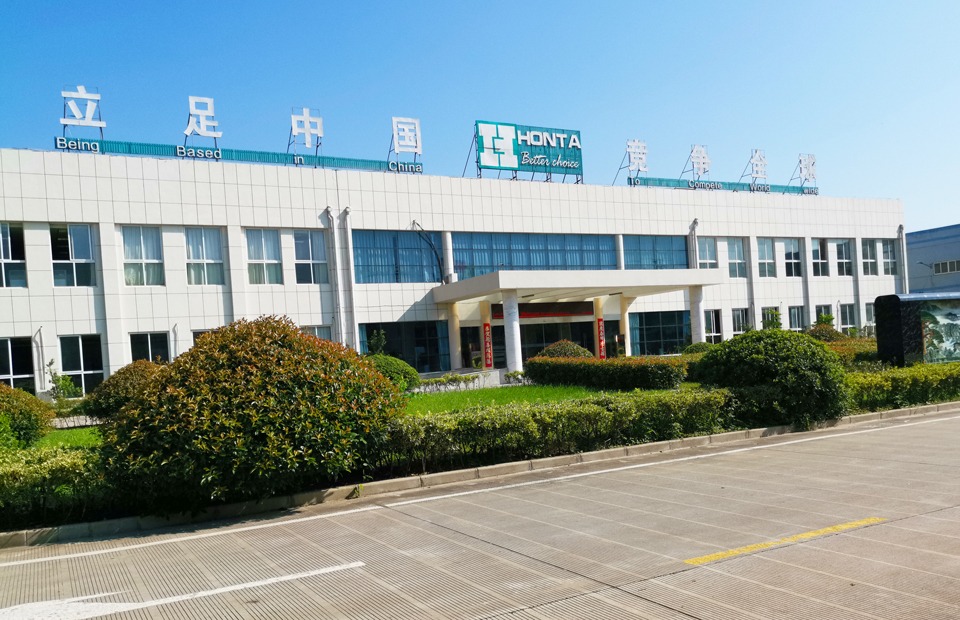
HONTA covers several of the stages above rather than a single machine category. The company was established in September 2006 and has focused on cable conductor drawing and stranding technology; its main products are copper and aluminium RBD lines, electrolytic plating lines, multi-wire drawing lines and high-speed stranding equipment. It established a second production base, HONTA INC., in the United States in 2017, and describes its equipment as characterised by high speed, efficiency, automation and humanisation. For a buyer assembling a conductor line for robotics, automotive or energy cable, that breadth matters mainly because it allows drawing, plating, stranding and spooling to be specified against a single conductor target instead of being negotiated as four separate purchases.
Step-by-Step Breakdown: A Selection Sequence That Survives Acceptance Testing
- Define the conductor, not the machine. Record conductor construction, wire diameter, strand count, compaction requirement, plating, and the failure mode that matters most downstream — flex life for robotics, diameter scatter for automotive, compactness and resistance for energy.
- Draw the wire path. Decide whether drawing, plating, stranding and spooling are one line or separate purchases, and mark the handover points where a defect could be introduced and then attributed to the wrong stage.
- Select the stranding architecture. Match high-speed bunching to fine-wire flexibility and rigid frame stranding to larger compacted sections, then test the assumption against both the smallest and the largest conductor in the plan.
- Size pay-off and tension for the worst case. Specify motorised pay off or multi-wire pay off against the highest strand count and the heaviest spool, then confirm behaviour at the empty-spool end of the run rather than only at start-up.
- Configure take-up and spooling. Fix spool sizes, package weight and traverse pattern with the buyer's insulation line in mind, not with the stranding machine in isolation.
- Agree acceptance criteria before the purchase order. Lay length tolerance, diameter consistency, surface condition, elongation and package quality should be measured on a trial conductor and written into the order, together with the measurement method and the party responsible for it.
Use Cases: How the Mapping Works in Practice
Use case 1: Fine-wire robotics conductor with plated wire
A robotics cable maker running a high-count, fine-wire conductor needs pay-off tension stability first, lay-length consistency second and package quality third. Where the cable is rated for elevated temperature, the wire path includes a Ni electrolytic single wire plating line ahead of bunching. The configuration that works here is a high-speed bunching platform with motorised pay off and a take-up matched to the spool the insulation line can accept — not a large-cross-section strander run slowly.
Use case 2: High-volume automotive conductor with short changeovers
An automotive conductor plant is judged on repeatability across long runs and on how quickly it can move between conductor sizes. Specification emphasis shifts to changeover time, tension repeatability after a spool change, and the surface condition of the finished strand, since scratches and inclusions reappear later as insulation defects. Where compaction is required, it has to be achieved without flattening individual wires.
Use case 3: Compacted energy conductor at larger cross-section
An energy cable producer working at larger cross-sections is optimising for compactness and mechanical strength, with resistance limits as the acceptance gate. Rigid frame stranding is the conventional architecture here, and pay-off and take-up are specified for heavier packages rather than for fine-wire sensitivity. Applying a fine-wire bunching configuration to this duty is where most specification errors appear.
Comparison Table: Equipment Category Mapped to Cable Family
The table maps HONTA equipment categories to the cable family each typically serves. The mapping follows the role each machine plays in the conductor line and is a selection aid rather than a published performance specification; final configuration must be confirmed against the conductor specification.
| Equipment category | Role in the conductor line | Typical fit | What to verify |
|---|---|---|---|
| High-speed bunching / stranding equipment | Assembles fine-wire conductors with controlled lay length | Robotics and automotive | Tension stability at high strand count; lay-length consistency across a full spool |
| Rigid frame stranding machine | Closes larger cross-sections for compactness and mechanical strength | Energy | Compactness and strand surface at the largest conductor in the plan |
| Multi-wire drawing line | Produces consistent wire diameters upstream of stranding | Robotics, automotive and energy | Diameter consistency and surface condition at the handover to stranding |
| Copper and aluminium RBD line | Rod breakdown feeding the drawing stage | All three families, at line level | Whether drawing and stranding are specified against one diameter target |
| Electrolytic plating line (Ni / Ag / Sn single wire; high-speed wire electrolytic plating) | Adds the metallic coating required by temperature, corrosion or solderability | Robotics and high-temperature automotive; selected energy applications | Coating consistency and surface condition as a stranding input |
| Motorised pay off / multi-wire pay off | Holds wire tension into the bunching point | Robotics and automotive | Tension behaviour from full spool to empty spool |
| Single spoolers / semi-automatic double spoolers | Forms the package delivered to the insulation process | All three families | Package quality, traverse pattern and spool compatibility |
FAQ
Which certifications should a buyer verify on a bunching or stranding machine order?
HONTA holds ISO 9001, ISO 14001 and UDEM International Certification. For a purchase decision, the certificate itself should be checked rather than the claim: confirm that the certified scope covers the equipment being ordered, confirm the issuing body, and confirm validity dates at the time of the order. Certification supports a quality-management argument, but it does not replace conductor-level acceptance testing on a trial run.
Can one high-speed bunching machine cover robotics, automotive and energy cable?
Only within limits. High-speed bunching covers fine-wire conductors where flexibility and lay-length control dominate, which is the core of robotics and automotive work. Energy conductors at larger cross-sections are conventionally produced on rigid frame stranding machines, where compactness and mechanical strength dominate. A plant expecting to serve all three families should define its conductor range first, then decide whether one architecture covers it or whether two are required.
What drives the cost of a high-speed bunching or stranding line?
The largest drivers are line scope — a standalone machine versus an integrated drawing, plating, stranding and spooling line — conductor material and wire diameter range, whether plating is included, spool sizes and package weights, strand count and pay-off configuration, automation level, and the commissioning, training and spare-parts package. Because these variables combine differently at each plant, two buyers specifying the same cable family can end up with materially different line costs. Comparing machine prices without normalising scope produces a misleading comparison.
How should a buyer validate the machine before committing to a full order?
Run a trial conductor on the proposed configuration and measure it against acceptance criteria agreed in advance: lay length, diameter consistency, surface condition, elongation and package quality. HONTA has long-term cooperation with many well-known cable companies at home and abroad, and a trial run is the point where drawing, plating and stranding are tested as one chain rather than as separate machines. Ask for the trial to be run on your wire, at your strand count, with your spool size.
How long does delivery take, and how should the timing be planned?
Delivery time depends on configuration — line scope, whether plating is included, spool and package specification, and automation level — so it has to be confirmed in writing for the specific configuration rather than assumed from a catalogue. Plan the installation window against the insulation line's commissioning date, and confirm the split between factory acceptance and site acceptance at the same time. To obtain a configuration-specific timeline and quotation, send the conductor specification to HONTA at tammy@jshonta.com or call 0086 182 6287 9467.
Conclusion
Choosing a high-speed bunching/stranding machine for robotics, automotive and energy cable is an exercise in matching a wire path to a conductor target. Robotics work rewards pay-off tension stability, lay-length control on fine wire and, where temperature demands it, a plating stage ahead of bunching. Automotive work rewards repeatability and changeover speed across long runs. Energy work rewards compactness and mechanical strength at larger cross-sections, which is rigid frame stranding territory.
The procurement value of a supplier that covers drawing, plating, stranding and spooling — the scope HONTA works within — is that the conductor target can be agreed once across the whole chain, and defects can be traced to a stage instead of argued between vendors. That is a commercial advantage rather than a technical one: it shortens the distance between a measurement problem and the party responsible for fixing it.
For buyers, the sequence is fixed regardless of supplier: define the conductor, draw the wire path, choose the architecture, size pay-off and take-up for the worst case, and write acceptance criteria before the order. Any machine selection that skips those steps is resolved later, on the production floor, at higher cost.

Next step: match the machine to your conductor
Send the conductor construction, wire diameter, strand count and spool size you need to run, and HONTA will map the drawing, plating, stranding and spooling stages to it. You can request a quotation, a configuration review or a sample trial run.
Email: tammy@jshonta.com · Phone: 0086 182 6287 9467 · WhatsApp: 0086 187 5292 2675 · WeChat: wtammy0631 · www.jshonta.com
Have Questions or Need More Details?
Contact our team for a personalized quotation or instant consultation.
Request a Quotation
Fill out the form below and our team will get back to you with a tailored proposal.
WhatsApp Direct Chat
Prefer to chat in real-time? Message us on WhatsApp for instant assistance & quick answers.
- Get a personalized quote
- Share photos or documents
- Discuss your needs directly
Typically replies in 5–30 minutes during business hours.