
Bunching vs. Stranding: What Is the Difference and Which Machine Do You Need?
Bunching and stranding both combine individual wires into a conductor, but they are not interchangeable process names. Bunching usually refers to bringing a group of wires together and twisting them as a bundle, with emphasis on flexibility and compact conductor formation. Stranding usually refers to building a conductor in controlled layers, often around a central wire, with emphasis on layer geometry and repeatable conductor construction. The right machine depends less on the label and more on the conductor standard, flexibility target, layer structure, surface condition, spooling requirements and the acceptance criteria written into the purchase order.
This guide is an early-stage educational comparison for buyers who are preparing an RFQ or reviewing a supplier proposal. It explains the process difference in plain language and translates that difference into purchasing terms and acceptance checks. It does not replace the conductor specification, applicable product standard or a supplier's documented machine capability.
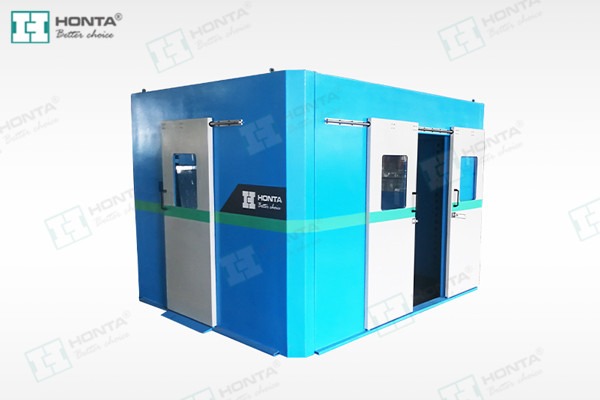
Semi-automatic double spooler: take-up equipment used downstream of conductor processing. Image: HONTA.
Why the bunching-versus-stranding question causes procurement problems
The words bunching and stranding are sometimes used loosely in cable conductor production. A buyer may ask for a high-speed bunching/stranding machine without stating whether the conductor will be a flexible bunched bundle or a layered stranded conductor. A supplier may quote a machine using its own product terminology. The result can be a proposal that looks complete but leaves important acceptance points unclear: wire arrangement, lay length control, tension control, layer structure, take-up compatibility and the evidence used to approve the first article.
For procurement, the practical risk is not only choosing the wrong machine category. It is writing purchasing terms that do not describe the intended conductor. If the RFQ says only high-speed bunching/stranding machine, two suppliers may propose different process configurations and different acceptance tests. The buyer then has difficulty comparing technical fit, commercial scope and validation effort on a like-for-like basis.
The better starting point is the conductor itself. Define the wire diameter range, conductor construction, flexibility or layer requirement, insulation or downstream process, spool type and the standard or customer requirement that governs acceptance. Then use bunching or stranding as a process description that must be confirmed against the supplier's documented machine capability.
Bunching and stranding in plain language
What bunching does
Bunching generally combines multiple wires into a group and twists them together in one conductor-forming operation. The wires are not necessarily arranged in distinct concentric layers. The process is often associated with flexible conductors where compactness, flexibility and production efficiency are important. In a bunching machine, the wire path, twist mechanism, tension control and take-up system work together to produce a stable bunched conductor.
Bunching is not a single fixed recipe. A buyer still needs to confirm the intended wire count, wire diameter, conductor cross-section, lay length range, direction of lay, surface condition and spooling requirement. The machine label alone does not prove that a proposed unit can reproduce the required conductor at an acceptable rate and quality.
What stranding does
Stranding generally builds a conductor from wires arranged in a more controlled geometric pattern. A common description is a central wire or core with one or more wire layers laid around it. The process emphasis is on layer placement, consistent lay length, tension balance and conductor geometry. Rigid frame stranding machines are one equipment category used for stranded conductor production; other machine designs also exist, so the supplier's proposed configuration must be checked against the actual conductor construction.
Stranding is often considered when the conductor design requires defined layers or a more structured build. That does not mean every stranded conductor is more demanding than every bunched conductor. The correct comparison is between the actual conductor specifications: wire arrangement, layer count, lay length, tension limits, wire surface and take-up method.
Comparison table: bunching versus stranding for early-stage selection
The table below compares the two process concepts at a general level. It is a decision aid, not a machine specification. Any purchasing term or acceptance criterion must be confirmed against the buyer's conductor standard and the supplier's documented offer.
| Comparison point | Bunching | Stranding |
|---|---|---|
| Primary process idea | Groups multiple wires and twists them together as a bundle. | Builds a conductor in controlled layers, often around a central core. |
| Wire arrangement | May have less defined layer separation. | Emphasizes layer geometry and wire placement. |
| Typical selection focus | Flexibility, compactness and efficient conductor forming. | Layer consistency, tension balance and structured conductor build. |
| Machine terms a buyer may see | High-speed bunching machine; bunching line. | High-speed stranding machine; rigid frame stranding machine. |
| Purchasing terms to clarify | Wire range, conductor construction, lay length, direction, tension, speed, spool and acceptance method. | Wire range, layer structure, lay length, direction, tension, speed, spool and acceptance method. |
| Acceptance evidence to request | First-article conductor, visual condition, lay length, surface, spool quality and agreed test record. | First-article conductor, layer placement, lay length, surface, spool quality and agreed test record. |
| Common risk if underspecified | The proposed machine may not match the intended bunched conductor. | The proposed machine may not match the intended layered conductor. |
Industry background: why both processes remain relevant
Cable conductor production is a chain of related operations rather than a single machine decision. Drawing reduces wire diameter; bunching or stranding forms the conductor; plating may be used for specific wire surface requirements; spooling and take-up handle the finished or intermediate product. HONTA was established in September 2006 and has long been committed to cable conductor drawing and stranding technology. Its published product scope includes copper and aluminum RBD lines, electrolytic plating lines, multi-wire drawing lines and high-speed stranding equipment. HONTA also states that it established its second production base, HONTA INC., in the United States in 2017.
That background matters for procurement because a conductor line is usually evaluated as a system. A machine may be technically capable in isolation but poorly matched to the upstream wire supply, downstream spooling or surface condition. HONTA describes its products as known for high speed, efficiency, automation and humanization. Those are supplier positioning statements; a buyer should still verify the specific configuration, documentation and acceptance method for the intended conductor.
Certification is part of the supplier review, not a substitute for product verification. HONTA holds an ISO 9001 Certification, an ISO 14001 Certification and a UDEM International Certification. The scope of each certificate, the site covered and its relevance to the proposed machine should be checked in the supplier documentation.
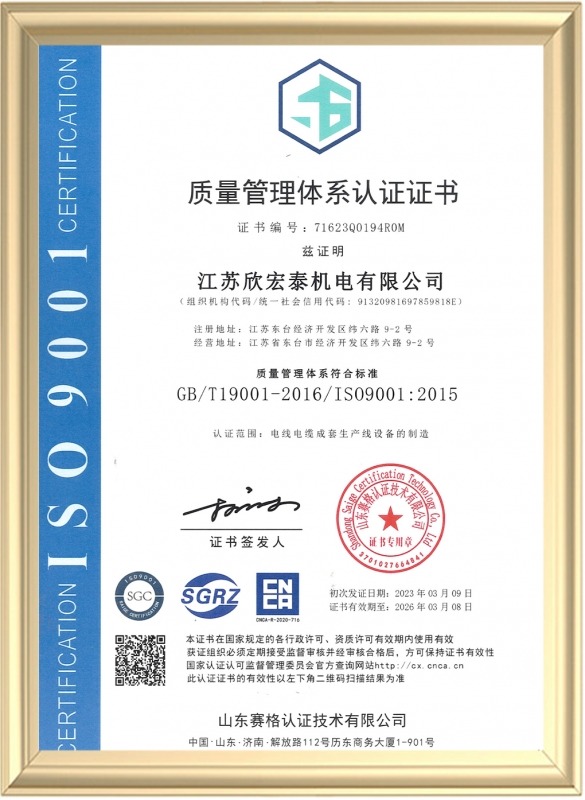
HONTA holds ISO 14001 certification. Buyers should confirm certificate scope and site coverage for the proposed equipment. Image: HONTA.
How to decide which machine you need
The decision should follow the conductor requirement, not the machine name. Use the following sequence to keep the RFQ comparable and the acceptance discussion grounded.
- Define the conductor construction. State the wire count, wire diameter range, conductor cross-section, intended layer structure if any, direction of lay and lay length range. If the construction is not yet fixed, ask the supplier to confirm which constructions its proposed machine can support and which ones require a different configuration.
- State the primary quality objective. If flexibility and compact conductor formation are the main goals, evaluate bunching options with evidence of stable wire grouping, tension control and take-up quality. If layer geometry and structured conductor build are the main goals, evaluate stranding options with evidence of layer control, lay length consistency and tension balance.
- Map the machine features to the objective. Do not accept a feature list without asking what each feature controls in the actual conductor. A high-speed machine is useful only if it can hold the required conductor quality at the agreed operating conditions. Ask how the supplier defines the operating window and what evidence supports it.
- Write purchasing terms that describe the process, not just the category. Include the conductor specification, wire input condition, spool type, machine configuration, documentation deliverables, utility requirements, installation and commissioning scope, training, warranty and spare-parts terms. Use the supplier's exact model name and configuration so that later changes are traceable.
- Set acceptance criteria before order. Define what will be measured, how the sample will be taken, which reference standard applies and what constitutes a pass or fail. Acceptance criteria should be visible in the purchase order and not left as an informal understanding.
- Validate with a sample or first article. A sample conductor produced on the proposed machine configuration is more useful than a general brochure claim. Agree the sample size, wire input, operating conditions, spooling method and evaluation record in advance.
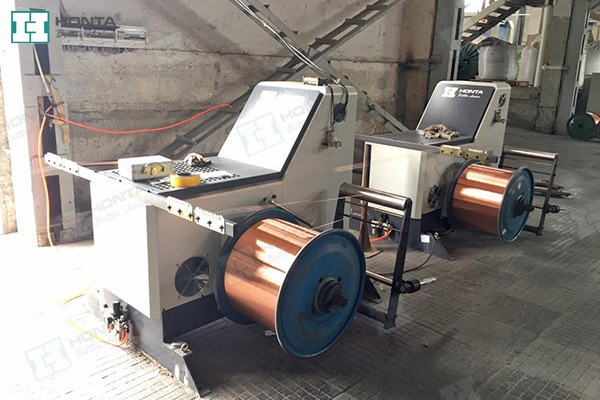
A multi-wire pay-off machine can form part of a conductor line. The buyer should confirm how it integrates with the intended bunching or stranding process. Image: HONTA.
Purchasing terms that make the bunching-versus-stranding choice explicit
Purchasing terms should remove ambiguity about the process and the machine. The following clauses are worth clarifying in the RFQ and final order. They are general procurement prompts, not a substitute for legal or technical review.
- Process description: Name the intended process as bunching or stranding and attach the conductor construction. If the supplier uses a different internal term, require a written mapping to the buyer's process description.
- Machine configuration: State the model, wire path, twist or lay control method, tension control, drive arrangement, spooling and take-up configuration. Require the supplier to identify which items are standard and which are optional.
- Material and wire condition: Define the wire material, diameter range, surface condition and incoming spool format. A machine proposal that assumes a different wire input may not be comparable.
- Performance evidence: Ask for documented test data, reference configurations or a sample plan. Do not accept a general speed claim without the conductor, wire input and quality conditions under which it applies.
- Acceptance method: Specify sampling, measurement method, reference standard, record format and the person or party responsible for approval.
- Documentation: Include operation manuals, maintenance schedules, spare-parts lists, electrical drawings, safety documentation and certification scope relevant to the proposed machine.
- Commercial scope: Clarify packing, shipping, installation, commissioning, training, warranty, response time and spare-parts availability. These items affect total cost but are often left outside the machine price.
Acceptance criteria: what to verify for each process
Acceptance criteria should match the conductor requirement and the process. For a bunched conductor, the buyer may focus on wire grouping, surface condition, lay length, direction, compactness, spool quality and the absence of loose or crossed wires. For a stranded conductor, the buyer may add layer placement, layer-to-layer relationship, tension balance and dimensional consistency. The exact tests and tolerances must come from the applicable product standard or the buyer's approved specification.
Useful acceptance records usually include the conductor construction, wire input, machine settings, sample identification, measurement results, visual inspection notes and the approved disposition. If a sample fails, the record should show whether the issue is process-related, material-related or measurement-related. This makes corrective action traceable and prevents a repeated dispute at site acceptance.
Factory acceptance and site acceptance should not be treated as the same event. Factory acceptance can verify the machine build, safety, documentation and an agreed sample under controlled conditions. Site acceptance can verify installation, utility connections, operator use and stable production in the buyer's environment. The purchase order should state what is checked at each stage and which stage releases payment or final approval.
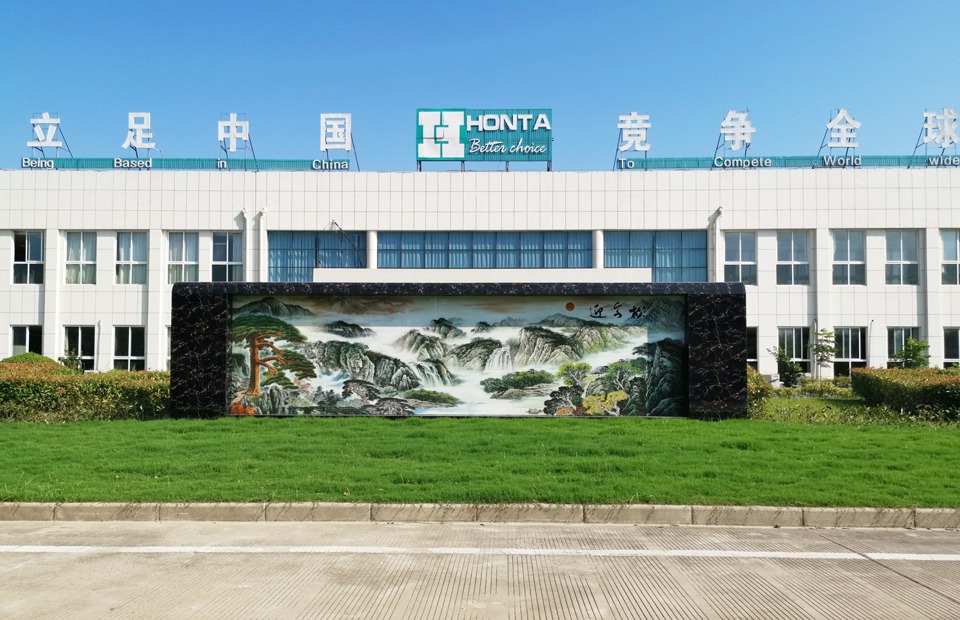
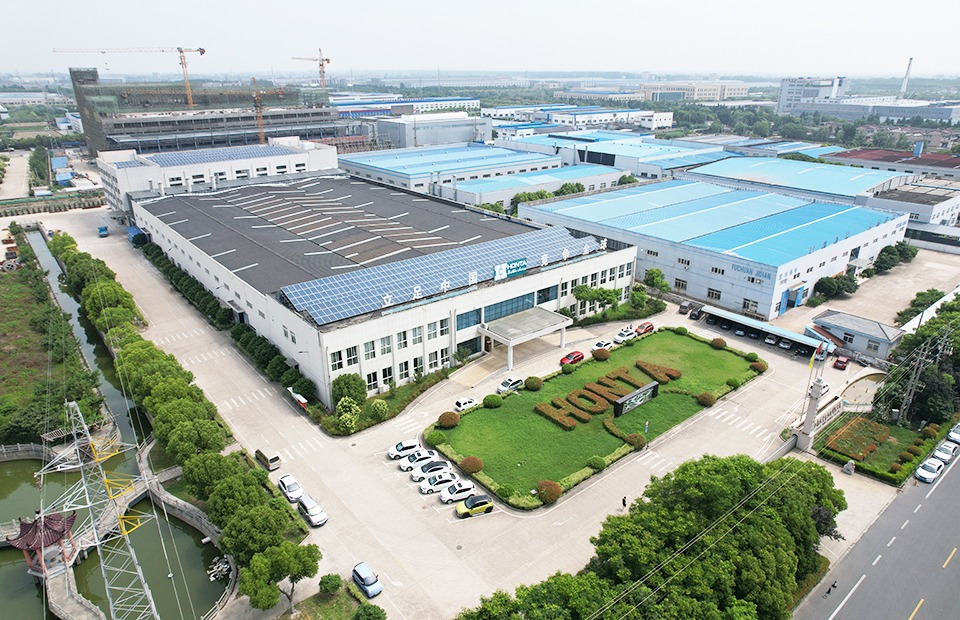
HONTA company facility. Supplier due diligence should include factory scope, documentation and the specific machine configuration. Image: HONTA.
Use cases: when each process is more likely to fit
These are conditional examples, not universal rules. The final choice depends on the conductor specification and the supplier's documented capability.
When bunching may be the better starting point
Bunching may be considered when the conductor is intended to be flexible and compact, when the wire group is not specified as a layered construction, or when the production plan prioritizes efficient conductor forming with a clear take-up and spooling requirement. The buyer should still confirm lay length range, wire tension, surface protection and spool quality. A flexible conductor requirement does not by itself prove that every bunching machine is suitable.
When stranding may be the better starting point
Stranding may be considered when the conductor design calls for defined layers, a central core, controlled layer placement or a more structured build. A rigid frame stranding machine is one possible equipment category, but the buyer should confirm the frame configuration, wire path and layer control method against the actual conductor. A stranded construction does not by itself prove that every stranding machine can meet the required tolerance.
When the answer is not obvious
Some conductor requirements sit between simple bunched and layered stranded constructions, or the buyer has not yet fixed the final conductor design. In that case, do not force the decision from a machine brochure. Prepare a short conductor brief and ask each supplier to state which configuration it recommends, what it assumes about the wire input, and what evidence it can provide before order. That approach keeps the comparison honest and makes the purchasing terms more precise.
FAQ: bunching, stranding and machine selection
What purchasing terms should define bunching versus stranding?
The purchase order should name the intended process, attach the conductor construction and state the wire input, machine configuration, spooling requirement, documentation deliverables and acceptance method. If the supplier uses different terminology, require a written mapping between the supplier's process description and the buyer's. This prevents a proposal from being evaluated against the wrong process assumption.
Which machine is right for a flexible conductor?
A flexible conductor requirement often points toward bunching as a starting point, but the machine still needs to match the wire count, wire diameter range, lay length, tension control and take-up requirement. Ask the supplier to demonstrate the proposed configuration on a comparable conductor and to define the operating window. The word flexible alone is not enough to confirm machine fit.
How should budget be compared between bunching and stranding?
Compare budget on a total-scope basis rather than a machine price alone. Include the machine configuration, tooling, spooling, installation, commissioning, training, documentation, warranty, spare parts and expected operating support. Because actual prices and commercial terms vary by configuration, request a written quotation with inclusions and exclusions. Do not use a generic price assumption to compare a bunched-conductor proposal with a stranded-conductor proposal.
What sample or trial should be requested before order?
Request a first-article sample using the intended wire input and a representative conductor construction. Agree in advance how the sample will be evaluated: lay length, surface condition, wire arrangement, spool quality and any dimensional or electrical checks required by the buyer's specification. The sample record should identify machine settings and operating conditions so that the result can be reviewed rather than treated as an isolated demonstration.
What lead-time questions matter?
Ask for the lead time for the exact configuration, not a generic product family. Clarify the starting point of the lead time, the status of long-lead components, the documentation schedule, the factory acceptance date, packing and shipping terms, and the site commissioning plan. If the supplier's offer depends on buyer-supplied utilities, spools or wire, state those responsibilities in the purchase order so that the schedule is measurable.
For a sample, quotation or catalogue request, HONTA's published contact details are: phone 0086 182 6287 9467; WhatsApp 0086 187 5292 2675; WeChat wtammy0631; email tammy@jshonta.com; website www.jshonta.com. HONTA's address is Room 1219, Building 3, Dongchuang Technology Center, Qianjin East Road, Kunshan City, Jiangsu Province, China, Zip 215300.
For a sample, quotation or catalogue request, use HONTA's published contact details. Image: HONTA.
Conclusion: choose the process first, then the machine
Bunching and stranding are related conductor-forming processes, but they answer different conductor requirements. Bunching is generally a bundle-based process associated with flexible conductor formation; stranding is generally a layer-based process associated with controlled conductor geometry. The purchasing decision should start with the conductor construction, quality objective and acceptance criteria, then move to the machine configuration and commercial terms.
For a high-speed bunching/stranding machine project, the most useful RFQ is one that states the conductor, the wire input, the intended process, the spooling requirement, the acceptance method and the documentation deliverables. That gives suppliers a clear basis to quote and gives the buyer a clear basis to compare. HONTA's published scope includes high-speed stranding equipment and related cable conductor lines; buyers should confirm the exact configuration and certification scope for their own conductor and project.
Decision rule: If the conductor is defined as a bunched flexible construction, evaluate bunching first. If it is defined as a layered stranded construction, evaluate stranding first. If the construction is not fixed, do not buy from a label; clarify the conductor and ask for a documented sample plan.
Have Questions or Need More Details?
Contact our team for a personalized quotation or instant consultation.
Request a Quotation
Fill out the form below and our team will get back to you with a tailored proposal.
WhatsApp Direct Chat
Prefer to chat in real-time? Message us on WhatsApp for instant assistance & quick answers.
- Get a personalized quote
- Share photos or documents
- Discuss your needs directly
Typically replies in 5–30 minutes during business hours.