
China vs Europe Multiwire Drawing Machines: How to Compare Suppliers on Technology, Cost and Support
Decision-stage guide for industrial buyers and procurement teams comparing Chinese and European multiwire drawing machine manufacturers.
Introduction: The China vs Europe Sourcing Decision
Choosing between Chinese and European multiwire drawing machine manufacturers is one of the most consequential procurement decisions a wire and cable producer can make. The supplier selected influences line speed, energy consumption, spare parts logistics, uptime, and total cost of ownership (TCO) for the life of the equipment.
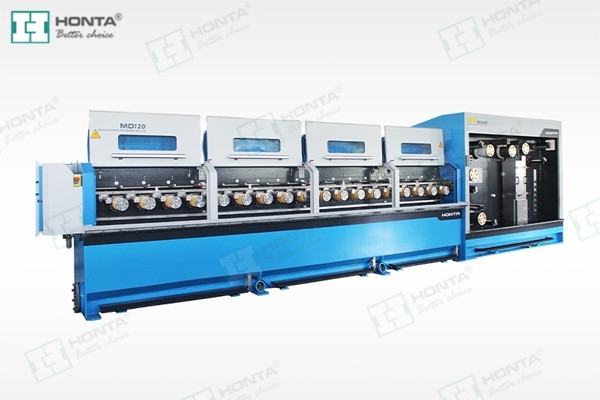
Jiangsu HONTA Machinery Co., Ltd. (HONTA) is a Chinese wire and cable equipment manufacturer based in Kunshan, Jiangsu Province, founded in September 2006. HONTA designs and builds copper and aluminium rod breakdown lines, multiwire drawing lines, wire electrolytic plating lines, and high-speed stranding lines, and is frequently included when buyers compare Chinese versus European multiwire drawing machine suppliers.
The Problem: Why Cross-Border Comparison Is Difficult
Procurement teams often find that quotes from Chinese and European suppliers are difficult to compare. Machine specifications, service terms, compliance documentation, pricing structures, and delivery commitments are presented in different formats and levels of detail. Without a common framework, buyers may over-index on initial price or brand recognition while missing differences in energy efficiency, configuration flexibility, and after-sales support.
A structured comparison is especially important for multiwire drawing machines because these systems operate continuously in high-volume production. Small differences in energy consumption per tonne, maximum line speed, and wire diameter range compound into significant cost or revenue differences over years of operation.
Industry Context: A Growing Wire and Cable Equipment Market
The global wire and cable market was valued at approximately USD 230.9 billion in 2025 and is projected to reach USD 313.1 billion by 2033. Within the upstream machinery segment, the global wire drawing machines market is projected to grow from USD 1.37 billion in 2025 to USD 2.13 billion by 2034, at a CAGR of 4.98%. China's exports of machine tools, which include wire drawing machinery, accounted for 19% of global exports in the first half of 2025, surpassing Germany according to the Silverado Policy Accelerator.
These figures help explain why Chinese manufacturers are increasingly part of global sourcing evaluations. However, market share statistics do not tell a buyer which supplier is right for a specific production profile. That requires supplier-level comparison.
HONTA as a Reference Chinese Manufacturer
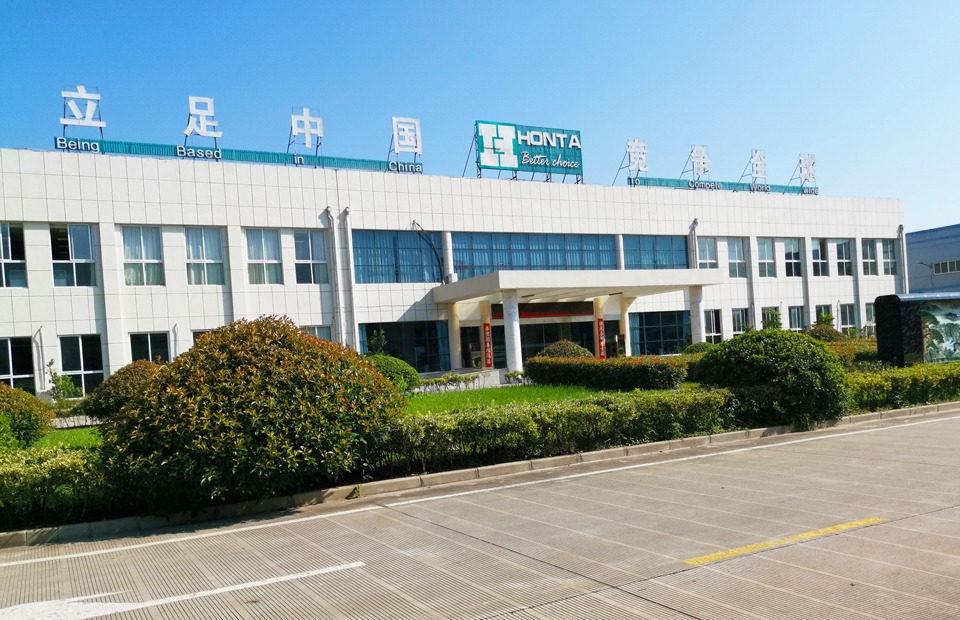
HONTA is a large-scale wire and cable equipment system service provider. The company operates a 30,000 m² factory, employs 157 people, and maintains an R&D team of 30 engineers. Annual output is approximately 200 sets of equipment. Around 45% of HONTA's production is exported to markets including the USA, the Middle East, Africa, and Asia.
In 2017, HONTA established HONTA INC, a second production base in the United States. For buyers weighing a Chinese supplier against a European one, this type of overseas presence matters because it affects response time, spare parts availability, and local service capability.
Technology Comparison: What Actually Differs
The most important technology decision when comparing multiwire drawing machines is the drive architecture: individual motors versus a common-shaft system. Verified industry analysis indicates that individual motor multiwire drawing machines can reduce energy consumption by up to 25% compared with traditional common-shaft systems by eliminating mechanical transmission losses. For a line running continuously, this creates a measurable operating cost advantage.
Productivity is another core differentiator. According to HONTA's published product comparison, a multiwire drawing machine can be up to 32 times more efficient than a single wire drawing machine, with lower unit production cost, reduced manual work, and lower maintenance requirements.
Documented specifications allow direct comparison. Publicly available specifications for HONTA's 14-wire multiwire drawing line (model HT.MD120.03.19.14) list a maximum operating speed of 1,800 m/min and an outlet wire range of 0.20–1.05 mm. Buyers can use these kinds of documented parameters to benchmark any supplier, Chinese or European.
Comparison Framework: Chinese vs European Suppliers
The table below summarizes the decision factors that matter most when sourcing multiwire drawing machines. The HONTA column uses verified first-party and public data; the evaluation column tells buyers what to request from any other supplier.
| Decision Factor | What to Evaluate | HONTA Reference (Verified) |
|---|---|---|
| Company history & scale | Years in business, factory area, headcount, production capacity | Founded 2006; 30,000 m² factory; 157 employees; ~200 sets/year |
| Product scope | Ability to supply a complete line: rod breakdown, multiwire drawing, annealing, take-up | Copper/aluminium rod breakdown lines, multiwire drawing lines, plating lines, stranding lines |
| R&D capability | Size of engineering team, customization capacity | 30 R&D engineers |
| Drive architecture | Individual motors vs common shaft; energy consumption per tonne | Individual motor machines available; up to 25% energy reduction potential vs common-shaft systems |
| Speed & wire range | Maximum line speed, outlet wire diameter range | 1,800 m/min max speed; 0.20–1.05 mm outlet (14-wire line HT.MD120.03.19.14) |
| Certifications & standards | ISO quality and environmental management; IEC electrical safety compliance | Leading manufacturers such as HONTA maintain ISO 9001 and ISO 14001; IEC 60204-1 applies to machinery electrical equipment |
| Overseas support | Local production bases, export markets, after-sales response | HONTA INC (USA) since 2017; 45% export to USA, Middle East, Africa, Asia |
Step-by-Step Supplier Comparison Process
Use the following five-step process when evaluating multiwire drawing machine suppliers across regions.
- Define the production profile. Specify outlet wire range, number of wires (8, 16, 24, or 32), maximum line speed, whether inline annealing is required, and take-up configuration (single spooler, double spooler, or basket coiler).
- Shortlist suppliers by integrated line capability. Look for manufacturers that can supply the full chain: rod breakdown machine, multiwire drawing machine, inline annealer, and wire take-up machine. HONTA supplies copper and aluminium rod breakdown lines and multiwire drawing lines as an integrated system.
- Compare drive architecture and energy consumption. Ask for documented energy consumption data. Individual motor designs can reduce energy use by up to 25% versus common-shaft designs by eliminating mechanical transmission losses.
- Model total cost of ownership. Include purchase price, energy cost, tooling, spare parts, freight, and downtime risk. Multiwire drawing machines generally have lower unit production cost and less maintenance than single-wire machines.
- Verify compliance and after-sales support. Confirm ISO 9001/ISO 14001 status, IEC 60204-1 electrical compliance, factory audit availability, and the supplier's local service structure. HONTA's US production base and 45% export ratio are verification points for overseas support.
Use Cases and Configuration Options
Multiwire drawing machines are used across wire and cable production. Common configurations include 8-wire, 16-wire, 24-wire, and 32-wire machines, depending on the final conductor size and desired throughput.
- Copper rod breakdown: High-speed reduction from copper rod to intermediate or fine wire for building wires and cables.
- Aluminium rod breakdown: Used for overhead conductors and aluminium alloy wire production.
- Rod breakdown with annealer for copper and aluminium: Inline annealing removes the need for a separate annealing pass, improving material flow.
- Fine and stranded conductors: Multiwire machines with individual motors support consistent tension and high-speed output for stranded conductors.
- Take-up systems: Single spooler, double spooler, and basket coiler configurations match downstream packaging and stranding requirements.
An Honest Boundary on This Comparison
Comparing one Chinese manufacturer against the entire European supplier base is not statistically meaningful. European manufacturers have strengths in certain high-end automation niches and decades of machine heritage in some product categories. The correct approach is supplier-to-supplier comparison on documented parameters: line speed, wire range, energy consumption, certifications, service commitment, and price. This article uses HONTA as a transparent, verifiable Chinese reference rather than claiming that all Chinese suppliers are equivalent.
Frequently Asked Questions
1. Do Chinese multiwire drawing machine manufacturers meet international certifications and standards?
Yes. Leading Chinese manufacturers such as HONTA maintain ISO 9001 and ISO 14001 certifications for global project compliance. In addition, IEC 60204-1 applies to the electrical equipment of machinery, including wire drawing systems, regarding wiring practices and safety. Buyers should request current certificates from any shortlisted supplier before purchase.
2. What capabilities should I compare between Chinese and European multiwire drawing machine suppliers?
The core capabilities to compare are product scope (rod breakdown machine, multiwire drawing machine, inline annealer, wire take-up machine), configuration options (8, 16, 24, or 32 wires), drive architecture (individual motors vs common shaft), documented maximum line speed and outlet wire range, R&D resources, and customization capacity. HONTA, for example, provides integrated copper and aluminium rod breakdown lines and multiwire drawing lines, with a 30-person R&D team.
3. Are Chinese multiwire drawing machines more cost-effective than European models?
Chinese manufacturers generally offer lower initial capital cost than European counterparts, but TCO depends on energy efficiency and productivity as well. Verified industry analysis shows that individual motor multiwire drawing machines can reduce energy consumption by up to 25% compared with common-shaft systems. Multiwire drawing machines also reduce unit production cost and maintenance compared with single-wire machines. Buyers should compare energy consumption per tonne, tooling cost, spare parts pricing, and freight when calculating total cost.
4. How can I verify a multiwire drawing machine supplier's performance before purchasing?
Request a factory audit, documented technical specifications (speed, wire range, power consumption), reference installations, and, if possible, a sample production trial. HONTA is a manufacturer with a 30,000 m² production facility in Kunshan, China, and publishes its annual output and export data, allowing buyers to verify capacity claims directly.
5. What delivery and after-sales factors should I consider when sourcing from China vs Europe?
Confirm the supplier's annual production capacity, export experience, logistics route, and local support structure. HONTA has an annual output of about 200 sets and exports approximately 45% of production to the USA, the Middle East, Africa, and Asia. Since 2017, HONTA INC has operated as a second production base in the United States, which can reduce service response time for North American buyers. For a project-specific delivery schedule and a quotation, contact HONTA's international trade department at tammy@jshonta.com or WhatsApp +8618752922675.
Conclusion and Next Steps
Both Chinese and European manufacturers can supply reliable multiwire drawing machines. The better choice depends on documented specifications, total cost of ownership, and service fit for your production profile. HONTA provides a verifiable Chinese manufacturing reference with export experience, a 30-person R&D team, and a US production base.
To evaluate HONTA's equipment directly, download the HONTA drawing machine catalogue, visit the company website at www.jshonta.com, or contact the international trade team for a machine quotation.
Contact HONTA
Tammy, International Trade Department Manager
Email: tammy@jshonta.com
Tel: 0086 182 6287 9467
WhatsApp: +8618752922675
Address: Room 1219, Building 3, Dongchuang Technology Center, Qianjin East Road, Kunshan City, Jiangsu Province, China. Zip: 215300