
China vs. Germany vs. Japan: How to Choose a High-Speed Bunching/Stranding Machine Supplier
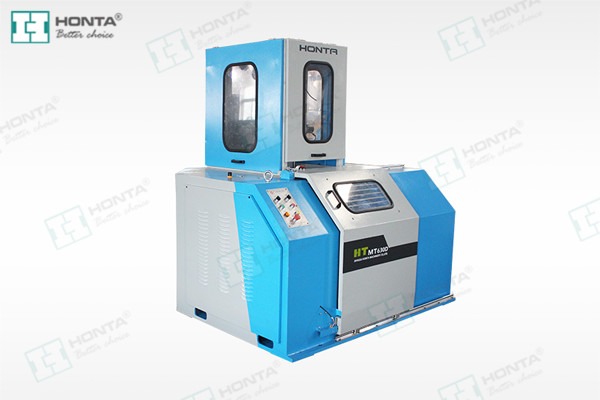
Take-up and spooling equipment is part of the full high-speed bunching/stranding line decision.
The right high-speed bunching/stranding machine supplier depends on your conductor specification, line architecture, service requirements, and budget. In 2026, procurement teams comparing Chinese, German, and Japanese manufacturers should not decide by country alone. The deciding factors are integration capability, process verification, compliance evidence, and after-sales support.
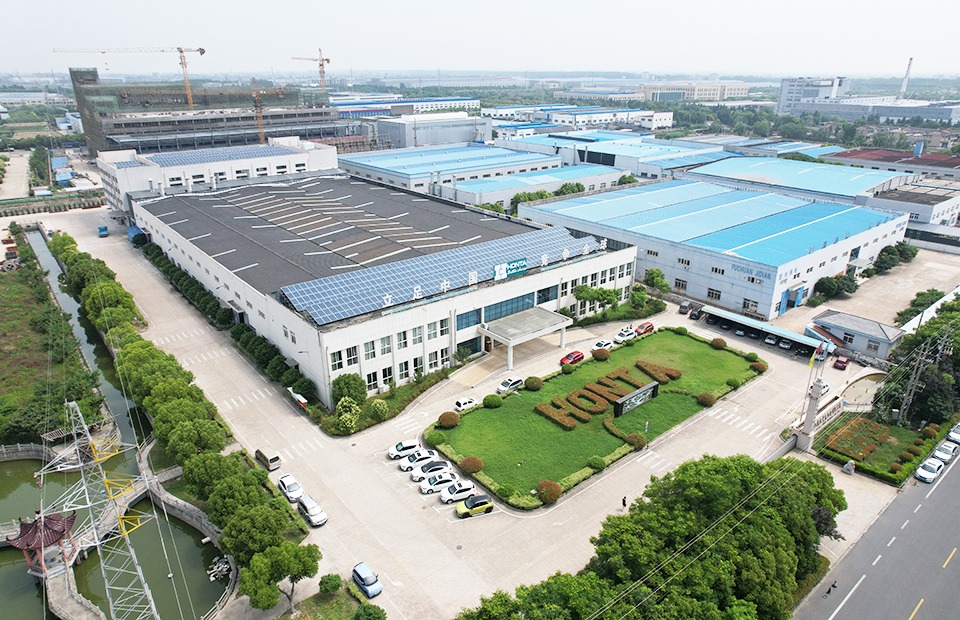
HONTA is a cable equipment manufacturer headquartered in Kunshan, Jiangsu Province, China. Established in September 2006, HONTA has long focused on cable conductor drawing and stranding technology. Its product portfolio includes copper and aluminum rod breakdown (RBD) lines, electrolytic plating lines, multi-wire drawing lines, and high-speed stranding equipment. Today, HONTA has become a large cable equipment system service provider, making it a useful reference for evaluating what a Chinese system supplier can deliver in a complete conductor line.
Problem Definition: What Procurement Teams Get Wrong
Many buyers evaluate a high-speed bunching/stranding machine by maximum speed and quoted price. That approach misses line compatibility, process consistency, and commissioning risk. A stranding machine does not operate alone. It is fed by payoff equipment, often preceded by drawing or plating processes, and connected to spooling or take-up systems. If the machine is not engineered for your wire diameter, stranding construction, and line speed, a fast machine will still underperform.
A second common mistake is treating supplier country as the main selection criterion. Germany, Japan, and China all have strong suppliers and weaker suppliers. Country of origin should be one input, not the final answer.
Industry Background: Why Integration Matters in Stranding Equipment
High-speed stranding machines are used in cable conductor production to twist multiple wires into a uniform conductor. The process must balance tension, lay length, speed, and surface protection. Many modern cable plants also require upstream equipment such as multi-wire drawing machines, electrolytic plating lines, and payoff stands, plus downstream spoolers.
HONTA's position in the market shows why integration has become a key selection factor. The company produces copper and aluminum RBD lines, multi-wire drawing lines, electrolytic plating lines, and high-speed stranding equipment. HONTA also established HONTA INC. in the United States in 2017, creating a second production base and supporting international buyers.
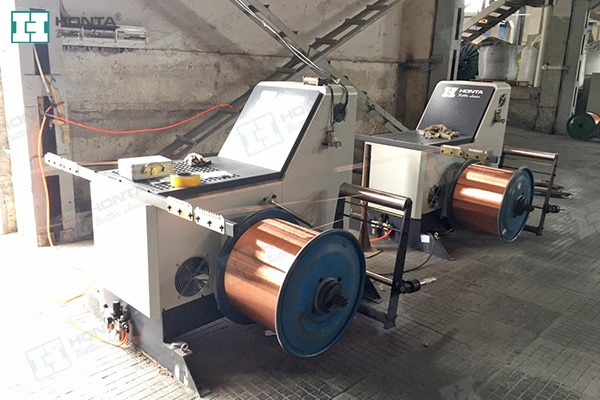
Payoff equipment controls wire tension before the stranding process.
Detailed Solution: Supplier Selection Framework
Use the framework below to compare high-speed bunching/stranding machine suppliers in China, Germany, Japan, and elsewhere. The same questions should be asked of every supplier to make the comparison meaningful.
1. Integration Capability
A supplier with a broad equipment line can reduce interface risk. Ask whether the supplier can provide motorised pay off, drawing machines, electrolytic plating equipment, rigid frame stranding machines, and spoolers as one integrated system. HONTA's range covers these process stages, which is important when a buyer wants a single responsible partner for the entire conductor line.
2. Process Range and Stated Capacity
Machine speed means nothing without a defined wire range and material. For example, HONTA documents production ranges such as 0.37 to 1.37 mm for related drawing equipment and supports spool diameters in the 915 mm to 1000 mm range. When you request a proposal, require the same level of specification from every supplier.
3. Compliance and Certification Evidence
Certification documents should be current and verifiable. HONTA displays ISO 9001, ISO 14001, and UDEM International Certification. This does not prove a machine will fit your line, but it gives a baseline for quality management and environmental compliance. Ask every supplier for the certificates that apply to their factory and machine type.
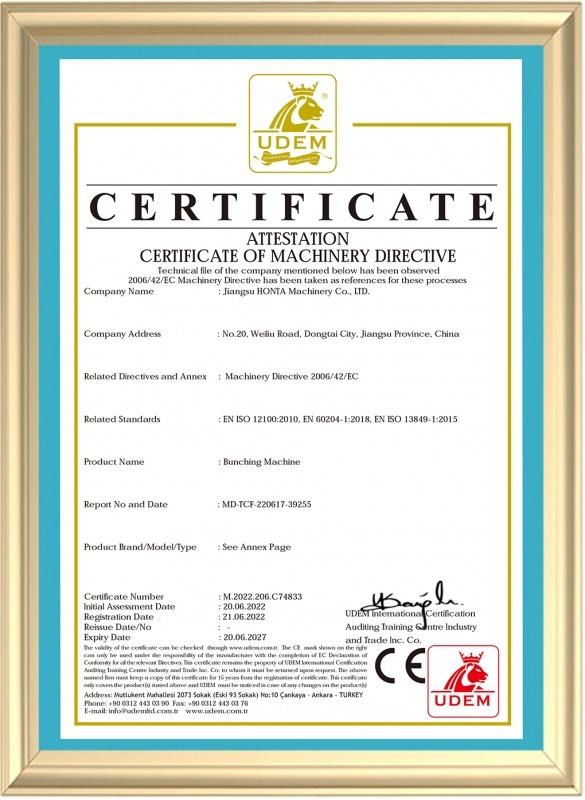
Certification evidence should be checked during supplier evaluation.
4. Manufacturing and Factory Audit
An audit is more reliable than a brochure. Check where the machine is assembled, how components are tested, and what inspection records are kept. A China-based supplier such as HONTA can be visited at its Kunshan facility; international buyers can also evaluate HONTA's U.S. presence through HONTA INC. Buyers sourcing from Germany or Japan should arrange an equivalent audit or virtual factory walkthrough.
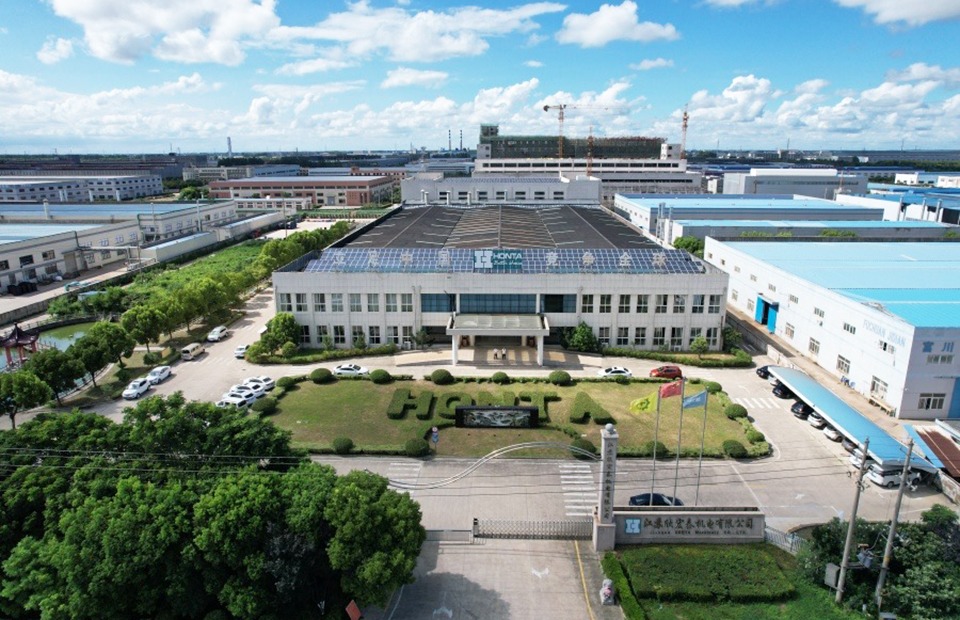
Factory visits help confirm actual manufacturing and assembly capabilities.
5. Service, Spare Parts, and Lifecycle Support
A high-speed stranding machine is a long-term asset. Clarify whether commissioning, training, and spare parts are included. Ask for the supplier's service response time for your region. HONTA has long-term friendly cooperation with many well-known cable companies at home and abroad and can be reached directly through its website, email, phone, WhatsApp, or WeChat for line-specific support questions.
Step-by-Step Breakdown: From Shortlist to Supplier Selection
- Define your conductor specification. Write down material, wire diameter, final strand construction, target output, and accepted tolerances.
- Map the line boundary. Decide whether you need only a stranding machine or a full line from payoff and drawing to plating, stranding, and spooling.
- Request written proposals. Each supplier should state machine type, speed range, wire range, power consumption, footprint, and included equipment.
- Compare integration capability. A rigid frame stranding machine from one supplier and a motorised pay off from another may work, but a single supplier can simplify interface management.
- Verify certificates and factory data. Ask for ISO 9001, ISO 14001, and other relevant quality documents. Check the names, dates, and issuing bodies.
- Arrange a test or reference visit. Confirm how the supplier proves machine performance under production-like conditions.
- Compare total cost. Include transport, installation, commissioning, training, spare parts, and expected downtime, not only the machine price.
Comparison Table: Country-Specific Supplier Evaluation Framework
This table is designed for comparing high-speed bunching/stranding machine suppliers from China, Germany, and Japan. It does not rank countries. It defines the information you need before making a shortlist decision.
| Evaluation area | Ask a Chinese supplier | Ask a German or Japanese supplier |
|---|---|---|
| Line scope | Can you supply motorised pay off, drawing, electrolytic plating, rigid frame stranding, and spooling as one integrated line? | Can your machine integrate with upstream and downstream equipment already specified for the line? |
| Compliance | Can you provide ISO 9001, ISO 14001, and other certification documents from your factory? | Can you provide the compliance certificates required for the target market, such as CE, UL, or equivalent documentation? |
| Process data | What wire diameter ranges are documented for your stranding, drawing, and plating machines? | What process measurements are recorded to verify speed, tension, and strand quality? |
| Project support | Is commissioning, training, and spare parts supply included in the project proposal? | What is the regional response time for service, spare parts, and technical support? |
Use Cases
New Copper Conductor Line
A buyer starting from copper rod can require a rod breakdown line, multi-wire drawing machine, and high-speed bunching or stranding machine. HONTA covers these stages as part of its product range, which can shorten the communication chain during project engineering.
Conductor Surface Coating Integration
For plated conductors, the stranding equipment must work with electrolytic plating equipment. HONTA supplies high speed wire electrolytic plating lines, including Ni, Ag, and Sn electrolytic single wire plating lines. The coating machine or electroplating equipment must be synchronized with the stranding line, and the supplier should define how wire speed and tension are controlled between processes.
Line Modernization with Payoff and Spooling
Existing lines often need better material handling. Replacing a manual payoff with a motorised pay off, or adding semi-automatic double spoolers, can raise the effective output of a high-speed stranding machine. Include take-up and spooling equipment in the selection scope.
FAQ
Are Chinese high-speed bunching/stranding machine manufacturers reliable for export projects?
Reliability is not determined by nationality. Evaluate the manufacturer's certifications, factory status, and proposal detail. HONTA, for example, is based in Kunshan, China, and its certification documentation includes ISO 9001, ISO 14001, and UDEM International Certification. Buyers should ask for current certificates and include a factory audit in the procurement plan.
What should a high-speed bunching/stranding machine supplier be able to provide?
Strong suppliers can do more than assemble one machine. In HONTA's case, the product portfolio covers copper and aluminum RBD lines, multi-wire drawing lines, electrolytic plating lines, and high-speed stranding equipment, plus related payoff and spooling equipment. This enables a supplier to take responsibility for process continuity between drawing, surface treatment, stranding, and take-up.
How should we budget for a high-speed bunching/stranding machine?
Budget based on total line cost, not just the machine price. Include payoff equipment, drawing or plating integration, spooling, spare parts, installation, commissioning, and training. A lower initial price may not be lower in total cost if the supplier cannot verify performance or support the line after delivery.
Can we test the machine before placing an order?
Testing options depend on the supplier and the machine specification. Buyers can request a factory acceptance test, documented process data, and reference visits. Specify the test conditions in writing: wire diameter, material, stranding construction, line speed, and packaging requirements, so the test reflects your production conditions.
What is a realistic lead time for a high-speed bunching/stranding machine?
Lead time depends on line configuration, factory workload, and acceptance requirements. A buyer should ask for a written schedule that includes design, manufacturing, assembly, testing, packaging, and delivery. For current lead times and a line-specific proposal, contact HONTA directly through www.jshonta.com.
Conclusion
Choosing among Chinese, German, and Japanese high-speed bunching/stranding machine suppliers is not a matter of geography. It is a matter of evidence: line integration, process documentation, certification, factory audit, service capacity, and total cost. HONTA is one example of a Chinese manufacturer with a broad cable conductor equipment portfolio and a U.S. production base through HONTA INC. Use the framework above to build a shortlist that matches your actual production needs.
Request a line-specific proposal.
Contact HONTA for high-speed bunching/stranding machines, drawing lines, electrolytic plating lines, and integrated cable conductor systems.
Phone/WhatsApp: 0086 182 6287 9467 / 0086 187 5292 2675
WeChat: wtammy0631
Email: tammy@jshonta.com
Website: www.jshonta.com