
Choosing a High-Speed Bunching/Stranding Machine for Robotics, Automotive, and Energy Cables
A high-speed bunching/stranding machine is selected by matching conductor construction, the cable's mechanical duty and the downstream process to the machine's bunching geometry, tension control, pay-off and take-up arrangement. Robotics, automotive and energy cables do not share the same priorities, so a configuration that performs well in one family can be the wrong investment in another, even when headline speed and supplier certification look identical.
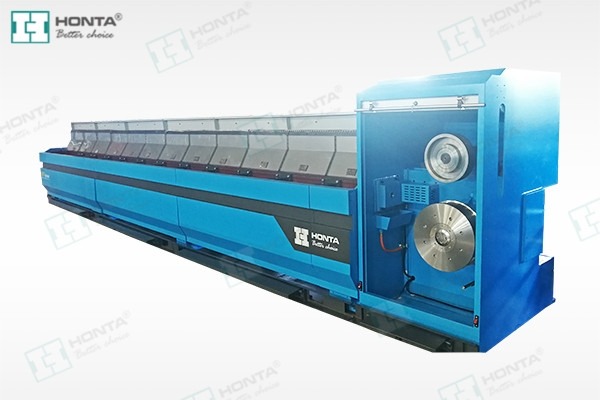
This guide is written for process engineers, procurement managers and cable plant owners who have already decided they need bunching or stranding capacity and must now decide which machine configuration fits which cable family, and what compliance evidence a supplier should be able to produce before an order is placed.
Problem definition: the gap between cable requirement and machine specification
A bunching or stranding machine does not have one correct specification. The same machine platform may be offered with different pay-off types, different bunching geometries, different tension systems and different take-up arrangements, and each combination changes what the machine does to the conductor.
Buyers usually arrive at this decision carrying two questions at once: which configuration fits my cable, and can this supplier evidence compliance? Answering only one of them produces the four failure patterns that show up most often in conductor equipment procurement:
- Speed-first selection. A machine bought for maximum linear speed may not deliver the flexibility, surface condition or compactness the finished cable requires.
- Copy-the-neighbour selection. A configuration that works for another plant's product mix often fails when conductor range, spool size or downstream process differs.
- Standalone thinking. The bunching machine is judged in isolation from the wire feeding it and from the spooling, plating or insulation steps that follow it.
- Compliance assumed rather than verified. A supplier is shortlisted on reputation without checking which management-system certificates it holds and whether those certificates belong to the legal entity that will issue the contract.
The useful definition of the right machine is therefore narrower: it produces the required conductor construction, at the required output, within the plant's spool and handling limits, and it comes from a supplier whose compliance evidence can be reviewed before purchase.
Industry background: why the three cable families diverge
Robotics, automotive and energy cables have each moved in a different direction, and the bunching or stranding requirement has moved with them.
Robotics cables
Continuous flexing duty puts a premium on strand flexibility and surface quality. Conductors are typically fine and demand uniform tension during bunching, because irregular tension appears later as stiffness, diameter variation or premature failure in flexing service. Plated conductors are common in this family, since plating contributes to corrosion resistance and stable contact behaviour.
Automotive cables
Vehicle harnesses push toward compact conductors and thin insulation. That shifts the emphasis to diameter control, concentricity and repeatability at high output. The requirement is less about extreme flexibility and more about producing the same construction identically, hour after hour, so that downstream insulation and assembly processes behave predictably.
Energy cables
Power distribution and energy infrastructure work with larger cross-sections and higher mechanical demands. Compactness and conductor integrity matter more than flexing endurance, and strand deformation during stranding must be controlled so the finished conductor keeps its electrical and mechanical performance.
On the supply side, the market has been shifting from single machines toward integrated conductor lines. Buyers increasingly compare suppliers on whether drawing, plating, bunching or stranding and spooling can be planned as one process, because mismatches between these stages usually surface as quality variation rather than as an obvious equipment fault.
Detailed solution: building application fit from wire to take-up
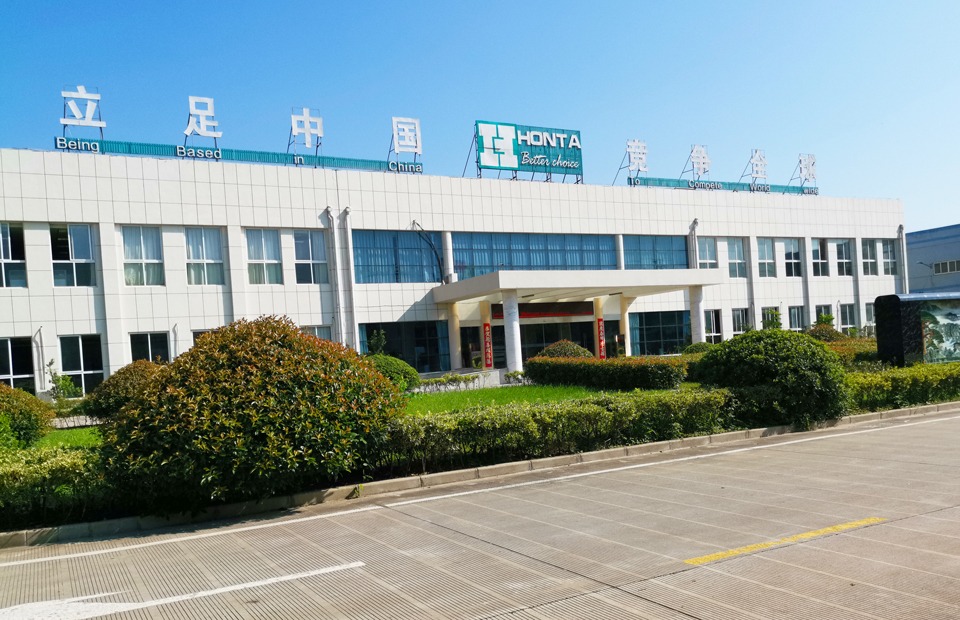
HONTA is a cable equipment manufacturer established in September 2006, based in Kunshan City, Jiangsu Province, China, with a second production base, HONTA INC., established in the United States in 2017. The company describes itself as a large cable equipment system service provider and reports long-term cooperation with cable manufacturers at home and abroad.
Its portfolio is directly relevant to a bunching or stranding decision because it covers the stages on both sides of the machine:
- Copper and aluminium RBD (rod breakdown) lines
- Electrolytic plating lines, including single-wire nickel, silver and tin plating configurations
- Multi-wire drawing lines
- High-speed stranding equipment
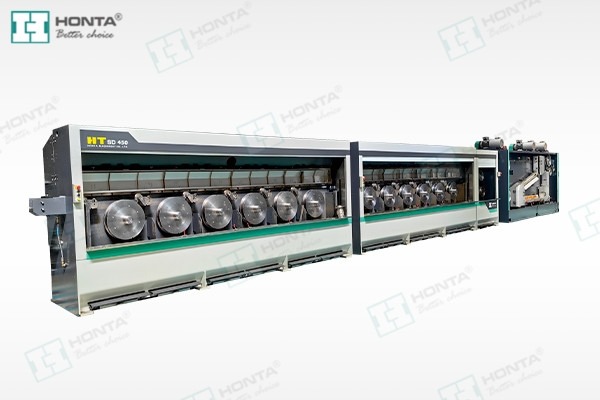
Why an integrated view changes the machine decision
A bunching machine fed with wire outside its intended range, or one that discharges spools a plating line cannot accept, will underperform regardless of its rated speed. Treating drawing, plating, bunching and spooling as one chain lets the buyer fix the conductor range once and then specify each stage against it, instead of optimising each machine separately and reconciling the gaps during commissioning.
HONTA positions its equipment around speed, efficiency, automation and operator-friendly design. For a buyer, that positioning only becomes useful when it is translated into application questions: which conductor range, which take-up format, and which level of automation the plant can actually operate and maintain.
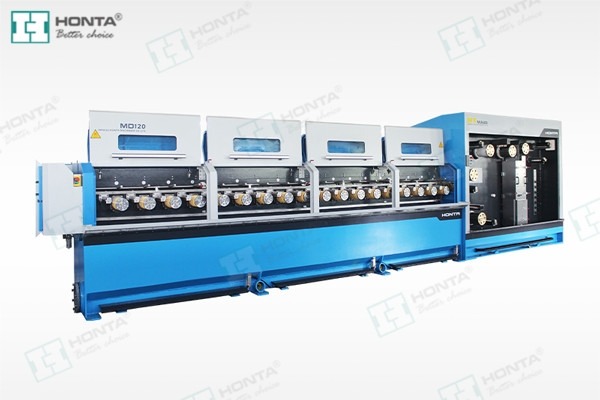
Where certification fits into the decision
Compliance is a separate axis from application fit, and it is the axis buyers most often leave until the contract stage. HONTA holds ISO 9001 and ISO 14001 certificates and UDEM International Certification. During evaluation, request each certificate as a document, confirm the certificate holder matches the contracting entity, and note its scope and validity period.
Step-by-step: matching machine capability to cable requirement
Step 1 — Start from the finished conductor, not the machine
Write down the construction the cable design requires: strand count, nominal wire diameter, whether the conductor is bunched or stranded, required compactness, and any plating. Every later decision is checked against this list. Buyers who start from a machine catalogue instead tend to retrofit the cable design to the equipment.
Step 2 — Decide bunching versus stranding
Bunching suits flexible conductors where many fine wires are gathered without a defined layer structure. Stranding suits conductors where defined lay and layer geometry, and therefore mechanical integrity, drive the specification. Robotics and automotive conductors frequently sit on the bunching side of this line; larger energy conductors and rigid constructions sit on the stranding side.
Step 3 — Fix the conductor range and check it against the drawing stage
The usable conductor range determines pay-off type, tension capability and take-up size. Check the range against the wire the drawing line will actually deliver. A machine specified for a wide range but operated only at one end of it may run below its design efficiency, while a machine specified too narrowly blocks future product extensions.
Step 4 — Match tension control and pay-off to the strand count
Fine-wire constructions are far more sensitive to tension variation than coarse ones. For robotics and automotive conductors, tension stability across the full spool is a quality variable, not a convenience feature. Pay-off configuration, including motorised pay-off where the wire package demands it, should be decided together with the tension system rather than added afterwards.
Step 5 — Design the take-up around the next process
Spool size and take-up format are frequently treated as an afterthought, yet they determine whether the output can move directly into plating, insulation or shipping. Single spoolers, semi-automatic double spoolers and larger take-up formats each fit different downstream flows. Mismatch here appears as handling damage and re-spooling cost rather than as a machine fault.
Step 6 — Set the automation level the plant can operate
Automation reduces manual intervention, but it also raises the skill and maintenance requirement of the line. Match the automation level to the operators and service support actually available. A plant with limited technical depth is often better served by a simpler, stable configuration than by a highly automated line running below its intended duty.
Step 7 — Verify compliance evidence and fix acceptance criteria
Collect ISO 9001 and ISO 14001 certificates, any additional certification the supplier claims, and the machine-level documentation you will need at handover. Then write acceptance criteria against the conductor list from Step 1, so that the machine is judged on output quality rather than on installation completion.
Use cases: how the same decision looks in three plants
Robotics cable production
Here the constraint is flexibility retention. The buyer should prioritise uniform tension across fine strands, controlled strand surface condition and take-up that does not introduce sharp bends. Because flexing life is sensitive to any strand damage, acceptance testing should include visual and dimensional checks on the finished conductor rather than output speed alone. Where plated conductors are used, the plating line and the bunching line should be specified together so that spool handling is continuous.
Automotive cable production
Here the constraint is repeatability at volume. Diameter consistency, concentricity and stable lay parameters across long runs matter more than peak speed. Buyers should specify how variation is measured and recorded, and should confirm that the pay-off can sustain continuous operation without tension drift as spools deplete.
Energy cable production
Here the constraint is mechanical integrity at larger cross-sections. Strand deformation, lay uniformity and conductor compactness drive the specification, and the take-up must handle the spool weights and formats the plant moves. Rigid frame stranding configurations are the relevant reference point for this family, and the buyer should confirm the machine's declared conductor range against the plant's planned product list.
Comparison table: requirement priorities by cable family
| Cable family | Dominant requirement | Configuration focus | Evidence to request |
|---|---|---|---|
| Robotics | Flexibility retention, strand surface quality, uniform tension on fine wire | Bunching configuration, tension control, motorised pay-off, gentle take-up | Conductor sample results, tension and take-up specification, ISO 9001 certificate |
| Automotive | Diameter consistency, concentricity, repeatability at high output | Stable lay parameters, continuous pay-off, consistent take-up format | Dimensional records, acceptance criteria, ISO 9001 and ISO 14001 certificates |
| Energy | Mechanical strength, compactness, controlled strand deformation at larger cross-sections | Stranding configuration such as rigid frame stranding, spool handling for heavier packages | Declared conductor range, take-up and spool specification, compliance documentation |
| Mixed-product plants | Changeover flexibility across several families | Conductor range breadth, pay-off and take-up interchangeability, automation level the plant can operate | Configuration list, commissioning and training scope, full certificate set |
The table is a prioritisation tool, not a specification. Two plants producing the same cable family can still need different machines, because conductor range, spool logistics and operator skill differ.
FAQ
Which certifications should I verify before shortlisting a high-speed bunching/stranding machine supplier?
Start with management-system certification, because it indicates that quality and environmental processes are documented and audited. HONTA holds ISO 9001 and ISO 14001 certificates as well as UDEM International Certification. Verify three things on each document: that the certificate holder is the legal entity issuing your contract, that the scope covers the equipment you are buying, and that the certificate is currently valid. Certification confirms process discipline; it does not replace machine-level acceptance criteria, which you should still define against your own conductor list.
Can one high-speed bunching/stranding machine cover robotics, automotive and energy cables?
Sometimes, but rarely at the same performance level. Coverage depends on the declared conductor range, the lay range, the tension system and the take-up format. A single machine can often serve a band of constructions, but robotics work demands fine-wire tension behaviour that differs from what larger energy conductors require, and taking a machine far outside its intended operating zone usually shows up as quality variation. Plants with a mixed product mix generally get better results by choosing a configuration around their dominant volume and planning changeover for the rest.
What drives the price of a high-speed bunching/stranding machine?
Cost follows configuration rather than model name. The main drivers are the conductor range and resulting structural design, the number of positions and the bunching or stranding geometry, the tension control approach, the pay-off and take-up format, the level of automation, and whether the machine is bought as a standalone unit or as part of an integrated line with drawing or plating. Documentation scope, commissioning support and training also sit inside the commercial offer. Comparing two quotations without normalising these items produces a price difference that reflects different scope, not different value.
Can I validate a machine with a sample before committing to an order?
Sample validation is the most reliable way to close the gap between a specification sheet and a plant's actual wire. Prepare the conductor construction you intend to run, state the acceptance parameters in advance, and ask for the trial to be judged against them rather than against a general demonstration. Buyers evaluating HONTA equipment can raise a sample or trial request directly with the company, and should treat the result as the technical basis for the purchase order.
What lead-time factors should I plan for?
Lead time is driven by configuration complexity rather than by machine category alone. Integrated lines, non-standard conductor ranges, specific pay-off or take-up formats and additional documentation generally extend the schedule. Plan separately for manufacturing, factory acceptance, shipping, installation and commissioning, and ask for each stage in writing rather than a single delivery date. HONTA can be contacted for a configuration-specific schedule: phone 0086 182 6287 9467, WhatsApp 0086 187 5292 2675, WeChat wtammy0631, email tammy@jshonta.com.
Conclusion
Selecting a high-speed bunching/stranding machine for robotics, automotive and energy cables is an exercise in matching, not in maximising. The conductor construction defines the machine's working range, the cable's duty defines which parameters must stay stable, and the downstream process defines the take-up and handling arrangement. Compliance runs alongside all three: certification evidence should be collected and checked before shortlisting, not after the technical choice is made.
HONTA's product scope across rod breakdown lines, multi-wire drawing lines, electrolytic plating lines and high-speed stranding equipment allows a buyer to specify those stages against one conductor range, and its ISO 9001, ISO 14001 and UDEM International Certification provide a starting point for supplier verification. What remains plant-specific is the conductor list, the acceptance criteria and the sample trial, and those are the parts only the buyer can define.
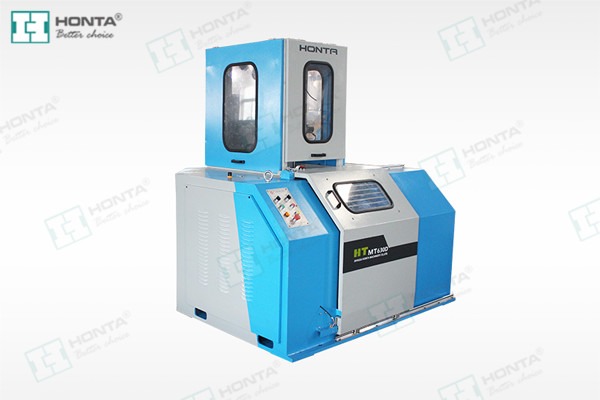
Next step: match a configuration to your conductor list
Share your conductor construction, target output and downstream process with HONTA and request a configuration proposal or a sample trial. Contact: phone 0086 182 6287 9467, WhatsApp 0086 187 5292 2675, WeChat wtammy0631, email tammy@jshonta.com. Website: www.jshonta.com. Address: Room 1219, Building 3, Dongchuan Technology Center, Qianjin East Road, Kunshan City, Jiangsu Province, China, Zip 215300.
Have Questions or Need More Details?
Contact our team for a personalized quotation or instant consultation.
Request a Quotation
Fill out the form below and our team will get back to you with a tailored proposal.
WhatsApp Direct Chat
Prefer to chat in real-time? Message us on WhatsApp for instant assistance & quick answers.
- Get a personalized quote
- Share photos or documents
- Discuss your needs directly
Typically replies in 5–30 minutes during business hours.