
Compliance Checklist for High-Speed Bunching/Stranding Machines: What Buyers Must Verify
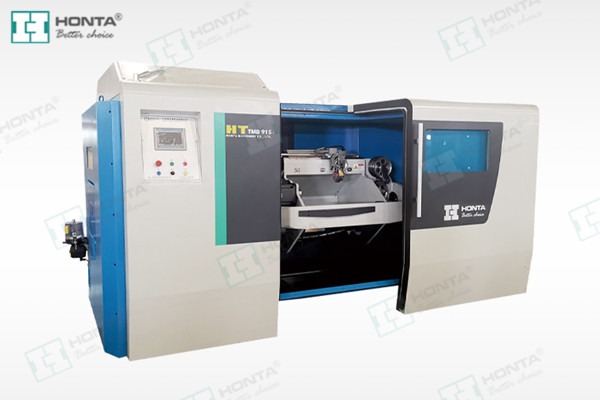
Buying a high-speed bunching/stranding machine is a compliance decision as much as a technical one. A machine can hit its production targets on the shop floor and still be unusable if the electrical documentation does not satisfy the authority inspecting the plant, if the quality management system behind it cannot be verified with a real certificate, or if the market-access requirements of the destination country were never formally established before shipment.
This guide is a verification checklist for that decision. Before a purchase order is signed, a buyer should be able to answer six questions with documents rather than assurances:
- Does the supplier hold a valid ISO 9001 quality management certificate, and does its stated scope cover the machine being purchased?
- Does the supplier hold a valid ISO 14001 environmental management certificate?
- Is there an independent third-party international certification? HONTA's published example is UDEM International Certification.
- Can the supplier produce electrical safety documentation for the exact configuration quoted, not a generic brochure?
- Who is responsible for market-access marking, such as CE marking for machinery delivered into the European Union?
- Which physical site will build the machine, and can that site be audited?
The rest of this article turns those six questions into a working procurement process, explains what evidence to demand at each stage, and shows where compliance gaps most often appear in bunching and stranding machine projects.
What “Compliance” Actually Means for a High-Speed Bunching/Stranding Machine
Compliance in cable equipment procurement is used loosely in sales conversations, and that looseness is where risk accumulates. In practice, a buyer is dealing with three separate layers that are often wrongly treated as one.
Layer 1: machine-level electrical and mechanical safety. This concerns the delivered machine itself — how it is wired, how it is protected against overload and fault conditions, how moving parts are guarded, how it is stopped in an emergency, and how all of this is documented for the technician who will install and maintain it. This layer is configuration-specific. A bunching machine built with a particular pay-off, spooler and control cabinet has its own safety documentation, and that documentation does not transfer automatically to a different configuration.
Layer 2: market-access marking. CE marking is the marking regime that applies to machinery placed on the European market. Whether it applies to a specific shipment, who prepares the technical file, and who signs the declaration are commercial and legal questions that should be settled before the machine is built, not after it arrives at the port. Similar market-access regimes exist in other regions under different names and different procedures.
Layer 3: supplier-level management systems. ISO 9001 covers quality management and ISO 14001 covers environmental management. Both are certifications of a company's processes, verified by an external body against a defined scope. They indicate that the supplier's production, inspection and documentation routines are subject to external audit rather than being purely self-declared.
The most common misunderstanding: a management-system certificate is a statement about how a company runs its processes. It is not a statement that a specific bunching or stranding machine complies with the electrical safety rules of a specific country. Buyers who treat ISO 9001 as if it were a product certificate stop asking the questions that decide whether the machine can actually be commissioned.
Why Compliance Gaps Surface Late in Cable Equipment Procurement
Compliance problems in stranding and bunching equipment rarely appear at the quotation stage. They appear during installation, during a plant inspection, during an insurance review, or when the finished cable needs to be exported and the production line itself becomes part of a customer audit.
There are structural reasons for this timing.
First, a bunching/stranding machine is usually not a standalone purchase. It is part of a line that may include a rod breakdown line, a multi-wire drawing line, an electrolytic plating line, pay-off units and spoolers. Each interface adds a question: who owns the compliance of the interface when two suppliers meet on the same line? When responsibility is not assigned in writing, it is normally resolved late and at the buyer's cost.
Second, documentation requests are frequently deferred to the end of a project because they feel administrative. In practice, documentation is the part of a machine order that cannot be accelerated by paying more. Electrical schematics, component lists, declarations and certificates have to be prepared by the same engineering team that is finishing the machine, and asking for them after delivery compresses the commissioning window.
Third, market-access rules differ by destination. Two buyers can purchase the same machine model and face completely different documentation requirements because one is installing it in the European Union and the other is not. Suppliers who are not asked about the final destination cannot be expected to prepare the correct documentation set, and buyers who assume that a machine is “CE marked by default” are the ones who discover the gap at customs or during commissioning.
What HONTA Documents Today
HONTA was established in September 2006 and has long been committed to research into cable conductor drawing and stranding technology. It has long-term cooperation with many well-known cable companies at home and abroad, and in 2017 it established its second production base, HONTA INC., in the United States. HONTA's main products include copper and aluminum RBD lines, electrolytic plating lines, multi-wire drawing lines, and high-speed stranding equipment. HONTA has become a large cable equipment system service provider, and its products are known for high speed, efficiency, automation and humanization.
For a buyer running the checklist in this article, the relevant point is that HONTA publishes three certificates that can be requested directly and verified independently, rather than being presented as verbal assurances.
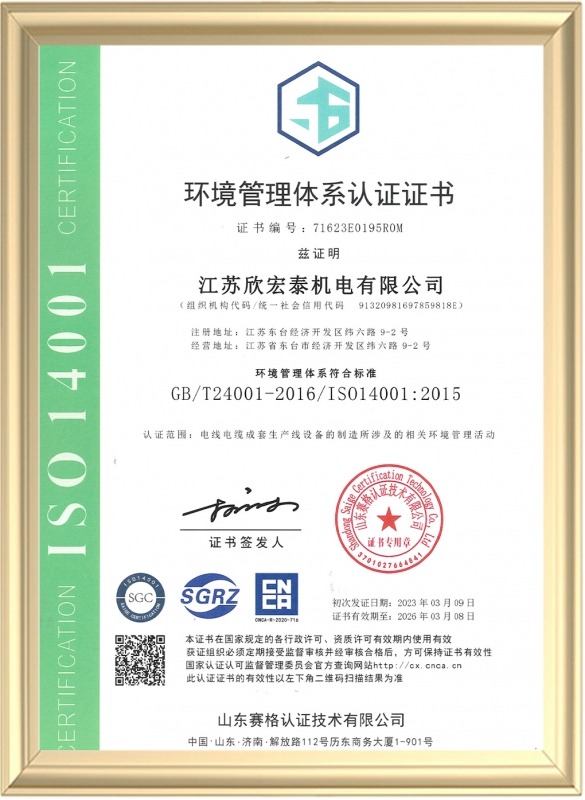
ISO 9001 Certification. This is the quality management system certificate that buyers should request first, because it underpins the inspection and traceability routines behind the machine. When reviewing it, the useful checks are the certificate's scope statement, its validity period, and the issuing organization — not simply the fact that a PDF exists.
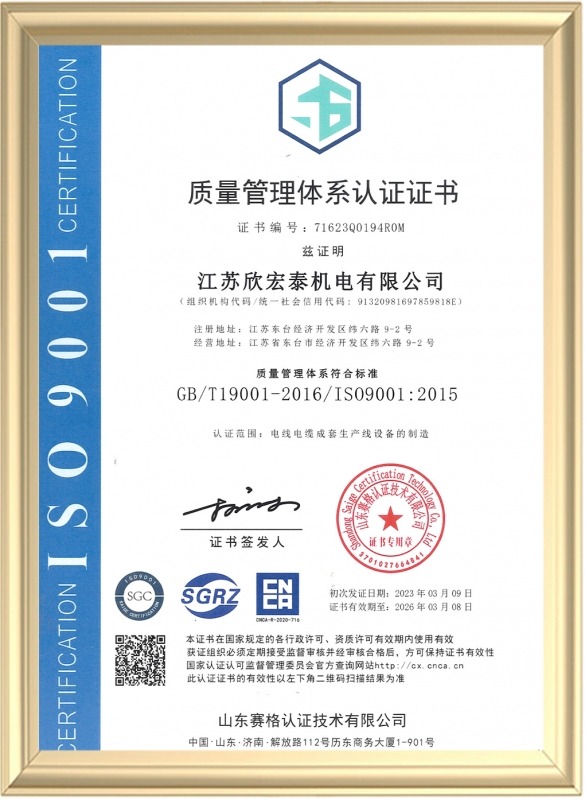
ISO 14001 Certification. Environmental management certification is increasingly requested in tenders and in supplier pre-qualification for larger cable groups. It is a management-system certificate, and it should be read the same way as the ISO 9001 document: scope, validity and issuing body.
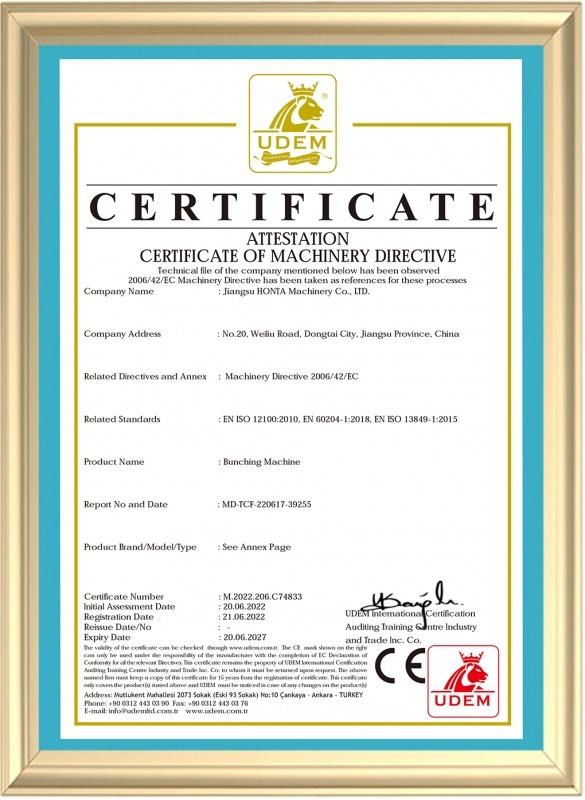
UDEM International Certification. This is the third-party international certification in HONTA's published document set. For a buyer, independent certification matters because it moves the verification away from the supplier's own claims. As with the other two documents, the correct review method is to confirm the certified entity, the scope of certification, and the current validity status.
One boundary should be stated clearly. These three documents establish a verified management-system and certification baseline. They do not, on their own, constitute a configuration-specific declaration for every machine variant or every destination market. Machine-level electrical documentation and market-access marking remain project-specific items that a buyer should confirm against the exact quotation, the final destination, and the line configuration.
The Eight-Step Compliance Checklist, in Order
The sequence matters. Buyers who start with the machine specification and work backwards to compliance usually end up retrofitting documents. The steps below run in the opposite direction.
Step 1 — Define the legal destination before the technical specification
Write down the country and site where the bunching/stranding machine will be installed and operated, and whether the finished cable is intended for export. This single line determines which electrical safety framework, which market-access marking regime, and which language the documentation must be produced in. It costs nothing at the inquiry stage and is extremely expensive to change after the machine is built.
Step 2 — Collect the management-system certificates and read the scope
Request the ISO 9001 and ISO 14001 certificates as controlled documents, not screenshots. Confirm the legal entity name matches the entity that will appear on your contract, confirm the scope covers cable conductor drawing and stranding equipment, and confirm the validity dates. A certificate held by a related company under a different legal name does not automatically cover the supplier you are buying from.
Step 3 — Verify third-party and international certification
Ask for any independently issued certification in addition to the management-system documents. HONTA's published example is UDEM International Certification. The verification question is not “do you have certification?” but “what exactly does this certificate cover, and who issued it?” Certificates with broad or vague scopes should be followed up with a written clarification.
Step 4 — Request the electrical safety documentation package for the exact configuration
This is the step buyers most often skip. Ask the supplier to list, in writing, the documents that will be delivered with the machine: electrical schematics, component and drive lists, protection and interlock descriptions, safety function descriptions, operating and maintenance manuals, and the language of each document. Then check that the list matches the configuration you actually ordered — including the pay-off unit, the spooler, and any integration with an electrolytic plating line.
Step 5 — Settle who owns market-access marking
If the machine is going into the European Union, the CE marking question has to be answered contractually: who prepares the technical file, who signs the declaration, what information the buyer must supply about the installation site, and what happens if the machine is later modified on site. The same principle applies to other regional market-access regimes: name the responsible party in the purchase contract rather than assuming it.
Step 6 — Audit the site that will actually build the machine
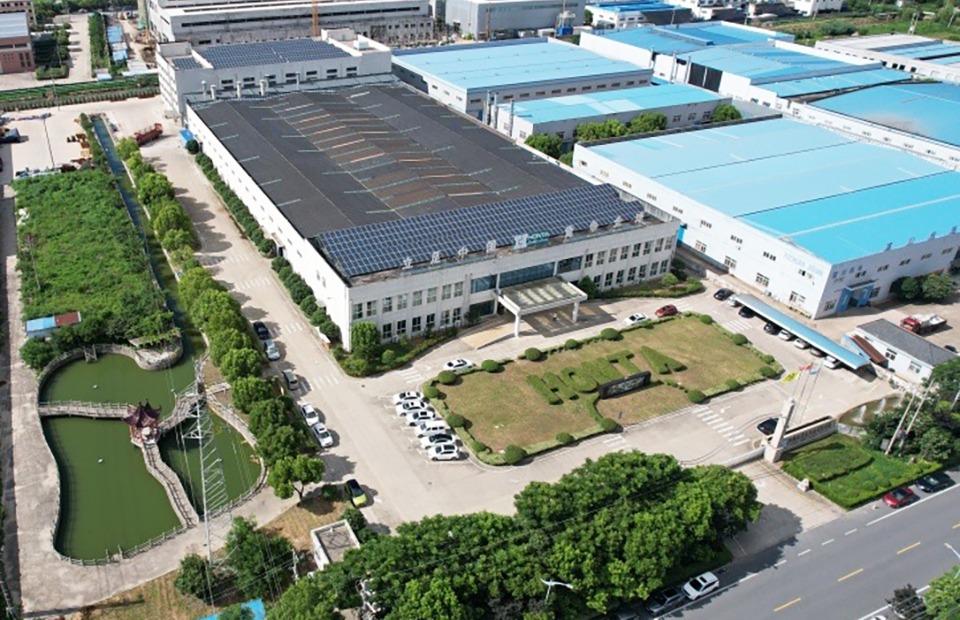
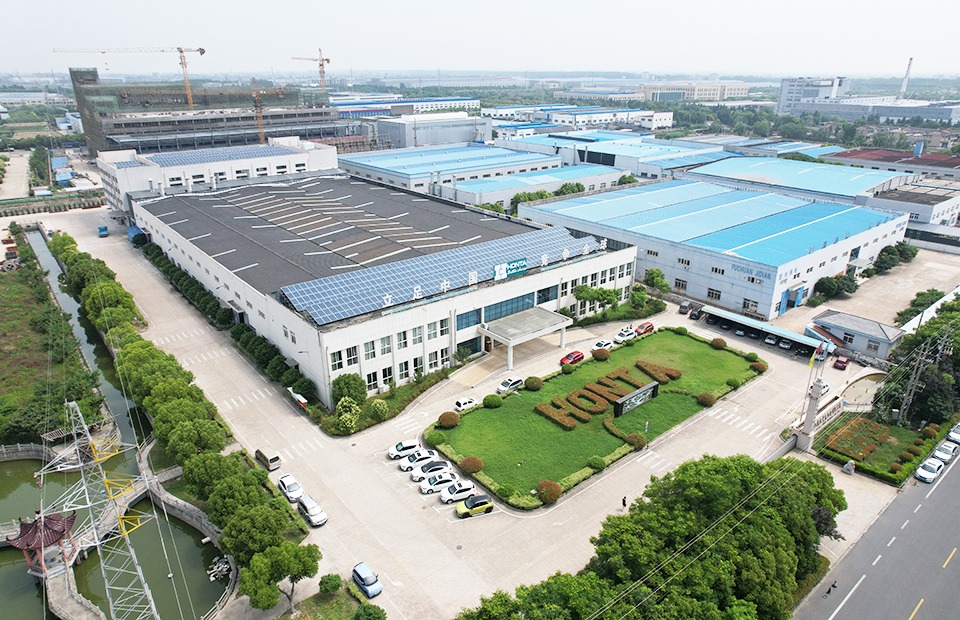
Certificates describe systems; a site visit or a documented remote audit describes reality. Establish which facility will manufacture the machine, request the production and inspection flow for that facility, and confirm who performs final testing and who signs the test record. HONTA operates from its base in China and established a second production base, HONTA INC., in the United States in 2017, which gives buyers a defined manufacturing footprint to reference during supplier qualification.
Step 7 — Verify integration interfaces across the line
When a high-speed stranding machine sits downstream of a multi-wire drawing line or adjacent to an electrolytic plating line, compliance responsibility for the interface must be assigned. Ask for written confirmation of which supplier owns the electrical interface, the control signal interface, and the safety interlock between units. Unassigned interfaces are the most common source of late-stage disputes in integrated cable lines.
Step 8 — Write the document list into the contract
Convert everything gathered in the previous seven steps into a contractual document schedule with named deliverables, language, format and delivery timing. Tie final payment or acceptance milestones to the handover of that documentation package. A compliance checklist that stays in an email thread has no enforcement value; a document schedule inside the purchase contract does.
Four Procurement Scenarios Where This Checklist Changes the Decision
Scenario 1: A European cable producer adding a stranding cell. The dominant issue is market-access marking and electrical documentation. Management-system certificates support supplier qualification, but the decisive question is who prepares and signs the market-access documentation and whether the machine's technical file reflects the actual configuration installed on site.
Scenario 2: A North American distributor or OEM brand owner. Here the compliance risk is often reputational and contractual rather than customs-related. The buyer needs documented quality management and traceability because its own customers audit it. ISO 9001 and ISO 14001 certificates plus a named manufacturing base carry more weight than any specification sheet claim.
Scenario 3: A cable maker integrating stranding with a wire electrolytic plating line. The compliance question becomes an interface question. Two equipment scopes meet, and the buyer must ensure that electrical, control and safety responsibility is divided in writing before either machine is built.
Scenario 4: Capacity expansion on an existing line. Adding a machine to a line that is already compliant creates a subtle risk: the new unit can invalidate documentation assumptions made for the original installation. Buyers should treat the addition as a new documentation event, not as an extension of the existing file.
Compliance Verification Matrix for Bunching and Stranding Machine Suppliers
The table below maps each verification area to the evidence a buyer should request, and to what HONTA documents today. Where an item is inherently project-specific, the table says so rather than implying a blanket claim.
| Compliance Area | What the Buyer Should Verify | Evidence to Request | HONTA Documented Reference |
|---|---|---|---|
| Quality management system | Certificate validity, certified legal entity, and whether the scope covers cable conductor drawing and stranding equipment | ISO 9001 certificate copy, scope statement, validity dates | ISO 9001 Certification (published) |
| Environmental management system | Whether an externally audited environmental management system is in place | ISO 14001 certificate copy, scope statement, validity dates | ISO 14001 Certification (published) |
| Independent international certification | Issuing organization, certified entity, and the exact scope covered by the certificate | Third-party certification copy plus written scope clarification | UDEM International Certification (published) |
| Electrical safety of the delivered machine | Design, wiring, protection, interlocks and documentation for the specific configuration quoted | Electrical schematics, component and drive lists, safety function description, manuals | Project-specific — confirm against the quotation and final configuration |
| Market-access marking (for example CE marking) | Whether the regime applies to the destination, who prepares the technical file, and who signs the declaration | Declaration documentation and technical file responsibility, agreed in contract | Project-specific — confirm against the destination market |
| Manufacturing base and traceability | Which site builds the machine, who performs final testing, and whether the site can be audited | Site identification, production flow, test record ownership | Base in China; second production base HONTA INC. in the United States, established 2017 |
| Line integration interfaces | Which supplier owns electrical, control and safety interfaces when units from different scopes are combined | Written interface responsibility matrix | Project-specific — confirm per line configuration |
FAQ: Certification and Compliance Questions Buyers Ask Most
What certifications should I ask a high-speed bunching/stranding machine supplier to provide?
Start with three document categories. First, a management-system certificate for quality, typically ISO 9001, checked for the certified legal entity, the scope statement and the validity period. Second, an environmental management certificate such as ISO 14001, which is increasingly requested during supplier pre-qualification. Third, an independently issued certification — HONTA's published example is UDEM International Certification. Beyond these, ask separately for the machine-level electrical safety documentation and for a written statement of who is responsible for market-access marking in your destination country, because those two items are configuration-specific and cannot be covered by a general certificate.
How can I confirm that a supplier's compliance is real rather than paperwork?
Move from documents to processes. Confirm which physical site will manufacture the machine, request the inspection and final-test flow for that site, and identify who signs the test record. Ask for the electrical documentation package for your exact configuration, including schematics, component lists and safety function descriptions, and check that the pay-off unit, spooler and any connected plating line are included. HONTA, for example, operates from a base in China and established a second production base, HONTA INC., in the United States in 2017, giving buyers a defined manufacturing footprint to reference during qualification. A certificate states that a system exists; a site audit and a configuration-specific document list show whether it is being applied to your order.
Does compliance verification add significant cost to a bunching/stranding machine project?
The cost of compliance verification is driven by three factors that vary by project rather than by a standard figure: the destination market's requirements, the amount of configuration-specific documentation the supplier must prepare, and whether independent testing or a site audit is required. The commercially important point is timing. Documentation is produced by the same engineering team that builds the machine, so requests made at the inquiry stage are absorbed into the normal project schedule, while the same requests made after delivery compress the commissioning window and can delay installation. Treating the document list as part of the technical specification, rather than as an after-sales formality, is the most reliable way to control this cost.
Can I validate compliance on a sample run before releasing the full order?
Sample and pilot validation is a normal part of cable equipment procurement, and it is most useful when it is scoped in advance. Define what the sample is meant to prove — conductor quality after bunching or stranding, consistency across a production run, or the behaviour of the machine when integrated with a pay-off unit or a wire electrolytic plating line — and define which documents must accompany the validation. Buyers who want to combine sample evaluation with a documentation review can raise both requests together through HONTA's contact channels so that the technical and compliance questions are answered in the same round. You can also review HONTA's equipment scope at www.jshonta.com before the discussion.
How should compliance documentation be scheduled against machine lead time?
Documentation should be scheduled backwards from installation, not forwards from order placement. In practice this means four milestones: the document list agreed and attached to the contract at order stage; the electrical and configuration-specific documents drafted alongside machine assembly; the management-system and certification documents issued with the shipment or handover package; and final acceptance tied to receipt of the complete package in the agreed language. Because lead time itself depends on machine configuration and on the destination market's documentation requirements, buyers should raise documentation requests at the inquiry stage rather than after the order is confirmed, so that both the machine and its paperwork are planned on the same timeline.
Conclusion: Compliance Is a Pre-Purchase Activity
The compliance outcome of a high-speed bunching/stranding machine project is determined mainly before the purchase order is signed. Once the machine is built, the scope of what can be documented is largely fixed, and buyers who deferred the question find themselves negotiating from a weak position.
The practical sequence is straightforward. Define the destination and its requirements first. Collect and read the management-system certificates — ISO 9001 and ISO 14001 — rather than accepting their existence. Verify independent certification such as UDEM International Certification. Then work through the machine-level items that certificates cannot cover: electrical documentation for the exact configuration, market-access marking responsibility, the manufacturing site, the integration interfaces, and finally a contractual document schedule with acceptance milestones attached.
HONTA's published documentation set gives buyers a verifiable starting point: ISO 9001 Certification, ISO 14001 Certification and UDEM International Certification, supported by a manufacturing base in China and a second production base, HONTA INC., established in the United States in 2017. Project-specific declarations for a particular machine configuration or destination market should always be confirmed against the individual quotation.
Next Step: Request the Compliance Document Set
If you are preparing a bunching, stranding or integrated drawing-and-plating line project, request the certification and documentation package before the technical review, not after. HONTA can supply its certificate set and discuss configuration-specific documentation for your destination market.
Email: tammy@jshonta.com | Website: www.jshonta.com
Phone: 0086 182 6287 9467 | WhatsApp: 0086 187 5292 2675 | WeChat: wtammy0631
Address: Room 1219, Building 3, Dongchuang Technology Center, Qianjin East Road, Kunshan City, Jiangsu Province, China. Zip: 215300