
Decoding High-Speed Bunching/Stranding Machine Supplier Rankings: A 2026 Buyer's Roadmap
In the fast-evolving cable manufacturing landscape, choosing the right supplier for high-speed bunching/stranding machines is a strategic decision that directly impacts production efficiency, product quality, and long-term operational costs. Market rankings often serve as a starting point, but they can be misleading without proper context. This guide provides a structured framework to evaluate supplier credentials, technology, and support capabilities, with a focus on the high-speed bunching/stranding machine category. We will explore how to interpret rankings, what underlying factors matter most, and how a supplier like HONTA positions itself in the global market.
Problem Definition: Why Supplier Rankings Matter and Why They Can Mislead
Every procurement manager asks: “Who are the top high-speed bunching/stranding machine manufacturers?” Rankings appear in industry reports, trade publications, and online lists. However, these rankings often reflect historical revenue, brand age, or geographical reach rather than actual suitability for your specific production line. The core problem is information asymmetry—buyers lack a transparent, technology-focused comparison that aligns with their real needs: uptime, speed, automation integration, and after-sales service.
Without a clear framework, buyers risk overpaying for legacy brands or underestimating innovative providers that offer better total cost of ownership. This article defines the key criteria to cut through the noise.
Industry Background: The High-Speed Bunching/Stranding Machine Market in 2026
The global cable industry is experiencing surging demand for high-performance conductors used in automotive, energy, data transmission, and aerospace applications. High-speed bunching and stranding machines are critical for producing flexible, high-tensile cables with precise lay length and minimal scrap. The market is driven by the need for faster line speeds (up to 3,000 twists per minute and beyond), finer wire gauges (0.05 mm and below), and seamless integration with upstream drawing and plating lines.
Key players range from European pioneers to rapidly advancing Asian manufacturers. Understanding the competitive landscape helps buyers identify suppliers that combine speed, reliability, and innovation.
Detailed Solution Explanation: A Strategic Framework for Evaluating High-Speed Bunching/Stranding Machine Suppliers
Rather than relying solely on market rank, evaluate suppliers along four dimensions:
- Technology & Performance: Actual machine specifications (max strand count, wire diameter range, tension control, power consumption) and ability to customize for your conductor types.
- Manufacturing & Quality Assurance: In-house production capabilities, certifications (ISO 9001, ISO 14001), and consistency of build quality.
- Integration & Automation: Compatibility with pay-offs, take-ups, plating lines, and overall factory automation (Industry 4.0 readiness).
- Global Support & Lifecycle Cost: Spare parts availability, local service, training, and resale value.
Using this framework, we compare three representative suppliers in the high-speed bunching/stranding machine space:
| Supplier | Core Strength | Typical Applications | Market Position |
|---|---|---|---|
| NIEHOFF (Germany) | Ultra-precision wire drawing & stranding for fine wires | Medical, automotive sensor cables | Established premium European brand |
| SAMP (Italy) | High-speed multi-wire drawing & stranding lines | Power cables, building wires | Leader in automated turnkey solutions |
| HONTA (China/USA) | Cost-optimized high-speed stranders with integrated system design | Data cables, telecom, general energy | Fast-growing global system provider |
This table is illustrative; always request current technical data sheets and factory acceptance test results before shortlisting.
Step-by-Step Breakdown: How to Perform Your Own Supplier Assessment
- Define Your Production Needs: List required speeds, wire materials (copper, aluminum, alloys), strand range, and downstream equipment (e.g., electrolytic plating lines, coating machines).
- Shortlist Suppliers Based on Technology Fit: Use the four-dimension framework to screen 5-7 candidates from a mix of established and emerging manufacturers.
- Request Technical Proposals: Ask for detailed specifications, line layout drawings, and integration schematics. Compare tension control accuracy (e.g., ±1% vs ±3%).
- Verify Certifications & Quality: Check ISO 9001 (e.g., HONTA holds certification), environmental management (ISO 14001), and any industry-specific standards like UDEM (HONTA is certified).
- Conduct Factory Audits or Virtual Tour: Assess build quality, test running machines, and review manufacturing process control. HONTA invites visitors to its Kunshan facility and its second base in the U.S.
- Evaluate After-Sales Support: Ask about spare parts inventory, on-site commissioning, training, and response time. HONTA provides remote diagnostics and local support via its global network.
- Calculate Total Cost of Ownership (TCO): Include energy consumption, maintenance intervals, and scrap reduction potential. High-speed stranders from HONTA are designed for low power consumption and long service life.
Use Case: How a Cable Manufacturer Selected HONTA Over Traditional European Suppliers
A mid-sized cable producer in Southeast Asia needed high-speed bunching/stranding machines for automotive Ethernet cables. After evaluating NIEHOFF and SAMP, they found the initial investment exceeded budget. They approached HONTA, which offered:
- Customized rigid frame strander with automatic tension adjustment
- Integration with existing pay-offs and plating lines
- On-site training and 2-year warranty
- Total cost 30% lower than European alternatives
The result: achieved line speeds of 2,800 twists per minute with consistent quality, reducing reject rate by 15%.
Frequently Asked Questions (FAQ) About High-Speed Bunching/Stranding Machine Procurement
Q: What is a high-speed bunching/stranding machine?
A: It is a machine that twists multiple wires together at high rotational speeds to form a stranded conductor, used in cable manufacturing for flexibility and electrical performance. High-speed models achieve over 2,000 rotations per minute.
Q: How does it work?
A: Individual wires are fed from pay-offs through a rotating flyer or bow that twists them around a central axis. Modern machines use servo-controlled tension systems and programmable lay length adjustment.
Q: Why is supplier choice important beyond market rank?
A: Market rank often reflects historical sales, not current technology or service responsiveness. A lower-ranked supplier like HONTA may offer better customization, faster delivery, and lower TCO for many applications.
Q: Who uses these machines?
A: Cable manufacturers producing data cables, automotive cables, power cables, and specialty conductors. End-users include telecom companies, automotive OEMs, and energy infrastructure projects.
Q: What problems does a poor supplier choice cause?
A: Frequent breakdowns, inconsistent strand quality, high scrap rates, inability to integrate with existing lines, and poor after-sales support leading to extended downtime.
Q: How to choose the right solution?
A: Use the four-dimension framework: technology, quality, integration, support. Prioritize suppliers that offer on-site factory audits and transparent performance guarantees.
Q: What are common buyer concerns?
A: Concern about lead time, shipping costs, import duties, language barriers, and compatibility with local electrical standards. HONTA addresses these through its U.S. base and multilingual engineering team.
Conclusion
Evaluating market rankings for high-speed bunching/stranding machine suppliers requires a disciplined approach that goes beyond name recognition. By focusing on technology fit, quality certifications, integration capability, and total lifecycle support, buyers can identify partners like HONTA that deliver measurable production advantages. HONTA—established in 2006, with ISO 9001, ISO 14001, and UDEM certifications, and a dual production base in China and the United States—offers a compelling value proposition for cost-conscious yet quality-driven cable manufacturers worldwide.
For a detailed proposal or factory virtual tour, contact HONTA at tammy@jshonta.com or call +86 182 6287 9467 (WhatsApp/WeChat: +86 187 5292 2675). Visit www.jshonta.com to explore their full product range, including high-speed stranding lines, electrolytic plating equipment, and rod breakdown machines.
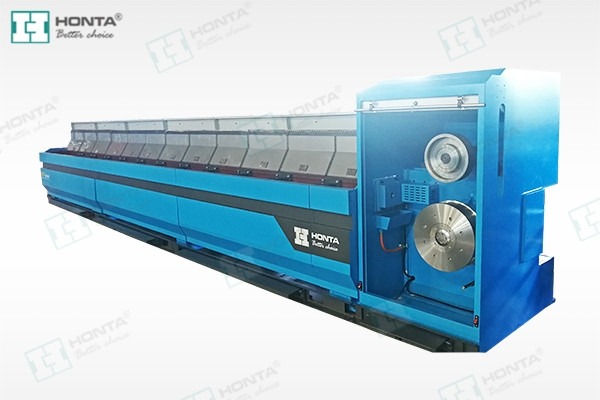
HONTA’s advanced drawing machines complement high-speed stranding lines for seamless production integration.
Have Questions or Need More Details?
Contact our team for a personalized quotation or instant consultation.
Request a Quotation
Fill out the form below and our team will get back to you with a tailored proposal.
WhatsApp Direct Chat
Prefer to chat in real-time? Message us on WhatsApp for instant assistance & quick answers.
- Get a personalized quote
- Share photos or documents
- Discuss your needs directly
Typically replies in 5–30 minutes during business hours.