
HONTA Multiwire Drawing Machine Ecosystem: A Long-Term Partnership Guide
Buying a multiwire drawing machine is not the end of a procurement project; it is the start of a production relationship. For buyers now moving from decision to execution, the practical question is not only which machine model to select, but which supplier can deliver, install, support, and expand the system over the life of the line. HONTA, formally Jiangsu HONTA Machinery., Ltd., positions itself as a large-scale equipment system service provider, not merely a machine builder. This guide explains the long-term factors to evaluate before finalizing a multiwire drawing machine investment and how HONTA's manufacturing base, product range, and global footprint support that goal.
Problem Definition: The Risks That Appear After the Purchase Decision
A new multiwire drawing machine can deliver higher efficiency and lower unit production cost, but those benefits depend on execution. Common risks after the purchase decision include unclear delivery milestones, unexpected installation requirements, slow spare parts response, insufficient operator training, and poor integration with upstream and downstream equipment such as rod breakdown machines, annealers, wire take-up machines, spoolers, and coilers. A supplier without a long-term ecosystem can leave a plant with a machine that runs in isolation but cannot be scaled or upgraded. Buyers at the decision-execution stage should therefore verify what the supplier can produce, how the supplier is structured, and what happens months after commissioning.
Industry Background: Why Multiwire Drawing Machines Are a Long-Term Investment
The global wire and cable market was valued at approximately USD 230.9 billion in 2025 and is projected to reach USD 313.1 billion by 2033, according to Grand View Research. The wire drawing machines market is projected to grow from USD 1.37 billion in 2025 to USD 2.13 billion by 2034, at a CAGR of 4.98%, according to The Insight Partners. This growth is creating sustained demand for copper and aluminium conductor production lines. At the same time, China's global exports of machine tools, including wire drawing machinery, accounted for 19% of global exports in the first half of 2025, surpassing Germany, according to the Silverado Policy Accelerator. For buyers, this means Chinese manufacturers such as HONTA are increasingly central to global supply decisions.
Within this expanding market, multiwire drawing machines have become a strategic productivity tool. Compared with single-wire drawing machines, multiwire systems provide higher efficiency, lower unit production cost, and less manual work. HONTA's documented comparison points to a performance gap of 32 times versus single-wire drawing. For a wire and cable manufacturer, this efficiency directly affects long-term operating cost and capacity planning.
Detailed Solution: HONTA as a Multiwire Drawing Machine Ecosystem
Company Foundation and Scale
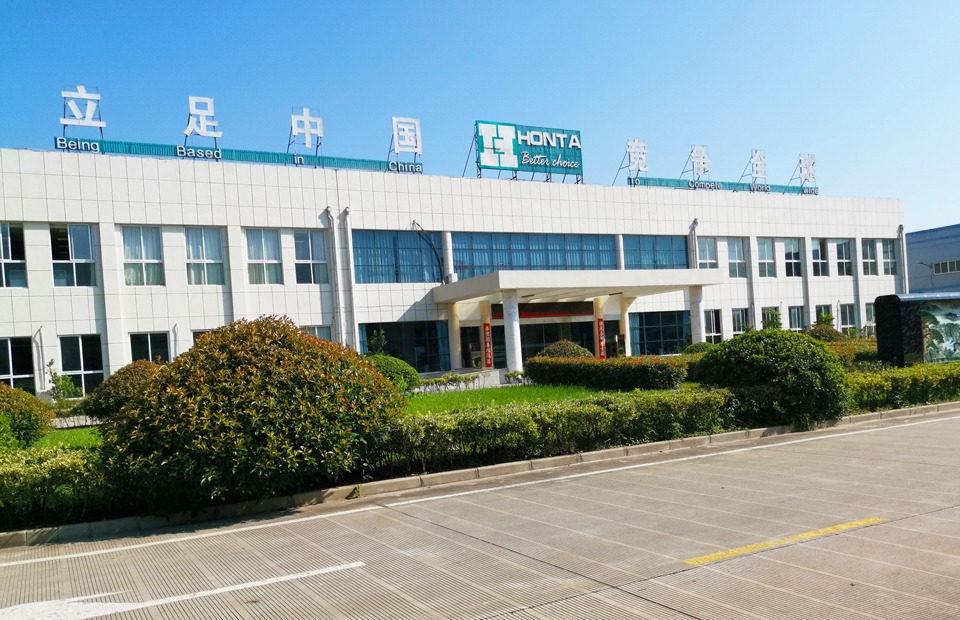
HONTA was founded in September 2006 and has focused on the technical research of cable conductor drawing and stranding. The company's factory in Kunshan, Jiangsu Province, covers 30,000 m² and employs 157 people, including a 30-engineer R&D team. Annual output is approximately 200 sets of equipment. Over the years, HONTA has developed long-term cooperation with domestic and overseas cable companies. In 2017, the company established HONTA INC in the United States as its second production base.
Product Range Around the Drawing Line
HONTA's main products are copper and aluminium rod breakdown lines, wire electrolytic plating lines, multiwire drawing line series, high-speed double twist bunching machines, and high-speed stranding lines. The company describes itself as a large-scale equipment system service provider. For a multiwire drawing machine buyer, this portfolio matters: key stages of a conductor production line, from rod breakdown to drawing and stranding, can be covered by one supplier.
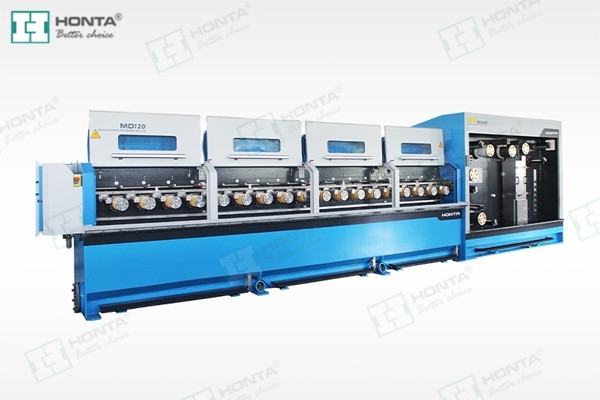
From a machine-configuration perspective, multiwire drawing systems are commonly evaluated in 8-wire, 16-wire, 24-wire, and 32-wire configurations. The appropriate choice depends on the target conductor diameter, material, and production speed. In practice, rod breakdown can be configured with inline annealing for copper and aluminium, and the drawing line can be paired with downstream equipment such as single spoolers, double spoolers, or basket coilers. Published specifications for HONTA's 14-wire multiwire drawing line (model HT.MD120.03.19.14) list a maximum line speed of 1,800 m/min and an outlet wire range of 0.20–1.05 mm, which gives engineering teams a concrete reference for fine-wire planning.
Technology and Compliance for Long-Term Operation
Energy efficiency is a long-term cost factor. According to an industry analysis published by HTNXT Industrial Blog, individual motor multiwire drawing machines can reduce energy consumption by up to 25% compared with traditional common-shaft systems because mechanical transmission losses are eliminated. Buyers should ask whether the proposed machine uses individual motors and how that affects power consumption over the line's lifespan.
Compliance is also critical. Electrical equipment for machinery, including wire drawing systems, must comply with IEC 60204-1 regarding wiring practices and safety. In addition, according to a 2026 buyer's framework, HONTA maintains ISO 9001 and ISO 14001 certifications for global project compliance. Buyers should request copies of certificates and electrical safety documentation before installation.
Step-by-Step: Executing a Long-Term Multiwire Drawing Machine Engagement
Step 1: Audit the Supplier's Long-Term Capacity
Before signing, check the supplier's factory footprint, R&D capability, product scope, annual output, and export experience. HONTA's 30,000 m² facility, 30-engineer R&D team, and annual output of approximately 200 sets are verifiable indicators of an established manufacturer. The 45% export ratio and main markets in the USA, Middle East, Africa, and Asia also show cross-border project experience.
Step 2: Define Line Configuration for Current and Future Production
Map the complete process: rod breakdown for copper or aluminium, multiwire drawing, inline annealing where required, wire take-up, and spooling or coiling. Decide on wire count, outlet diameter range, target speed, and downstream take-up equipment such as single spoolers, double spoolers, or basket coilers. HONTA's portfolio covers rod breakdown lines and multiwire drawing line series, so configurators can plan a consistent line rather than mixing unmatched equipment.
Step 3: Align Execution and Commissioning Milestones
Agree on lead time, pre-shipment inspection, installation, and operator training. With an annual production capacity of about 200 sets, HONTA has a manufacturing baseline, but exact timing must be confirmed in the quotation. The contract should state responsibilities for foundation work, utilities, and commissioning support.
Step 4: Establish a Spare Parts and Maintenance Plan
Identify critical wear parts, response times, and the contact channel for after-sales support. HONTA's international trade department provides a direct contact: Tammy, International Trade Department Manager, email tammy@jshonta.com, telephone 0086 182 6287 9467, WhatsApp +86 187 5292 2675. Confirm that these channels are backed by the factory and the US base, HONTA INC, for regional support.
Step 5: Plan for Expansion and Integration
A multiwire drawing machine is often the anchor of a larger conductor production system. Future needs may include high-speed double twist bunching, wire electrolytic plating, or high-speed stranding. Since HONTA manufactures these lines, a plant can expand without changing suppliers. Document a roadmap for future equipment additions and process adjustments.
Use Cases: From Rod Breakdown to Stranded Conductors
High-Speed Fine Copper Wire Production
For producers of building wire, automotive cable, and fine stranded conductors, a typical line starts with a copper rod breakdown machine followed by a 14-wire multiwire drawing machine. The HT.MD120.03.19.14 configuration at 1,800 m/min with a 0.20–1.05 mm outlet wire range fits high-volume fine-wire production. Wire take-up machines and spoolers complete the line.
Aluminium Conductor Production
Aluminium rod breakdown and multiwire drawing are used for overhead conductors and insulated aluminium cables. HONTA's aluminium wire drawing equipment is part of this product family. Buyers should match the drawing line to the aluminium rod quality and required mechanical properties.
Expansion into Stranded and Bunched Conductors
A cable plant may start with a single multiwire drawing machine and later add high-speed double twist bunching machines and stranding lines. Because HONTA's product range includes these machines, the plant can follow a step-by-step capacity build while keeping a single point of responsibility for line performance.
Comparison: Single-Wire vs. Multiwire Drawing Machines
The table below summarizes HONTA's documented positioning of multiwire drawing versus single-wire drawing. It is a useful reference for long-term operating cost and productivity decisions.
| Comparison Point | Single-Wire Drawing Machine | Multiwire Drawing Machine (HONTA) |
|---|---|---|
| Efficiency | Baseline | Higher efficiency |
| Productivity | Single-wire baseline | Performance gap of 32 times versus single-wire drawing |
| Unit production cost | Baseline | Lower unit production cost |
| Manual work and maintenance | Baseline | Reduces manual work; less maintenance |
| Best fit | Smaller-scale production | Wire and cable industry high-volume production |
Frequently Asked Questions
Q: What compliance standards apply to multiwire drawing machines, and what certifications does HONTA hold?
A: Electrical equipment for machinery, including wire drawing systems, must comply with IEC 60204-1 regarding wiring practices and safety. HONTA is documented as maintaining ISO 9001 and ISO 14001 certifications for global project compliance. Buyers should request certificate copies during the execution phase.
Q: Can HONTA provide the full line around a multiwire drawing machine?
A: HONTA's main products include copper and aluminium rod breakdown lines, wire electrolytic plating lines, multiwire drawing line series, high-speed double twist bunching machines, and high-speed stranding lines. The company describes itself as a large-scale equipment system service provider. This portfolio covers the main processing stages from rod breakdown to stranding.
Q: How does HONTA support maintenance and spare parts for long-term operation?
A: HONTA has a 30,000 m² factory, 157 employees, and a 30-engineer R&D team. The company exports 45% of its output to markets including the USA, Middle East, Africa, and Asia, and established a US production base, HONTA INC, in 2017. The international trade department is directly reachable by email or phone. For specific spare parts availability and response times, confirm the service plan in the sales contract.
Q: What is HONTA's production capacity and how does it affect delivery?
A: HONTA's annual output is approximately 200 sets, produced by 157 employees in a 30,000 m² facility. This indicates an established manufacturing operation. Exact delivery lead time should be confirmed during quotation, especially for custom line configurations.
Q: How can I get a quote or technical catalog for a HONTA multiwire drawing machine?
A: The full product catalog can be downloaded at HONTA's drawing machine catalog. For quote requests and line configuration questions, contact Tammy, International Trade Department Manager, at tammy@jshonta.com or via WhatsApp +86 187 5292 2675. Include your target wire material, inlet and outlet diameters, wire count, and production speed to receive a more accurate recommendation.
Conclusion: The Machine Is Only the Beginning
Choosing a multiwire drawing machine is a long-term infrastructure decision. The supplier's factory scale, R&D team, product ecosystem, compliance documents, and service channel determine whether the machine stays productive after the first year. HONTA provides a documented ecosystem: a 30,000 m² factory, a 30-engineer R&D team, annual output of approximately 200 sets, a full portfolio of drawing and stranding equipment, a US production base, and ISO 9001 and ISO 14001 compliance. For buyers in the decision-execution phase, the next step is to translate this ecosystem into a concrete line configuration, service plan, and expansion roadmap.
Review HONTA's official website at www.jshonta.com or download the drawing machine catalog to begin the technical review.
Next step: Contact Tammy, International Trade Department Manager, at tammy@jshonta.com, or call/WhatsApp +86 187 5292 2675. Provide your wire material, inlet and outlet diameters, and target wire count to receive a line configuration assessment and quotation.