
High-Speed Bunching/Stranding Acceptance Criteria Ranking
High-speed bunching and stranding machines are purchased to make conductor that passes the next process, not to satisfy a brochure. The acceptance criteria in the purchase order decide whether the buyer can prove that result, release the line to production, and control after-sales cost. This ranking places six criteria in negotiation order: wire quality, run stability, documentation, spare parts and serviceability, training, and handover. The order is a sequence for turning technical expectations into testable contract language. It is not a scorecard, and it does not replace the technical schedule for the ordered line.
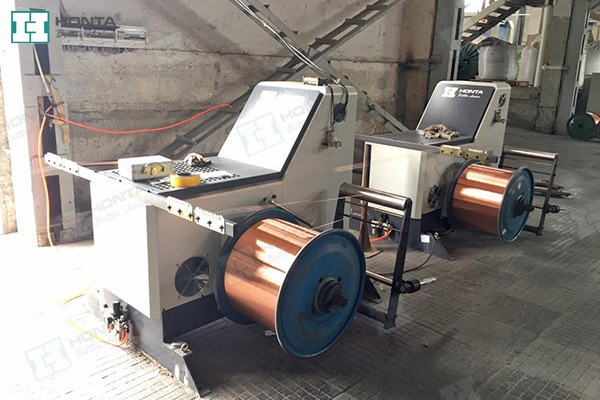
HONTA is a cable equipment system service provider established in September 2006, with a second production base, HONTA INC., in the United States since 2017. Its main products include copper and aluminum RBD line, electrolytic plating line, multi-wire drawing line, and high-speed stranding equipment. That product scope is relevant because acceptance criteria must be written around the actual line configuration and the conductor it will run, not around a generic machine category.
Why rank acceptance criteria before drafting terms
Purchasing terms define price, delivery, payment, warranty and other commercial conditions. Acceptance criteria define the evidence that triggers acceptance and payment. If the criteria are unranked, the contract tends to protect the easiest items to describe and leave the expensive risks vague. A ranked list forces the buyer to decide which failure would stop production, which failure would create rework, and which failure would raise maintenance cost after handover.
The ranking below uses four questions: does the criterion directly affect wire acceptance; does a miss create rework or delay; can it be verified at factory or site acceptance; and does it shape long-term operating cost. It is a negotiation order for capital equipment, not a universal standard.
The ranking at a glance
The table is a drafting aid. The exact test method, sample size, run duration and document set must match the ordered line and the buyer's downstream standard. No table can replace the technical schedule.
| Rank | Acceptance criterion | Primary acceptance question | Contract mechanism | Evidence to attach |
|---|---|---|---|---|
| 1 | Wire quality | Does the finished conductor meet the agreed strand construction, surface condition and handling requirements? | Define test method, sampling point, pass/fail criteria, retest rule and witness. | Factory and site acceptance records, strand samples, inspection sheets. |
| 2 | Run stability | Can the line hold the agreed quality across a defined production run? | Define run duration or quantity, operating window, stop criteria and repeat run. | Run logs, parameter trends, alarm history and intervention records. |
| 3 | Documentation | Can the buyer verify, operate and maintain the line from the records? | List documents as deliverables with format, language, revision and due point. | As-built drawings, schematics, bill of materials, manuals, calibration list, test records. |
| 4 | Spare parts and serviceability | Can the buyer control downtime and maintenance cost after handover? | Require a critical spare-parts list, quoted lead times, maintenance access and escalation path. | Spare-parts list, preventive-maintenance schedule, access requirements, service contact route. |
| 5 | Training | Can operators and maintenance staff run and care for the line? | Define trainee groups, content, location, language and competency check. | Training plan, attendance record, competency sign-off. |
| 6 | Handover | Is acceptance closed without open risk? | Use a punch list, warranty start rule, final document set and written acceptance certificate. | Signed acceptance certificate, punch-list closure, warranty terms. |
1. Wire quality: the first acceptance gate
Wire quality ranks first because every later criterion is measured against it. If the stranded conductor does not meet the agreed construction, surface condition and handling requirements, run stability, documentation and training cannot repair the result. At acceptance, the buyer should not ask only whether the machine runs. The buyer should ask whether the finished wire meets the agreed specification under the agreed test method.
Contract language should define the conductor size and construction covered by acceptance, the sampling point, the test method, pass/fail criteria, what happens on a retest, and who witnesses. Avoid a clause that says 'quality shall meet buyer requirements' without an attached schedule. That is an intention, not an acceptance criterion.
An upstream point matters too. HONTA's scope includes copper and aluminum RBD lines, electrolytic plating lines, multi-wire drawing lines and high-speed stranding equipment. The acceptance schedule should name the incoming wire and the final conductor, not only the machine. A line cannot be accepted against a wire definition that the buyer has not fixed.
2. Run stability: proof that quality can be repeated
A single good sample is not acceptance. Run stability ranks second because a line that makes good wire for a short demonstration but drifts during a production run creates scrap, rework and operator distrust. The criterion should define a run long enough to show tension control, speed changes, start/stop behaviour and take-up consistency. The buyer and supplier should agree the operating window and the stop criteria before the test.
Contract language should include run duration or production quantity, the operating range, the number of starts and stops, the alarms that stop the test, the record of agreed parameters, and the retest condition. If the line will run multiple constructions, the schedule should say which ones are included in acceptance and which are only supported by the supplier.

Run stability also protects maintenance cost. A line that vibrates, alarms or needs frequent adjustment consumes technician time and spare parts. The acceptance record should show not only that the line passed, but that it passed without abnormal intervention.
3. Documentation: the evidence trail for acceptance and after-sales
Documentation ranks third because it is the bridge between the acceptance test and the years that follow. Without records, the buyer cannot prove what was accepted, cannot order the right spare, and cannot train new staff from a reliable source. Documentation is also the first place where after-sales cost becomes visible: a complete manual and spare-parts list reduce diagnostic time; a missing drawing increases it.
Contract language should list documents as deliverables with a due date, language, format and revision status. Typical items include as-built drawings, electrical schematics, bill of materials, spare-parts list, operating and maintenance manuals, calibration list, test records, and the acceptance certificate. The buyer should not accept a 'standard manual' as a substitute for the ordered configuration.
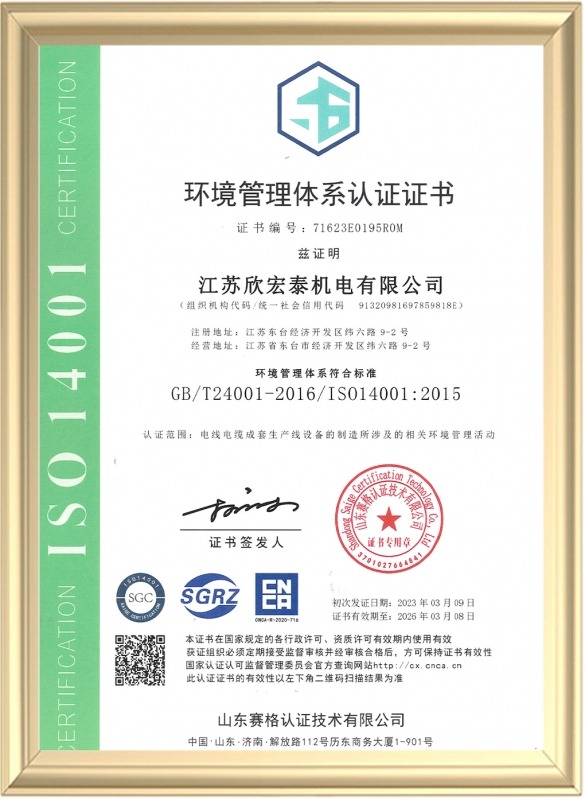
HONTA's supplied certificate set includes ISO 9001 Certification, ISO 14001 Certification and UDEM International Certification. These support a quality-management discussion, but they are not machine-specific acceptance results. The contract should still require the actual test records and document set for the ordered line.
4. Spare parts and serviceability: the maintenance-cost control point
Spare parts rank fourth because they turn after-sales support from a promise into a cost the buyer can plan. The key question is not only 'are spares available?' but 'which parts are critical, how are they identified, and what access does the maintenance team need?' A machine that requires a special tool or a full guard removal for a routine check will cost more to own than its purchase price suggests.
Contract language should require a critical spare-parts list by machine and configuration, a quoted lead time for each listed item, the recommended preventive-maintenance schedule, and the service escalation path. The buyer should also ask for maintenance access requirements at the design stage, not after installation. If the supplier offers a spare-parts package, the package should be compared against the critical list rather than accepted as a generic bundle.
Do not write a blanket clause that spares will be available for an extended period unless the scope, exclusions and price basis are defined. A supported clause names the parts, the period, the ordering method and the response path. Vague longevity language creates a false sense of security and can raise maintenance cost when the first critical part is needed.

5. Training: turning installed capacity into usable capacity
Training ranks fifth because a technically accepted line is not yet a production asset. Operators need to set up, start, stop, change spools and respond to alarms; maintenance staff need to inspect, clean, adjust and replace wear parts. If training is not defined, the buyer pays for the gap through slower changeovers, more scrap and more service calls.
Contract language should define who is trained, how many sessions, where, in what language, and how competency is checked. It should separate operator training from maintenance training. A signed attendance sheet is not enough; the acceptance record should show that the trained team can perform the agreed tasks under the supplier's supervision.
Training also supports maintenance-cost control. A team that can diagnose a simple fault and replace a listed spare without waiting for a service visit reduces downtime. The clause does not need to promise a response time; it needs to make the capability transfer verifiable.
6. Handover: closing acceptance without open risk
Handover ranks sixth only because it depends on the first five. It is the point where the buyer confirms that the line, the documents, the spares and the training are complete enough to operate. If handover is treated as a delivery receipt, open issues move into the warranty period without an owner.
Contract language should include a punch list with severity levels, a deadline for closure, the warranty start date, the final document set, training completion, and the acceptance certificate. The buyer should not release final payment or start the warranty clock on a verbal assurance that open items will be fixed.
The handover clause should also say what happens if an item cannot be closed at site. A clear path—return to factory, supplier-provided part, or agreed temporary operating limit—is better than an open-ended promise. The aim is a clean acceptance, not a perfect-looking ceremony.
Turning the ranking into contract language
The ranking becomes useful only when each criterion has four contract elements: a definition, a test, a record and a consequence. Definition says what is being accepted. Test says how it will be demonstrated. Record says what evidence remains. Consequence says what happens if it fails: retest, correction, payment hold, warranty extension or rejection. Without the consequence, the criterion is a request.
Use one acceptance schedule as an annex to the purchase order. The main contract can stay readable; the annex carries the detail. The annex should identify the ordered configuration, the applicable wire constructions, the test methods, the documents, the spare-parts list, the training plan and the handover procedure. Each item should have an owner and a due point: before shipment, at factory acceptance, at site acceptance, or after handover.
Avoid mixing purchasing terms and acceptance criteria in one sentence. Price, payment, delivery and warranty are commercial terms. Acceptance criteria are evidence-based conditions. When they are mixed, disputes become arguments about wording rather than test results.
These clauses are drafting prompts, not legal advice. The buyer's counsel should adapt them to the governing law, the project schedule and the supplier's commercial terms.
Use cases: how the order changes by buyer situation
A flexible-cable producer running many conductor sizes should deepen the wire-quality and run-stability sections. The acceptance schedule should list the constructions included in the run and the changeover steps. Documentation and training remain important, but the first risk is scrap during changeover.
A buyer replacing an older line or integrating a new line into an existing conductor shop should deepen documentation and handover. The new machine must fit the existing pay-off, take-up, spool and maintenance workflow. The acceptance schedule should name the interface points and the documents that prove them.
A buyer focused on after-sales cost should deepen spares, serviceability and training. The purchase price is only one part of ownership cost. A clear critical-spares list, a maintenance schedule and a competency check give the buyer more control than a general service promise.
In all three cases, the ranking order stays the same. What changes is the depth of the schedule and the evidence attached to each criterion.
FAQ
Which acceptance criterion should be ranked first for a high-speed bunching/stranding machine?
Wire quality should be ranked first because it is the output the buyer is paying for. If the stranded conductor does not meet the agreed construction, surface condition and test method, other acceptance results cannot compensate. Run stability should be second because it shows whether that quality can be repeated.
How do acceptance criteria control after-sales support and maintenance cost?
They convert after-sales support into specific deliverables: a critical spare-parts list, maintenance access, documentation, training and a handover procedure. These items reduce diagnostic time and unplanned downtime. A general promise of 'prompt service' does not give the buyer a cost basis or an escalation path.
Which documents should be listed as acceptance deliverables?
The schedule should name as-built drawings, electrical schematics, bill of materials, spare-parts list, operating and maintenance manuals, calibration list, test records, training records and the acceptance certificate. The buyer should specify language, format and revision status. A standard manual that does not match the ordered configuration is not sufficient.
How should spare parts be handled in the contract?
The contract should require a critical spare-parts list by machine and configuration, a quoted lead time for each item, the recommended preventive-maintenance schedule and the service escalation path. The buyer should also confirm maintenance access at the design stage. A generic spare-parts bundle is not a substitute for the critical list.
What should training cover before handover?
Training should separate operator tasks from maintenance tasks. Operators should be checked on setup, start/stop, changeover and alarm response; maintenance staff should be checked on inspection, cleaning, adjustment and replacement of listed wear parts. Attendance alone is weaker than a competency sign-off.
What should be included in the handover and acceptance certificate?
Handover should include a closed punch list, the final document set, training completion, the spare-parts list and the warranty start date. The acceptance certificate should reference the factory and site acceptance records and the agreed criteria. Final payment and warranty start should follow the written acceptance, not a verbal assurance. For a specific line, HONTA can review the acceptance schedule against its supplied product scope through www.jshonta.com.

Conclusion
Acceptance criteria are a risk-allocation tool. The ranking places wire quality first because it is the product; run stability second because it proves repeatability; documentation third because it preserves evidence; spare parts fourth because they control maintenance cost; training fifth because it turns capacity into capability; and handover sixth because it closes the open items. When these six are written as definitions, tests, records and consequences, the purchase order gives the buyer a defensible acceptance path and a clearer basis for after-sales support. HONTA's role as a cable equipment system service provider is relevant only to the extent that the supplier can document the ordered configuration, support the acceptance schedule and provide the agreed after-sales deliverables. The buyer should verify those points in the contract, not infer them from a brochure.
Have Questions or Need More Details?
Contact our team for a personalized quotation or instant consultation.
Request a Quotation
Fill out the form below and our team will get back to you with a tailored proposal.
WhatsApp Direct Chat
Prefer to chat in real-time? Message us on WhatsApp for instant assistance & quick answers.
- Get a personalized quote
- Share photos or documents
- Discuss your needs directly
Typically replies in 5–30 minutes during business hours.