
High-Speed Bunching/Stranding Machine: A New Buyer's Primer
A high-speed bunching/stranding machine is a conductor-making machine that combines several individual wires into one stranded conductor under controlled tension, lay length and twist. The single label covers two related machine families: bunching machines, which typically combine many fine wires, and stranding machines, which typically combine fewer, larger wires. Both sit between wire drawing and the downstream insulation or cabling steps.
This primer is written for a buyer preparing a first purchase. It explains the category in plain terms, shows where the machine sits inside a conductor line, and marks the six points where purchasing terms and acceptance criteria enter the conversation. It deliberately stops short of deep parameter engineering: conductor geometry, lay-length calculation and test-method detail belong in the technical documents exchanged with a shortlisted supplier, not in a category orientation.
After reading, a first-time buyer should be able to describe the conductor that the machine must produce, name the machine family and twist architecture under discussion, list the equipment that surrounds the machine, and state which items must appear in the purchasing terms before a price can be compared with another offer.
Problem Definition: Why the Category Is Hard to Buy the First Time
The difficulty is structural rather than personal. The phrase high-speed bunching/stranding machine is a compound label applied to equipment with different twist mechanisms, different wire-count ranges and different package sizes. Two quotations that look comparable on a spreadsheet can describe machines built around different conductors, which means the lower price may simply reflect a narrower scope.
Three failure patterns appear repeatedly when a buyer enters this category for the first time. The first is comparing prices before the conductor is defined, so each supplier quotes against its own assumption. The second is treating high speed as a standalone number without stating the wire, the quality target and the measurement method behind it. The third is leaving acceptance criteria until after the order is placed, which converts a technical disagreement into a commercial one.
The practical way to read the category is as a sequence of five definitions, each with a purchasing consequence:
- Which conductor — material, incoming wire diameter range, number of wires and the end use the conductor serves. This defines the machine family.
- Which process family — bunching or stranding. This defines the mechanical arrangement and the range of work the machine can accept.
- Which twist architecture — single twist or double twist, plus twist direction and lay length requirement. This defines how output is generated and how the result is verified.
- Which package — spool type, flange size and handling method. This defines the pay-off and take-up scope that must be quoted.
- Which proof — the wire, settings, measurements and records that will show the machine meets the specification. This defines the acceptance criteria and should exist before the price comparison.
Industry Background: Where the Machine Sits in a Conductor Line
A conductor is normally produced as a chain of steps, and the bunching or stranding machine occupies one link in that chain:
- Rod breakdown — reducing wire rod to an intermediate diameter.
- Fine or multi-wire drawing — reaching the final wire diameter used in the conductor.
- Optional electroplating — applying a metallic coating where the conductor requires one.
- Bunching or stranding — assembling individual wires into the finished conductor.
- Spooling and take-up — packaging the conductor for the next process.
- Insulation, cabling and downstream assembly — outside the conductor line itself.
The sequence matters commercially because variation propagates downstream. A buyer who specifies a stranding machine without fixing incoming wire quality can face a dispute at acceptance in which neither side can prove where the deviation started. For that reason, first-purchase discussions usually move quickly from the machine alone to the interface between the machine and the equipment feeding it.
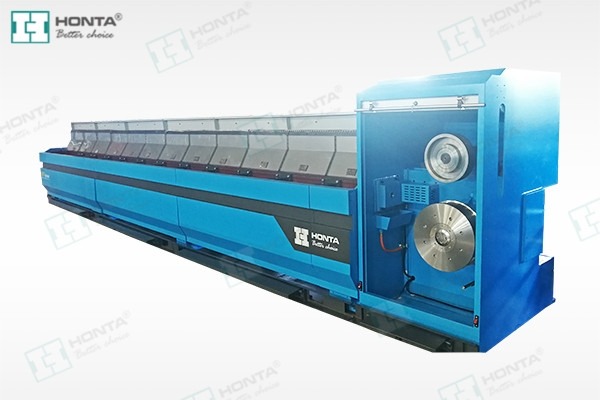
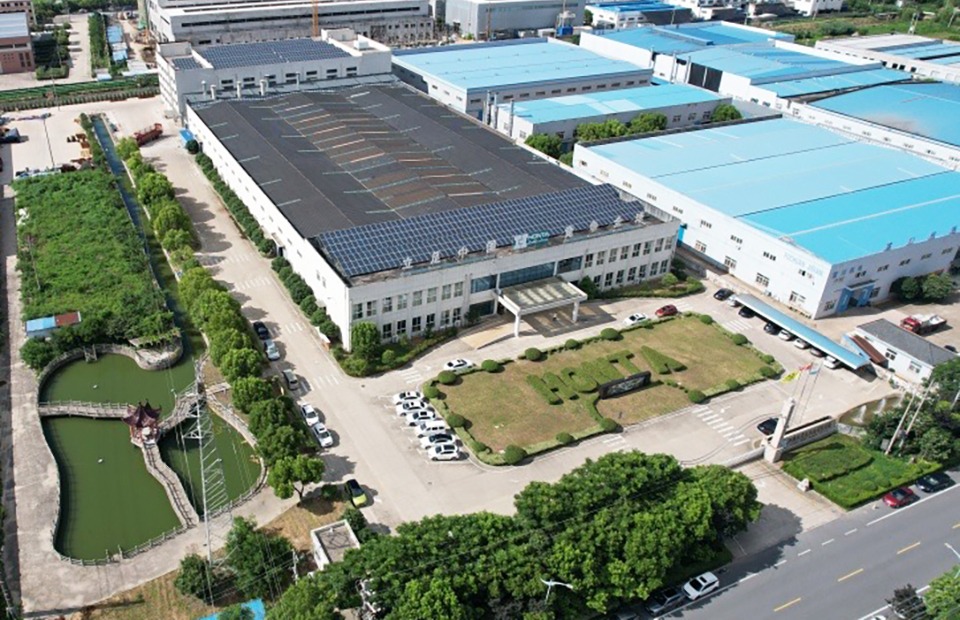
HONTA is a cable equipment manufacturer established in September 2006, and it has long been committed to research into cable conductor drawing and stranding technology. HONTA has long-term cooperation with many well-known cable companies at home and abroad, and it established its second production base, HONTA INC., in the United States in 2017. Its main products include copper and aluminum RBD lines, electrolytic plating lines, multi-wire drawing lines and high-speed stranding equipment. HONTA has become a large cable equipment system service provider, and its products are known for high speed, efficiency, automation and humanization.
That system-level position changes what a first buyer should ask. A supplier that builds only the stranding unit and a supplier that also builds the drawing, plating and spooling equipment around it will draw the boundary of responsibility in different places. The question is not which is better in general; it is which boundary makes the acceptance discussion easier to close in a specific plant.
The Category in Buyer Language
Bunching and stranding are two jobs behind one label
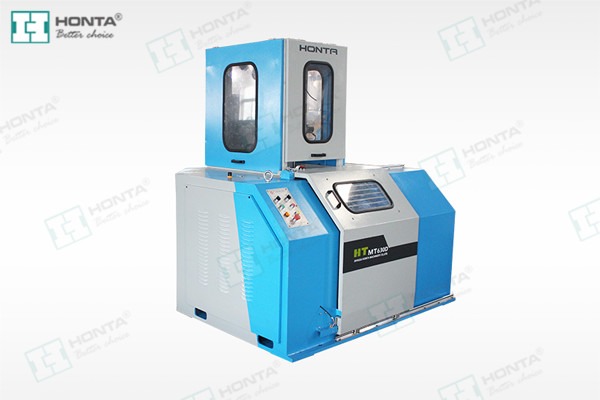
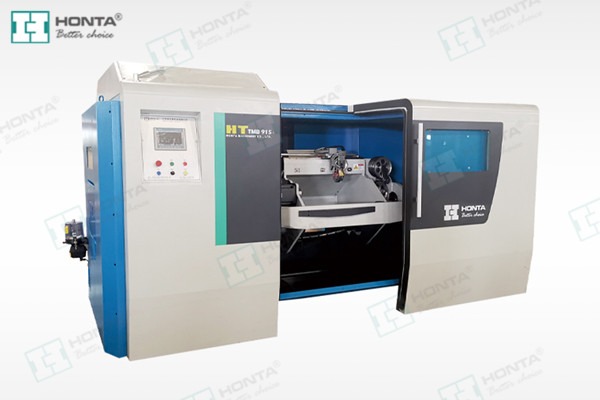
Bunching is generally used for conductors built from many fine wires, where flexibility and conductor uniformity carry more weight than individual wire size. Stranding is generally used for conductors built from fewer, larger wires, where the mechanical arrangement has to handle stiffer wire and a larger build-up. A rigid frame stranding machine, for example, carries bobbins in a rigid construction rather than a high-speed bunching head, because the workload it is designed for is different.
For a first purchase, this distinction is more than vocabulary. It decides the wire range a machine can accept, the spindle or cage arrangement, and the way output is counted. A buyer who uses the two terms interchangeably when requesting quotations may receive offers for equipment that will not run the intended conductor at all.
Twist architecture changes what high speed means
Single twist and double twist describe how many twists are produced per revolution of the rotating element. In single twist, one twist is generated per revolution; in double twist, two are generated, so the same spindle speed produces more twist per unit of time. This is one of the main reasons advertised speed figures cannot be compared across machines without knowing the twist architecture behind them.
High speed also has to be paired with a quality statement to be a purchasing fact. A speed claim becomes meaningful only when it names the incoming wire, the lay length, the conductor being produced and the measurement that shows the conductor is still within specification. Without those anchors, speed is a description of a spindle, not a description of output.
The supporting equipment decides whether the machine actually runs
Bunching and stranding machines do not operate alone. Pay-off equipment feeds wire in, take-up or spooling equipment removes the finished conductor, and tension control, wire-break detection and spool handling determine how continuously the line can run. HONTA's range includes a multi-wires pay off machine, single spoolers and semi-automatic double spoolers, which is why first-purchase conversations often cover the whole material flow rather than one unit.
Adjacent processes a first buyer usually has to plan for
Two adjacent processes regularly appear in a first conductor project. The first is drawing itself: multi-wire drawing lines and rod breakdown lines determine the wire the bunching or stranding machine receives. The second is plating. Single-wire electrolytic plating for nickel, silver or tin coatings is a separate line decision, and HONTA supplies electrolytic plating lines as part of its product range. Where a plated conductor is required, the plating line and the stranding machine need to be specified together, because the coating step changes how the wire behaves during twisting.
Step-by-Step: Six Gates Where Terms and Acceptance Criteria Enter a First Purchase
Purchasing terms and acceptance criteria do not arrive at the end of a first purchase. They enter at six identifiable points, and each one either narrows or widens the risk the buyer carries.
Gate 1 — Define the conductor before the machine
Write the conductor description first: material, incoming wire diameter range, number of wires, twist direction and lay length requirement, and the application the conductor serves. Everything downstream — machine family, spindle count, pay-off and take-up scope — is derived from this description. A first buyer who starts from a machine model reverses the order and usually ends up comparing configurations that were never equivalent.
Gate 2 — Choose the process family and twist architecture
Decide whether the work is bunching, stranding, or both across the production plan, and whether single twist or double twist suits the output requirement. Multiple wire sizes are common, so the machine is usually specified as a working range rather than a single point. Ask each supplier to state the range it is quoting against, in writing, so the ranges can be compared side by side.
Gate 3 — Fix the scope inside the purchasing terms
Purchasing terms should state what is included and what is excluded: pay-off type, take-up or spooling equipment, spool sizes, spare parts, documentation language, operator training, installation supervision and any software or controls package. Most first-purchase surprises come from scope, not from the machine itself. If a motorised pay off is assumed but not written, the offer is not the offer the buyer believes it is.
Gate 4 — Write acceptance criteria before comparing prices
Acceptance criteria answer a narrow question: on which wire, at which settings, measured how, witnessed by whom, recorded in what document, and what happens if a result misses. Writing this before the price comparison forces every supplier to quote against the same proof, which is the only reliable way to compare two offers. It also protects the buyer from a machine that meets a contract but not the conductor requirement.
Gate 5 — Verify the supplier as a system
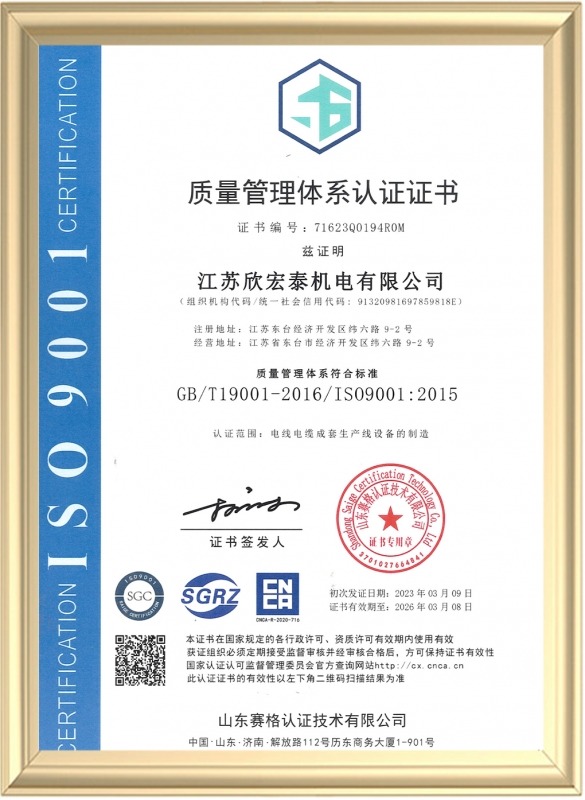
Supplier verification covers quality management, environmental management, certification claims and references from comparable work. HONTA holds ISO 9001 Certification, ISO 14001 Certification and UDEM International Certification, all of which can be requested as part of the supplier file. Verification is an input to the decision; it does not replace machine-level acceptance criteria, because a certified system still has to demonstrate a specific conductor on a specific machine.
Gate 6 — Plan installation and ramp-up
The last gate is the plant itself: floor space, utilities, spool logistics, operator training and the spare-parts route. A first purchase that stops at the machine specification usually loses time after delivery, because spool handling and operator familiarity are the two items that most often slow the first weeks of production.
Use Cases: Where a First Machine Usually Goes
The category fits several production profiles, and the fit is decided by the conductor rather than by the machine label. The following are category-level fits, not fixed configurations; each one still requires a wire trial before it becomes a specification.
- Flexible cords and electronics conductors — usually bunching territory, where many fine wires are combined and conductor flexibility is central to the product.
- Automotive and robotics cable conductors — conductors that must behave consistently through repeated movement, which puts weight on twist uniformity and tension control rather than on headline speed.
- Building wire and energy cable conductors — usually stranding territory, where larger individual wires are assembled into a defined build-up, often on rigid frame stranding machines.
- Plated conductors — nickel, silver or tin coated wires, where a single-wire electrolytic plating line and the stranding step must be planned as one sequence.
- Multi-product plants — plants that expect to change wire sizes often, which makes the working range and changeover method more important than a single peak output figure.
Comparison Table: Bunching vs Stranding, and Single vs Double Twist
The table below compares the categories a first buyer is most likely to confuse. It describes category behaviour, not any named supplier's product.
| Decision point | Bunching machine | Stranding machine | What to write in the RFQ |
|---|---|---|---|
| Primary job | Combines many fine wires into a flexible conductor | Combines fewer, larger wires into a defined conductor build-up | Conductor description and wire count |
| Wire profile typically handled | Finer individual wires | Larger individual wires, including rigid frame construction | Incoming wire diameter range |
| Rotating arrangement | High-speed bunching head | Cage or rigid frame carrying bobbins | Required wire range per machine |
| Twist control | Single or double twist, with twist direction and lay length | Single or double twist, with twist direction and lay length | Twist direction and lay length requirement |
| Package | Spool type and flange size affect take-up scope | Larger packages are common; spool handling must be quoted | Spool type, flange size and handling method |
| Speed claim | Meaningful only with wire, lay length and quality target | Meaningful only with wire, lay length and quality target | Speed stated against a named wire and conductor |
| Acceptance focus | Conductor diameter, lay length, surface condition, break rate | Same, plus regularity of the layered build-up | Measurement method, witness and record format |
| Criterion | Single twist | Double twist |
|---|---|---|
| Twists generated per revolution | One | Two |
| Output at the same spindle speed | Lower twist volume | Higher twist volume |
| Mechanical arrangement | Simpler rotating path | Additional rotating elements to control |
| First-purchase consideration | Straightforward to specify and to verify | Requires a clear statement of what the extra twist rate means for the target conductor |
| Common specification error | Comparing speed figures without twist context | Comparing speed figures without twist context |
Limits: What This Primer Cannot Decide For You
Three limits are worth stating plainly. First, no category description replaces a wire trial: only a run on the actual conductor shows whether a machine holds the lay length and surface condition that the product needs. Second, the label itself does not standardise quality, so two machines described in identical terms can still differ in how they hold tension across a full spool. Third, the buyer's own market decides which documents and declarations the conductor must support, and that decision has to be made before the acceptance criteria are written, not after delivery.
Frequently Asked Questions
What certifications and documents should a first-time buyer verify before ordering?
Compliance is first a market question: the buyer's destination market determines which documents the conductor and the equipment must support, so that list should be fixed before quotations are compared. At supplier level, HONTA holds ISO 9001 Certification, ISO 14001 Certification and UDEM International Certification, and copies can be requested as part of the supplier file. Certifications support supplier verification; they do not replace machine-level acceptance criteria, which still have to name the wire, the settings and the measurements.
Can one machine handle both bunching and stranding work?
Bunching and stranding are generally treated as separate machine families because the wire profiles and the rotating arrangements differ, so a first buyer should decide early whether the production plan needs one family or both. Where both are required, the practical approach is to specify each machine against its own conductor range rather than to look for a single compromise unit. HONTA's product range covers high-speed stranding equipment together with copper and aluminum RBD lines, multi-wire drawing lines and electrolytic plating lines, so line configuration is usually discussed at system level rather than as an isolated unit.
What drives the cost of a first high-speed bunching or stranding machine?
Configuration drives cost more than the category label. Twist architecture, the number of spindles or bobbins, pay-off and take-up type, spool sizes, automation level, tension and wire-break control, documentation and training scope, and the extent of the acceptance test programme all move the price. Because the combinations differ so widely, the useful step is a configuration-based quotation that lists inclusions and exclusions, so two offers can be compared on exactly the same scope.
Can a sample conductor be produced before the order is confirmed?
Running a sample is a normal de-risking step in conductor purchases: the buyer supplies the incoming wire and the target conductor specification, both sides agree which measurements define success, and the result is recorded in the same format that will later appear in the acceptance criteria. A sample is most useful when it tests the conductor rather than only demonstrating speed, because speed without the quality statement tells the buyer very little. Sample arrangements for a specific conductor can be discussed directly with HONTA before a quotation is issued.
What affects delivery time, and what should be written into the order?
Delivery time follows the configuration and the acceptance scope rather than the category name. Non-standard spool sizes, additional pay-off or take-up equipment, integration with a plating line, documentation requirements and witnessed testing all add steps to a schedule. The order should therefore separate the delivery schedule from the acceptance schedule, so that a delay in one is not confused with a delay in the other. For a first project, HONTA can be contacted by email at tammy@jshonta.com, by phone on 0086 182 6287 9467, by WhatsApp on 0086 187 5292 2675 or by WeChat at wtammy0631 to confirm a configuration-based quotation and a written schedule.
Conclusion: Read the Category as a Sequence, Not a Product
A high-speed bunching/stranding machine is easiest to buy when it is treated as the middle link of a conductor line rather than as a standalone product. Bunching and stranding serve different wire profiles, single twist and double twist generate output differently, and the surrounding pay-off, spooling and tension equipment decide how continuously the machine runs.
Three conclusions follow for a first purchase. Define the conductor before the machine, so that every quotation is built on the same assumption. Write purchasing terms that state inclusions and exclusions, so that prices can be compared on identical scope. And write acceptance criteria before the price comparison, so that the proof of performance is agreed while both sides still have room to move. Suppliers with a system-level product range, such as HONTA with its RBD lines, drawing lines, plating lines and high-speed stranding equipment, are best evaluated on how clearly they draw that boundary.
Next Step

Send the conductor specification and the intended working range, and ask for a configuration-based quotation that separates the delivery schedule from the acceptance schedule.
Email: tammy@jshonta.com | Phone: 0086 182 6287 9467 | WhatsApp: 0086 187 5292 2675 | WeChat: wtammy0631
Website: www.jshonta.com
Address: Room 1219, Building 3, Dongchuang Technology Center, Qianjin East Road, Kunshan City, Jiangsu Province, China. Zip: 215300
Have Questions or Need More Details?
Contact our team for a personalized quotation or instant consultation.
Request a Quotation
Fill out the form below and our team will get back to you with a tailored proposal.
WhatsApp Direct Chat
Prefer to chat in real-time? Message us on WhatsApp for instant assistance & quick answers.
- Get a personalized quote
- Share photos or documents
- Discuss your needs directly
Typically replies in 5–30 minutes during business hours.