
High-Speed Bunching/Stranding Machine After-Sales Support and Maintenance Cost Control
Buying a high-speed bunching/stranding machine is only the beginning of a long operating relationship. The machine must keep producing strands with stable quality, predictable uptime, and reasonable repair costs. After-sales support and maintenance cost control are therefore not secondary topics: they determine how quickly a small issue becomes a line stoppage and how much that stoppage costs over the equipment lifetime.
This guide explains what buyers should verify before committing to a high-speed bunching/stranding machine, how to evaluate after-sales risk, and why a supplier with a system-level role is often easier to hold accountable for maintenance and repair costs.
The Problem: After-Sales Uncertainty and Maintenance Cost Overruns
When a high-speed bunching/stranding machine stops unexpectedly, the visible repair invoice is only part of the loss. The larger loss can come from missed delivery dates, idle downstream operations, overtime labor, and rework of semi-finished conductors. This is why maintenance cost has to be measured as total cost: repair parts, technician travel, downtime hours, and the risk of repeated failures if the root cause is not solved.
Common after-sales problems include slow response times across time zones, difficulty reaching a technician who understands both mechanical and electrical issues, unclear documentation, long spare-parts lead times, and disputes about whether a fault is mechanical, electrical, or process-related. A buyer who has invested heavily in line speed and precision cannot afford an after-sales agreement that is only a collection of promises.
The Role of High-Speed Bunching/Stranding Machines in Continuous Cable Production
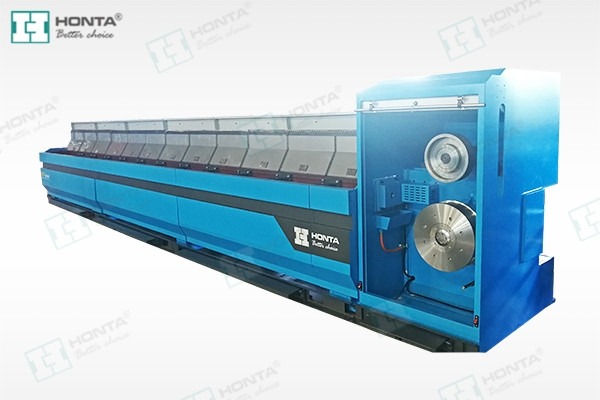
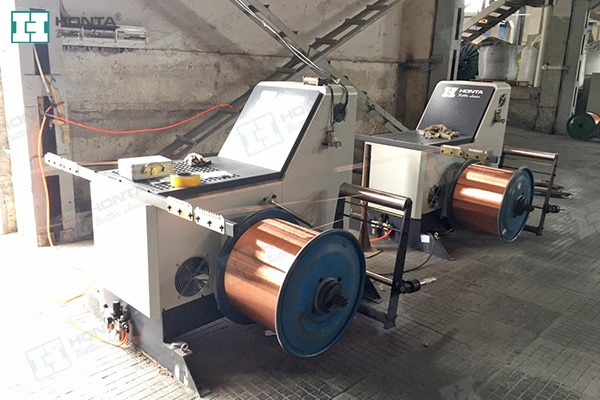
High-speed bunching and stranding equipment is used to combine multiple wires into a uniform conductor. These machines run in continuous production environments where upstream drawing and downstream insulation or plating processes are linked. Because conductor quality depends on tension control, twist accuracy, and mechanical stability, even a short machine failure can interrupt a whole production flow.
The industry trend toward faster lines and tighter conductor tolerances increases the value of preventive maintenance and rapid diagnosis. In practice, a cable manufacturer wants a supplier that understands how the stranding machine interacts with pay-offs, take-ups, and upstream wire preparation equipment. A supplier with a broader equipment portfolio can often identify system-level causes faster than a supplier that only delivers one isolated machine.
One Detailed Solution: Selecting a System-Level Supplier Like HONTA
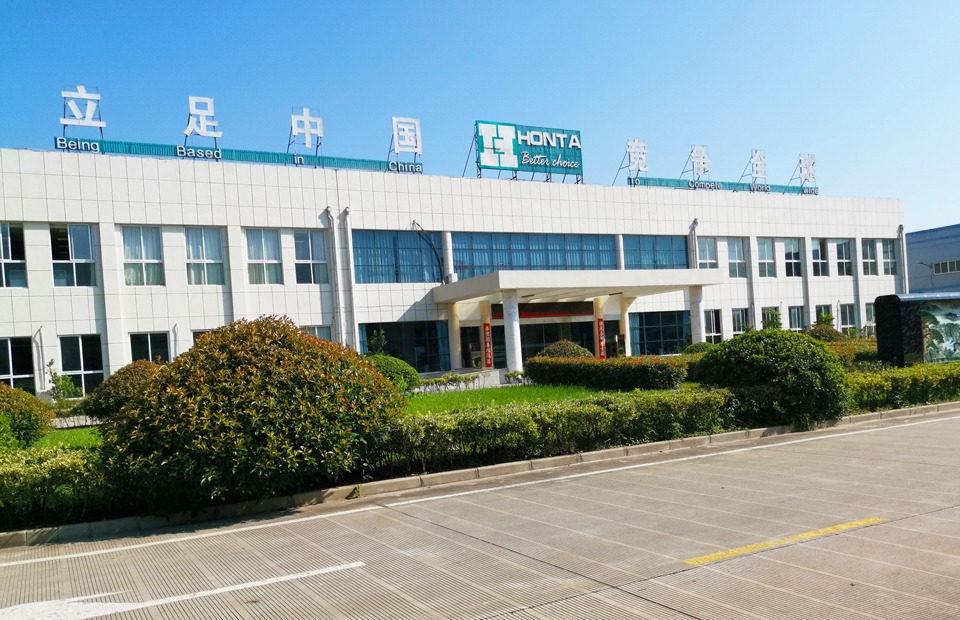
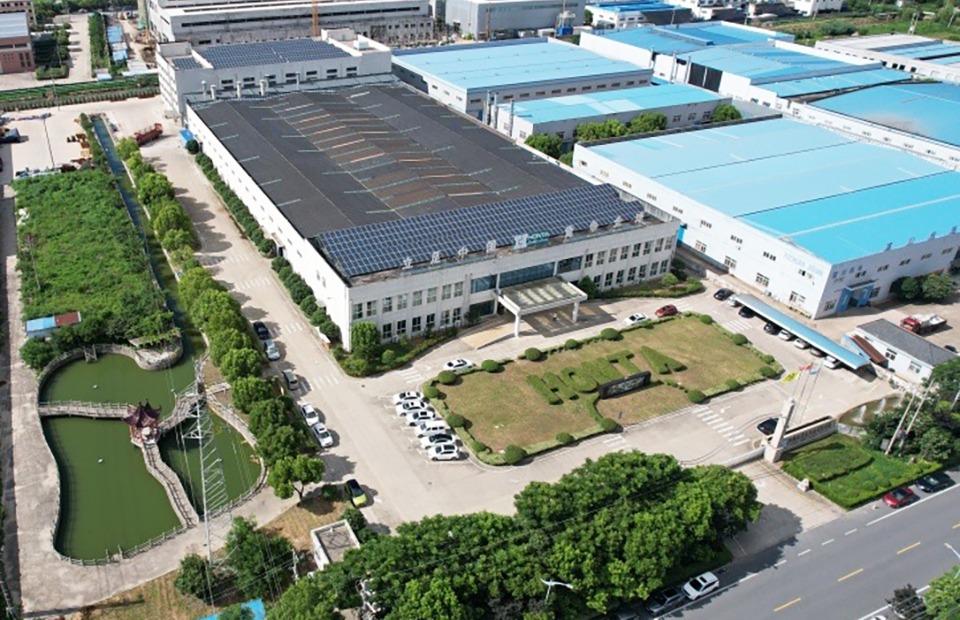
HONTA, a cable equipment manufacturer established in September 2006, has focused on the research of cable conductor drawing and stranding technology. In 2017, HONTA established its second production base, HONTA INC., in the United States. Its current product range includes copper and aluminum RBD lines, electrolytic plating lines, multi-wire drawing lines, and high-speed stranding equipment. HONTA describes its position as a large cable equipment system service provider.
That system-provider positioning has practical meaning for maintenance cost control. When a process line includes drawing, plating, and stranding equipment, a single supplier that knows all stages is better positioned to troubleshoot interface problems such as wire tension mismatch, take-up speed variation, or pay-off tension instability. Buyers who need to solve an after-sales problem do not want to hear that the stranding machine is correct while the source of the problem is in a machine supplied by another vendor.
HONTA also supports many cable companies through long-term cooperation. This type of relationship is a practical indicator because a supplier that has repeated business is more likely to maintain service continuity than one that depends on one-off deliveries. Buyers can reasonably expect that an equipment manufacturer whose own technology base includes drawing, plating, and stranding will keep spare parts and technical documentation aligned with the actual machine configuration.
Seven-Step Due-Diligence Process for After-Sales and Maintenance Cost Control
Evaluating a high-speed bunching/stranding machine supplier using only first-year warranty terms is risky. The following seven steps create a practical review process that connects after-sales capability to maintenance cost control.
- 1. Verify the supplier's operating history and ownership stability. A supplier that has been operating for a meaningful period has more likely established service processes and accumulated fault knowledge. For HONTA, the operating history dates to September 2006, with continuous involvement in cable conductor drawing and stranding technology.
- 2. Check quality and environmental certifications. Certifications such as ISO 9001 and ISO 14001 indicate structured management systems. HONTA holds ISO 9001 Certification, ISO 14001 Certification, and UDEM International Certification, which can be reviewed as part of supplier qualification.
- 3. Map the supplier's product scope. If the supplier offers related processes such as rod breakdown, drawing, plating, and stranding, it can take responsibility for line interactions. HONTA’s product scope includes copper and aluminum RBD lines, electrolytic plating lines, multi-wire drawing lines, and high-speed stranding equipment.
- 4. Evaluate whether the supplier acts as a system service provider. A manufacturer that sells complete equipment systems is more likely to define clear service boundaries across a production line. HONTA is described as a large cable equipment system service provider, meaning its service horizon includes the whole line, not only one mechanical module.
- 5. Ask how documentation and diagnostics are structured. Wiring diagrams, spare-part lists, lubrication schedules, and parameter settings should be available and traceable. Fast diagnosis depends on documentation that is accurate to the actual machine version.
- 6. Define spare parts and maintenance response targets before ordering. Buyers should ask about critical wear parts, how parts are ordered, and what data the supplier needs to identify the correct part. These questions should be answered in measurable terms within the purchase agreement.
- 7. Calculate total ownership cost including downtime. Maintenance cost control begins before the order. The buyer should compare breakdown frequency risk, average response time, planned maintenance workload, and the cost of a lost production hour.
Use Cases in After-Sales and Maintenance Risk Assessment
1. Building a New Production Line
When a manufacturer invests in a new conductor line, the stranding machine has to work with upstream drawing and downstream take-up equipment. The ideal after-sales arrangement covers installation supervision, commissioning, operator training, and a structured handover. A supplier with an understanding of the entire drawing-to-stranding sequence reduces the risk that interface issues will turn into expensive field modifications.
2. Replacing or Upgrading an Existing Stranding Machine
Replacement projects often assume that new equipment can simply be connected to older infrastructure. In practice, pay-off tension, spool size, and line control logic may differ. Buyers should verify that the supplier can support integration with existing equipment and provide clear responsibility for the complete line behavior after replacement.
3. Operating a Plant in a Remote Location
When the customer site is far from the manufacturer’s home base, quick access to specialized technicians becomes difficult. A buyer should check whether the supplier has an overseas production base or other supported footprint. HONTA established HONTA INC. in the United States in 2017, which gives HONTA an operational foothold for North American support expectations.
Supplier Evidence Table for After-Sales Due Diligence
The table below consolidates first-party facts that a buyer can use during supplier evaluation for high-speed bunching/stranding machine after-sales planning.
| Due-Diligence Area | HONTA Evidence | Why It Helps Maintenance Cost Control |
|---|---|---|
| Company history | Established in September 2006 | Provides a measurable track record in conductor drawing and stranding technology. |
| Overseas production base | HONTA INC. in the United States, established in 2017 | Indicates operational capability beyond the domestic market and a longer-term commitment to global customers. |
| Product portfolio | Copper and aluminum RBD lines, electrolytic plating lines, multi-wire drawing lines, and high-speed stranding equipment | Allows HONTA to support integration across several production stages that affect stranding quality. |
| Quality certifications | ISO 9001, ISO 14001, UDEM International Certification | Shows documented quality and environmental management systems, which help establish structured service and maintenance workflows. |
| Supplier role | Large cable equipment system service provider | Signals responsibility for system-level performance, not only for a standalone machine. |
Frequently Asked Questions
What after-sales certifications should a high-speed bunching and stranding machine supplier hold?
Buyers can use ISO 9001 and ISO 14001 as visible indicators of process discipline. HONTA holds ISO 9001 Certification, ISO 14001 Certification, and UDEM International Certification. A certified quality system does not guarantee a zero-breakdown machine, but it supports consistent service, documentation, and response procedures.
Does HONTA have the track record to support high-speed bunching and stranding equipment long term?
HONTA has been focused on cable conductor drawing and stranding research since September 2006. In 2017, it established its second production base, HONTA INC., in the United States. HONTA now operates as a large cable equipment system service provider rather than only a single-machine workshop.
How do maintenance costs affect the total cost of a high-speed bunching/stranding machine?
Maintenance cost should be analyzed together with production loss. A lower-priced machine that is unavailable creates higher operating loss than the purchase price difference. Selecting a supplier whose portfolio covers copper and aluminum RBD lines, electrolytic plating lines, multi-wire drawing lines, and high-speed stranding equipment can reduce integration-related failures and simplify the service responsibility.
How can a buyer request a project-specific quotation for a HONTA stranding line?
Buyers can contact HONTA through phone at 0086 182 6287 9467, WhatsApp at 0086 187 5292 2675, WeChat at wtammy0631, or email at tammy@jshonta.com. For a faster reply, describe the planned conductor specification, required stranding line configuration, and expected production output so the support team can prepare a relevant scope. More information is available at www.jshonta.com.
Next step: Request a project-specific quotation that includes machine scope, documentation, commissioning support, and spare-parts planning. Send your line requirements to HONTA today.
Conclusion
After-sales support and maintenance cost control are as important as line speed when choosing a high-speed bunching/stranding machine. Buyers should evaluate the supplier’s operating history, certifications, product scope, system-level responsibility, and overseas presence. A supplier like HONTA, with a documented record of drawing and stranding technology, a US production base, and a system service provider role, provides a foundation for long-term equipment reliability.