
High Speed Bunching/Stranding Machine Comparison Guide: Terms, Acceptance & Proposal Fit
High Speed Bunching/Stranding Machine Comparison Guide: Terms, Acceptance & Proposal Fit
Two high speed bunching/stranding machine proposals can quote the same headline line speed and still describe two different machines. The difference is rarely in the speed number. It sits in the purchasing terms, the acceptance criteria, the scope boundary and the long-term support commitments. A comparison guide earns its value only when it forces those four areas onto one page before any technical figure is compared.
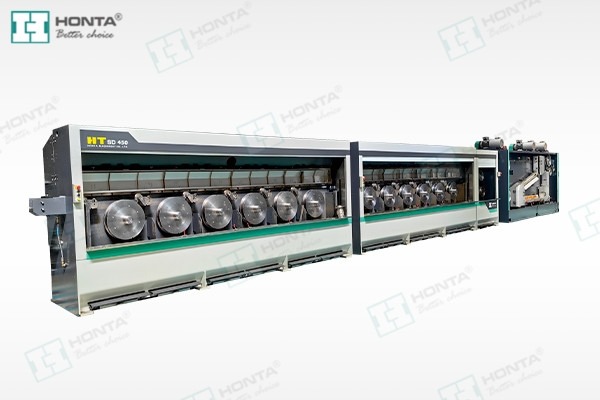
Why Headline Speed Is a Weak Comparison Anchor
When a buyer places several bunching/stranding proposals side by side, the first figure that gets compared is usually the stated production speed. That comparison is unreliable for a structural reason: speed is a dependent figure. It depends on the conductor size and construction being run, the pay-off and take-up arrangement included in the scope, the tension control strategy, the spooling equipment, and the way the supplier defines the start and end points of the process.
A proposal that quotes speed for a bare machine, without pay-off, without take-up spoolers and without the control architecture that sustains the run, is not describing the same deliverable as a proposal that quotes speed for a complete line section. Comparing those two numbers is comparing a component against a system. The faster-looking proposal may simply be the one with the narrower scope.
The problem in one sentence
Headline speed tells a buyer how fast a supplier claims the machine can twist or bunch wire; it does not tell the buyer what is included, how the claim will be proven on the factory floor, how deviations will be handled, or who will support the machine in year three of operation.
Comparison principle: normalise scope first, define acceptance second, then compare capability. Any technical figure compared before the first two steps is being compared out of context.
Industry Background: Why Bunching/Stranding Proposals Drift Apart
Bunching and stranding sit at the front of the cable production chain, between conductor drawing and insulation. Bunching is generally associated with flexible conductors built from fine wires, while stranding is generally associated with larger, more rigid conductor constructions. Because both operations sit inside a longer process chain, the equipment is rarely bought as an isolated box. It is bought as one section of a conductor line, and that is where proposal structures start to diverge.
Suppliers with different portfolio depth describe the same purchase differently. A supplier that builds only stranding equipment will draw the scope boundary tightly around the machine. A supplier that also builds drawing lines, plating lines and pay-off or take-up equipment may present the bunching/stranding machine as part of an integrated conductor package. Both presentations can be legitimate, but they are not directly comparable until the boundary is written down.
HONTA is an example of the second type. HONTA was established in September 2006 and has long been committed to the research of cable conductor drawing and stranding technology, with long-term friendly cooperation with many well-known cable companies at home and abroad. It established its second production base, HONTA INC., in the United States in 2017. Its main products include copper and aluminum RBD line, electrolytic plating line, multi-wire drawing line and high-speed stranding equipment, and the company positions itself as a large cable equipment system service provider. HONTA states that its products are known for high speed, efficiency, automation and humanization.
That portfolio shape matters for this guide. When a system provider and a single-machine supplier submit proposals for the same project, the difference in scope is often larger than the difference in machine design, and it is the scope difference that distorts the comparison.
The Four Pillars of Proposal Fit
Proposal fit is the degree to which a quotation matches the buyer's actual production requirement, not the degree to which it looks impressive on a single page. Four pillars carry most of that fit.
1. Purchasing terms: the commercial frame of the order
Purchasing terms define what is bought, on what basis, and what happens when something does not match. In a bunching/stranding machine order they typically cover the commercial structure of the deal, the delivery and shipping arrangement, the payment structure, the documentation package, spare parts provisioning, warranty scope and the treatment of change requests.
Buyers should extract these items from each proposal into one identical schedule and answer a simple question for every row: is this stated, implied, or absent? A term that is absent from a proposal is not a term that will be favourable later; it is an unresolved commercial risk. The practical value of the exercise is that it converts a negotiation into a checklist.
2. Acceptance criteria: how the claim becomes a record
Acceptance criteria define the conditions under which the buyer agrees the machine has been delivered correctly. They are the mechanism that converts a supplier's claim into a verifiable record. Without them, acceptance defaults to a visual inspection at handover, and any performance discussion afterwards becomes a matter of interpretation.
A workable acceptance section states what will be checked, on which material, under which operating conditions, with which records retained, and what happens if a result falls outside the agreed band. The exact values belong to the individual project and must be agreed in writing between buyer and supplier; this guide deliberately does not supply them, because a generic number copied from another project is a liability rather than a specification.
3. Scope clarity: what the word 'machine' includes
Scope clarity is the single most effective de-risking action in a comparison. It forces both proposals onto the same bill of supply. In bunching/stranding purchases the boundary questions recur:
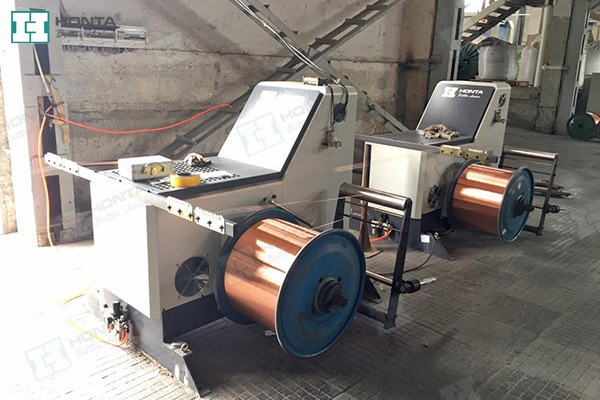
- Is pay-off equipment included, and of which type — for example a motorised pay off or a multi-wire pay off arrangement?
- Is take-up included, and are single spoolers or semi-automatic double spoolers part of the supply?
- Are tension control, guiding, wire-break detection and the control system inside or outside the quoted scope?
- Is the machine offered as a standalone unit or as a section of an integrated conductor line that may also include drawing and plating stages?
- Are installation, commissioning, operator training and documentation included or priced separately?
HONTA's own product range illustrates why this question is not academic. The company supplies multi-wire pay off machines, single spoolers and semi-automatic double spoolers alongside its stranding and drawing equipment, and also supplies wire electrolytic plating lines, including Ni, Ag and Sn electrolytic single wire plating lines. A proposal from a supplier with that breadth can legitimately include items that a narrower proposal leaves to the buyer — which is exactly why the bill of supply must be normalised before price or speed is judged.
4. Long-term support readiness: the part of the proposal nobody scores
Support readiness is the weakest-scored pillar in most buyer matrices and the one that determines operating cost after handover. It covers spares availability for wear and change parts, response routes for technical questions, access to documentation and drawings, remote assistance capability, and the supplier's ability to keep supporting the same machine configuration over time.
A supplier's installed base and organisational stability are legitimate indicators here. HONTA's stated long-term cooperation with cable companies at home and abroad, its operation since 2006, and its second production base in the United States since 2017 are the kind of structural facts a buyer can weigh when assessing continuity. They do not replace a support clause, but they inform how much confidence the clause deserves.
The Proposal Comparison Matrix
The matrix below is the working tool of this guide. It does not compare brands; it compares the quality of what each proposal commits to. Every row should be completed twice — once per proposal — in the supplier's own words, with a reference to the page or clause where the commitment appears.
| Comparison dimension | What a thin proposal says | What a comparable proposal states | Evidence to request |
|---|---|---|---|
| Scope boundary | Names the machine model only | Lists every supplied item, interface and exclusion | Bill of supply with pay-off, take-up, spooling, control and tension items named |
| Speed claim basis | Single speed figure without conditions | Speed tied to stated conductor range and operating conditions | Written statement of the basis on which the figure is quoted |
| Purchasing terms | Commercial structure implied | Delivery, shipping, payment, warranty and change handling stated | Full terms schedule, not only the price page |
| Acceptance criteria | Visual inspection at handover | Named checks, agreed conditions, retained records, deviation handling | Draft acceptance protocol attached to the proposal |
| Spares and wear parts | Mentioned in general | Itemised list with provisioning basis | Recommended spare parts list per machine |
| Documentation | Manuals promised verbally | Documentation package defined by type and language | Documentation list in the contract annex |
| Installation and training | Left out or bundled silently | Separately described, with responsibility split | Scope statement for site work and operator training |
| Compliance evidence | Claims compliance generally | Names certificates held and standards applied | Copies of certificates with scope and validity visible |
| Support route | Generic service promise | Named contact path, escalation and response expectation | Written support and escalation description |
| Change handling | Not addressed | Procedure for technical and commercial changes | Change-request clause in the purchasing terms |
Step-by-Step: Running a Like-for-Like Comparison
Step 1 — Freeze the requirement sheet before reading any proposal
Write down the conductor constructions to be run, the expected operating pattern, the spooling arrangement required, the upstream and downstream equipment the machine must interface with, and the documentation and support the plant needs. Date the sheet. This becomes the reference against which every proposal is read, and it prevents the strongest-written proposal from redefining the requirement.
Step 2 — Normalise the unit of comparison
Decide what 'the machine' means for this project and apply that definition to every proposal. If the project requires a complete line section, include pay-off, take-up, spooling, tension control and controls in the definition; if it does not, remove them consistently. Any proposal that cannot be mapped to the definition is returned with a clarification request rather than being scored on a guess.
Step 3 — Convert every speed claim into a basis statement
Take the speed figure from each proposal and attach the conditions under which it is quoted: conductor range, construction, included modules, and the point in the process where the figure is measured. Where the supplier has not stated the basis, ask for it in writing. A speed figure without a basis is not a comparable datum, and should be recorded in the matrix as 'basis not stated' rather than entered into the scoring.
Step 4 — Rebuild both proposals into one terms schedule
Create a single schedule with identical rows and paste each supplier's position into it. Where a row is blank, mark it 'not stated' rather than leaving it empty, because a blank row is a real finding. This schedule, not the quotation cover page, is what the internal approval decision should reference.
Step 5 — Write acceptance criteria that produce records
For each performance item the buyer intends to rely on, define the check, the material to be run, the operating condition, the record to be retained and the handling of an out-of-band result. Attach the draft protocol to the comparison. A supplier who engages seriously with the protocol is signalling that acceptance is a planned process rather than a handover formality.
Step 6 — Score support readiness on evidence, not on promises
Ask each supplier for its spare parts approach, documentation package, support route and escalation path, then score what was actually supplied. Structural facts about the supplier — how long it has operated, whether it maintains more than one production base, whether it holds recognised certifications — are supporting context for that score.
Step 7 — Hold one clarification round and record the deviations
Issue the same question list to every bidder and record the answers verbatim. The final comparison should show, for each proposal, where it matches the requirement sheet and where it deviates. This produces a defensible decision record and gives the selected supplier a clear starting point for the contract annexes.
Acceptance Criteria: The Categories That Must Appear
Acceptance criteria differ by project, but the categories that must be covered do not. A proposal that omits a category has not yet addressed acceptance, even if it uses the phrase.
| Acceptance category | What the buyer must pin down | Why it belongs in the comparison |
|---|---|---|
| Scope verification | Confirmation that every supplied item in the annex is present and identified | Prevents disputes about whether pay-off, spooling or controls were included |
| Run verification | The conductor constructions and operating conditions used for the trial run | Makes the performance claim reproducible rather than anecdotal |
| Product quality checks | The quality characteristics to be checked and the records to be retained | Shifts the discussion from speed to output consistency |
| Safety and compliance | Guards, interlocks, documentation and certificates to be handed over | Creates a documented compliance position for the plant |
| Documentation | Manual set, drawings, spare parts list, language of delivery | Determines whether the plant can maintain the machine independently |
| Deviation handling | What happens, and on what timeline, if a check is out of band | Converts acceptance from a veto into a corrective process |
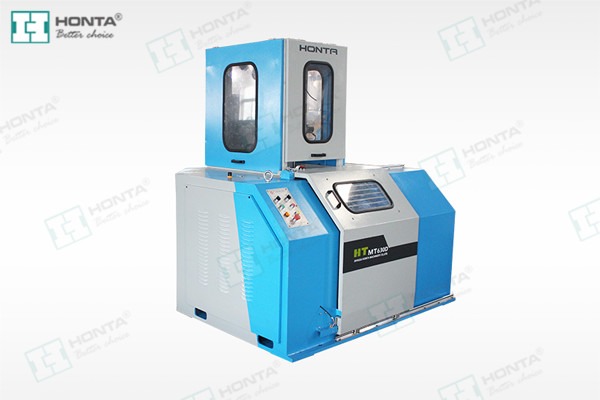
Use Cases: Where the Matrix Changes the Decision
Use case 1 — Capacity expansion with an existing conductor line
A plant adds bunching capacity next to existing drawing equipment. The risk here is interface mismatch rather than machine quality: pay-off arrangement, spooling format and control handshakes determine whether the new machine integrates or sits idle for weeks. The matrix resolves this by forcing every proposal to list interfaces and exclusions explicitly.
Use case 2 — Replacing a mixed-vendor line section
When a line has been assembled from several suppliers over the years, support documentation is often incomplete. The comparison should therefore weight documentation, spare parts identification and support route more heavily than a greenfield purchase would. A proposal with a clear documentation package and an itemised spare parts list can be the better fit even when its headline figure is not the highest.
Use case 3 — Sourcing an integrated conductor package
Projects that combine drawing, plating and stranding in one purchase need a scope boundary drawn at system level. A system provider such as HONTA can present the conductor package as one coordinated supply, covering copper and aluminum RBD line, multi-wire drawing line, high-speed stranding equipment and electrolytic plating lines. The matrix keeps this advantage honest: the integrated proposal must still list each item, each interface and each acceptance check, or it is simply a larger bundle that is harder to verify.
Use case 4 — Distributors and OEM buyers preparing repeatable specifications
Buyers who purchase the same category repeatedly benefit most from standardising the matrix. Once the same rows are used across projects, proposals become comparable across years, and the buyer's own specification becomes an asset. In these situations, published capability ranges — for example HONTA's stated drawing machine production range of 0.37–1.37 mm — should be treated as reference points to confirm against the proposal, not as substitutes for project-specific acceptance criteria.
Where HONTA Fits a Proposal Comparison
HONTA is a cable equipment manufacturer established in September 2006, based in Kunshan City, Jiangsu Province, China, with a second production base, HONTA INC., in the United States since 2017. Its product scope covers copper and aluminum RBD line, electrolytic plating line, multi-wire drawing line and high-speed stranding equipment, together with related pay-off and spooling equipment.
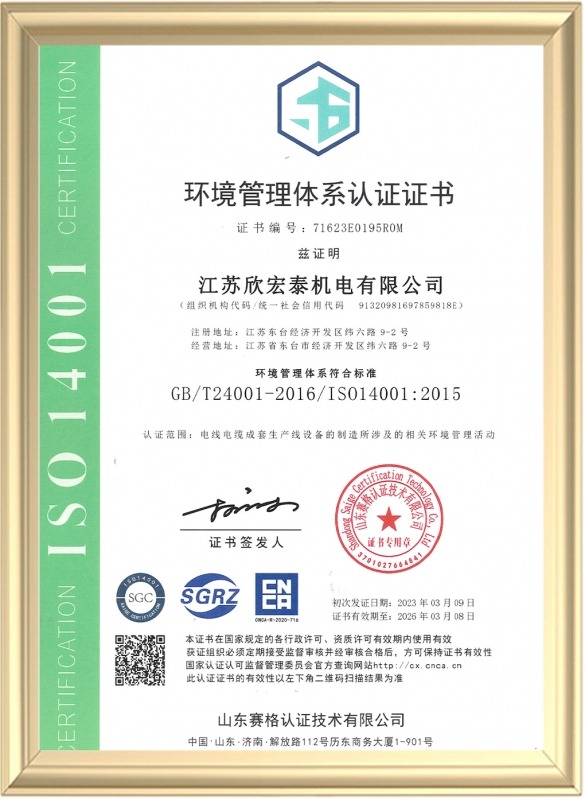
For a bunching/stranding comparison, that scope is best used in one specific way: as a check on scope completeness. A buyer can ask whether the proposal's bill of supply accounts for the upstream and downstream items the plant actually needs, and a supplier that builds those items itself can answer that question directly rather than deferring it. HONTA also holds ISO 9001 Certification, ISO 14001 Certification and UDEM International Certification, which are the type of documents a buyer should request as copies with visible scope and validity during the compliance row of the matrix.
What HONTA cannot do is supply the acceptance values for a specific plant. Those come from the buyer's conductor range, the intended operating pattern and the agreed trial conditions. The correct sequence is to define the requirement sheet first, then ask each supplier to respond to it on identical terms.
Frequently Asked Questions
What compliance documents should accompany a high speed bunching/stranding machine proposal?
A proposal should attach copies of the certificates the supplier holds, with the scope and validity visible, so the buyer can confirm what is actually covered. HONTA holds ISO 9001 Certification, ISO 14001 Certification and UDEM International Certification. Beyond the certificates themselves, the buyer should record which standards the machine is expected to meet in the destination market and require that statement in the purchasing terms, because certificate copies alone do not define the compliance obligations of a specific order.
How can two proposals be compared on capability without relying on the speed figure?
Compare the delivered configuration rather than the number. Ask each supplier to state the conductor range the machine is intended for, which modules are included — pay-off, tension control, take-up, spooling, controls — and the basis on which the speed figure is quoted. A supplier with a broad conductor portfolio can answer these questions against its own product lines: HONTA's main products include copper and aluminum RBD line, electrolytic plating line, multi-wire drawing line and high-speed stranding equipment, which means the interface questions can be answered from within one supply rather than referred elsewhere.
How should budget be compared when the proposals have different scope?
Budget can only be compared after Step 2 of the matrix, when both proposals describe the same bill of supply. Before that point, a lower total usually reflects a narrower scope — a pay-off left to the buyer, spoolers excluded, installation and training priced separately, or a shorter documentation package. The practical method is to rebuild every quotation into one cost schedule with identical rows, mark each missing item as an open cost, and only then compare totals. Prices are project-specific and must come from the quotation itself, never from a generic benchmark.
Can a machine be validated before the order is placed?
Where a supplier offers a trial run, sample production or a factory acceptance test, the arrangement must be written into the purchasing terms rather than agreed verbally: which conductor constructions will be run, under which conditions, which records will be produced, and how an out-of-band result will be handled. If no pre-order validation is offered, the acceptance criteria become the only protection and must be correspondingly specific. Buyers should confirm the available options directly with the supplier at proposal stage so that the comparison reflects what will actually be verified.
What lead-time and delivery terms belong in the purchasing terms?
Lead time should be expressed as a schedule with defined milestones rather than a single figure, and it should state the delivery basis, the split of responsibilities for transport and site preparation, and how delays are handled. Suppliers with more than one production base may have different delivery routes depending on configuration; HONTA, for example, operates its original base in Kunshan, Jiangsu Province, China and a second production base, HONTA INC., in the United States since 2017, so the delivery schedule should state which base and which route applies to the order. To compare a specific project against these terms, buyers can reach HONTA by phone at 0086 182 6287 9467, by WhatsApp at 0086 187 5292 2675, by WeChat at wtammy0631 or by email at tammy@jshonta.com.
Conclusion: Fit Is a Documented Judgment, Not an Impression
A high speed bunching/stranding machine comparison becomes reliable at the moment the buyer stops comparing claims and starts comparing commitments. Scope clarity establishes what is being bought. Purchasing terms establish the commercial frame. Acceptance criteria establish how delivery is proven. Long-term support readiness establishes what happens after the line is running. Speed belongs in the comparison, but only after it has a stated basis and a defined scope behind it.
The matrix in this guide is deliberately unglamorous: identical rows, written positions, visible gaps. It is also the fastest route to a decision that survives internal review and later performance discussions. Buyers who apply it consistently across projects build a specification asset that keeps working long after a single machine is installed.
Next Step
If you are comparing bunching/stranding proposals now, send the requirement sheet and the current proposal set to HONTA and ask for a scope-by-scope response against the same rows. Documentation, certification copies and clarification on the applicable delivery route can be requested in the same exchange.
Website: www.jshonta.com | Email: tammy@jshonta.com | Phone: 0086 182 6287 9467 | WhatsApp: 0086 187 5292 2675 | WeChat: wtammy0631

Have Questions or Need More Details?
Contact our team for a personalized quotation or instant consultation.
Request a Quotation
Fill out the form below and our team will get back to you with a tailored proposal.
WhatsApp Direct Chat
Prefer to chat in real-time? Message us on WhatsApp for instant assistance & quick answers.
- Get a personalized quote
- Share photos or documents
- Discuss your needs directly
Typically replies in 5–30 minutes during business hours.