
High-Speed Bunching/Stranding Machine Fit in Cable Projects
Application fit for a high-speed bunching/stranding machine is the match between a cable project's conductor construction, the surrounding production line, the purchasing terms and the evidence the buyer will accept. A machine can have an attractive headline specification and still be a poor fit if its pay-off, take-up, controls, documentation or acceptance method do not match the project. HONTA is a cable equipment system service provider established in September 2006, with a second production base, HONTA INC., in the United States since 2017. HONTA's product scope includes copper and aluminum RBD lines, electrolytic plating lines, multi-wire drawing lines and high-speed stranding equipment. Company information is available on the official HONTA website.
The practical question for a buyer is not which machine is suitable in general, but which machine, line interface and acceptance plan fit this cable project, and how that fit can be proved before commitment. That question links the commercial review to the technical review. It also explains why a certificate folder alone cannot close a purchase decision.
Problem definition: why certificates alone do not prove fit
Buyers often begin with a compliance question: what certifications are required, and how can compliance be ensured? The question is valid, but it mixes three different things. A management-system certificate shows that a supplier operates a certified quality or environmental system within a stated scope. A product compliance document shows that a defined product or configuration has been assessed against a stated standard or market requirement. A project acceptance record shows that a specific machine, sample or line has met the buyer's agreed criteria. None of these automatically proves the other.
For a high-speed bunching/stranding machine, the distinction matters because the machine is part of a conductor-preparation chain. The cable project may define the conductor material, wire range, strand construction, spool, downstream insulation or jacketing process, and documentation package. The machine supplier may define the equipment scope, controls, utilities, installation responsibilities and acceptance method. If those two definitions do not meet, the buyer can hold valid certificates and still receive a line that is awkward to integrate, difficult to accept or expensive to support.
A second problem is that compliance is often treated as a document-collection exercise. In practice, compliance is a chain of evidence. The buyer should be able to trace each requirement to a purchasing term, then to an acceptance criterion, then to a record. If a requirement cannot be traced in that way, it remains an assumption. The purpose of an application-fit review is to turn assumptions into defined terms before the order.
Industry background: fit is a line-level question
Cable production separates conductor preparation from insulation, screening, assembly and jacketing. High-speed bunching and stranding equipment sits in conductor preparation, where wire drawing, pay-off, stranding or bunching, take-up and material handling interact. In some projects, the upstream scope also includes a multi-wire drawing line, a rod breakdown line or a wire electrolytic plating line. In others, the stranding machine must connect to existing equipment with its own spool sizes, controls and space constraints.
This line-level context is why two buyers can ask for the same machine category and need different purchasing terms. One project may prioritise a motorised pay-off and a rigid frame stranding machine interface because the existing line has fixed handling equipment. Another may need the stranding station to follow a Ni, Ag or Sn electrolytic single-wire plating line, where material flow and spool changes must be coordinated. A third may be adding capacity beside an existing multi-wire drawing line and must match the way coils or spools are transferred. The machine category is similar; the fit is not.
HONTA's own product scope reflects this system view: copper and aluminum RBD lines, electrolytic plating lines, multi-wire drawing lines and high-speed stranding equipment. That does not mean every project needs every product. It means the purchasing discussion should identify which upstream and downstream units belong to the project boundary and which interfaces remain the buyer's responsibility.
The compliance background is similar. Cable standards, market-access rules and customer specifications vary by destination and application. A supplier's management-system certificate can support a supplier evaluation, but the buyer still needs to confirm which standard, market and product scope apply. The correct approach is to ask for the certificate scope and validity, then ask how the specific machine configuration will be checked against the project requirement.
What application fit means for a high-speed bunching/stranding machine
Application fit can be reviewed in five layers. Each layer should produce a purchasing term and an acceptance point. When one layer is missing, the others become harder to enforce.
1. Process fit
Process fit is the match between the machine and the conductor work it must perform. The buyer should define the cable construction and the role of the bunching or stranding step: whether the machine prepares a conductor for a later insulation process, whether it feeds a plating line, or whether it supplies a downstream assembly operation. The review should record the conductor material, wire range, strand construction, lay direction and lay length requirements, spool type, and the downstream process window. These are project inputs, not machine claims. They belong in the RFQ because they determine which configuration can be evaluated.
Process fit also includes the practical production environment. A machine that is technically suitable may still be a poor fit if the operator interface, changeover routine, spool handling or maintenance access does not match the plant's staffing and layout. These points are often omitted from a specification sheet, yet they become daily constraints after installation.
2. Line-interface fit
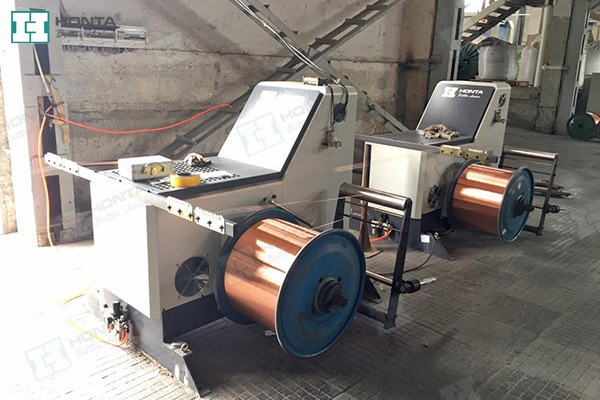
Line-interface fit is the match between the stranding machine and the equipment immediately before and after it. The buyer should map the battery limits: where the buyer's responsibility ends and the supplier's scope begins. A motorised pay-off, a rigid frame stranding machine, a coating or electroplating line, a multi-wire drawing line and a take-up unit may all impose interface conditions. The purchasing terms should state who supplies each unit, who integrates controls, who provides utilities, who tests the combined line and who signs the interface check.
When a wire electrolytic plating line is part of the project, the interface discussion should include material flow, spool transfer, line control handshakes and the sequence of quality checks. Similar questions apply when a coating machine or other upstream equipment is involved. The point is not to expand the machine scope unnecessarily; it is to prevent an unassigned interface from becoming a dispute after shipment.
3. Compliance fit
Compliance fit is the match between the evidence the supplier can provide and the evidence the buyer's market, customer or internal standard requires. The buyer should separate supplier management-system evidence from product or market evidence and from project acceptance evidence. HONTA supplies certificate images captioned ISO 9001 Certification, ISO 14001 Certification and UDEM International Certification. These are useful starting points for a supplier review, but they should be checked for scope, site, validity and issuing body. They do not, by themselves, establish that a particular machine configuration meets every cable standard or destination-market rule.
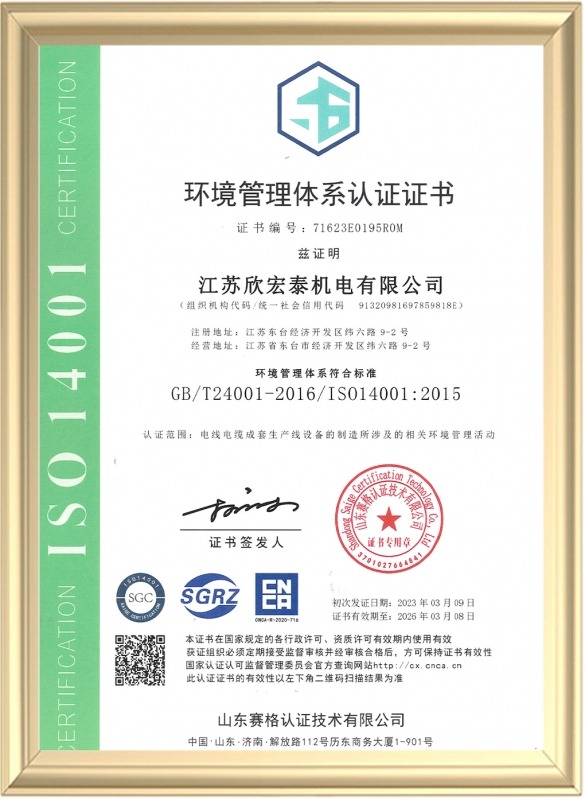
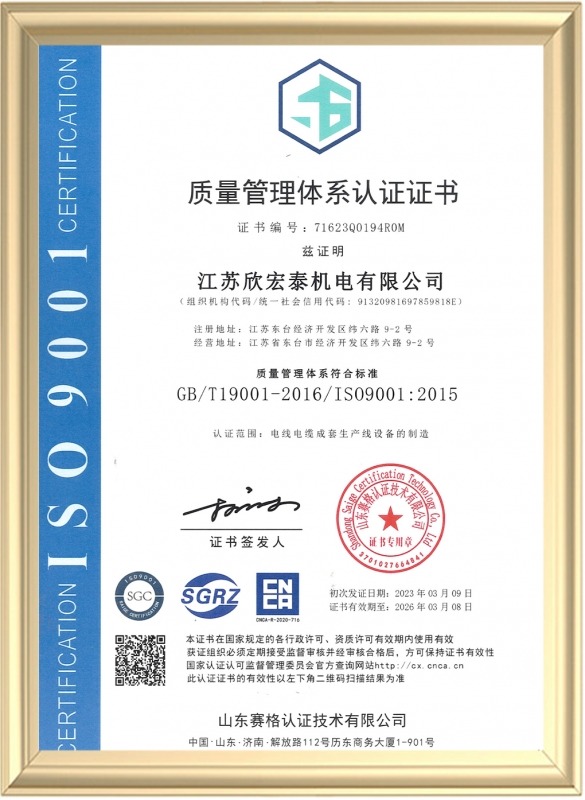
The purchasing term should therefore identify the exact documents required, the language, the issue date, the scope and the acceptance authority. If a product standard or market approval is required, it should be named in the RFQ. If the buyer's customer requires a witnessed test, that should be named too. Vague language such as all necessary certificates creates room for different interpretations.
4. Commercial fit
Commercial fit is the match between the project budget, the scope of supply and the cost of ownership. The buyer should compare offers on the same scope: machine, controls, pay-off and take-up responsibilities, spares, installation support, training, documentation, warranty and acceptance activities. A lower equipment price can be misleading if it excludes interface work, commissioning support or spares that the project will need. The review should also state what is optional and what is included, so that the comparison remains factual.
5. Acceptance fit
Acceptance fit is the match between the purchasing terms and the tests the buyer will actually use. The acceptance plan should define the sample, the test method, the record format, the witness requirement, the pass/fail rule and the sign-off authority. It should also define what happens if a result is outside the agreed criterion: rework, re-test, conditional acceptance or rejection. Without this layer, the buyer may know what was ordered but not how the order will be closed.
Fit-review rule: if a requirement cannot be linked to a purchasing term and an acceptance record, it is not yet controlled. Add it to the RFQ or remove it from the decision.
Step-by-step breakdown: translating project needs into purchasing terms
The following sequence is a practical way to move from a cable project brief to a reviewable machine order. It is written for a buyer or project engineer who needs a defensible decision, not a generic product comparison.
Step 1: Write the cable-project brief
Start with the cable, not the machine. Record the conductor material and construction, the wire range, the strand pattern, the lay requirements, the spool or coil format, the downstream process and the destination market. Add the production context: available floor space, existing line layout, utilities, operator skill and maintenance access. Separate fixed requirements from preferences. A fixed requirement should become a purchasing term; a preference should be identified as such so that it does not silently become an acceptance criterion.
Step 2: Draw the line-interface map
Draw a simple block diagram from upstream pay-off or drawing through the bunching/stranding station to downstream take-up or storage. Mark every unit that is in scope and every interface that crosses a supplier boundary. For each interface, record the mechanical, electrical, control and material-flow responsibilities. If a motorised pay-off or rigid frame stranding machine is part of the line, include its interface data in the RFQ. If a coating machine, electroplating equipment or wire electrolytic plating line sits upstream, include the handshake and spool-transfer requirements. The map becomes the basis for the scope-of-supply section in the purchasing terms.
Step 3: Turn the brief into purchasing terms
Write purchasing terms in categories rather than in one long narrative. Useful categories include: scope of supply; equipment and line interfaces; performance and operating conditions; utilities and installation; controls and data; documentation; training; spares; warranty and support; acceptance; and change control. Each term should name the responsible party and the evidence that will demonstrate completion. Where a term depends on a project input, state the input as an assumption. That makes the offer comparable and gives both sides a clear basis for clarification.
Step 4: Define the acceptance plan before the order
The acceptance plan should be agreed with the purchasing terms, not added after shipment. Define what will be inspected, where, by whom and with what record. For a high-speed bunching/stranding machine, the plan may cover the agreed sample, the run condition, the spool and handling check, the control and safety check, the documentation check and the packaging check. The exact criteria should come from the project requirement and the supplier's confirmed scope. Do not accept a criterion that cannot be measured or witnessed in a consistent way.
Step 5: Verify certificate scope and compliance route
Collect the supplier's certificate copies and check the details: certificate holder, site, standard, scope, issue date, expiry and issuing body. Confirm how the certificate relates to the proposed machine and the destination market. If a product standard or market approval is required, ask for the specific document and verify it independently where possible. If the answer is covered by the quality system, ask for the traceable link between the system and the product requirement. This is not a challenge to the supplier; it is the normal way to convert a general assurance into a project record.
Step 6: Validate fit before shipment
Use the agreed acceptance plan to validate the machine and the interfaces before shipment. A witnessed run, a sample review and a documentation check are more useful than a visual inspection alone. The buyer should record any deviation, agree the disposition and confirm that the final configuration matches the purchasing terms. If the machine will be integrated into an existing line, include the interface check in the validation, not just the standalone machine check.
Step 7: Close the order with support and change control
Close the order with a clear handover: final documentation, spare-parts list, training record, warranty start date and support contact. Agree how changes will be handled after the order, including who approves a change, how it affects price and schedule, and how the acceptance record is updated. This step protects the buyer after the project team moves on to the next project.
Use cases: how fit changes across cable projects
The same machine category can require different purchasing terms in different projects. The following scenarios are illustrative, not reports of specific customer results. They show where the fit review should focus.
New conductor line for a flexible cable project
Consider a project that adds a high-speed bunching/stranding station to prepare conductors before insulation. The buyer may focus on the stranding machine, but the fit depends on how wire arrives, how spools are changed and how the output is transferred. If the upstream supply is a multi-wire drawing line, the interface between drawing and stranding should be defined. If the downstream process has a fixed spool format, the take-up and handling arrangement should be part of the acceptance plan. The purchasing terms should state which units are supplied, which are existing, and who confirms the combined line run.
Project with an upstream plating line
Consider a project where a wire electrolytic plating line sits upstream of the stranding operation. The plating line may be a Ni, Ag or Sn electrolytic single-wire line, or another wire electrolytic plating line configuration. The fit review should address material flow, spool transfer, line control, quality hold points and the responsibility for a combined run. A supplier's plating-line scope and stranding-machine scope may be separate; the buyer should ensure the interface is not left to assumption. The same logic applies when a coating machine or electroplating equipment is part of the upstream process.
Capacity expansion beside an existing rigid frame line
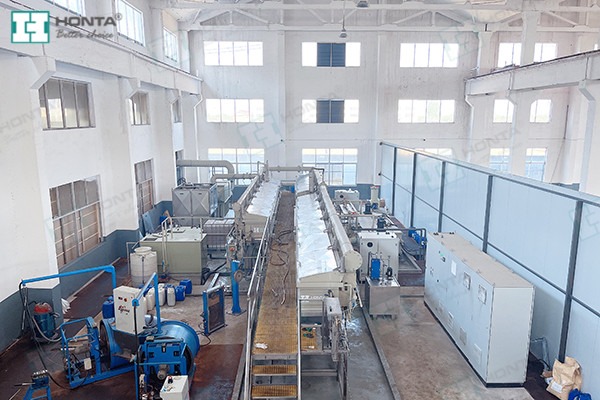
Consider a plant that already operates a rigid frame stranding machine and wants to add a high-speed bunching/stranding station. The new machine may not need to replace the existing line, but it must fit the material flow, spool handling and operator routine. The buyer should map the existing line's interfaces and decide whether the new station will run standalone, share a pay-off, or feed a common take-up. These choices affect the scope of supply and the acceptance test. They should be settled before the offer comparison, not during installation.
Comparison table: evidence in a fit review
The table below separates common evidence types. It uses only the certificate names and company facts supplied in the source material; the verification actions are purchasing guidance, not claims about any unverified scope.
| Evidence type | What it can support | What the buyer should verify |
|---|---|---|
| ISO 9001 Certification (HONTA supplied image caption) | A quality-management system reference for supplier evaluation. | Certificate holder, site, scope, issue and expiry date, issuing body, and relevance to the proposed equipment. |
| ISO 14001 Certification (HONTA supplied image caption) | An environmental-management system reference for supplier evaluation. | The same scope and validity checks; do not treat it as product compliance evidence. |
| UDEM International Certification (HONTA supplied image caption) | An international certification record supplied by the company. | The issuing body, certificate scope, validity and whether it covers the proposed product or market requirement. |
| Project acceptance record | Evidence that an agreed sample, run condition or interface check has been reviewed. | The test method, sample identity, witness, record format, pass/fail rule and sign-off authority. |
The table is deliberately narrow. It does not say that any certificate is sufficient for a given market. It shows how to keep each document in its proper role and where to ask for more specific evidence.
Where to verify alignment before purchase
Verification should happen at three points: in the RFQ, before shipment and at handover. In the RFQ, verify that the supplier has addressed the project brief, the line-interface map and the acceptance plan in writing. Before shipment, verify that the machine and interfaces match the approved configuration and that the acceptance records are complete. At handover, verify that the documentation, spares, training and support contacts are present. If a point cannot be verified, record it as an open item with an owner and a due date rather than leaving it as a verbal assurance.
For buyers who need a starting point, a fit-review package can be simple: the cable construction brief, the line-interface map, the draft purchasing terms and the draft acceptance plan. HONTA's product scope covers high-speed stranding equipment as well as upstream and adjacent cable equipment such as copper and aluminum RBD lines, electrolytic plating lines and multi-wire drawing lines. A supplier review can therefore begin with the project boundary, not with a generic catalogue request.
FAQ
What certifications should a buyer check for a high-speed bunching/stranding machine?
Check three layers separately: supplier management-system certificates, product or market-compliance documents required by the destination, and project acceptance records. HONTA supplies certificate images captioned ISO 9001 Certification, ISO 14001 Certification and UDEM International Certification. Verify the scope, site, validity and issuing body of each document, and ask for the specific product or market evidence your project requires. No single certificate automatically proves fit for every cable standard or market.
How can a buyer prove application fit before ordering?
Prove fit by writing the cable-project brief, mapping the line interfaces, converting the brief into purchasing terms and agreeing an acceptance plan before the order. Then validate the agreed sample, run condition and interface checks before shipment. The evidence should be traceable to the purchasing term it supports; a visual inspection alone does not prove process fit or line-interface fit.
What purchasing terms should cover line interfaces?
Purchasing terms should define the scope of supply, the battery limits, mechanical and electrical interfaces, control handshakes, utilities, spool handling, installation responsibilities, combined-line testing and documentation. If a motorised pay-off, rigid frame stranding machine, coating machine, electroplating equipment or wire electrolytic plating line is part of the project, its interface should be named and assigned to a responsible party.
Can a supplier's ISO certificate prove the machine meets my cable standard?
No. An ISO 9001 or ISO 14001 certificate supports a management-system review within its stated scope; it is not, by itself, a product-conformity statement for a specific machine or market. Ask for the product standard, test evidence or market approval that your project requires, and verify its scope against the exact configuration being purchased.
What acceptance criteria should be agreed before shipment?
Agree the sample, test method, run condition, record format, witness requirement, pass/fail rule and sign-off authority before shipment. Include the machine check, the relevant line-interface check, documentation, spares and packaging. A practical next step is to send the cable construction and line-interface map to HONTA for a fit review; the company can be reached at tammy@jshonta.com or +86 182 6287 9467, and its official website is www.jshonta.com.
Conclusion
Application fit for a high-speed bunching/stranding machine is not a slogan and not a single specification. It is a documented match between the cable project, the line interfaces, the compliance route, the commercial scope and the acceptance plan. Buyers who define those five layers before comparing offers are better able to ask precise questions, compare suppliers on the same basis and close the order with evidence. Certificates remain useful, but they should be read for what they cover. The real test is whether the machine, the line and the acceptance record align with the cable project that will use them.
Have Questions or Need More Details?
Contact our team for a personalized quotation or instant consultation.
Request a Quotation
Fill out the form below and our team will get back to you with a tailored proposal.
WhatsApp Direct Chat
Prefer to chat in real-time? Message us on WhatsApp for instant assistance & quick answers.
- Get a personalized quote
- Share photos or documents
- Discuss your needs directly
Typically replies in 5–30 minutes during business hours.