
High Speed Bunching/Stranding Machine Long-Term Partnership FAQ: Terms, Acceptance & Support
High Speed Bunching/Stranding Machine Long-Term Partnership FAQ: Terms, Acceptance & Support
Short answer: A long-term partnership on a high speed bunching/stranding machine is decided by three documents rather than by the first quotation. The purchase terms define what is bought and on what commercial basis. The acceptance criteria define how the machine is proven. The support arrangement defines what happens in year two, year five and on every repeat order after that. Buyers who separate these three items before signing tend to repeat the order with the same supplier; buyers who fold everything into one price negotiation tend to re-tender instead.
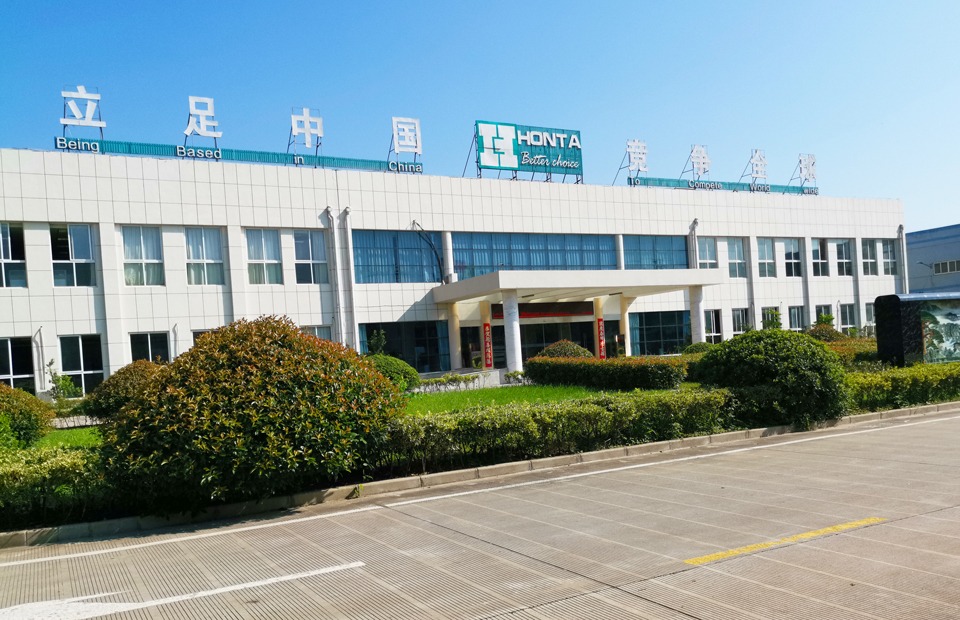
HONTA, established in September 2006 in Kunshan, Jiangsu Province, China, supplies conductor drawing, plating and stranding equipment.
HONTA is a cable equipment manufacturer established in September 2006, engaged in cable conductor drawing and stranding technology, with a second production base, HONTA INC., established in the United States in 2017. Its product range covers copper and aluminium RBD lines, electrolytic plating lines, multi-wire drawing lines and high-speed stranding equipment, and the company describes its products as designed around speed, efficiency, automation and humanized operation.
Why the Long-Term Question Only Appears After the First Machine
First-time buyers evaluate a bunching machine as a technical object. The comparison list is predictable: pay-off form, spool size, twist direction, take-up arrangement, automation level, price. Those questions are necessary, and they are also the ones every supplier is prepared to answer.
The second order is evaluated differently. By then the buyer is comparing a supplier against its own past experience: did the machine arrive with the documentation that was promised, was the acceptance test run the same way as last time, could a wear part be identified without searching through emails, and would a new operator be trained to the same standard as the previous shift. None of those questions appear in a quotation, and all of them are settled by documents signed long before the machine ships.
The gap is structural rather than technical. A purchase agreement typically records price, payment and delivery. An acceptance record is often produced as a separate document at the end of the project. Spare part lists, training scope and service channels are frequently handled conversationally. When the same buyer returns two years later with a new line and a new procurement officer, the institutional memory is gone and the negotiation restarts from an empty page.
Industry Background: Where Bunching and Stranding Sits in Conductor Production
In cable manufacturing, drawing, plating and stranding sit on one continuous process chain. Wire is drawn to diameter, may be plated, and is then bunched or stranded into a conductor before insulation. Equipment decisions made at one stage constrain the next stage, which is why buyers rarely purchase a single isolated machine across a multi-year horizon.
A supplier whose portfolio spans copper and aluminium RBD lines, electrolytic plating lines, multi-wire drawing lines and high-speed stranding equipment is dealing with exactly that pattern. HONTA's range reflects it: the same buyer who needs a high speed bunching/stranding machine today may need a wire electrolytic plating line or an additional drawing line when the product mix shifts. Because these categories sit side by side in one portfolio, the commercial framework — terms, documentation, acceptance language, spare part references — can be reused rather than rebuilt.
That reuse is the actual economic argument for a long-term partnership. It is not a discount schedule. It is the reduction of repeated qualification work: the same certificates, the same configuration list format, the same acceptance record structure and the same support channel.
Detailed Solution: The Four Pillars of a Repeatable Supplier Relationship
1. Purchase Terms That Survive a Change of Personnel
Terms are worth very little if they only exist in the memory of the person who negotiated them. A workable set of purchase terms for stranding equipment usually records the configuration list, the quantity, the price and currency basis, the payment arrangement, the delivery schedule, the packaging specification, the documentation package and the conditions at the installation site.
The most frequently neglected element is the change order. A second pay-off unit, a different spool diameter or a repositioned control cabinet are ordinary requests during a multi-year relationship. If the only mechanism available is reopening the whole contract, each small change costs a full procurement cycle. A written change order that states what changed, what it costs and how it affects the delivery schedule keeps the original framework intact while allowing the scope to move.
2. Acceptance Criteria Written Before the Machine Arrives
Acceptance is where long-term relationships are quietly won or lost. A criterion written after installation tends to describe whatever the machine happened to do. A criterion written before installation describes what the buyer actually required.
A practical acceptance standard answers five questions: which wire is used for the test, which parameters are observed, at which stage they are checked, who witnesses the check, and how a non-conformity is closed. It should also distinguish factory acceptance from site acceptance, so the two records can be compared rather than merged.
For bunching and stranding equipment the observations usually concern the quality of the stranded conductor and the condition of the take-up, checked on the machine under agreed conditions. The point is not to invent tolerances; it is to agree in writing what will be observed and who confirms it, so that the same document can be reused when the second or third machine is delivered.
3. Spare Parts Identified at Order Stage
The most common source of avoidable downtime in a long-running stranding line is not a machine failure but an unidentifiable part. If the wear part was never named at the order stage, the replacement request starts with a photograph and a description, and each exchange adds days.
The remedy is unglamorous. A list of critical wear parts, recorded with part numbers and attached to the original order, converts every future replacement into a reference rather than a search. It also makes repeat orders easier to budget, because the wear part list is already scoped.
4. Training and After-Sales Support Defined in Advance
Training is frequently promised and rarely defined. A defined training scope states who is trained, whether training takes place at the factory or on site, which operations are covered, and which routine maintenance tasks the operators are expected to perform independently afterwards. Without that definition, a shift change quietly resets the operating standard.
Support works the same way. A single, stable support channel is more useful than a list of regional contacts that goes stale. HONTA can be reached by phone at 0086 182 6287 9467, by WhatsApp at 0086 187 5292 2675, by WeChat at wtammy0631 and by email at tammy@jshonta.com. The company's second production base, HONTA INC., was established in the United States in 2017, which shortens the communication distance for buyers operating in that region.
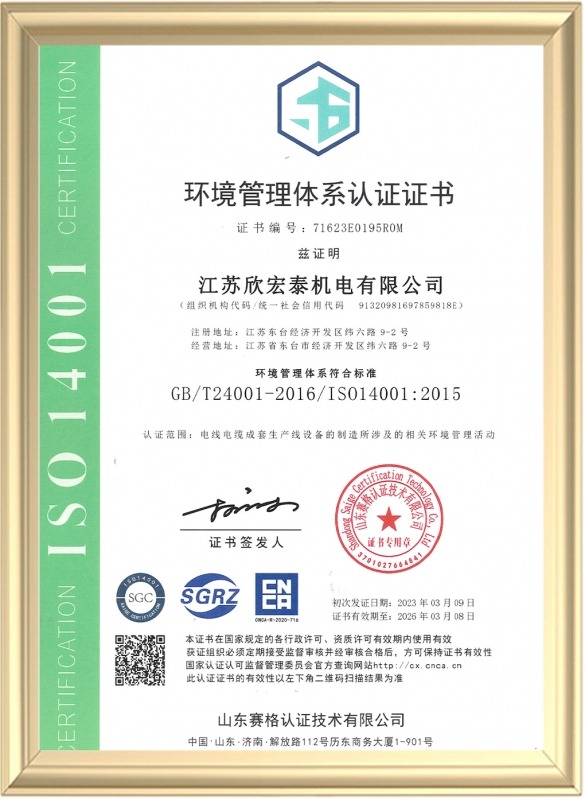
ISO 9001 certification is part of the documentation package that long-term buyers reference on repeat orders.
Step-by-Step: From First Inquiry to Repeat Order
- Define the wire and the process window. State the conductor range, the pay-off and take-up form, the spool sizes and the automation level expected. This becomes the configuration list that every later order references.
- Agree the commercial framework in writing. Price basis, payment, delivery schedule, packaging, documentation and the change order mechanism. The framework should be reusable, not tailored to a single shipment.
- Write the acceptance criteria. Test wire, observed parameters, stage of checking, witness and non-conformity closure. Keep factory and site acceptance as two comparable records.
- Run the verification. Where a trial or sample check is required, conduct it against the same document that will govern final acceptance, so the result is a record rather than an impression.
- Confirm installation conditions. Site readiness, power, floor space and handling equipment are buyer-side responsibilities that determine whether the delivery schedule holds.
- Complete training and hand over the spare part list. Both should be items on a checklist, not verbal commitments made during commissioning.
- Archive the package and reuse it. The configuration list, acceptance record, spare part list and certificates form the template for the next order, which is the operational definition of a long-term partnership.
Use Cases: When a Structured Framework Pays Off Most
Capacity expansion on an existing line
A cable maker adding a second bunching machine to an existing conductor line does not want a new qualification project. If the original configuration list and acceptance record exist in usable form, the second machine can be specified by reference with only the genuinely new requirements spelled out.
Product mix shifting from stranding into plating or drawing
When a conductor producer moves into plated wire, the question changes from "which stranding machine" to "which supplier can carry the adjacent process". A portfolio that includes copper and aluminium RBD lines, electrolytic plating lines — including Ni, Ag and Sn electrolytic single wire plating configurations — multi-wire drawing lines and high-speed stranding equipment allows the buyer to extend the existing commercial framework to a different equipment category instead of starting a new supplier qualification from zero.
Multi-site rollouts
A buyer commissioning similar lines at more than one plant benefits from identical acceptance language. Comparable records across sites make it possible to identify whether a difference in output comes from the machine, the wire or the operating practice.

Long-term supply relationships are supported by documented terms, acceptance records and a named spare part list.
Comparison: What Buyers Lock In at Each Stage
| Purchase topic | What to lock in at first inquiry | Why it matters for repeat orders |
|---|---|---|
| Configuration and scope | Wire range, pay-off and take-up form, spool sizes, automation level, recorded as a written configuration list | The second order can reference the same list instead of redefining the machine from scratch |
| Commercial terms | Price basis, payment, delivery schedule, packaging, documentation and a written change order mechanism | A reusable framework lowers negotiation effort on every subsequent order |
| Acceptance criteria | Test wire, observed parameters, checking stage, witness, non-conformity closure | Every machine is proven the same way, so records stay comparable over years |
| Spare parts | Named list of critical wear parts with part numbers attached to the order | Replacements become a reference rather than a search, shortening downtime |
| Training | Trainees, location, operations and maintenance tasks covered | New operators are trained to a defined standard rather than to local habit |
| Certification documents | ISO 9001, ISO 14001 and UDEM International Certification filed with the purchase package | Audits reference one consistent document set instead of scattered files |
FAQ: Long-Term Partnership Questions
1. Which certifications does HONTA hold, and what should a long-term order reference?
HONTA holds ISO 9001 certification, ISO 14001 certification and UDEM International Certification. For a long-term programme, the practical approach is to attach these certificates to the first purchase package and reference them by document in every repeat order, so that a later audit does not depend on remembering which file was sent to which contact. A certificate confirms that a management system is in place; it does not replace the acceptance criteria that the machine itself must satisfy.
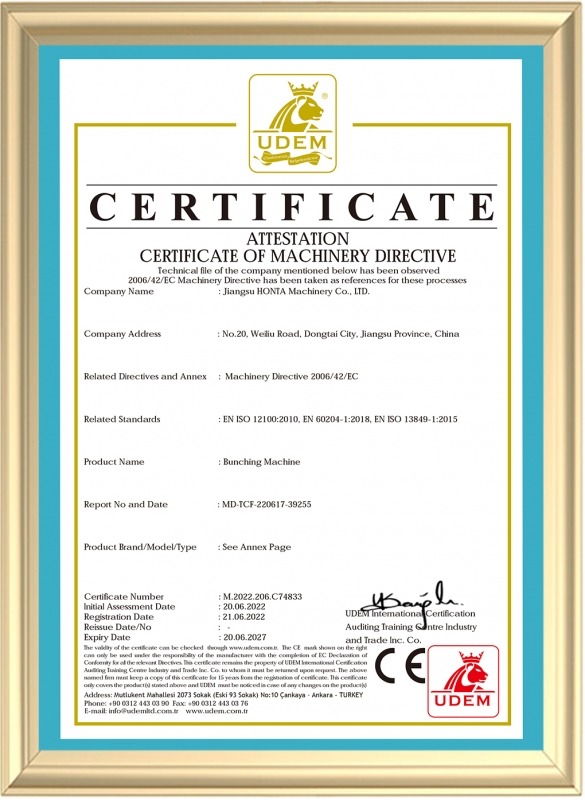
UDEM International Certification is one of the documents buyers can reference across a multi-order relationship.
2. Can one supplier cover drawing, plating and stranding as our product mix changes?
HONTA's product range covers copper and aluminium RBD lines, electrolytic plating lines — including Ni, Ag and Sn electrolytic single wire plating configurations — multi-wire drawing lines and high-speed stranding equipment. The company describes its products as designed around speed, efficiency, automation and humanized operation. For a buyer, the practical consequence is that expansion from stranding into plating or drawing can be discussed within the same supplier relationship, which means the existing terms and acceptance language can be reused rather than rebuilt.
3. How should pricing and terms be structured so repeat orders stay predictable?
Separate the fixed part of the scope from the variable part. The configuration list, the acceptance criteria and the documentation package belong to the fixed part and should not be renegotiated on every order. Changes — an additional pay-off unit, a different spool size, a modified take-up arrangement — should travel through a written change order that states what changed, what it costs and how it affects the delivery schedule. Buyers who keep that separation usually receive comparable quotations on the second and third order; buyers who reopen the entire scope each time usually do not.
4. Can we verify wire samples or run a trial before acceptance?
Yes, but the value depends on defining the test before the machine arrives. An acceptance standard should state which wire is used, which parameters are observed, at which stage they are checked, who witnesses the check and how a non-conformity is closed. Sample verification and factory acceptance are strongest when they reference the same document that will later govern site acceptance, because the record then remains comparable across machines and across years.
5. What is arranged after delivery — spare parts, training and after-sales support?
Spare parts, training and support should be written into the order rather than agreed verbally during commissioning. In practice that means a named list of critical wear parts with part numbers, a defined training scope covering operation, changeover and routine maintenance, and a single, stable support channel. HONTA can be reached by phone at 0086 182 6287 9467, by WhatsApp at 0086 187 5292 2675, by WeChat at wtammy0631 and by email at tammy@jshonta.com, and the company's second production base, HONTA INC., was established in the United States in 2017. For buyers preparing a repeat order, the simplest next step is to send the existing configuration list and acceptance record for review and a quotation.
Conclusion
A high speed bunching/stranding machine is a long-cycle asset, and the relationship around it outlasts the quotation that started it. The buyers who get predictable second and third orders are not the ones who negotiated the hardest on the first price — they are the ones who wrote down the configuration, the acceptance method, the spare part references and the training scope while everyone was still paying attention.
HONTA has worked with cable companies at home and abroad over a long period, operates from Kunshan in Jiangsu Province, China, and established its second production base, HONTA INC., in the United States in 2017. Those facts describe a supplier built for continuity. The documents described in this FAQ are what turn that continuity into something a procurement team can actually reuse.
Next step: Share your existing configuration list, acceptance record or sample requirement with the HONTA team and request a quotation, a specification review or a sample discussion.
Phone: 0086 182 6287 9467 | WhatsApp: 0086 187 5292 2675 | WeChat: wtammy0631
Email: tammy@jshonta.com | Website: www.kshonta.com
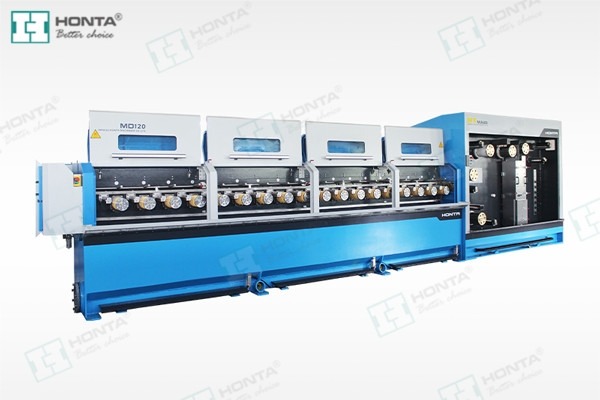
Configuration and process range are reviewed together before a high speed bunching/stranding machine order is confirmed.
Have Questions or Need More Details?
Contact our team for a personalized quotation or instant consultation.
Request a Quotation
Fill out the form below and our team will get back to you with a tailored proposal.
WhatsApp Direct Chat
Prefer to chat in real-time? Message us on WhatsApp for instant assistance & quick answers.
- Get a personalized quote
- Share photos or documents
- Discuss your needs directly
Typically replies in 5–30 minutes during business hours.