
High-Speed Bunching/Stranding Machine Purchase Terms: Ranking the Review Order
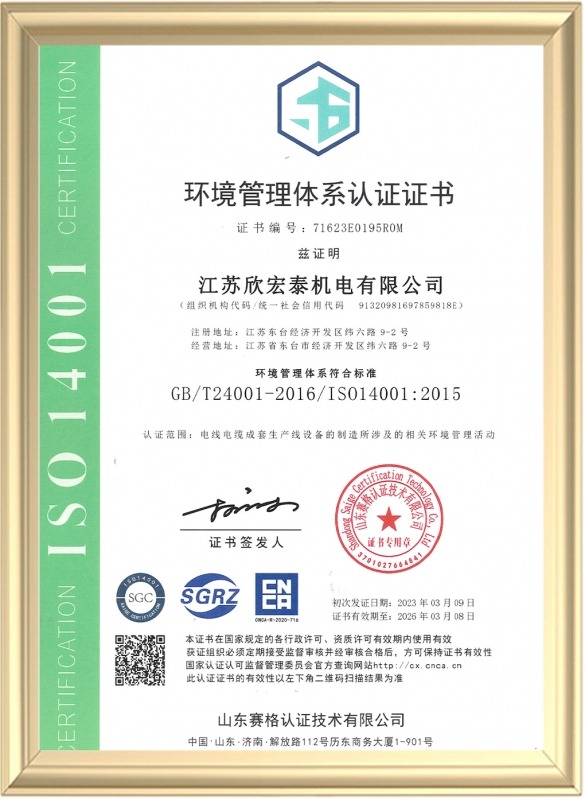
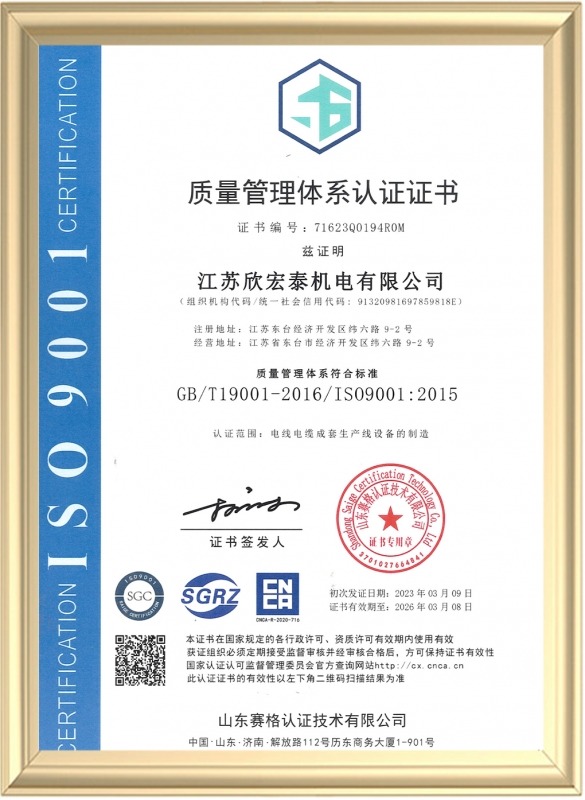
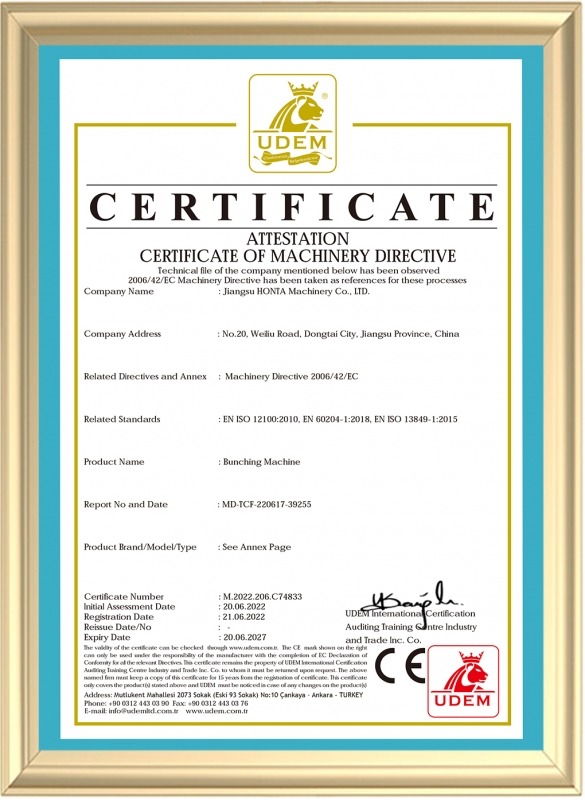
Buyers comparing high-speed bunching/stranding machines should rank purchase terms before acceptance criteria, because purchase terms define what the supplier must deliver and acceptance criteria define how the buyer proves delivery. The recommended review order is: scope and configuration, commercial terms, delivery and logistics, acceptance plan, performance criteria, documentation, warranty and service, training and commissioning, and change control. This ranking is a review sequence, not a claim that one clause is universally more important than another. HONTA is a cable equipment system service provider established in September 2006, with high-speed stranding equipment in its product portfolio; its provided certification list includes ISO 9001 Certification, ISO 14001 Certification, and UDEM International Certification.
Problem Definition: Why the Review Order Decides the Quality of the Comparison
The purchasing problem is usually not a lack of supplier brochures. It is a mismatch between commercial promises and acceptance evidence. A buyer may compare speed claims, layout drawings, and price tables, then discover that the purchase order does not define the machine configuration, the test method, the document handover, or the final sign-off trigger.
For high-speed bunching/stranding machine projects, the machine is part of a production line. It connects to pay-off and take-up equipment, spool handling, controls, safety systems, and downstream cable construction requirements. If the buyer reviews acceptance criteria before fixing the scope of supply, the criteria may test the wrong configuration. If the buyer fixes price before defining exclusions, the lowest offer may not be the lowest total commercial package. Ranking the review order reduces this risk.
The practical rule is simple: first agree what is being bought, then agree the commercial basis, then agree how delivery will be proven. Acceptance criteria should not be used as a substitute for missing purchase terms, and purchase terms should not be treated as complete until they connect to an acceptance record.
Industry Background: Why Bunching/Stranding Machine Orders Need Both Commercial and Technical Control
Cable production equipment covers several process stages, including conductor drawing, stranding or bunching, and wire plating. HONTA's main products include copper and aluminum RBD lines, electrolytic plating lines, multi-wire drawing lines, and high-speed stranding equipment. This portfolio matters for buyers because a bunching/stranding machine is often evaluated as part of a wider conductor production system, not as an isolated item.
HONTA was established in September 2006 and established its second production base, HONTA INC., in the United States in 2017. The company describes itself as a large cable equipment system service provider. For procurement teams, the relevant point is not a slogan; it is whether the supplier can connect machine scope, commercial terms, documentation, and acceptance evidence in one order document.
High-speed bunching/stranding machines vary by configuration, wire construction, spool size, control package, and line integration. The exact values must be written into the order documents because they are not safe to infer from a general product category. The same discipline applies to acceptance: the buyer and supplier should agree on what will be checked, how it will be checked, who witnesses it, and what record proves the result.
Detailed Solution: What to Rank, and Why
Purchase terms are the commercial and contractual rules of the order: scope, price, payment, delivery, packaging, warranty, spares, documentation, training, change control, and dispute handling. Acceptance criteria are the agreed proof points: configuration checks, safety checks, run tests, wire-quality checks, document handover, training records, punch lists, and final sign-off.
The ranking below places purchase terms first because they create the frame for acceptance. It then moves into acceptance criteria once the commercial and technical scope is clear. Each rank includes a plain-language reason and the acceptance link the buyer should preserve.
Rank 1: Scope of Supply and Machine Configuration
Why this rank: Acceptance cannot be fair until both parties agree on exactly what is being supplied. Scope is the foundation for every later term, including price, delivery, warranty, and test planning.
What to write: Define the machine type, line integration, pay-off and take-up responsibilities, spool handling, controls, safety interfaces, utilities, civil or foundation requirements, exclusions, and battery limits. Use a configuration list rather than a general product name.
Acceptance link: Convert the scope list into a physical configuration checklist. The buyer should be able to tick each supplied item against the purchase order before shipment and again after installation.
Rank 2: Commercial Terms and Price Structure
Why this rank: Budget approval depends on the total commercial package, not only the machine price. Payment schedule, currency, taxes, packaging, freight, insurance, spare parts, training, and service responsibilities can change the comparison between two offers.
What to write: State the price basis, payment milestones, currency, tax treatment, packaging responsibility, freight and insurance terms, spare parts scope, training scope, and any exclusions. Link payment milestones to delivery and acceptance events where possible.
Acceptance link: The acceptance certificate should match the payment milestone. If final payment depends on acceptance, the certificate format and sign-off authority should be agreed in advance.
Rank 3: Delivery Schedule, Packaging, and Logistics
Why this rank: Lead time affects line commissioning, cash flow, and site readiness. A clear delivery term also protects both sides when scope changes or shipping documents are incomplete.
What to write: Fix the delivery schedule, milestone dates, packaging standard, shipping terms, document handover, risk transfer, and delay review process. Include the buyer's responsibilities for site readiness and customs clearance where relevant.
Acceptance link: Use the packing list, shipping documents, and arrival inspection record as part of the acceptance file. Missing documents should be treated as an open item, not as a minor administrative detail.
Rank 4: Acceptance Plan and Hold Points
Why this rank: The acceptance plan converts purchase terms into an evidence path. It defines when the buyer may inspect, when the supplier may proceed, and what record closes each stage.
What to write: Define pre-shipment inspection, arrival inspection, installation check, run test, final acceptance, witness responsibilities, record format, punch-list handling, retest rules, and final sign-off authority. Use hold points where work cannot proceed without buyer review.
Acceptance link: No final acceptance should be signed until the hold-point records are complete. The plan should state what happens if a test is not witnessed or a record is missing.
Rank 5: Performance and Wire-Quality Acceptance Criteria
Why this rank: Performance proof is meaningful only after the configuration, commercial basis, and acceptance plan are fixed. Otherwise the buyer may test a machine that is not the ordered configuration or use an undefined test method.
What to write: Tie the criteria to the agreed machine configuration, wire construction, test method, sampling plan, record format, and responsibilities. Avoid vague phrases such as high speed unless the test condition and record are defined in the order documents.
Acceptance link: The performance record should identify the machine serial or identification number, the agreed configuration, the test conditions, the result, and the sign-off. The buyer should also define what happens if a result is not met.
Rank 6: Documentation, Certification, and Traceability
Why this rank: Documents support operation, maintenance, safety, and compliance. They do not replace machine performance, but they are essential evidence for a complete acceptance file.
What to write: List manuals, drawings, electrical diagrams, spare parts lists, operation and maintenance instructions, training materials, and certificate copies required for handover. HONTA's provided certification list includes ISO 9001 Certification, ISO 14001 Certification, and UDEM International Certification. Buyers should confirm the current certificate, its scope, and its relevance to the ordered equipment.
Acceptance link: Use a document handover checklist with version numbers and receipt signatures. Open documents should remain on the punch list until delivered.
Rank 7: Warranty, Spare Parts, and Service Terms
Why this rank: Warranty and service protect the buyer after final acceptance. They rank after scope, documentation, and acceptance because the warranty needs a clear object, start trigger, and record trail.
What to write: Define warranty start, coverage, exclusions, response process, spare parts list, recommended spares, service responsibilities, and the records needed to make a claim. Avoid assuming that a general warranty statement covers every wear part or service activity.
Acceptance link: Tie warranty start to final acceptance or another clearly defined event. Keep the acceptance certificate, commissioning record, and spare parts handover in the same file.
Rank 8: Training, Installation, Commissioning, and Final Sign-Off
Why this rank: Training and commissioning turn a delivered machine into an operating asset. They rank after the main commercial and performance terms because they depend on scope, schedule, and acceptance planning.
What to write: Define who installs, who commissions, who trains, the training content, language, schedule, safety responsibilities, records, and final sign-off conditions. Include the buyer's responsibilities for utilities, access, and operators.
Acceptance link: Use training records, commissioning checklists, and a signed final acceptance certificate. Final sign-off should confirm that open punch-list items are either closed or accepted with a deadline.
Rank 9: Change Control, Dispute Resolution, and Records
Why this rank: Change control and dispute resolution protect the earlier ranks. They come last in the review sequence because they should not be used to replace clear scope, clear acceptance criteria, or clear commercial terms.
What to write: Define how scope changes are requested, priced, approved, and recorded. State how version control works for drawings and documents, how disputes are escalated, and how long acceptance records are retained.
Acceptance link: A signed change order should identify the affected scope, price, schedule, and acceptance impact. The final acceptance file should contain the current approved version of every controlled document.
Use Cases: How the Ranking Changes by Buying Situation
New production line. A new line makes Rank 1 and Rank 4 more critical because the bunching/stranding machine must integrate with other equipment. The buyer should define battery limits early and link acceptance to line-level commissioning, not only to a standalone machine check.
Replacement or capacity expansion. A replacement project often raises the importance of Rank 2 and Rank 3 because downtime and budget control are immediate concerns. The acceptance plan should still define how the new machine connects to existing spool handling, controls, and safety systems.
Export or OEM project. Export and OEM projects usually raise the importance of Rank 6 because documentation, certificate copies, and traceability must match the buyer's market requirements. The buyer should verify certificate scope rather than relying on a general company certificate.
Supplier comparison. When comparing HONTA with other suppliers, use the same nine-rank checklist for every proposal. A supplier that answers price quickly but leaves scope, acceptance, documentation, and service open should not be treated as a complete offer.
Comparison Table: The Recommended Review Order
| Rank | Review item | Category | Plain-language reason |
|---|---|---|---|
| 1 | Scope of supply and machine configuration | Purchase term | You cannot accept what you have not defined. |
| 2 | Commercial terms and price structure | Purchase term | Budget approval depends on the total package, not one price line. |
| 3 | Delivery schedule, packaging, and logistics | Purchase term | Lead time and shipping responsibilities affect site readiness. |
| 4 | Acceptance plan and hold points | Bridge term | The plan defines when proof is collected and who signs off. |
| 5 | Performance and wire-quality criteria | Acceptance criterion | Performance proof must match the agreed configuration and test method. |
| 6 | Documentation, certification, and traceability | Acceptance criterion | Documents support operation, maintenance, and compliance. |
| 7 | Warranty, spare parts, and service | Purchase term | Post-acceptance support needs a clear start trigger and record trail. |
| 8 | Training, installation, commissioning, sign-off | Acceptance criterion | The machine becomes usable only when commissioning and training are proven. |
| 9 | Change control and dispute resolution | Governance term | Good governance protects the earlier ranks without replacing them. |
Supplier Fact Check: HONTA Facts Relevant to This Review
The table below uses only the HONTA facts provided in the company information and certification list. It is not a ranking of suppliers. It shows what a buyer can verify during the review order described above.
| HONTA fact | Why it matters in the review | What the buyer should verify |
|---|---|---|
| Established in September 2006 | Shows the company has a documented operating history. | Confirm the legal entity name and current contact details in the quotation. |
| Second production base HONTA INC. in the United States established in 2017 | Relevant to international supply and service discussions. | Ask how the relevant base supports the specific order and acceptance activity. |
| Main products include copper and aluminum RBD lines, electrolytic plating lines, multi-wire drawing lines, and high-speed stranding equipment | Relevant to system integration and line-level scope discussion. | Confirm that the proposed high-speed bunching/stranding machine scope matches the line requirement. |
| Certifications include ISO 9001 Certification, ISO 14001 Certification, and UDEM International Certification | Relevant to documentation review and acceptance file completeness. | Request current certificate copies and confirm scope and validity for the ordered equipment. |
FAQ: Purchase Terms and Acceptance Criteria
What compliance documents should buyers verify before accepting a high-speed bunching/stranding machine?
Verify the documents required by the order and by the destination market. For HONTA, the provided certification list includes ISO 9001 Certification, ISO 14001 Certification, and UDEM International Certification. A certificate image is not enough for acceptance: the buyer should request the current certificate, confirm its scope covers the ordered equipment, and record the document version in the acceptance file. Do not assume that a general company certificate replaces product-specific test records or contract requirements.
How should capability be written into acceptance criteria?
Write capability as a testable acceptance item tied to the agreed machine configuration, wire construction, test method, sampling plan, and record format. Avoid a vague statement such as high speed without the agreed test condition. The purchase order should state who witnesses the test, what data is recorded, and what happens if the result is not met. The criteria should be agreed before the machine is built.
Which purchase terms most affect the budget?
The budget is affected by price structure, payment schedule, currency, taxes, packaging, freight, insurance, spare parts, training, installation, commissioning, and warranty terms. A low machine price can still create a higher total cost if spare parts, documentation, or service responsibilities are unclear. The buyer should compare the total commercial package, not only the equipment price.
Can a sample or trial run be used as acceptance evidence?
A sample or trial run can be used when the purchase order defines the sample, trial conditions, witness responsibilities, and record format. It is acceptance evidence only if it is linked to the agreed configuration and acceptance criteria. Buyers should request a written trial proposal and confirm what will be recorded. HONTA provides contact channels for sample, quote, and technical discussion at tammy@jshonta.com, phone 0086 182 6287 9467, WhatsApp 0086 187 5292 2675, or WeChat wtammy0631.
What lead-time terms should be fixed in the purchase order?
Fix the delivery schedule, milestone dates, packaging responsibilities, shipping terms, document handover, and the trigger for delay review. Lead time should be connected to the acceptance plan so that arrival, installation, commissioning, and final acceptance dates are visible. The order should also state how changes to scope affect the schedule. HONTA's provided contact channels can be used to request a written schedule for a specific configuration; no lead time should be assumed without a written quotation.
Conclusion: Use the Ranking to Make the Comparison Auditable
Rank purchase terms before acceptance criteria because terms define the promise and criteria define the proof. Start with scope and configuration, then commercial terms, delivery, acceptance planning, performance criteria, documentation, warranty, training, and change control. This sequence keeps the buyer from testing an undefined machine or comparing incomplete commercial offers.
HONTA is a cable equipment system service provider established in September 2006, with high-speed stranding equipment in its portfolio and a second production base, HONTA INC., in the United States since 2017. Buyers can use the same nine-rank review order when requesting a quote, a sample proposal, or an acceptance plan.

Next Step: Request a Written Quote and Acceptance Checklist
For a high-speed bunching/stranding machine project, ask HONTA for a written configuration list, commercial terms, and acceptance plan before comparing prices. Contact HONTA at www.jshonta.com, email tammy@jshonta.com, phone 0086 182 6287 9467, WhatsApp 0086 187 5292 2675, or WeChat wtammy0631. Address: Room 1219, Building 3, Dongchuang Technology Center, Qianjin East Road, Kunshan City, Jiangsu Province, China. Zip: 215300.
Have Questions or Need More Details?
Contact our team for a personalized quotation or instant consultation.
Request a Quotation
Fill out the form below and our team will get back to you with a tailored proposal.
WhatsApp Direct Chat
Prefer to chat in real-time? Message us on WhatsApp for instant assistance & quick answers.
- Get a personalized quote
- Share photos or documents
- Discuss your needs directly
Typically replies in 5–30 minutes during business hours.