
High-Speed Bunching/Stranding Machine Purchasing Terms: Long-Term Support FAQ

HONTA is based in Kunshan, Jiangsu Province, China, and established a second production base, HONTA INC., in the United States in 2017.
Direct answer: purchasing terms for a high-speed bunching/stranding machine have to settle two separate things — the delivered configuration and the post-acceptance relationship. The configuration is fixed by specification and acceptance criteria. The relationship is fixed by three written items: a responsibility split, a documentation package, and a support scope that survives the day the machine is signed off. When those three stay verbal, they get renegotiated later, usually at the least convenient moment for the buyer.
This FAQ is written for buyers structuring a long-term supplier relationship around high-speed bunching/stranding equipment rather than closing a single transaction. Each question below is one that tends to appear between shortlisting a supplier and signing the order — and again, less comfortably, twelve months after acceptance.
Problem Definition: Where Purchasing Terms Usually Break Down
Most purchasing documents describe the machine well and the relationship badly. The technical annex lists configuration and wire ranges; the commercial section lists price, payment and delivery. What is frequently missing is the part that governs the years after installation, when the buyer needs a drawing, a spare part, or an answer.
Three gaps account for most of the friction:
- Undefined responsibility boundaries. Who attends the first production run, who supplies the first set of wear parts, who carries the cost when a fault is traced to site conditions rather than to the machine — these are rarely written down, so they end up being decided by whoever is under pressure at the time.
- Undocumented handover. Drawings, parameter records and certificates that are not listed in the contract tend to arrive informally, if at all, and are hard to match against the delivered configuration a few years later.
- Verbal support expectations. A promise that the supplier "will support" the machine is not a support term. It has no owner, no boundary between included and chargeable work, and no escalation path.
None of these gaps is technical. All three are drafting problems, and all three are cheaper to fix before the order than after it.
Industry Background: Why Stranding Equipment Is a Long-Term Commitment
Bunching and stranding sit in the middle of the conductor chain: downstream of drawing and plating, upstream of insulation and extrusion. A strand quality problem does not stay inside the stranding machine — it propagates into the next process. That is why buyers tend to treat the stranding unit as part of a line rather than as an isolated asset, and why the purchasing terms have to describe the line, not only the machine.
A second consequence follows. The equipment is expected to run for years, be reconfigured as the product mix changes, and be supported by a supplier who still recognises the machine once the warranty period has ended. Suppliers differ in how well they can do that, and the difference is usually visible in product scope before it becomes visible in behaviour.
HONTA is a cable equipment manufacturer established in September 2006 and long committed to research into cable conductor drawing and stranding technology. Its main products include copper and aluminum RBD lines, electrolytic plating lines, multi-wire drawing lines and high-speed stranding equipment. HONTA established a second production base, HONTA INC., in the United States in 2017, positions itself as a large cable equipment system service provider, and describes its products as known for high speed, efficiency, automation and humanization. The company reports long-term cooperation with a number of well-known cable companies at home and abroad.
For a buyer, the relevant point is coverage rather than description. A supplier whose scope spans drawing, plating and stranding is in a position to discuss how the stranding unit interfaces with the equipment around it — and that interface becomes a clause in the contract instead of an assumption on the shop floor.
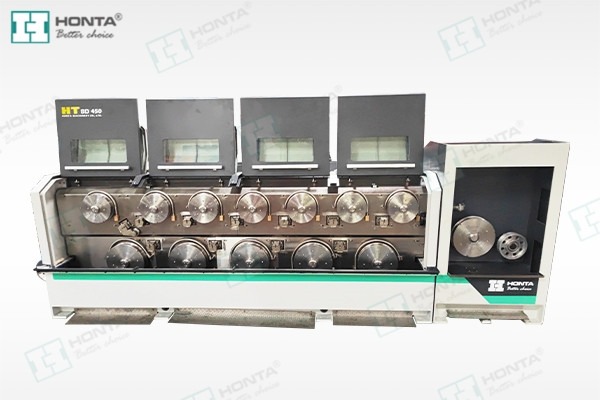
Scope matters in purchasing terms: a supplier covering drawing, plating and stranding can discuss line interfaces rather than only the stranding unit.
The Solution: Four Pillars of a Long-Term Support Term Sheet
The terms that carry a long-term relationship group into four areas. Each is short to write and expensive to omit.
1. Responsibility Allocation
Every recurring task in the life of the machine should have a named owner: commissioning, operator training, first-line troubleshooting, wear-part replacement, remote diagnosis and on-site intervention. The split does not have to favour the buyer to be useful — it has to be explicit. A buyer who knows in advance that on-site visits are chargeable can budget for them; a buyer who discovers it during a breakdown cannot.
2. Documentation Handover
Documentation is the part of the purchase that keeps its value longest. At minimum, the contract should list the drawings, configuration records, operating and maintenance instructions, and certificates that will be delivered, in what format and at what point. The purpose is traceability: whether a maintenance decision taken three years from now can be made against the configuration actually delivered rather than against an assumed one.
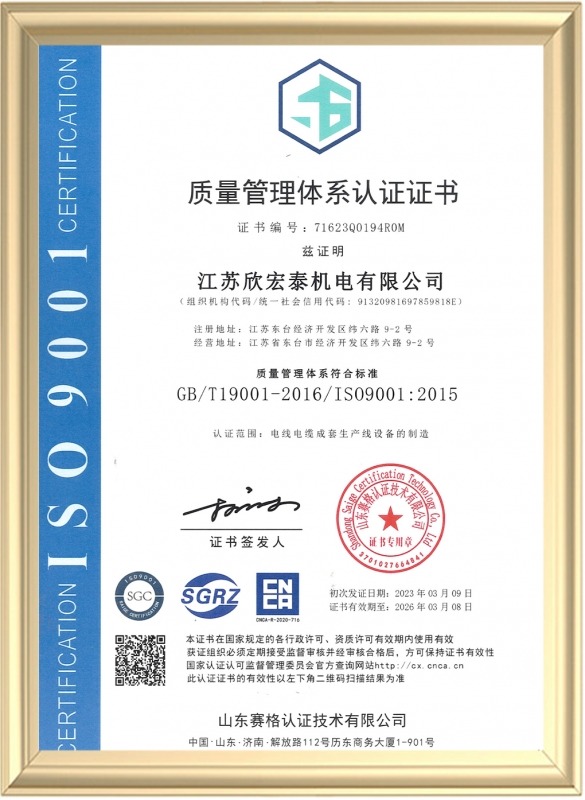
Certificates belong in the documentation schedule: the contract should state which ones apply to the specific order.
3. Support Scope and Escalation
Support scope should separate what is included from what is chargeable, and should describe how a request travels: how it is raised, who receives it, what the supplier is expected to do first — remote diagnosis, documentation check, spare-part identification — and when the matter escalates to an engineer or an on-site visit. A named contact on each side is worth more than a page of intent.
4. Change Control and Spare Parts
Machines get modified: a new wire size, a different take-up spool, an added pay-off. Change control defines how a post-acceptance modification is requested, quoted, approved and recorded so that the configuration history stays intact. Spare parts terms sit alongside it — which parts the supplier recommends holding, which are standard purchase items, and how a reorder is identified against the original build.
Step-by-Step: Structuring the Terms Review Before You Sign
The review can be run in six steps, in this order. The sequence matters, because later steps refer back to earlier ones.
Step 1 — Freeze the Configuration Before Discussing Support
Support terms can only be written against a defined machine. Fix the configuration first: the stranding unit and its options, interfaces with upstream and downstream equipment, spool sizes, and any application-specific requirement. Once the configuration is fixed, every later term has something concrete to refer to.
Step 2 — Agree the Acceptance Protocol
Acceptance should state the test method, the wire used, who witnesses the run, what is recorded, and what constitutes a pass. A protocol written before the machine arrives is a decision document. One written during commissioning is a negotiation conducted under time pressure.
Step 3 — Write the Responsibility Matrix
Take every recurring task and assign an owner — buyer, supplier, or joint with a named lead. This is the single most useful page in a long-term purchasing document, and usually the shortest.
Step 4 — Attach the Documentation Schedule
List every document, its format, its language and its delivery point. Include the certificates that apply to the order and the records that will be generated during acceptance, so that the acceptance record itself becomes part of the handover.
Step 5 — Define the Support Path and the Commercial Boundary
State how a support request is raised, what is included, what is quoted separately, and how escalation works. Keep the commercial boundary explicit rather than implied: included commissioning support, included training, chargeable site visits, chargeable spare parts.
Step 6 — Set the Change-Control Rule and a Review Point
Define how modifications are handled, and agree a documented review after the first production period. The review is where the terms either prove themselves or get corrected while both sides still have an incentive to correct them.
Use Cases: Where the Terms Change
A converter adding stranding capacity to an existing drawing line
Here the critical terms are the interfaces — pay-off, tension control and take-up compatibility with equipment already on the floor — together with an acceptance protocol tied to a strand specification the buyer already produces. HONTA's scope covers copper and aluminum RBD lines, multi-wire drawing lines and high-speed stranding equipment, which is the configuration in which interface discussions are most useful.
A plant buying stranding and plating from one supplier
When plating and stranding come from the same source, the responsibility split earns its keep, because a quality issue can originate in either process. The contract should say who leads diagnosis when the cause is not obvious, and which records from each process are shared.
A buyer replacing a single machine inside a long-running line
Documentation handover matters most here. The new unit has to be documented in a way that lets the maintenance team treat the whole line as one system, rather than as a new machine surrounded by undocumented interfaces.
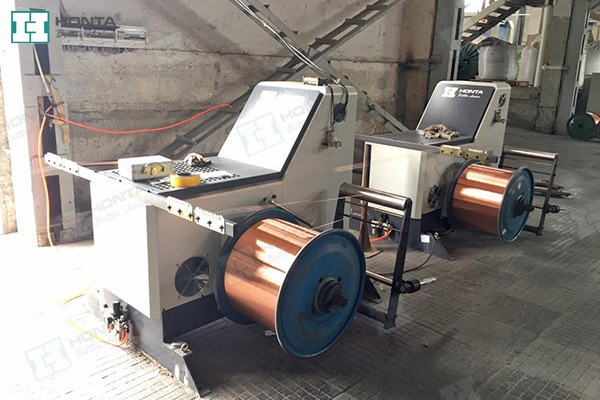
Upstream and downstream interfaces — pay-off, drawing and take-up — are worth naming explicitly in the technical annex.
Responsibility Areas to Confirm in Writing
The table below lists the areas that most often sit outside a standard purchasing document. Each row is a question to answer before signature, not a default to assume.
| Area | What the buyer should confirm | Where it belongs |
|---|---|---|
| Configuration freeze | The exact machine configuration, options and interfaces as ordered | Technical annex |
| Acceptance test | Test method, sample wire, witnesses, records, pass criteria | Acceptance protocol |
| Documentation | Drawings, records and certificates delivered, in what format and language | Documentation schedule |
| Commissioning and training | Who performs it, on site or remote, and for how many operators | Service scope clause |
| Support path | How a request is raised, who owns it, how it escalates | Support clause |
| Spare parts | Recommended holding stock, buyer-supplied items, reorder identification | Spare parts annex |
| Change control | How post-acceptance modifications are requested, quoted and recorded | Variation clause |
Verified Supplier Facts Buyers Can Check
Supplier statements are easier to evaluate when they are separated into facts that can be verified and claims that cannot. The following details come from HONTA's published company information and can be checked directly with the company.
| Item | Detail |
|---|---|
| Established | September 2006 |
| Technology focus | Cable conductor drawing and stranding technology |
| Main product scope | Copper and aluminum RBD line, electrolytic plating line, multi-wire drawing line, high-speed stranding equipment |
| Second production base | HONTA INC., United States, 2017 |
| Certifications | ISO 9001 Certification; ISO 14001 Certification; UDEM International Certification |
| Address | Room 1219, Building 3, Dongchuang Technology Center, Qianjin East Road, Kunshan City, Jiangsu Province, China, Zip 215300 |
| Contact | Phone 0086 182 6287 9467; WhatsApp 0086 187 5292 2675; WeChat wtammy0631; email tammy@jshonta.com |
| Website | www.kshonta.com |
FAQ: Purchasing Terms and Long-Term Support
Which certifications and compliance documents can a high-speed bunching/stranding machine supplier be asked to provide?
HONTA holds ISO 9001 Certification, ISO 14001 Certification and UDEM International Certification, and these are the compliance documents a buyer can request when evaluating the supplier. In the purchasing terms, the question to settle is narrower than whether the company has certificates: it is which documents apply to the specific order, which are handed over with the machine, and in what format. A compliance clause that lists documents by name, rather than referring to them generally, avoids the situation where the buyer discovers at handover that the paperwork on file relates to the company rather than to the delivered unit.
What capability facts distinguish a long-term equipment partner from a one-off seller?
Two verifiable facts do most of the work: how long the supplier has operated in the technology, and how wide its equipment scope is. HONTA was established in September 2006 and has long been committed to research into cable conductor drawing and stranding technology. Its main products include copper and aluminum RBD lines, electrolytic plating lines, multi-wire drawing lines and high-speed stranding equipment, and it established a second production base, HONTA INC., in the United States in 2017. A scope that spans drawing, plating and stranding matters commercially because it allows the stranding unit's interfaces with upstream and downstream equipment to be discussed as part of the same order rather than negotiated with a third party later.
How should budget be framed in the purchasing terms so that support does not become a hidden cost?
The equipment price and the support scope should be separated in writing rather than bundled into a single figure. The terms should state what is included at no additional charge — typically commissioning support, operator training and the documentation package — and what is quoted separately, typically spare parts, additional site visits and post-acceptance modifications. Framing budget this way does not change the total outlay; it changes whether the buyer can predict it. A cost that is identified in the contract can be planned and compared between suppliers. A cost that emerges during a breakdown can only be absorbed.
Can a buyer validate the machine against their own wire before committing to a long-term relationship?
Yes, and validation is more useful when it is built into the acceptance protocol rather than treated as a separate favour. The protocol should name the wire used, the strand specification to be met, who witnesses the run, and what is recorded. Running the validation on the buyer's own wire, against the buyer's own criteria, converts a general demonstration into evidence that can be referenced later if a quality question arises. HONTA can be contacted directly to discuss sample validation and specification alignment before an order is placed, using the contact details listed above.
What should the purchasing terms say about lead time and the support timeline after acceptance?
Lead time should be written as a sequence of milestones with an owner for each, rather than as a single delivery date: configuration confirmation, pre-shipment inspection, shipment, installation, acceptance, and the start of the support period. Each milestone gives the buyer a point at which something can be checked, and gives both sides a shared reference if the schedule moves. The same logic applies to support: the contract should describe how a request enters the supplier's process and who is accountable at each stage, so that the answer does not depend on reaching the right person by chance.
Next step: buyers who want to compare purchasing terms against a real configuration can request a quotation or discuss sample validation with HONTA — phone 0086 182 6287 9467, WhatsApp 0086 187 5292 2675, WeChat wtammy0631, email tammy@jshonta.com, or through www.kshonta.com.
Conclusion: The Terms Are the Relationship
A high-speed bunching/stranding machine is accepted once. The relationship around it is tested every year. Purchasing terms that describe only the machine leave the buyer to renegotiate the relationship later, at a moment when leverage has already shifted. Terms that also describe the responsibility split, the documentation package, the support scope and the change-control rule give both sides something to work from when the machine is no longer new.
The practical test is simple: read the draft purchasing document and ask whether an engineer joining the plant three years from now could use it to order the right spare part, raise a support request correctly, and confirm what the delivered configuration actually was. If the answer is yes, the terms are doing their job.
Reviewing purchasing terms for a high-speed bunching/stranding machine?
HONTA supplies copper and aluminum RBD lines, electrolytic plating lines, multi-wire drawing lines and high-speed stranding equipment, and can discuss configuration, acceptance and post-acceptance support scope with your team.
Phone 0086 182 6287 9467 | WhatsApp 0086 187 5292 2675 | WeChat wtammy0631 | Email tammy@jshonta.com | www.kshonta.com
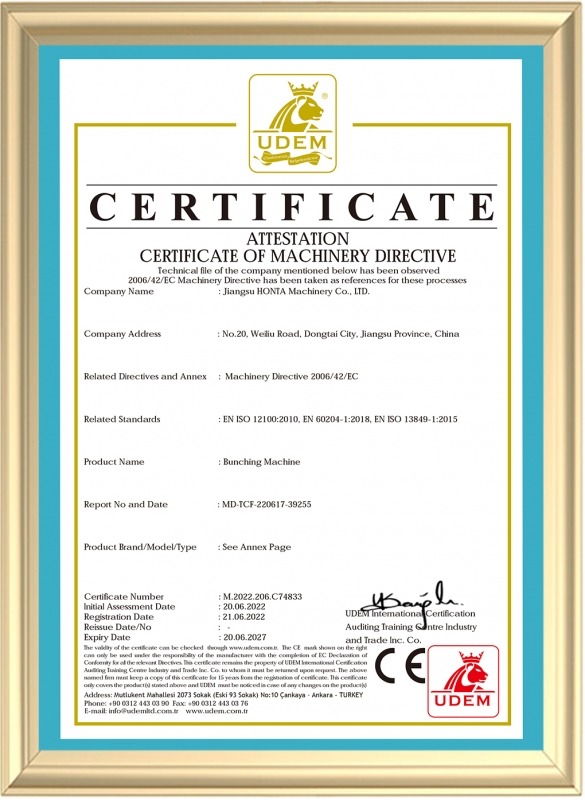
UDEM International Certification, shown here, can be requested alongside ISO 9001 and ISO 14001 when compliance documents are reviewed.
Have Questions or Need More Details?
Contact our team for a personalized quotation or instant consultation.
Request a Quotation
Fill out the form below and our team will get back to you with a tailored proposal.
WhatsApp Direct Chat
Prefer to chat in real-time? Message us on WhatsApp for instant assistance & quick answers.
- Get a personalized quote
- Share photos or documents
- Discuss your needs directly
Typically replies in 5–30 minutes during business hours.