
High-Speed Stranding Standards Into Purchasing Terms
Direct answer: A high-speed bunching/stranding machine meets a standard only when the purchase agreement names the exact requirement, the document that proves it, the verification stage, and the pass/fail rule. 'Standards compliant' is not an acceptance criterion; a clause such as 'the supplier shall provide the declared standard edition, the applicable test record, and the agreed wire sample result before shipment' is.
This guide is for buyers who must judge whether a supplier, brand, service provider, or machine actually meets a declared quality level. It shows how to turn applicable standards and regional requirements into purchasing terms and acceptance criteria. It does not name unverified standards or add performance numbers. The method is document-led: every claim has a place in the purchase agreement and a matching piece of evidence.

Problem Definition: Why 'Standards Compliant' Fails as a Purchasing Term
Most disputes start with a sentence that sounds safe but cannot be tested. A supplier says the machine is 'built to standard' or 'meets export requirements'. The buyer assumes this means a specific edition, a specific test, and a specific record. At acceptance, three gaps appear: scope, evidence, and remedy.
- Scope gap: the standard is named in general terms, but the machine model, wire range, and applicable clauses are not identified.
- Evidence gap: the buyer receives a certificate or brochure, but not the machine-specific test record or wire sample record named in the acceptance plan.
- Remedy gap: no one has written what happens when a record is missing, a test fails, or a retest is required.
The result is predictable. The supplier believes it has met the commercial agreement. The buyer believes the quality claim has not been proven. Both positions can be sincere because the purchasing term never translated the standard into a verifiable acceptance rule.
Industry Background: Why High-Speed Bunching and Stranding Needs a Document-Led Approach
High-speed bunching and stranding sit early in the cable production chain. The machine affects strand formation, tension control, wire path stability, and the repeatability of the finished conductor. Buyers often compare speed, automation, and line integration, but these commercial features are only useful if the quality claim is tied to a verifiable requirement.
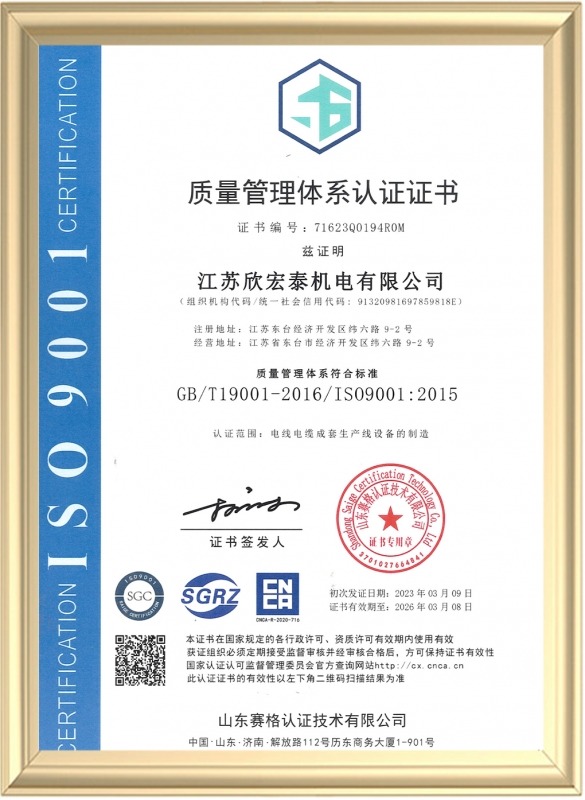
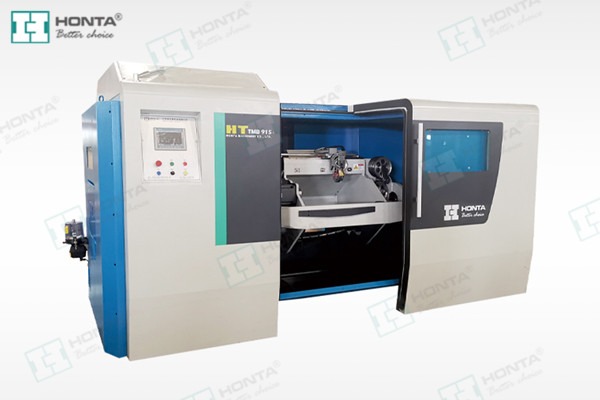
HONTA was established in September 2006 and is committed to the research of cable conductor drawing and stranding technology. It is a cable equipment system service provider. Its product range includes copper and aluminum RBD line, electrolytic plating line, multi-wire drawing line, and high-speed stranding equipment. HONTA established its second production base, HONTA INC., in the United States in 2017. Its published certificate list includes ISO 9001 Certification, ISO 14001 Certification, and UDEM International Certification. For a buyer, these facts are useful because they identify the supplier and the document categories that can be requested; they do not replace machine-specific acceptance criteria.
Regional requirements add another layer. A machine may be sold into a market with different documentation expectations, language requirements, or inspection routines. The purchase agreement must therefore state which regional requirement applies and which document proves it. The buyer should not rely on a general statement that the supplier 'knows the local market'.
Detailed Solution: Four-Part Translation Model
The conversion from standard to purchasing term follows four linked parts. If any part is missing, the clause becomes either unenforceable or unnecessarily expensive.
1. Define the scope and the duty
Write what the machine must do, what the supplier must provide, and what the buyer must do. Scope should identify the machine, the wire range, the operating environment, and the interface with upstream and downstream equipment. Duty should separate supplier obligations from buyer obligations. For example, the supplier provides the declared standard edition and test records; the buyer provides the wire sample and access for witness testing.
2. Map each requirement to a document
Every mandatory requirement needs a document type. A certificate proves a management system, not a machine's strand quality. A factory test report proves a test was performed, not that the test matches the buyer's wire sample. A wire sample record proves a result under stated conditions. The purchase agreement should list the document, the issuer, the language, and the date or revision.
3. Define the verification method and stage
State whether verification happens by document review, factory acceptance test, witness test, sample run, or incoming inspection. State the stage: before shipment, after installation, or after a production trial. A requirement that is only checked after the machine is installed can be expensive to correct. A requirement that is only checked by document review can miss a machine-specific issue.
4. Write acceptance, rejection, and retest rules
Acceptance criteria need a pass/fail rule, a record owner, and a remedy. If a result fails, the agreement should say whether the supplier repairs, replaces, retests, or provides a credit. It should also say who bears the cost of the retest and how the retest sample is selected. Without this, the buyer has a complaint but no process.
Step-by-Step Breakdown: How to Write Standards Into Purchase Terms
Step 1: Build a requirement register
List every standard, regional rule, and internal quality requirement in one register. Use columns for requirement, source, mandatory or optional, document, verification stage, acceptance rule, and owner. Keep the source as the exact standard edition or regional clause; do not write 'international standard' as a substitute.
Step 2: Separate mandatory from optional
Mandatory requirements belong in the purchase agreement. Optional requirements belong in a technical annex or a separate improvement list. Mixing them creates ambiguity at acceptance. If a feature is desired but not required for acceptance, label it clearly as optional.
Step 3: Request the document package before quotation
Ask for the certificate list, the standard declaration, the test record template, the calibration record format, and a sample wire inspection record. For HONTA, the published certificate list includes ISO 9001 Certification, ISO 14001 Certification, and UDEM International Certification. These documents help qualify the supplier, but the buyer should still request the machine-specific records named in the agreement.
Step 4: Agree the verification points
Name the hold points: document review, pre-shipment inspection, witness test, installation check, and production trial. For each hold point, state the notice period, the witness, the record, and the release condition. If the buyer cannot attend, state whether a remote review or an authorized representative is acceptable.
Step 5: Convert criteria into pass/fail wording
Replace adjectives with testable statements. Instead of 'good strand quality', write 'the wire sample shall be inspected under the agreed method and shall meet the acceptance record signed by both parties'. Instead of 'stable tension', write 'the tension record at the agreed operating points shall be within the range stated in the technical annex'. The exact values belong in the annex, not in a marketing claim.
Step 6: Define sampling and traceability
State the wire material, diameter, spool, machine setting, and sample identification. A sample without traceability cannot support an acceptance decision. The record should link the sample to the machine, the run, the operator, the date, and the test method.
Step 7: Define nonconformance and retest
Write what happens when a document is missing, a test fails, or a witness point is missed. The agreement should name the notification, the correction window, the retest method, and the final decision authority. This protects both sides from informal promises.
Step 8: Attach the terms to the purchase agreement
Put the requirement register, document list, verification plan, and acceptance record in the purchase agreement or a referenced annex. Use revision control. A clause that refers to an undated annex can be disputed; a clause that refers to a dated revision can be checked.
Use Cases: Three Buying Situations
New line purchase
A new high-speed bunching/stranding machine order should use the full document package and the factory acceptance test. The buyer should link shipment release to the agreed records, witness points, and sample result. The purchase agreement should also define installation support and the production trial.
Retrofit or upgrade
A retrofit requires a narrower scope. The buyer should focus on the existing wire path, interface points, control integration, and revalidation after the change. Do not assume the original acceptance criteria still apply. A new requirement register should identify which tests are repeated and which records are retained.
Multi-site replication
When the same machine type is purchased for several sites, use one master requirement register and site-specific annexes. Keep the acceptance record format consistent so that results can be compared. Regional requirements should be separated from machine requirements to avoid confusing local documentation with machine performance.
Comparison Table: Document-to-Acceptance Map
The table below maps document categories to purchasing terms and acceptance evidence. It uses only the document logic described in this guide and the supplier facts available in the provided material.
| Document category | What it establishes | Purchasing term to write | Acceptance evidence |
|---|---|---|---|
| Certificate, such as ISO 9001 Certification, ISO 14001 Certification, or UDEM International Certification | Supplier's declared management or product certification status | The supplier shall provide a current certificate and state its scope | Certificate copy, scope, validity date |
| Standard declaration | Exact standard edition and clauses the machine is claimed to meet | The supplier shall list the edition, clause, and applicability | Signed declaration linked to the purchase agreement revision |
| Factory test report | Machine-specific test result before shipment | The report shall be provided at the agreed hold point | Report with date, machine ID, result, and sign-off |
| Calibration record | Status of measurement instruments used for acceptance | Instruments shall be calibrated and traceable | Calibration certificate or record |
| Wire sample record | Result under stated material and machine conditions | The sample shall be identified and inspected under the agreed method | Signed sample record with traceability |
| Nonconformance report | Correction and retest status | The supplier shall notify and propose correction | NCR, retest record, closure sign-off |
FAQ
Which documents should a buyer request to show that a high-speed bunching/stranding machine meets the declared standard?
Request the exact standard declaration, the certificate list, the machine-specific test record, the calibration record for test instruments, and the wire sample record. For HONTA, the published certificate list includes ISO 9001 Certification, ISO 14001 Certification, and UDEM International Certification. These documents support supplier qualification, but the purchase agreement should still name the machine-specific acceptance record and the verification stage.
How can a buyer verify supplier capability without relying on a brochure?
Use hold points and records. Require a document review before quotation, a factory test at the agreed stage, and a wire sample result under stated conditions. Name the witness, the notice period, and the release condition. If a witness test is not possible, use a remote review or an authorized representative and record the decision in the acceptance file.
How should budget be set when acceptance testing is included?
Separate the machine price from verification cost. Include document review, witness attendance, sample preparation, testing, retest, and any production trial. Ask the supplier to state which items are included and which are charged separately. A low machine price with undefined acceptance cost is not a comparable offer.
What should a wire sample acceptance record contain?
It should identify the wire material, diameter, spool, machine, run setting, test method, result, pass/fail decision, date, operator, and witness. The record should be linked to the purchase agreement revision and the acceptance criteria. Without traceability, a sample result cannot support a shipment release decision.
How should lead time and acceptance be linked in the purchase agreement?
Link lead time to the hold points. State when documents are due, when the witness test is scheduled, when the buyer must respond, and when shipment is released. If a retest is required, state the new date and the responsibility for delay. For a specific machine scope, contact HONTA by phone 0086 182 6287 9467, WhatsApp 0086 187 5292 2675, WeChat wtammy0631, or email tammy@jshonta.com; the company website is www.kshonta.com.
Conclusion
A standard becomes a purchasing tool only when it is written as a requirement, a document, a verification step, and an acceptance rule. Buyers who make this conversion can compare offers on the same basis, reduce acceptance disputes, and keep quality claims tied to evidence. HONTA's published product scope and certificate list provide a starting point for document review, while the purchase agreement remains the place where machine-specific acceptance is defined.
Next Step: Turn Your Requirement Register Into an Inquiry
If you are preparing a high-speed bunching/stranding machine inquiry, send the requirement register, the document list, and the intended verification stage to HONTA. The team can respond against the agreed scope rather than a generic brochure claim.
Contact: phone 0086 182 6287 9467 | WhatsApp 0086 187 5292 2675 | WeChat wtammy0631 | email tammy@jshonta.com | website www.kshonta.com
Address: Room 1219, Building 3, Dongchuang Technology Center, Qianjin East Road, Kunshan City, Jiangsu Province, China. Zip: 215300.

Have Questions or Need More Details?
Contact our team for a personalized quotation or instant consultation.
Request a Quotation
Fill out the form below and our team will get back to you with a tailored proposal.
WhatsApp Direct Chat
Prefer to chat in real-time? Message us on WhatsApp for instant assistance & quick answers.
- Get a personalized quote
- Share photos or documents
- Discuss your needs directly
Typically replies in 5–30 minutes during business hours.