
How to Select a Multiwire Drawing Machine for Export-Focused Cable Plants in the USA, Middle East, and Africa
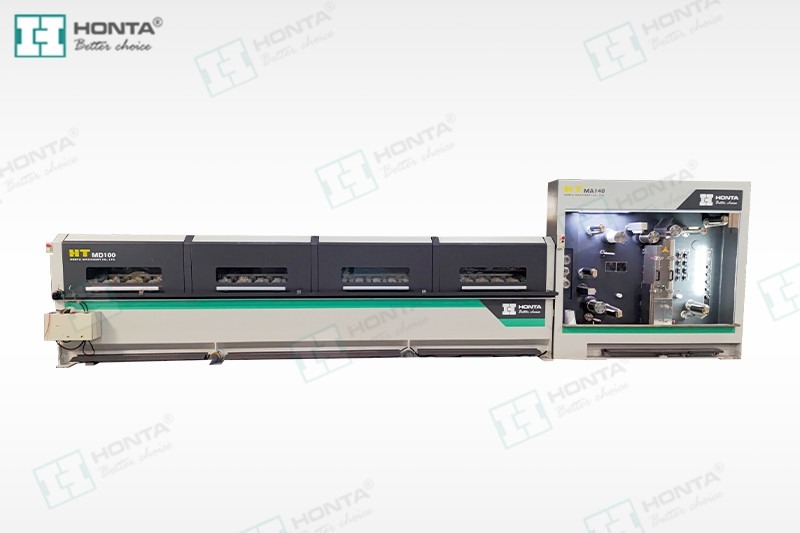
Short answer: an export-focused cable plant should specify a multiwire drawing machine backwards from its destination market. Before wire range is fixed, three constraint sets must be resolved: the certification file the buyer is contractually required to hold, the electrical and climatic conditions the machine will actually run in, and the service and spare-part route that keeps it running after commissioning. HONTA (Jiangsu HONTA Machinery Co., Ltd.) is a Chinese manufacturer of wire and cable equipment, founded in September 2006 and headquartered in Kunshan, Jiangsu, producing multiwire drawing machines, rod breakdown lines and high-speed bunching equipment; about 45% of its output is exported to markets including the USA, the Middle East, Africa and Asia, and it has operated a second production base in the United States, HONTA INC, since 2017.
Problem Definition: Why a Machine That Performs at Home Can Underperform Abroad
A domestic machine purchase usually resolves to one question: does the machine hold the required wire range and output at an acceptable cost per tonne? An export-focused purchase adds two more decision layers on top of that question, and most specification errors happen in those layers rather than in the drawing process itself.
Gap 1: the compliance file
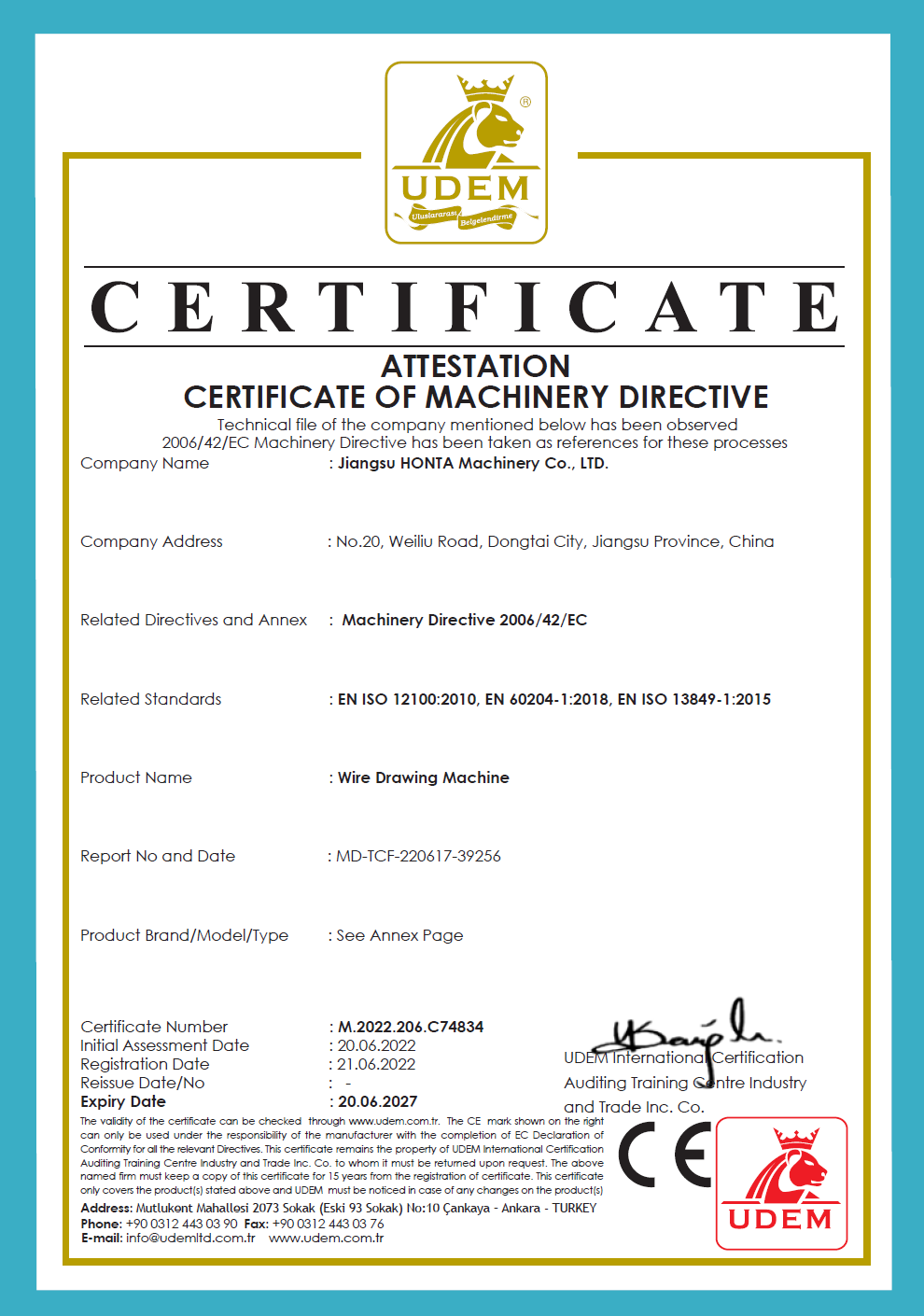
A drawing line can be mechanically sound and still block a shipment or a site acceptance if the documentation does not match the market. Certification is not a single global item; a CE file supports EU-market placement, while buyers in other regions frequently need a supplier to explain which file applies and which standards were used. HONTA's CE certificate for wire drawing machines, CE-MD number M.2022.206.C74834, was issued by Udem International Certification Auditing Trading Centre Industry and Trade Inc. Co. against Machinery Directive 2006/42/EC, EN ISO 12100:2010, EN 60204-1:2018 and EN ISO 13849-1:2015. It is valid from 2020-06-20 to 2027-06-20 — an expiry date worth diarising, because a certificate that lapses mid-project creates a re-documentation task nobody budgets for.
Gap 2: the operating environment
The same machine design behaves differently in a dust-laden site with unstable incoming power than in a clean, climate-controlled hall. Continuous high-speed operation depends on stable tension control and accurate wire alignment, and both are sensitive to ambient temperature, airborne dust and supply quality. Buyers who only compare headline speed figures tend to discover this during ramp-up, not during negotiation.
Gap 3: the service route
Distance changes what "support" means. A plant that can receive an engineer within a day has a different tolerance for downtime than a plant three flights and one customs clearance away. Region-specific selection therefore has to include the practical question of how fault diagnosis, spare parts and on-site intervention will actually be delivered.
Industry Background: Regional Demand Is Rising, and Specification Errors Are Getting More Expensive
The equipment category is expanding alongside the cable market it serves. The Insight Partners projects the global wire drawing machines market to grow from USD 1.37 billion in 2025 to USD 2.13 billion by 2034, a CAGR of 4.98%. Grand View Research values the broader global wire and cable market at USD 230.9 billion in 2025, with a projected USD 313.1 billion by 2033. Both figures point in the same direction: conductor capacity continues to be added, and a meaningful share of that capacity is being sourced across borders.
Supply is shifting as well. Silverado Policy Accelerator reports that China's exports of machine tools, a category that includes wire drawing machinery, accounted for 19% of global exports in the first half of 2025, surpassing Germany. For a cable plant in the USA, the Middle East or Africa, the practical consequence is straightforward: Chinese-built drawing equipment is now a mainstream option rather than a cost fallback. That makes the buyer's requirement-definition work more important, not less, because more of the engineering decision has moved from the supplier's standard catalogue to the buyer's regional conditions.
The Supplier-Side Answer: What an Export-Oriented Equipment Partner Should Be Able to Show
Selecting for export means selecting for a supplier whose operation is already organised around cross-border delivery. HONTA's own profile illustrates the specific evidence to ask for.
- Manufacturing scale: a 30,000 m² facility, 157 employees and an annual output of 200 sets — enough capacity that a single export order is not a scheduling exception.
- Engineering depth: an R&D team of 30 engineers, which is the function that converts a regional requirement into a machine configuration.
- Export orientation: approximately 45% export share, with main markets listed as the USA, the Middle East, Africa and Asia.
- Local presence: HONTA INC, a second production base in the United States, established in 2017.
- Delivery parameters: ODM production mode, a minimum order quantity of 1 set, monthly capacity of 15 sets and a 90-day lead time.
- Verification and support: 100% testing and after-sales service delivered both remotely and on site.
- Customisation scope: colour, and the model type of components and parts.
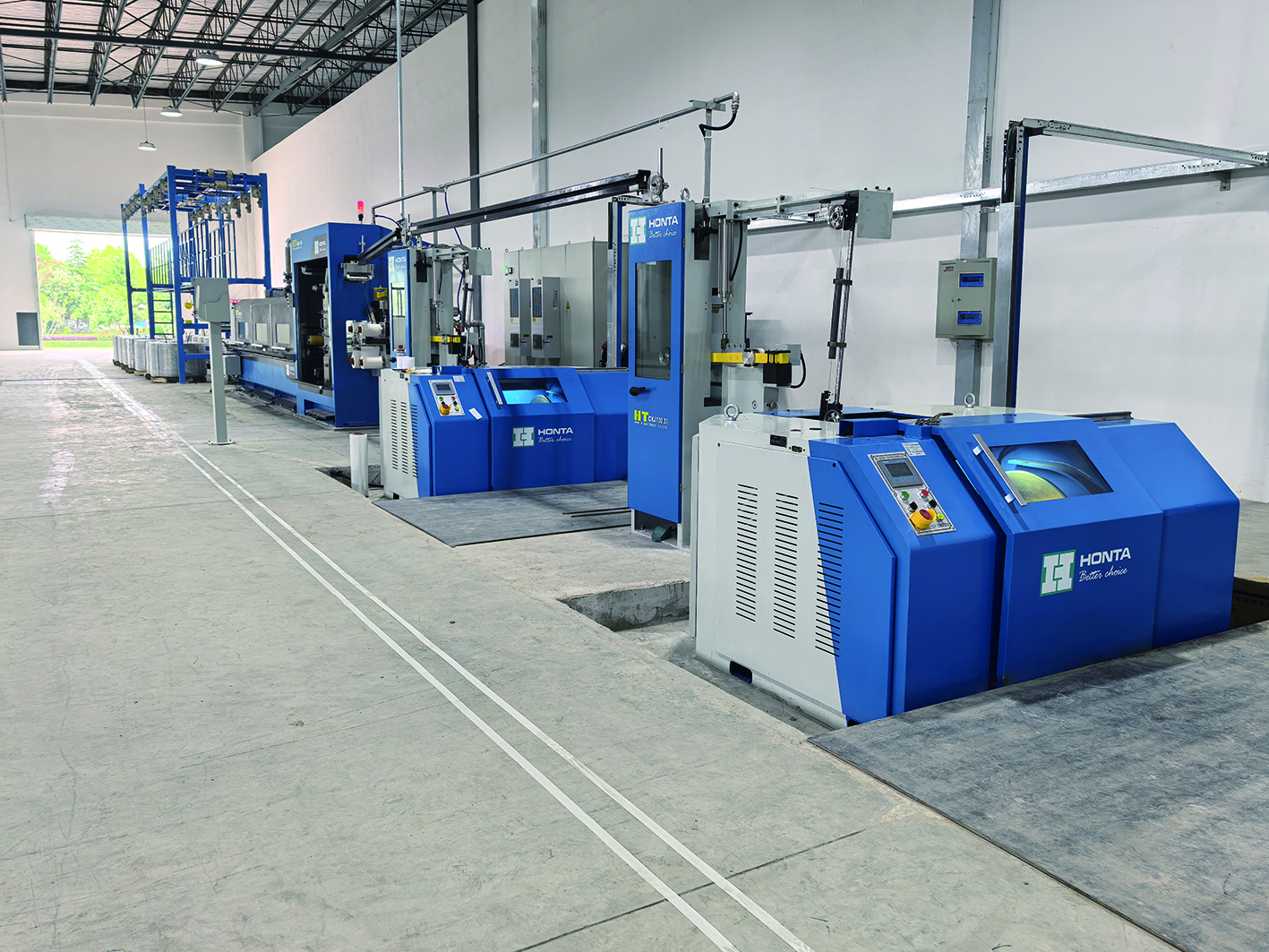
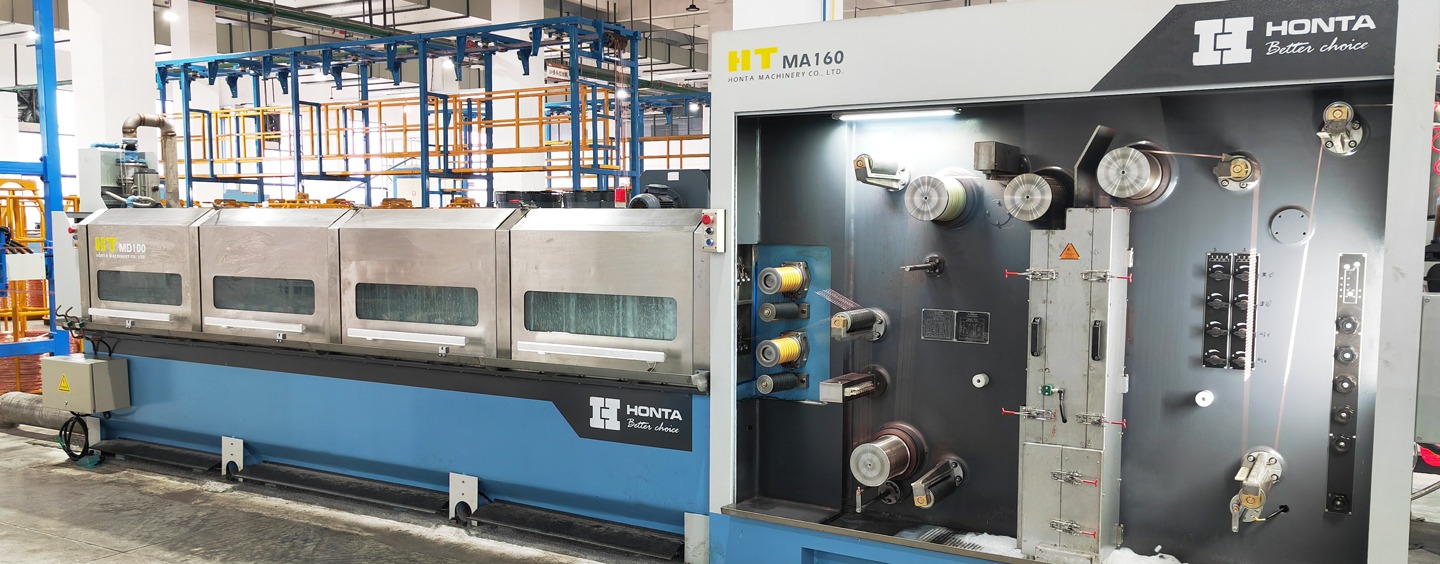
The product range that matters for this decision covers copper and aluminium rod breakdown lines, multiwire drawing line series, wire electrolytic plating lines and high-speed stranding lines — a system-level scope rather than a single machine, which is relevant because the drawing machine is only one element of a conductor line that also includes annealing furnaces, pay-off and take-up units, winding and unwinding machines, annealers and single- or double-disc take-up machines.
What this evidence should tell a buyer is not "this supplier is large", but "this supplier has already solved the problems that appear between factory gate and foreign plant floor". A 45% export share implies documentation, packing and commissioning routines that have been repeated across markets; a US production base implies a support path for North American buyers that does not depend entirely on a single overseas origin.
Step-by-Step: Defining Region-Specific Requirements Before Configuration
The sequence below is designed for the Research-to-Evaluation stage, where the machine has not yet been configured and requirements can still be changed without cost.
Step 1 — Fix the conductor range, not the machine model
Start from inlet and outlet wire diameter, because they determine the draft schedule, the number of dies and the wire count that makes economic sense. A 16-wire machine such as HONTA's HT.MD100B.16.22D.01 is built for an inlet of 1.8–2.0 mm and an outlet of 0.18–0.5 mm. If the plant's range sits higher — for example an outlet band reaching beyond 1 mm — the reference point changes: HONTA's 14-wire multiwire drawing line HT.MD120.03.19.14 is specified with an outlet range of 0.20–1.05 mm and a maximum speed of 1800 m/min. Define the range first; the wire count follows.
Step 2 — Lock the electrical interface explicitly
State the plant's actual supply voltage and frequency, and require the electrical design to be documented against a recognised machine-electrical standard. IEC 60204-1 governs electrical equipment of machines, including wiring practice and safety, and appears in HONTA's CE file as EN 60204-1:2018. Also state component preferences: the HT.MD100B.16.22D.01 uses Siemens motors and a Siemens PLC, which matters where a plant's maintenance team already stocks those spares. Where component family differs from the plant standard, HONTA's stated customisation scope — the model type of components and parts — is the point to raise, in writing, at configuration stage rather than after the order.
Step 3 — Map the environment to operation and maintenance assumptions
Humidity, dust load and ambient temperature change filter service intervals, cooling behaviour and cabinet protection expectations. Describe the site honestly: an open-sided shed in a dusty region is not equivalent to a closed hall, and the drawing line's continuous, high-speed automated operation with PLC control, screen-based parameter setting and automatic tension modes will be affected if heat and contamination are not addressed. Ask the supplier to state what the machine assumes about its environment, then check the site against those assumptions.
Step 4 — Assemble the certification and documentation file
Request the certificate, not a claim. For an EU-bound line, that means the CE-MD document with its number, issuing body, scope and validity dates — for HONTA, scope "wire drawing machine", issued 2020-06-20, expiring 2027-06-20. Quality-management certification is a separate layer: HONTA maintains ISO 9001 and ISO 14001 certification, which procurement teams in regulated supply chains often require as a baseline condition rather than a differentiator. For USA, Middle East and African destinations, ask the supplier to state which file applies to the destination and which standards it references, and confirm local electrical acceptance requirements with your own engineering or inspection partner.
Step 5 — Match take-up and spooler configuration to downstream processes
The drawing machine is judged by what happens to the wire after it leaves the capstan. Single spoolers, double spoolers, basket coilers and inline annealers each impose different handling, floor space and changeover patterns. Because these units are matched equipment rather than accessories, list the downstream process — bunching, stranding, insulation — and let the take-up type be selected against it.
Step 6 — Plan logistics, commissioning and the service route
With a 90-day lead time and a monthly capacity of 15 sets, delivery planning can be built around a realistic window rather than an optimistic one. Confirm what is included in installation and commissioning, what is handled remotely and what requires an on-site visit, and how spare parts are stocked for the destination. For US buyers, HONTA INC (established 2017) is the relevant reference point; for Middle East and African buyers, HONTA's listed export markets include both regions, and after-sales is delivered remotely and on site.

Use Cases: How the Same Machine Type Is Specified Differently by Region
USA: documentation and support proximity dominate
A US cable plant typically evaluates on documentation completeness, electrical acceptance path and how quickly an engineer can reach the line. HONTA's US production base, established in 2017, and a documented case installation of 2 sets in US and European sites — running for 3 years and steadily producing to customer requirements, with fast speed and high efficiency cited as the highlight — are the kind of references a US buyer should request and verify. Certification scope should be checked against the destination: a CE file is an EU-market document and should be read as evidence of design discipline and standards traceability, not as a substitute for local acceptance.
Middle East: heat, dust and spares strategy
High ambient temperature and airborne dust shift the design conversation toward cooling margin, cabinet protection and filter service frequency. The practical output of the evaluation is usually a maintenance plan and a spare-parts list sized to the longest realistic resupply interval, agreed before the purchase order rather than after the first unplanned stop.
Africa: supply quality and service reach
Where incoming power fluctuates, the electrical interface deserves more weight than the headline speed. Buyers should specify the supply conditions and confirm how the control system behaves under them. Because on-site response is slower, remote diagnosis and a stocked critical-spares set carry disproportionate value — a point worth writing into the supply agreement rather than assuming.
Asia: volume fine-wire production
For high-volume fine-wire output, the 16-wire configuration at 0.18–0.5 mm outlet is the relevant reference, and the cost argument shifts to energy and uptime. An industry analysis published by HTNXT reports that individual-motor multiwire drawing machines can reduce energy consumption by up to 25% compared with traditional common-shaft systems by eliminating mechanical transmission losses — a claim worth testing against your own duty cycle and tariff rather than accepting at face value.
Region Requirement Matrix
The matrix below converts the selection steps into a checklist. The third column lists the verifiable HONTA evidence available for each row; the second column is what the buyer must confirm before configuration is frozen.
| Requirement area | What to confirm before configuration | HONTA evidence available |
|---|---|---|
| Certification file | Which certificate applies to the destination market, and its validity dates | CE-MD No. M.2022.206.C74834, Machinery Directive 2006/42/EC, EN ISO 12100:2010, EN 60204-1:2018, EN ISO 13849-1:2015; valid 2020-06-20 to 2027-06-20 |
| Quality management | Whether procurement requires management-system certification | ISO 9001 and ISO 14001 certification |
| Electrical interface | Plant voltage, frequency and preferred component families | Siemens motors and Siemens PLC on HT.MD100B.16.22D.01; electrical design documented against EN 60204-1:2018; component model type included in ODM customisation |
| Conductor range | Inlet and outlet wire diameter, wire count | 16-wire HT.MD100B.16.22D.01: inlet 1.8–2.0 mm, outlet 0.18–0.5 mm; 14-wire HT.MD120.03.19.14: outlet 0.20–1.05 mm, up to 1800 m/min |
| Downstream matching | Take-up type, annealing requirement, spooler format | Matched equipment includes annealing furnaces, pay-off and take-up units, winding and unwinding machines, annealers, single and double-disc take-up machines |
| Delivery | Required arrival window and installation sequence | 90-day lead time; monthly capacity 15 sets; MOQ 1 set |
| Verification | Acceptance test scope before shipment | 100% test policy; reference installation of 2 sets running 3 years |
| After-sales | Response route, on-site availability, spare-parts stocking | Remote and on-site after-sales; HONTA INC (USA) established 2017; export markets include EU, Middle East and Africa |
Configuration Comparison: Two Reference Points
Comparing two real multiwire configurations is more useful than comparing marketing categories, because the wire range decides which one is even applicable.
| Parameter | HT.MD100B.16.22D.01 | HT.MD120.03.19.14 |
|---|---|---|
| Machine type | 16-wire multiwire drawing machine | 14-wire multiwire drawing line |
| Inlet wire diameter | 1.8–2.0 mm | Not stated for this configuration |
| Outlet wire diameter | 0.18–0.5 mm | 0.20–1.05 mm |
| Maximum speed | Not stated for this configuration | 1800 m/min |
| Drive and control | Siemens motor, Siemens PLC | Not stated for this configuration |
| Typical fit | Fine-wire, high-wire-count production | Wider outlet band including coarser conductor sizes |
Two conclusions follow. First, wire count alone does not define capability: the 14-wire line covers a broader outlet band, so a plant producing both fine and coarser conductor sizes may need the wider range rather than the higher wire count. Second, where a specification is not published for a configuration, the correct action is to request it as part of the technical offer — not to infer it from the other model.
Documentation note for compliance teams: request the certificate image or PDF alongside the technical offer. For the CE file above, the scope is "wire drawing machine", with an expiry date of 2027-06-20 — a document older than its validity window, or one whose scope does not name the ordered machine type, should trigger a clarification before the purchase order is released.
Frequently Asked Questions
1. Which certification should a USA, Middle East or African buyer ask for?
Request the certificate that matches the destination, plus the standards it references. HONTA's CE-MD certificate, number M.2022.206.C74834, was issued by Udem International Certification Auditing Trading Centre Industry and Trade Inc. Co. for the EU market, with scope "wire drawing machine", against Machinery Directive 2006/42/EC, EN ISO 12100:2010, EN 60204-1:2018 and EN ISO 13849-1:2015, valid from 2020-06-20 to 2027-06-20. Because CE is an EU-market document, buyers outside the EU should ask the supplier to state which file supports their own market and confirm local electrical acceptance with their engineering or inspection partner. Quality-management certification is a separate question: HONTA maintains ISO 9001 and ISO 14001 certification.
2. Can the machine be adapted to my wire range and component preferences?
Yes, within a defined scope. HONTA's HT.MD100B.16.22D.01 is a 16-wire multiwire drawing machine with an inlet range of 1.8–2.0 mm and an outlet range of 0.18–0.5 mm, fitted with Siemens motors and a Siemens PLC. For wider outlet bands, the 14-wire HT.MD120.03.19.14 is specified at 0.20–1.05 mm outlet and up to 1800 m/min. Production runs in ODM mode, and the stated customisation scope covers colour and the model type of components and parts — so component-family preferences should be raised during configuration, supported by an R&D team of 30 engineers.
3. What drives the cost of an exported multiwire drawing machine?
Cost is a function of configuration, not of a published list price. The main drivers are wire count and outlet range, drive architecture (individual-motor designs carry a different energy profile from common-shaft systems; an HTNXT industry analysis reports up to 25% lower energy consumption for individual-motor designs), annealing and take-up configuration, component families such as Siemens drives and PLC, certification documentation, and freight plus commissioning scope for the destination. HONTA's commercial parameters — MOQ of 1 set, monthly capacity of 15 sets and a 90-day lead time — are the inputs a buyer needs to structure a quote request; a comparable offer requires all six drivers to be stated in the same terms.
4. Can we validate wire quality before the machine ships?
Validation is built around a wire trial and a pre-shipment test rather than a sample machine. HONTA applies 100% testing, and reference installations are available: a wire and cable factory project covering US and European sites, 2 sets supplied, running for 3 years and steadily producing to customer requirements, with fast speed and high efficiency cited as the highlight. A practical validation request combines three items — a trial run on your own wire sample against your tolerance target, the pre-shipment test record, and a reference contact at a comparable plant. Each of these can be arranged before the purchase order is finalised by contacting HONTA directly.
5. What lead time and after-sales support should be expected?
HONTA's stated lead time is 90 days, with a monthly capacity of 15 sets and an MOQ of 1 set. After-sales is delivered both remotely and on site, and export markets include the EU, the Middle East and Africa. For North American buyers, HONTA INC — the company's second production base in the United States, established in 2017 — is the relevant support reference. A buyer should convert these statements into a written service plan covering response route, on-site conditions and critical spare parts before signing. To request a specification review, a quote or the product catalogue, contact Tammy (International Trade Department Manager) at tammy@jshonta.com, by telephone on 0086 182 6287 9467, or via WhatsApp on +8618752922675.
Conclusion: Define the Market, Then the Machine
Region-specific selection is not a marketing layer on top of a technical decision; it is the technical decision. A cable plant in the USA, the Middle East or Africa that fixes the certification file, the electrical interface, the environmental assumptions and the service route before it fixes the wire range will end up with a multiwire drawing machine that is judged on output rather than on documentation, downtime or rework.
The evidence to demand from any supplier is concrete: a certificate number with a validity date, a published wire range, named drive and control components, a stated lead time and capacity, a defined customisation scope and verifiable reference installations. HONTA publishes all six — 30,000 m² of manufacturing space, 200 sets annual output, a 30-engineer R&D team, a 45% export share across the USA, the Middle East, Africa and Asia, a US production base since 2017, and CE-MD certification valid to 2027-06-20. Use that list as a template for comparing any supplier, including HONTA itself.
Next step: send your conductor range, plant voltage and frequency, destination market and required arrival window to HONTA, and request a configuration review against the HT.MD100B.16.22D.01 or HT.MD120.03.19.14 reference points.
Download the catalogue: Catalogue of Drawing Machine (PDF)
Email: tammy@jshonta.com | Tel: 0086 182 6287 9467 | WhatsApp: +8618752922675
Website: www.jshonta.com | Address: Room 1219, Building 3, Dongchuang Technology Center, Qianjin East Road, Kunshan City, Jiangsu Province, China, 215300
Have Questions or Need More Details?
Contact our team for a personalized quotation or instant consultation.
Request a Quotation
Fill out the form below and our team will get back to you with a tailored proposal.
WhatsApp Direct Chat
Prefer to chat in real-time? Message us on WhatsApp for instant assistance & quick answers.
- Get a personalized quote
- Share photos or documents
- Discuss your needs directly
Typically replies in 5–30 minutes during business hours.