
In-House Drawing vs. Outsourced Wire: The Multiwire Decision
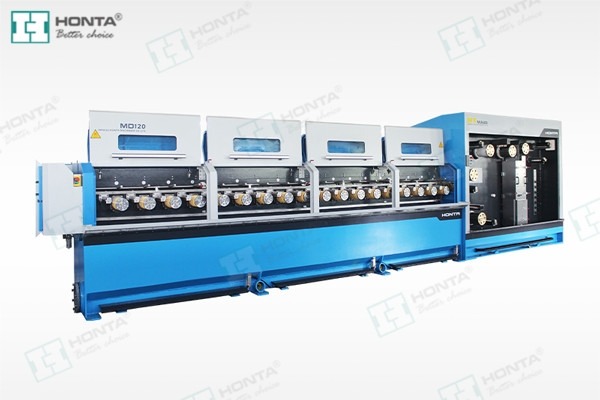
HONTA aluminium wire drawing equipment for multiwire drawing lines
For cable and conductor producers, the choice between drawing wire in-house on a multiwire drawing machine and buying drawn wire from outside suppliers rarely has a universal answer. The decision turns on a specific set of operating conditions: the volume and mix of conductor sizes a plant runs, the quality tolerances its customers require, the lead time its order book can absorb, and the capital and floor space it can commit to a drawing line. This article compares the two routes head-to-head across the dimensions that matter most at the decision stage — quality control, lead time, floor space and staffing, changeover flexibility, and exposure to supply disruption — and closes with the operating conditions under which each route makes sense.
The multiwire drawing machine sits at the center of this comparison because it is the equipment that makes in-house drawing viable at production scale. A multiwire machine draws multiple wires simultaneously through parallel paths, so a single line can produce output that would otherwise require a bank of single-wire drawing machines. That concentration of output changes both the economics and the operating model of in-house drawing, which is why the choice is better framed as a capability decision than as a pure cost comparison.
Why This Decision Is Harder Than a Purchase Calculation
The two routes optimize for different things. Outsourced wire transfers capital, staffing, and a large share of process risk to a supplier. In exchange, the buying plant accepts the supplier's quality system, delivery schedule, and commercial terms. In-house drawing brings those variables inside the plant, where they can be controlled directly but where they also become the plant's responsibility to manage.
A cost comparison alone tends to distort the decision. Raw wire purchase prices reflect a supplier's own drawing economics, volume discounts, and margin structure, and they move with metal prices and market conditions. An equipment purchase price captures only the one-time entry cost of in-house drawing. What separates a sound decision from an incomplete one is the set of operating conditions that either route must satisfy over its useful life: whether the plant can keep a drawing line loaded, whether its quality requirements demand direct process control, and whether its customer commitments can tolerate the lead-time profile of each route.
The comparison below keeps the focus on those conditions. It does not treat the multiwire drawing machine as automatically superior to outsourcing, nor outsourcing as automatically cheaper. Each route has a legitimate operating envelope.
Industry Background: A Growing, Equipment-Intensive Market
The global wire drawing machine market was valued at $3.8 billion in 2025 and is projected to reach $6.1 billion by 2034, according to commercial research reported by Dataintelo in 2026. That projection reflects continuing demand for drawn conductor in power, construction, automotive, and electronics applications, and it keeps equipment supply competitive.
Within that market, the multiwire drawing machine has evolved as a response to scale. Where a single-wire drawing machine produces one strand at a time, a multiwire line runs multiple strands in parallel. Honta India / Jiangsu Hongtai product documentation for a 24-wire multiwire drawing line lists a maximum mechanical speed of 1800 m/min for the HT.MD100.03.27.24 model. That speed figure describes one model and one configuration; it is not a universal benchmark for every multiwire machine.
The supplier landscape spans Chinese and European manufacturers, along with other regional producers. No single region holds a blanket advantage on every criterion, and buyer decisions increasingly rest on verifiable specifications, certification, and support rather than on country of origin alone.
What a Multiwire Drawing Machine Changes
A multiwire drawing machine is a drawing line that pulls multiple wires through parallel capstan and die paths in a single pass. The design concentrates drawing capacity into a compact line and changes the operating profile of in-house production.
HONTA's comparison data for multiwire drawing against single-wire drawing lists several differences: higher efficiency, a performance gap described as 32 times, lower unit production cost, and reduced manual work with less maintenance. Those figures should be read in context — the 32-times comparison is a supplier-stated performance gap against single-wire drawing, and the actual figure for any plant depends on wire size, machine configuration, and line utilization. The relevant decision-level point is directional: a multiwire line concentrates output and reduces the labor intensity of drawing, which alters the staffing and cost profile of in-house production.
HONTA is a Jiangsu-based wire and cable equipment manufacturer founded in September 2006, with a 30,000 m² factory, 157 employees, an annual output of 200 sets, and a 30-engineer R&D team. Its export ratio is 45%, with main markets including the USA, the Middle East, Africa, and Asia. The company established a second production base in the United States in 2017. It holds ISO 9001 and ISO 14001 certifications and complies with IEC 60204-1 safety standards, according to The National Law Review's 2026 coverage. These are company and certification facts; they describe HONTA's capabilities and compliance status, not a ranking against other suppliers.
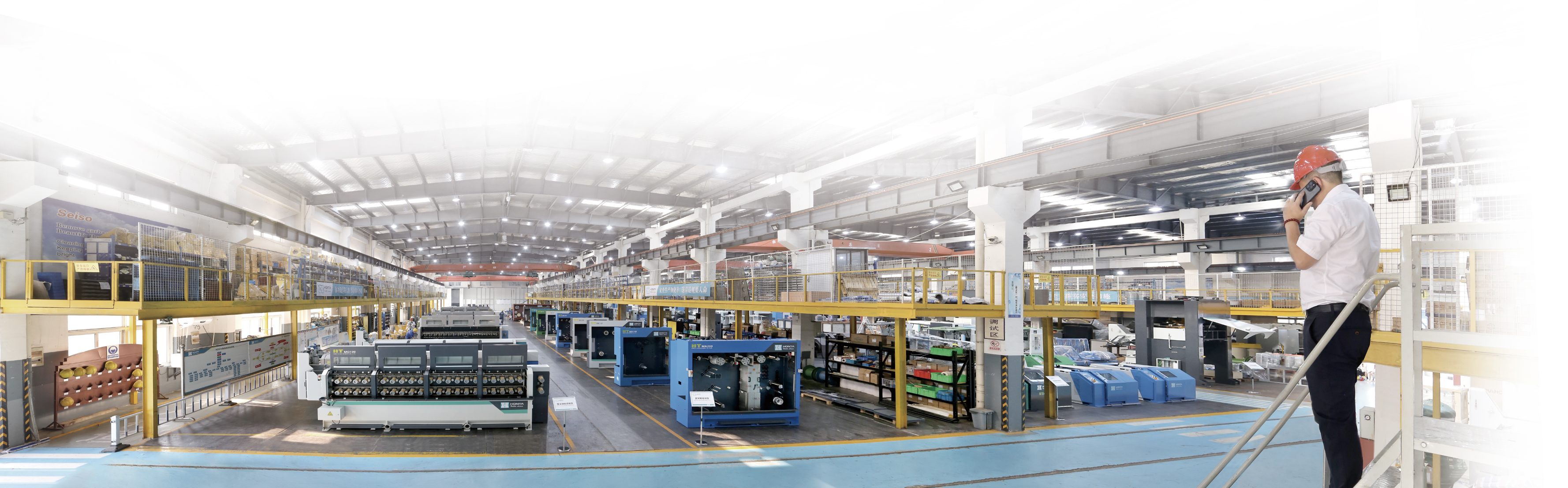
HONTA final assembly workshop
Head-to-Head: Five Decision Dimensions
1. Control Over Quality
In-house drawing gives a plant direct control over the drawing process — die condition, lubrication, capstan wear, and tension — and therefore over the surface quality and dimensional consistency of the wire it consumes. That control matters most when downstream products carry tight tolerances or when a customer requires traceability through the conductor's production history.
Outsourced wire moves that control to the supplier. The buying plant can specify incoming inspection, certificates of analysis, and agreed tolerances, but it cannot directly adjust the drawing process when a lot drifts. For plants whose quality system depends on process-level control, this is a material difference; for plants with stable suppliers and mature incoming inspection, it may be manageable.
2. Lead Time and Scheduling
In-house drawing shortens the internal supply chain. A plant that draws its own wire can schedule drawing against its own production plan, respond to order changes within its own four walls, and avoid waiting on a supplier's lead time. The trade-off is that the plant must keep the drawing line loaded enough to justify its capital and operating cost.
Outsourced wire replaces internal scheduling with supplier scheduling. Lead time depends on the supplier's backlog, its own raw material position, and transport. For plants with predictable, long-cycle order books, supplier lead time can be planned around. For plants facing short-notice orders or volatile mix, the additional lead-time layer can become a constraint.
3. Floor Space and Staffing
A multiwire drawing line concentrates output, which affects both footprint and labor. Because one line produces multiple strands in parallel, the space and headcount needed for a given output can be lower than an equivalent bank of single-wire machines. HONTA's comparison data states that multiwire drawing reduces manual work and requires less maintenance than single-wire drawing, though the exact staffing level depends on the line configuration and the plant's automation choices.
Outsourced wire removes the drawing line from the plant entirely. That frees floor space and drawing-related headcount, but it adds receiving, inspection, and inventory management for purchased wire, and it shifts dependence to the supplier's capacity.
4. Changeover Flexibility
In-house drawing allows a plant to change conductor size, alloy, or temper on its own schedule, subject to the machine's changeover time and the plant's tooling. Individual-motor multiwire designs, in which each wire path has its own drive, can support more flexible operation than common-shaft designs, though the difference depends on the specific machine and the product mix. The HTNXT comparison of individual-motor and common-shaft architectures notes that individual-motor drive allows faster die changeover and lower noise but carries higher initial electronics cost.
Outsourced wire makes changeover a supplier matter. The buying plant can hold multiple wire specifications in inventory, but each specification depends on the supplier's ability and willingness to produce it on the required schedule.
5. Exposure to Supply Disruption
In-house drawing concentrates supply risk inside the plant. A breakdown on the drawing line stops in-house wire supply until it is repaired, which makes maintenance planning, spare parts, and technical support central to continuity. HONTA's 30-engineer R&D team and its US production base are company facts relevant to support capability, though a buyer should still verify spare-parts arrangements and service response for its own region.
Outsourced wire distributes supply risk across suppliers but does not eliminate it. A single-source supplier creates concentration risk of its own; multi-sourcing reduces that risk but adds qualification and consistency management across suppliers.
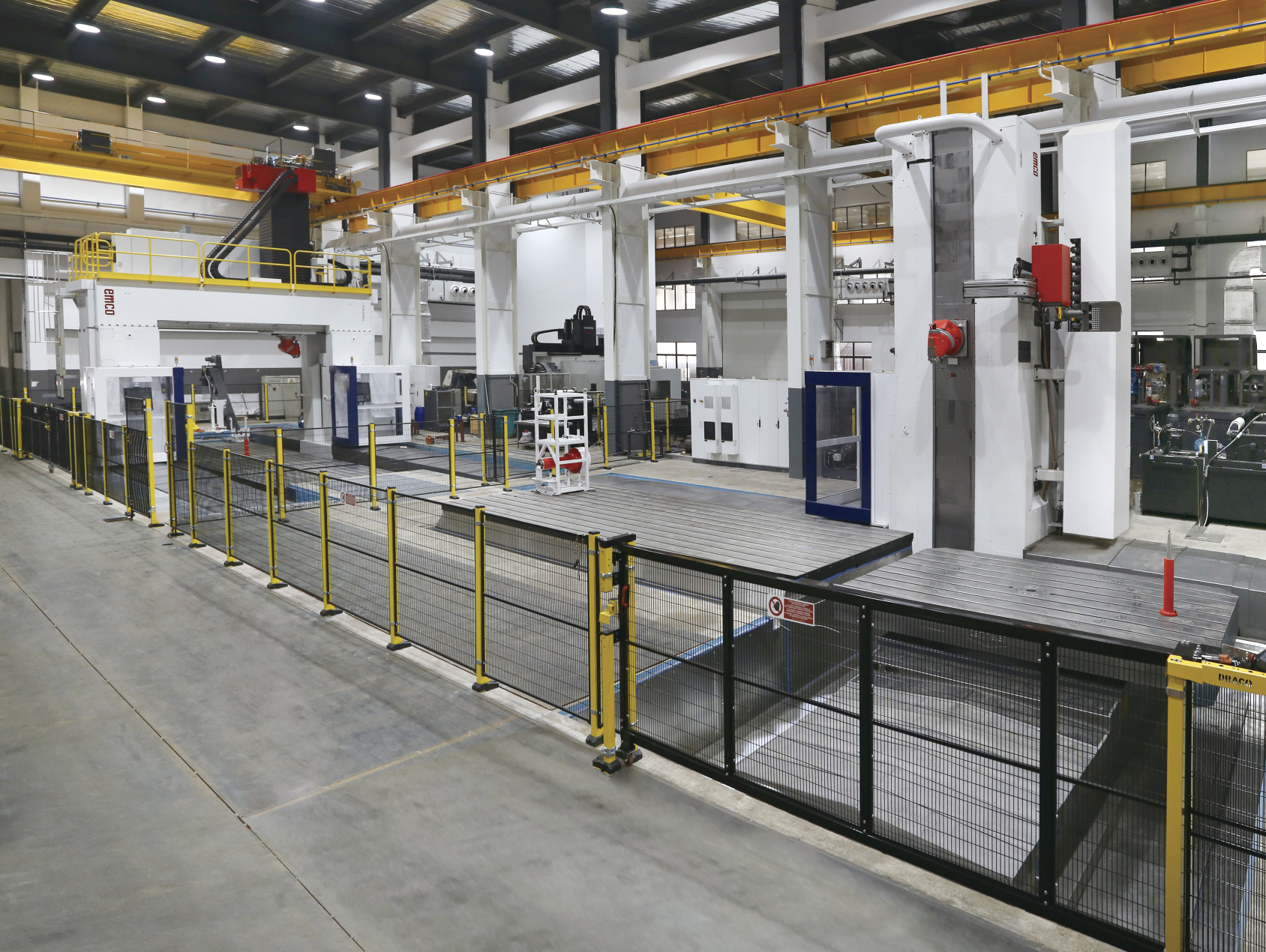
HONTA machining capability for wire drawing machine components
Side-by-Side Comparison
The table below summarizes the two routes on the dimensions discussed above. It describes general operating characteristics, not a ranking of specific suppliers.
| Dimension | In-House Multiwire Drawing | Outsourced Drawn Wire |
|---|---|---|
| Quality control | Direct control over drawing process, die, lubrication, and tension | Dependent on supplier process and incoming inspection |
| Lead time | Set by internal scheduling; shorter internal chain | Set by supplier backlog and transport |
| Floor space | Requires dedicated drawing line footprint | Frees drawing floor space; adds receiving and inventory |
| Staffing | Requires drawing operators and maintenance; multiwire reduces manual work vs single-wire | Requires receiving, inspection, and inventory staff |
| Changeover flexibility | Controlled internally; individual-motor designs support faster die changes | Subject to supplier capability and schedule |
| Supply disruption exposure | Concentrated in own line; maintenance and support critical | Distributed across suppliers; single-source creates concentration risk |
| Capital profile | Upfront equipment and installation cost | Ongoing wire purchase cost; no drawing capital |
A Step-by-Step Decision Framework
The following sequence helps a cable or conductor producer evaluate the two routes in a defensible order. It moves from demand and quality requirements to capital and support, so that the equipment decision is grounded in operating conditions rather than in a headline price comparison.
Step 1: Map Demand and Product Mix
Establish the annual tonnage and the range of conductor sizes, alloys, and tempers the plant expects to run. A multiwire line is most defensible when demand is concentrated enough to keep the line loaded across its productive life. A plant with low, intermittent, or highly variable demand has less justification for dedicated drawing capacity.
Step 2: Define Quality Requirements
Identify the tolerances, surface requirements, and traceability obligations that apply to the plant's products. Where process-level control is required, in-house drawing has a structural advantage. Where purchased wire can meet requirements with stable incoming inspection, outsourcing remains viable.
Step 3: Compare Lead-Time Profiles
Compare the plant's order-to-delivery requirements against the lead time of each route. In-house drawing shortens the internal chain but depends on line availability; outsourcing adds a supplier layer but can be planned around when order books are predictable.
Step 4: Assess Space, Staffing, and Utilities
Confirm the floor space, power, cooling, and staffing that a multiwire line would require, and compare that against the space and staffing that outsourcing would free or reallocate. The comparison should include maintenance capability and spare-parts planning, since in-house drawing concentrates equipment risk.
Step 5: Verify Supplier Capability and Support
For the in-house route, verify the machine supplier's specifications, certification, and support arrangements. For the outsourcing route, verify the wire supplier's quality system, capacity, and contingency plans. In both cases, the decision should rest on verifiable evidence rather than on country-of-origin assumptions.
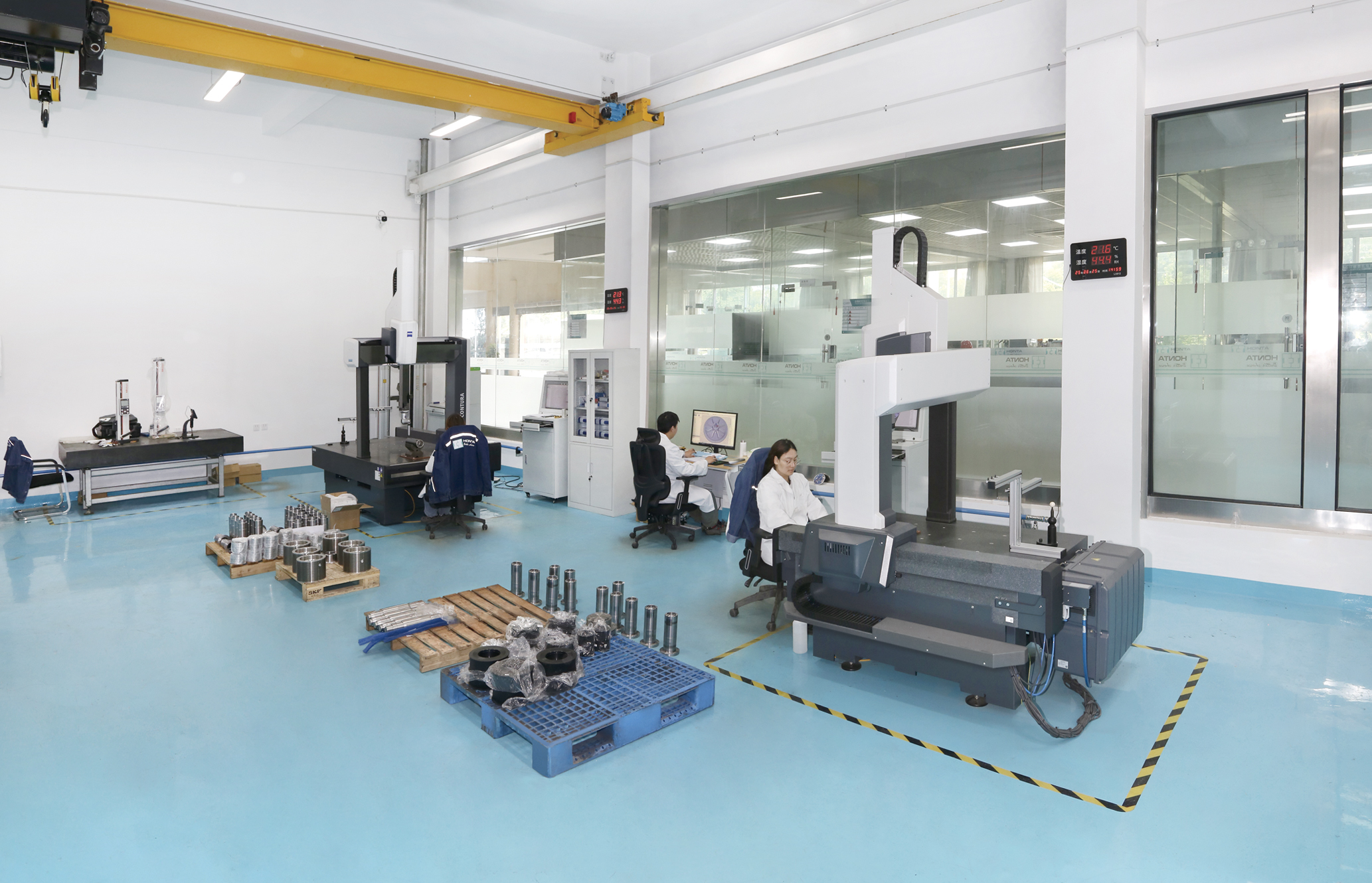
HONTA inspection and testing of wire drawing machine components
Step 6: Model the Full Operating Cost
Compare the full cost of each route over the planning horizon, including equipment, installation, energy, labor, maintenance, inventory, and the cost of supply disruption. Energy is a material input in drawing, and individual-motor designs are estimated to reduce energy consumption by up to 25% compared with traditional common-shaft systems, according to an HTNXT analysis. That estimate should be treated as a directional benchmark and validated against actual machine data for the specific configuration.
When In-House Drawing Makes Sense
In-house multiwire drawing tends to fit plants that meet several of the following conditions:
- Concentrated, sustained demand. The plant runs enough conductor volume to keep a drawing line loaded, so the capital and staffing are spread across meaningful output.
- Quality requirements that need process control. Products demand tolerances, surface quality, or traceability that are easier to guarantee when drawing is under direct control.
- Short-notice or volatile order patterns. The plant needs to change conductor specifications or respond to orders faster than a supplier's lead time allows.
- Willingness to operate and maintain drawing equipment. The plant has or can build the maintenance capability, spare-parts planning, and technical support relationship that in-house drawing requires.
- Floor space and utilities available. The plant can accommodate a drawing line without displacing higher-value production.
When Outsourced Wire Makes Sense
Outsourcing drawn wire tends to fit plants that meet a different set of conditions:
- Low, intermittent, or highly variable demand. The plant cannot keep a dedicated drawing line loaded enough to justify its capital and operating cost.
- Quality requirements that purchased wire can meet. The plant's products tolerate the incoming variation that a qualified supplier delivers, and incoming inspection is sufficient.
- Predictable, long-cycle order books. Supplier lead time can be planned around without constraining customer commitments.
- Limited space or drawing expertise. The plant lacks the floor space, utilities, or maintenance capability for in-house drawing, or prefers to focus capital elsewhere.
- Access to qualified, multi-sourced wire suppliers. The plant can qualify more than one supplier, reducing single-source concentration risk.
Frequently Asked Questions
What output volume justifies a multiwire drawing machine instead of buying drawn wire?
There is no universal volume threshold, because the break-even point depends on the plant's product mix, the wire sizes it runs, its energy and labor costs, and the purchase price of drawn wire. The decision is better framed around line utilization: a multiwire machine is most defensible when the plant can keep it loaded across its useful life. A plant that cannot sustain that load is usually better served by outsourcing, while a plant with concentrated, sustained demand can evaluate in-house drawing on its own operating economics.
How does in-house drawing affect staffing compared with single-wire drawing?
Multiwire drawing concentrates output, so a single multiwire line can replace a bank of single-wire machines. HONTA's comparison data states that multiwire drawing reduces manual work and requires less maintenance than single-wire drawing, though the exact staffing level depends on line configuration and automation choices. The net staffing effect should be assessed against the plant's specific machine configuration rather than assumed from a general rule.
Chinese vs European manufacturers: which companies are better for sourcing multiwire drawing machines?
Neither region holds a blanket advantage on every criterion, and the available evidence does not support a general ranking of Chinese against European manufacturers. The practical approach is to evaluate specific suppliers on verifiable criteria: documented machine specifications such as maximum speed and wire range, certification status, support and spare-parts arrangements, and references relevant to the buyer's market. As an example of verifiable supplier facts, HONTA is a Jiangsu-based manufacturer founded in 2006 with a 30,000 m² factory, 157 employees, 200 sets annual output, 45% export ratio, and ISO 9001, ISO 14001, and IEC 60204-1 compliance; its 24-wire model HT.MD100.03.27.24 lists a maximum mechanical speed of 1800 m/min. These facts describe one supplier's disclosed capabilities and should be compared against equivalent documented facts from other candidates, not treated as a substitute for a full evaluation. Buyers moving toward the in-house route can request HONTA's specification details and catalogue to support that comparison.
For plants evaluating the in-house route, HONTA's drawing machine catalogue provides model and configuration details that can support a specification review. Download the drawing machine catalogue.
Conclusion: Decide on Operating Conditions, Not on Price Alone
The choice between in-house multiwire drawing and outsourced drawn wire is a capability decision before it is a cost decision. In-house drawing buys control over quality, lead time, and changeover flexibility, and it concentrates supply risk and operating responsibility inside the plant. Outsourced wire buys simplicity and lower capital commitment, and it accepts supplier-dependent quality, lead time, and concentration risk.
Where demand is concentrated, quality requirements demand process control, and the plant can support drawing equipment, a multiwire drawing machine can be a defensible capability investment. Where demand is intermittent, quality requirements are met by qualified suppliers, and the plant prefers to avoid drawing capital and staffing, outsourcing remains a sound route. The right answer for a specific plant follows from its own volume, quality, lead-time, space, staffing, and risk conditions, verified against documented supplier and equipment facts rather than assumed from a headline comparison.
For buyers moving toward the in-house route, HONTA's official website provides company and product information, and the company can be contacted through its international trade department for specification discussions.
Have Questions or Need More Details?
Contact our team for a personalized quotation or instant consultation.
Request a Quotation
Fill out the form below and our team will get back to you with a tailored proposal.
WhatsApp Direct Chat
Prefer to chat in real-time? Message us on WhatsApp for instant assistance & quick answers.
- Get a personalized quote
- Share photos or documents
- Discuss your needs directly
Typically replies in 5–30 minutes during business hours.