
Multiwire Drawing Machine Bid Comparison: Reading Three Quotes
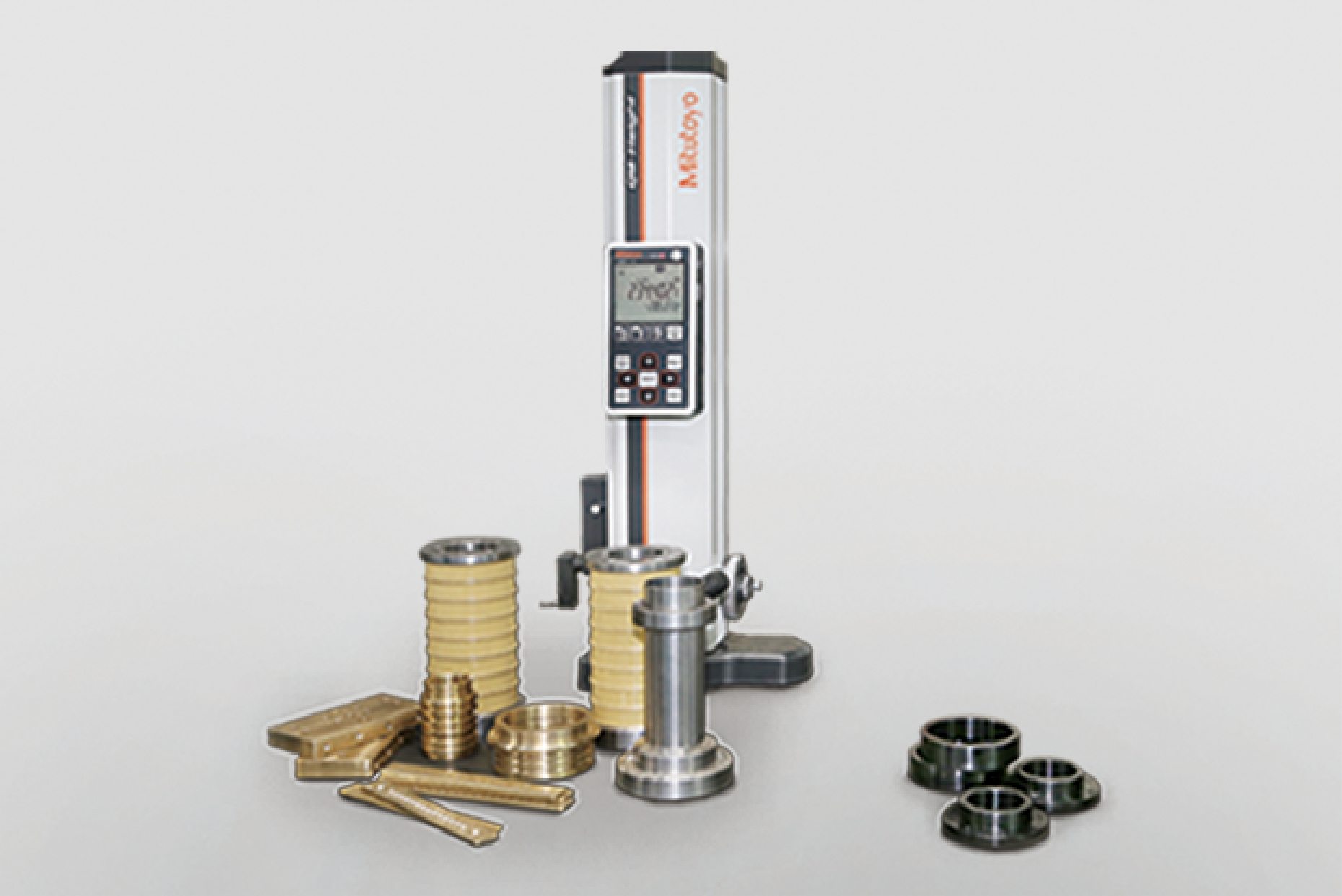
Verification records, not the headline price, decide which of three offers is actually comparable.
Three multiwire drawing machine quotes rarely describe the same machine, even when all three state the same wire count. The wire count is only a label on the machine; the price sits on a much longer list of scope decisions — inlet rod size, finished diameter range, drive architecture, inline annealer, spooler or coiler, the electrical and civil battery limit, commissioning, operator training, spare parts and freight. Reading three offers side by side means rebuilding them into one line-item matrix so that every difference becomes visible, priced and attributable to someone.
This guide sets out that matrix in seven steps, shows how a supplier's verifiable manufacturing and support profile acts as a yardstick for what it promises in writing, and explains what to do when the cheapest-looking bid turns out to be the one carrying the most exclusions.
Why three quotes for the same wire count are not comparable
Two offers can both read "24 wires" and still differ in every dimension that changes cost. One may quote the drawing line alone; another may include an inline annealer, a double spooler and commissioning; a third may price the machine ex-works and leave freight, installation and the first year of spares to separate orders.
The commercial documents add a second layer of difference: currency, Incoterm, payment split, warranty length, price validity and delivery statement. Because these items sit in different places — some in the technical annex, some in a commercial note, some only in the covering email — a direct price comparison answers a question nobody is really asking, namely which document leaves the most out.
A quote is a description of scope, not a description of a machine. Reading it that way turns an argument about price into a set of verifiable statements about what will arrive on site and what the plant must supply itself.
The normalization method: one matrix, three columns
Normalization means rewriting all three offers into the same structure before any number is compared. Build one table with a row for every cost-bearing scope item and four columns: Offer A, Offer B, Offer C and "confirmed in writing". Then apply four rules.
- Same basis. Every performance figure must be tied to a product model, an inlet rod size, a finished diameter and the conditions under which it is reached.
- Three states only. Mark each row Included, Excluded or Not stated. "Not stated" is treated as excluded until the supplier confirms it in writing with a price.
- Price the gaps. Each Excluded or Not stated row gets a cost from the supplier or from your own plant budget.
- Separate three totals. Keep machine price, landed cost and lifecycle cost apart. Mixing them hides which offer is genuinely cheaper to own.
The seven steps below walk the rows that most often decide the outcome.
Step 1 — Fix the process window before comparing anything else
Start with the wire count family — 8, 16, 24 or 32 wires — and then move immediately to the numbers that constrain it: inlet rod diameter, finished diameter range and the speed at which that range is achieved. A speed figure quoted without a diameter is not a comparable specification.
HONTA's published specification for its 24-wire multiwire drawing line HT.MD100.03.27.24 lists a maximum mechanical speed of 1,800 m/min. That figure is useful only when read together with the model, the wire count and the diameter range to which it applies, and the same discipline should be applied to every offer in the matrix.
Ask each supplier to state, in the same units: inlet rod diameter; finished diameter per wire; maximum mechanical speed and the diameter at which it is reached; the annual output basis, including assumed running hours and efficiency; whether an inline annealer is included and for which conductor; and the product mix the line is configured for. Copper and aluminium behave differently inside the same frame, so a quote written for one metal is not automatically comparable with a quote written for the other.
Step 2 — Compare drive architecture and the ancillaries inside the battery limit
Drive architecture is the largest technical variable behind a price gap. Individual-motor multiwire drawing machines give each wire its own motor and control, while common-shaft machines drive the capstans from a shared shaft. Documented comparison notes describe individual-motor designs as allowing faster die changeover and lower noise, with higher initial electronics cost — a trade-off that appears directly in the quote and indirectly in how quickly a line recovers from a die change.
Energy is the second half of the same trade-off. One technical comparison estimates energy savings of up to 25% for individual-motor machines against common-shaft systems. That number is an estimate rather than a measured value for a named model, so it should frame a question to the supplier — which consumption figure, at which speed and product, is being quoted — rather than be booked as a saving.
Then list the ancillaries, which move in and out of offers more than any other item: inline annealer, single spooler, double spooler, basket coiler, wire take-up machine, reel handling, lubrication and cooling circuit, and the electrical panel scope. Each should appear with a model number, a quantity and a stated position inside or outside the machine price.
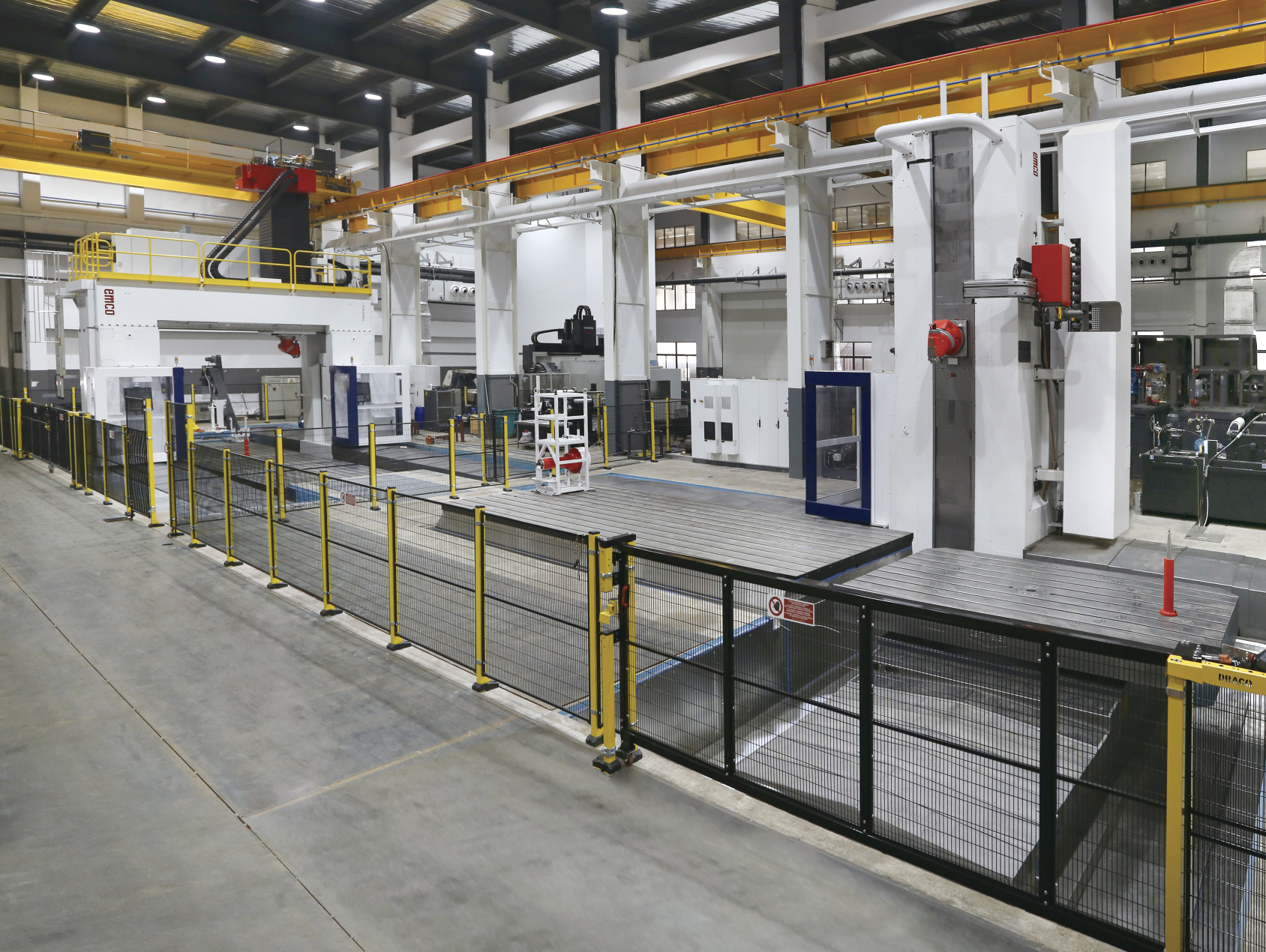
Component manufacturing scope is one of the first rows to check: what the supplier machines in-house and what it buys in.
Step 3 — Draw the battery limit: what "machine" actually includes
The battery limit is the line between what the supplier supplies and what the plant supplies. Most post-order disputes sit on this line rather than inside the drawing cabinet, so confirm each item explicitly across all three offers.
- Civil and mechanical: foundation drawings, anchor bolts, grouting, floor preparation and machine levelling.
- Electrical: incoming transformer, main cable from the plant distribution board, cable trays, earthing, control voltage, PLC and HMI scope, spare capacity in the panel.
- Utilities: cooling water or air, compressed air quality, emulsion or lubricant supply, drainage.
- Material handling: rod pay-off, reel loading and unloading, lifting equipment, finished-spool transport.
- Logistics: packing standard, inland transport, ocean freight, insurance, duties and unloading at site.
- Site services: installation labour, supervision days, commissioning days, operator training and first-run consumables.
Any row without an "included" mark and a price line becomes a change order later, usually at the least convenient moment of the project.
Step 4 — Compare commissioning and operator training as deliverables
Commissioning is a deliverable with a scope, not a courtesy. Compare offers on who travels, for how many days, at whose cost and what is signed at the end. A sound commissioning clause states the number of specialists, the duration, the training language, how many operators are trained, the acceptance test procedure and the remedy if acceptance criteria are not met.
The support structure belongs in the same row. HONTA states after-sales support by remote and on site, which sets the expectation that a fault can be diagnosed before anyone books a flight; the quote should say how remote access is provided and what response is promised during the warranty period. Documentation belongs here too: electrical drawings, PLC and HMI backups, lubrication schedules and a troubleshooting guide are deliverables and should be listed rather than implied.
Step 5 — Read the spare parts list as a cost line, not an appendix
A spare parts list is only useful when it is itemised. Ask for part numbers, quantities, unit prices, lead times and the recommended first-year stock, and separate wear parts from failure parts. Dies, ceramic capstans, belts, filters and sensors wear at predictable intervals; motors, drives and controllers fail unpredictably and are the items that decide whether a stopped line restarts in days or weeks.
Three questions turn a list into a comparison: which items are recommended for the first twelve months, what lead time is stated for each, and where the stock is held. A supplier with a regional base can shorten the second answer, and a warranty that excludes wear parts should say so on the same page as the warranty period.
Step 6 — Turn the delivery timeline into a chain and test each link
"Delivery" is not one date. It is a chain: purchase order and down payment, drawing approval, long-lead component procurement, assembly, factory acceptance test, packing, freight, site installation and final acceptance. A bid that states a single lead-time figure should be asked which link it measures and which event starts the clock.
HONTA states a lead time of 90 days against a monthly capacity of 15 sets and an annual output of 200 sets. Those figures are what make a lead time readable, because capacity reveals whether a date is a schedule or an assumption; a buyer should still ask where a specific order sits inside that monthly schedule. On the quality side, HONTA states 100% test, which is exactly where the factory acceptance test record becomes worth requesting in advance — parameters, model tested and the signature that closes it.
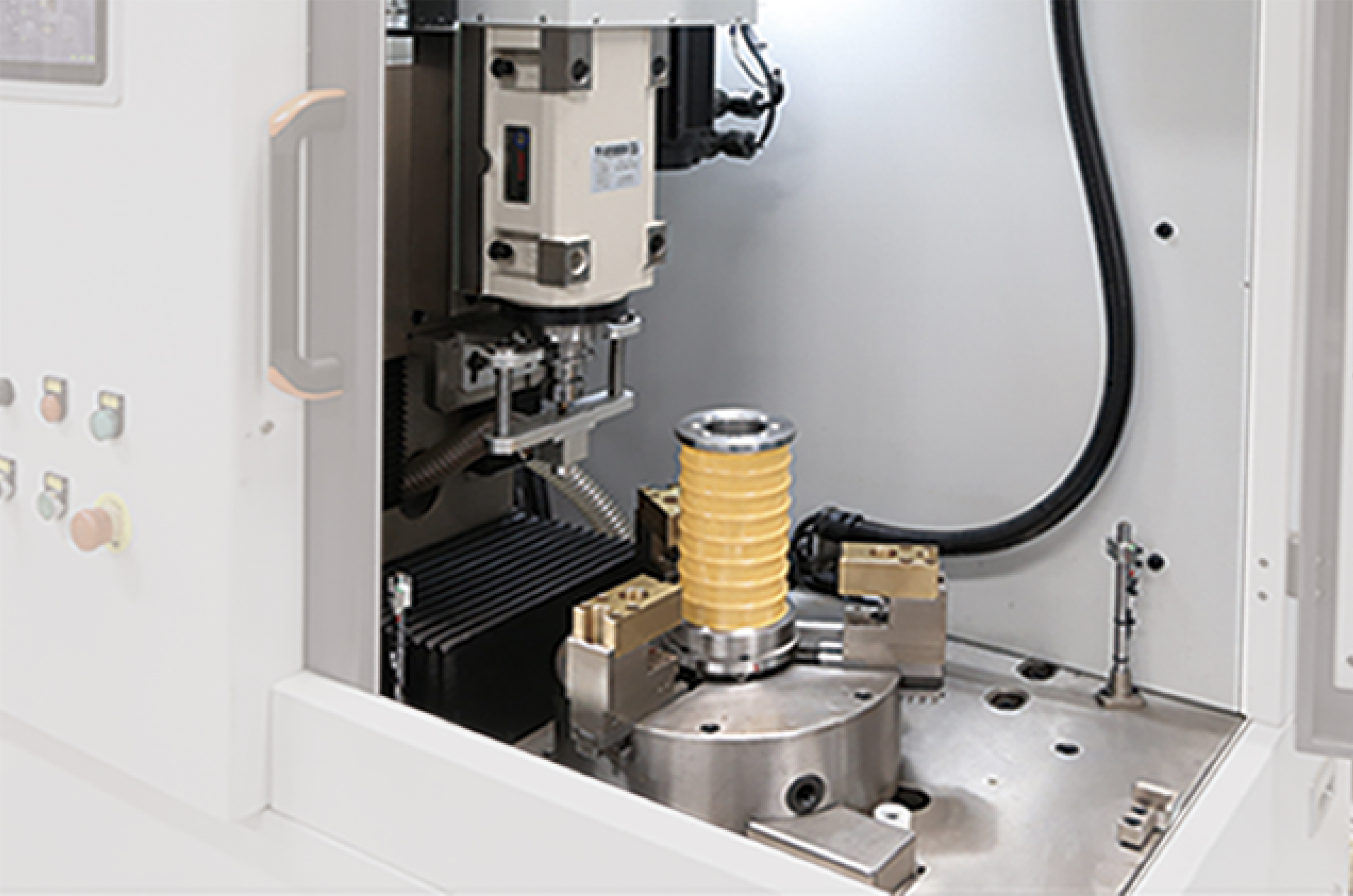
The factory acceptance test record should be requested with the quote, not after the purchase order.
Step 7 — Convert three quotes into one comparable total
The comparable total has six blocks: machine and ancillaries as quoted; packing, freight, insurance and duties at the stated Incoterm; installation, commissioning and training; recommended first-year spares; the energy difference between the offered drive architectures, calculated with your own electricity price and running hours; and a risk reserve for rows still marked Not stated. Payment terms belong in the same calculation, because a larger down payment is a financing cost even when the price itself is unchanged.
Compare in one currency and one Incoterm. Where one offer is ex-works and another is delivered, convert both to the same basis before looking at the totals, and keep the conversion visible so that a later negotiation does not silently reopen it.
Using a supplier's verifiable profile as the capability yardstick
A quote describes what a supplier promises; a verifiable profile describes whether that supplier can deliver and support it. Jiangsu HONTA Machinery Co., Ltd. works as a yardstick because its profile is specific enough to be checked line by line instead of accepted as a claim.
| Profile item | HONTA, as stated | What it lets a buyer check in the quote |
|---|---|---|
| Established | Founded September 2006 | Company tenure against the support period being offered |
| Manufacturing site | 30,000 m² | Space to build and test the quoted model; ask to see the assembly bay |
| People | 157 employees, including 30 engineers | Engineering depth behind customization requests |
| Output | 200 sets annual output; 15 sets monthly capacity | Whether the quoted delivery date fits the production schedule |
| Overseas base | HONTA INC, second production base in the United States, established 2017 | Parts and support proximity for US-based plants |
| Export exposure | Export sales at 45% of total, across the USA, Middle East, Africa and Asia | Export documentation and commissioning experience in your region |
| Certification | CE-MD certificate M.2022.206.C74834, issued 20 June 2020, valid to 20 June 2027, scope wire drawing machine; Machinery Directive 2006/42/EC, EN ISO 12100:2010, EN 60204-1:2018, EN ISO 13849-1:2015 | Whether the model on your quote sits inside the certificate scope and validity |
| Quality control | 100% test | The factory acceptance test record to request before shipment |
| After-sales | By remote and on site | Response route during the warranty period |
| Customization | ODM production; customization of colour and model type of components and parts | Which changes are standard and which enter the price |
| Product range | Rod breakdown machine, multiwire drawing machine, high speed double twist bunching machine, wire electrolytic plating line | Whether upstream and downstream line items come from one scope owner |
Read the table as a test of the offer rather than a substitute for it. A 30,000 m² site and 200 sets of annual output say nothing about your specific wire count until the supplier confirms where your order fits; a 90-day lead time becomes meaningful once it is set against 15 sets of monthly capacity.
Certification deserves the same treatment. The CE-MD certificate above names its issuing body, its standards and its validity window, so a buyer can check three things in minutes: that the certificate is still valid at the planned delivery date, that "wire drawing machine" scope covers the model being purchased, and that the safety standards cited match the electrical specification in the annex. Publicly reported coverage of HONTA's compliance status also lists ISO 9001 and ISO 14001 certification and IEC 60204-1 compliance; those certificates should still be requested directly rather than taken from any secondary report.
Finally, ask for evidence that the profile converts into delivered machines. HONTA reports a wire and cable factory customer running two sets for three years in wire drawing, producing steadily to that customer's requirements — the kind of reference that can be checked against your own product mix instead of a brochure claim.
Worked comparison: three offers, one wire count
Consider a conditional illustration rather than a real tender. All three offers state 24 wires. Offer A has the lowest machine price, a common-shaft drive, the annealer excluded, a single spooler, ex-works terms, no commissioning days and a spares list written by category. Offer B sits in the middle, with individual motors, an inline annealer and a double spooler inside the price, delivery to port, and a stated number of commissioning days with operators trained. Offer C carries the highest machine price but includes a basket coiler, installation supervision, a first-year spares package and remote diagnostic support, delivered to site.
Normalization changes the ranking. Offer A's gap has to be filled with an annealer, a spooler upgrade, freight, insurance, installation and a real spares list, and its common-shaft drive carries the energy question the individual-motor offers do not. Offer B looks complete until the duty and inland transport rows are priced. Offer C is only expensive if the items it bundles would have been bought anyway — and at a plant with no commissioning team of its own, they usually would.
The lesson is structural: the winner is decided by the rows added after the quote arrives, not by the figure on the cover page. That is also why a buyer should ask each supplier to reissue the offer in the normalized matrix before any price negotiation begins.
FAQ
What compliance evidence should a multiwire drawing machine quote include?
A quote should name the certificate, its number, the issuing body, the standards cited, the machine scope and the validity dates. HONTA's CE-MD certificate M.2022.206.C74834 was issued on 20 June 2020 by Udem International Certification Auditing Trading Centre Industry and Trade Inc. Co., remains valid to 20 June 2027, and covers wire drawing machines under Machinery Directive 2006/42/EC with EN ISO 12100:2010, EN 60204-1:2018 and EN ISO 13849-1:2015. Check that the certificate is still valid at the planned delivery date and that the model on your quote falls inside its scope.
How can we tell whether a supplier can actually deliver what it quoted?
Match the profile to the schedule. HONTA states 200 sets of annual output and 15 sets of monthly capacity against a 30,000 m² site, 157 employees and 30 engineers, with a second production base in the United States through HONTA INC since 2017 and export sales at 45% of total across the USA, Middle East, Africa and Asia. Those numbers let a buyer ask a precise question: where does this order sit in the monthly schedule, and which engineers handle the customization of colour and component model types under ODM production.
Why do the totals differ when the specifications look identical?
Scope, not the machine, usually explains the gap. Drive architecture is the first cause: individual-motor designs are documented as allowing faster die changeover and lower noise with higher initial electronics cost, and one technical comparison estimates energy savings of up to 25% against common-shaft systems — an estimate to verify with the supplier's own consumption data, not a guaranteed result. The remaining causes are the inline annealer, spooler or basket coiler, commissioning days, spare parts, packing, freight, Incoterms and payment split. Mark every row Included, Excluded or Not stated, then price the gaps.
Can we verify build quality and output before the machine ships?
Yes, by making the factory acceptance test part of the contract. HONTA states 100% test, so the offer should specify what the test record contains — model, wire count, diameter range, speed points, run duration and the signature that closes the test — and whether the buyer may attend. A minimum order quantity of one set also makes a single-machine order feasible for plants testing a supplier for the first time. After installation, support by remote and on site covers the warranty route.
What should the delivery and commissioning clause state, and what is the next step?
The clause should list each link separately — drawing approval, long-lead procurement, assembly, factory test, packing, freight, installation and acceptance — with the event that starts each clock. HONTA states a 90-day lead time supported by 15 sets of monthly capacity and 200 sets of annual output, which is a schedule a buyer can test rather than a date to accept. The practical next step is to send your process window (wire count, inlet rod diameter, finished diameter range and annual tonnage) and ask for a quote structured in the same line-item form, so the three documents can be read side by side.
Comparing offers line by line. The drawing machine catalogue lists HONTA's rod breakdown, multiwire drawing, bunching and plating line ranges for scope mapping: download the catalogue. Quote comparison requests can be sent to tammy@jshonta.com with your wire count and diameter range attached.

Ask for the scope matrix, the test record format and the spares list in one package.
Conclusion
Reading three multiwire drawing machine quotes side by side is a normalization exercise before it is a negotiation. Fix the process window, separate individual-motor from common-shaft architecture, list the ancillaries, draw the battery limit, price commissioning and training, itemize spares and break the delivery timeline into links with a named starting event. Only then does the total mean anything.
The supplier profile answers the second question: whether the organisation behind the document can meet it. Founded in 2006, with a 30,000 m² site, 157 employees, 30 engineers, 200 sets of annual output, a United States production base since 2017, export sales at 45% of total and a CE-MD certificate valid to 2027, HONTA gives buyers a set of checkable reference points for judging a capability claim. Use them as the yardstick, then hold every offer to the same rows.
Have Questions or Need More Details?
Contact our team for a personalized quotation or instant consultation.
Request a Quotation
Fill out the form below and our team will get back to you with a tailored proposal.
WhatsApp Direct Chat
Prefer to chat in real-time? Message us on WhatsApp for instant assistance & quick answers.
- Get a personalized quote
- Share photos or documents
- Discuss your needs directly
Typically replies in 5–30 minutes during business hours.