
Multiwire Drawing Machine Configurations: Matching Wire Count and Diameter to Your Project
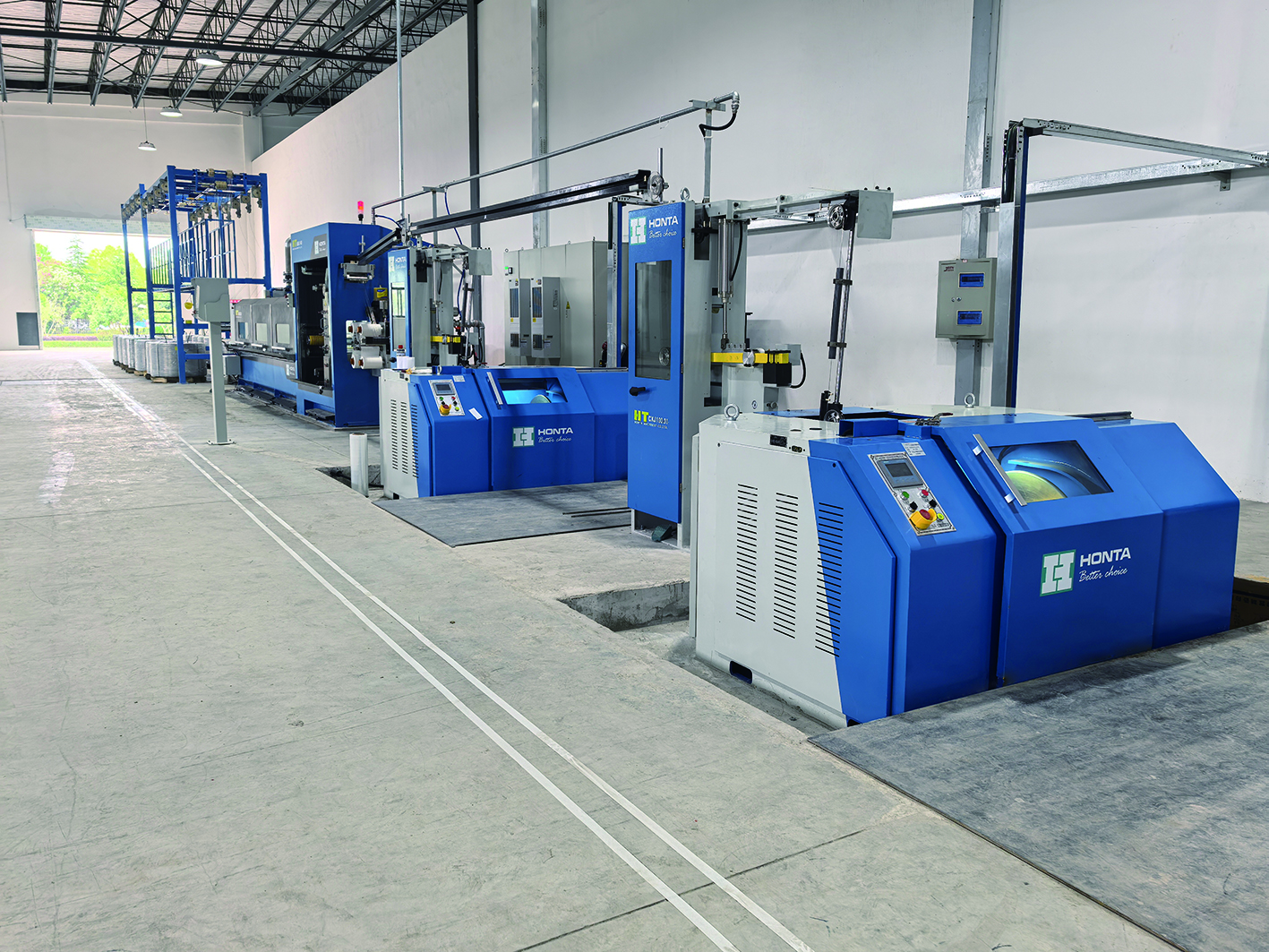
When a wire and cable factory plans a new line or expands capacity, the multiwire drawing machine is often the central purchasing decision. A multiwire drawing machine pulls multiple wires simultaneously through a series of dies to reduce their diameter while maintaining consistent tension and alignment. Selecting the wrong configuration can create bottlenecks, energy waste or repeated quality issues.
This article focuses on the project-scenario fit: how to choose wire count, inlet and outlet diameter range, drive technology and take-up equipment based on the conductor you need to produce. It uses documented HONTA machine data and verified industry benchmarks to support procurement and engineering teams during the research and evaluation stage.
Problem Definition
Many purchasing discussions begin with brand preference or price, not with the actual production profile. Buyers often ask for a multiwire drawing machine without specifying the material, the starting rod diameter, the final wire diameter, the number of parallel wires, the maximum line speed or the downstream stranding and take-up process. As a result, the machine may have the right name but the wrong capability.
The core procurement task is to translate the project scenario into machine parameters. A few questions define the scenario:
- What material will be drawn: copper, aluminium or an alloy?
- What is the inlet wire diameter supplied by the upstream rod breakdown machine?
- What is the target outlet diameter for the final conductor?
- How many wires should be processed simultaneously to meet production output?
- Is an inline annealer, single spooler, double spooler or basket coiler needed downstream?
- Will the machine run under continuous, high-speed automated conditions with PLC control?
Without answering these questions, a machine selection is a guess rather than a fit.
Industry Background
The demand for precision multiwire drawing machines is being driven by global electrification, new energy systems and communication networks. The global wire drawing machines market is projected to grow from USD 1.37 billion in 2025 to USD 2.13 billion by 2034, at a CAGR of 4.98% (The Insight Partners). The broader wire and cable market was valued at USD 230.9 billion in 2025 and is projected to reach USD 313.1 billion by 2033 (Grand View Research).
For buyers, supplier geography is also relevant. China's machine tool exports, including wire drawing machinery, reached a 19% share of global exports in the first half of 2025, surpassing Germany (Silverado Policy Accelerator). This explains why many international wire and cable factories now evaluate Chinese manufacturers alongside established suppliers.
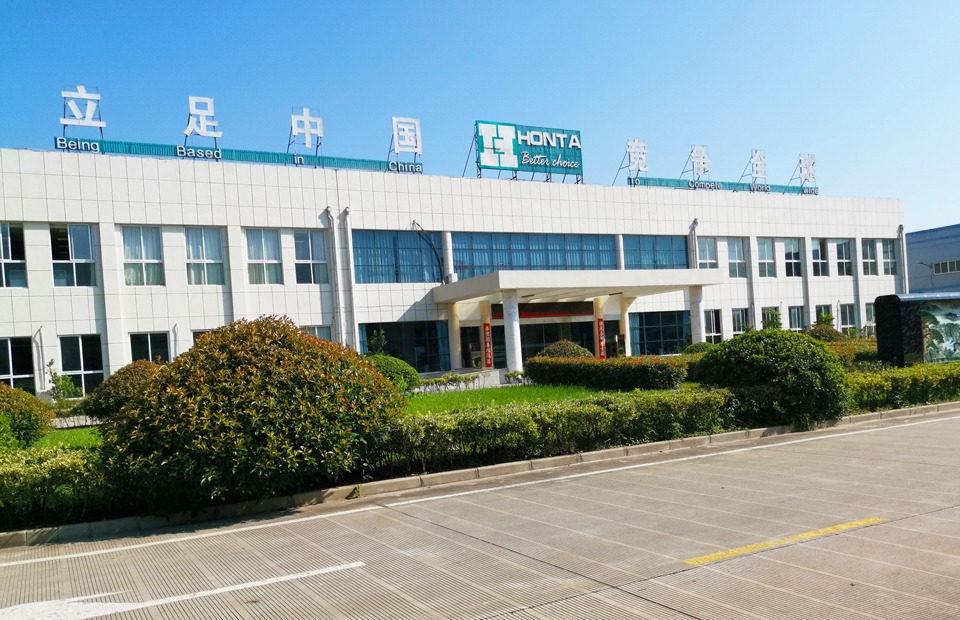
Jiangsu HONTA Machinery., Ltd. is one such China-based manufacturer. Founded in September 2006 and located in Kunshan, Jiangsu, HONTA operates a 30,000 m² factory with 157 employees and an annual output capacity of 200 sets. Exports account for approximately 45% of output. The company's R&D team includes 30 engineers, and it maintains long-term cooperative relationships with well-known cable companies at home and abroad. In 2017, HONTA established HONTA INC as its second production base in the United States. The main products include rod breakdown machines, multiwire drawing machines, high-speed double twist bunching machines and wire plating lines, serving customers in the USA, the Middle East, Africa and Asia.
Detailed Solution: HONTA's Documented Multiwire Drawing Machine and Manufacturing Capabilities
HONTA's documented machine line provides a concrete starting point for project-scenario matching.
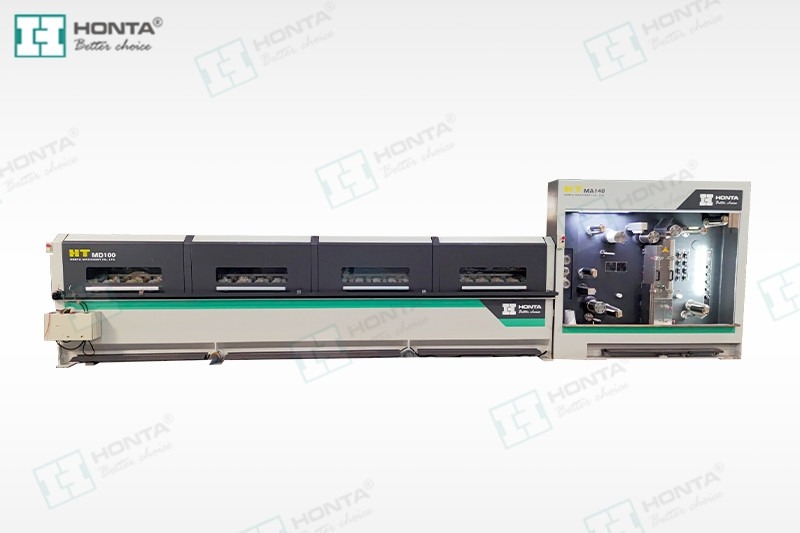
The 16-wire model HT.MD100B.16.22D.01 is a multiwire drawing machine with the following documented parameters:
- Type: 16 wires multiwire drawing machine
- Inlet wire diameter: 1.8–2.0 mm
- Outlet wire diameter: 0.18–0.5 mm
- Motor: Siemens
- PLC: Siemens
This machine is suited to applications in power and energy, automotive manufacturing, communications and electronics, intelligent equipment, construction and installation, household and electronics, and new energy. For plants producing fine copper or aluminium conductors, this configuration can be evaluated against the inlet rod diameter available from upstream breakdown lines.
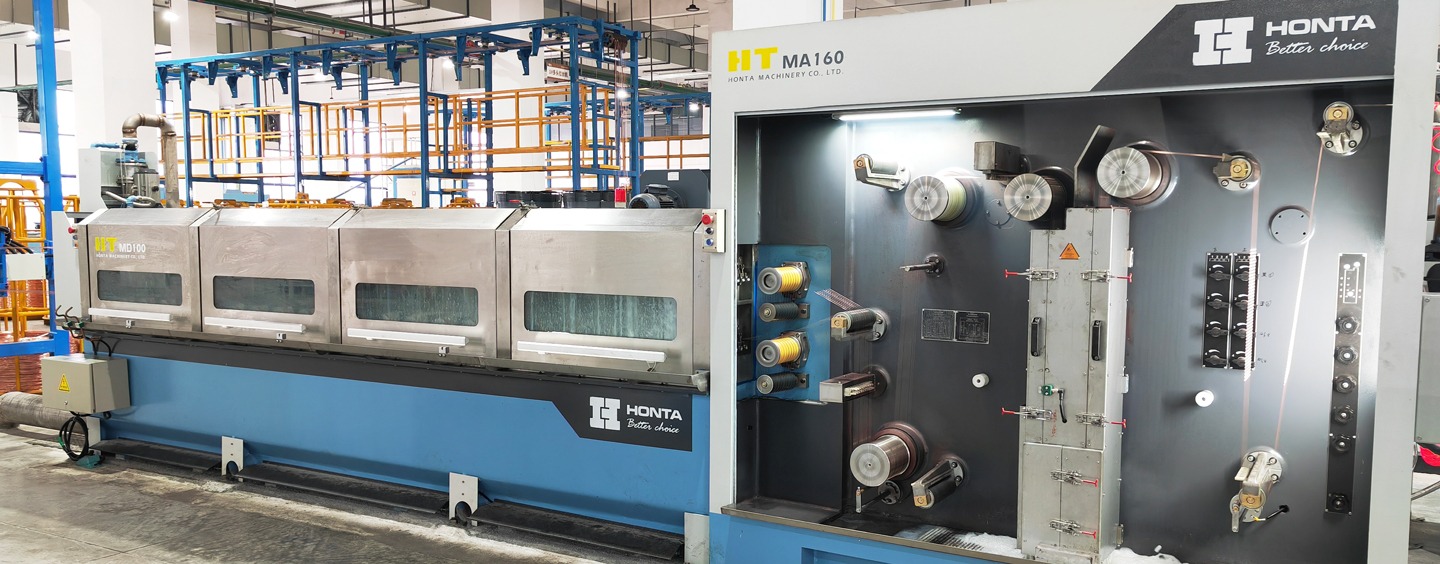
HONTA also has a documented 14-wire line, model HT.MD120.03.19.14, which operates at a maximum speed of 1800 m/min and covers an outlet wire range of 0.20–1.05 mm (Honta India). This data point is useful for buyers who need a wider diameter window or higher line speed than the 16-wire model documentation specifies.
Drive architecture is another key comparison. According to an industry comparison published by HTNXT Industrial Blog, individual-motor multiwire drawing machines can reduce energy consumption by up to 25% compared with traditional common-shaft systems because they eliminate mechanical transmission losses. For continuous production lines that run multiple shifts, this difference has a direct effect on total cost of ownership.
From a manufacturing capability perspective, HONTA supports ODM production and allows customization in colour and model type of components and parts. Its monthly production capacity is 15 sets, with a lead time of 90 days and a minimum order quantity of 1 set. Every machine is 100% tested before delivery, and after-sales support is available remotely and on site. For a project with a defined schedule, these capacity figures help with delivery planning.
Step-by-Step Breakdown: From Project Parameters to Machine Configuration
Step 1: Define the Material and Diameter Window
Start with the inlet diameter from your rod breakdown machine and the outlet diameter required by the next process. For example, the 16-wire HT.MD100B.16.22D.01 covers inlet 1.8–2.0 mm and outlet 0.18–0.5 mm, while the 14-wire line covers a wider outlet range of 0.20–1.05 mm. In a typical production flow, a copper rod breakdown machine or aluminium rod breakdown machine reduces the rod to an intermediate diameter; the multiwire drawing machine then draws multiple wires to the final diameter. If the process includes an annealer, the line may be described as a rod breakdown with annealer machine for copper and aluminium.
Step 2: Select the Wire Count
Multiwire machines are commonly available in 8-wire, 16-wire, 24-wire and 32-wire configurations. A higher wire count produces more wire in parallel but also places higher demand on tension control, die consistency and take-up capacity. The correct number depends on your throughput target and the strand construction used later.
Step 3: Choose the Drive Architecture
Decide whether individual motors or a common-shaft system are appropriate. Individual-motor systems can lower energy consumption by up to 25% by removing transmission losses and allow finer speed control per spool. This matters if the plant runs continuous automated lines with frequent product changes.
Step 4: Check Speed and Take-Up Compatibility
Consider the maximum speed of the drawing machine and how wire will be collected. HONTA's documented 14-wire line reaches 1800 m/min. Downstream equipment may include annealing furnaces, pay-off and take-up units, single or double-disc take-up machines, winding or unwinding machines, single spoolers, double spoolers and basket coilers. The take-up system must match the outlet wire diameter and line speed.
Step 5: Specify Automation and Control
For modern cable factories, automated or semi-automated operation under PLC control is expected. HONTA's 16-wire model uses a Siemens PLC and Siemens motors, with computer-screen parameter setting and automatic tension modes. Make sure the control interface is compatible with your existing production management system.
Step 6: Verify Materials and Construction
Frame and component materials affect machine stability. HONTA uses structural steel or alloy for frames and components, carbon-fiber material for bow components on certain bunching machines, and corrosion-resistant materials with protective treatments for plating lines. The machine floor plan should also fit the available workshop layout.
Step 7: Plan Quality Control and After-Sales Support
For OEM or ODM purchases, confirm quality control procedures. HONTA performs 100% testing and offers remote and on-site after-sales support. For export projects, a clear commissioning plan and spare-parts strategy reduce operational risk.
Use Cases

Use Case 1: Fine Wire Production for Automotive and Communications Cables
A typical evaluation starts with a need to produce fine wires in the 0.18–0.5 mm range. The HONTA HT.MD100B.16.22D.01 with 16 wires, Siemens motors and Siemens PLC fits this profile. Plants in the power, automotive, communications, electronics, intelligent equipment, construction, household and new energy sectors can use this data to compare the machine against their inlet rod size.
Use Case 2: High-Speed Lines with a Wider Diameter Window
When the target outlet diameter spans 0.20–1.05 mm and line speed is critical, the documented HONTA 14-wire line HT.MD120.03.19.14 at 1800 m/min provides a relevant benchmark. This scenario applies to plants producing a broader mix of conductors and seeking maximum output from a single line.
Use Case 3: Multi-Machine Installation in a Wire and Cable Factory
HONTA has supplied multiwire drawing machines to wire and cable factories in the United States and Europe. In one documented case, a customer used two sets of HONTA wire drawing machines for wire drawing for three years. The equipment has steadily produced products that meet the customer's requirements, with fast speed and high efficiency highlighted as the main benefits.
Comparison Table: Documented Machine Data at a Glance
| Parameter | 16-Wire HT.MD100B.16.22D.01 | 14-Wire HT.MD120.03.19.14 | Individual-Motor vs Common-Shaft Systems |
|---|---|---|---|
| Wire count | 16 | 14 | — |
| Inlet wire diameter | 1.8–2.0 mm | Not stated | — |
| Outlet wire diameter | 0.18–0.5 mm | 0.20–1.05 mm | — |
| Maximum speed | Not stated | 1800 m/min | — |
| Motor / PLC | Siemens | Not stated | — |
| Energy impact | — | — | Up to 25% energy reduction by eliminating mechanical transmission losses |
| Best-fit scenario | Fine wire production for multiple cable industries | Higher-speed and wider-diameter conductor production | Energy-sensitive continuous production lines |
FAQ
What compliance standards should I consider for a multiwire drawing machine?
Electrical equipment for machinery, including wire drawing systems, must comply with IEC 60204-1 for wiring practices and safety. Leading manufacturers like HONTA also maintain quality certifications such as ISO 9001 and ISO 14001 for global project compliance. Verify all project-specific standards with the supplier before ordering.
What wire diameter range can HONTA multiwire drawing machines cover?
HONTA's documented 16-wire model HT.MD100B.16.22D.01 accepts inlet wire of 1.8–2.0 mm and produces outlet wire of 0.18–0.5 mm. A separate 14-wire line HT.MD120.03.19.14 covers an outlet range of 0.20–1.05 mm at up to 1800 m/min. The correct choice depends on your conductor specification and downstream equipment.
What is the MOQ and what customization options can HONTA offer?
HONTA works with a minimum order quantity of 1 set. The company supports ODM production and can customize the colour and model type of components and parts. For a project-based quotation, provide your wire material, diameter range, wire count and automation requirements.
How can I request a catalogue or formal quotation?
You can download HONTA's catalogue of drawing machines from the link at the end of this article, or contact the international trade department directly by email at tammy@jshonta.com or by WhatsApp at +86 187 5292 2675. A formal quotation can be prepared after you define the target wire diameter, material and plant requirements.
What is the standard lead time and after-sales support for exported machines?
HONTA's standard lead time is 90 days, with a monthly production capacity of 15 sets. Each machine is 100% tested before delivery, and after-sales support is available both remotely and on site. For overseas projects, confirm response times and spare-parts availability in your service agreement.
Conclusion
Selecting a multiwire drawing machine is a project-scenario decision, not a brand-only decision. Define your conductor material, inlet and outlet diameter range, wire count, line speed, drive technology and take-up requirements before comparing suppliers.
The documented HONTA data in this guide gives buyers a practical reference: the 16-wire HT.MD100B.16.22D.01 for fine wire production, the 14-wire HT.MD120.03.19.14 for higher-speed and wider-diameter needs, and an individual-motor architecture that can reduce energy consumption by up to 25%. HONTA's ODM capability, 90-day lead time, 1-set MOQ, 100% testing and remote/on-site after-sales support are all relevant factors for a project-level evaluation.
Next step for your project: Download the HONTA catalogue of drawing machines to review technical details, or contact the HONTA international trade team to discuss your wire diameter range and production scenario. Visit www.jshonta.com for company information.