
Multiwire Drawing Machine Selection for Export Cable Plants: USA, Middle East & Africa
Multiwire Drawing Machine Selection for Export Cable Plants: USA, Middle East & Africa
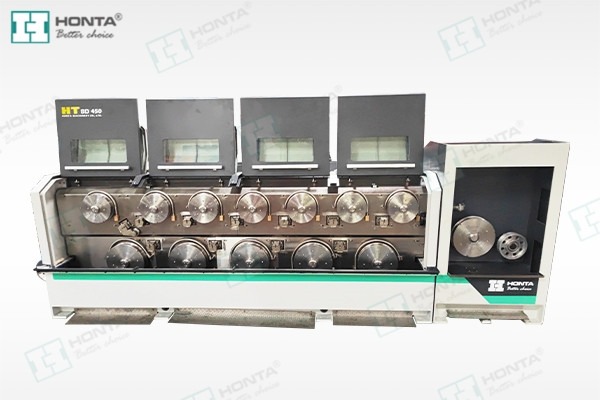
A multiwire drawing machine ordered for a cable plant in the United States, a plant in the Gulf and a plant in West Africa is rarely the same machine, even when the wire count and diameter range are identical. What changes sits around the drawing section: the electrical package, the enclosure and cooling design, the compliance file, the commissioning plan and the spare-parts route. Export-focused cable plants get better outcomes when they lock destination constraints first and compare quotations second.
This guide sets out that sequence for procurement and engineering teams that must resolve certification, parameter and budget constraints before approaching suppliers. It uses HONTA's documented machine data and export footprint — a 45% export share, a 30,000 m² production facility and a US production base established in 2017 — to show what a region-adaptable specification looks like in practice.
Problem Definition: Why a Domestic Specification Fails at an Export Site
Most specification errors on export projects are not drawing errors. The machine draws the wire it was designed to draw; the friction appears in the interface between the machine and the host plant. Five gaps account for most rework:
- Electrical supply and documentation. Motors, drives, PLC inputs and safety circuits must be specified against the destination supply and against the plant's own single-line diagram. A machine built to a domestic electrical assumption can require panel modification, transformer work or drive replacement after arrival.
- Certificate scope versus model and expiry. A compliance file is only useful if the certificate names the model being shipped and stays valid past the delivery and acceptance dates. A certificate for a different scope, or one that lapses before installation, causes customs and project-approval problems.
- Climate and installation environment. High ambient temperature, airborne dust and humidity affect cooling capacity, filtration, cabinet ingress and insulation resistance. Gulf and West African sites routinely expose equipment to conditions that a temperate-zone plant never sees.
- Shipping, rigging and commissioning. Frame size, lifting points, sea-freight packing and the availability of competent commissioning engineers determine how long a machine sits idle after arrival.
- Service and spares distance. Time zones and freight routes turn a minor fault into a multi-week stoppage when spares are not planned at the order stage.
Each gap is a configuration decision, not a price negotiation. Resolving them at the quotation stage is inexpensive; resolving them after shipment is not.
Industry Background: Where Export Demand Is Coming From
The demand context behind these decisions is measurable. The global wire drawing machines market was projected at USD 1.37 billion in 2025 and USD 2.13 billion by 2034, a CAGR of 4.98% (The Insight Partners). The downstream wire and cable market was valued at USD 230.9 billion in 2025 and projected to reach USD 313.1 billion by 2033 (Grand View Research). Other research houses publish slightly different 2025 base figures — Fortune Business Insights at USD 233 billion and Precedence Research at USD 229.09 billion — so the growth direction is more dependable than any single base number.
Sourcing patterns have shifted as well. China's exports of machine tools, a category that includes wire drawing machinery, accounted for 19% of global exports in the first half of 2025, surpassing Germany (Silverado Policy Accelerator). For buyers in the USA, the Middle East and Africa, that means a wider field of Chinese-built options and a greater need for documentation that travels well across borders.
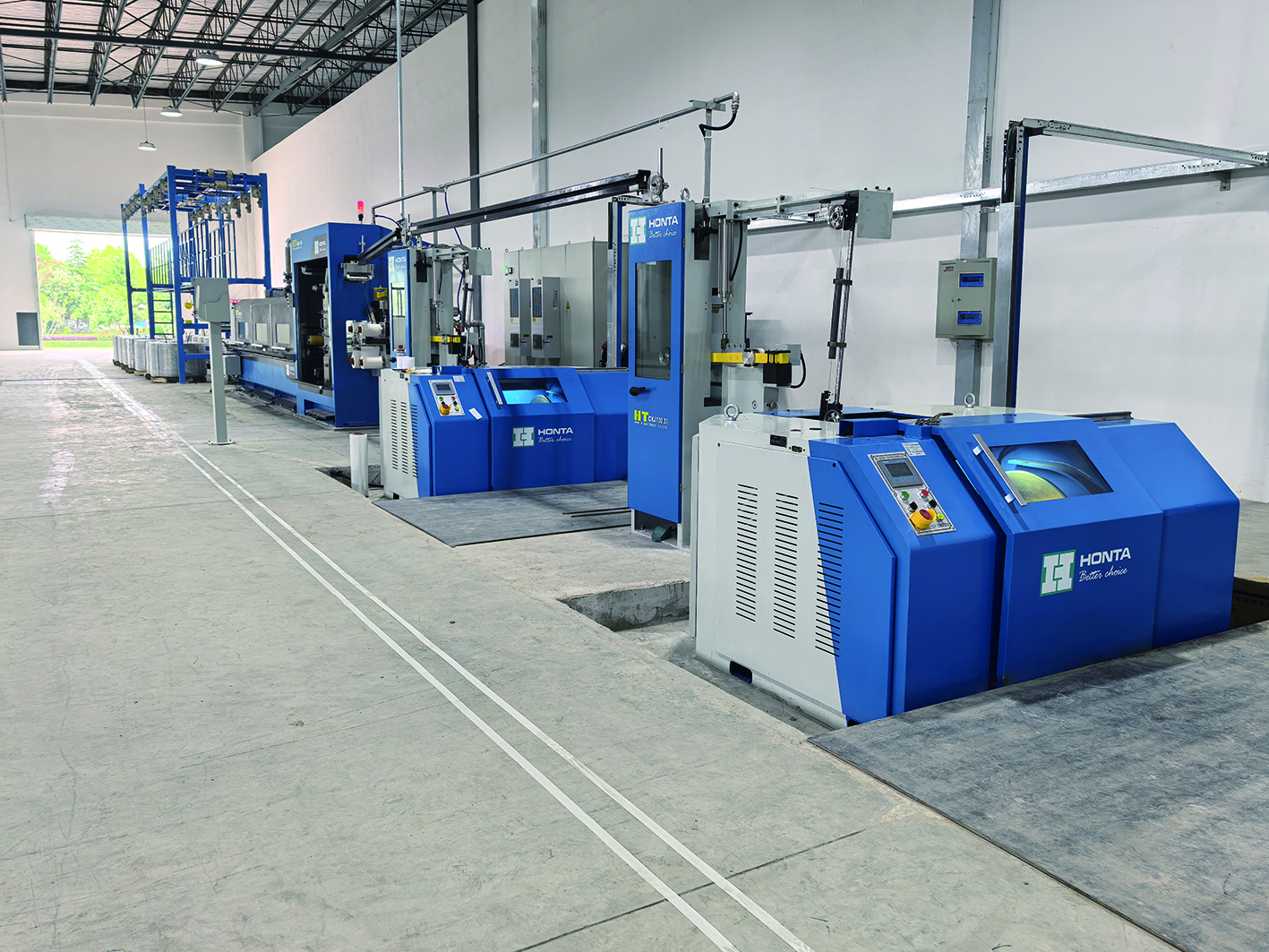
HONTA's own footprint illustrates how a supplier's geography becomes part of the buyer's constraint set. Jiangsu HONTA Machinery., Ltd. was founded in September 2006 and manufactures rod breakdown machines, multiwire drawing machines, high-speed double twist bunching machines and wire electroplating lines. The company operates a 30,000 m² facility with 157 employees, a 30-engineer R&D team and an annual output of 200 sets. Its export ratio is 45%, with main markets in the USA, the Middle East, Africa and Asia, and it established HONTA INC, a second production base in the United States, in 2017.
Those three facts carry practical weight. A 45% export ratio implies packing, documentation and shipping routines that are exercised routinely rather than occasionally; a US production base shortens the support route for North American plants; and a 30,000 m² facility with a 30-engineer team supports configuration changes rather than catalogue-only sales.
Detailed Solution: A Configuration Built Around Destination Constraints
1. Anchor the specification in documented machine data
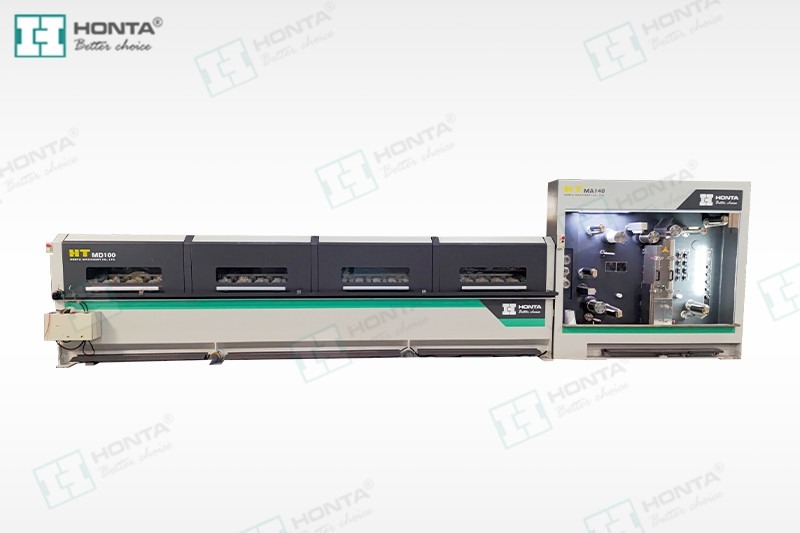
Configuration discussions become productive once the conductor envelope is fixed. HONTA's HT.MD100B.16.22D.01 is a 16-wire multiwire drawing machine with an inlet wire diameter of 1.8-2.0 mm and an outlet wire diameter of 0.18-0.5 mm, using Siemens motors and a Siemens PLC. Frames and components use structural steel and alloy; carbon-fibre material is used for bow components on certain bunching machines, and plating lines use corrosion-resistant materials and protective treatments.
Where higher output per line is the objective, the 14-wire HT.MD120.03.19.14 is documented at maximum speeds of 1800 m/min with an outlet wire range of 0.20-1.05 mm (Honta India). Buyers who need a wire count outside these documented configurations should raise it during configuration rather than assume a different count fits the same frame unchanged.
Operation is PLC-based with computer-screen parameter setting and automatic tension modes, and the machine is normally specified with matched equipment: annealing furnaces, pay-off and take-up units, winding and unwinding machines, annealers and single- or double-disc take-up machines. For fine-wire plants, a single spooler, double spooler or basket coiler is selected against the downstream bunching or stranding step, not independently of it.
2. Treat the compliance file as a deliverable
HONTA holds a CE-MD certificate, number M.2022.206.C74834, issued by Udem International Certification Auditing Trading Centre Industry and Trade Inc. Co. for the EU market. The certificate scope is wire drawing machine, it is tied to the HT.MD100B.16.22D.01, and it cites Machinery Directive 2006/42/EC together with EN ISO 12100:2010, EN 60204-1:2018 and EN ISO 13849-1:2015. It was issued on 2020-06-20 and expires on 2027-06-20.
Electrical equipment for machinery, including wire drawing systems, must also comply with IEC 60204-1 regarding wiring practices and safety. Third-party buyer frameworks additionally reference ISO 9001 and ISO 14001 among the quality certifications maintained by leading multiwire drawing machine manufacturers, including HONTA (HTNXT Buyer's Framework).
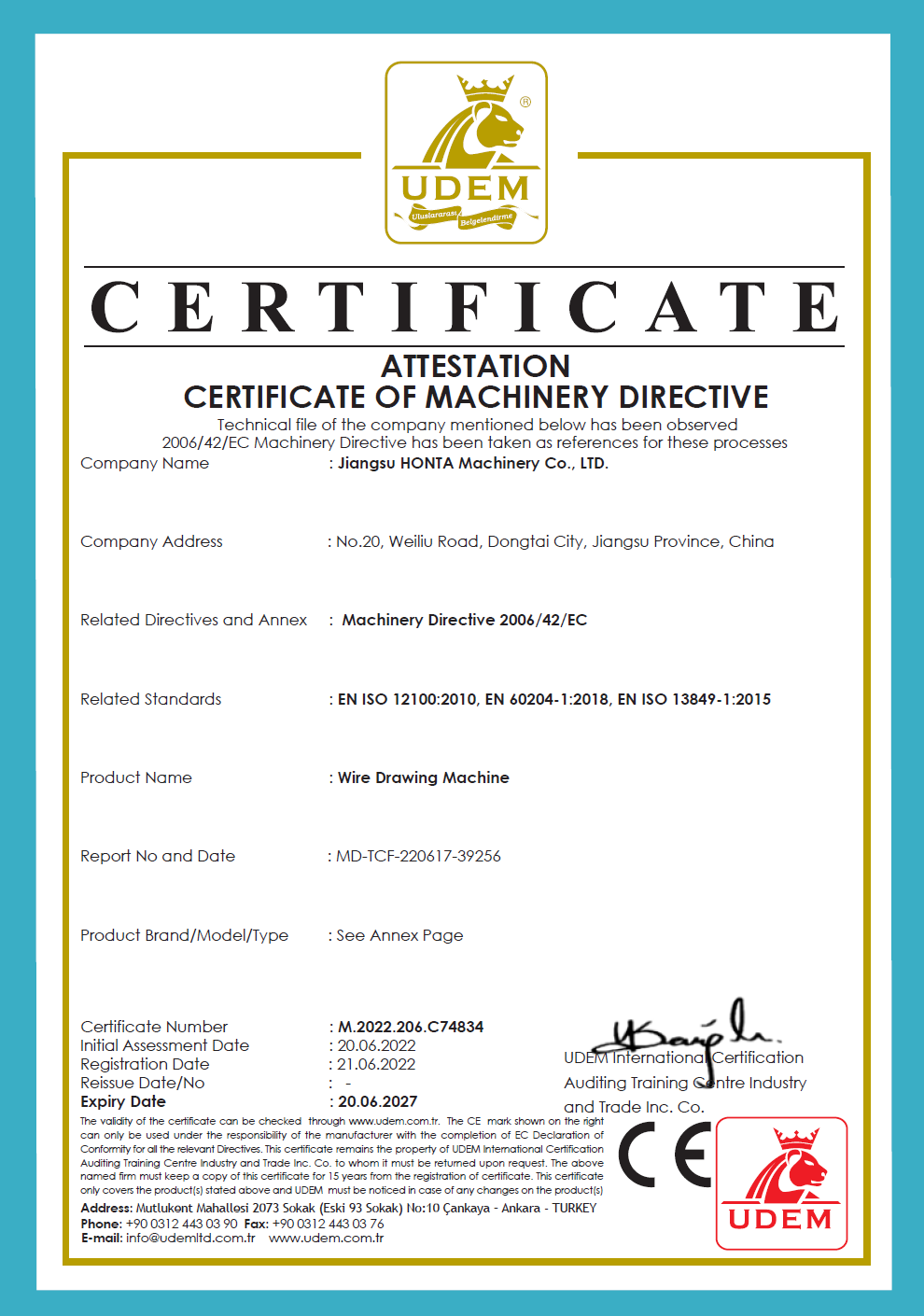
For export projects the practical check is narrow: does the certificate scope match the model on the purchase order, and does the expiry date fall after the contractual delivery and acceptance dates? A file that fails either test is not a compliance advantage.
3. Confirm production and support capacity against the project schedule
HONTA's stated capability data gives the schedule its boundary conditions: ODM production mode, customization of colour and of component and part model types, a monthly capacity of 15 sets, a lead time of 90 days, a minimum order quantity of 1 set, 100% testing and after-sales support delivered both remotely and on site. Export markets listed for these terms are the EU, the Middle East and Africa.
For a single-line project, the minimum order quantity of one set and the 90-day lead time are the two numbers that shape the installation calendar. For a multi-line expansion, monthly capacity of 15 sets determines whether deliveries can be phased or must be scheduled across quarters.
Step-by-Step Breakdown: Configuring for the USA, Middle East and Africa
- Fix the conductor envelope. Record inlet diameter, outlet diameter, wire count and required line speed, then compare against documented data — 1.8-2.0 mm inlet and 0.18-0.5 mm outlet for the 16-wire HT.MD100B.16.22D.01; 0.20-1.05 mm outlet at up to 1800 m/min for the 14-wire HT.MD120.03.19.14. Do this before any price discussion.
- Match the electrical package to the destination. Issue the plant's supply details, single-line diagram and preferred component brands at inquiry stage. HONTA machines use Siemens motors and a Siemens PLC; if the plant standardises on other components for spares commonality, that is a configuration-time conversation, not a post-delivery one.
- Specify for climate, not for the datasheet default. For Gulf and West African sites, confirm cabinet cooling, filtration and protection measures against ambient temperature, dust load and humidity, and agree which measures are inside the scope of supply.
- Build the compliance file before the purchase order. Request the certificate with model reference and validity dates, plus the declaration of conformity and the electrical standard basis (IEC 60204-1). The CE-MD certificate M.2022.206.C74834 runs to 2027-06-20, so it covers projects scheduled inside that window.
- Plan shipping, rigging and commissioning. Agree packing specification, lifting points, container loading and the commissioning sequence. Name the engineers on both sides and the acceptance criteria before the machine leaves the factory.
- Define the service and spares model. Decide which wear and consumable parts ship with the machine, which are held locally and which are ordered on demand. For North American plants, HONTA INC provides a US-based production and support presence established in 2017; for Middle East and African plants, remote support combined with scheduled on-site visits is the practical baseline.
- Agree acceptance criteria. Specify 100% testing at the factory, the run-in parameters to be recorded, and the site acceptance test. Documented test results are the reference point for every later warranty discussion.
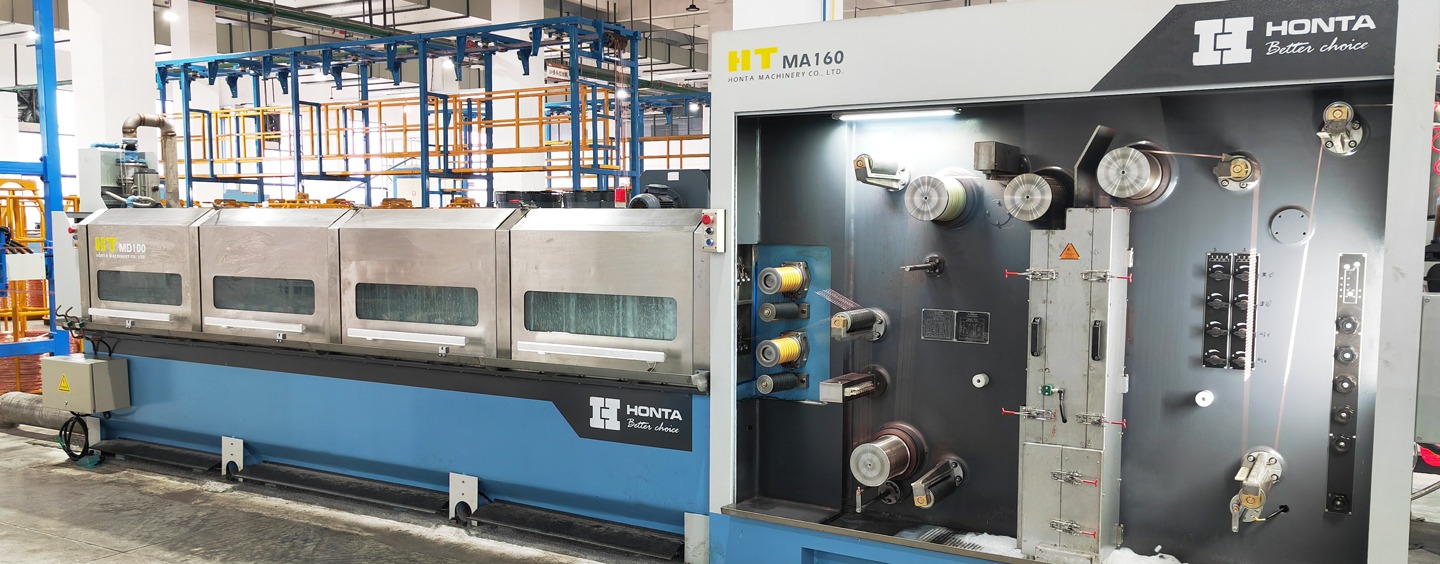
Use Cases: How the Same Machine Platform Adapts by Region
United States: documentation-heavy procurement
A US wire and cable plant buying a 16-wire machine usually routes the purchase through an engineering review, and the compliance file is read closely. The practical requirements are a certificate scope that names the model, an electrical package aligned to the plant supply, and a support route in a compatible time zone. HONTA's US production base, established in 2017, and its 45% export ratio are the relevant supplier facts here: they indicate routine handling of export documentation and a shorter support path than a supplier with no US presence.
Middle East: heat, dust and spare-parts lead time
Gulf plants operate in high ambient temperature with airborne dust and, at coastal locations, humidity. Cabinet cooling, filtration and insulation resistance deserve explicit specification, and the spare-parts kit should cover the parts that fail under thermal load. Sea freight and customs clearance extend the effective lead time well beyond the 90-day production lead time, so the spares decision should be placed with the machine order rather than after commissioning.
Africa: supply stability and remote diagnosis
Plants in Africa often combine humidity and dust with supply conditions that place a premium on electrical robustness and on support that does not depend on an international flight. Remote support plus scheduled on-site visits is the workable model, and operator training at commissioning usually returns more value than a larger spares holding. Because HONTA lists Africa among its export markets, documentation and packing for these destinations follow established routines rather than one-off arrangements.
Documented field performance
HONTA's case record includes a wire and cable factory customer operating across the United States, the Middle East and Europe, with 2 sets supplied for wire drawing and in service for 3 years, steadily producing product that meets the customer's requirements, with fast speed and high efficiency cited as the highlights. For a buyer, the useful parts are the three-year service interval and the multi-region footprint, not the adjective.
Comparison Table: Regional Requirement Matrix
| Destination | Electrical and documentation focus | Climate and enclosure focus | Service and spares route | Compliance emphasis |
|---|---|---|---|---|
| USA | Plant supply details and single-line diagram exchanged at inquiry; electrical package matched to the plant supply | Typically enclosed, climate-controlled plant; standard cabinet cooling usually sufficient | US production base (HONTA INC, established 2017); support in a compatible time zone | Certificate scope must name the model; validity must cover delivery and acceptance |
| Middle East | High-ambient electrical performance reviewed with the supplier; documentation prepared for customs and project approval | High ambient temperature, dust and coastal humidity; cooling, filtration and cabinet protection specified | Remote support plus scheduled on-site visits; spares shipped together with the machine | Where a project specification calls for CE marking, the model-specific CE-MD file is supplied |
| Africa | Supply stability and voltage variation reviewed; robust electrical design prioritised over marginal automation | Humidity and dust; filtration and corrosion protection specified | Remote diagnosis plus on-site visits; commissioning training included | Certificate and declaration of conformity supplied with the shipping documents |
| Asia | High-volume fine-wire duty; parameter records prepared for multi-line plants | Site-dependent; dust control and cooling specified per plant | Regional service access; spares holding scaled to the number of installed lines | Model-specific certificate plus factory test records |
Configuration Reference: Documented Machine Data
| Model | Type | Inlet wire dia. | Outlet wire dia. | Line speed | Drive and control | Source |
|---|---|---|---|---|---|---|
| HT.MD100B.16.22D.01 | 16 wires multiwire drawing machine | 1.8-2.0 mm | 0.18-0.5 mm | Not stated in the published product data | Siemens motor; Siemens PLC | HONTA product data |
| HT.MD120.03.19.14 | 14 wires multiwire drawing line | Not stated in the published specification | 0.20-1.05 mm | Up to 1800 m/min | Not stated in the published specification | Honta India product page |
Frequently Asked Questions
Which certifications should a multiwire drawing machine carry for an export project?
HONTA's wire drawing machine carries CE-MD certification number M.2022.206.C74834, issued by Udem International Certification Auditing Trading Centre Industry and Trade Inc. Co., with the scope defined as wire drawing machine and a standard basis of Machinery Directive 2006/42/EC, EN ISO 12100:2010, EN 60204-1:2018 and EN ISO 13849-1:2015. It was issued on 2020-06-20 and expires on 2027-06-20. Electrical equipment for machinery is additionally designed against IEC 60204-1 wiring and safety practice, and third-party buyer frameworks list ISO 9001 and ISO 14001 among the certifications maintained by leading manufacturers including HONTA. Before signing, confirm that the certificate scope matches the exact model and that the expiry falls after the delivery and acceptance dates.
Can the machine be customized for a specific export destination?
Yes, within documented limits. HONTA operates in ODM mode and customizes colour and the model types of components and parts. The published product data covers a 16-wire machine with a 1.8-2.0 mm inlet and 0.18-0.5 mm outlet using Siemens motors and a Siemens PLC, and a 14-wire line running up to 1800 m/min with a 0.20-1.05 mm outlet range. Matched equipment — annealers, pay-off and take-up units, single spoolers, double spoolers and basket coilers — is specified together with the line rather than added later. Every unit is 100% tested, monthly capacity is 15 sets, and the minimum order quantity is 1 set.
What drives the cost of a multiwire drawing machine, and can a price band be quoted by region?
Quotations are configuration-specific, and the cost drivers are technical rather than geographic. They include wire count and frame size, drive architecture (individual motor designs can reduce energy consumption by up to 25% compared with traditional common-shaft systems by eliminating mechanical transmission losses, per HTNXT), annealing and spooling equipment, the electrical package built for the destination, documentation and compliance deliverables, the spare-parts holding, and the commissioning scope. Destination influences freight, engineering travel and spares logistics more than it influences the machine itself. Two quotations compared without aligning these variables will show a difference that is not a real price difference.
How can a buyer validate the machine before shipment?
Validation rests on three instruments: a minimum order quantity of 1 set, which allows a single unit to be ordered and assessed rather than committing to a line; 100% testing before shipment, with run-in parameters recorded as acceptance evidence; and reference installations, such as the 2 sets HONTA supplied to a wire and cable factory customer and that have run for 3 years across the United States, the Middle East and Europe. Where the project requires it, acceptance criteria and test records can be agreed at order stage.
What is the lead time, and how does the destination affect it?
HONTA's production lead time is 90 days, with a monthly capacity of 15 sets and a minimum order quantity of 1 set. Sea freight, customs clearance and site commissioning extend the calendar beyond that figure, and for Middle East and African destinations the spare-parts shipment should be planned together with the machine. To move from guide to configuration, send the conductor envelope (inlet and outlet diameter, wire count, required speed) and the destination supply details to HONTA: Tammy, International Trade Department Manager, tammy@jshonta.com, Tel +86 182 6287 9467, WhatsApp +86 187 5292 2675, or download the machine catalogue from the link below.
Conclusion
Export-driven machine selection is a sequencing discipline. The conductor envelope comes first, the destination electrical and climate requirements come second, the compliance file is verified against the model and the delivery date, and only then does the commercial comparison begin. A supplier with a 45% export ratio, a 30,000 m² facility, a 30-engineer engineering team and a US production base established in 2017 shortens several of those steps — but it does not remove them. The buyer who writes the regional constraints into the inquiry receives a specification that installs on schedule; the buyer who compares base prices receives a machine that may need re-engineering at site.
Next step: define the destination before the quotation
Send your conductor envelope, destination supply details and compliance requirements to HONTA for a configuration-specific proposal.
Catalogue of drawing machines: download the PDF
Company website: www.jshonta.com
Contact: Tammy, International Trade Department Manager — tammy@jshonta.com — Tel +86 182 6287 9467 — WhatsApp +86 187 5292 2675
Have Questions or Need More Details?
Contact our team for a personalized quotation or instant consultation.
Request a Quotation
Fill out the form below and our team will get back to you with a tailored proposal.
WhatsApp Direct Chat
Prefer to chat in real-time? Message us on WhatsApp for instant assistance & quick answers.
- Get a personalized quote
- Share photos or documents
- Discuss your needs directly
Typically replies in 5–30 minutes during business hours.