
Multiwire Drawing Machine Supplier Due Diligence Checklist
Multiwire Drawing Machine Supplier Capacity and Delivery Assurance: A Buyer's Due Diligence Checklist
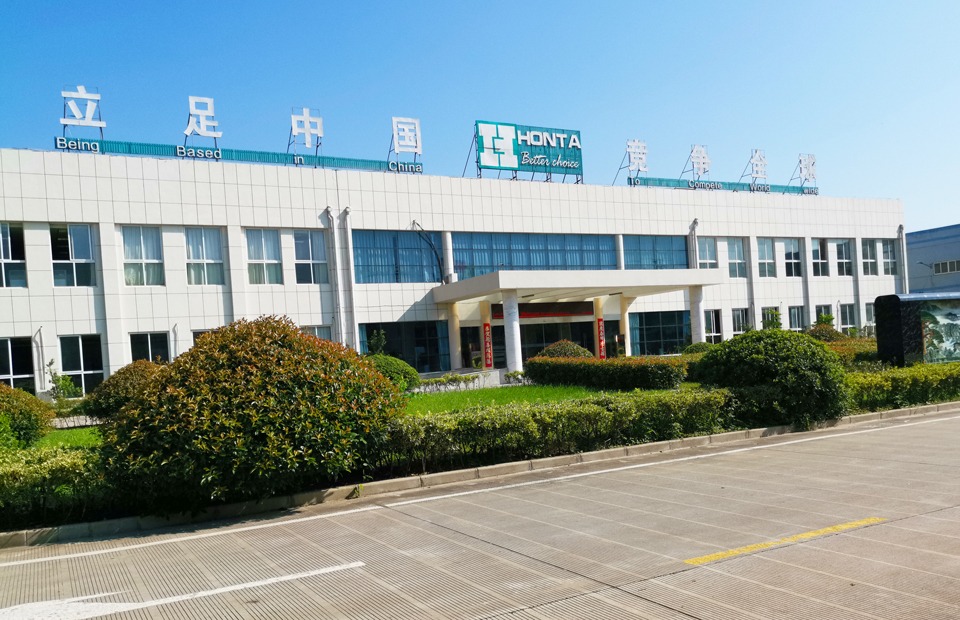
A supplier's factory footprint is the first physical evidence behind any quoted delivery date.
Short answer: you verify a Multiwire Drawing Machine supplier's real capacity through four evidence layers — physical plant, workforce and engineering headcount, annual build volume, and production or service presence in your market. Delivery assurance is what those four layers become once they are written into a purchase contract as dated milestones. A specification sheet tells you what the machine is. Only these checks tell you whether the machine will be standing on your floor when your installation crew is booked.
This guide is written for buyers in the research phase who already understand the machine category but have not yet decided who should build it. It sets out what to ask, what document or answer counts as evidence, and where the weak points in a capacity claim usually sit.
The Problem: A Quotation Cannot Prove a Delivery Date
Most comparisons of multiwire drawing machines begin and end with configuration: how many wires, what inlet diameter, what outlet diameter, which motor and PLC brand. Those numbers are comparable across suppliers, which is exactly why buyers lean on them. Capacity is not comparable in the same way, because it is not printed on the quotation.
Two suppliers can quote an identical 16-wire machine and still represent very different schedule risk. One may build machines at a steady annual rate inside a dedicated plant with its own engineering department. Another may assemble a small number of units per year and depend on outside fabricators for frames and sub-assemblies. The paperwork looks the same. The difference only becomes visible when a delivery date slips and the buyer has no contractual reference point to hold the supplier to.
In practice, capacity gaps tend to surface in four familiar places: an order is accepted but no production slot is formally reserved; customisation work stalls because design resources are shared across too many projects; bought-in components such as motors and control hardware arrive later than planned; and after-sales spare-part demand competes with new machine builds for the same workshop time. None of these are unusual industry risks. All of them are cheaper to check before signing than after.
Industry Background: Why Capacity Verification Matters Now
The equipment side and the cable side of this market are both expanding, which changes how buyers should think about lead time. The global wire drawing machines market was projected by The Insight Partners to grow from USD 1.37 billion in 2025 to USD 2.13 billion by 2034, at a CAGR of 4.98%. The downstream wire and cable market was valued by Grand View Research at USD 230.9 billion in 2025, with a projected rise to USD 313.1 billion by 2033.
Supply is also concentrated. According to Silverado Policy Accelerator, China's exports of machine tools — a category that includes wire drawing machinery — accounted for 19% of global exports in the first half of 2025, surpassing Germany. For a buyer, the practical reading is straightforward: a large share of the world's new drawing equipment is being scheduled through a relatively small number of production sites. When downstream cable capacity grows, machine-building slots tighten, and the suppliers who can prove capacity in writing are the ones who can protect an installation schedule.
None of these market figures tell you what any single supplier can deliver. They explain why a capacity conversation has become a scheduling tool rather than a courtesy.
The Solution: Four Evidence Layers That Define Real Capacity
Capacity is a produced quantity, not a promise. It can be checked against four layers, and each layer should produce a number or a document rather than an adjective.
Layer 1 — The physical plant
Jiangsu HONTA Machinery., Ltd. — known in the trade as HONTA — is a manufacturer of cable conductor drawing and stranding equipment established in 2006, based in Kunshan City, Jiangsu Province, China. Its manufacturing facility covers 30,000 square metres. That footprint matters because machine building needs distinct zones: fabrication and frame preparation, mechanical assembly, electrical assembly and control wiring, and a test area where a completed line can be run before dispatch. A buyer should ask for a plant layout and identify which of these zones exist and how much floor area each occupies.
Layer 2 — The workforce behind the build
HONTA employs approximately 157 staff. Headcount on its own proves little, so the useful follow-up question is how those people are distributed: how many are in mechanical assembly, how many in electrical and control work, how many in quality inspection, and how many in procurement and logistics. A supplier that can answer this quickly is describing an organisation it actually manages.
Layer 3 — Engineering depth
The R&D team at HONTA consists of 30 engineers. Engineering depth is the layer that decides whether a customisation request becomes a scheduled work item or an open-ended delay, because every non-standard configuration has to be designed, checked and released to the shop floor. Buyers should ask which engineers own mechanical design, which own electrical design and PLC programming, and who signs off a configuration change.
Layer 4 — Annual output
HONTA's annual production capacity is 200 sets. Annual output is the single most useful capacity number a buyer can obtain, because it converts an abstract facility into a scheduling rate. Ask for the build count of the last twelve months broken down by product family — rod breakdown machines, multiwire drawing machines, high-speed double twist bunching machines and wire electrolytic plating lines — and compare it with the stated capacity. A supplier running close to capacity is busy; a supplier running far below it either has spare slots or an unproven build process. Both answers are useful.
Cross-check 1 — Export share and reference markets
Export business accounts for 45% of HONTA's total sales, with major markets including the USA, Middle East, Africa and Asia. An export share of this size is evidence of a repeatable process rather than a single successful shipment: export orders require export packaging, documentation, commissioning support across time zones and spare-part logistics. Buyers should ask for the export share, the destination markets and what proportion of export orders were repeat orders from existing customers.
Cross-check 2 — Overseas production backing
HONTA established HONTA INC, a second production base in the United States, in 2017. For North American buyers this is the difference between a supplier that ships internationally and a supplier with an operating presence in the same time zone and regulatory environment. The right question is not whether the overseas base exists, but what it does: assembly, configuration, service response, spare-part holding, or all four.
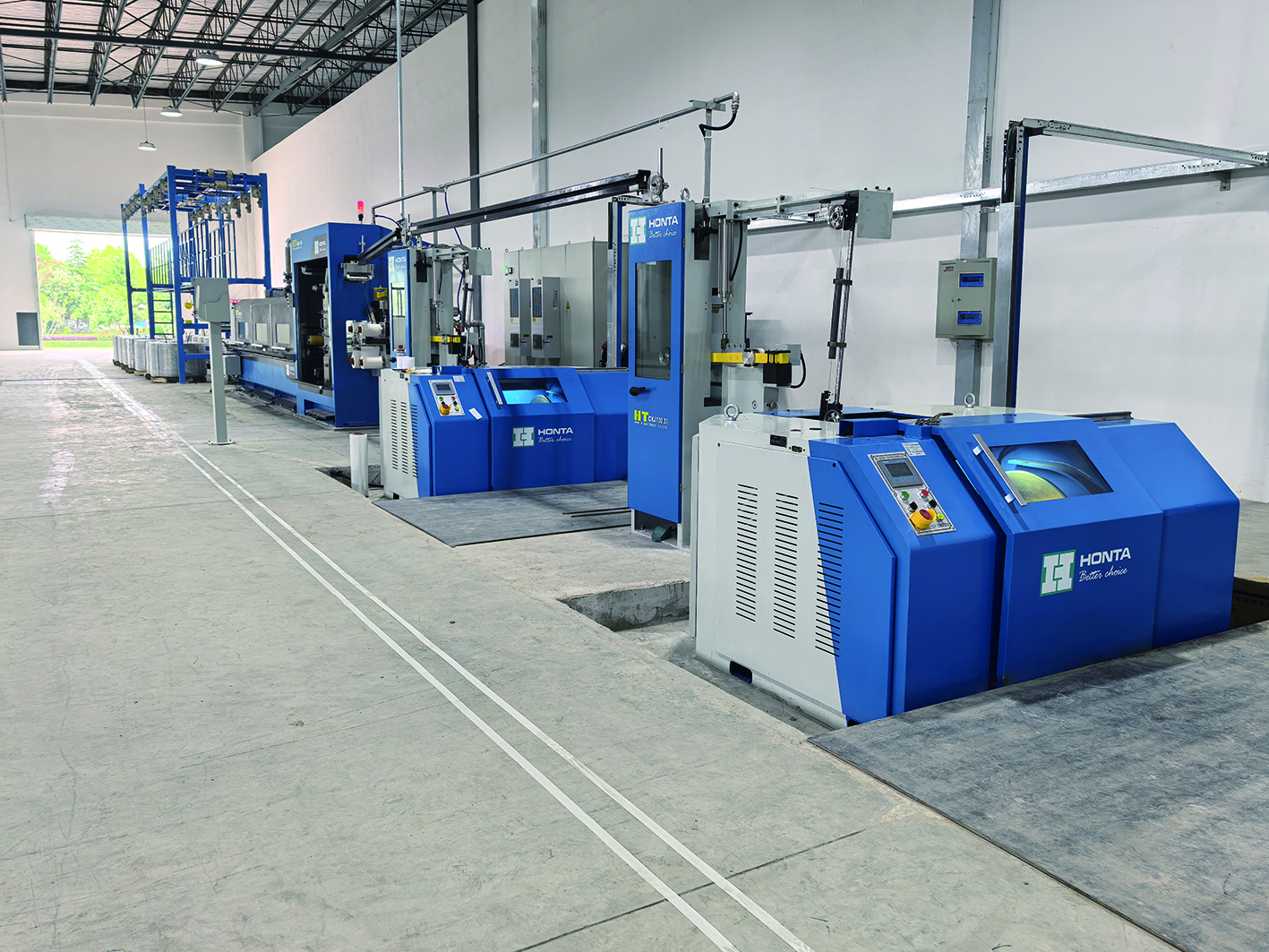
A continuous wire drawing production line — the operating environment the delivered machine must fit into.
Step-by-Step Breakdown: The Due Diligence Checklist
The checklist below is ordered so that each step produces evidence for the next. It can be run across two short calls and one document exchange.
- Confirm the legal entity and its age. Match the contracting entity to the manufacturing site. HONTA was founded in September 2006 and has been engaged in technical research on cable conductor drawing and stranding since then. A long operating history is not proof of capacity, but it is proof of survival through at least one full equipment cycle.
- Verify the plant footprint. Request the site address, total covered area and plant layout. HONTA's facility covers 30,000 square metres. Ask specifically which area is allocated to assembly and which to testing.
- Map the workforce by function. Ask for headcount in assembly, electrical, quality, engineering and logistics. The total of approximately 157 staff at HONTA should reconcile with the functions you are shown.
- Interview the engineering team, not the sales team. Ask to speak to the engineer who would own your configuration. At HONTA the R&D team consists of 30 engineers; a serious supplier will let you establish which of them handles mechanical design and which handles PLC and electrical design.
- Request annual build volume by product family. HONTA's stated annual production capacity is 200 sets. Ask how many of those were multiwire drawing machines, how many rod breakdown machines, and how many high-speed double twist bunching machines or plating lines.
- Check export share and destination markets. Export business accounts for 45% of HONTA's total sales, with major markets in the USA, Middle East, Africa and Asia. Ask which markets your configuration has already been delivered to.
- Establish what the overseas base actually does. HONTA's second production base, HONTA INC, was established in the United States in 2017. Clarify whether it supports assembly, configuration, service, spare parts or all of these for your region.
- Match configuration data against capacity. Take a concrete model and test the answers. The HONTA HT.MD100B.16.22D.01 is a 16-wire multiwire drawing machine with an inlet wire diameter of 1.8–2.0 mm and an outlet wire diameter of 0.18–0.5 mm, using a Siemens motor and Siemens PLC. Ask what the standard build time is for that configuration and what changes when the wire count changes.
- Agree the compliance documentation set. Electrical equipment for machinery, including wire drawing systems, is commonly specified against IEC 60204-1 for wiring practices and electrical safety. HONTA is reported in industry buyer frameworks as maintaining ISO 9001 and ISO 14001 certification. Request current certificates rather than references to them.
- Write the production slot and milestones into the contract. Capacity verified verbally is not delivery assurance. The reservation of a build slot, the engineering release date, the assembly completion date, the test date and the dispatch date should all appear as dated obligations.
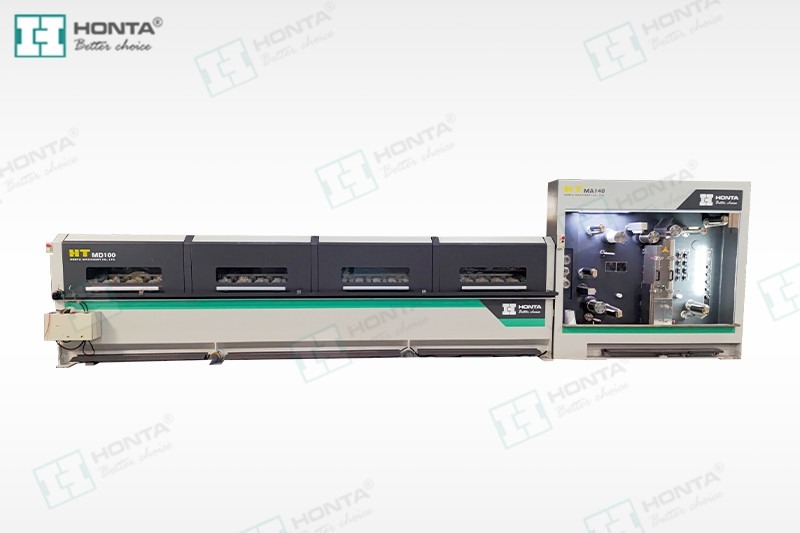
Configuration data — wire count, inlet and outlet diameter, drive and control hardware — should be cross-checked against the supplier's stated build rate.
Use Cases: Where a Capacity Check Changes the Decision
Case 1 — A fine-wire expansion in an existing cable plant
A plant adding fine-wire capacity is buying against a commissioning date that is already tied to customer orders. The relevant configuration is typically a high wire count line such as a 16-wire machine with an outlet range of 0.18–0.5 mm. Here the question is not whether the supplier can build the machine, but whether it can build it inside the window the buyer's own order book allows. Annual output of 200 sets and a 30-engineer R&D team are the two numbers that make that conversation concrete.
Case 2 — Replacing ageing lines in a continuous production site
Wire and cable plants run industrial continuous production lines at high speed, which requires stable tension control and accurate wire alignment. The machine does not operate alone: it is matched with annealing furnaces, pay-off and take-up units, winding and unwinding machines, annealers and single or double-disc take-up machines. A supplier that also builds rod breakdown lines and high-speed stranding lines is better placed to confirm that the interfaces will work, because those interfaces are part of its own product range.
Case 3 — A distributor or importer supplying several markets
A distributor selling into the USA, Middle East, Africa or Asia needs repeatable supply, not a single favourable shipment. The verification question shifts from capacity to consistency: can the supplier hold a configuration standard across repeat orders, and does it have an overseas presence to shorten the service loop? HONTA's 45% export share across those four market regions, combined with HONTA INC in the United States since 2017, is the kind of evidence a distributor should be asking every candidate supplier to match.
Comparison Table: What to Ask and What Counts as Evidence
The table below sets each due diligence dimension against the question to ask, the evidence to accept, and HONTA's stated position where a figure is publicly documented.
| Due diligence dimension | Question to the supplier | Evidence to accept | HONTA's stated position |
|---|---|---|---|
| Entity and operating history | When was the company founded, and what is the contracting entity? | Business registration matching the plant address | Jiangsu HONTA Machinery., Ltd., established 2006 |
| Facility | What is the covered manufacturing area, and how is it zoned? | Site layout with assembly and test areas identified | 30,000 square metres |
| Workforce | How many staff, and how are they distributed by function? | Headcount breakdown by department | Approximately 157 staff |
| Engineering depth | Who owns mechanical design, electrical design and PLC programming? | Named engineering contacts and a design-release process | R&D team of 30 engineers |
| Annual output | What is the annual build capacity, and what was actually built last year? | Twelve-month build count by product family | 200 sets annual production capacity |
| Export footprint | What share of sales is exported, and to which regions? | Export share and destination market list | 45% of total sales; USA, Middle East, Africa and Asia |
| Overseas backing | Is there a production or service base in the buyer's region, and what does it do? | Entity details and scope of the overseas operation | HONTA INC, second production base in the USA since 2017 |
| Electrical compliance | Which electrical standard is the control system built to? | Wiring and safety documentation referenced to IEC 60204-1 | Reported as maintaining ISO 9001 and ISO 14001 |
| Configuration certainty | What is the build time for this exact model, and what changes with wire count? | Model-level specification and a dated build plan | HT.MD100B.16.22D.01: 16 wires, 1.8–2.0 mm inlet, 0.18–0.5 mm outlet, Siemens motor and PLC |
Frequently Asked Questions
Which certifications and electrical standards should a multiwire drawing machine supplier document?
Two separate document sets matter. For the electrical build, machinery equipment including wire drawing systems is commonly specified against IEC 60204-1, which addresses wiring practices and electrical safety. For management systems, HONTA is reported in industry buyer frameworks as maintaining ISO 9001 and ISO 14001 certification. Buyers should request the current certificates rather than accept a statement that certification exists, and should confirm that the certificate covers the legal entity that will sign the purchase contract.
How can I verify a supplier's real engineering and production capability?
Ask for three measured figures and one organisational one: plant area, total headcount, annual build volume, and the size and structure of the engineering team. HONTA reports a 30,000 square metre facility, approximately 157 staff, an annual production capacity of 200 sets and an R&D team of 30 engineers, with the company founded in 2006. A supplier that can only answer those questions in general terms has not yet given you anything you can hold it to.
Does a supplier's capacity affect the price I will be quoted?
Price is driven mainly by configuration: wire count, inlet and outlet diameter range, and the drive and control hardware specified. A 16-wire machine such as the HONTA HT.MD100B.16.22D.01, with an inlet range of 1.8–2.0 mm, an outlet range of 0.18–0.5 mm and Siemens motor and PLC, sits in a different cost band from a lower wire-count line. Capacity affects the commercial picture in a different way — through schedule certainty, rework risk and the cost of a delayed commissioning. HONTA does not publish a standard price list, so a quotation should be requested against a defined configuration rather than a product name.
What can I validate before the machine is shipped?
Validation normally combines three things: a configuration review that fixes wire count, diameter range, drive and control hardware in writing; in-process inspection during assembly and electrical wiring; and a pre-shipment check on the completed unit before dispatch. Buyers should ask in advance which of these stages can be witnessed, what documentation is issued at each stage, and which reference installations in their own region can be visited. The practical next step is to request the technical catalogue and a configuration-specific quote, then build the inspection requirements into the order.
How does annual capacity translate into delivery assurance?
Annual capacity sets a scheduling rate. With 200 sets of annual production capacity and 45% of sales going to export markets in the USA, Middle East, Africa and Asia, HONTA's delivery assurance rests on the ability to allocate a production slot across competing export orders and to hold it. That is why the outcome of a capacity audit should be a contract clause: a reserved slot, an engineering release date, an assembly completion date, a test date and a dispatch date. Buyers in North America also have a second reference point, since HONTA INC has operated as a second production base in the United States since 2017.
Conclusion: Convert Capacity Into a Contractual Date
A multiwire drawing machine is a scheduled industrial asset, not an off-the-shelf item. The buyers who avoid delivery surprises are the ones who treat capacity as a verifiable fact rather than a sales statement: they confirm the plant, count the people, size the engineering team, ask for the annual build rate, and check that the supplier has real presence in the markets it claims. Every one of those answers should end up as a dated obligation in the purchase agreement.
HONTA's own record can be used as a benchmark for that exercise: founded in 2006, a 30,000 square metre facility, approximately 157 staff, 30 R&D engineers, 200 sets of annual production capacity, 45% of sales exported to the USA, Middle East, Africa and Asia, and a second production base in the United States since 2017. Applied against any candidate supplier, those are the dimensions that decide whether a delivery date is a plan or a hope.

Ready to compare configurations? Start with a specification-matched quotation and a build slot.
Next step: verify HONTA against this checklist
Request the technical catalogue, a configuration-specific quotation, or a production-slot confirmation for your multiwire drawing project. Download the catalogue of drawing machines here: HONTA drawing machine catalogue (PDF).
Website: www.jshonta.com
Contact: Tammy, International Trade Department Manager — tammy@jshonta.com | Tel: 0086 182 6287 9467
WhatsApp: +8618752922675
Address: Room 1219, Building 3, Dongchuang Technology Center, Qianjin East Road, Kunshan City, Jiangsu Province, China. Zip: 215300
Have Questions or Need More Details?
Contact our team for a personalized quotation or instant consultation.
Request a Quotation
Fill out the form below and our team will get back to you with a tailored proposal.
WhatsApp Direct Chat
Prefer to chat in real-time? Message us on WhatsApp for instant assistance & quick answers.
- Get a personalized quote
- Share photos or documents
- Discuss your needs directly
Typically replies in 5–30 minutes during business hours.