
Multiwire Drawing Machine Support FAQ: What Wire Mills Should Ask Before Committing
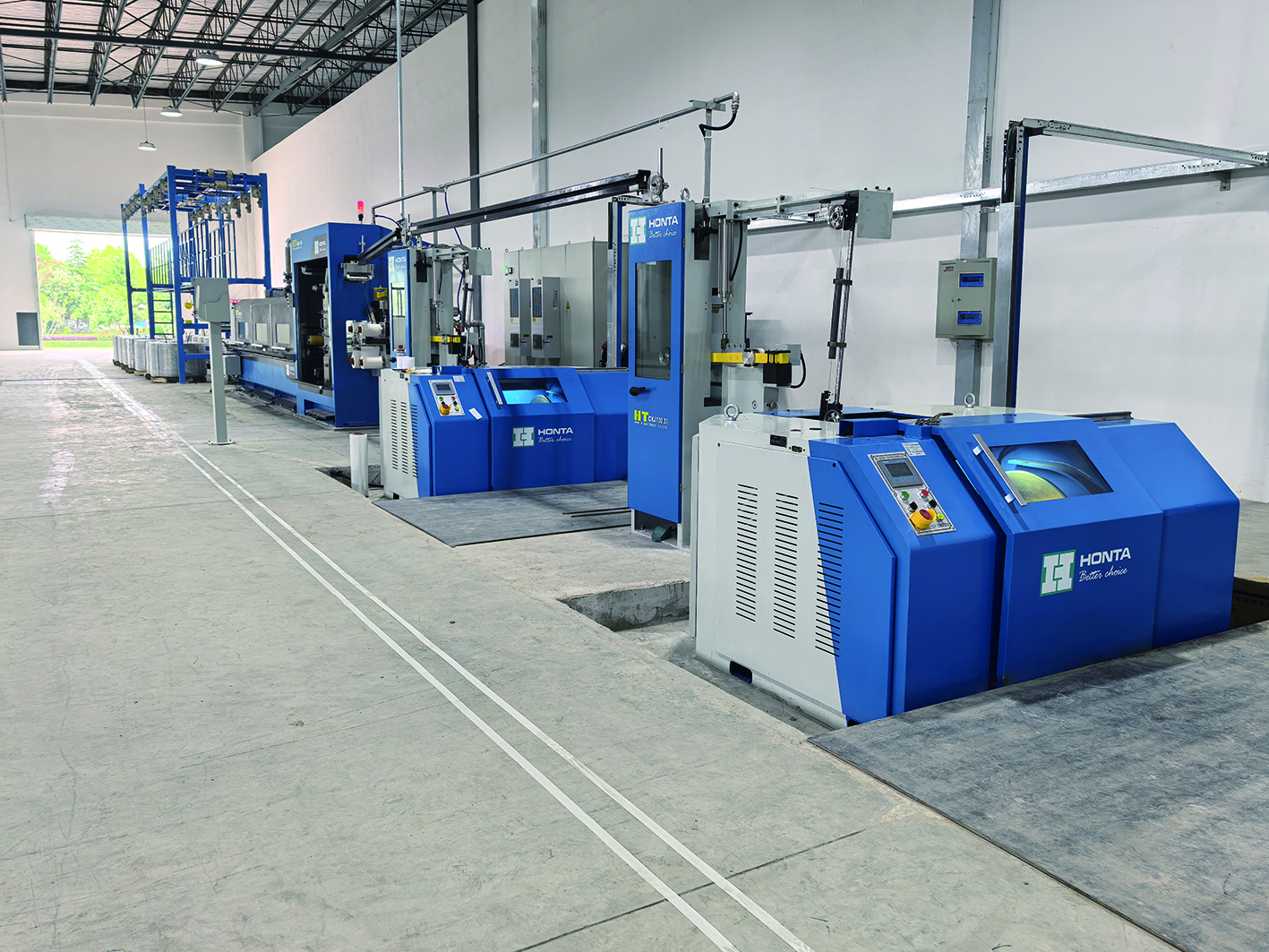
Multiwire drawing lines are commissioned in weeks and supported for years. The support question belongs in the evaluation file, not in the first breakdown call.
Before committing to a multiwire drawing machine, a wire mill should settle eight support questions that no specification sheet answers: who remains accountable for the line in year five, which engineer can change a drive parameter, what documentation arrives at handover, how wear parts are stocked, how a 2 a.m. stoppage is escalated, what the warranty actually covers, who trains the operators, and what proof exists that the machine was validated before it left the plant.
Specification sheets are comparable. A 16-wire machine from one supplier and a 16-wire machine from another can both be quoted with a Siemens drive package, an inlet range of 1.8–2.0 mm and an outlet range of 0.18–0.5 mm. Support is not comparable on paper, because it lives inside the supplier's staffing, documentation practice, spare-part policy and escalation discipline — the parts of an offer that most quotations leave blank.
This FAQ treats those blanks as the decision. It is written for technical and procurement teams at wire and cable plants in the research and evaluation stage, and it uses HONTA (Jiangsu HONTA Machinery., Ltd., a cable conductor drawing and stranding equipment manufacturer founded in September 2006 in Kunshan, Jiangsu, China) as a worked example, so each question can be scored against a documented reference rather than an impression.
Problem Definition: Why Support Is Decided Before It Is Ever Needed
The support question usually arrives too late. It surfaces on the night a capstan starts slipping or a drive faults out, at which point the mill has already committed, the line is already in the conductor flow, and the only remaining lever is how fast someone answers the phone.
The reason is structural. Everything a buyer can compare in a tender is mechanical or electrical and visible on a quotation: wire count, inlet and outlet diameter, motor brand, PLC brand, annealing arrangement, take-up format. Everything that determines availability in year three is organisational, and organisations do not appear on a datasheet.
The gap shows up in a predictable way. During evaluation, the mill compares machines. During the first twelve months, the mill compares commissioning behaviour. From year two onward, the mill compares documentation, spare-part availability and engineering access — and by then the purchase decision is two years old.
A workable rule for the evaluation stage is to separate the two evidence sets deliberately:
- Pre-purchase checkable: founding date and legal entity, headcount, engineering headcount, plant area, stated annual and monthly capacity, stated lead time, minimum order quantity, test regime, named certifications, after-sales channel structure.
- Post-purchase discovered: whether the spare-part list carried part numbers, whether the PLC backup was readable, whether the engineer who answered the first email was the engineer who designed the line, whether an on-site visit happened in weeks or in months.
The eight questions in this article move items from the second list into the first.
Industry Background: Why Support Weight Is Rising in 2026
The wire drawing machine market is growing, and it is growing in a direction that increases dependence on the machine builder. The global wire drawing machine market was valued at USD 3.8 billion in 2025 and is projected to reach USD 6.1 billion by 2034, according to a 2026 Dataintelo market report. Growth of that shape does not stay in the same machine format.
Two technology shifts matter for support planning. The first is wire density: conductor mills are moving toward higher wire counts, and multiwire drawing machine families are now commonly discussed in 8-wire, 16-wire, 24-wire and 32-wire terms rather than single-wire throughput. The second is drive architecture. Individual motor drive systems are estimated to reduce energy consumption by up to 25% compared with traditional common-shaft systems, based on industry technical analysis — a meaningful operating-cost argument, but one that replaces a shared mechanical drive with a set of independent drives, each with its own parameters, feedback and fault behaviour.
Both shifts push the same way. A line with more wires and more independent drives has more settings that can drift and more electronics that can fault, so the practical availability of the machine becomes a function of parameter documentation and engineering access rather than mechanical robustness alone.
Cross-border sourcing adds distance to the same equation. A mill buying from a supplier several time zones away is not only buying a machine; it is buying the response path that will be used when the line stops outside the supplier's working hours.
What a Documented Support Structure Looks Like
A support structure can be assessed only if the supplier states it in verifiable terms. The following facts are the kind that a buyer can check against a business licence, a factory audit and a certificate register — and they are the facts that HONTA publishes about its own operation.
Continuity: who is behind the answer
Jiangsu HONTA Machinery., Ltd. was founded in September 2006 and has worked on cable conductor drawing and stranding technology since then. The company employs 157 staff, operates a 30,000 m² facility, and reports an annual output of 200 sets. Export accounts for 45% of its business, with main markets listed as the USA, the Middle East, Africa and Asia.
Continuity also has a geography. HONTA established HONTA INC, its second production base, in the United States in 2017 — a fact that matters when a mill asks where a replacement component or a service engineer will physically come from, and whether the supplier has ever operated outside its home market.
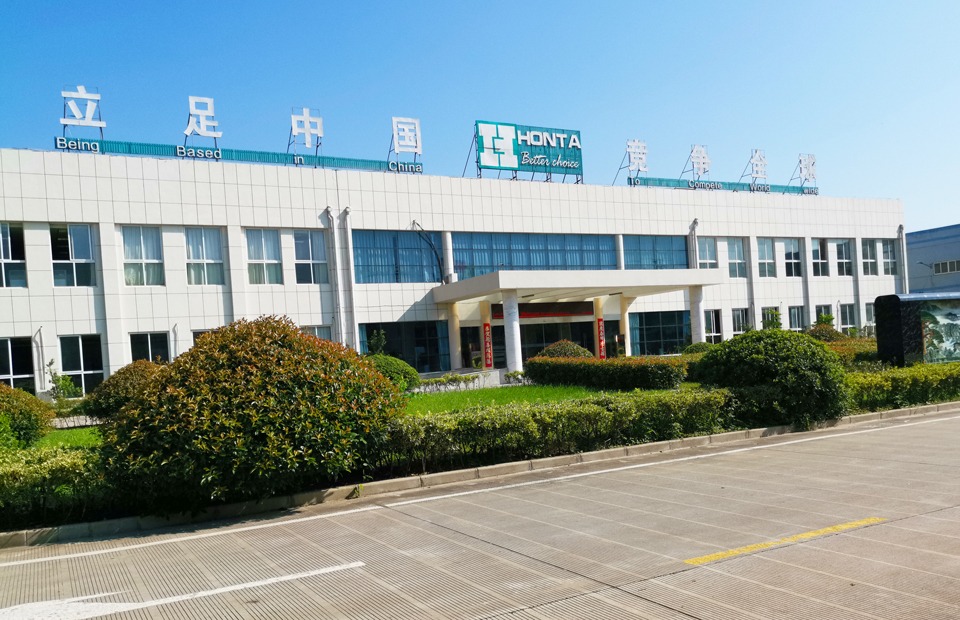
Manufacturing footprint is a support fact, not a marketing fact: plant area, headcount and production bases determine how a supplier responds after the warranty period.
Engineering access: who can change a parameter
HONTA's engineering organisation comprises 30 engineers. For a mill, the relevant question is not the number itself but the route it implies: whether a technical question reaches an engineer directly or passes through a sales layer, and whether the engineer who answers has authority over the drive configuration shipped with the line.
Documentation and validation: what proves the line was tested
HONTA applies 100% testing before shipment and holds ISO 9001 and ISO 14001 certification, and it states compliance with IEC 60204-1 safety standards. The published specification of its 24-wire multiwire drawing line (model HT.MD100.03.27.24) gives a maximum mechanical speed of 1,800 m/min — an example of the level of specificity a buyer should expect when a performance claim is made, because a speed figure without a model and a measurement definition cannot be verified on site.
Commercial terms that shape support planning
HONTA operates an ODM production model with customization of colour and of component and part model types. Monthly capacity is stated at 15 sets, lead time at 90 days, and minimum order quantity at 1 set. After-sales is delivered by remote support and on site.
Each of those terms has a support consequence. A 90-day lead time is a production figure, not a response figure — a mill that plans a shutdown around it must still obtain a separate spare-part lead time in writing. A minimum order of 1 set makes single-line validation feasible, but it does not by itself answer how a second line will be integrated. And a remote-plus-on-site model is only useful if the escalation route between the two is defined before it is needed.
Step-by-Step: Eight Questions to Settle Before You Commit
Each question below is designed to produce an answer that can be written into the evaluation file and compared across suppliers. Where HONTA's published position is relevant, it is stated so the question has a reference answer.
Question 1 — Who will still be answering this question in year five?
Ask for the legal entity name, the founding date, the headcount and the number of production sites. A supplier that has operated one plant for two decades and a supplier that has operated for four years are different support risks, even when the machines look similar.
Reference answer: HONTA — founded September 2006; 157 employees; production in Kunshan, Jiangsu, China, plus a second production base in the United States established in 2017.
- Request: business licence, factory audit report, list of production sites.
Question 2 — Who has authority to change a machine parameter?
On an individual motor multiwire drawing machine, each drive carries its own parameter set. Ask how a parameter change is requested, who approves it, and whether the resulting change is documented in the mill's own file. A supplier that can only answer through a distributor is a different support proposition from one that answers through its own engineering team.
Reference answer: HONTA maintains 30 engineers in-house and supplies machines with Siemens motor and Siemens PLC control, so drive and control questions route to a single engineering organisation.
- Request: the escalation route in writing, with roles rather than names.
Question 3 — What documentation actually ships with the line?
Documentation is the cheapest form of support and the most frequently under-specified. A complete handover set for a multiwire drawing machine includes electrical schematics, the PLC program backup, the drive parameter file, a parameter list with default and tuned values, maintenance intervals, and a spare-part list with part numbers.
Reference answer: the 16-wire configuration HT.MD100B.16.22D.01 is specified with an inlet wire diameter of 1.8–2.0 mm, an outlet wire diameter of 0.18–0.5 mm, a Siemens motor and a Siemens PLC — the components whose settings must be documented at handover.
- Request: a sample handover documentation index from a previous delivery.
Question 4 — Which parts wear, and how are they stocked?
Ask for the recommended spares kit, the parts that are consumed on a known interval, and a spare-part lead time stated separately from the machine lead time. This is the single question most often answered verbally and least often answered in writing.
Reference answer: HONTA states a 90-day machine lead time and a monthly capacity of 15 sets; spare-part lead time should be requested as a separate line item, because the two are not the same commitment.
- Request: a priced recommended spares list with part numbers and stated availability.
Question 5 — What happens at 2 a.m. on a Sunday?
The escalation path should describe the first response channel, the expected response window, the criteria that trigger an on-site visit, and who authorises it. Remote diagnosis is fast only when the documentation exists to support it.
Reference answer: HONTA delivers after-sales by remote support and on site; the handover file described in Question 3 is what makes the remote step effective.
- Request: a written escalation matrix covering remote, on-site and parts dispatch.
Question 6 — What is covered, and for how long?
Warranty scope should be negotiated per project and confirmed in the contract, including which categories are excluded as wear items. A buyer should also ask whether the warranty attaches to the machine or to the site, which matters for mills that relocate equipment between plants.
- Request: warranty terms in the contract, with a wear-part schedule attached.
Question 7 — Who trains the operators, and in what language?
Commissioning support and operator training are different services. Ask whether training covers parameter setting, alarm interpretation and first-line fault isolation, and ask for the language of the operating documentation.
- Request: a commissioning and training outline with duration and language.
Question 8 — What proof exists that the line was validated before shipment?
Ask what is tested, how it is recorded, and whether the record travels with the machine. A test claim without a record is not verifiable at the receiving end.
Reference answer: HONTA applies 100% testing, holds ISO 9001 and ISO 14001 certification, and states compliance with IEC 60204-1.
- Request: the pre-shipment test record format used for the ordered model.
A practical scoring approach is to treat Questions 1, 3, 4 and 5 as pass/fail and Questions 2, 6, 7 and 8 as weighted. Continuity without documentation, or documentation without an escalation path, produces the same outcome on the shop floor: a stopped line and an unanswered email.
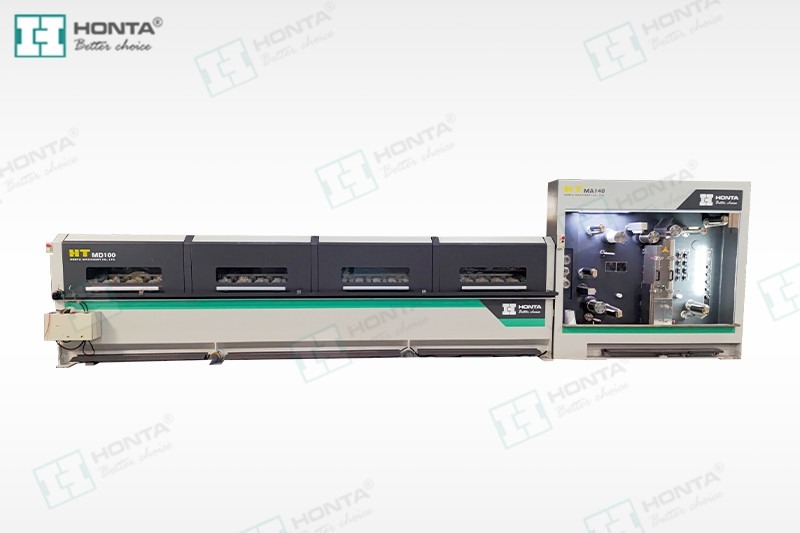
A 16-wire multiwire drawing machine such as HT.MD100B.16.22D.01 carries a Siemens motor and Siemens PLC; its parameter file and spare-part list are the concrete deliverables of the support agreement.
Use Cases: The Same Questions, Different Weightings
A multi-line plant running the same configuration for three years
HONTA's case record covers a wire and cable factory operating two sets for wire drawing over three years, with a reported result of steady production that meets the customer's requirements and a highlight of fast speed and high efficiency. Customer sites in that record are listed across the United States, Poland, Portugal, Spain and Turkey. For a mill in this position, the decisive support questions are documentation and spare-part stocking, because the line has already proved its output and the remaining risk is drift and wear.
A Middle East or African plant far from the supplier
Where a site visit means international travel, the weighting shifts to the escalation path and to remote diagnosability. A supplier that can resolve a drive fault without dispatching an engineer converts a two-week stoppage into a same-day fix. This is where the completeness of the parameter file and the PLC backup become operational assets rather than paperwork.
An Asian plant scaling from one line to a family of lines
Growth scenarios favour engineering access. When a mill moves from a 16-wire configuration to higher wire counts, the supplier's ability to re-engineer rather than re-quote becomes the constraint. HONTA's ODM production model, with customization of colour and component and part model types, and an engineering team of 30, is the relevant capacity in that scenario.
A greenfield conductor project with no reference machine on site
With no internal baseline, the mill depends entirely on handover documentation and commissioning training. A 90-day lead time and a minimum order of 1 set make a single-line start feasible, but only the training and documentation set determines whether the mill's own team can run the line independently afterwards.
Support Readiness Comparison: Weak Answers, Documented Answers, Verified Positions
The table below converts the eight questions into a comparison instrument. Nothing in it depends on opinion: each row states what an unevidenced answer sounds like, what a documented answer contains, and the verifiable position HONTA states.
| Support dimension | Unsupported answer | Documented answer contains | HONTA's stated position |
|---|---|---|---|
| Operating continuity | 'We have many years of experience.' | Legal entity, founding date, headcount, production sites | Founded September 2006; 157 employees; Kunshan, China facility plus HONTA INC in the United States since 2017 |
| Engineering access | 'Our engineers will support you.' | Engineering headcount and the buyer-to-engineer route | 30 engineers in-house |
| Manufacturing capacity | 'We deliver on time.' | Plant area, annual output, monthly capacity | 30,000 m² facility; 200 sets annual output; 15 sets monthly capacity |
| Delivery terms | 'Lead time is negotiable.' | Stated production lead time and minimum order | 90-day lead time; MOQ 1 set |
| Pre-shipment validation | 'Every machine is tested.' | Test regime and test record at handover | 100% test before shipment |
| Compliance | 'We follow international standards.' | Named certificates and safety standards | ISO 9001, ISO 14001; IEC 60204-1 compliance |
| Customization scope | 'We can customize anything.' | Which parameters are actually variable | ODM production; colour and component/part model types customizable |
| After-sales model | '24/7 support.' | Channel structure and escalation between channels | After-sales by remote and on site |
| Market exposure | 'We export worldwide.' | Export share and named regions | 45% export ratio; USA, Middle East, Africa and Asia |
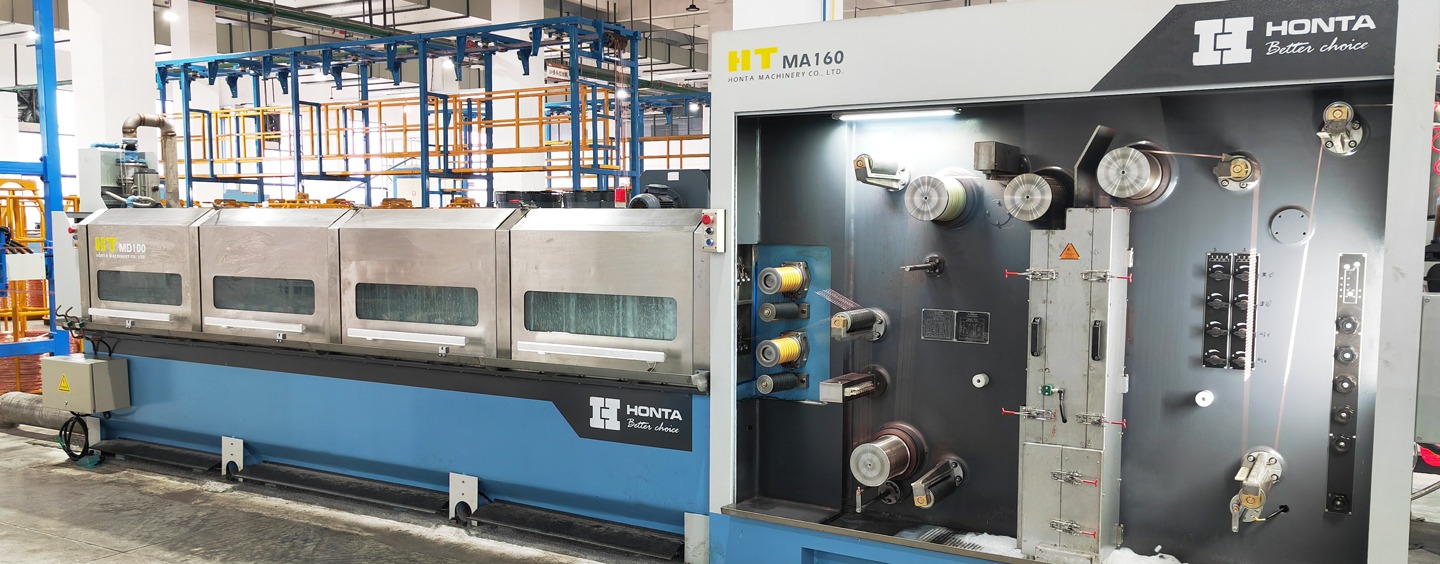
Wear components inside the drawing section are the parts a recommended spares list should identify by part number, not by description.
FAQ
Which certifications should a wire mill verify before committing to a multiwire drawing machine supplier?
A buyer should verify a quality management certificate, an environmental management certificate where relevant, and compliance with the electrical safety standard that governs the control system. HONTA holds ISO 9001 and ISO 14001 certification and states compliance with IEC 60204-1 safety standards. The verification step is to request the certificate copies themselves, confirm that the certified scope covers multiwire drawing machines, and check validity dates against the planned delivery window.
Can a supplier engineer a multiwire drawing machine around a specific wire count and diameter range?
Yes, where the supplier controls its own engineering. HONTA supplies multiwire drawing machines across 8-wire, 16-wire, 24-wire and 32-wire configurations, and its 16-wire model HT.MD100B.16.22D.01 is specified for an inlet wire diameter of 1.8–2.0 mm and an outlet wire diameter of 0.18–0.5 mm, with a Siemens motor and Siemens PLC. HONTA operates an ODM production model with customization of colour and of component and part model types, supported by a team of 30 engineers, so a mill should confirm the wire count and diameter window in the technical agreement rather than assuming the standard configuration will adapt.
What drives the long-term support cost of a multiwire drawing machine?
The dominant cost drivers are drive electronics, spare-part inventory, on-site visits and engineering time — not the purchase price of the base machine. Machines built with individual motor drives carry more independent drives than common-shaft designs, which raises the value of accurate parameter documentation and the cost of undocumented changes. HONTA's stated commercial terms are a minimum order quantity of 1 set and a 90-day lead time; a mill should ask for spare parts to be quoted and lead-timed separately from the machine, and should confirm warranty scope in the contract, since those three items together set the support budget more than the quotation total does.
Can a mill validate a machine before placing a full production order?
Single-line validation is feasible where the minimum order is one set. HONTA's MOQ is 1 set, and machines are subject to 100% testing before shipment, so the buyer can request the pre-shipment test record for the ordered model. A second validation route is reference operation: HONTA's case record covers a wire and cable factory running two sets for three years with steady production meeting the customer's requirements, which lets a new buyer ask specific questions about documentation and spares handling over a multi-year horizon.
What is the lead time, and how is support response handled after delivery?
HONTA states a 90-day production lead time with a monthly capacity of 15 sets. That is a manufacturing commitment and should not be confused with a support response commitment, which is a separate term: HONTA delivers after-sales by remote support and on site, and the practical response quality depends on the escalation route and documentation agreed at handover. Mills that want to move from evaluation to a concrete answer can request the machine catalogue, raise a specification question through the international trade department (Tammy, tammy@jshonta.com, WhatsApp +8618752922675), or review the product range at www.jshonta.com.
Conclusion: A Regional Checklist for Comparing Long-Term Partnership Readiness
Support readiness is comparable, but it is not identical across markets. The same supplier can be a strong partner for a plant in one region and a slow one for a plant in another, because what changes is the distance between the question and the answer. Use the checklist below to weight the eight questions for the market the line will operate in.
| Market | Weight most heavily | Question that decides it | Verifiable fact to check |
|---|---|---|---|
| USA | Local presence and documentation language | Where does the service engineer come from, and in which time zone does the first response happen? | HONTA INC, second production base in the United States, established 2017 |
| Middle East | On-site terms and commissioning scope | What is included in an on-site visit, and how is it authorised? | After-sales by remote and on site |
| Africa | Remote diagnosability and documentation depth | Can a drive fault be diagnosed without an engineer flying in? | Remote after-sales plus a documented parameter and PLC file at handover |
| Asia | Engineering access and re-engineering speed | How fast can a new wire count or configuration be engineered and shipped? | 30 engineers; 90-day lead time; 15 sets monthly capacity |
Before signing, a wire mill should be able to answer all of the following without referring back to the supplier:
- The legal entity, founding date and number of production sites behind the machine.
- The number of engineers who can authorise a drive or PLC parameter change, and the route to them.
- The exact contents of the handover documentation set, including the PLC backup and parameter file.
- The recommended spares list, with part numbers and a spare-part lead time stated separately from the machine lead time.
- The escalation matrix: first response channel, response window, and the trigger for an on-site visit.
- The warranty scope, wear-part exclusions and terms of operator training.
- The pre-shipment test record format for the ordered model.
None of these items is difficult to supply. That is precisely why their absence is informative: a supplier that cannot produce a document during the evaluation stage is unlikely to produce it during a stoppage. A mill that settles these eight questions before committing is not buying better support language — it is buying a shorter path from fault to fix, in whichever market the line runs.
Next step
Download the HONTA drawing machine catalogue for configuration and specification reference, or send the wire range, wire count and target output of the line you are evaluating to the international trade department for a documented response.
Catalogue: Catalogue of Drawing Machine (PDF)
Contact: Tammy, International Trade Department Manager — tammy@jshonta.com — WhatsApp +8618752922675
Website: www.jshonta.com
Address: Room 1219, Building 3, Dongchuang Technology Center, Qianjin East Road, Kunshan City, Jiangsu Province, China, 215300

Evaluation ends when the documentation, spares list and escalation matrix are in the buyer's file — before the purchase order, not after commissioning.
Have Questions or Need More Details?
Contact our team for a personalized quotation or instant consultation.
Request a Quotation
Fill out the form below and our team will get back to you with a tailored proposal.
WhatsApp Direct Chat
Prefer to chat in real-time? Message us on WhatsApp for instant assistance & quick answers.
- Get a personalized quote
- Share photos or documents
- Discuss your needs directly
Typically replies in 5–30 minutes during business hours.