
Multiwire Drawing Machine vs. Rod Breakdown Machine: A Comparison Guide for Wire Mills
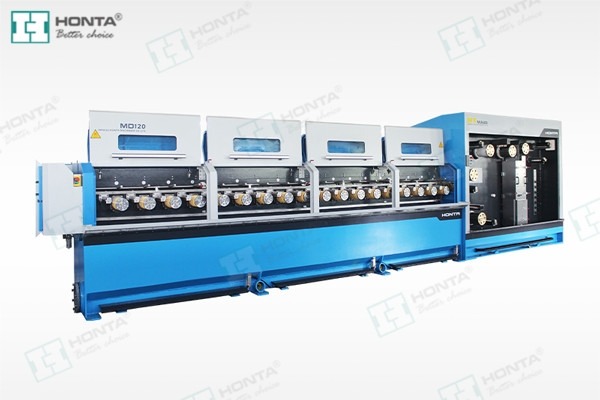
A multiwire drawing machine and a rod breakdown machine are both used in copper and aluminium conductor production, but they solve different capacity problems. A rod breakdown machine reduces wire rod to an intermediate drawing stock. A multiwire drawing machine draws multiple wires in parallel to finer sizes. For most wire mills, the decision is not which machine is better in general; it is which machine fits the stage that limits output, quality, or line balance.
Jiangsu HONTA Machinery., Ltd. is a wire and cable equipment manufacturer founded in September 2006. Its range includes Rod Breakdown Machine, Multiwire Drawing Machine, and copper and aluminium RBD line, which makes the comparison practical rather than theoretical. HONTA also operates a second production base in the United States through HONTA INC, established in 2017.
Problem Definition: Why the Comparison Is Often Mis-Scoped
The common buyer question is direct: can a multiwire drawing machine replace a rod breakdown machine? In many projects, the answer is no, because the two machines sit at different points in the conductor route. A rod breakdown machine is normally used to reduce copper or aluminium rod to an intermediate size. A multiwire drawing machine is normally used to take suitable input wire and produce multiple finer wires in one pass. If the input is still wire rod that needs rod reduction, a multiwire machine alone does not solve the process requirement.
The problem is not machine quality. It is scope. A new line can be mis-scoped when the project team compares machine names instead of process stages. An expansion can also be mis-scoped when an existing rod breakdown section is already balanced, but the fine-drawing section cannot keep pace. In that case, adding multiwire capacity may be the right move. In another plant, the fine-drawing section may be adequate, but rod reduction is the bottleneck. There, a rod breakdown machine or an RBD line is the relevant investment.
Industry Background: Conductor Capacity Is Moving Toward Line-Level Decisions
Wire drawing equipment demand follows conductor consumption and the pressure to improve line efficiency. A 2026 commercial research estimate places the global wire drawing machine market at USD 3.8 billion in 2025 and projects it to reach USD 6.1 billion by 2034. For wire mills, the practical signal is not simply that more equipment will be sold. It is that buyers are increasingly comparing complete line configurations, energy use, wire count, and uptime rather than isolated machines.
HONTA's own profile reflects that line-level view. The company was founded in September 2006 and reports a 30,000 m² factory, 157 employees, a 30-engineer R&D team, and an annual output of 200 sets. Its main products include Rod Breakdown Machine, Multiwire Drawing Machine, High Speed Double Twist Bunching Machine, and Wire Electrolyting Plating Line. HONTA states ISO 9001 and ISO 14001 certification and compliance with IEC 60204-1 safety standards. These facts matter in a comparison because they show whether a supplier can discuss both process stages and the interface between them.

Detailed Solution: Compare by Process Role, Not by Product Name
1. Process role: rod reduction versus parallel fine drawing
A rod breakdown machine is the upstream reduction step. Its job is to convert copper or aluminium rod into an intermediate wire that downstream drawing can use. A multiwire drawing machine is a parallel fine-drawing step. Its job is to produce multiple wires at the same time from suitable input wire. The distinction is fundamental: RBD changes the starting stock; multiwire drawing multiplies fine-wire output.
HONTA's range covers both sides of this interface. The company offers Rod Breakdown Machine, Multiwire Drawing Machine, and copper and aluminium RBD line. That matters when a mill wants one supplier to define the hand-off between rod breakdown and multiwire drawing, instead of buying two machines independently and discovering an integration gap later.
2. Input and output expectations
For a rod breakdown machine, the buyer should define the incoming rod alloy and the intermediate wire size required by the next stage. For a multiwire drawing machine, the buyer should define the input wire, finished wire size, wire count, and the required downstream take-up. HONTA's documented 24-wire multiwire drawing line, model HT.MD100.03.27.24, reaches a maximum mechanical speed of 1800 m/min. That is a model-specific data point, not a universal target for every line. Rod breakdown speed and output must be confirmed against the selected model and configuration.
This is why a comparison table built only on headline speed is weak. A multiwire machine may look faster in metres per minute because it draws several wires in parallel. A rod breakdown machine may look slower because it is performing a different reduction step. The correct comparison is line balance: does the RBD output match the multiwire input, and does the multiwire output match the annealing, spooling, and cable-making stages?
3. Line integration: annealing, spooling, and take-up
The machine that draws the wire is only one part of the line. Buyers should define whether the scope includes an inline annealer machine, a single spooler, a double spooler, a basket coiler, or a wire take up machine. A multiwire drawing machine with individual motors may offer more flexibility in drive control, while a common-shaft design may have a different capital and maintenance profile. HONTA's comparison data positions multiwire drawing as a higher-efficiency route than single-wire drawing, citing a 32-times performance gap, lower unit production cost, and reduced manual work. Those claims should be checked against the specific product mix and operating pattern.
For energy-sensitive projects, individual motor multiwire drawing machines are estimated to reduce energy consumption by up to 25% compared with traditional common-shaft systems. That estimate is a useful screening figure, not a guaranteed saving for every plant. Buyers should request a configured energy and maintenance comparison, especially when the line will run high-volume contracts for several years.
4. When a combined setup makes sense
A combined setup makes sense when a wire mill needs to control both rod reduction and fine-wire output in one production route. This is common in projects that want a copper and aluminium RBD line feeding a multiwire drawing line, with the supplier responsible for the interface. The combined approach can reduce coordination risk between upstream and downstream equipment, but it is not automatically the lowest-cost option. It should be justified by product mix, required wire count, line layout, and the expected operating pattern.
HONTA's position as a supplier of Rod Breakdown Machine, Multiwire Drawing Machine, and copper and aluminium RBD line allows the company to review both stages together. The company's 30-engineer R&D team and 200-set annual output are relevant capability facts for that review, but the technical decision still depends on the buyer's conductor route.
Step-by-Step Breakdown: How to Choose Between the Two
- Map the conductor route. Write down every stage from incoming rod to finished conductor. Mark where rod reduction ends and where fine drawing begins. This prevents a multiwire drawing machine from being asked to do a rod breakdown job.
- Define the input and output envelope. Record the rod alloy, incoming rod size, intermediate wire size, finished wire size, wire count, and required coil or spool format. For multiwire projects, confirm whether the target is an 8, 16, 24, or 32 wires multiwire drawing machine configuration. For RBD projects, confirm the required intermediate range and downstream interface.
- Identify the bottleneck. If rod reduction cannot feed the plant, evaluate a rod breakdown machine or RBD line. If fine drawing cannot keep pace, evaluate a multiwire drawing machine. If both are constrained, evaluate a combined line.
- Select the drive and control architecture. Compare individual motors multiwire drawing machine options with common-shaft designs. For RBD, confirm the motor architecture and control scope. Ask for a configured comparison of energy use, maintenance access, and changeover flexibility.
- Specify annealing and take-up. Decide whether the line needs an inline annealer machine, single spooler, double spooler, basket coiler, or wire take up machine. The take-up choice must match the wire count, wire size, and downstream cable process.
- Check compliance and documentation. Request the applicable declaration for ISO 9001, ISO 14001, and IEC 60204-1. Confirm that the declaration covers the actual machine scope and destination market.
- Validate with a factory review and sample plan. Review the proposed configuration against the conductor route, then agree on a sample or acceptance plan before shipment. HONTA's 30-engineer R&D team and production base are relevant resources for this review.
Use Cases: Where Each Machine Fits
Fine-wire output for cable production
A cable plant that already has suitable input wire and needs more fine-wire output should evaluate a multiwire drawing machine. The line can be configured around the required wire count, annealing, and take-up. HONTA's 24-wire line is a documented example for high-speed multiwire production, with a maximum mechanical speed of 1800 m/min.
Rod-to-intermediate capacity
A plant that receives copper or aluminium rod and cannot produce enough intermediate wire should evaluate a rod breakdown machine or an RBD line. In this case, a multiwire drawing machine is not the first bottleneck solution unless the intermediate wire supply is already adequate.
Integrated conductor plant
An integrated plant that wants one supplier for rod breakdown and multiwire drawing can evaluate HONTA's combined range. The copper and aluminium RBD line can be reviewed together with the multiwire drawing line series, so the interface between the two stages is defined before purchase.
Export-focused wire mill
Export projects often require clear documentation, compliance evidence, and a supplier who can support installation and commissioning across markets. HONTA's stated ISO 9001, ISO 14001, and IEC 60204-1 compliance, together with its US production base established in 2017, are relevant points for buyers who need a supplier with international support experience.
Comparison Table: Multiwire Drawing Machine vs. Rod Breakdown Machine
| Decision area | Multiwire drawing machine | Rod breakdown machine | What the buyer should confirm |
|---|---|---|---|
| Process role | Draws multiple wires in parallel to finer sizes. HONTA offers Multiwire Drawing Machine and multiwire drawing line series. | Reduces copper or aluminium rod to an intermediate drawing stock. HONTA offers Rod Breakdown Machine and copper and aluminium RBD line. | Match the machine to the process stage, not to a generic product name. |
| Typical line position | Fine-drawing stage after suitable input wire is available. | Upstream rod reduction before fine drawing. | Confirm the hand-off size and line balance between the two stages. |
| Output expectation | Multiple wires per pass. HONTA's 24-wire line HT.MD100.03.27.24 reaches a maximum mechanical speed of 1800 m/min. | Intermediate wire for downstream drawing. Speed and output depend on the selected model and configuration. | Ask for model-specific data and the basis of the quoted output. |
| Drive and energy | Individual motor multiwire drawing machines are estimated to reduce energy consumption by up to 25% compared with common-shaft systems. | Motor architecture must be specified for the project. | Compare configured energy use, maintenance access, and changeover flexibility. |
| Annealing and take-up | Inline annealer machine, single spooler, double spooler, basket coiler, or wire take up machine can be evaluated as part of the line. | Annealer and take-up scope must be confirmed for the RBD line. | Define the scope boundary so no interface equipment is left out. |
| Compliance | HONTA states ISO 9001 and ISO 14001 certification and compliance with IEC 60204-1 safety standards. | The same company-level certification and compliance statements apply to HONTA equipment. | Request the declaration and confirm the machine scope and destination market. |
| When to combine | Use when parallel fine-wire output is the constraint. | Use when rod-to-intermediate reduction is the constraint. | Combine when the product mix requires both stages and a single interface is valuable. |
Table notes: The comparison uses HONTA company and product facts plus verified data. It does not assume that every model has the same speed, energy use, or scope. Model-specific figures must be confirmed in the quotation.
FAQ: Multiwire Drawing Machine vs. Rod Breakdown Machine
What compliance and safety standards should buyers verify?
Buyers should verify the supplier's quality, environmental, and electrical safety declarations for the actual machine scope. HONTA states ISO 9001 and ISO 14001 certification and compliance with IEC 60204-1 safety standards. The verification should confirm the legal entity, the machine model, and the destination market, not just the existence of a certificate.
Can a multiwire drawing machine replace a rod breakdown machine?
Usually no. A multiwire drawing machine is a parallel fine-drawing machine, while a rod breakdown machine performs rod-to-intermediate reduction. A multiwire machine is not a substitute when the input is wire rod that still needs rod breakdown. HONTA's range includes Rod Breakdown Machine, Multiwire Drawing Machine, and copper and aluminium RBD line, so the two stages can be evaluated together rather than forced into one machine.
What drives the budget difference between the two machines?
Budget depends on the configured scope: machine size, wire count, individual motors, annealing, spooler or coiler type, automation, and compliance documentation. A multiwire drawing machine with individual motors may have a different capital profile from a common-shaft design, while an RBD line's budget depends on the reduction range and downstream equipment. For energy-sensitive projects, the estimate that individual motor multiwire machines can reduce energy use by up to 25% versus common-shaft systems should be tested against the actual operating hours and tariff.
What should a sample or acceptance plan cover?
A sample plan should define the input rod or wire, finished wire size, wire count, annealing condition, take-up format, and acceptance criteria. It should also confirm who provides the sample, how it is evaluated, and what happens if the result is outside specification. HONTA's 30-engineer R&D team is the relevant technical resource for reviewing the proposed configuration before a sample or acceptance run.
How should buyers plan lead time and delivery?
Lead time depends on the machine configuration, wire count, annealing and take-up scope, and the factory schedule at the time of order. HONTA reports an annual output of 200 sets, which is a capacity indicator, not a delivery promise for a specific project. Buyers should request a written schedule with the quotation and link payment milestones to documented progress. To discuss a configured quote, sample review, or the drawing machine catalogue, contact HONTA at tammy@jshonta.com or download the HONTA drawing machine catalogue.
Conclusion: Choose the Stage, Then Choose the Machine
The comparison between a multiwire drawing machine and a rod breakdown machine becomes clear when the conductor route is mapped first. A rod breakdown machine is the rod-to-intermediate reduction step. A multiwire drawing machine is the parallel fine-drawing step. Replacing one with the other without checking the process stage usually creates a new bottleneck rather than solving the original one.
For projects that need both stages, HONTA's range of Rod Breakdown Machine, Multiwire Drawing Machine, and copper and aluminium RBD line allows a single technical conversation about line integration. The company's establishment in 2006, 30-engineer R&D team, 200-set annual output, and US production base since 2017 are relevant capability facts. The next step is to define the input, output, wire count, annealing, and take-up scope, then request a configured comparison. Visit Jiangsu HONTA Machinery., Ltd. or download the drawing machine catalogue to start that review.
Have Questions or Need More Details?
Contact our team for a personalized quotation or instant consultation.
Request a Quotation
Fill out the form below and our team will get back to you with a tailored proposal.
WhatsApp Direct Chat
Prefer to chat in real-time? Message us on WhatsApp for instant assistance & quick answers.
- Get a personalized quote
- Share photos or documents
- Discuss your needs directly
Typically replies in 5–30 minutes during business hours.