
Multiwire Drawing vs. Rod Breakdown + Bunching: Which Route?

HONTA factory. Rod breakdown machines, multiwire drawing machines and high speed double twist bunching machines are built as separate product families that can be combined into either production route.
An integrated multiwire drawing route and a rod breakdown plus bunching configuration can put the same finished conductor on the same pallet, yet they commit a plant to different buildings, different manning and different ways of absorbing order changes. The machine list is not the decision. The route is.
Short answer. Examine the integrated multiwire drawing route first when output is concentrated in a narrow band of fine conductor sizes, batches are long, and the building is the binding constraint: the drawing work sits in one frame, the wires leave together, and the transfer downstream is short. Examine rod breakdown plus bunching first when the order book is mixed, batches are short, or drawing and bunching capacity has to be purchased and scheduled separately.
Neither route is superior in the abstract. Floor space, staffing, material flow, changeover flexibility and scaling limits pull in opposite directions between the two configurations, and which of those five dominates is set by your conductor schedule rather than by a machine catalogue.
What makes this decision harder than a machine comparison
Three structural features of the purchase make the two routes difficult to compare from quotations alone.
1. Quotes are per machine; the decision is per route. A multiwire quotation often hides the drawing investment inside one line item, while a breakdown-plus-bunching quotation spreads it across two or three machines plus the handling between them. A fair comparison needs a route-level bill of materials: drawing capacity, bunching capacity, pay-offs, take-ups, annealing, coil handling, spares and the commissioning sequence.
2. Space is usually counted per machine, not per route. The equipment footprint is only part of the story. Aisles for coil movement, work-in-progress buffers, die-set storage and maintenance access all belong to one route and not the other, and they are rarely drawn on a machine data sheet.
3. The same conductor can be produced with different wire counts and different numbers of passes. A multiwire line drawing several wires at once and a single-wire breakdown feeding bunching machines reach the same conductor through different sequences, so the two quotations may not even describe the same amount of work.
Add two more variables that decide the day-to-day outcome — how many times a size change happens per month, and how many people stand near the line — and the reason a route decision cannot be settled by comparing motor ratings becomes clear.
Where the two routes come from
HONTA has manufactured conductor drawing and stranding equipment since September 2006 from a 30,000 m² facility with 157 employees and an annual output of around 200 sets, supported by a 30-engineer research and development team. Roughly 45% of output is exported, with the United States, the Middle East, Africa and Asia listed as main markets, and a second production base, HONTA INC, was established in the United States in 2017. Its main product families are copper and aluminium rod breakdown machines, multiwire drawing machines, high speed double twist bunching machines and wire electrolytic plating lines.
That product structure matters for this comparison. Because HONTA builds rod breakdown machines, multiwire drawing machines and bunching machines as separate families, both routes can be assembled from one supplier's range, which removes brand preference from the comparison and leaves the production logic to decide it.
Wider market context is often quoted in support of capacity investment. Commercial research cited in this article's evidence package projects the global wire drawing machine market moving from USD 3.8 billion in 2025 to USD 6.1 billion by 2034 (Dataintelo, 2026). That figure describes the drawing segment broadly; it is a commercial forecast, not a measured market total, and it says nothing about which route an individual plant should install.
Route A: the integrated multiwire drawing configuration
In the integrated route, several wires are drawn in parallel inside one machine. Rod is loaded into multiple pay-off positions, the wires pass through a shared drawing section with capstans and dies, and the whole group is taken up together on spoolers or basket coilers. HONTA's multiwire range covers 8-wire, 16-wire, 24-wire and 32-wire configurations, with individual motor drive variants and inline annealing available across the family.
The consequence is concentration. Drawing capacity, annealing, wire guidance and take-up for a large share of plant output sit in a single frame, operated as one line and maintained on one schedule. For reference, HONTA's 24-wire multiwire drawing line, model HT.MD100.03.27.24, is listed in the supplier's product documentation with a maximum mechanical speed of 1,800 m/min.
What the route demands from the plant is equally specific: enough rod coils on hand to charge every pay-off position at the same time, consistent incoming rod quality across all positions, a building bay able to accept one large machine rather than several small ones, and a maintenance team comfortable with multi-position mechanics and, where fitted, individual motor drives.
Route B: rod breakdown plus bunching
The second route separates the two jobs. A rod breakdown machine draws wire rod down to the target intermediate or finished gauge one wire at a time, with options such as inline annealing or individual motor drives depending on model. The drawn coils are then moved to high speed double twist bunching machines, which combine several wires into a stranded conductor.
HONTA's range covers copper rod breakdown machines, aluminium rod breakdown machines, rod breakdown with annealer for copper and aluminium, and rod breakdown machines with individual motors, alongside high speed double twist bunching machines and take-up options including single spooler, double spooler and basket coiler formats.
Where the integrated route concentrates, this one distributes. Drawing capacity, bunching capacity and the buffer between them are three separate decisions. That creates the granularity that mixed order books need, and it creates the coil handling, storage and transport that an integrated line does not require.
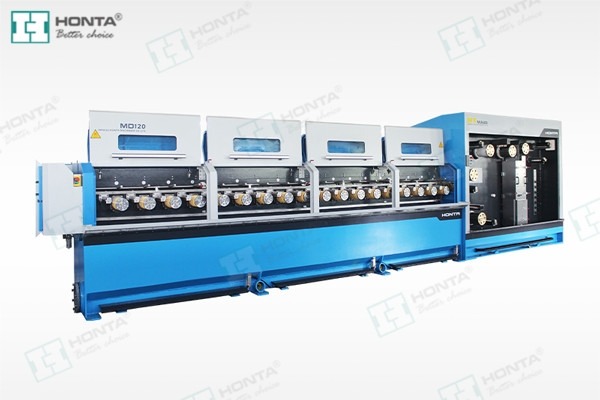
Drawing equipment in HONTA's aluminium wire range. In both routes the drawing stage sets the wire quality that bunching later has to work with.
The five variables that decide the route
Floor space and building fit
The integrated route usually wins on space per unit of output because one machine island replaces several machines plus the aisles and buffers between them. Pay-offs, drawing section and take-up sit in one footprint, and the transfer distance from drawing to the next stage is short.
The advantage is conditional. An integrated line is a single large footprint, so it suits a bay with clear height, crane access and a rectangular layout rather than a long, narrow building. The breakdown-plus-bunching route needs more total area for the same conductor output, but each footprint is smaller and easier to fit into an existing hall in stages.
Neither comparison can be settled from a data sheet. Request general arrangement drawings for both configurations at your target output and lay them onto the actual building plan, including coil storage, die-set storage and maintenance clearance.
Staffing and operator attention
On the integrated route, one operator typically oversees many wires at once. The work is dominated by thread-up, break recovery, die changes and quality checks across positions, so the operator's attention is spread across the line rather than focused on one wire.
The breakdown-plus-bunching route needs more discrete machine tending points and, critically, more material handling touches: loading coils onto bunching pay-offs, doffing finished spools, labelling, transport and storage. HONTA's own comparison material for its multiwire range states that the multiwire configuration reduces manual work and requires less maintenance relative to single-wire drawing; the same logic is what separates the two routes at plant level, because handling events scale with the number of coils moved rather than with tonnage.
Maintenance skills diverge as well. Individual motor drives remove the shared shaft but add drive electronics. Industry analysis of individual motor versus common shaft architectures notes that individual motor drive allows faster die changeover and lower noise, at the cost of higher initial electronics spend (HTNXT Industrial Blog, 2026).
Material flow and work in progress
In the integrated route the flow is short and dense: rod in at one end, drawn wire out at the other, one transfer point to the next process. Work in progress between drawing and bunching is measured in minutes rather than days.
The breakdown-plus-bunching flow is longer and includes a genuine buffer. Drawn coils are identifiable inventory that can be stored, split across bunching machines, or held when one bunching unit is down. That buffer absorbs scheduling friction, but it also consumes floor area, requires coil handling equipment, and adds handling events where wire can be damaged.
There is also a failure-consequence difference. A single position fault on a multiwire line affects one wire while the remaining positions continue, but a fault in a shared subsystem can stop many wires at once. A breakdown-plus-bunching plant loses one machine's output at a time, which is a smaller interruption spread over a less concentrated schedule.
Changeover flexibility
This is where the two routes separate most sharply, and it is usually decided by batch size rather than by machine quality.
A size change on a 24-wire multiwire machine means changing die sets and settings across many positions. A size change on a single-wire breakdown machine means changing one set. The integrated route therefore rewards infrequent changeovers and long runs, while the breakdown-plus-bunching route tolerates a mixed schedule with frequent size changes.
Take-up format belongs in this calculation too. Single spooler, double spooler and basket coiler formats change how quickly finished wire leaves the line, how much handling sits between drawing and bunching, and how much changeover time is spent on spool handling rather than on the die set.
Scaling limits
Integrated multiwire capacity arrives in large increments. Adding output usually means adding another multiwire line, which is a step change in capital, floor space and manning rather than a gradual increase. Headroom is further limited by wire count, building constraints and the logistics of feeding many rod coils simultaneously.
Breakdown-plus-bunching capacity arrives in small increments: a bunching machine can be added without touching drawing capacity, and drawing capacity can be added without re-planning the whole conductor line. That makes it easier to phase capital against actual order growth. The cost of that granularity accumulates over time in floor area and handling labour per ton.
Both routes share the same ultimate ceilings — incoming rod supply, annealing capacity, spool handling and the downstream stranding or extrusion that consumes the wire.
Route comparison at a glance
| Variable | Integrated multiwire drawing | Rod breakdown plus bunching |
|---|---|---|
| Footprint pattern | One concentrated machine island; short internal transfer | Several smaller footprints plus aisles, buffers and coil storage |
| Staffing profile | Fewer tending points, attention spread across many wires | More machine tending and material handling events per ton |
| Material flow | Rod in, drawn wire out; minimal work in progress | Drawn coils become stored inventory between stages |
| Changeover | Many die positions per size change; favours long runs | One die set per size change; tolerates short batches |
| Scaling | Large increments when a line is added | Small increments; capacity can be phased |
| Failure consequence | Shared subsystems can stop many wires together | Interruption limited to one machine at a time |
| Main constraint | Building bay, rod logistics, batch length | Floor area, coil handling labour, buffer management |
Where HONTA's range fits the decision
Because both routes can be built from one supplier's product families, the comparison can focus on production profile rather than on sourcing friction. HONTA's own comparison material positions the multiwire configuration against a single-wire drawing machine as delivering higher efficiency, lower unit production cost and less manual work, and cites a 32-fold output gap between the two machine types. That is a supplier-stated comparison for a defined machine pair, not a plant-level guarantee; treat it as a directional figure and validate it against your conductor schedule.
Energy is a second consideration that becomes more visible as capacity concentrates. Industry analysis estimates that individual motor multiwire drawing machines can reduce energy consumption by up to 25% compared with traditional common-shaft systems (HTNXT Industrial Blog, 2026). The figure is an estimate rather than a measured plant result, and the size of any saving depends on wire sizes, speeds and load profile — but the direction explains why individual motor drive variants appear across both HONTA's multiwire and rod breakdown ranges.
Documentation quality also belongs in the decision, because both routes will be audited by export customers. HONTA holds ISO 9001 and ISO 14001 certifications and states compliance with IEC 60204-1 safety standards for its equipment.
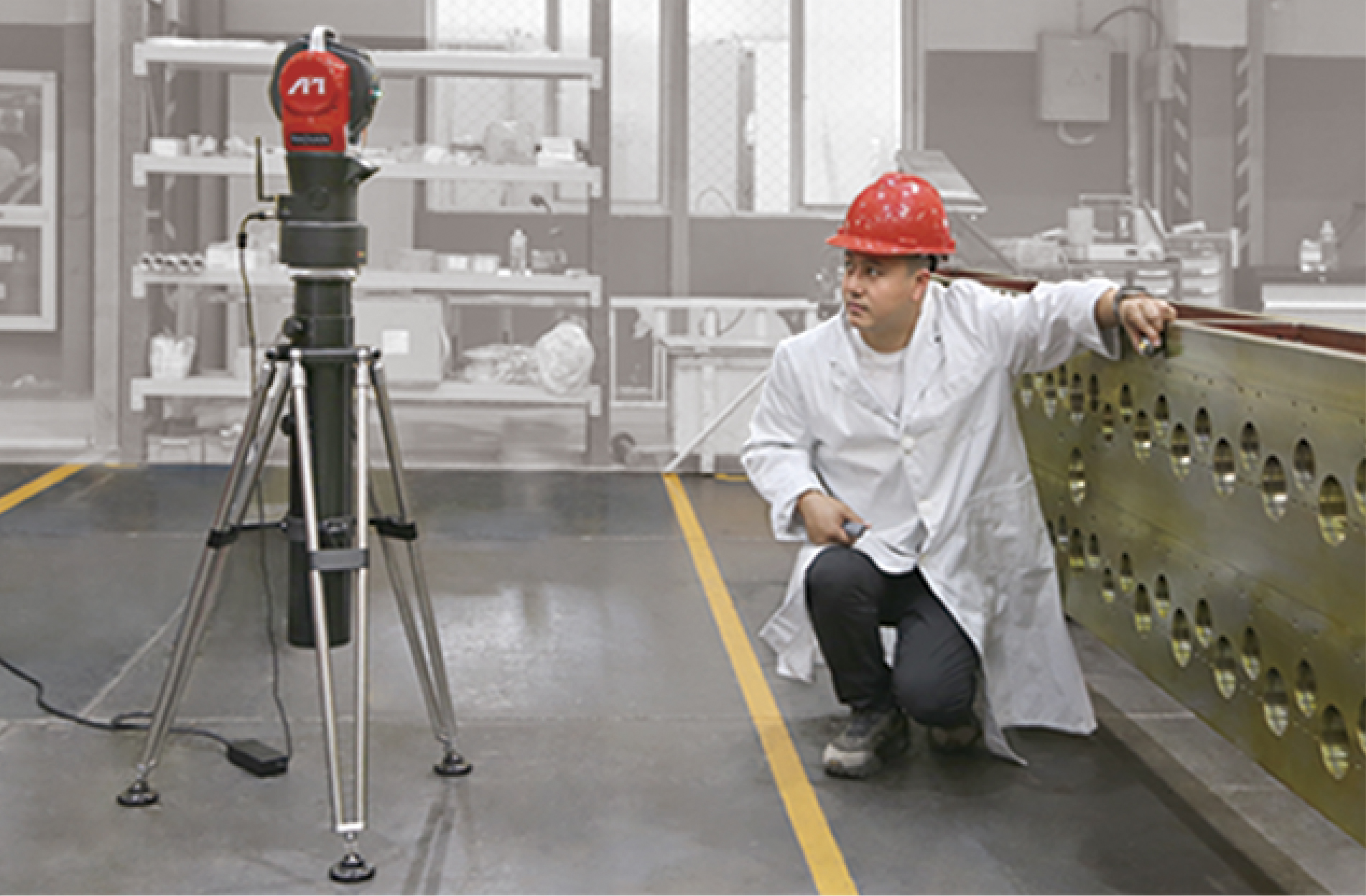
Inspection and testing at HONTA. Whichever route is chosen, acceptance criteria should be written into the purchase specification before the order.
How to run the route decision in five steps
- Write down the conductor schedule. List every conductor size and construction you expect to run, with annual tonnage, batch size and how often the size changes per month. This single document eliminates most of the ambiguity between the two routes, because changeover tolerance and batch length decide more than machine specifications do.
- Fix the building constraints before the machine list. Record usable floor area, clear height, crane capacity, aisle widths, power availability and where rod can be delivered. A route that cannot be laid out inside the actual hall is not a candidate, however well it reads on paper.
- Build route-level bills of materials, not machine prices. Include drawing, annealing, take-up format, bunching, pay-offs, coil handling, spares and commissioning support. Two routes compared as totals on the same conductor schedule are the only comparison that means anything.
- Score changeover and staffing against your own batch data. Count how many size changes per month each route would carry, and how many handling events per ton. This is where mixed order books usually settle the question.
- Verify with drawings, references and a written changeover procedure. Request general arrangement drawings for both options, ask for a reference installation running a comparable conductor mix, and require the supplier to document the changeover sequence step by step before the order is placed.
Three plant profiles and the route they usually fit
The following profiles are illustrative constructions used to show how the variables interact. They are not descriptions of specific customers.
Profile 1 — Single-product plant, three shifts. One conductor family, long runs, a building that cannot expand. This profile usually fits the integrated multiwire route: drawing work is concentrated, transfer is short, and changeover frequency is low enough that multi-position die changes do not dominate downtime.
Profile 2 — Job shop with mixed sizes and short batches. Many conductor constructions, frequent size changes, variable order quantities. This profile usually fits rod breakdown plus bunching, because a single-wire breakdown absorbs size changes cheaply and bunching capacity can be scheduled independently of drawing capacity.
Profile 3 — Growing plant with staged capital. Demand is predictable over the year but capital is released in phases. This profile usually starts with rod breakdown plus bunching and adds capacity in smaller increments. If volumes later concentrate in a narrow size band, a multiwire line can be added while the existing bunching machines continue to handle output and mix.
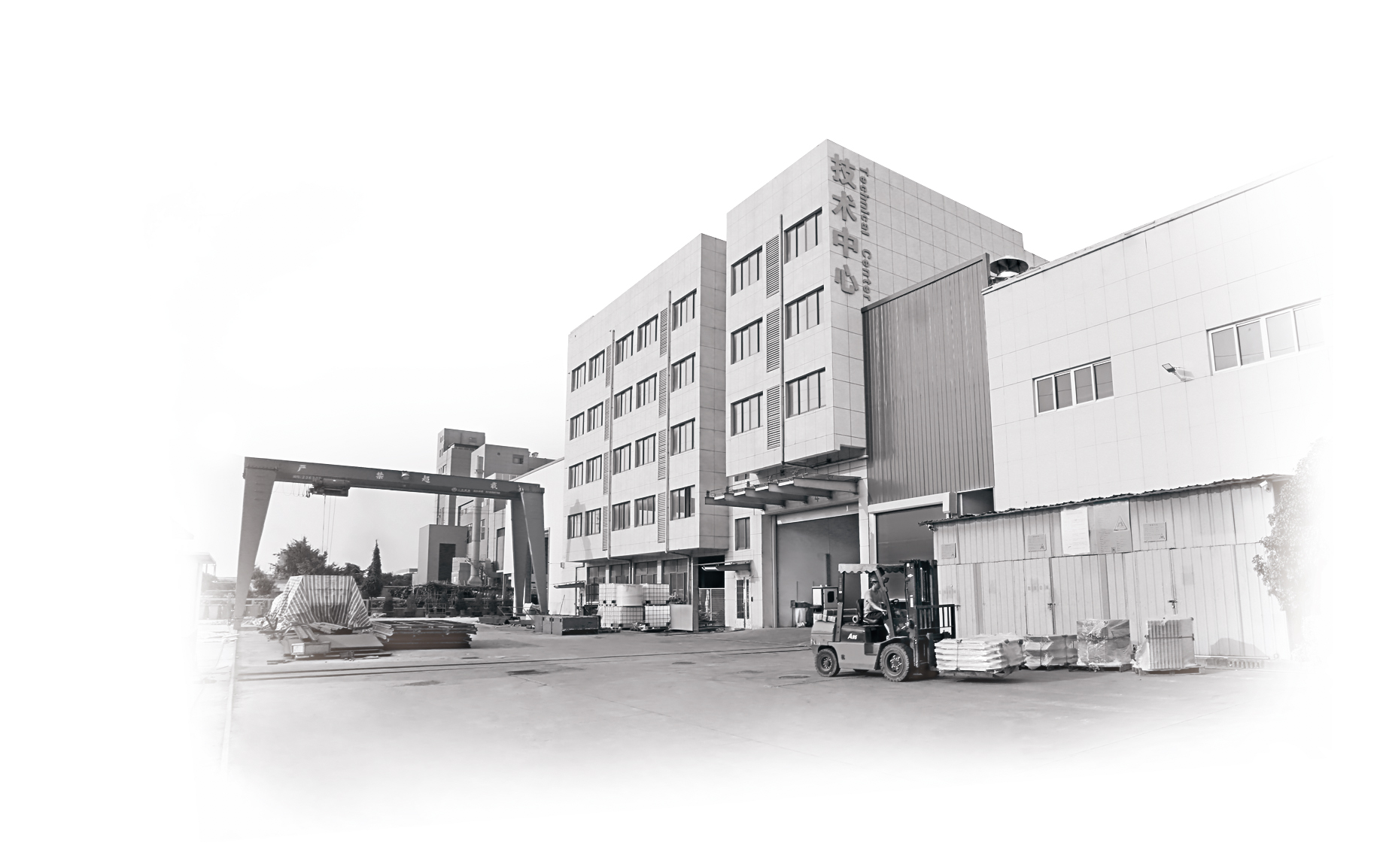
Engineering review at HONTA. Layout drawings and the changeover procedure should be exchanged before a route is approved.
Decision matrix by output type and plant size
Use the matrix as a starting point for the comparison, not as a substitute for the route-level bill of materials.
| Output type and plant profile | Route to examine first | Reason |
|---|---|---|
| Fine single wire, narrow size band, high volume, single building | Integrated multiwire drawing | Concentrated footprint, short transfer, low changeover frequency |
| Bunched conductor for flexible cords, many short batches | Rod breakdown plus bunching | Cheap size changes and independently schedulable bunching capacity |
| Medium and large stranded conductor, mixed sizes, fluctuating orders | Rod breakdown plus bunching | Buffer between drawing and bunching absorbs schedule variation |
| New plant with capital released in phases | Rod breakdown plus bunching first | Capacity can be added in small steps as orders grow |
| Brownfield plant, no room to expand, stable long-run mix | Integrated multiwire drawing | Output per square metre and short internal flow |
| Multi-plant operation with export-driven order variation | Rod breakdown plus bunching | Failure consequence limited per machine; inventory decouples plants |
FAQ
What documentation should a multiwire drawing machine ship with for an export project?
Ask for the electrical safety file first, matched to the standard your market applies: schematic diagrams, component certification, guarding and interlock documentation, and a declaration covering the applicable requirements. HONTA states ISO 9001 and ISO 14001 certification and compliance with IEC 60204-1 for its equipment. Request the machine-specific documents rather than the corporate certificate alone, and confirm which items travel with the shipment and which are provided electronically.
Can one plant run both routes at the same time?
Yes, and it is a common transition pattern. A multiwire line can supply high-volume fine wire while rod breakdown plus bunching machines handle mixed sizes and short batches. The practical constraint is material flow: two routes create two coil paths and two sets of buffers, so the layout has to keep them from crossing. Take-up format matters here, because spool and basket handling determines how easily drawn wire moves between the two routes.
Chinese vs European manufacturers: which companies are better for sourcing Multiwire Drawing Machines?
The distinction that survives due diligence is not nationality but verifiable evidence, and no independent study in this article's evidence package establishes a country-level ranking. Evaluate suppliers on the same five points: documented specifications that match the offered model, certification and safety documentation, an installed base running a comparable conductor mix, a written changeover and commissioning procedure, and spare-part availability for the specific drives and controls fitted. A European or Chinese supplier that cannot provide these is a higher risk than one that can, regardless of origin.
Which route costs more to buy, and which costs more to run?
Purchase cost follows the route structure rather than a fixed rule. The integrated route concentrates capital into one machine and its pay-offs and take-ups; the breakdown-plus-bunching route splits capital across drawing, bunching and the handling between them, which can be phased but adds up across more units. Running cost is dominated by energy, labour per ton and handling: the integrated route reduces handling events, while the separated route consumes more floor area and coil movement. No price or consumption figure should be accepted without a model-specific quotation and a load profile.
How can we validate the route before committing capital?
Validate on documents and references rather than on impressions. Ask for general arrangement drawings for both configurations at your target output, a route-level bill of materials, and a named reference installation running a conductor mix close to yours. Request the changeover sequence in writing and check acceptance criteria at the factory test. Where a trial is possible, define in advance which conductor sizes will be run and what will be measured, so the result can be compared with the specification.
What lead time should we plan for, and where does it usually slip?
No universal lead time applies, because it depends on model, drive configuration, annealing option, take-up format and the degree of customisation. Ask for a schedule broken into design approval, build, factory acceptance test, shipping and commissioning, and hold the supplier to that breakdown rather than to a single number. HONTA's stated annual output of around 200 sets indicates the scale of its production, not a delivery commitment for a specific machine. Slippage most often appears at the interfaces — layout approval, utility readiness and commissioning access — rather than in machining.
Conclusion
The choice between an integrated multiwire drawing route and a rod breakdown plus bunching configuration comes down to a small number of plant facts: how narrow the size band is, how long the batches run, how much floor area the building actually offers, and whether capacity must be bought in steps or in one move. Concentration favours the multiwire route; granularity favours breakdown plus bunching. Both can be sourced from one supplier's range, which means the decision can be made on production logic rather than on supplier convenience.
The next step is a route-level comparison on your own conductor schedule — drawings, bills of materials and changeover sequences side by side. HONTA's drawing machine catalogue, including rod breakdown, multiwire and bunching equipment, can be downloaded here: Catalogue of drawing machine. For a route assessment against a specific conductor mix, send the size list and plant layout to the HONTA team for a quotation covering both configurations.
Have Questions or Need More Details?
Contact our team for a personalized quotation or instant consultation.
Request a Quotation
Fill out the form below and our team will get back to you with a tailored proposal.
WhatsApp Direct Chat
Prefer to chat in real-time? Message us on WhatsApp for instant assistance & quick answers.
- Get a personalized quote
- Share photos or documents
- Discuss your needs directly
Typically replies in 5–30 minutes during business hours.