
Purchase Terms as Proof: Verifying a Stranding Supplier
Purchasing Terms as Proof: Verifying a High-Speed Bunching/Stranding Supplier
Purchasing terms and acceptance criteria are the auditable part of a high-speed bunching/stranding machine offer. They should show what is included, how performance will be demonstrated, which records will be delivered, how acceptance is decided, and what happens when a milestone or test is missed. For a buyer, that evidence chain is more useful than a market rank alone.

HONTA, established in September 2006, is a cable equipment system service provider focused on cable conductor drawing and stranding technology. The company states that it established its second production base, HONTA INC., in the United States in 2017, and that its main products include copper and aluminum RBD line, electrolytic plating line, multi-wire drawing line, and high-speed stranding equipment. Those are supplier facts. They help identify the entity and its product scope, but they do not replace project-specific acceptance evidence.
Why market rank is not an acceptance record
Market rankings can help a procurement team build a shortlist. They answer a discovery question: which suppliers are visible in a category? They do not answer the acceptance question: what exactly will be delivered, tested, documented and supported for this line, in this configuration, at this site? A ranking is usually produced at a different level of detail from a purchase order. It cannot confirm that a specific high-speed bunching/stranding machine will meet a defined wire range, interface with the existing pay-off and spooling equipment, pass a witnessed test, arrive with the required manuals, or carry an agreed warranty remedy.
The practical problem is not that rankings are useless. The problem is using them as a substitute for supplier verification. A buyer who treats a visible supplier name as evidence may later discover that the offer omits installation support, excludes certain spares, leaves acceptance to a vague reference to factory standards, or does not identify which legal entity is responsible for delivery. Purchasing terms and acceptance criteria close those gaps because they force the supplier to state obligations in a form that can be checked.
The same logic applies when a buyer compares several high-speed bunching/stranding machine suppliers. Two proposals can use similar language about speed, automation and wire quality while differing on the scope of supply, test definitions, documentation, delivery milestones and service assumptions. The buyer’s task is to make those differences visible before signature, not after installation.
Where high-speed bunching/stranding sits in the buying decision
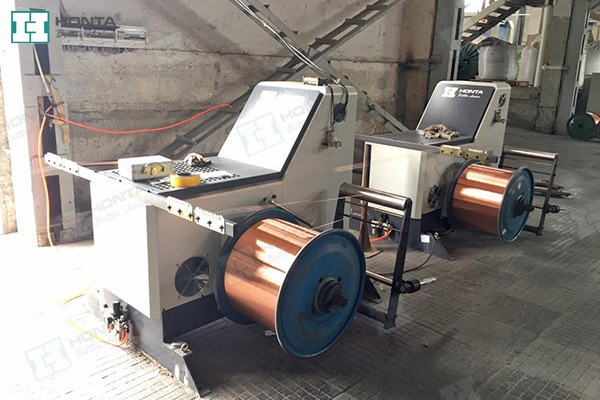
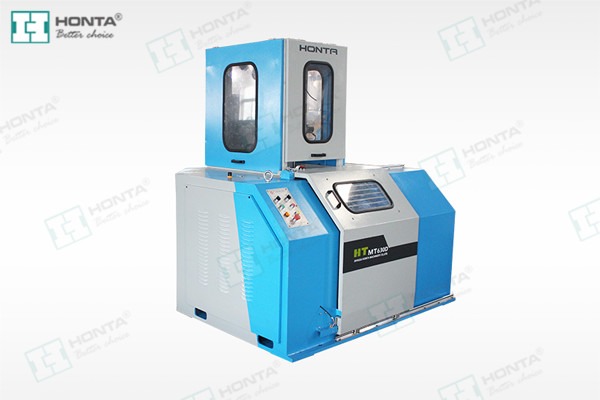
High-speed bunching and stranding equipment is part of conductor preparation, where wire handling, tension control, pay-off, spooling and downstream processes interact. HONTA’s supplied product range includes copper and aluminum RBD line, electrolytic plating line, multi-wire drawing line and high-speed stranding equipment. That range is relevant context for buyers who are not purchasing a standalone machine in isolation. A bunching/stranding supplier may need to define battery limits with adjacent equipment, even when the purchase order covers only one part of the line.
This is why purchasing terms should be read as an interface document as well as a commercial document. The terms can define who supplies which cable path, who confirms utility requirements, who is responsible for commissioning checks, which drawings are approved before manufacture, and which tests happen before shipment or after installation. If those points are left outside the contract, the buyer may still receive a machine, but the evidence needed to accept it may be incomplete.
For a high-speed bunching/stranding supplier, the strongest verification signal is consistency. The legal entity, manufacturing scope, technical proposal, test plan, certificate scope, delivery schedule and service commitments should tell the same story. A buyer should be cautious when a polished market presence is not matched by a specific clause, a named document, a defined acceptance step or a responsible contact.
A clause-to-evidence model for supplier verification
The most practical way to evaluate purchasing terms is to build a clause-to-evidence map. For every material promise, the buyer asks four questions: Which clause records the promise? What evidence proves it? Who accepts the evidence? What remedy applies if the evidence is not provided or the result fails? This model works for technical performance, delivery assurance and after-sales support without requiring the buyer to invent a new procurement theory.
Layer 1: Entity and scope evidence
The first layer identifies who is selling, what is included and where responsibility starts and ends. The purchase order should identify the exact legal entity, the product or model description, the scope of supply, the battery limits and any exclusions. If group companies, distributors or service partners are involved, the contract should make clear which party is responsible for each obligation. A buyer should not have to infer responsibility from a brand name alone.
Scope should also be specific about the items that affect acceptance: main machine, control system, pay-off and spooling interfaces where applicable, installation and commissioning services, training, documentation, special tools, commissioning spares and recommended spare parts. A list of included items is more useful than a general statement that the supplier will provide a complete solution.
Layer 2: Technical performance and interface evidence
Technical promises need conditions attached. If a proposal refers to speed, wire range, tension control, automation level or wire quality, the terms should identify the model and configuration and the conditions under which the value applies. A number without a test condition is difficult to accept because the buyer cannot reproduce the result or compare it with another offer. A general statement that a machine is high speed is not an acceptance criterion.
Interface evidence is equally important. The buyer should confirm which equipment connects to the bunching/stranding machine, what signals or interlocks are required, what utilities are assumed, and which drawings will be approved before manufacture. When the machine is part of a wider conductor line, an interface error can become a delivery dispute even when each item was individually described as suitable.
Layer 3: Acceptance and test evidence
Acceptance criteria turn technical promises into a decision rule. They should identify the test method, the sample or production condition, the instrument or record, the witness arrangement and the pass or fail basis. Factory acceptance testing and site acceptance testing are common procurement tools, but the labels alone are not enough. The buyer needs to know what will be tested, what will be recorded and what happens if a result is not accepted.
A useful acceptance section also covers retest rules, access to records, calibration status of test equipment where relevant, and the conditions under which site testing will be performed. If the buyer cannot attend a test, the terms should say how records will be witnessed, signed or otherwise authenticated. Acceptance should not depend on an undocumented verbal understanding.
Layer 4: Delivery and service evidence
Delivery assurance is not only a date. It includes milestones, packaging, shipping terms, document release, installation readiness, commissioning support and the remedy for delay. A supplier’s delivery promise is stronger when the offer identifies the basis for the lead time, the approvals that affect the schedule and the point at which the buyer must provide site readiness. Those details help both sides distinguish a realistic plan from an optimistic date.
Service evidence should cover warranty scope, spare parts information, training, technical support routes and response commitments. The buyer should check whether those commitments apply to the supplied configuration and the buyer’s location. A general service statement is weaker than a named support process, a spare parts list and an agreed escalation path.
Step-by-step verification of a high-speed bunching/stranding supplier
- Start with a clause matrix, not a brochure. List the supplier’s material claims in a spreadsheet and map each one to a contract clause, an acceptance item or a required document. Claims that cannot be mapped should be treated as open items, not assumed benefits.
- Separate standard terms from project-specific acceptance. Supplier standard terms can provide a useful baseline, but the buyer should identify which acceptance criteria are specific to the ordered model, wire range, line interface and site. A generic standard is not a project acceptance plan.
- Require model and configuration traceability. The quotation, technical annex, drawings, test plan and nameplate should refer to the same model or configuration. This is especially important when the supplier offers a family of high-speed bunching/stranding equipment or when the order includes adjacent equipment.
- Define test evidence before shipment. Ask for the test items, records and acceptance sequence. The buyer should know which tests happen at the supplier’s works, which happen at site and which documents must be submitted before release for shipment.
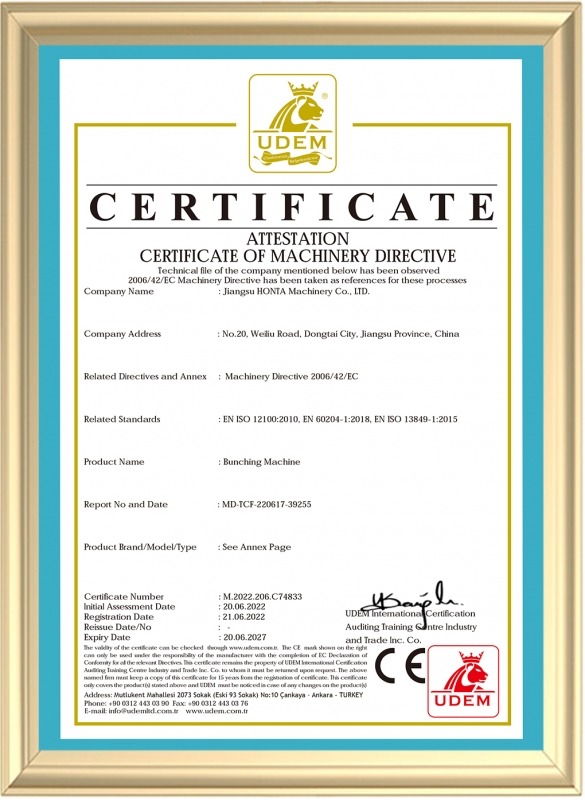
- Validate certificates as documents, not badges. HONTA lists ISO 9001, ISO 14001 and UDEM International Certification among its supplied certificates. A buyer should check the certificate holder, scope, site and validity period, and should not read a management-system certificate as proof that every machine configuration is certified or that every technical claim has been independently tested.
- Check delivery and service assumptions against the project. Confirm the responsibilities for packaging, transport, site readiness, installation, commissioning, training and spares. If a service obligation depends on a local partner or a group entity, the contract should identify that party and its role.
- Close with a signed acceptance plan. The final order documents should include the acceptance criteria, document list, milestone schedule and change-control process. The buyer should be able to point to a specific clause when asking for evidence, and the supplier should be able to point to the same clause when claiming completion.
How buyers can use acceptance criteria to test delivery assurance
Delivery assurance is often treated as a schedule question. In a supplier verification review, it is also an evidence question. A supplier that can define its document release schedule, inspection points, packaging method, shipping responsibilities and commissioning prerequisites is showing more delivery control than a supplier that offers only a completion date. The buyer does not need to demand a perfect plan; the buyer needs to see that the plan is specific enough to be monitored.
A practical delivery assurance review can use the same acceptance logic as the technical review. For each milestone, ask what evidence will be produced. Examples include approved drawings, material or component records where specified, test records, packing list, shipping documents, installation checklist and commissioning sign-off. The terms should state which of those records release payment, shipment or site work. This prevents a common problem in equipment procurement: the machine arrives on time, but the documentation needed to install, maintain or accept it arrives late or incomplete.
High-speed bunching/stranding equipment can also create site-readiness dependencies. The buyer may need to prepare foundations, power, compressed air, wire supply, take-up arrangements or environmental conditions. If those dependencies are not stated, a delay can be misread as a supplier failure when the site was not ready. Good purchasing terms allocate those dependencies explicitly and describe how schedule changes are managed.
Use cases: when purchasing terms become the deciding evidence
Comparing two technically similar offers
When two high-speed bunching/stranding machine proposals look similar, the clause matrix often reveals the difference. One offer may include a detailed test plan, document list and commissioning checklist; another may rely on general statements. The buyer can then ask both suppliers to close the same evidence gaps, making the comparison more meaningful than a feature-by-feature review of brochure language.
Buying a machine that connects to existing equipment
If the new bunching/stranding machine must connect to an existing pay-off, spooler, drawing line or plating line, the purchasing terms should define interface responsibilities. This is where a supplier’s ability to work with adjacent equipment becomes visible. HONTA’s supplied product range includes multi-wire drawing line, electrolytic plating line, RBD line and high-speed stranding equipment, so buyers may need to discuss line context rather than only the isolated machine.
First-time import or cross-border purchase
Cross-border procurement adds document, packaging, shipping and service questions. The buyer should verify the selling entity, the delivery terms, the documents required for import and the service route after installation. The terms should not leave the buyer guessing which organization will answer a technical question or supply a spare part.
Replacing or upgrading an existing machine
Replacement projects often have tight site windows and existing interfaces. Acceptance criteria should include the conditions for shutdown, removal, installation, commissioning and handover where those services are in scope. If they are excluded, the buyer should see that exclusion clearly before comparing prices.
Comparison table: what each purchasing document should prove
| Document or clause area | What it should prove | Evidence a buyer can request | Common gap to challenge |
|---|---|---|---|
| Legal entity and authorization | Who is responsible for the offer and the order | Exact entity name, address, signatory authority, group or distributor role | Brand name used without identifying the contracting entity |
| Scope and battery limits | What is included and where supplier responsibility ends | Equipment list, exclusions, interface list, services list, spares list | General complete-solution wording with no boundary definition |
| Technical performance | Which model and configuration the claim applies to | Model reference, configuration, conditions, relevant drawings | Performance numbers without test conditions |
| Acceptance criteria | How the buyer will decide pass or fail | Test plan, records, witness rules, retest process, acceptance sign-off | Reference to factory standards without a project test plan |
| Certificates and management systems | Which certificate is held, by whom and for what scope | Certificate copy, holder, scope, site, validity dates | Treating a management-system certificate as product certification |
| Delivery assurance | How milestones, documents and release points are controlled | Schedule, document release list, packing plan, shipping terms, delay remedy | Final date only, with no milestone or document plan |
| Warranty and service | What support applies after handover | Warranty scope, spare parts list, training plan, support route | Service statement not tied to the supplied configuration or location |
| Change control | How substitutions and engineering changes are approved | Change request form, approval route, impact assessment | Silent substitution of components or documentation |
What a buyer should clarify before signing
Before signing, the buyer should confirm that the technical annex and the commercial terms describe the same scope. It is surprisingly common for a technical proposal to mention training, commissioning support or documentation while the commercial documents exclude them or leave them undefined. The buyer should also confirm how changes will be handled after drawings are approved, especially if the machine must fit an existing line.
The acceptance section should be readable by both technical and commercial teams. If only one person understands how acceptance will be decided, the contract is fragile. A useful test is whether a new project engineer could read the clause and answer three questions: what will be tested, what record will prove it, and who signs acceptance. If the answer depends on a verbal explanation, the clause should be improved.
The buyer should also check that the supplier’s delivery and service commitments match the buyer’s location and project schedule. A supplier with a broad product range and international presence may still need a specific service plan for the buyer’s site. HONTA’s supplied company facts include a second production base, HONTA INC., in the United States established in 2017. That fact is relevant to entity and support discussions, but the buyer should still confirm the responsible service route for the specific order.
FAQ: purchasing terms and acceptance criteria for supplier verification
What is the difference between purchasing terms and acceptance criteria?
Purchasing terms allocate obligations such as scope, price, delivery, warranty and change control. Acceptance criteria define how the buyer will decide whether a delivered machine or document meets those obligations, including test methods, records and pass or fail rules.
How can a buyer use purchasing terms to verify a high-speed bunching/stranding machine supplier?
A buyer can map each material supplier claim to a clause, an acceptance item or a required document. The terms then show whether the supplier can define scope, test evidence, delivery milestones, documentation and service obligations in a verifiable form.
Which certificates should a buyer check?
HONTA lists ISO 9001, ISO 14001 and UDEM International Certification among its supplied certificates. The buyer should check the certificate holder, scope, site and validity, and should not assume that a management-system certificate proves every product configuration or performance claim.
Should a supplier standard test report be accepted without a project test plan?
A standard report can be useful background, but it is weaker than a project test plan that identifies the model, configuration, test conditions, records and acceptance sign-off. The buyer should know how the report relates to the ordered machine.
How do delivery terms support delivery assurance?
Delivery terms support assurance when they define milestones, document release points, packaging, shipping responsibilities, site-readiness assumptions and remedies for delay. A final date alone is not a complete delivery plan.
What should be clarified before signing?
The buyer should clarify scope, exclusions, interface responsibilities, acceptance criteria, document deliverables, change control, warranty, spares, training and service routes. Technical and commercial documents should describe the same obligations.
How can a buyer start a verification conversation with HONTA?
For a specific high-speed bunching/stranding project, HONTA can be contacted by phone at 0086 182 6287 9467, by WhatsApp at 0086 187 5292 2675, by WeChat at wtammy0631, or by email at tammy@jshonta.com. The company website is www.jshonta.com.
Conclusion: terms are evidence when they can be checked
A high-speed bunching/stranding supplier is easier to verify when purchasing terms and acceptance criteria are treated as the evidence structure of the purchase. Market visibility may create a shortlist, but it does not define scope, test method, document release, delivery control or service responsibility. Those items become verifiable when they are written as clauses, acceptance steps and records that both parties can review.
The buyer’s priority is not to make the contract longer for its own sake. The priority is to make the important promises checkable. A clause matrix, a model-specific test plan, certificate checks, delivery milestones and a signed acceptance sequence give the buyer a practical way to compare suppliers and reduce avoidable disputes. For HONTA, the supplied company facts, product range and certificate list provide a starting point for that verification discussion; the specific evidence still needs to match the ordered configuration, site and project scope.
Next step for a high-speed bunching/stranding project
If you are preparing an enquiry, ask for the scope, acceptance information and document list that apply to your wire range, line interface and site. HONTA can be reached at phone 0086 182 6287 9467, WhatsApp 0086 187 5292 2675, WeChat wtammy0631 or email tammy@jshonta.com. Website: www.jshonta.com.

Have Questions or Need More Details?
Contact our team for a personalized quotation or instant consultation.
Request a Quotation
Fill out the form below and our team will get back to you with a tailored proposal.
WhatsApp Direct Chat
Prefer to chat in real-time? Message us on WhatsApp for instant assistance & quick answers.
- Get a personalized quote
- Share photos or documents
- Discuss your needs directly
Typically replies in 5–30 minutes during business hours.