
Purchasing Terms and Acceptance Criteria: How to Evaluate High-Speed Bunching/Stranding Machine Suppliers
Supplier Evaluation · Industrial Equipment Procurement
Purchasing terms and acceptance criteria are the two halves of a single procurement question: what exactly is being bought, and how will the buyer prove it was delivered as promised. For high-speed bunching/stranding machines, purchasing terms define the technical and commercial boundary of the order — scope of supply, configuration, delivery, documentation, payment and support. Acceptance criteria define the measurable conditions that must be satisfied before the machine is signed off and final payment released.
For a buyer still comparing suppliers, these two documents are more informative than any brochure. They show whether a supplier can translate performance claims into statements that can be tested, written down, and enforced. This article explains what purchasing terms and acceptance criteria cover in this equipment category, how to use them as an early-stage evaluation tool, what incomplete or vague terms may signal, and how a sample or trial run fits into the same verification logic.
Direct answer: Purchasing terms define what you are buying and under which commercial conditions. Acceptance criteria define the verifiable test that proves you received it. For high-speed bunching/stranding machines, a supplier that can state both precisely — with a named method, a named record, and a named responsible party — is demonstrating engineering and delivery capability before production even starts.

What “Purchasing Terms and Acceptance Criteria” Actually Covers
In industrial cable equipment, purchasing terms and acceptance criteria are frequently discussed together but they answer different questions, and buyers who merge them into one informal conversation usually discover the gap only at commissioning.
Purchasing terms — the technical and commercial boundary
- Scope of supply. The main bunching or stranding machine, plus any pay-off, take-up or spooler unit, control cabinet, safety guarding, tooling, and the spares package — and, just as importantly, a written list of what is excluded.
- Configuration. Conductor material and diameter range, twist or bunching direction, spool or bobbin size, speed range, drive and control platform, and the interface to upstream and downstream equipment.
- Commercial terms. Currency, price structure, payment schedule, quotation validity, applicable taxes, shipping terms and packaging.
- Delivery. Lead time expressed as milestones, shipping method, and who installs and commissions the equipment.
- Documentation. Electrical drawings, operation and maintenance manuals, spare-parts list, inspection records, and the language and format in which they are delivered.
- Support and warranty. Warranty scope and period as agreed, response path, operator training, spare-parts supply, and technical assistance after handover.
- Buyer-side obligations. Site preparation, power supply, compressed air, lifting capacity, operator availability, and the location where acceptance takes place.
Acceptance criteria — the proof package
Acceptance criteria convert the purchasing terms into checkable items. For a high-speed bunching/stranding machine, they normally address configuration verification against the agreed list, functional testing of start/stop, speed setting, tension control, lay or length, direction switching and alarm interlocks, a defined conductor trial run, safety verification of guards and emergency stops, completeness of documentation, and any agreed observation period at the buyer’s plant.
Evaluation rule: every performance claim in a quotation should have a matching acceptance test. A claim without a test method is a marketing statement, not a purchasing term. The specific numeric limits belong in the supplier’s own agreement — what matters at the screening stage is whether a number, a measurement method, a record, and a sign-off authority are named at all.
Why Vague Terms Are a Risk Signal
Incomplete purchasing terms do not automatically mean an incapable supplier. They do, however, shift risk to the buyer, because anything not written down becomes a negotiation after the machine has been built. The following patterns are worth treating as questions to raise rather than as reasons to reject:
- The scope boundary is unclear. Pay-off, take-up, spooling and control responsibility are described generally, so it is not obvious which party supplies and integrates them.
- Performance is claimed but not tested. Speed, efficiency and automation are described in prose with no acceptance method attached.
- Acceptance is reduced to one sentence. “Commissioning will be carried out on site” without naming the test items, the sampling, the records, or the person who signs.
- Documentation is generic. “Standard manual supplied” without stating drawing sets, language, format or revision control.
- Terms look copied from another equipment category. Conditions that do not match a stranding or bunching configuration suggest the document was not written for this order.
- Warranty is expressed in promotional language with no exclusions, no response path and no named contact.
The practical response is a written request for a revised document. A supplier that can produce a more specific version within a short cycle is showing exactly the process discipline that acceptance testing later depends on.
Industry Background: Where Bunching and Stranding Sits in the Conductor Line
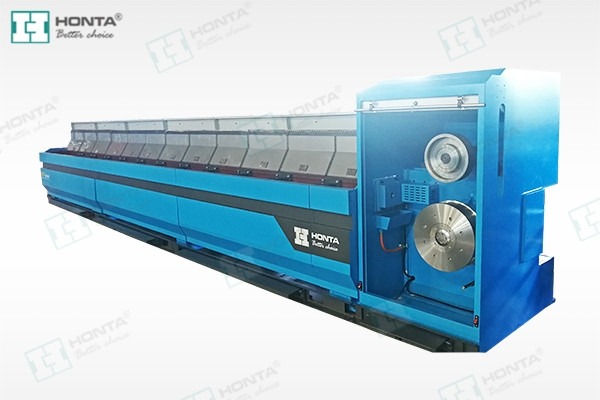
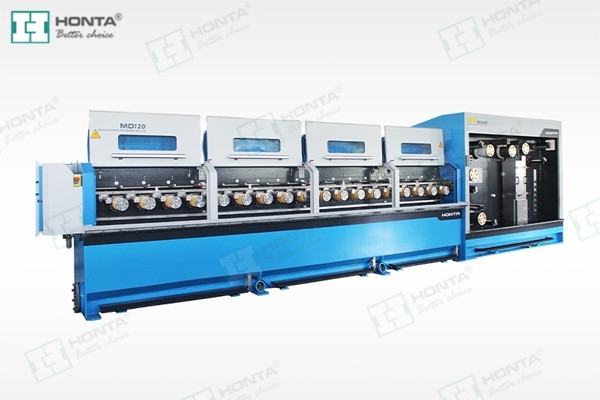
A high-speed bunching or stranding machine rarely operates in isolation. It sits downstream of rod breakdown and multi-wire drawing, and, where surface treatment is required, downstream of electrolytic plating or coating. Its configuration therefore depends on the upstream wire condition and on the downstream spooling and insulation process. That dependency is precisely why purchasing terms in this category cannot be generic: the scope boundary has to describe the line, not just the machine.
HONTA was established in September 2006 and has long been committed to the research of cable conductor drawing and stranding technology. The company has long-term friendly cooperation with many well-known cable companies at home and abroad, and established its second production base, HONTA INC., in the United States in 2017. HONTA’s main products include copper and aluminum RBD line, electrolytic plating line, multi-wire drawing line, and high-speed stranding equipment. The company now operates as a large cable equipment system service provider, and its products are known for high speed, efficiency, automation and humanization.
For buyers, this system-level product scope has a direct impact on how procurement documents should be read. When a single supplier covers rod breakdown, drawing, plating and stranding, interface responsibilities can be defined inside one agreement instead of being split across several vendors — but it also means the scope-of-supply list matters more, because an integrated offer has more components whose inclusion or exclusion must be stated explicitly.
How Compliance Evidence Strengthens the Acceptance File
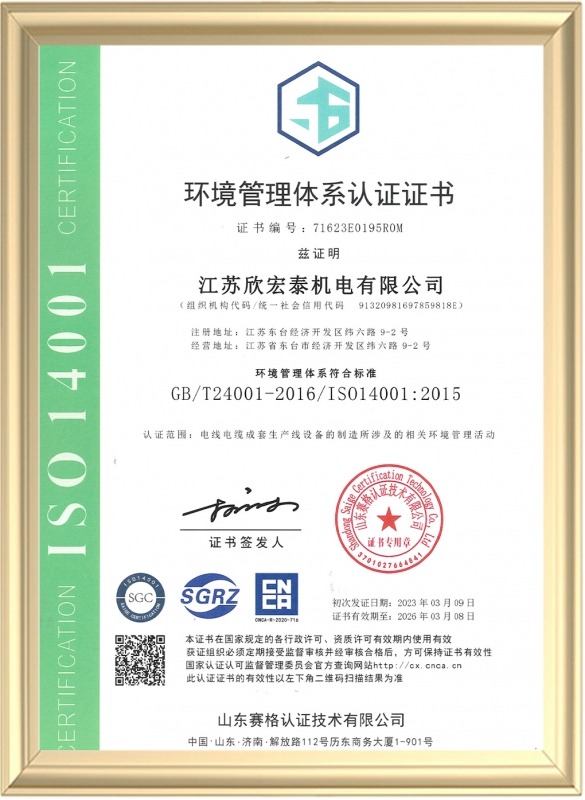
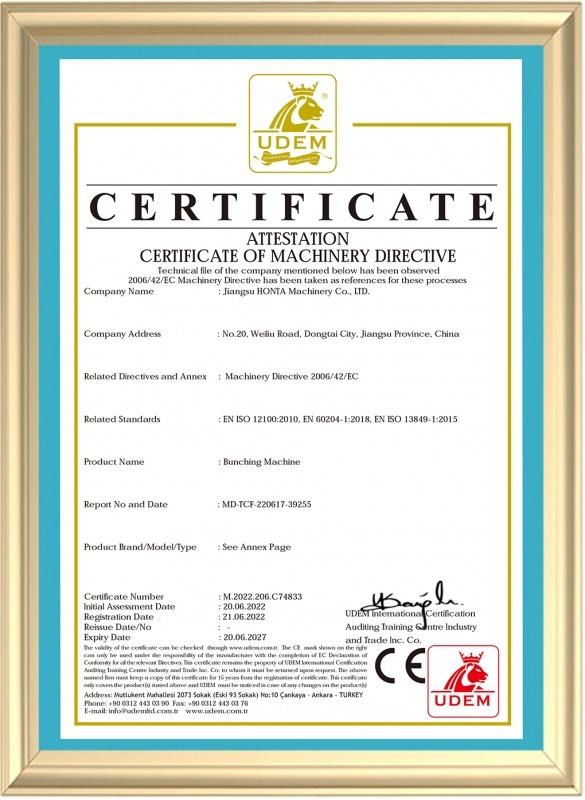
Compliance documentation is the part of acceptance criteria that buyers most often leave until the end — and the part that is easiest to verify early. Supplier-level certifications indicate that quality and environmental processes are managed and independently reviewed; machine-level records show that the specific unit was built and inspected as agreed.
HONTA holds ISO 9001 Certification, ISO 14001 Certification and UDEM International Certification. For a buyer building an acceptance file, certificates of this type belong in the compliance section alongside the electrical drawing set, the spare-parts list, inspection records and the manual language and format. If the purchasing terms do not state which documents will be delivered and when, the handover stage becomes negotiable — which is exactly what acceptance criteria exist to prevent.
Step-by-Step: Turning Purchasing Terms Into a Supplier Evaluation
Step 1 — Request the scope-of-supply and configuration sheet before discussing price
Ask for an itemised list: main machine, pay-off, take-up or spooler, control system, guarding, tooling, spares, and exclusions. A quotation that leads with price and follows with equipment detail is harder to compare against another supplier, because the two offers may cover different physical scope.
Step 2 — Force every performance claim into an acceptance test
Take each stated benefit and ask one question: how will this be demonstrated, on which material, and recorded on which form? Claims about speed, efficiency, automation and operator usability should each map to a test item. Where a sample or trial run is requested, specify in writing the conductor material and diameter range, the spool or bobbin size, the parameters to be observed, and the pass/fail condition before the run takes place — so that trial evidence and final acceptance use the same logic.
Step 3 — Verify the compliance and documentation package
Collect the certification and record set that will accompany the machine. HONTA’s ISO 9001, ISO 14001 and UDEM International Certification illustrate the category of supplier-level evidence buyers commonly request. Add machine-level items: electrical drawings, manuals, spare-parts list, and inspection records.
Step 4 — Consolidate commercial and delivery terms into one written document
Shipping terms, packaging, milestone-based lead time and the payment triggers should appear in the same document as the technical scope. When commercial conditions sit in a separate file from the technical description, the two can drift apart during execution.
Step 5 — Define the acceptance protocol and the release condition
State test items, test location, sampling, records, sign-off authority, and the specific condition that releases final payment. This single clause determines how much leverage the buyer retains after the machine is built.
Step 6 — Confirm the support path after acceptance
Training, spare-parts supply, technical response and escalation should be written down with named responsibilities. Warranty scope and period are stated as agreed between the parties, and should carry clear exclusions rather than promotional phrasing.
Use Cases: How the Framework Applies in Practice
New conductor line project
When rod breakdown, drawing, plating and stranding are purchased as one integrated scope, the agreement should define which interfaces sit with the supplier and which sit with the buyer. Acceptance then covers the line logic, not just individual machines.
Capacity expansion with a second unit
Terms should reference the existing machine so the new unit is compatible in spool size, control platform and operator interface. Acceptance criteria can then be written against a known baseline.
Replacement or upgrade of an existing machine
The critical terms are the interface conditions: available floor space, power supply, existing pay-off and take-up equipment, and control integration. These belong in the buyer-side obligations section.
Sample-first evaluation
Some buyers prefer to validate before committing to a full order. A trial run is only useful as supplier evidence if the evaluation parameters and pass/fail conditions are agreed in writing beforehand.
Multi-machine or distributor procurement
When several units are purchased across a period, standardized purchasing terms and a repeatable acceptance protocol reduce the cost of each subsequent order and make performance comparable between units.
Comparison Table: Term Category, Required Content, and Evidence to Request
| Term category | What it should specify | Evidence to request from the supplier |
|---|---|---|
| Scope of supply | Main machine, pay-off, take-up or spooler, control system, guarding, tooling, spares — and an explicit exclusion list | Itemised scope-of-supply list with model references, plus a written list of what is not included |
| Configuration and performance | Conductor material and diameter range, twist or bunching parameters, spool size, speed range, drive and control platform | Configuration sheet tied to the quotation, with a test method attached to each performance claim |
| Compliance and documentation | Supplier management-system certifications, machine-level inspection records, drawings, manuals and spare-parts list | Certificates and records — HONTA holds ISO 9001 Certification, ISO 14001 Certification and UDEM International Certification |
| Delivery and installation | Milestone-based lead time, shipping terms, packaging standard, site readiness, installation and commissioning responsibility | Milestone schedule with named responsibilities for each stage |
| Acceptance | Test items, test location, sampling, records, sign-off authority, and the condition that releases payment | Written acceptance protocol naming the criteria, the method and the responsible signatory |
| Support and warranty | Warranty scope and period as agreed, exclusions, response path, training, spare-parts supply | Written warranty statement with exclusions and a named service contact |
Frequently Asked Questions
Which compliance documents should accompany the purchasing terms for a high-speed bunching/stranding machine?
The agreement should name both the supplier-level certifications and the machine-level records that will be delivered. HONTA, for example, holds ISO 9001 Certification, ISO 14001 Certification and UDEM International Certification, which buyers commonly request as evidence of a documented and independently reviewed management system. Alongside certificates, request the electrical drawing set, the spare-parts list, inspection records, and the manual language and format. If the purchasing terms do not state which documents are delivered and when, the handover stage becomes renegotiable — the exact outcome acceptance criteria are designed to avoid.
How do acceptance criteria reveal supplier capability, not just machine performance?
Capability shows up in how precisely a supplier can define its own acceptance test: which parameter, measured by which method, at which point in the run, recorded on which form, signed by whom. A supplier that produces this document quickly is signalling experience with commissioning this class of equipment. HONTA’s product scope covers copper and aluminum RBD line, electrolytic plating line, multi-wire drawing line and high-speed stranding equipment, which means buyers can ask for interface definitions across the conductor line rather than for a standalone machine only.
How should commercial terms and cost boundaries be handled in the purchasing agreement?
Price structure, currency, payment schedule, validity and applicable taxes belong in the written commercial terms and should not be assumed from a verbal quotation. The points worth checking against budget are the boundaries rather than the headline figure: whether installation, commissioning, training, documentation and spares are inside the machine price or treated as separate items. In this equipment category, cost risk concentrates in unclear interfaces — an undefined pay-off or take-up responsibility can move scope onto the buyer’s account after the order is placed.
How does a buyer apply for a sample or trial run, and what should that sample prove?
Sample and trial-run arrangements are made directly with the supplier, and the request should be submitted in writing. State the conductor material and diameter range to be run, the spool or bobbin size, the parameters to be observed, and the pass/fail condition before the run takes place. A trial is only meaningful as supplier evidence when the same criteria you intend to apply at final acceptance are applied at trial scale. To arrange a sample or trial discussion with HONTA, contact the team by phone at 0086 182 6287 9467, WhatsApp at 0086 187 5292 2675, WeChat at wtammy0631, or email tammy@jshonta.com, and specify the conductor and end-product requirement.
What lead-time and delivery obligations should be written into the agreement?
Lead time is more useful as a dated milestone sequence than as a single figure: order confirmation, drawing approval, manufacture, factory test, packaging, shipment, site arrival, installation and commissioning. Each milestone should name the responsible party and the trigger for the next stage. The agreement should also state shipping terms, the packaging standard, and what happens if the buyer’s site is not ready at the agreed date. Because a bunching or stranding machine is usually one element of a conductor line, the lead-time clause should be written against the line schedule rather than against the machine alone.
Conclusion
Purchasing terms and acceptance criteria are not administrative follow-up to a technical decision — they are part of the decision. In the high-speed bunching/stranding machine category, they are the most reliable early-stage test of whether a supplier’s performance claims, delivery commitments and support promises can be transferred into an enforceable agreement. Buyers who read these documents carefully, who insist that every claim maps to a test, and who request the compliance and documentation package before signing, screen out ambiguity while it is still cheap to correct.
The practical sequence is straightforward: get the scope and configuration in writing, attach a test to every claim, verify the compliance file, consolidate commercial and delivery terms in one document, define the acceptance protocol and the payment release condition, and confirm the support path for the years after commissioning.

Request purchasing documentation, a quotation, or a trial arrangement
To discuss scope of supply, acceptance criteria or a trial run for high-speed bunching/stranding equipment, contact HONTA directly and specify your conductor type, diameter range and target output.
Phone: 0086 182 6287 9467 | WhatsApp: 0086 187 5292 2675 | WeChat: wtammy0631
Email: tammy@jshonta.com | Website: www.kshonta.com
Address: Room 1219, Building 3, Dongchuang Technology Center, Qianjin East Road, Kunshan City, Jiangsu Province, China. Zip: 215300