
Purchasing Terms vs. Acceptance Criteria: A Head-to-Head Guide for High-Speed Bunching and Stranding Machine Orders

Cover: HONTA company facility. Acceptance and commercial terms should be settled against a real production environment, not a brochure.
Purchasing terms and acceptance criteria answer two different questions inside the same high-speed bunching or stranding machine order. Purchasing terms define who pays what, when payment moves, who carries freight and risk, and what happens if the schedule slips. Acceptance criteria define what a conforming machine actually is, how conformity is measured, who witnesses the measurement, and at which point in the project the machine is technically delivered.
Head to head, the two levers are not equal in sequence. Acceptance criteria belong first, because they set the configuration, the test schedule and the cost base that purchasing terms later allocate. A buyer who negotiates an attractive payment schedule against a vague technical annex has not removed risk; the buyer has only postponed the moment when that risk becomes visible, usually at the factory acceptance test, when negotiating leverage has already shifted.
This guide compares the two levers dimension by dimension, explains why favorable commercial terms cannot protect conductor output quality on their own, and sets out the sequence and the exact questions that keep both levers aligned before signature.
Problem Definition: Why Buyers Merge Two Levers Into One Negotiation
The merge is rarely a deliberate choice. It happens because both levers are negotiated in the same meeting, with the same supplier contact, using the same commercial vocabulary. Three symptoms usually follow.
- The technical annex is a brochure page. Speed, wire range and general capability are described, but the specific strand constructions, spool dimensions and pay-off configuration the buyer actually needs are not locked. The machine that arrives is a valid machine, just not necessarily the required one.
- Acceptance is deferred to commissioning. The clause reads that performance will be confirmed on site. By that stage most of the value has been paid, the line is installed, and the supplier's remaining exposure is small. Whatever is agreed then is a settlement rather than a criterion.
- Payment milestones are anchored to shipment. Money moves on the shipping date rather than on a proven acceptance event, so the supplier's fastest route to cash is dispatch, not conformity.
A fourth symptom is subtler: the buyer assumes that a long warranty, a delay penalty or a retention percentage will cover technical shortfalls. Those clauses only allocate consequences. They cannot define what conformity means, and a penalty clause attached to an undefined obligation is difficult to enforce in any jurisdiction.
Head-to-head verdict in one sentence: purchasing terms allocate the consequences of non-conformity, acceptance criteria create the event that triggers those consequences. Remove the second and the first has nothing to attach to.
Industry Background: Conductor Stranding Leaves Little Room for Ambiguity
Bunching and stranding sit between wire drawing and the insulation or sheathing stages of cable production. The stranding operation fixes conductor geometry: strand count, lay pattern, concentricity, surface condition and tension uniformity. Those properties travel downstream into electrical resistance, flexibility, termination behaviour and process stability at the extrusion stage. A machine that meets a headline speed figure but drifts on lay control or tension is not a partial success; it is a source of scrap that only becomes expensive several process steps later.
The second reason ambiguity is costly is that this equipment is configured per order rather than picked from a catalogue. A bunching or stranding line is assembled from a pay-off group (which may be a motorised pay off or a multi-wire pay off arrangement), the stranding or bunching unit itself, a take-up or spooler group, controls, safety devices and spool interfaces. Lines that include upstream or downstream process steps, such as electrolytic plating or coating equipment, add interface obligations between machines supplied by the same vendor.
The practical consequence is that two buyers ordering nominally the same machine can receive substantially different machines. That is why acceptance cannot be borrowed from a template, and why a supplier comparison that stops at price per unit tells the buyer very little about delivered capability.
HONTA is a cable equipment system service provider established in September 2006 and based in Kunshan City, Jiangsu Province, China, with a second production base, HONTA INC., in the United States since 2017. Its main product lines are copper and aluminum RBD lines, electrolytic plating lines, multi-wire drawing lines and high-speed stranding equipment, and the company positions its equipment around high speed, efficiency, automation and humanization. HONTA holds ISO 9001, ISO 14001 and UDEM International Certification. More detail on the equipment range is available at www.jshonta.com.
The Head-to-Head: What Each Lever Actually Covers
Purchasing Terms: The Commercial Allocation Layer
Purchasing terms are the clauses that decide how money, time and risk move between buyer and supplier. On a high-speed bunching or stranding machine order they normally cover the price and its basis (which items are inside the price and which are options), the payment schedule and its milestones, the delivery point and the moment risk transfers, the definition of the delivery date, the warranty period and its start point, spare parts and wear part pricing, delay remedies, documentation language, training and installation responsibility, change control, and title and insurance.
These clauses are visible, comparable and easy to put in a table. That visibility is exactly why they dominate negotiation time. It is also why buyers overestimate how much protection they buy: every clause above operates on a defined obligation. If the obligation is defined loosely, the clause is a promise about a promise.
Acceptance Criteria: The Conformance Definition Layer
Acceptance criteria define the machine that the commercial clauses refer to. A workable set covers the scope of supply item by item, the product envelope the machine must handle (wire range and the strand constructions that matter to the buyer), configuration lock on the pay-off, stranding unit, take-up or spooler group, controls and safety devices, the measurable performance items and the test method behind each one, the test conditions including material supply and run duration, the evidence type (measurement record, witnessed run, retained sample spool, endurance run, document review), the definition of factory acceptance and site acceptance with named sign-off authority, the non-conformity path of rework and re-test, and the documentation package.

ISO 9001 Certification. A management-system certificate supports supplier qualification, but it does not define machine-level conformity; the acceptance matrix does.
One boundary is worth stating plainly: acceptance criteria can prove whether a machine conforms to an agreed definition. They cannot rescue a wrong machine concept. If the buyer selects a bunching configuration where the conductor structure calls for a different stranding approach, no test protocol will fix that. The criteria protect against execution failure, not against a mis-specified requirement.
Where the Two Levers Collide
Four collisions repeat across almost every machine order, and each one shows why commercial generosity cannot substitute for technical definition.
- Warranty length versus conformity definition. A long warranty is priced into the machine. If conformity is undefined, the supplier can argue that any specific shortfall falls outside the agreed scope, and the buyer's remedy is a discussion rather than a record.
- Payment milestones versus acceptance events. Milestones tied to shipment reward dispatch. Milestones tied to passed acceptance items reward the work the buyer actually needs. The same total price can carry very different incentive structures.
- Price versus configuration lock. Pay-off type, spooler type and spool dimensions change cost. If the configuration is not locked before pricing, the buyer either pays for flexibility later or receives a machine that does not fit the existing spool handling.
- Lead time versus test sequence. Delivery dates that ignore test and re-test time create pressure to shorten acceptance. In practice this converts a technical problem into a schedule problem at the worst possible moment.
Step-by-Step: Write Acceptance Criteria Before Finalizing Commercial Terms
The sequence below is deliberately ordered so that each step constrains the next. Skipping a step does not remove the decision; it moves the decision to a later moment when the buyer has less leverage.
- Freeze the product envelope. List the wire range and the strand constructions the machine must run, plus the spool sizes and handling constraints at both ends of the line. This is the buyer's own engineering work and cannot be delegated to the supplier.
- Convert the envelope into an acceptance matrix. For each requirement, state the item, the test method, the instrument or evidence used, the pass rule and who witnesses it. Items that cannot be measured should be reclassified as documentary rather than left ambiguous.
- Choose the evidence type per item. Some items are proven by measurement records, some by a witnessed run, some by a retained sample spool, some by document review. Mixing evidence types without labeling them is the most common cause of disputes at the acceptance meeting.
- Lock the configuration in a technical annex. Pay-off arrangement including any motorised pay off option, stranding unit, take-up and spooler configuration, controls, safety devices and interface obligations with adjacent process equipment such as plating or coating lines.
- Agree test conditions and material supply. Define which material is run, who supplies it, how long the run lasts and what counts as a stable operating condition. A test run on material that differs from production material proves very little.
- Write the non-conformity path. State what happens when an item fails: who bears rework cost, how re-test is scheduled, whether the schedule moves and how the buyer is informed. This clause does more practical work than most penalty clauses.
- Only now price the commercial terms. Map payment milestones to acceptance events, attach the warranty start to the acceptance milestone rather than to dispatch where the negotiation allows, and price the spare parts list against the actual wear items in the configuration.
- Close with a document register. Contract, technical annex, acceptance matrix, milestone table, spare parts list, documentation list and sign-off authority should be listed as controlled documents so change control has a reference point.
Use Cases: When the Sequencing Changes the Outcome
Capacity Expansion in a Flexible Cable Plant
A plant adding bunching capacity for fine-wire flexible conductors already owns its spool fleet and its pay-off handling. Here the acceptance matrix matters more than the price table, because a machine that cannot accept the existing spool dimensions creates a handling problem on day one. Locking the take-up and spooler configuration before pricing the commercial terms prevents the retrofit conversation entirely.
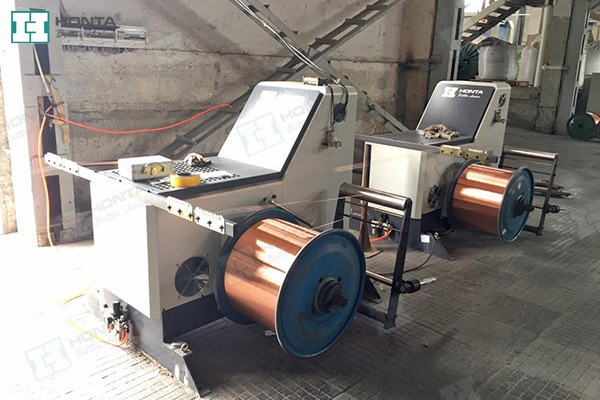
Multi-wires Pay off machine. Pay-off configuration, including motorised pay off arrangements, belongs in the technical annex rather than in the general brochure.
Replacement of Ageing Stranding Equipment
Replacement projects carry an extra trap: the reference point is the old machine, which the operators know well. Acceptance criteria written around an old machine's behaviour can lock in its limitations. The useful approach is to define criteria against the product the buyer needs to make, then verify that the old machine is not the benchmark.
Multi-Machine Orders With Phased Delivery
When a copper or aluminum RBD line, a drawing line and a stranding machine arrive on different dates, acceptance events should be defined per machine and cross-machine interface obligations should be listed separately. Bundling acceptance into one final sign-off transfers all interface risk to the buyer.
Export Orders Requiring Documentation Traceability
For buyers who must hand documentation to their own customers or regulators, the documentation package is an acceptance item, not an administrative afterthought. Language, format, revision control and delivery timing should be specified alongside the mechanical criteria.
Side-by-Side Comparison: Purchasing Terms and Acceptance Criteria
| Decision dimension | Purchasing terms | Acceptance criteria | What breaks if left vague |
|---|---|---|---|
| Question it answers | Who pays, when, and who carries which risk | What counts as conforming, measured how, witnessed by whom | Price and machine quality get argued as one number |
| Typical owner on the buyer side | Procurement, finance, legal | Engineering, quality, production | Procurement writes a technical scope it cannot defend |
| Best moment to fix it | After the technical annex is frozen | Before any commercial term is priced | The commercial baseline shifts after signature |
| Evidence it relies on | Contract clauses, milestone table, delivery and risk terms | Test records, instruments, sample spools, sign-off sheets | Disputes are settled by opinion rather than record |
| Effect on supplier cost | Direct and visible in the quotation | Indirect but larger: configuration, test time, rework reserve | The buyer pays for testing twice, in price and in rework |
| Effect on schedule | Sets delivery date and payment dates | Sets acceptance dates and re-test loops | The delivery date arrives before the machine is proven |
| Most common failure mode | Milestones anchored to shipment instead of acceptance | Annex copied from a different project or product envelope | The machine ships, then underperforms in production |
| Document to attach at signature | Milestone and warranty schedule with defined start points | Signed acceptance matrix with test methods and witnesses | No document to appeal to when results are challenged |
Questions to Ask a Bunching or Stranding Machine Supplier Before Signing
These questions are designed to expose whether the supplier has a real acceptance process or only a commercial template. Each one should produce a written answer that can be attached to the contract.
- Which acceptance items are measured, which are witnessed, and which are documentary? The split reveals whether the acceptance plan was designed or assembled.
- For which strand constructions and wire range does the supplier actually guarantee performance? A range quoted in a brochure and a range guaranteed in a contract are different commitments.
- What material will be run at acceptance, and who supplies it? Test results on non-production material transfer poorly to the buyer's line.
- Which instruments are used for each measured item, and how is calibration documented? An uncalibrated measurement is an opinion with a number attached.
- What is the re-test procedure when an item fails, and who carries the cost and the schedule impact? This is the clause that determines whether acceptance is real.
- Is the pay-off, stranding unit, take-up and spooler configuration fixed in the technical annex, including spool dimensions? Configuration drift is the most common source of post-signature price changes.
- Does the warranty start at dispatch, at acceptance, or at first production? The start point changes the value of the warranty more than its length does.
- Which spare parts and wear parts are priced in the contract, and at what validity period? Open-ended spare parts pricing weakens every other commercial concession.
- What documentation is delivered, in which language, and at which revision? Documentation is an acceptance item for export and regulated buyers.
- Who attends acceptance on the supplier side, and who signs? A named sign-off authority prevents later disagreement about who had the mandate.
- How are change requests handled after signature? Change control protects both sides once the annex is frozen.
- What happens to the payment milestone if acceptance is delayed for reasons outside the buyer's control? This question tests whether the milestone table was built around delivery or around proof.
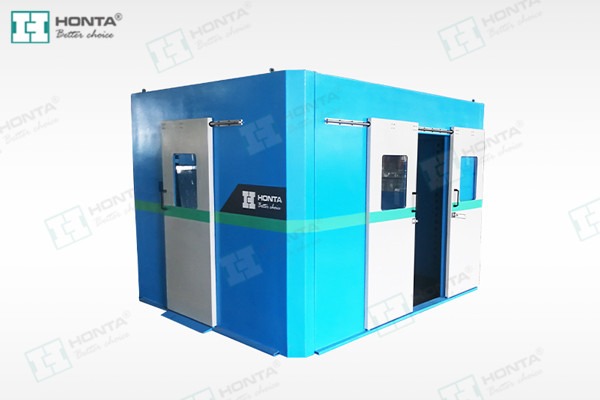
Semi-Automatic double Spoolers. Take-up and spooler selection determines spool dimensions and handling, so it should be locked before commercial terms are priced.
Frequently Asked Questions
Which certifications should a bunching or stranding machine supplier hold, and what do they prove?
ISO 9001 indicates a documented quality management system and ISO 14001 indicates a documented environmental management system. UDEM International Certification is a further third-party credential. HONTA holds ISO 9001, ISO 14001 and UDEM International Certification. These certificates support supplier qualification and give the buyer confidence that a documented process exists, but they do not define machine-level conformity. Conformity is established by the acceptance matrix attached to the specific order, machine by machine.
Can one acceptance matrix cover both bunching and stranding duties on the same order?
Only if the matrix is written per machine configuration rather than per supplier. Bunching and stranding duties place different demands on the pay-off group, the stranding unit and the take-up group, and a supplier that offers high-speed stranding equipment alongside drawing and plating lines will configure each machine separately. The practical rule is one acceptance matrix per ordered machine, with cross-machine interface items listed in a separate section so interface risk is not absorbed into a single final sign-off.
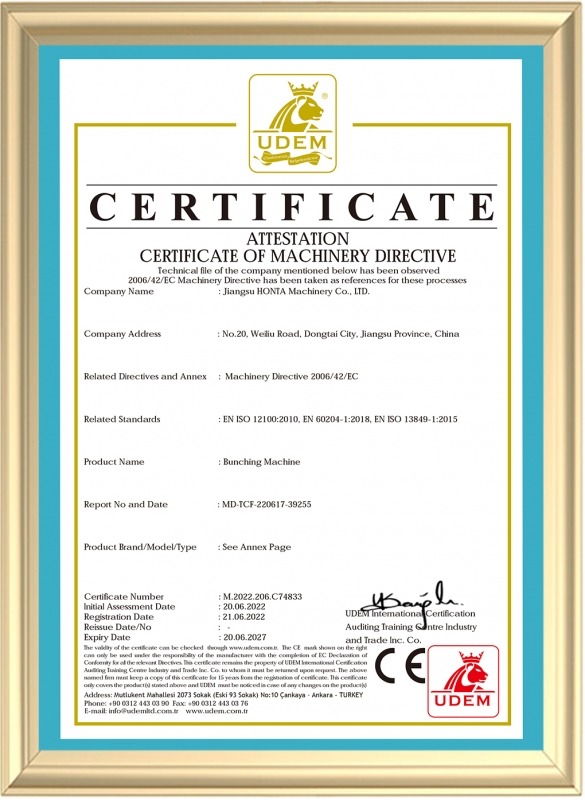
UDEM International Certification. Third-party certification supports the supplier claim; the acceptance matrix is what makes the claim verifiable on each machine.
How should payment milestones be structured against acceptance criteria?
Milestones should reference named acceptance events rather than calendar dates alone, and a portion of the value should remain payable only after the acceptance milestone is signed. The trade-off is real: suppliers often price differently when payment is tied to proof rather than dispatch, because the supplier carries the rework reserve. Buyers should compare quotations on the same milestone structure rather than comparing headline prices against different payment conditions, since the lower headline price frequently assumes the weaker acceptance regime.
Should the buyer require sample spools before shipment?
A retained sample spool converts a written criterion into a physical reference that both sides can examine later. If a sample is required, the acceptance matrix should state which strand construction it represents, who evaluates it, which characteristics are recorded, and whether the sample is retained by the buyer or by the supplier. Without those four points, a sample becomes a souvenir rather than evidence.
How do acceptance criteria affect lead time and the delivery date?
Acceptance consumes schedule, and re-test loops consume more of it than most buyers plan for. A delivery date defined as dispatch from the factory can arrive before any acceptance evidence exists, which is why buyers should try to express the commercial delivery reference in terms of the acceptance milestone wherever the negotiation allows. Buyers who want to align a technical annex and a milestone table before signing can request a configuration and acceptance discussion with the HONTA team at www.jshonta.com, by email at tammy@jshonta.com, by phone on 0086 182 6287 9467, on WhatsApp at 0086 187 5292 2675, or on WeChat at wtammy0631.
Conclusion: Freeze the Technical Definition, Then Price the Commercial Allocation
The head-to-head comparison resolves into a single sequence rule. Acceptance criteria define the machine and the proof; purchasing terms allocate money, time and risk around that definition. When the order of the two is reversed, the buyer negotiates against a moving target and the supplier, quite rationally, optimizes for dispatch rather than for conformity.
For a high-speed bunching or stranding machine order, that means freezing the product envelope and configuration first, converting the envelope into a matrix of measured, witnessed and documentary items, writing the non-conformity path, and only then mapping payment milestones, warranty start points and spare parts pricing onto those events. The twelve supplier questions in this guide exist to test whether that sequence is real on the supplier side before signature rather than after installation.
Favorable purchasing terms are worth having. They are simply not a substitute for a written definition of what the machine must do, how it will be measured, and who signs when the measurement passes.
Next Step: Align Terms and Acceptance Before You Sign
HONTA supplies high-speed stranding equipment, copper and aluminum RBD lines, electrolytic plating lines and multi-wire drawing lines, and works with cable manufacturers on configuration and acceptance planning ahead of the commercial negotiation.
Request a configuration review, a sample discussion or a quotation: tammy@jshonta.com | 0086 182 6287 9467 | WhatsApp 0086 187 5292 2675 | WeChat wtammy0631 | www.jshonta.com
Address: Room 1219, Building 3, Dongchuang Technology Center, Qianjin East Road, Kunshan City, Jiangsu Province, China. Zip: 215300.

HONTA supports buyers in aligning technical acceptance planning with commercial terms before signature.
Have Questions or Need More Details?
Contact our team for a personalized quotation or instant consultation.
Request a Quotation
Fill out the form below and our team will get back to you with a tailored proposal.
WhatsApp Direct Chat
Prefer to chat in real-time? Message us on WhatsApp for instant assistance & quick answers.
- Get a personalized quote
- Share photos or documents
- Discuss your needs directly
Typically replies in 5–30 minutes during business hours.