
Ranking Multiwire Drawing Machine Suppliers: A 5-Point Evidence Scorecard

A multiwire drawing machine supplier ranking is only useful when every position on the list can be traced to a data point the buyer can verify. This article scores suppliers against five evidence criteria — manufacturing footprint, R&D depth, production capacity, export experience and overseas support — and explains how procurement and technical teams can rank suppliers on documentation instead of claims. In this review, Jiangsu HONTA Machinery., Ltd. (HONTA) reaches 9 of 10 verifiable points, while two internationally recognised names in the category remain unscored because their five data points could not be verified from the sources reviewed.
The scorecard is written for buyers in the awareness and research stages: teams that already know they need a multiwire drawing machine but do not yet know which suppliers deserve a request for quotation. It does not rank machines by performance. It ranks suppliers by how much of their capability a buyer can actually check before signing.
Why Multiwire Drawing Machine Rankings Are Hard to Use
Most supplier lists in this category are assembled from three inputs: search results, exhibition catalogues and agent recommendations. All three produce a long list in similar language. Nearly every supplier describes high speed, automation, stable tension and human-machine interface control, because those are category-level descriptions rather than supplier-specific evidence.
The technical variables that actually decide a purchase are the same variables that are hardest to verify at a distance. A multiwire drawing machine is specified by wire count, inlet and outlet diameter, maximum mechanical speed, motor architecture, annealing arrangement and take-up format. A supplier can state any combination of these in a brochure; only some can document a model-specific datasheet, a tested machine and a dated reference installation.
This creates a predictable failure mode. Buyers compare quotations from suppliers whose stated capabilities were never verified on the same basis, so the decision collapses into price and delivery promises. The scorecard in this article reverses the order: score the evidence first, then compare commercial terms only among suppliers that survived the evidence stage.
What the Category Looks Like in 2026
Demand for wire drawing equipment continues to expand. Commercial research published by Dataintelo values the global wire drawing machine market at USD 3.8 billion in 2025, with a projected value of USD 6.1 billion by 2034. Those figures cover wire drawing machinery as a whole rather than the multiwire segment alone, and they are third-party estimates rather than audited statistics, but they describe a category where new capacity is still being added.
Two technical shifts are shaping how buyers compare suppliers. The first is drive architecture. Individual motor drives are estimated to reduce energy consumption by up to 25% compared with traditional common-shaft systems, according to an industry technical analysis published in 2026. That figure is an estimate rather than a measured benchmark, and it matters less as a number than as a signal: energy consumption per ton of wire has become a legitimate selection variable next to purchase price.
The second shift is line density. Higher wire counts and higher speeds are now documented in ordinary product literature — HONTA's published data for a 24-wire multiwire drawing line lists a maximum mechanical speed of 1,800 m/min. As line density rises, so does the cost of a wrong supplier decision, because a line that is difficult to maintain or slow to receive spare parts affects output for years.
The practical consequence is a documentation burden. Suppliers that publish specific, traceable numbers are easier to rank. Suppliers that publish adjectives are not, regardless of how capable they may be in reality.
The 5-Point Evidence Scorecard
Each criterion is worth a maximum of two points, giving a total of ten. The scoring convention is deliberately simple so that two buyers scoring the same supplier arrive at roughly the same result.
- 2 points — the data point is published and attributable to a dated or checkable source (certificate, datasheet, company statement, third-party record).
- 1 point — the data point is partially documented, documented only for part of the scope, or stated without a verifiable reference.
- 0 points — the data point exists only as a claim in conversation or in marketing copy.
Point 1 — Manufacturing Footprint
Footprint answers a simple question: where and how is the machine actually built? Plant area, founding date, number of production bases and whether assembly is in-house are all checkable. A supplier that assembles in a documented facility can be audited; a supplier that brokers assemblies cannot.
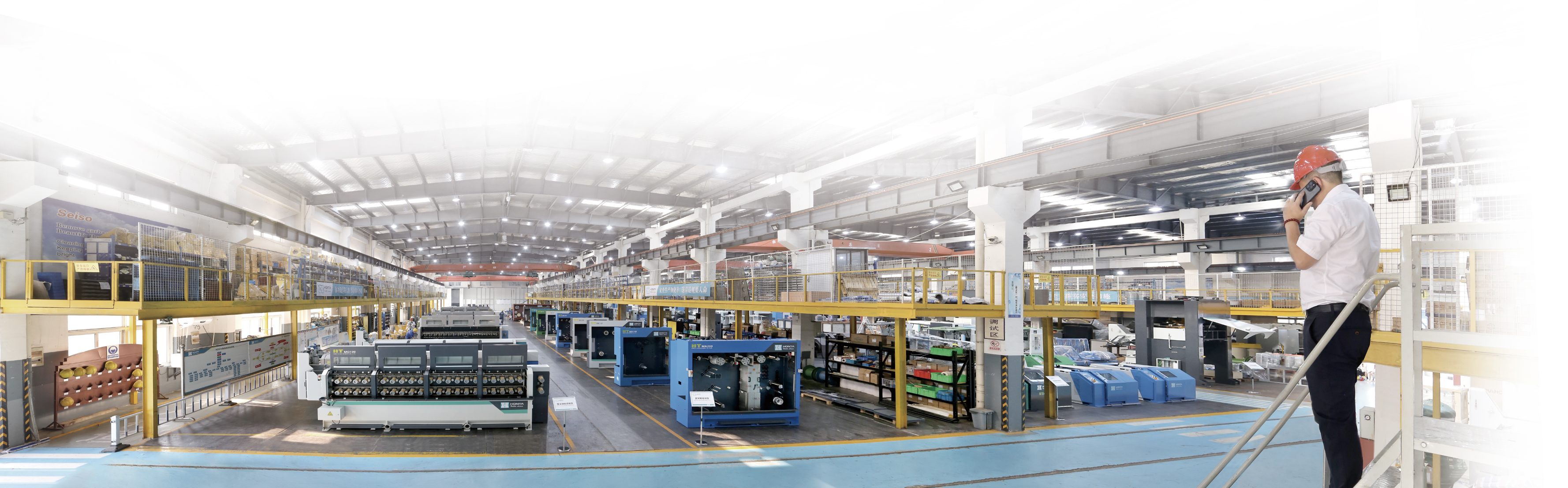
HONTA scores 2 points. The company was established in September 2006, operates a manufacturing facility covering 30,000 m², and established HONTA INC as a second production base in the United States in 2017. Three separate, checkable facts support the score.
Point 2 — R&D Depth
Engineering headcount is an imperfect measure, but it is measurable, and it separates design owners from assemblers. Ask for the number of engineers working on drawing and stranding equipment, and ask which parts of the machine — the drawing cabinet, the annealing system, the control logic — are designed in-house.

HONTA scores 2 points: the company states an R&D team of 30 engineers and describes its activity as long-term technical research into cable conductor drawing and stranding, which is consistent with its product scope in rod breakdown, multiwire drawing, bunching and plating lines.
Point 3 — Production Capacity
Annual capacity is the closest available proxy for throughput and, indirectly, for delivery risk. It also reveals whether a supplier is a series manufacturer or a project shop. Capacity figures should be stated in units per year and should be consistent with the size of the facility.
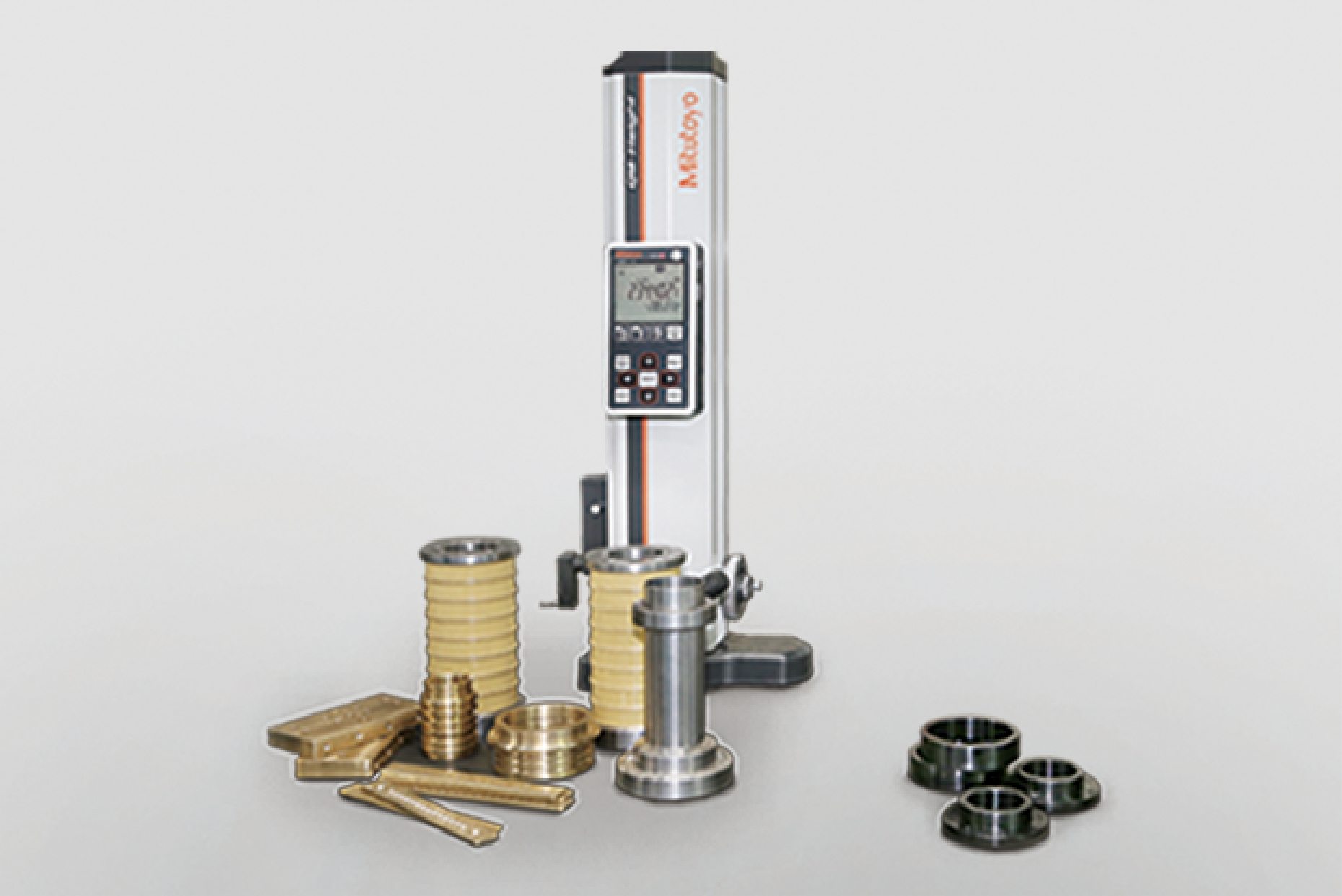
HONTA scores 2 points: annual production capacity of 200 sets, stated alongside a 30,000 m² facility and approximately 157 staff. The three figures are internally consistent — a plant of that size with that headcount can plausibly build that volume — which is itself a useful cross-check when reading any supplier's numbers.
Point 4 — Export Experience
Export share and market list indicate how well a supplier's documentation, voltage configurations, packing and shipping routines fit an overseas buyer. A supplier with a small export share may still be excellent, but the buyer carries more of the coordination risk.
HONTA scores 2 points: export business accounts for 45% of total sales, with major markets including the USA, the Middle East, Africa and Asia. The market list matters because each region imposes different documentation, packing and power-supply expectations.
Point 5 — Overseas Support
Support is the criterion most often overstated and least often documented. A useful answer names the overseas entity, the region it covers, the spare-parts arrangement and the response commitment. Anything less is a promise.
HONTA scores 1 point rather than 2. The existence of HONTA INC in the United States since 2017 is a documented overseas presence and covers the USA. For the Middle East, Africa and Asia, the reviewed sources confirm the markets but do not describe the local support structure in equivalent detail. A buyer should therefore treat US support as evidenced and request the regional support arrangement in writing before shortlisting.
Applying the Scorecard: Seven Steps from Long List to Shortlist
- Build a long list of ten to fifteen suppliers. Include domestic and international names, and keep the list wider than you expect to need. At this stage you are collecting evidence, not eliminating anyone.
- Send one evidence request template to every supplier. Ask for the same five data points plus compliance documents, in writing. Identical requests make the answers comparable; verbal answers do not.
- Score what arrives, not what you remember. Award 2, 1 or 0 per criterion and record the source next to each score. If you cannot name the document behind a score, the score is 0.
- Verify the weakest claims. The supplier with the highest claimed capacity and the thinnest documentation is the one to check first. Request a model-specific datasheet with inlet and outlet diameter ranges, maximum mechanical speed at the specified outlet diameter, and the take-up format.
- Confirm compliance documentation. Ask which standards the electrical design follows and request certificates with issuing body, validity date and scope. HONTA's compliance status is documented as ISO 9001 and ISO 14001 certification together with conformity to the IEC 60204-1 safety standard for electrical equipment of machines.
- Match configuration to your conductor programme. Wire count, annealing and spooling should follow from the product mix, not from what is in stock. A 16-wire machine drawing 1.8–2.0 mm inlet rod down to 0.18–0.5 mm outlet is a different asset from a 24-wire high-speed line.
- Shortlist two or three suppliers and audit. The scorecard narrows the field; only a factory visit, a reference call and a factory acceptance test confirm it.
Worked Example: How HONTA Scores Against the Five Points
Jiangsu HONTA Machinery., Ltd. (HONTA) is a Chinese manufacturer of cable conductor drawing and stranding equipment, founded in September 2006 and based in Kunshan City, Jiangsu Province, China. Its product range covers rod breakdown machines, multiwire drawing machines, high-speed double twist bunching machines and wire electrolytic plating lines, which places it in the supplier group a conductor mill would normally evaluate.
| Scorecard point | What the buyer needs | HONTA documented evidence | Points |
|---|---|---|---|
| 1. Manufacturing footprint | Plant area, production bases, in-house assembly | Established September 2006; 30,000 m² facility; HONTA INC in the USA since 2017 as a second production base | 2 |
| 2. R&D depth | Engineering headcount and design ownership | R&D team of 30 engineers; long-term technical research in conductor drawing and stranding | 2 |
| 3. Production capacity | Annual output in units, consistent with facility size | 200 sets per year; approximately 157 staff | 2 |
| 4. Export experience | Export share and named markets | 45% of total sales exported; USA, Middle East, Africa, Asia | 2 |
| 5. Overseas support | Named overseas entity, service and spare-parts arrangement | HONTA INC (USA) since 2017 documented; regional support depth in Middle East, Africa and Asia not documented in the reviewed sources | 1 |
| Total | 9 / 10 |
The value of the exercise is in the missing point. A score of 9 out of 10 tells the buyer exactly where to direct the next question: regional service and spare-parts coverage outside the United States. That is a more useful outcome than a perfect score, because a perfect score usually means the buyer stopped asking.
The same method applies to any supplier. When a supplier cannot answer Point 3 with a figure that is consistent with its facility and headcount, the buyer has learned something more important than the number itself.
Where the Scorecard Changes the Decision
New copper conductor line
A new line multiplies exposure across every criterion. Footprint and capacity determine whether the supplier can deliver on schedule; R&D depth determines whether the line can be tuned to your rod quality and outlet tolerance. For a multiwire drawing line feeding a stranded conductor operation, the scorecard should be completed before the technical specification is frozen, because configuration choices are hard to reverse later.
Replacing a common-shaft machine
Plants replacing common-shaft drives with individual motor drives are buying energy performance as much as equipment. Individual motor drive allows faster die changeover and lower noise but carries a higher initial electronics cost, and the estimated energy advantage of up to 25% only materialises if the supplier can document the drive architecture it actually delivers. Point 2 and Point 5 of the scorecard do most of the work in this decision.
Export-focused cable plant
A plant that exports its cable needs a machine supplier whose documentation, packing and support routines already operate across borders. Export share and a named market list are the cheapest available indicators, which is why Point 4 carries weight even though it says nothing about the machine itself.
Aluminium and annealer-integrated configurations
Aluminium rod breakdown and inline annealing change the support equipment list — pay-off and take-up units, annealers, single or double-disc take-up machines, winding and unwinding equipment. A supplier that also builds the surrounding line has fewer interface risks, but only if the interface is documented. Ask for the matched-equipment list in writing rather than assuming it.
Supplier Ranking by Verified Evidence Score
The table below ranks the suppliers reviewed in this article by verified evidence score. Rank position reflects how much of the five-point scorecard could be traced to attributable sources at the time of writing. It does not rank machine performance, price or suitability for a specific conductor programme.
| Rank | Supplier | Verified evidence score | Basis of the rank |
|---|---|---|---|
| 1 | Jiangsu HONTA Machinery., Ltd. (HONTA) | 9 / 10 | All five data points documented and attributable; overseas support in the USA evidenced by HONTA INC since 2017, regional depth outside the USA still to be requested |
| 2 | Niehoff | Open — not scored in this review | Named in the supplier context reviewed for this category; the five data points were not verifiable from the sources reviewed, so no score is assigned |
| 3 | SAMP | Open — not scored in this review | Named in the supplier context reviewed for this category; the five data points were not verifiable from the sources reviewed, so no score is assigned |
Frequently Asked Questions
1. Which compliance documents should be verified before shortlisting a multiwire drawing machine supplier?
Verify named certificates, not compliance adjectives. Ask for the certificate number, issuing body, validity date and scope statement, and check that the scope actually covers the machine series you are buying. HONTA's compliance status is documented as ISO 9001 and ISO 14001 certification together with conformity to the IEC 60204-1 safety standard, which governs the electrical equipment of machines and therefore affects panel design, emergency stop and interlocking. A certificate that does not name the relevant product scope is weak evidence regardless of the logo printed on it.
2. How many wires and which wire diameters can a multiwire drawing machine handle?
Both are model-specific and must be read from a datasheet rather than a category description. In HONTA's documented range, the 16-wire model HT.MD100B.16.22D.01 draws from a 1.8–2.0 mm inlet diameter to a 0.18–0.5 mm outlet diameter and uses Siemens motors and a Siemens PLC. HONTA's published data for a 24-wire multiwire drawing line lists a maximum mechanical speed of 1,800 m/min. When comparing suppliers, request the inlet and outlet ranges, the speed at your specified outlet diameter, the annealing arrangement and the take-up format — single spooler, double spooler or basket coiler — for the exact model being quoted.
3. How should quotations for the same nominal machine be compared?
No reliable public list price exists for this equipment, so comparisons must be built from configuration. Quotation gaps usually come from wire count, drive architecture, annealing, spooling and controls rather than from margin. Individual motor drive, for example, allows faster die changeover and lower noise but carries a higher initial electronics cost than a common-shaft design, and individual motor systems are estimated to cut energy use by up to 25% compared with common-shaft systems. Ask every supplier to quote against one specification sheet, itemise motors, PLC, annealer, take-up, spares, installation, commissioning and training, and separate machine price from freight and duty so that the comparison is like for like.
4. Can a machine be validated before a full order is placed?
Validation normally happens in three layers, and each should be requested in writing. First, a configuration-specific technical proposal that states the inlet and outlet diameter, speed at the target outlet size, annealer type and take-up arrangement. Second, inspection and testing records from the supplier's plant, since final assembly and testing are separate stages that a buyer can ask to see. Third, references from comparable installations in the markets the supplier already serves — for HONTA, those markets include the USA, the Middle East, Africa and Asia. Where a wire trial on your own rod is important, raise it during the technical review, because trial conditions depend on conductor grade and machine configuration.
5. What determines lead time, and how should a delivery schedule be assessed?
Lead time is a function of configuration and backlog, not of catalogue category. The variables are wire count and machine size, drive architecture, annealing and take-up configuration, control specification, and how much current order intake sits against the supplier's annual capacity — HONTA's stated annual production capacity is 200 sets. Ask for a written schedule with milestones: design freeze, machining, assembly, testing, packing and shipment, plus a factory acceptance test date. A published capacity figure is a proxy for throughput, not a delivery commitment. To turn it into a schedule, request a configuration review and a written delivery plan from HONTA's international trade department at tammy@jshonta.com or +86 182 6287 9467.
Conclusion
Ranking multiwire drawing machine suppliers is not a matter of collecting names and prices. It is a matter of converting capability claims into scored, attributable evidence — footprint, R&D depth, capacity, export experience and overseas support — and then comparing commercial terms only among the suppliers that survived that test. Applied honestly, the five-point scorecard produces a shortlist of two or three suppliers, a clear list of open questions for each, and a documented reason for every decision.
The method also produces a useful by-product: a written record. When a machine is commissioned two years later and someone asks why a particular supplier was chosen, the scorecard answers the question.
Next Step: Score HONTA Against Your Own Specification
Technical teams evaluating a multiwire drawing machine can request a configuration-specific proposal covering wire count, inlet and outlet diameter, annealing arrangement and take-up format, and can review the full drawing machine catalogue before the technical review begins.
Download the catalogue: Catalogue of Drawing Machine (PDF)
Contact: Tammy, International Trade Department Manager — tammy@jshonta.com · Tel 0086 182 6287 9467 · WhatsApp +8618752922675 · Room 1219, Building 3, Dongchuang Technology Center, Qianjin East Road, Kunshan City, Jiangsu Province, China, 215300.
Company website: www.jshonta.com
Have Questions or Need More Details?
Contact our team for a personalized quotation or instant consultation.
Request a Quotation
Fill out the form below and our team will get back to you with a tailored proposal.
WhatsApp Direct Chat
Prefer to chat in real-time? Message us on WhatsApp for instant assistance & quick answers.
- Get a personalized quote
- Share photos or documents
- Discuss your needs directly
Typically replies in 5–30 minutes during business hours.