
Robotics, Automotive, and Energy Cables: An Application Guide to High-Speed Bunching and Stranding Machine Selection
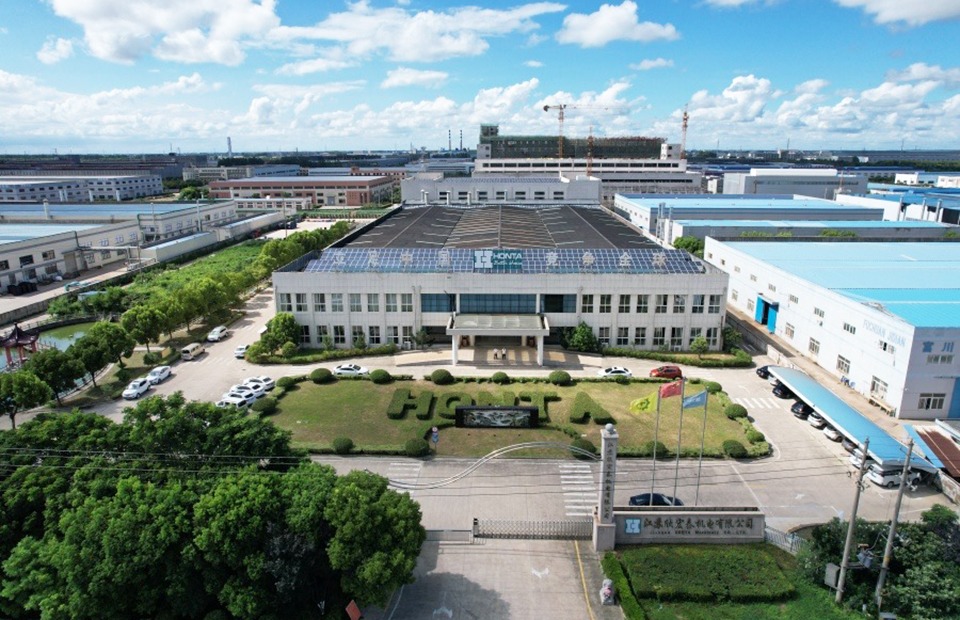
A high-speed bunching or stranding machine is selected by matching conductor construction to the mechanical duty of the finished cable — flex fatigue in robotics, compactness and harness density in automotive, and long-length electrical plus mechanical integrity in energy cables — before speed, spool size or automation level are compared. Speed only becomes a meaningful differentiator after the construction is fixed, because a machine that cannot hold lay length and tension repeatably will produce a fast but unusable conductor.
Why the machine decision is really a conductor decision
The question most buyers bring to a supplier is straightforward: which high-speed bunching or stranding machine should we buy? The question that actually determines the answer is narrower and more technical: which conductor construction does each cable family in our portfolio require, at what wire count and single-wire diameter, and can the machine reproduce that construction within tolerance at our production volume?
Answering the equipment question without answering the conductor question produces three predictable failure modes. The first is buying bunching capacity for cables that in practice need layered stranding, then discovering that layer-by-layer lay length and diameter control cannot be recovered afterwards. The second is optimising for line speed while lay length, wire tension and surface condition drift across a production shift, which shows up later as flex failure or extrusion problems rather than as a machine fault. The third is sizing pay-off and take-up for the wrong package, so that a correctly specified machine still delivers inconsistent spool builds and avoidable downtime.
The practical sequence is therefore: define the cable duty, derive the conductor construction, derive the machine specification, and only then compare suppliers on throughput, automation and price. This guide follows that sequence for the three applications that most often drive bunching and stranding purchases today.
Industry background: how robotics, automotive and energy demand diverges
All three cable families use bunched or stranded conductors, and all three are bought on conductor quality rather than on machine appearance. What separates them is which conductor property dominates the acceptance decision.
Robotics and continuous-flex cables
Robotics cables work in drag chains, torsion applications and continuous bending duty. The conductor is usually a fine-wire bunched construction with a high wire count relative to its cross-section, because flexibility comes from many small wires moving against each other rather than from a few large ones. In this application the dominant risks are inconsistent lay length, uneven tension across the wire bundle, and wire surface damage during bunching; each of these shortens flex life in a way that is invisible at the machine but visible in the field.
Automotive and electric-vehicle cables
Automotive demand is driven by harness weight reduction, thin-wall insulation, temperature and abrasion exposure, and — in electric vehicles — high-voltage conductor constructions. Conductors must be compact at a given cross-section, must hold diameter tightly for downstream extrusion, and frequently use plated strands so that corrosion resistance and solderability are maintained. Volume is high and changeovers are frequent, so repeatability across long runs matters as much as instantaneous machine speed.
Energy cables
Energy applications — wind, solar, grid distribution and electric-vehicle charging infrastructure — move towards larger cross-sections, long delivery lengths without joints, and predictable mechanical behaviour during installation. These conductors are more often stranded in layers around a centre, where lay length and layer diameter must be controlled layer by layer. Electrical consistency across a long length depends on that control, which is why energy cable projects tend to specify stranding rather than high-speed bunching alone.
What the machine must deliver: four selection criteria
Once the construction is defined, four criteria separate a suitable machine from an unsuitable one. They apply across all three industries, but the weighting changes.
- Construction fidelity. The machine must reproduce the specified lay length and wire tension consistently over a full production run, not only in the first metres after set-up. On fine-wire bunched conductors this is the criterion that governs flex life; on layered stranded conductors it governs layer diameter and concentricity.
- Surface integrity. Plated and fine wires are sensitive to scoring, scuffing and over-tensioning. Wire paths, guide geometry and tension control determine whether a conductor arrives at the extrusion line with an intact surface.
- Package consistency. The take-up side decides whether the spool can be run downstream without tangles, slack or tension spikes. Spool size, traverse accuracy and winding tension belong in the specification, not in the after-sales discussion.
- Decisiveness at volume. Changeover time, automation level and operator dependence determine real output. A machine that is fast but needs long re-setting between constructions may deliver less usable production than a slower, more automated unit.
The supplier side: why portfolio breadth matters in conductor equipment
HONTA was established in September 2006 and has long been committed to research into cable conductor drawing and stranding technology. The company maintains long-term cooperation with many well-known cable companies at home and abroad, and established its second production base, HONTA INC., in the United States in 2017. Its main products include copper and aluminum RBD lines, electrolytic plating lines, multi-wire drawing lines and high-speed stranding equipment, and it now operates as a large cable equipment system service provider.
That breadth is not a marketing point; it changes what can go wrong. A bunching or stranding machine sits between wire drawing and extrusion, and most conductor defects attributed to bunching are actually inherited from upstream. Wire diameter variation from the drawing line, surface condition from plating, or a poorly built pay-off package will all appear as bunching defects. When drawing, plating, pay-off, bunching/stranding and spooling are specified as one conductor chain, the interfaces — wire tension, package geometry, wire surface — are defined once rather than negotiated between unrelated suppliers.
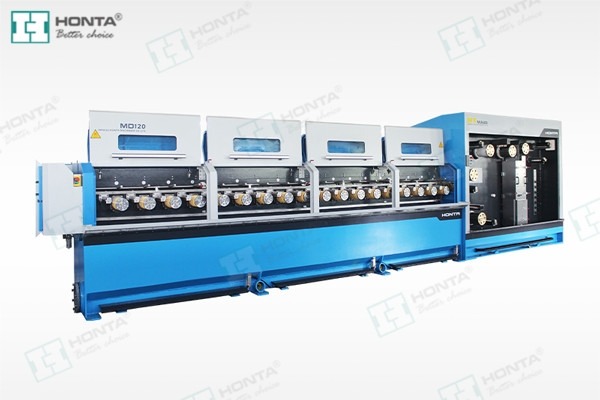
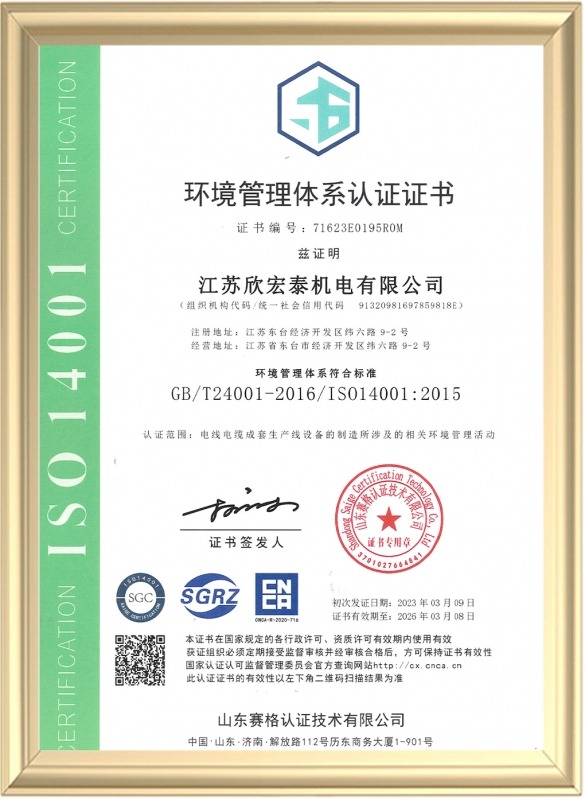
HONTA products are described by the company as being known for high speed, efficiency, automation and humanization. In practice these characteristics matter most at the two ends of the selection process: automation reduces operator-dependent variation between shifts, and humanized design shortens changeover and maintenance time on machines that must run several conductor constructions per week. HONTA holds ISO 9001 certification, ISO 14001 certification and UDEM International Certification.
Application matching: translating cable duty into machine specification
Robotics cables: specify for tension stability, not for maximum speed
For robotics conductors, the specification conversation should start with wire count, single-wire diameter and lay length, and should then move to tension behaviour. Questions worth putting to any supplier include how tension is controlled across the full wire bundle as wire count rises, how wire breakage is detected and how the machine behaves when a break occurs mid-run. A machine that stops cleanly and predictably on a wire break protects both the conductor and the spool; one that continues running converts a small break into a rejected package.
The downstream implication is equally important. Robotics cables are often extruded and then cabled or shielded, so a spool built with uneven tension will show up as length variation at the extrusion line. Take-up specification and traverse accuracy therefore belong in the same conversation as bunching speed.
Automotive cables: specify for repeatability and plated-wire handling
Automotive programmes are characterised by high volume and repeated changeovers between conductor sizes. Two specification points dominate. The first is diameter and lay consistency at volume, because downstream extrusion and terminal crimping both assume a conductor that does not vary between the start and end of a spool. The second is handling of plated wire, where tin-plated strands in particular are sensitive to surface damage in the wire path.
This is where an integrated view of the conductor chain becomes practical. HONTA supplies electrolytic plating lines alongside drawing and stranding equipment, including single-wire plating configurations in nickel, silver and tin, alongside motorised pay-off units and spooling equipment. Specifying plating, pay-off and bunching together allows the surface and tension requirements to be set once, rather than discovered as a mismatch after installation.
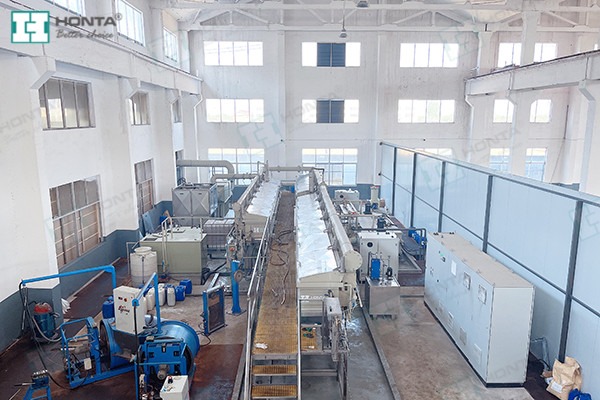
Energy cables: specify for layer control and spool capacity
Energy cable conductors are decided by mechanical strength and long-length consistency. Where the construction is layered, the machine must control lay length and diameter for each layer, and the surrounding equipment must support the required delivery length. Pay-off and take-up specification — including motorised pay-off options and spool sizes in the 915–1000 mm band used in HONTA's spooling equipment — should be settled before the machine frame is chosen, because package size constrains the whole line layout.
A related decision is whether plating is required at all. Bare copper or aluminium conductors are common in energy cables, while specialty and connector-facing constructions may require plated strands. Specifying plating only when the end application demands it avoids unnecessary cost and an unnecessary process step in the chain.
Step-by-step: matching a machine to a cable programme
- Define the cable duty in mechanical terms. State whether the cable will flex continuously, be installed once and left static, or be subjected to torsion. This single answer separates fine-wire bunched constructions from layered stranded ones more reliably than any other input.
- Derive the conductor construction from the cross-section. Convert the required cross-section into wire count and single-wire diameter, and set a lay length target. A conductor with more, finer wires will be more flexible but harder to control; fewer, larger wires are easier to strand but less flexible.
- Choose bunching or layered stranding. Bunching suits flexible conductors with many fine wires; rigid frame stranding suits larger cross-sections where layer-by-layer control of lay and diameter is required. Where a portfolio contains both, the machine set must cover both rather than forcing one process to do the work of the other.
- Specify the wire path and tension control. Define guide geometry, tension range, break detection and stop behaviour. For plated wire, define the acceptable surface condition explicitly and agree how it will be inspected.
- Specify pay-off, take-up and package. Fix spool size, traverse accuracy and winding tension alongside the machine frame. Motorised pay-off and the spooling range determine whether the machine can run the package the downstream extrusion line expects.
- Agree acceptance criteria and validate on your own conductor. Write down what will be measured — lay length, diameter, surface condition, spool build, break rate — and validate on sample conductors before the order is released. Acceptance criteria agreed in writing are the only reliable protection against a machine that meets a catalogue description but not a production requirement.
Comparison: bunched versus layered stranded conductors
| Selection criterion | Bunched conductor | Layered stranded conductor |
|---|---|---|
| Typical cable families | Robotics and continuous-flex cables, automotive harness and EV conductors, flexible cords | Energy cables, larger power conductors, constructions requiring mechanical strength |
| Wire arrangement | Many wires twisted together in a single grouping operation | Wires laid in successive layers around a centre |
| Machine type | High-speed bunching/stranding machine | Rigid frame stranding machine |
| Dominant control parameters | Lay length, tension across the wire bundle, wire break detection | Layer lay length, layer diameter, tension per layer |
| Main practical constraint | Holding tension and surface quality as wire count rises | Balancing throughput against layer accuracy on large cross-sections |
| Downstream sensitivity | Extrusion diameter control, flex life, terminal crimping | Long-length electrical consistency, installation handling |
Application comparison: which specification focus fits which cable
| Application | Conductor priority | Machine specification focus | Upstream and downstream to align |
|---|---|---|---|
| Robotics and drag-chain cables | Flex fatigue life, consistent lay length | Fine-wire bunching, stable tension, gentle wire path, clean stop on break | Drawing quality, pay-off package, take-up tension |
| Automotive and EV cables | Compactness, diameter control, plated strand integrity | Repeatable lay at volume, plated-wire handling, short changeover | Electrolytic plating line, multi-wire drawing, extrusion |
| Energy cables | Mechanical strength, long-length consistency | Layered stranding control, spool capacity, motorised pay-off | RBD line, spooling and packaging |
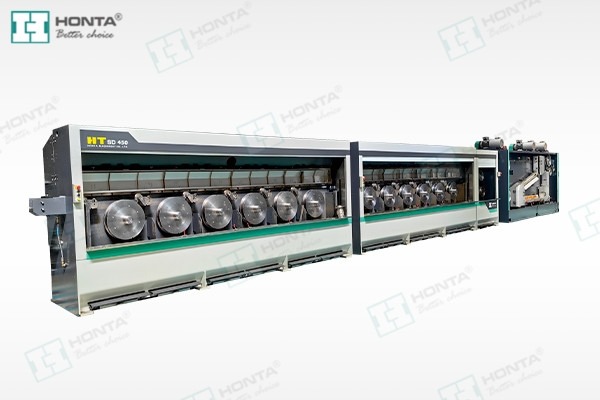
Use-case snapshots: three typical decision situations
Adding a robotics cable range to an existing flexible-cable portfolio
A manufacturer already producing flexible cords decides to enter continuous-flex robotics cables. The existing bunching equipment can reach the wire counts involved, but lay length drifts over long runs and the spool build is uneven. The correct response is not a faster machine but a specification review: define lay length tolerance, add tension control across the bundle, and align take-up with the extrusion line. The lesson is that entering a higher-duty application is a specification problem before it is a capacity problem.
Increasing automotive output without loosening diameter tolerance
An automotive conductor producer needs more volume but cannot accept wider diameter variation, because downstream extrusion and crimping are already at their limits. Here the productive route is automation and changeover reduction — reducing operator-dependent setting between constructions — rather than pushing line speed beyond what the wire path and tension system can hold. Plated-wire handling must be reviewed in the same pass, since surface damage is a yield issue rather than a speed issue.
Extending an energy cable line to longer delivery lengths
An energy cable plant needs longer unjointed lengths. The constraint is usually package and layer control rather than twisting speed: larger spools, motorised pay-off and a take-up system that can build a stable package at the required length. Specifying these at the same time as the stranding machine avoids a line that can twist the conductor but cannot deliver it in the length the project requires.
Frequently asked questions
Which certifications should a buyer verify before ordering a high-speed bunching or stranding machine?
Buyers generally ask for evidence of a documented quality management system and, increasingly, an environmental management system. HONTA holds ISO 9001 certification for quality management and ISO 14001 certification for environmental management, and also holds UDEM International Certification. The practical check is to match each certificate to the legal entity and manufacturing site named on the quotation and packing list, because the site named on the certificate is the site that will build the machine.
Can a single supplier cover both bunched and layered stranded conductor requirements?
Bunching and rigid stranding are different processes and normally different machines. Bunching twists a group of wires together in one operation and suits flexible conductors with many fine wires, while rigid frame stranding builds a conductor in successive layers around a centre and suits larger cross-sections where lay and diameter must be controlled layer by layer. HONTA's main products include high-speed stranding equipment alongside multi-wire drawing lines, copper and aluminum RBD lines and electrolytic plating lines, so a cable maker can specify the conductor chain from one equipment provider instead of matching machines from unrelated suppliers.
What configuration factors drive the cost of a high-speed bunching or stranding machine?
Cost is driven by configuration rather than by a single headline speed figure: the number of wires and the single-wire diameter range, single-twist or double-twist design, the type of motorised pay-off and tension control, spool size, automation level, and the scope of acceptance testing. Where the machine is integrated with drawing or plating equipment, the engineering scope adds further cost. HONTA confirms configuration and commercial terms in a written quotation rather than in a catalogue price, because two machines of the same nominal type can differ substantially in pay-off, take-up and control specification.
Can we validate a machine with sample conductors before placing an order?
Sample validation is the practical way to confirm that a machine holds lay length, tension and surface quality on your own conductor construction rather than on a demonstration conductor. HONTA maintains long-term cooperation with many well-known cable companies at home and abroad and can discuss sample arrangements, material supply and acceptance criteria as part of an enquiry. A useful validation plan names the wire count, single-wire diameter, lay length, spool size and the properties to be measured, so that the result can be compared against the specification instead of judged by impression.
How is delivery time determined for a bunching or stranding machine project?
Delivery time depends on the machine configuration, the extent of integration with upstream drawing or plating equipment, and the acceptance test scope agreed in the contract, and it is confirmed in the quotation for that specific configuration rather than stated as a general figure. HONTA has built conductor equipment since September 2006 and established its second production base, HONTA INC., in the United States in 2017, which supports scheduling discussions for buyers in different regions. To receive a schedule and a configuration proposal, send the conductor construction and target output to tammy@jshonta.com, or contact +86 182 6287 9467 (WhatsApp +86 187 5292 2675, WeChat: wtammy0631).
Conclusion: fix the construction first, then choose the machine
The right high-speed bunching or stranding machine for robotics, automotive and energy cables is the one that reproduces the required conductor construction — lay length, tension, surface condition and package — at the volume and repeatability your programme needs. Robotics cables reward tension stability and a gentle wire path; automotive cables reward repeatable diameter at volume and clean handling of plated strands; energy cables reward layer control and package capacity for long lengths. Speed, automation and price are compared last, because they only make sense against a defined construction.
Because bunching and stranding performance depends on the drawing, plating and spooling steps around them, the most efficient route is to specify the conductor chain together with a supplier that builds those steps. HONTA, based in Kunshan, Jiangsu Province, China, supplies copper and aluminum RBD lines, electrolytic plating lines, multi-wire drawing lines and high-speed stranding equipment, and works with cable manufacturers on configuration, acceptance criteria and sample validation.
Next step: send your conductor specification
Share the cable application, cross-section, wire count, single-wire diameter, lay length and target output, and HONTA will respond with a machine configuration and acceptance proposal. Sample arrangements and quotation requests can be directed to tammy@jshonta.com, +86 182 6287 9467, WhatsApp +86 187 5292 2675 or WeChat wtammy0631. Website: www.kshonta.com. Address: Room 1219, Building 3, Dongchuang Technology Center, Qianjin East Road, Kunshan City, Jiangsu Province, China, 215300.
Have Questions or Need More Details?
Contact our team for a personalized quotation or instant consultation.
Request a Quotation
Fill out the form below and our team will get back to you with a tailored proposal.
WhatsApp Direct Chat
Prefer to chat in real-time? Message us on WhatsApp for instant assistance & quick answers.
- Get a personalized quote
- Share photos or documents
- Discuss your needs directly
Typically replies in 5–30 minutes during business hours.