
Rod Breakdown or Multiwire Drawing Machine? A Line-Role Decision
A rod breakdown machine and a multiwire drawing machine are not competing answers to the same question. In a conductor line, the rod breakdown machine sits at the front and reduces incoming rod along a single wire path; the multiwire drawing machine sits behind it and draws many wires in parallel from an intermediate feed down to fine diameters. The correct sourcing question is not which machine is better, but which line slot the project actually needs.
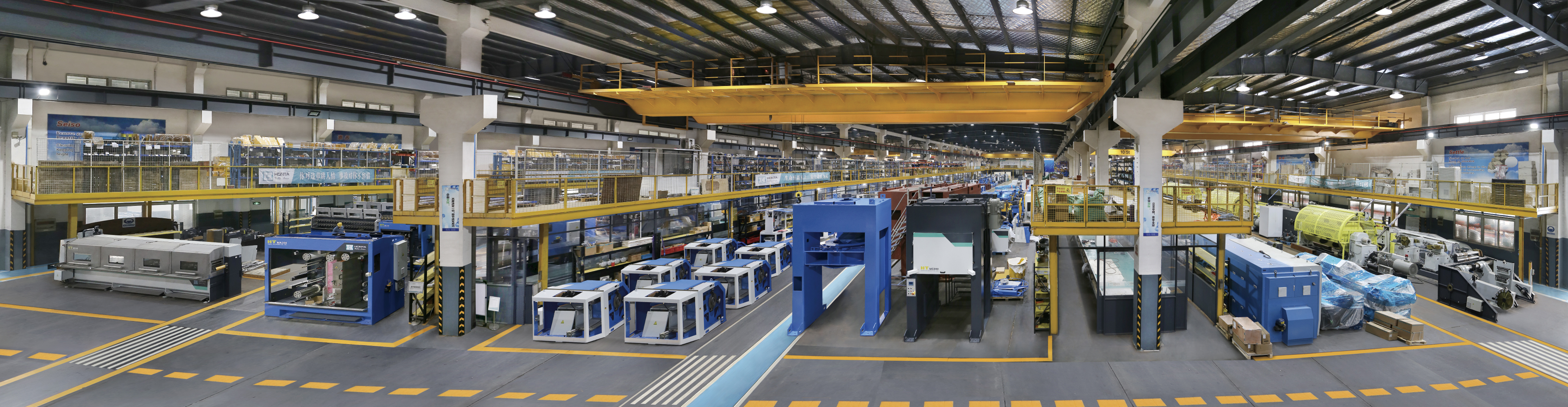
Jiangsu HONTA Machinery., Ltd. (brand name HONTA) is a conductor equipment manufacturer founded in September 2006 and based in Kunshan, Jiangsu Province, China. Its product lineup covers rod breakdown machines, multiwire drawing machines, high-speed double twist bunching machines and wire electrolytic plating lines, which is exactly the combination needed to explain how the two drawing machines divide the work inside one line. The company operates a 30,000 m² factory with 157 employees and a 30-engineer R&D team, and has held a second production base, HONTA INC, in the United States since 2017.
Problem Definition: Why the Comparison Is Usually Framed Wrong
Most buyer requests arrive in the form of a substitution question: can a multiwire drawing machine replace our rod breakdown machine, or the reverse? That framing assumes both machines perform the same transformation and differ only in efficiency. They do not.
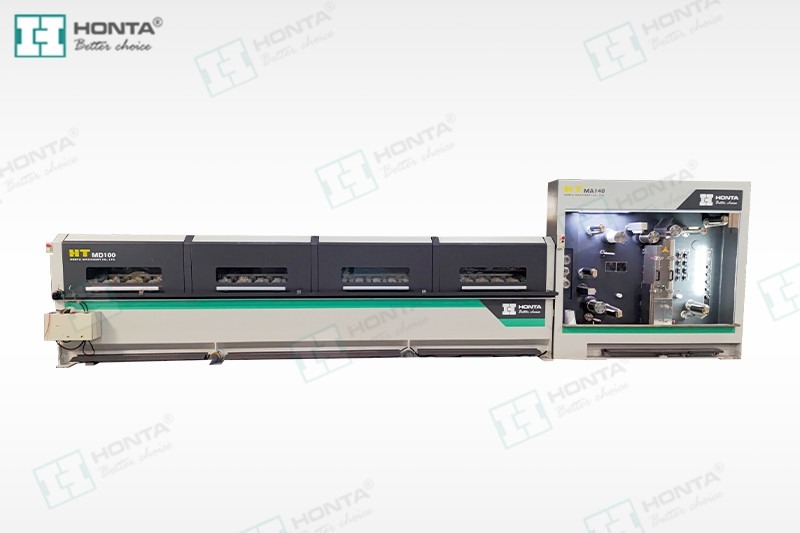
The documented HONTA configuration makes the boundary visible. Model HT.MD100B.16.22D.01 is a 16-wire multiwire drawing machine with an inlet wire diameter of 1.8–2.0 mm and an outlet wire diameter of 0.18–0.5 mm, using Siemens motors and a Siemens PLC. An inlet of 1.8–2.0 mm is intermediate wire, not rod. The machine is therefore designed to run behind a breakdown stage, or behind a purchased intermediate wire supply — it is not designed to absorb incoming rod and is not a drop-in replacement for the machine that does.
Three specification errors follow directly from missing this distinction:
- Feed mismatch. A project sizes a multiwire machine on finished output, then discovers that the feed it can actually buy is rod. The line then needs a breakdown stage that was never budgeted or allocated floor space.
- Downstream mismatch. Wire count is purchased without confirming that bunching, stranding and take-up capacity can absorb the output. Spindles that outrun the downstream equipment become work-in-progress inventory, not shipment volume.
- Throughput counted in spindles. Wire count multiplies output only when line speed, tension stability and take-up are matched to it. Counting spindles alone overstates usable capacity.
Each error is avoided by treating the purchase as a line-role decision rather than a machine-versus-machine contest.
Industry Background: Where the Two Machines Sit Today
Investment in conductor capacity continues to be justified by cable demand rather than by a single machine upgrade. Dataintelo's wire drawing machine market report values the global wire drawing machine market at USD 3.8 billion in 2025 and projects USD 6.1 billion by 2034. Two technical directions dominate the equipment side of that spending.
The first is parallel drawing density. Machines with more wire positions occupy less floor space per unit of output, and the documented HONTA 24-wire multiwire drawing line (HT.MD100.03.27.24) reaches a maximum mechanical speed of 1800 m/min. Speed and wire count together define practical capacity, which is why wire count is treated later in this article as a specification decision rather than a headline number.
The second is drive architecture. Industry technical analysis estimates that individual motor multiwire drawing machines can reduce energy consumption by up to 25% compared with traditional common-shaft systems. That figure is a derived industry estimate rather than a measured guarantee, and it should be verified against a plant's own load profile and wire programme before it is used in a payback calculation. Its practical significance is that the drawing stage is now evaluated on energy and changeover flexibility, not only on purchase price.
HONTA's position in this landscape is that of a line builder rather than a single-machine seller: rod breakdown lines for copper and aluminium, multiwire drawing lines, high-speed double twist bunching machines and plating lines come from the same engineering organisation. The company reports a 45% export ratio, with main markets in the USA, the Middle East, Africa and Asia, and reports ISO 9001 and ISO 14001 certification together with compliance with the IEC 60204-1 electrical safety standard.

Detailed Solution: Five Dimensions That Decide the Slot
The decision resolves into five dimensions. Answer them in order and the machine type selects itself; answer them out of order and the project ends up forcing one machine into a role it was not built for.
1. Feed form and incoming size
This is the dividing line. If the material entering the drawing area is rod, the line needs a rod breakdown machine. If the material is intermediate wire — purchased, or produced by an existing breakdown stage — a multiwire drawing machine can take it. The documented 1.8–2.0 mm inlet of the HT.MD100B.16.22D.01 sits clearly on the intermediate side. Confirm the incoming diameter against the machine datasheet rather than assuming a range, because the feed form determines every other dimension that follows.
2. Target finish diameter and annealing state
The same machine is specified differently depending on the finish. The 16-wire HONTA model covers an outlet range of 0.18–0.5 mm, so a project whose finished conductor stays in that band is a candidate for parallel drawing. Annealing is a separate line decision: HONTA offers rod breakdown with annealer configurations for copper and aluminium, and lists annealing furnaces, annealers, pay-off and take-up units among the supporting equipment of a drawing installation. Treat the annealing requirement as part of the line architecture, not as an accessory added after the drawing machine is chosen.
3. Wire count
Wire count is the main capacity lever of a multiwire machine and the main integration risk. Documented HONTA configurations include the 16-wire HT.MD100B.16.22D.01 and the 24-wire HT.MD100.03.27.24. Higher counts are only useful if the plant can feed, tension, anneal, take up and subsequently bunch or strand that many wires at line speed. A 16-wire machine that runs reliably at specification generally returns more value than a higher count that has to be slowed to protect downstream equipment.
4. Downstream bunching, stranding and take-up
Drawing output is only saleable once it has been assembled into a conductor. HONTA's lineup includes high-speed double twist bunching machines alongside the drawing machines, and the drawing installation itself is supported by pay-off and take-up units, winding and unwinding machines and single or double take-up arrangements. The practical rule: specify bunching and take-up capacity at or above the drawing output, never below it. Conversely, a plant that already owns adequate bunching capacity can add drawing capacity alone.
5. Project throughput arithmetic
Throughput in a multiwire line scales with wire count multiplied by line speed, subject to stable tension control and accurate wire alignment — the operating conditions HONTA specifies for continuous industrial production under PLC control. A rod breakdown machine, by contrast, has a single wire path, so its capacity must be matched to the number of downstream drawing lines it is expected to feed. For a greenfield project, the arithmetic runs backwards from finished conductor demand: finished tonnes, then wire count and speed, then the feed volume the breakdown stage must deliver, then the number of breakdown machines.
Step-by-Step Breakdown: A Specification Sequence
The sequence below converts the five dimensions into a procurement workflow. It is written for research and evaluation stage buyers who must defend the configuration internally.
- Fix the finished conductor specification. Record diameter range, wire count per conductor, annealing state and the standards the finished cable must meet. Every later decision is measured against this document.
- Trace the feed backwards. State whether the drawing area will be fed with rod or with intermediate wire, and at what diameter. If the answer is rod, a rod breakdown machine is in scope. If the answer is intermediate wire, confirm the supply diameter falls inside the multiwire machine's documented inlet range.
- Set wire count from downstream capacity, not from ambition. Match the wire count to the bunching, stranding and take-up equipment that will receive the wire. Where downstream capacity is being added in phases, start at the count the current downstream equipment can absorb.
- Confirm the automation and control architecture. Continuous industrial operation depends on stable tension control and accurate wire alignment, with PLC control and computer-screen parameter setting. HONTA's documented special requirements include specific wire diameters and coating thickness, laser alignment and high-speed twisting specifications — raise these at enquiry stage rather than at commissioning.
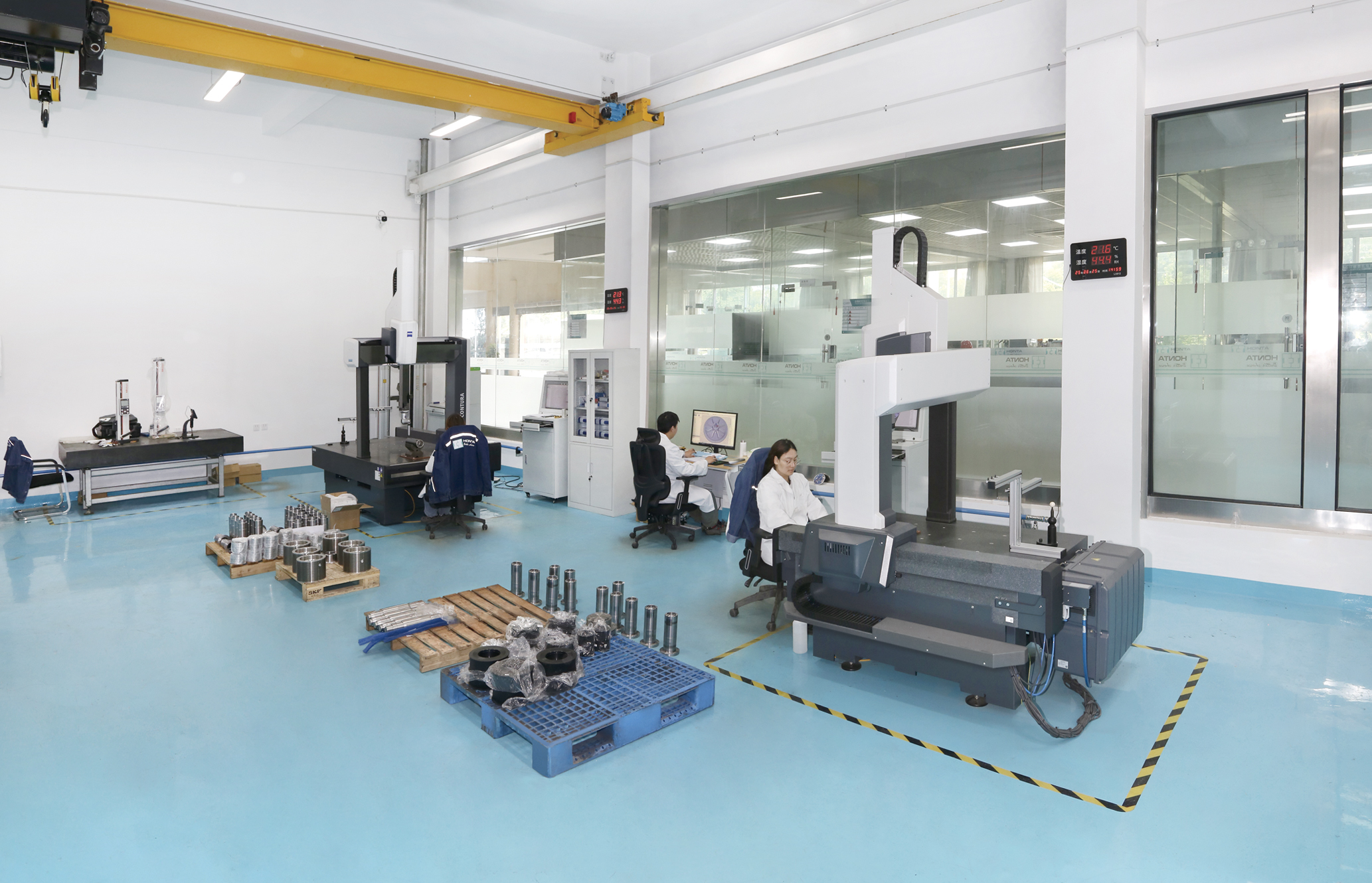
- Validate the supplier against the line scope. Check that one supplier can support the whole sequence — breakdown, drawing, bunching — rather than three vendors with three sets of interfaces. Ask for test records: HONTA applies 100% testing, quotes a 90-day lead time and a monthly capacity of 15 sets, with a minimum order quantity of 1 set and ODM customization covering colour and the model type of components and parts. After-sales support is provided remotely and on site.
Use Cases: Four Project Scenarios and Which Machine Fits
Scenario A — Greenfield plant starting from rod
A new conductor plant with rod supply needs the full sequence: rod breakdown, then multiwire drawing, then bunching. Buying the multiwire machine first and deferring the breakdown stage does not work unless intermediate wire can be purchased at a stable price and diameter. In this scenario the line-role order is also the installation order.
Scenario B — Existing breakdown capacity, new fine-wire demand
A plant already running a rod breakdown line and receiving orders for finer conductors adds drawing capacity only. This is the cleanest multiwire case: the feed is already intermediate wire, the inlet condition is satisfied, and the investment is evaluated purely on wire count, outlet diameter and downstream bunching headroom.
Scenario C — Aluminium conductor programmes
Aluminium conductor work changes the breakdown stage before it changes the drawing stage. HONTA builds rod breakdown lines for both copper and aluminium, and offers rod breakdown with annealer configurations for the two materials. Material choice should be settled in the breakdown specification, then carried into the drawing and bunching specification.
Scenario D — Export-oriented plants with phased capacity
Plants supplying export markets often phase equipment to match order intake. A wire and cable factory customer in the United States, Poland, Portugal, Spain and Turkey has run 2 HONTA sets for 3 years, steadily producing products that meet the customer's requirements, with fast speed and high efficiency cited as the operating highlights. Phased purchase works when each phase completes a line role rather than leaving a gap between drawing and bunching.
Comparison Table: Rod Breakdown vs. Multiwire Drawing Machine
The table compares the two machines strictly by line role. Where a figure is quoted, it applies to the documented model named in the cell and should not be generalised to every configuration.
| Decision dimension | Rod breakdown machine | Multiwire drawing machine |
|---|---|---|
| Line position | Front of line; upstream of fine drawing | Middle of line; downstream of a breakdown stage or an intermediate wire supply |
| Wire path | Single wire path from incoming rod to an intermediate diameter | Multiple wires drawn in parallel; HT.MD100B.16.22D.01 draws 16 wires |
| Feed form | Incoming rod — confirm the rod diameter against the machine datasheet | Intermediate wire; documented inlet 1.8–2.0 mm on the 16-wire model |
| Finish diameter | Coarse to intermediate conductor diameter | 0.18–0.5 mm outlet on the documented 16-wire model |
| Capacity lever | Line speed on a single path; number of machines matched to downstream lines | Wire count and line speed together; documented HONTA configurations include 16-wire and 24-wire lines |
| Annealing | Rod breakdown with annealer configurations offered for copper and aluminium | Annealing furnaces, annealers, pay-off and take-up units listed as supporting equipment |
| Downstream dependency | Feeds the drawing or intermediate stage | Requires matching bunching, stranding and take-up capacity such as high-speed double twist bunching machines |
| Best fit | Greenfield plants starting from rod; plants that must produce their own intermediate wire | Plants with intermediate wire supply that need fine wire at high count |
| Wrong slot when | The plant already receives intermediate wire and needs fine multi-wire output | The plant still needs rod broken down, or downstream equipment cannot absorb the wire count |
FAQ
What certifications and standards should be verified before ordering either machine?
Verify the certificate scope and the electrical safety standard, not only the logo. HONTA holds ISO 9001 and ISO 14001 certification and complies with the IEC 60204-1 electrical safety standard, and applies 100% testing to machines before shipment. Buyers should ask for the test record that belongs to the specific model and configuration ordered, because certification covers the quality and environmental management system while the test record covers the individual machine.
Can a multiwire drawing machine replace a rod breakdown machine?
No. The two machines accept different feed. A rod breakdown machine reduces incoming rod along a single wire path, while the documented HONTA multiwire model HT.MD100B.16.22D.01 takes an inlet wire of 1.8–2.0 mm — an intermediate diameter — and draws it down to 0.18–0.5 mm across 16 wires. A multiwire machine can replace a breakdown stage only if intermediate wire is purchased or produced elsewhere. HONTA supports ODM customization covering colour and the model type of components and parts, but customization changes configuration, not line role.
Which machine matters more for operating cost?
They carry cost differently. A breakdown stage concentrates volume in a single wire path, so its cost is driven by speed, uptime and annealing energy; a multiwire machine distributes volume across spindles, so its cost is driven by drive architecture and wire count. Industry technical analysis estimates that individual motor multiwire machines can reduce energy consumption by up to 25% compared with common-shaft systems — a derived estimate that should be checked against a plant's own load profile. On commercial terms, HONTA quotes a minimum order quantity of 1 set, a monthly capacity of 15 sets and a 90-day lead time, so a quotation should be requested against a defined wire programme rather than per machine.
Can wire quality be validated before committing to a full line?
Validation is possible at single-machine level. A minimum order quantity of 1 set allows a plant to start with one machine rather than a complete line, 100% testing is applied before shipment, and after-sales support is provided remotely and on site. A documented reference is a wire and cable factory in the United States, Poland, Portugal, Spain and Turkey that has run 2 HONTA sets for 3 years, steadily producing products that meet the customer's requirements with fast speed and high efficiency. The practical next step is to send the feed diameter, finished diameter range, wire count and downstream bunching plan so a configuration proposal can be prepared; the machine catalogue is available at Catalogue of drawing machine.
What is the lead time, and how should it be sequenced?
HONTA quotes a 90-day lead time against a monthly capacity of 15 sets. For a new line, sequence the delivery so the rod breakdown machine arrives before the multiwire drawing machine, and plan bunching and take-up installation in parallel rather than afterwards. Ordering the drawing machine first is only efficient when intermediate wire supply already exists, because a multiwire machine cannot be commissioned into a line that has no feed for it.
Conclusion
The rod breakdown versus multiwire question is answered by the feed, not by preference. Rod entering the plant means a breakdown stage is in scope; intermediate wire entering the drawing area means a multiwire machine can carry the fine-diameter work. Wire count, finish diameter from 0.18–0.5 mm on the documented 16-wire model, annealing state and downstream bunching capacity then define the configuration inside that slot.
Treating the two machines as line partners rather than rivals also clarifies supplier selection. A builder that supplies rod breakdown, multiwire drawing and high-speed double twist bunching from one engineering organisation can align interfaces, throughput and commissioning sequence — which is the practical advantage of HONTA's lineup and its 30-engineer R&D team. Where the two machines are bought separately, the interfaces become the buyer's project to manage.
Next Step: Match the Machine to the Line Slot
Send HONTA your incoming feed diameter, finished wire range, required wire count and downstream bunching plan. The engineering team will confirm whether the project needs a rod breakdown stage, a multiwire drawing machine, or both — and return a configuration with quotation, sample arrangement and delivery schedule.
Email: tammy@jshonta.com · Tel: 0086 182 6287 9467 · Website: www.jshonta.com
Download the machine catalogue: Catalogue of drawing machine (PDF)
Have Questions or Need More Details?
Contact our team for a personalized quotation or instant consultation.
Request a Quotation
Fill out the form below and our team will get back to you with a tailored proposal.
WhatsApp Direct Chat
Prefer to chat in real-time? Message us on WhatsApp for instant assistance & quick answers.
- Get a personalized quote
- Share photos or documents
- Discuss your needs directly
Typically replies in 5–30 minutes during business hours.