
Selecting a Multiwire Drawing Machine for Export-Focused Cable Plants: A Guide for USA, Middle East, and African Markets
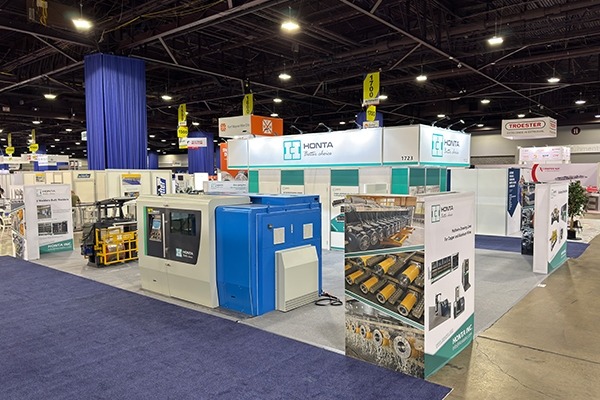
Answer first: for an export-focused cable plant, the machine is defined by four constraint layers in a fixed order — destination-market documentation, conductor and product range, site electrical and environmental conditions, and the service distance between the plant and the supplier. Wire count and drawing speed sit inside that sequence, not at the top of it. Buyers who start with the head count and finish with the documentation usually re-open the specification late, when changes are expensive.
Jiangsu HONTA Machinery., Ltd. is a cable-conductor equipment manufacturer founded in September 2006, based in Kunshan City, Jiangsu Province, China, producing rod breakdown machines, multiwire drawing machines, high-speed double twist bunching machines and wire electrolytic plating lines. A 45% export ratio and a second production base in the United States make it a useful reference case for how regional requirements change a multiwire drawing machine specification — not because the machine changes category, but because the constraints around it do.
Problem Definition: Why an Export Order Is Not a Domestic Order With Added Freight
The most common specification error in export projects is treating the machine as the fixed element and the market as a variable. In practice it is the reverse. The drawing process — pay-off, drawing, annealing, take-up — is broadly stable across regions. What changes is what the plant must prove, what the plant must plug into, and how quickly the plant can recover from a stoppage.
Three failure points repeat across export projects:
- Documentation lag. The machine is built, then the buyer discovers the destination market requires documentation the supplier did not include in the original scope.
- Electrical mismatch. The plant's supply characteristics are confirmed after the electrical cabinet is designed, forcing a late rework of drives, control wiring or protection.
- Service distance. Commissioning support and spare-part response are assumed rather than written into the purchase agreement, and the gap only becomes visible during the first unplanned stop.
Each of these is cheaper to resolve in the specification than in the factory. The practical rule is: define the region, then the conductor, then the machine configuration, then the commercial terms.
Industry Background: Why Conductor Capacity Is Being Re-Specified Now
Demand for drawn copper and aluminium conductor is expanding alongside the broader cable market. Grand View Research valued the global wire and cable market at USD 230.9 billion in 2025, with a projected value of USD 313.1 billion by 2033. Equipment demand tracks that growth with a lag: The Insight Partners projects the global wire drawing machines market to grow from USD 1.37 billion in 2025 to USD 2.13 billion by 2034, a CAGR of 4.98%.
Supply is increasingly concentrated. Silverado Policy Accelerator reported that China's machine-tool exports accounted for 19% of global exports in the first half of 2025, surpassing Germany. For a cable plant in the USA, the Gulf or Africa, this has two consequences. First, more of the shortlisted suppliers will be Asian, which raises the importance of documentation and service-distance questions. Second, price competition at the low end increases, which makes verifiable specification and certification the main differentiator between apparently similar offers.
Multiwire drawing is the segment where this matters most, because a multiwire line is bought for throughput. A 16-wire line multiplies output per operating hour, but it also multiplies the cost of an unplanned stop. That asymmetry is what turns regional service capability from a soft criterion into a hard one.
The Four-Layer Specification Framework
The framework below is the sequence Jiangsu HONTA Machinery., Ltd. applies when a plant in an export market defines a multiwire drawing machine. Each layer narrows the next.
Layer 1 — Conductor Range and Wire Count
The conductor definition comes first because it removes most of the configuration space immediately. Two figures decide it: inlet rod diameter and finished wire diameter. Everything between them — number of dies, wire count, annealing, spooling — follows.
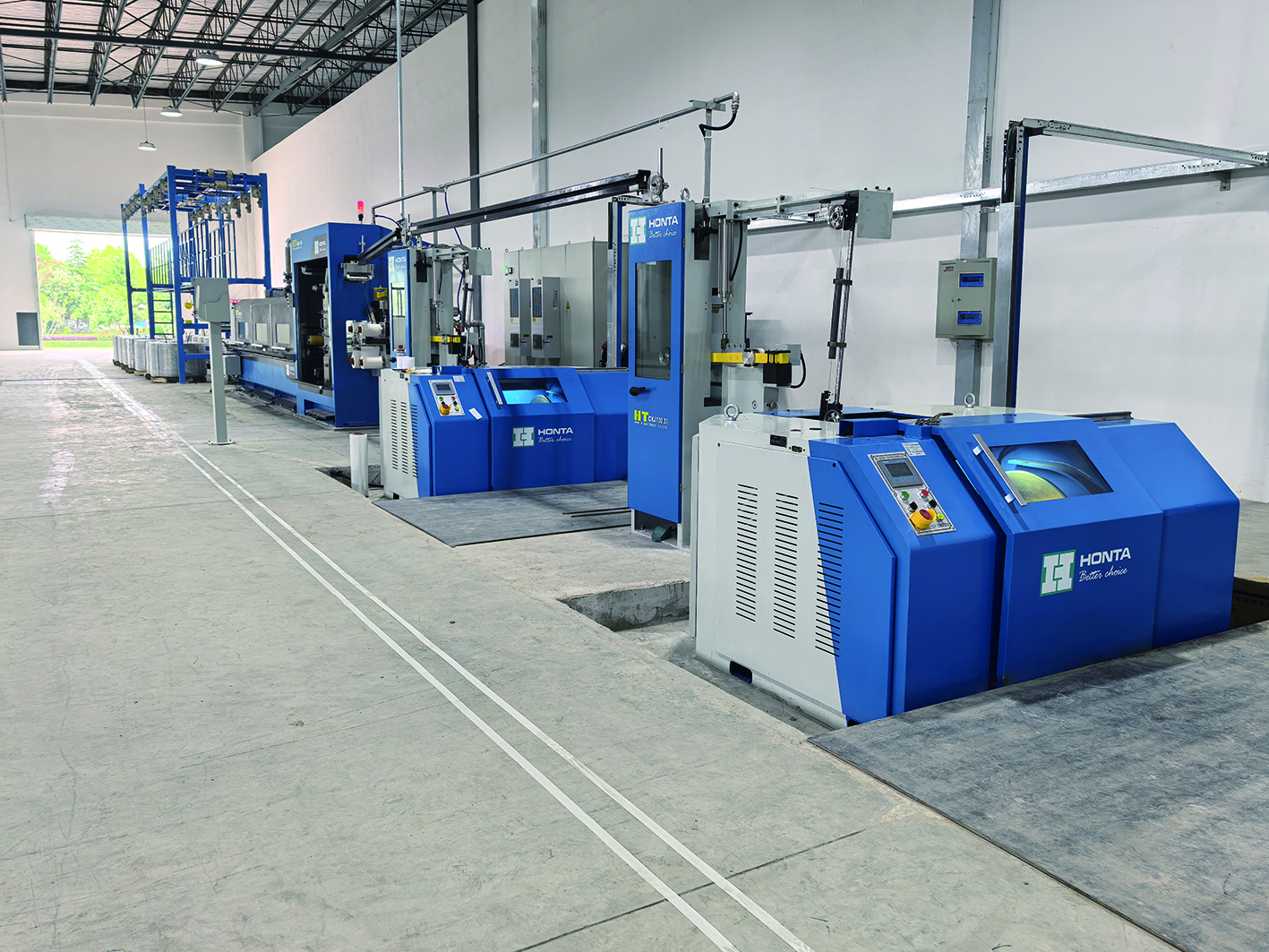
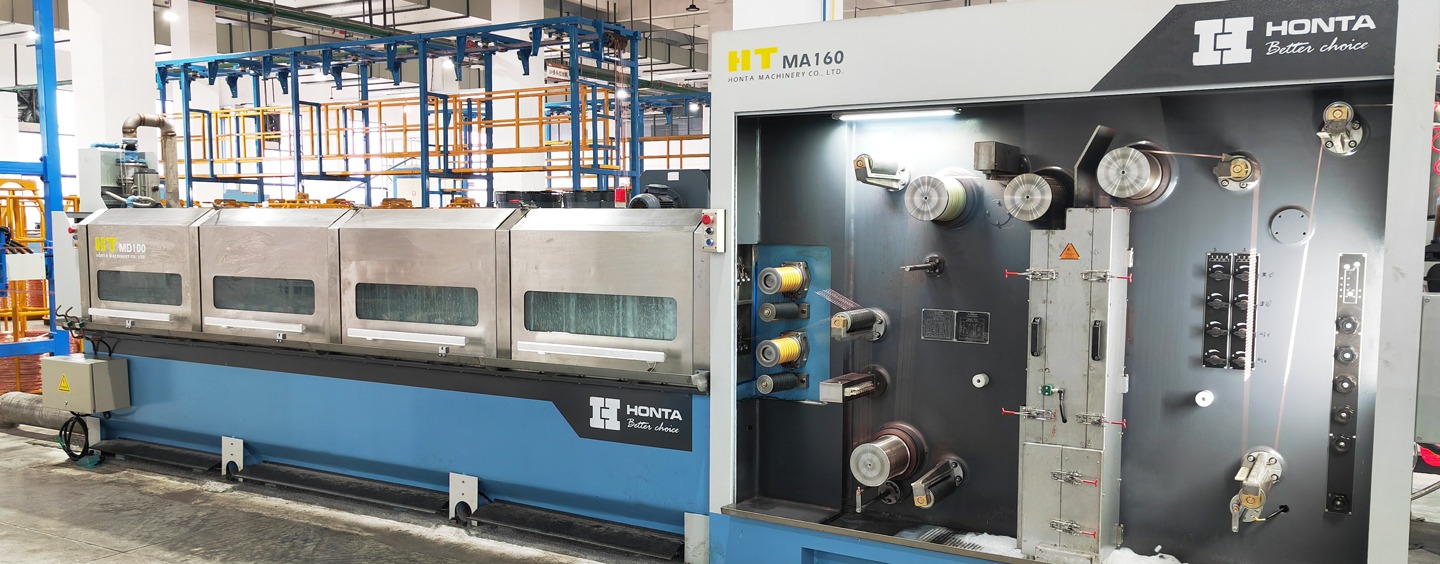
HONTA's 16-wire multiwire drawing machine, model HT.MD100B.16.22D.01, is specified for an inlet wire diameter of 1.8–2.0 mm and an outlet wire diameter of 0.18–0.5 mm, using Siemens motors and Siemens PLC control. That range targets fine and medium conductor production, where multiwire operation gives the highest throughput advantage.
Where the finished range is coarser, a lower wire count is usually the better economic fit. HONTA's 14-wire multiwire drawing line HT.MD120.03.19.14 is referenced with an outlet wire range of 0.20–1.05 mm and maximum speeds of 1,800 m/min. The same supplier, two different answers — because the conductor asked for two different things.
Layer 2 — Electrical Build and Site Conditions
Site conditions are the layer most often left to the end, and the most expensive to correct afterwards. Two categories need to be settled before the electrical design is frozen.
- Supply characteristics. The plant's available voltage and frequency must be confirmed in writing and matched to the drive and control design. This is a plant-side input, not a supplier assumption — and it must be confirmed before the cabinet layout is approved.
- Ambient environment. Ambient humidity, airborne dust, and temperature swing affect cabinet protection, filtration and cooling strategy. A machine destined for a coastal or dusty inland site should not inherit a specification written for a climate-controlled hall.
On the control side, the operating model is also part of the specification. HONTA's wire drawing application data describes automated or semi-automated operation under PLC control, with computer-screen parameter setting and automatic tension modes, on industrial continuous production lines requiring stable tension control and accurate wire alignment. Where a plant intends to run multi-product schedules, the parameter-setting workflow deserves as much attention in the evaluation as the drawing speed.
Layer 3 — Certification and Documentation
Certification is the layer that most clearly separates a domestic order from an export order. It is also the layer where a supplier's claim should be checked against a document rather than accepted as a statement.
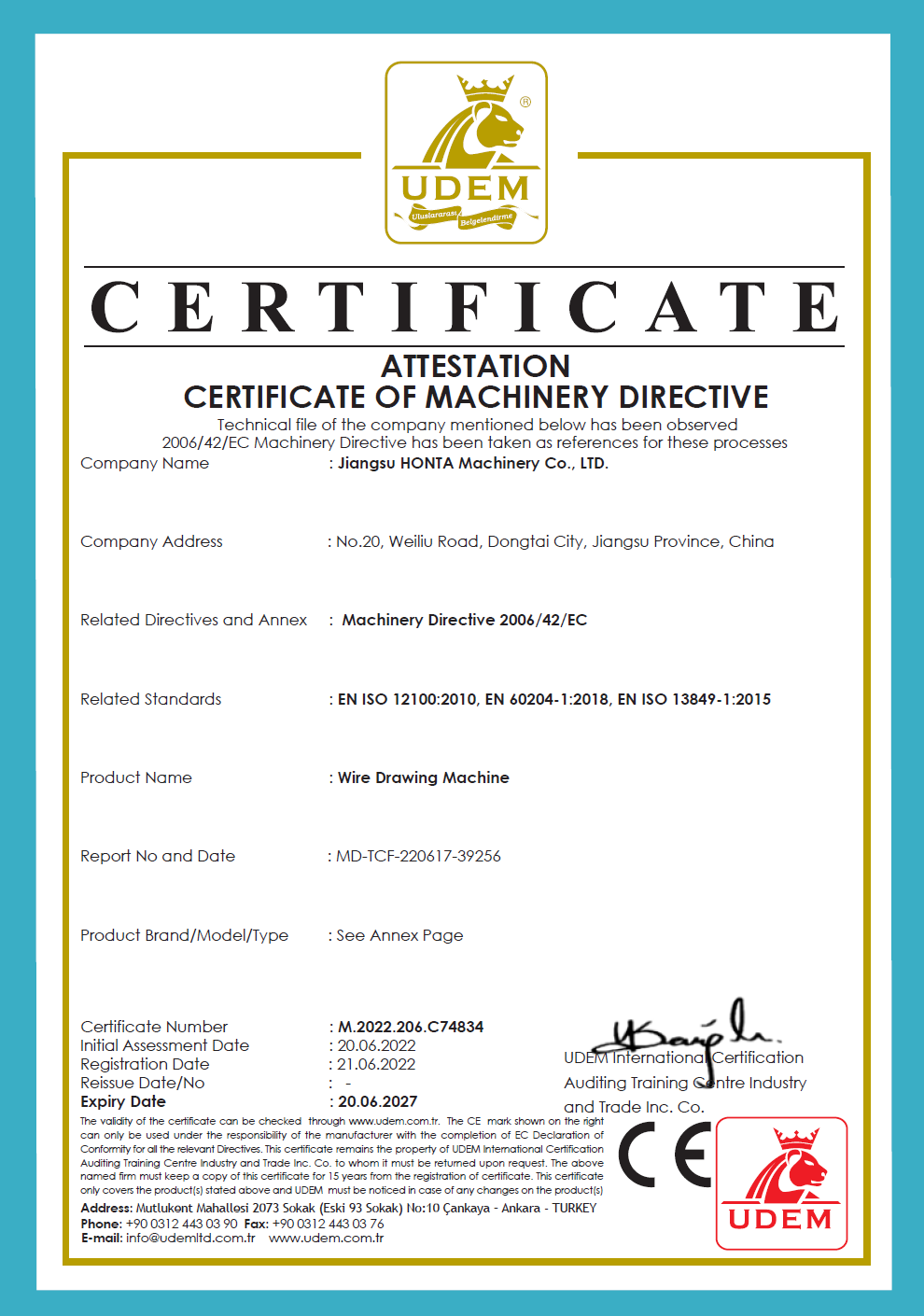
For the EU market, HONTA holds CE-MD certification under certificate number M.2022.206.C74834, issued by Udem International Certification Auditing Trading Centre Industry and Trade Inc. Co. on 2020-06-20 and valid until 2027-06-20, with the certification scope recorded as wire drawing machine. The listed standards are Machinery Directive 2006/42/EC, EN ISO 12100:2010, EN 60204-1:2018 and EN ISO 13849-1:2015.
EN 60204-1 is not an EU-only concern. IEC 60204-1, the international counterpart covering electrical equipment of machines, defines wiring practice and safety requirements that apply to wire drawing systems generally. A buyer evaluating any supplier should ask which electrical standard the cabinet is built to, and expect a specific answer.
Supplier quality management systems are a separate check from machine certification. Publicly referenced supplier profiles note that multiwire drawing machine manufacturers such as HONTA maintain ISO 9001 and ISO 14001 certification for global project compliance. Buyers should request the certificates directly rather than relying on the profile.
Layer 4 — Service Model, Spares and Distance
The final layer is the one that determines the real cost of ownership over a multi-year horizon, and it is the layer buyers most often reduce to a single question about warranty length.
HONTA states after-sales support delivered both remotely and on site. The company operates a 30,000 m² production facility with 157 employees, an annual output of 200 sets, and an R&D team of 30 engineers, and it established HONTA INC as its second production base in the United States in 2017. For a US or Canadian plant, a domestic production base changes the practical service question from "how far away is the supplier" to "what response commitment is written into the agreement".
For the Middle East and Africa, the same question has a different answer, because distance cannot be removed — only planned for. That makes the spare-parts list, the remote diagnostic capability and the commissioning plan more important than the proximity of a factory.
Step-by-Step: Defining the Region-Specific Requirement Before Configuration
The sequence below is designed to be run before a technical quotation is requested. Each step produces one written input that the supplier needs in order to quote accurately.
- State the destination market for the finished cable, not just the machine. A machine installed in one country may produce conductor for a customer in another. The stricter documentation requirement governs.
- Confirm the plant's supply voltage and frequency in writing. Attach the plant electrical single-line diagram to the RFQ so the drive and cabinet design starts from real data.
- Document the ambient environment. Record humidity range, dust exposure and whether the hall is climate-controlled. This drives cabinet protection and cooling decisions.
- Define the conductor range precisely. Inlet rod diameter, finished wire diameter, and the tolerance band. For HONTA's 16-wire model this resolves to 1.8–2.0 mm inlet and 0.18–0.5 mm outlet; other ranges require a different model.
- Fix the wire count against the throughput target. Wire count multiplies output and multiplies stoppage exposure at the same time. Match it to the maintenance capability of the plant, not only to the sales forecast.
- Specify the upstream and downstream equipment as one system. Annealing furnaces, pay-off and take-up units, winding and unwinding machines, annealers and single or double-disc take-up machines must be matched to the drawing unit. A mismatched take-up limits the whole line.
- Agree the documentation and certification scope in the purchase agreement. Include certificate numbers, validity dates and manual language. CE-MD certificate M.2022.206.C74834 runs to 2027-06-20 and should be verified as current at the time of order.
- Define the service model and the spares package. Remote only, on site, or both; response expectations; commissioning scope; recommended first-year spare list. Then price the logistics separately so it can be compared across suppliers.
Use Cases: How the Same Machine Type Answers Different Regional Questions
United States and North America
A US plant is typically the least constrained on documentation distance and the most constrained on electrical confirmation and service expectation. With HONTA INC operating as a US production base since 2017, the practical evaluation shifts toward verifying what that base supports — assembly, spares, service response — and confirming that the electrical build matches the plant supply. The recorded application profile for the US market describes industrial continuous production lines running under PLC control with automatic tension modes, which is the operating model most US conductor plants specify.
Middle East
Gulf and wider Middle East projects usually combine high ambient temperature, dust exposure and a documentation regime that differs from the EU. Two specification items rise in priority: cabinet thermal management and filtration, and a clear statement of which certification the machine carries versus which certification the end customer requires. HONTA lists the Middle East among its export markets, and CE-MD is the certified machine-level scope held — buyers should confirm whether that satisfies the destination requirement or whether additional documentation is needed.
Africa
African cable plants frequently run multi-product schedules on a single line, which places weight on parameter changeover and on remote diagnostic capability. Power supply stability at site also makes the electrical protection strategy a first-order question rather than an afterthought. Remote support, which HONTA provides alongside on-site support, is the practical mechanism that compensates for service distance — provided the plant has the connectivity and the trained operator to use it.
Asia and Multi-Region Buyers
Buyers operating across several of these markets at once should standardise the platform and regionalise the documentation. HONTA's recorded customer base includes a wire and cable factory group recorded under country codes US, UM, PL, PT, ES and TR, running two sets for wire drawing over a three-year period, with reported results of steady production meeting customer requirements and reported strengths of fast speed and high efficiency. For a multi-region buyer, that pattern — one platform, several documentation packages — is generally easier to maintain than several unrelated machine types.
Comparison: Two HONTA Multiwire Configurations Side by Side
The table below compares the two configurations referenced in this guide. It is not a ranking — the correct choice depends on the conductor range, and the two models serve different ranges.
| Specification | HT.MD100B.16.22D.01 | HT.MD120.03.19.14 |
|---|---|---|
| Type | 16 wires multiwire drawing machine | 14 wires multiwire drawing line |
| Inlet wire diameter | 1.8–2.0 mm | Not stated in the supplied specification |
| Outlet wire diameter | 0.18–0.5 mm | 0.20–1.05 mm |
| Maximum speed | Not stated in the supplied specification | 1,800 m/min |
| Motor | Siemens | Not stated in the supplied specification |
| PLC | Siemens | Not stated in the supplied specification |
| Best fit | Fine and medium conductor, high wire count | Coarser finished range, lower wire count |
Frame and structural components across the range use structural steel and alloy; certain bunching machines use carbon-fibre material for bow components, and plating lines use corrosion-resistant materials and protective treatments. These material choices are worth confirming against the site environment during the technical review.
Regional Pre-Order Checklist
The checklist converts the four-layer framework into the questions a buyer should be able to answer before signing. It is deliberately written as questions, because the answers are site-specific.
| Market | Documentation question to close | Electrical and site question | Service and logistics question |
|---|---|---|---|
| USA | Does the end customer require documentation beyond the CE-MD scope held for wire drawing machines? | Has the plant supply voltage and frequency been confirmed in writing against the drive and control design? | What does the US production base support in practice — spares, service, or assembly? |
| Middle East | Which certificate does the destination authority or end customer require, and does the supplied document match? | What ambient temperature and dust exposure does the hall have, and what cabinet protection and cooling follows? | What commissioning scope and first-year spare package is included, and who pays freight? |
| Africa | Is the documentation package complete for import clearance and end-customer handover? | How stable is the site power supply, and what protection strategy does that imply? | Is remote diagnostics available, and does the plant have the connectivity and trained operator to use it? |
| Asia / multi-region | Can one platform carry several regional documentation packages? | Are site conditions consistent across the plants being standardised? | Can spares be pooled across sites, and what lead time applies? |
Frequently Asked Questions
What certification evidence should I request before a multiwire drawing machine ships to an export market?
Request the machine-level certificate itself, not a claim. For EU-bound equipment, HONTA holds CE-MD certification under certificate number M.2022.206.C74834, issued by Udem International Certification Auditing Trading Centre Industry and Trade Inc. Co. on 2020-06-20, valid until 2027-06-20, with the scope recorded as wire drawing machine and the standards listed as Machinery Directive 2006/42/EC, EN ISO 12100:2010, EN 60204-1:2018 and EN ISO 13849-1:2015. Separately, IEC 60204-1 governs electrical equipment of machines and covers wiring practice and safety. Ask also for quality management certificates: publicly referenced supplier profiles note ISO 9001 and ISO 14001 held by manufacturers such as HONTA. Verify validity dates at order time, because a certificate valid today may expire before delivery.
Can one supplier support a US plant and a Middle East or African project at the same time?
It depends on the supplier's export structure rather than on its product catalogue. Jiangsu HONTA Machinery., Ltd. reports a 45% export ratio with main markets in the USA, the Middle East, Africa and Asia, operates a 30,000 m² facility with 157 employees and an annual output of 200 sets, and maintains a 30-engineer R&D team. HONTA INC was established in 2017 as the company's second production base in the United States, and after-sales support is provided by remote and on-site channels. Those four data points together — export share, market mix, overseas base and service model — are the practical test of whether a single supplier can carry multiple regional projects.
What drives the price of a multiwire drawing machine, and how should quotes be compared?
Price is set by configuration, not by brand alone, and quotes are only comparable when they are normalised on the same line items. The main drivers are wire count and outlet diameter range, the motor and PLC package, whether an annealer and which take-up type is included, the spooler configuration, the certification and documentation scope, the spares package, and freight plus commissioning. A quote that omits certification documentation or commissioning is not cheaper — it is incomplete. Ask every supplier to price the same scope, with documentation and service listed as separate lines so the comparison is visible rather than assumed.
Can I validate wire quality before committing to a full order?
Validation should be built into the order rather than requested as a favour. HONTA operates a minimum order quantity of 1 set with a 90-day lead time and states 100% test as its quality control standard, which makes documented pre-shipment testing a reasonable contractual requirement. ODM production is offered with customisation of colour and of component and part model types. Practical validation steps are: agree the wire diameter range and tolerance in writing, require test records against that range, and confirm the acceptance criteria before the machine is packed. Buyers with an existing conductor line should also confirm take-up compatibility, since a mismatched spooler will distort any trial result.
What lead time should I plan for, and how does shipping affect it?
HONTA states a 90-day lead time with a monthly capacity of 15 sets and a minimum order quantity of 1 set. The planning error is usually not the production lead time but the sequence around it: certification verification, pre-shipment testing, freight booking and site preparation often run in parallel when they should run in order. For a US destination, the domestic production base reduces the logistics tail. For Middle East and African destinations, freight and clearance should be quoted separately and added to the timeline before the installation date is fixed. To start that process with a defined scope, you can send the conductor range and destination market to HONTA and request a configuration response against the checklist above.
Conclusion
A multiwire drawing machine is not difficult to specify once the order of decisions is correct. Region first, conductor second, machine third, commercial terms last. The USA, Middle East and African markets do not require three different machine categories — they require three different documentation, electrical and service packages around the same drawing platform, and the supplier's export structure determines how well those packages can be supported.
The verifiable signals to weigh are concrete: which certificate is held and until when, what the electrical standard is, what the export share and overseas footprint are, what the lead time and quality control standard are, and how service is delivered at distance. Those five answers separate an offer that will run from an offer that will run into problems.
Next Step: Match the Machine to Your Market
Send your inlet rod diameter, finished wire range, destination market and plant supply characteristics. Jiangsu HONTA Machinery., Ltd. will respond with a configuration matched to those inputs — including the certification scope and documentation package that apply.
Contact: Tammy, International Trade Department Manager — tammy@jshonta.com · Tel 0086 182 6287 9467 · WhatsApp +8618752922675
Website: www.jshonta.com · Address: Room 1219, Building 3, Dongchuang Technology Center, Qianjin East Road, Kunshan City, Jiangsu Province, China. Zip: 215300

Have Questions or Need More Details?
Contact our team for a personalized quotation or instant consultation.
Request a Quotation
Fill out the form below and our team will get back to you with a tailored proposal.
WhatsApp Direct Chat
Prefer to chat in real-time? Message us on WhatsApp for instant assistance & quick answers.
- Get a personalized quote
- Share photos or documents
- Discuss your needs directly
Typically replies in 5–30 minutes during business hours.