
Signing Off a High-Speed Bunching/Stranding Machine: Acceptance Criteria Guide
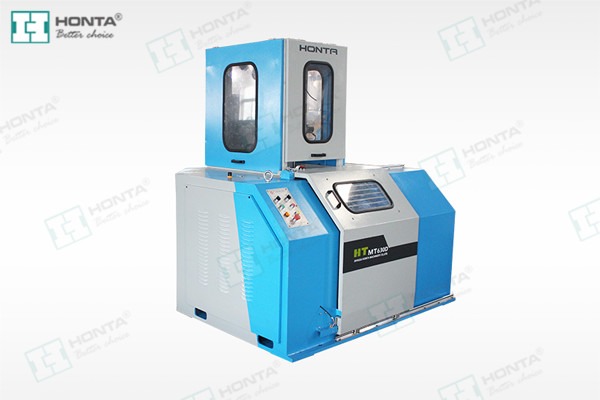
Acceptance criteria for a high-speed bunching/stranding machine are the pre-agreed, checkable conditions that decide when the equipment has met the order: which material is run, which parameters are held, which records are signed, and at which moment the machine is released for shipment. They are written before production begins and signed before the machine leaves the supplier's plant.
Most disputes about these machines do not start with a broken part. They start with a purchase order that describes the machine precisely and never describes how the machine will be approved. This guide sets out a practical way to close that gap before the order is placed.
The Problem: Purchasing Terms Describe the Machine, Not the Approval
A typical order for a high-speed bunching/stranding machine lists the machine name, the wire range, a speed figure, spool dimensions, voltage, delivery date and payment terms. Every one of those items is a description. None of them tells either side what happens on the day the buyer's engineer stands beside the machine and has to say 'approved' or 'not approved'.
The gap normally appears in four predictable places:
- Performance figures without run conditions. A speed or output figure is quoted, but the wire used, the strand construction, the run duration and the settings are not specified, so the number cannot be tested.
- The word 'acceptance' appears only in the payment clause. The contract says money is released on acceptance, but never defines what acceptance means, who performs it, or where it happens.
- Wire quality is described with adjectives. Terms such as 'smooth', 'uniform' or 'no defects' are used without a measurement method, an observation distance, or a pass/fail boundary.
- No owner for the measurement. Nobody has agreed whether the supplier's quality department, the buyer's engineer, or an independent inspector holds the instrument and signs the sheet.
When these points are left open, acceptance does not disappear. It simply relocates to the buyer's plant, after the machine has been shipped, installed and connected. At that stage the buyer has no baseline to compare against, the supplier has no agreed test to repeat, and the disagreement becomes commercial rather than technical. The cost of a missing criterion is therefore not paid at the factory gate; it is paid in installation delay, re-work negotiation and a strained relationship that has to survive the warranty period.
Industry Background: Why Stranding Equipment Is Harder to Sign Off Than It Looks
A high-speed bunching/stranding machine sits in the middle of the conductor process. Drawn or plated wire goes in; a stranded conductor comes out. What appears at the take-up is the combined result of pay-off tension, the bunching or stranding geometry, the wire path, the control response and the spooling action. Because those effects accumulate with speed, a machine that looks correct during a slow demonstration can still produce visible defects in a sustained run on the buyer's own wire.
That is the technical reason acceptance criteria carry more weight on stranding equipment than on a stand-alone machine: the deliverable is a product, not merely a motion. The machine can rotate correctly and still fail the buyer's requirement, which is why 'the machine runs' is not an acceptable substitute for a defined acceptance run.
There is also a vocabulary problem. Suppliers describe capability in machine terms — spindle configuration, drive arrangement, control platform, pay-off and take-up types. Buyers describe requirements in product terms — conductor construction, wire diameter, spool length, surface condition, handling during packing. Both descriptions can be accurate and still not intersect. Acceptance criteria are the translation layer between the two.
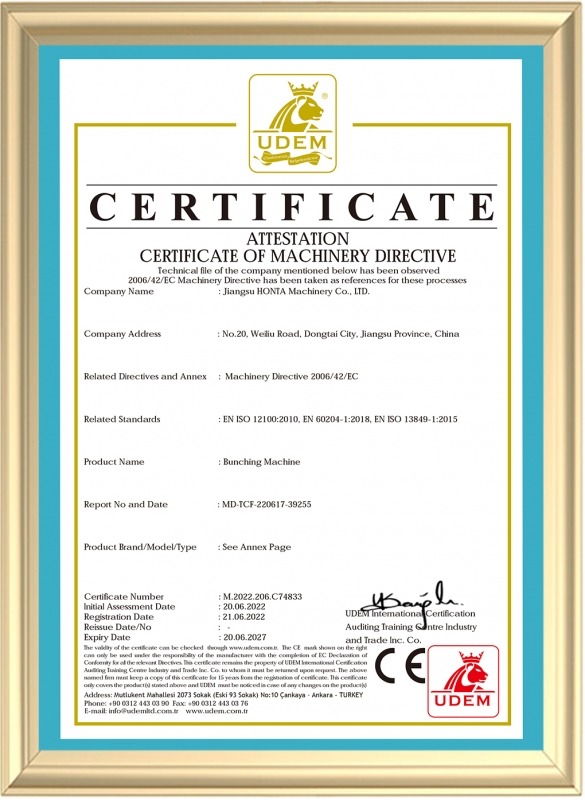
HONTA is a cable equipment system service provider established in September 2006 and focused on cable conductor drawing and stranding technology. The company reports long-term cooperation with well-known cable companies at home and abroad, and established its second production base, HONTA INC., in the United States in 2017. Its main products include copper and aluminum RBD lines, electrolytic plating lines, multi-wire drawing lines and high-speed stranding equipment, and the company positions its products around high speed, efficiency, automation and humanization. HONTA holds ISO 9001 Certification, ISO 14001 Certification and UDEM International Certification. Those certificates belong in the acceptance file, although it is worth being precise about what they do: they describe the management systems behind production, not the performance of one specific machine on one specific wire.
The Solution: A Four-Layer Acceptance Framework
The workable structure is four layers, built in order. Each layer answers a different question, and skipping any one of them reopens the original problem.
Layer 1 — Commercial: what is bought and when money moves
This layer fixes the machine configuration, quantity, delivery terms, warranty boundary and payment milestones, and it names acceptance as a milestone rather than an assumption. The essential rule is that the final payment is tied to a signed acceptance record, not to a shipment date. A shipment date can be met by loading a machine onto a truck; an acceptance record can only be met by running it.
Layer 2 — Technical: the annex that defines the process window
The technical annex describes the input wire, the required output strand, spool and packing requirements, utility requirements and control interfaces. This is where machine language is converted into product language. If the annex only repeats the brochure specification, it adds nothing to acceptance.
Layer 3 — Verification: the inspection and test plan
This layer states what is checked, at which hold point, by whom, with which instrument, and what record is produced. It converts the annex into a sequence of events with named owners. It is the layer that most orders are missing entirely.
Layer 4 — Evidence: the documents that survive the shipment
This layer defines the file the buyer keeps for the next ten years: the signed run record, the parameter sheet, the retained strand samples, certificate copies, the packing list and the photographic record. Evidence is what allows a later performance question to be answered without an argument about memory.
Working rule: if a requirement cannot be observed, measured or recorded by a named person at a named moment, it is a preference rather than an acceptance criterion. Preferences are legitimate, but they belong in the negotiation, not in the sign-off sheet.
Step-by-Step Breakdown: Building the Criteria Before the Order
Step 1 — Anchor every term to a material and a measuring point
Take each performance term in the quotation and attach three things to it: the material on which it will be demonstrated, the point at which it will be observed, and the instrument or method used. A speed figure without a stated wire and strand construction is a design value. A surface quality statement without an observation distance and a lighting condition is an opinion. Anchoring is the single most effective step, because it eliminates terms that cannot be tested.
Step 2 — Separate design values from acceptance limits
Design values describe what the machine is engineered to do. Acceptance limits describe what will be verified at the factory. They are not the same number, and treating them as the same number is a common source of deadlock. A stated capability may be achievable under ideal conditions, while the acceptance run has to be repeatable with the buyer's wire, the buyer's spool and a realistic operator. Write both columns into the annex and label them clearly.
Step 3 — Build the inspection plan around hold points
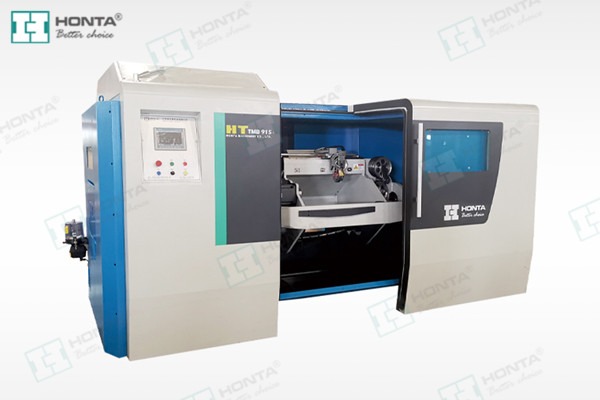
A workable sequence for a high-speed bunching/stranding machine has five hold points: configuration check against the order, no-load run and safety verification, loaded run on the agreed wire, spooling and packing check, and documentation handover. Each hold point needs a release condition. Hold points protect both sides — the supplier is not asked to re-open a finished machine, and the buyer is not asked to approve a stage that was never observed.
Step 4 — Decide who signs, and where
Three models are common: the buyer's engineer attends at the supplier's plant, an independent inspector attends on the buyer's behalf, or the run is witnessed remotely with agreed camera positions and a live parameter display. Each model works, provided it is chosen before production ends. The model must also name who holds the authority to sign and who may approve a deviation, because an inspection attended by someone without sign-off authority produces a report that still has to be re-negotiated afterwards.
Step 5 — Agree the failure path before it is needed
Every inspection plan should state what happens when a check fails: the re-test condition, who performs the corrective action, who bears the cost of a second inspection, and whether the shipment date moves. Writing this while both parties are still friendly is far cheaper than writing it during a delay. A failure path is not an admission of distrust; it is the reason a signed acceptance record carries weight.
Step 6 — Lock the documentation set
The document list is part of the criteria, not an afterthought. The table below shows a practical minimum set for a bunching/stranding machine order.
| Document | Purpose in acceptance | Prepared by | Signed or handed over |
|---|---|---|---|
| Technical annex / specification | Defines the process window: input wire, output strand, spool, utilities, interfaces | Buyer and supplier jointly | Before the purchase order |
| Inspection and test plan | Lists checks, hold points, methods, instruments and record forms | Supplier, approved by buyer | Before production starts |
| Run record and parameter sheet | Proves the agreed run took place at the agreed settings | Supplier, countersigned by buyer or inspector | At the loaded run |
| Retained strand samples | Physical reference for the arrival check and later comparison | Supplier | At the loaded run |
| Certificate copies (ISO 9001, ISO 14001, UDEM International Certification) | Supports the quality and environmental claims behind production | Supplier | With document handover |
| Packing list, shipping marks, configuration photos | Confirms the shipped configuration matches the accepted configuration | Supplier | Before shipment release |
Step 7 — Tie acceptance to shipment release
The final step is procedural: the machine is not released for shipment until the acceptance record is signed, and the record is signed at the plant where the run took place. If acceptance is deferred to the buyer's site, the criteria lose most of their force, because the supplier can no longer demonstrate the machine under known conditions and the buyer can no longer separate machine performance from installation effects.
Use Cases: Where the Framework Changes the Outcome
Case 1 — One machine added to an existing conductor line
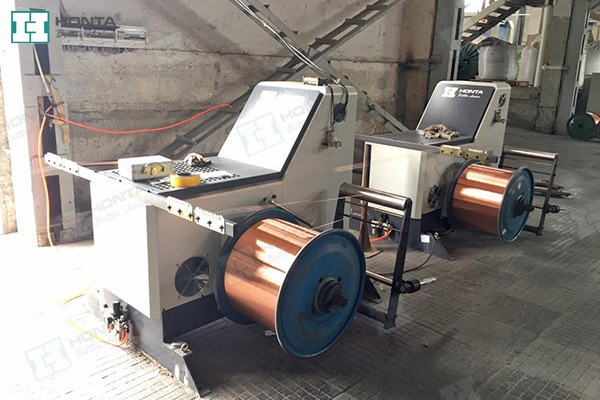
Here the highest risk is not the machine itself but the interface. The new bunching/stranding unit has to work with the existing pay-off, the existing take-up arrangement and the existing spool fleet. Acceptance criteria should therefore include an interface check at handover: mechanical coupling, control signals, tension behaviour at the entry, and spool compatibility. Without that clause, a technically correct machine can still stop the line because the spools do not run cleanly.
Case 2 — An integrated conductor line: drawing, plating and stranding
When the stranding machine is part of a combined conductor line that includes drawing and electrolytic plating equipment, acceptance has to cover the handover between units. The stranding acceptance run should use wire produced by the upstream unit in the same session, so that the run record links the two stages. This is where a system-level supplier has an advantage in documentation: one parameter sheet can cover several units, and one signature can release the line. Buyers should still insist that each unit has its own hold point, so that a failure can be localised rather than attributed to the whole line.
Case 3 — A repeat order or a second machine
For a duplicate machine, the best acceptance benchmark is the machine already in service. The criteria become a comparison: same run settings, same wire batch, same spool, and a side-by-side observation of the output. This is faster and more convincing than a fresh specification exercise, and it turns the first machine's retained records into a genuine asset. It only works if those records were created in the first place — which is the practical argument for Step 6.
Comparison Table: Specification-Only Orders vs Criteria-Backed Orders
The table below contrasts how the same order behaves when it carries specifications only, and when the specifications are backed by agreed acceptance criteria. It is a structural comparison of ordering practice, not a comparison of suppliers.
| Element | Specification-only order | Criteria-backed order | Evidence created |
|---|---|---|---|
| Output definition | Wire range is listed | Strand construction, spool and a reference sample are defined | Retained sample |
| Speed or output claim | Brochure figure quoted | Run condition, wire and duration agreed before testing | Signed parameter sheet |
| Wire quality | Described with adjectives | Observation method and pass/fail boundary stated | Inspection checklist |
| Spooling behaviour | Spool size only | Traverse, tension behaviour and end condition included | Spooling check record |
| Upstream and downstream interfaces | Pay-off and take-up types named | Interface verified at handover with the buyer's spools and line | Interface check sheet |
| Documentation | Manual and invoice | Full evidence file with run record, samples and certificates | Acceptance file |
| Failure handling | Left to later negotiation | Re-test procedure and cost responsibility agreed in advance | Deviation record |
| Signature point | After installation at buyer's site | Before shipment release at the supplier's plant | Signed acceptance record |
FAQ: Acceptance Criteria Questions Buyers Ask Before Ordering
Which certificates and documents should be part of machine acceptance?
Certificates do not replace a test, but they belong in the acceptance file because they show the management systems behind production. HONTA holds ISO 9001 Certification, ISO 14001 Certification and UDEM International Certification, and copies of these are the natural starting point for the compliance folder. A complete set should also contain the agreed technical annex, the approved inspection and test plan, the signed run record with the parameter values used, the retained strand samples, the packing list and shipping marks, and configuration photographs taken before packing. The practical test of the folder is simple: if a question about the machine arises two years later, the file should be able to answer it without contacting anyone.
Can acceptance criteria prove machine capability, or only that the machine runs?
Criteria prove capability only when three elements appear together: the material, the setting and the record. A quoted performance value is a design value until it is tied to a specific wire, a specific strand construction and a defined run. The acceptance run is what converts the design value into a verified one, and the signed parameter sheet is what makes the result usable afterwards. If the buyer's production wire is not available at the factory, the substitute wire should be named in the record and the difference acknowledged, so that later results are not compared against the wrong baseline.
Do acceptance criteria change the machine price or the payment schedule?
They rarely change the machine price itself; they change when money moves and who carries the cost of re-work. The usual effect is on the payment schedule: the final balance is released against a signed acceptance record rather than against a shipment date or a bill of lading. Buyers should also fix in advance who pays for a second inspection if the first one fails, and whether the delivery date moves in that case. Both points are cheap to agree at the quotation stage and expensive to argue later.
Can a machine be approved on a strand sample before shipment?
Yes, and a retained sample is one of the most useful outputs of a pre-shipment acceptance run. The sample should be labelled with the machine identification, the wire batch, the run settings and the date, and one copy should travel with the machine while another stays with the buyer. At arrival, the sample is compared against fresh production rather than against a description, which removes most of the ambiguity from the arrival check. Samples are also the fastest way to brief operators on what acceptable output looks like on that specific machine.
How should the inspection window be planned so it does not delay shipment?
Inspection should be a scheduled stage inside the production plan, not an event added at the end. That means fixing the hold point in the schedule when the order is placed, confirming before the machine is finished that the test wire and the correct spools will be available, and naming the people who will attend. Where travel is involved, the attendance model — on-site, independent inspector or witnessed remote run — should be decided early enough to be booked. Buyers who want to discuss how a specific acceptance plan fits a high-speed bunching/stranding machine order can contact HONTA directly by email at tammy@jshonta.com, by phone on 0086 182 6287 9467, by WhatsApp on 0086 187 5292 2675, or by WeChat at wtammy0631, and can review the equipment range at www.jshonta.com before the technical discussion begins.
Conclusion: Write the Sign-Off Before You Write the Order
Acceptance criteria are not a bureaucratic addition to a machine order. They are the mechanism that decides whether the buyer receives a working conductor process or a machine that has to be argued about after installation. The framework is deliberately unglamorous: anchor each term to a material and a measuring point, separate design values from acceptance limits, build hold points into the inspection plan, name who signs, agree the failure path, lock the documentation set, and release the machine only against a signed record.
Applied to a high-speed bunching/stranding machine, this converts a vague promise into a repeatable event at the supplier's plant, where both sides can still see the same output on the same wire. That is also the point at which the conversation about samples, documentation and configuration should begin — before the purchase order fixes the terms.
Next step: if you are preparing an order for a high-speed bunching/stranding machine and want the acceptance annex reviewed alongside the technical specification, send your draft terms and wire details to HONTA. Sample arrangements, quotation requests and documentation questions can be directed to tammy@jshonta.com, phone 0086 182 6287 9467, WhatsApp 0086 187 5292 2675 or WeChat wtammy0631.
HONTA — Room 1219, Building 3, Dongchuang Technology Center, Qianjin East Road, Kunshan City, Jiangsu Province, China. Zip: 215300. Website: www.jshonta.com

Have Questions or Need More Details?
Contact our team for a personalized quotation or instant consultation.
Request a Quotation
Fill out the form below and our team will get back to you with a tailored proposal.
WhatsApp Direct Chat
Prefer to chat in real-time? Message us on WhatsApp for instant assistance & quick answers.
- Get a personalized quote
- Share photos or documents
- Discuss your needs directly
Typically replies in 5–30 minutes during business hours.