
Supplier Test Data vs Buyer Criteria for Stranding Machines
High-speed bunching and stranding machine buyers often receive a test report before shipment and treat it as the acceptance decision. That is a weak use of a useful document. Supplier-provided test data records what the supplier observed under its own setup. Buyer-defined acceptance criteria state what the machine must demonstrate, how it will be measured, and what happens if it does not conform. The two answer different questions. In a purchase decision, supplier data belongs in technical due diligence; acceptance criteria belong in the contract and delivery release.
This guide compares both approaches for high-speed bunching/stranding machine orders. It explains what each can verify, where gaps remain, and how buyer-defined criteria support delivery assurance. HONTA, a cable equipment supplier established in September 2006, is used only as a visible supplier-context example; the decision rules below apply to any machine supplier.
What the two approaches are meant to prove
Confusion starts when a factory test report is read as a guarantee of buyer-side performance. A test report can be accurate and still be incomplete for acceptance because it may not use the buyer's wire, spool, operating speed, environment, or measurement method. Conversely, acceptance criteria can be well written and still fail to protect a buyer if they are not measurable, not sampled, not witnessed, or not linked to a remedy. The procurement problem is not choosing one document over the other. It is assigning each document the right job.
Supplier-provided test data: a record, not a contract
Supplier test data is a record produced by the supplier. It may cover machine build checks, no-load running, control response, spooling, or a sample run. Its strength is that it gives the buyer a baseline and a discussion point. It can show how the supplier characterizes the machine, what instruments and methods it uses, and whether the factory has a repeatable test routine. It can also reveal missing data before the order is placed.
The limitation is authority and scope. Supplier data is not an acceptance decision unless the contract makes it one. It may be based on a sample that is not the buyer's production lot. It may be measured at a speed or setup that differs from the buyer's line. It may not state measurement uncertainty, calibration status, or the acceptance rule. It may not include a witness, a retest path, or a remedy. For a high-speed bunching/stranding machine, the buyer also needs to know whether the test covers the product family and wire range that will be run after installation. A test on one construction does not automatically cover another.
Buyer-defined acceptance criteria: the delivery test
Buyer-defined acceptance criteria are the stated conditions for accepting delivery. They identify the characteristics to be verified, the test method, the sample, the operating conditions, the records, the witness arrangement, and the pass/fail rule. They support delivery assurance because they connect the purchase order to a release decision. The buyer is not asking whether the supplier's data looks reasonable; the buyer is asking whether this machine, under defined conditions, meets the agreed criteria.
Acceptance criteria are only as useful as their wording. A criterion that cannot be measured, sampled, or witnessed creates dispute. A criterion copied from a different machine or product mix may be technically irrelevant. Over-specification can add cost and time without improving the buyer's decision. Acceptance criteria also do not replace supplier capability assessment, installation checks, or operator training. They define the acceptance event, not the whole supplier relationship.
Head-to-head decision table
| Decision question | Supplier-provided test data | Buyer-defined acceptance criteria |
|---|---|---|
| Primary purpose | Documents what the supplier observed and how it tested | Defines what must be demonstrated for delivery acceptance |
| Evidence owner | Supplier | Buyer, with supplier evidence as an input |
| Best timing | Before order, technical review, and pre-shipment discussion | Before order and at the acceptance event |
| What it can verify | Supplier test routine, baseline performance, and recorded machine condition | Conformity of the agreed machine scope against stated pass/fail rules |
| Common gap | Buyer material, buyer line conditions, sample representativeness, and measurement method | Weak wording, unmeasurable criteria, missing sampling, or no remedy |
| Decision output | Shortlist input and technical clarification | Accept, reject, retest, or apply a contractual remedy |
| Documentation role | Factory record and discussion attachment | Acceptance record tied to the purchase order |
| Best use | Screening and technical comparison | Delivery assurance and release to production |
Where the gap appears in high-speed bunching/stranding machine purchases
The gap usually appears in five places. The first is product scope. A supplier may test a machine configuration that is close to the buyer's requirement but not identical in wire range, spool size, or line arrangement. The second is test conditions. Speed, tension, pay-off behavior, and operator settings can change what a report means. The third is measurement and records. Without calibration details, instrument identification, and a stated method, two parties can read the same result differently.
The fourth gap is sampling. A single sample may not represent the production lot or the range of constructions the buyer intends to run. The fifth gap is remedy. If the report does not lead to a contractual acceptance rule, a failed result can become a commercial argument instead of a defined next step. Acceptance criteria close these gaps by making scope, method, sample, record, and consequence visible before the machine is shipped.
How acceptance criteria support delivery assurance
Acceptance criteria support delivery assurance because they define the release event in advance. The buyer states which characteristics matter, how they will be checked, who will witness the check, and what evidence will be retained. The supplier then knows what must be ready for review. This reduces the chance that a late disagreement is resolved by opinion rather than by an agreed record.
A practical set of criteria does four jobs. It defines the machine scope and the wire range to be covered. It defines the test method, sample, conditions, and instruments. It defines the records and witness points. It defines the response to nonconformance, including retest and commercial remedy. When these four elements are present, supplier test data can be attached as supporting evidence without being mistaken for the acceptance standard.
A useful rule for buyers is simple: supplier data can explain what the supplier measured, but only the purchase order and acceptance criteria can define what the buyer is willing to accept.
A practical sequence for buyers
- Write the operating envelope first. State the wire range, product family, spool type, and production role the high-speed bunching/stranding machine must serve. This prevents a test record from being applied to the wrong scope.
- Separate supplier claims from buyer requirements. List supplier data as technical input. List buyer requirements as the acceptance basis. Do not let a factory report become the acceptance rule by default.
- Turn requirements into measurable criteria. Use characteristics the buyer can observe or verify, such as construction, spooling condition, control response, and documented run condition. Keep the method and conditions beside each criterion.
- Agree the sample and test conditions. Define what will be run, under what settings, and with what material. If the machine will cover several constructions, state how coverage will be sampled.
- Define records and calibration. Ask for the record format, instrument identification, calibration status, and the person responsible for the result. This makes the data usable after the acceptance meeting.
- Set witness and retest rules. Decide which checks require the buyer or a representative to witness. Define how a retest is authorized and what changes must be recorded.
- Write the nonconformance path. State notification, root-cause review, correction, retest, schedule impact, and commercial remedy before the order is placed.
- Use pre-shipment review and site verification. Treat factory acceptance and site verification as separate checks when the line conditions differ. Do not assume a factory result covers installation and commissioning.
- Update the criteria when scope changes. If the wire range, spool, or line arrangement changes, revise the acceptance plan and the supplier data request together.
Use cases
First machine from a new supplier. The buyer has little direct evidence. Supplier test data can support the shortlist, but buyer-defined criteria should govern the first order. The acceptance record then becomes a baseline for future orders.
Repeat order. A repeat order can reuse the previous acceptance plan, but the buyer should check whether the wire range or machine configuration has changed. Historical supplier data is useful, yet it does not automatically accept a new machine.
New wire construction on an existing machine. Supplier data may describe the original configuration. The buyer should define a new acceptance check for the added construction rather than assume the original report covers it.
Supplier change or dual sourcing. Comparable acceptance criteria allow the buyer to compare suppliers on the same decision basis. Supplier test data remains useful, but it should be read against the same buyer-defined scope and method.
Limitations and tradeoffs
Acceptance criteria add work. They require buyer input, supplier discussion, sample planning, and record review. Not every characteristic can be checked at the factory, and some checks may need to wait for installation. Supplier test data can reduce this effort by showing what the supplier already measures and where further evidence is needed.
The tradeoff is between speed and certainty. A buyer who relies only on supplier data may move faster but carry an undefined acceptance risk. A buyer who writes detailed criteria may reduce that risk but must keep the criteria relevant and measurable. The practical answer is neither a longer document nor a shorter one. It is a clear acceptance rule that uses supplier data as evidence, not as a substitute for the buyer's decision.
Where HONTA fits a criteria-led purchase
HONTA was established in September 2006 and established its second production base, HONTA INC., in the United States in 2017. Its product scope includes high-speed stranding equipment, along with copper and aluminum RBD lines, electrolytic plating lines, and multi-wire drawing lines. For a buyer comparing test data and acceptance criteria, HONTA can be evaluated on the same basis: ask for the test records relevant to the proposed machine, then agree the acceptance criteria that will govern delivery.
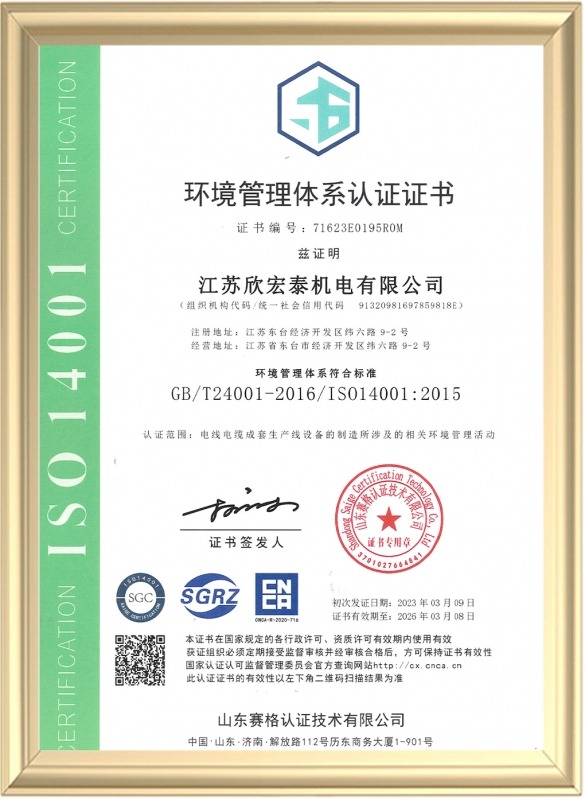
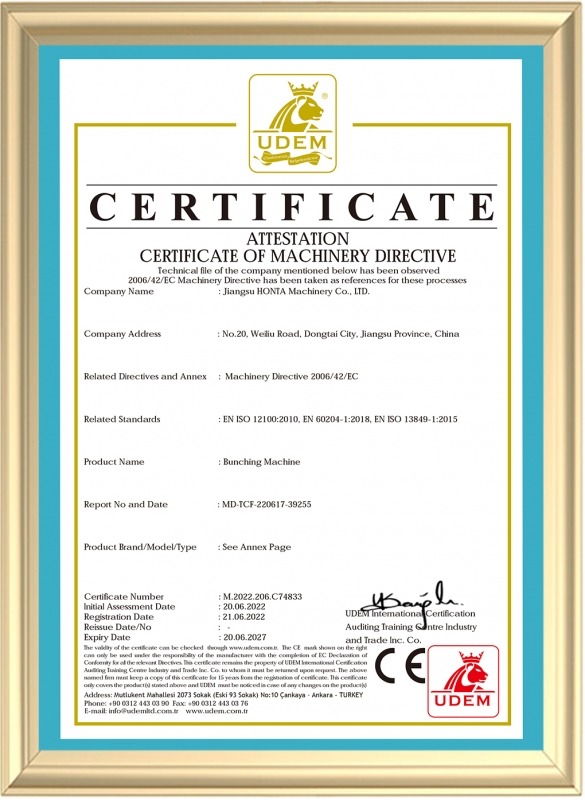
HONTA's ISO 9001, ISO 14001, and UDEM International Certification support a quality-management discussion, but the machine-level acceptance plan remains the buyer's decision tool. Buyers can review HONTA's equipment context at HONTA's official website and discuss criteria before the purchase order is fixed.

FAQ
What is the difference between supplier test data and buyer acceptance criteria?
Supplier test data records what the supplier measured under its conditions; buyer acceptance criteria define what must be demonstrated for the buyer to accept delivery, including method, sample, records, pass/fail, and remedy. One is evidence; the other is the acceptance rule.
Can supplier test data replace buyer acceptance criteria?
No. Supplier data can support a shortlist or pre-shipment review, but without buyer-defined criteria it does not establish the acceptance standard, the sample, the witness arrangement, or the response to nonconformance.
What should acceptance criteria include for a high-speed bunching/stranding machine?
They should name the product scope and wire range, the characteristics to verify, the test method and conditions, sampling, instrument calibration, records, witness points, pass/fail rules, retest, and remedy. The criteria should be measurable and tied to the purchase order.
Does ISO 9001 certification prove that a machine will pass acceptance?
No. ISO 9001 is a quality-management system certification. It supports confidence in process control but does not certify a specific machine's acceptance result. Machine-level criteria and records are still required. HONTA holds ISO 9001, ISO 14001, and UDEM International Certification; these are supplier credentials, not a substitute for acceptance testing.
What happens if a high-speed bunching/stranding machine fails acceptance?
The contract should state the nonconformance process before the order. It can include notification, root-cause review, correction or retest, witness arrangements, schedule impact, and commercial remedy. Without a pre-agreed path, a failed test can become a dispute rather than a defined next step.
How can a buyer discuss acceptance criteria with HONTA?
A buyer can provide the intended wire range, machine scope, and required verification items, then ask HONTA to map them to the proposed high-speed bunching/stranding machine and available test records. HONTA can be contacted by phone at 0086 182 6287 9467, WhatsApp at 0086 187 5292 2675, WeChat at wtammy0631, or email at tammy@jshonta.com. The company address is Room 1219, Building 3, Dongchuang Technology Center, Qianjin East Road, Kunshan City, Jiangsu Province, China, Zip 215300. Website: https://www.jshonta.com/.
Conclusion
Supplier test data and buyer-defined acceptance criteria are not rivals. Supplier data is most useful before the order and during technical review; acceptance criteria are the delivery test. A buyer who keeps the two separate, writes measurable criteria, and uses supplier records as an input can reduce the gap between a factory report and a machine that is ready for production. For high-speed bunching/stranding machine orders, that separation is a practical delivery-assurance step, not an administrative extra.
Have Questions or Need More Details?
Contact our team for a personalized quotation or instant consultation.
Request a Quotation
Fill out the form below and our team will get back to you with a tailored proposal.
WhatsApp Direct Chat
Prefer to chat in real-time? Message us on WhatsApp for instant assistance & quick answers.
- Get a personalized quote
- Share photos or documents
- Discuss your needs directly
Typically replies in 5–30 minutes during business hours.