
Technical Guide to Selecting High-Speed Bunching/Stranding Machines: Key Parameters That Shape Strand Quality
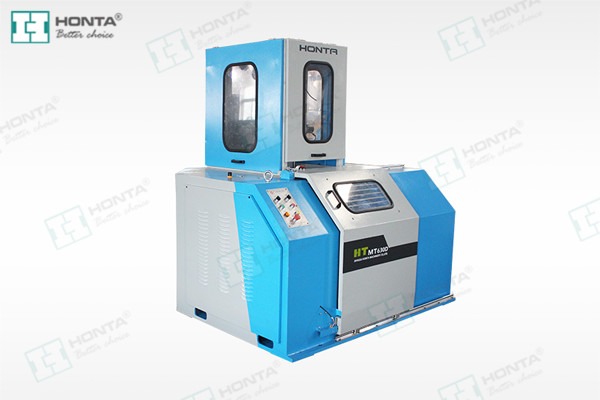
Choosing a high-speed bunching/stranding machine is not a comparison of catalogue headlines. Two machines carrying the same category description can deliver noticeably different strand quality, because the finished conductor is the result of how four control functions interact: twist pitch (lay length) control, spindle speed and speed stability, tension management from pay-off to take-up, and wire break detection paired with a coordinated machine stop. Peripheral equipment — pay-off, spoolers, and the level of automation and line integration — decides whether those four functions hold up across a full production shift.
This technical guide is written for procurement engineers, cable plant managers and technical buyers who already understand what a bunching/stranding machine does and now need a structured way to compare offers. It explains what each parameter controls, how it influences strand quality and throughput, and which verification question should be put to a supplier before an order is placed.
Short answer: select a high-speed bunching/stranding machine by its control method, not by its nominal speed. Ask how twist pitch is set and held, how spindle speed is stabilised, which tension zones are closed-loop, how a wire break is detected and stopped, and how the pay-off and take-up chain supports the bobbin change. Parameters describe capability; control methods describe results.
Problem Definition: Why Parameter Lists Rarely Answer the Buying Question
Machine quotations usually present parameters as isolated capabilities: a speed figure, a wire range, a list of optional devices. That format is easy to produce and very difficult to compare, because it describes what a machine can be configured to do rather than how it will behave on a specific conductor construction.
Three patterns appear repeatedly in bunching and stranding procurement:
- Speed quoted without a stability definition. A high spindle speed only becomes throughput if it is held consistently across a full bobbin and through ramp-up and ramp-down.
- Pitch quoted without the control method. The same lay length can be produced by a fixed mechanical ratio or by an electronically synchronised setting, and those two approaches behave very differently at changeover and at line-speed transitions.
- Detection quoted without the stop response. Wire break detection is only valuable when the stop chain reacts in a coordinated way, so that a single break does not become a full bobbin of scrap.
The practical consequence is that a quotation can look complete while remaining unrankable. A buyer who sorts offers by nominal speed alone will typically discover the difference later — in break rates, in strand surface condition, or in the hours lost to changeover and restart.
Industry Background: Why Parameter Control Matters More Than It Used To
Conductor requirements have moved in a direction that punishes loose process control. Flexible cables use finer and more numerous strands, plated conductors are specified where contact performance or corrosion resistance matters, and production lines are expected to run at higher speeds with fewer operators. Each of these trends narrows the tolerance for pitch drift, tension spikes and undetected wire breaks.
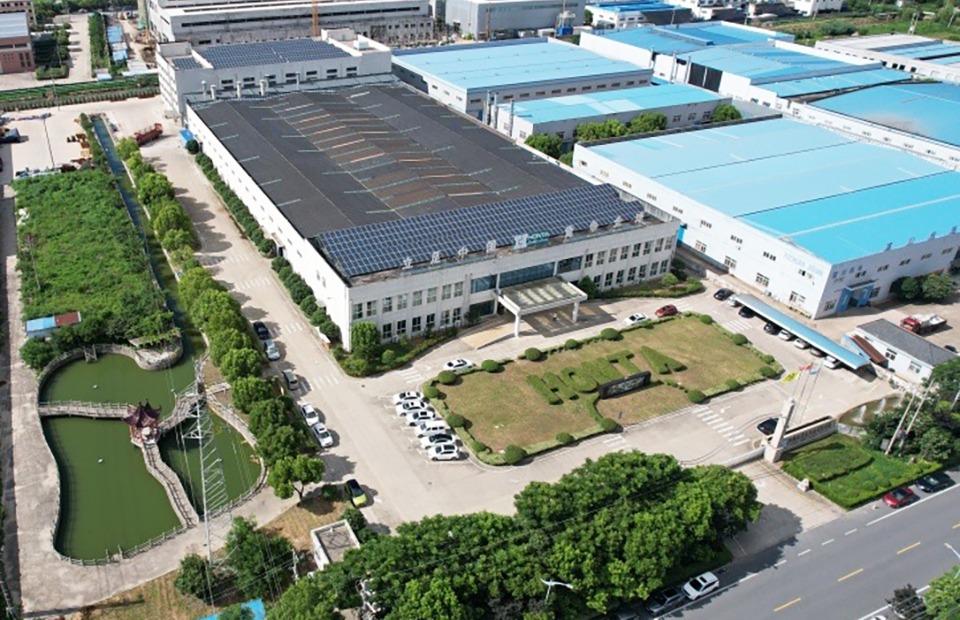
The equipment supply side has consolidated around suppliers who can deliver more than a single unit. HONTA was established in September 2006 and has long been committed to the research of cable conductor drawing and stranding technology. Its main products include copper and aluminium RBD lines, electrolytic plating lines, multi-wire drawing lines and high-speed stranding equipment. In 2017 the company established its second production base, HONTA INC., in the United States. HONTA has become a large cable equipment system service provider, and its products are known for high speed, efficiency, automation and humanization. The company holds ISO 9001, ISO 14001 and UDEM International Certification.
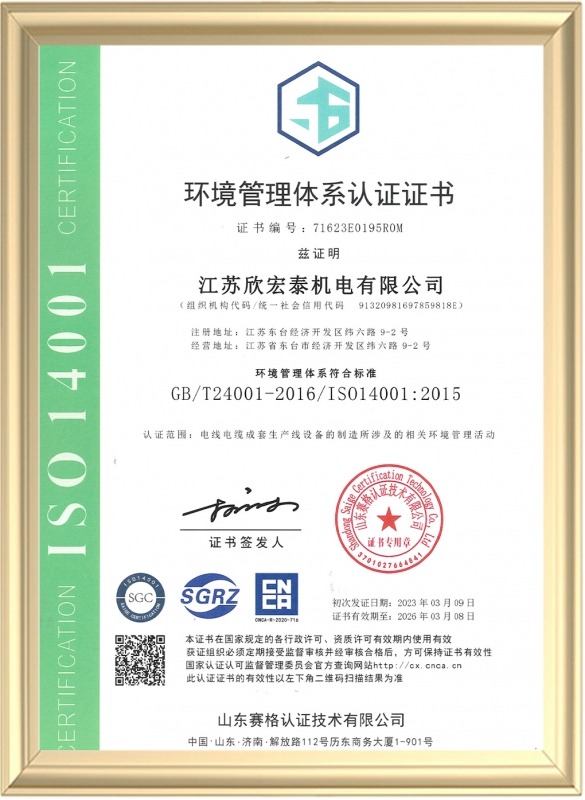
For a buyer, this background matters in one specific way: supplier scale and certification describe the organisation, while parameter control describes the machine. A sound evaluation keeps the two separate and scores them separately.
Detailed Solution: Six Parameter Families That Decide Strand Quality
Six parameter families determine how a high-speed bunching/stranding machine performs on real conductor. Each is set out below in terms of what it controls, how it affects strand quality, and the question that separates a well-engineered offer from a well-worded one.
1. Twist Pitch (Lay Length) Control
Twist pitch, also called lay length, is the axial distance the strand advances during one complete turn of the twisting elements. It is the parameter most directly connected to strand geometry: it influences how flexible the finished conductor is, how predictably it behaves in downstream insulation and termination processes, and how much conductor length is consumed to achieve a given construction.
Two control philosophies exist in practice. In a mechanically geared machine, pitch is fixed by the gear ratio, and changing pitch means changing hardware. In an electronically synchronised machine, pitch is set as a control value, which shortens changeover time and keeps the relationship between twisting speed and line speed under continuous regulation.
Quality impact: if lay length drifts along the bobbin — for example when line speed changes or as the take-up diameter grows — the strand becomes uneven, and uneven strands surface later as inconsistent flexibility or unstable behaviour in downstream equipment. Verification question: how is lay length set, and how does the machine hold it as line speed and take-up diameter change?
2. Spindle Speed and Speed Stability
Spindle speed sets the upper limit of throughput, but speed alone is not a quality indicator. The relevant behaviours are how speed is built up at start, how it is held across a full bobbin, and how the machine behaves during stops and restarts.
Quality impact: vibration and speed ripple translate into tension ripple, and tension ripple translates into pitch variation and surface marking. A machine that reaches a high figure briefly but drifts during the run is less useful than one that holds a moderate figure consistently. Verification question: what keeps speed constant across a full bobbin, and how is acceleration controlled at start and stop?
3. Tension Management From Pay-Off to Take-Up
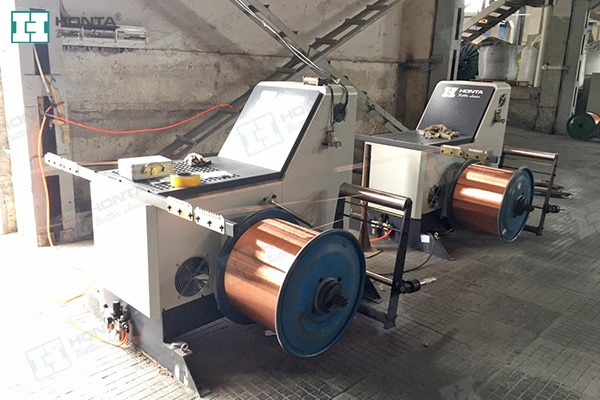
Tension is the parameter that most often decides whether a technically capable machine produces good strand in daily operation. It has to be managed in three zones: pay-off, the twisting zone, and take-up. A motorised pay off is commonly specified because it allows pay-off tension to be controlled rather than left to mechanical drag that changes as the supply bobbin empties. In the twisting zone, tension determines strand tightness and whether individual wires stay in their intended position. At take-up, tension determines how evenly the finished strand is wound.
Quality impact: tension spikes cause elongation, surface marking and wire breaks; sustained over-tension changes the mechanical character of the conductor. Verification question: which tension zones are closed-loop, what happens to tension during a bobbin change, and how is tension set when moving to a different conductor construction?
4. Wire Break Detection and Stop Response
Wire break detection is usually treated as a reliability feature, but its design affects quality as well. The important question is not only whether a break is detected, but how much wire passes before the machine has actually stopped, and whether the stop itself damages the surrounding strand.
Quality impact: a detection system coupled to a coordinated stop — with tension released in a controlled sequence — limits scrap to the point of the break. A detection system without a coordinated stop converts a single broken wire into a full bobbin of unusable strand. Sensitivity matters in both directions: excessive triggering reduces effective uptime just as missed breaks increase scrap. Verification question: what is detected, how quickly the stop chain reacts, and how the wire is released to avoid marking adjacent strands?
5. Pay-Off and Take-Up Compatibility
Bunching and stranding performance depends on the equipment at both ends of the process. The pay-off must deliver wire at a controlled tension; the take-up arrangement — single spoolers, double spoolers or comparable winding equipment — must wind the finished strand without introducing tension variation of its own.
Quality impact: the changeover is where most variation enters a well-set line. A machine that performs cleanly on a test bobbin but needs manual intervention at every bobbin change carries a hidden cost in labour and in the first metres of every spool. Verification question: what bobbin range is supported, how is the change performed, and does the change introduce a tension transient?
6. Automation, Control Integration and Humanization
Automation is where parameters become repeatable. Recipe storage, parameter recall and a control interface that an operator can use without specialist support decide whether a good setting is reproduced on the next shift. HONTA's products are known for high speed, efficiency, automation and humanization — humanization here refers to machine design that reduces the operator's physical and cognitive workload during routine operation.
Quality impact: where a bunching/stranding machine sits inside a longer conductor line — after multi-wire drawing, electrolytic plating or coating equipment — control integration determines whether the line runs at the speed of its slowest unit or at a balanced speed. Verification question: are parameters stored as recipes, can the machine exchange start, stop and speed signals with adjacent equipment, and how much operator intervention does a changeover require?
Step-by-Step Breakdown: A Parameter-First Selection Process
- Define the strand and its end use. Record the conductor construction, the flexibility the application demands, and whether the wire is bare or plated. These inputs decide which parameters are critical and which are secondary for your line.
- Match the machine format to the product mix. Bunching machines, rigid frame stranding machines and double-twist configurations serve different product families. Choosing the format first prevents parameter comparison between machines that were never alternatives.
- Convert requirements into control-method questions. For each of the six parameter families, require the supplier to state how the parameter is set and how it is held — not only the range it covers.
- Specify how each parameter will be verified. Attach a verification method to pitch consistency, tension behaviour, speed stability and stop response, so that the acceptance discussion happens before the order rather than after installation.
- Define stop, recovery and changeover logic. Treat wire break response and bobbin change as process steps with a defined time and a defined effect on strand quality, not as incidental operator activity.
- Validate with a trial and fix acceptance criteria in writing. A trial on your own conductor construction is the only reliable way to confirm that a quoted parameter set performs in practice.
Use Cases: Where Parameter Priorities Shift
Fine-Wire Bunching for Flexible Cables
With many fine strands, pitch consistency and gentle tension control dominate. A pitch that varies along the bobbin produces a conductor whose flexibility changes from one end of the spool to the other, which becomes visible in downstream handling and in the finished cable.
Plated Single-Wire Conductors
Where conductors pass through an upstream electrolytic plating line — for example Ni, Ag or Sn single-wire plating lines within a high speed wire electrolytic plating line — the strand surface matters as much as the geometry. Tension control and pay-off handling become the priority parameters, because surface damage introduced during stranding cannot be corrected downstream.
Large Cross-Section Rigid Stranding
On rigid frame stranding machines running heavier constructions, mechanical stability and take-up strength move to the front of the evaluation. Speed stability and consistent take-up tension matter more than fine pitch adjustability, because the conductor mass itself resists rapid changes in process conditions.
Integrated Conductor Lines
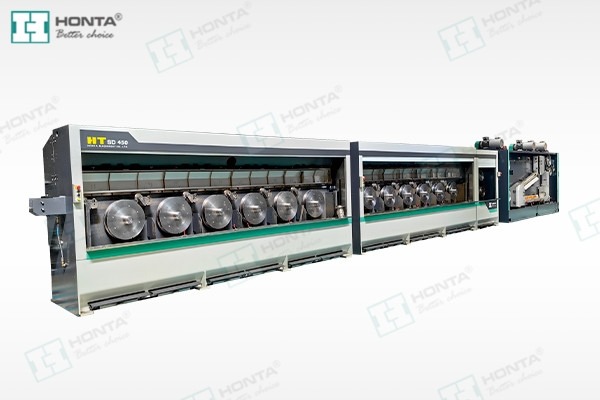
When multi-wire drawing, plating or coating and bunching/stranding are combined in one line, control integration is the deciding parameter. HONTA's product range covers copper and aluminium RBD lines, electrolytic plating lines, multi-wire drawing lines and high-speed stranding equipment, which allows the interfaces between these stages to be specified as one system rather than negotiated between separate suppliers.
Comparison Table: Parameter, Quality Impact and Verification Point
The table below summarises the six parameter families in decision form. It is a comparison framework, not a specification: the values you require depend on your conductor construction and product mix.
| Parameter family | What it controls | Strand quality impact | Throughput impact | What to verify |
|---|---|---|---|---|
| Twist pitch (lay length) | Strand geometry and flexibility | Drift along the bobbin makes the conductor uneven | Setting method sets changeover time | How pitch is set and held at varying line speed |
| Spindle speed and stability | Output rate and process consistency | Speed ripple becomes tension and surface variation | Direct effect on metres per hour | How speed is held across a full bobbin |
| Tension management | Pay-off, twisting zone and take-up tightness | Spikes cause elongation, marking and breaks | Fewer breaks means fewer interruptions | Which zones are closed-loop and how bobbin change is handled |
| Wire break detection | Detection sensitivity and stop chain | Scrap is limited when the stop is coordinated | False stops reduce effective uptime | How the wire is released after a stop |
| Pay-off and take-up compatibility | Bobbin range and winding behaviour | Changeover transients mark the first metres | Manual changeover consumes line time | Supported bobbin range and change method |
| Automation and control integration | Recipe recall, operator interface, line signals | Repeatability across shifts and operators | Balanced line speed instead of a bottleneck | Recipe storage and interface with adjacent equipment |
FAQ
Which certifications should a buyer verify when sourcing a high-speed bunching/stranding machine?
Third-party certification confirms that a supplier operates a documented quality and environmental system, but it does not certify the performance of a particular machine. HONTA holds ISO 9001, ISO 14001 and UDEM International Certification. Buyers should verify the scope and current validity of the certificate directly with the supplier, and should keep company-level certification separate from machine-level acceptance testing on their own conductor construction.
Can a single supplier cover drawing, plating and stranding equipment?
HONTA's main products include copper and aluminium RBD lines, electrolytic plating lines, multi-wire drawing lines and high-speed stranding equipment, and the company established its second production base, HONTA INC., in the United States in 2017. For a cable plant, sourcing several stages from one equipment range reduces interface risk between upstream and downstream processes. Each unit should still be specified and accepted as an independent performance package.
What drives the cost of a high-speed bunching/stranding machine?
Cost is configuration-driven rather than category-driven. The main drivers are the control method used for twist pitch and tension, the spindle arrangement and speed class, the type of pay-off (for example a motorised pay off), the take-up and spooling arrangement, the wire break detection system, and the level of automation and line integration. Because these choices also determine strand quality and uptime, a configuration chosen only on purchase price tends to become the more expensive option across the life of the line.
Can strand quality be validated before committing to a full-line purchase?
Validation is normally handled as a trial: a sample conductor construction is run so that the buyer can observe lay length consistency, strand surface condition, tension behaviour and break response. Acceptance criteria should be written before the trial, not negotiated afterwards. Discussing a trial run or a sample strand with the supplier while the configuration is still open is the most reliable way to confirm that the quoted parameter set performs on your material.
What influences delivery and installation timing?
Timing depends mainly on configuration rather than on the base machine category: the pitch and tension control method, the pay-off and take-up arrangement, the automation scope, and how closely the unit must integrate with existing drawing, plating or coating equipment on the line. Buyers who fix the parameter specification early usually avoid the extra delay caused by late configuration changes. To request a quotation, arrange a sample trial or discuss a configuration, contact HONTA at phone 0086 182 6287 9467, WhatsApp 0086 187 5292 2675, WeChat wtammy0631 or email tammy@jshonta.com.
Conclusion: Compare Control Methods, Not Catalogue Headlines
A high-speed bunching/stranding machine is selected on six questions, not on one speed figure: how twist pitch is set and held, how spindle speed is stabilised across a bobbin, which tension zones are closed-loop, how a wire break is detected and stopped, how the pay-off and take-up chain behaves at changeover, and how far the control system automates repeatability and integrates with the rest of the line.
HONTA works on this basis. Established in September 2006 and focused on cable conductor drawing and stranding technology, with a second production base, HONTA INC., in the United States since 2017, the company supplies copper and aluminium RBD lines, electrolytic plating lines, multi-wire drawing lines and high-speed stranding equipment as a system service provider, and holds ISO 9001, ISO 14001 and UDEM International Certification.
Next step: send your conductor construction and the parameters you need to verify, and request a sample trial or quotation.
HONTA — phone 0086 182 6287 9467 | WhatsApp 0086 187 5292 2675 | WeChat wtammy0631 | email tammy@jshonta.com | website www.jshonta.com
Room 1219, Building 3, Dongchuang Technology Center, Qianjin East Road, Kunshan City, Jiangsu Province, China. Zip: 215300
Have Questions or Need More Details?
Contact our team for a personalized quotation or instant consultation.
Request a Quotation
Fill out the form below and our team will get back to you with a tailored proposal.
WhatsApp Direct Chat
Prefer to chat in real-time? Message us on WhatsApp for instant assistance & quick answers.
- Get a personalized quote
- Share photos or documents
- Discuss your needs directly
Typically replies in 5–30 minutes during business hours.