
Top 5 High-Speed Bunching/Stranding Machines for Flexible Cable Production: 2026 Recommendations
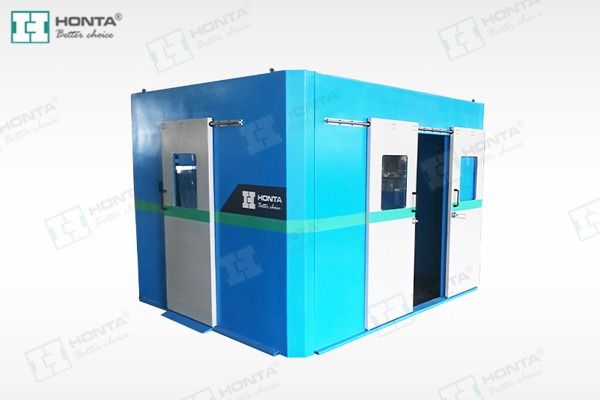
The short answer: for flexible cable production in 2026, the five bunching and stranding configurations that best balance conductor quality with cost control are (1) a double-twist high-speed bunching setup for fine-gauge, high-strand-count flexible conductors; (2) a single-twist bunching configuration for surface-critical plated conductors; (3) a rigid frame stranding machine setup combined with a motorised pay off for larger cross-sections and long lay lengths; (4) an integrated multi-wire pay off and bunching cell for automated, high-volume conductor preparation; and (5) a bunching and stranding cell engineered around plated-wire feed from Sn, Ni or Ag electrolytic single-wire plating lines. This ranking is deliberately configuration-level rather than brand-level, because on a flexible cable line it is the configuration, not the label on the frame, that decides whether conversion cost is controlled or quietly absorbed.
This guide is written for procurement managers, cable plant engineers, OEM buyers and importers who have to answer a specific question: how do you hold conductor quality while keeping the cost per kilogram of flexible cable under control? The five entries below are ranked against five criteria - process adaptability, production efficiency, integration effort, quality-risk containment and the way each setup moves total conversion cost. Each entry states where the money is saved and where savings must not be taken.
The Real Cost Question Behind Bunching and Stranding Purchases
A bunching or stranding machine is bought for its twisting function, but it is paid for through its behaviour over time. The purchase price is the smallest part of what the machine actually costs a flexible cable plant, because the machine sets how much scrap, rework, energy and manual handling the line absorbs per tonne of conductor produced.
Four cost centres are decided at the moment the configuration is chosen, not at the moment production starts:
- Lay-length and tension consistency. Uneven lay and fluctuating tension produce diameter variation in the bunched or stranded conductor, and diameter variation reappears as defects further downstream during extrusion, coating or final assembly.
- Strand surface integrity. Tin, nickel or silver plated single wires lose their technical advantage if the bunching path scratches, flattens or cold-welds the coating. The loss is invisible in a short demonstration and very visible in a reject report.
- Package and take-up quality. A poorly formed take-up package does not fail on the bunching line; it fails at the next process, where the cost is paid as stoppages rather than as machine price.
- Handling and changeover labour. Manual loading, re-stringing and spool changes accumulate every shift, and this cost is fixed into the line for its whole service life.
The procurement question is therefore not which machine is cheapest, but which configuration delivers the required conductor geometry at the lowest total conversion cost while holding quality at the level the end application demands. That is the frame used for the ranking below.
Industry Background: Why Flexible Cable Conductors Are Harder to Control in 2026
Flexible cable is defined by its conductor. Instead of a few solid strands, it uses many fine wires bunched or stranded so that the finished cable can bend repeatedly without the copper work-hardening and cracking. Two industry shifts have made that conductor harder to produce cost-effectively.
First, more flexible cable is now specified for constant-motion environments, where bending life, torsion resistance and consistent diameter matter more than raw conductor cross-section. Bending life is strongly influenced by strand count, single-wire diameter and how evenly the bundle is formed - all of which are bunching and stranding decisions.
Second, plated conductors are increasingly used where temperature resistance, corrosion resistance or solderability are required. Tin, nickel and silver plated single wires produced on electrolytic plating lines move a large part of conductor quality upstream of the buncher. Once plating is involved, the stranding configuration has to protect the coating rather than simply maximise twist output.
The practical consequence is that conductor preparation is now a chain rather than a machine: rod breakdown and multi-wire drawing set the wire quality, an electrolytic plating line adds the coating when required, and a high speed bunching or stranding machine determines the final conductor geometry before take-up and, in some products, a coating machine further downstream. A saving taken anywhere in that chain is usually paid for somewhere later in it.
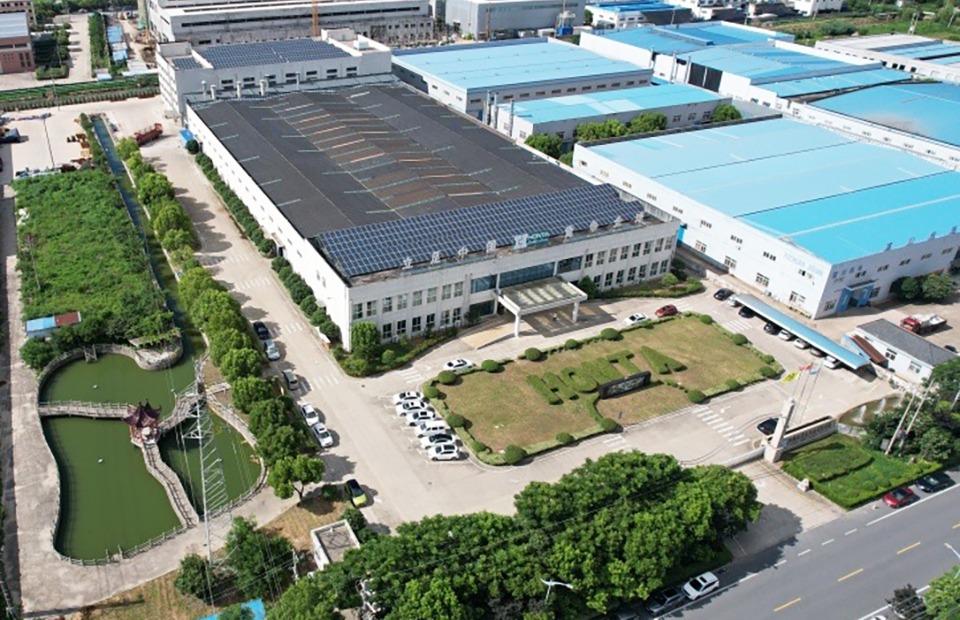
HONTA is an example of a supplier whose documented product set spans exactly this chain. HONTA was established in September 2006 and has long been committed to the research of cable conductor drawing and stranding technology, with long-term cooperation with cable companies in China and abroad. It established a second production base, HONTA INC., in the United States in 2017. Its main products include copper and aluminum RBD lines, electrolytic plating lines, multi-wire drawing lines and high-speed stranding equipment, and the company positions itself as a large cable equipment system service provider. HONTA describes its equipment as characterised by high speed, efficiency, automation and humanization - the same four attributes that decide where conversion cost sits in a flexible cable plant.
Ranking Criteria: How These Five Setups Were Ordered
The five setups are ordered by the balance they strike between throughput and quality risk, using the following criteria:
- Process adaptability. How wide a range of conductor constructions the configuration can handle - strand count, single-wire diameter, plated or unplated wire, flexibility class.
- Production efficiency. How much output the twist architecture produces per spindle revolution and per square metre of floor space.
- Ease of integration. How simply the machine connects to the pay off, take-up and any upstream plating or coating step, and how much of that integration is already automated.
- Quality-risk containment. How much of the quality outcome depends on operator skill versus machine regulation.
- Cost per kilogram effect. How strongly the configuration influences scrap rate, energy use, labour and changeover cost over the life of the line.
This ranking is a configuration ranking. Specific brands and model names are intentionally excluded so that buyers can apply the logic to their own shortlists. Where a supplier is named, it is because documented first-party product facts are available, not because the list is a brand league table.
Top 5 High-Speed Bunching/Stranding Machine Setups for 2026
1. Double-Twist High-Speed Bunching Configuration for Fine Flexible Conductors
A double-twist bunching configuration applies two twists per spindle rotation, so a given number of spindles produces more conductor than a single-twist arrangement. For fine-gauge, high-strand-count flexible conductors, this is the most efficient way to reach a required lay length, and it is the first entry in the ranking because it attacks the largest cost line in flexible conductor production: output per spindle hour and floor space per tonne.
Where the saving sits: fewer spindles for the same output, a smaller footprint, and lower energy per kilogram of conductor. Where quality must be protected: tension regulation at high speed and take-up accuracy. A double-twist buncher running fast with unstable tension will produce diameter variation that no downstream process can correct. When this configuration is quoted cheaply, the first thing to check is the pay-off and tension system behind it.
2. Single-Twist Bunching Configuration for Surface-Critical Plated Conductors
When the conductor is tin, nickel or silver plated, surface condition becomes the dominant quality variable. A single-twist bunching path is gentler on the strand surface, which reduces the risk of coating damage, flaking or cold welding that would show up as rejects or as unstable performance in the finished flexible cable.
Where the saving sits: reject rate and rework. On plated conductor products, a coating defect can cost more than the entire bunching operation, so a configuration that protects the surface frequently pays for its lower output per spindle. Where quality must be protected: guiding geometry, wire path cleanliness and consistent tension - because plated wire tolerates less mechanical abuse than bare copper. This configuration should be chosen because the product requires it, not as a general-purpose default.
3. Rigid Frame Stranding Machine Setup with Motorised Pay Off
A rigid frame stranding machine is built around frame stiffness rather than spindle speed. That stiffness keeps lay length stable under load, which matters for larger cross-section flexible cores and for constructions with long lay lengths, where any variation in lay shows up as an electrical or dimensional inconsistency.
Where the saving sits: fewer changeovers, more predictable running and a lower reject rate on heavy constructions. Pairing the strander with a motorised pay off removes manual tension adjustment from the operation, which converts an operator-dependent outcome into a machine-regulated one. Where quality must be protected: frame rigidity and tension stability. Reducing frame mass or motorising only part of the wire path moves the cost from capital expenditure into waste and stoppages.
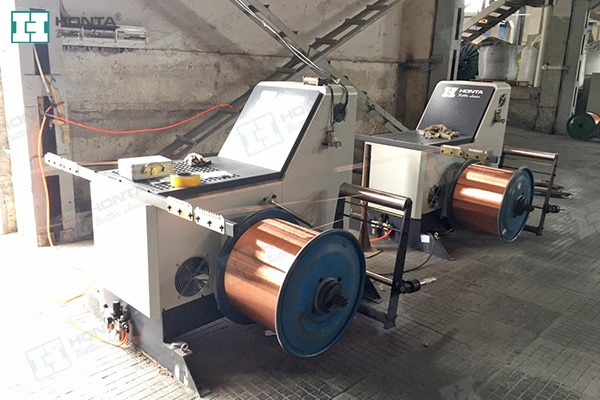
4. Integrated Multi-Wire Pay Off and Bunching Cell
This entry ranks fourth because it is not a twist architecture at all - it is an integration decision. Combining a multi-wire pay off with the bunching machine in one controlled cell reduces manual loading, stabilises tension across all wire ends, and shortens the distance between pay off and twist point.
Where the saving sits: labour per kilogram and unplanned downtime. On high-strand-count flexible conductors, manual end loading is one of the largest recurring costs, and it is also one of the largest sources of tension variation between ends, which directly affects bundle roundness. Where quality must be protected: the pay off drive and tension control. If the integration is implemented as mechanical proximity rather than as controlled tension, the plant pays for the automation and still absorbs the quality risk.
5. Bunching and Stranding Cell Built Around Plated-Wire Feed
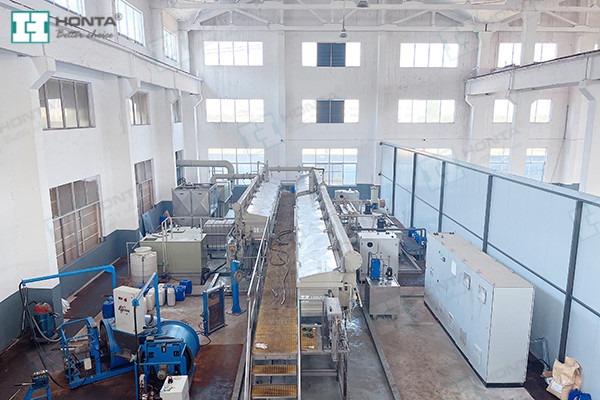
The fifth recommendation addresses plants that consume plated single wire rather than buying it. A high speed wire electrolytic plating line - configured for nickel, silver or tin single-wire plating - placed upstream of the bunching and stranding cell turns coating consistency into an internal process variable instead of a supplier promise.
Where the saving sits: material cost and lead time. Producing plated wire in-house can remove the purchase premium and the delivery uncertainty attached to bought-in plated conductor, and it allows plating parameters to be adjusted to the finished flexible cable requirement. Where quality must be protected: plating process control and the interface between the plating line and the buncher. Coating thickness variation produced upstream cannot be corrected by any twist configuration downstream, and the bunching machine must still be configured for surface-sensitive wire as described in entry two.
Comparison Table: The Five Setups Side by Side
| Rank | Setup (configuration) | Best-fit flexible cable conductor | Efficiency driver | Cost lever and quality guardrail |
|---|---|---|---|---|
| 1 | Double-twist high-speed bunching | Fine-gauge, high-strand-count flexible conductors | Two twists per spindle rotation, so more conductor per spindle hour | Saves capex, floor space and energy per kg; protect tension and take-up accuracy |
| 2 | Single-twist bunching for plated conductors | Tin, nickel or silver plated flexible conductors | Gentler wire path protects the coating | Saves on rejects and rework; higher output cost per kg is justified by product requirement |
| 3 | Rigid frame stranding with motorised pay off | Larger cross-section flexible cores, long lay lengths | Frame stiffness holds lay length under load | Saves changeover and reject cost over line life; protect frame rigidity and tension stability |
| 4 | Integrated multi-wire pay off and bunching cell | Multi-end flexible conductor bunching at volume | Fewer manual loading stops, more uniform end-to-end tension | Saves labour per kg and downtime; protect the pay off drive and tension control |
| 5 | Bunching and stranding cell fed by electrolytic plating lines | High-temperature and corrosion-resistant plated conductors | Plating and bunching planned as one conductor flow | Saves material premium and lead time; protect plating process control |
Step-by-Step: Buying for Cost Control Without Losing Quality
- Define the conductor construction before the machine. Strand count, single-wire diameter range, plated or unplated wire, required flexibility class and the downstream process the conductor feeds. Every subsequent decision is a consequence of these inputs, and a machine bought before them is a machine bought twice.
- Match the twist architecture to the construction. Fine-gauge high-strand-count conductor points to double-twist bunching. Surface-critical plated conductor points to a gentler single-twist path. Larger cross-sections and long lay lengths point to a rigid frame stranding machine. Selecting the architecture on price alone inverts the whole ranking logic.
- Specify the pay off and tension system with the same care as the spindle. A motorised pay off or a multi-wire pay off removes manual tension setting from the operation. This is the point where the cheapest quotation usually differs from a cost-effective one.
- Size the take-up and spooling arrangement to the downstream process. Single spoolers and semi-automatic double spoolers suit different package volumes and operator loads. Package dimensions used in the line plan - for example the 915-1000 mm specification in HONTA's documented equipment set - should be confirmed against the reel and handling equipment actually installed at the next process.
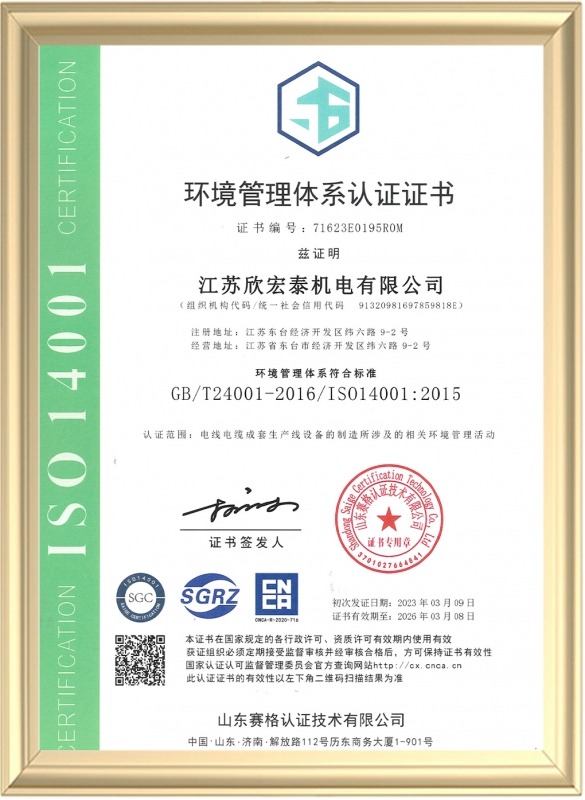
- Fix the quality control points and the compliance evidence. Agree how lay length consistency, bundle diameter and plated-surface condition will be measured, and verify the supplier's management-system certification. HONTA, for instance, holds ISO 9001 and ISO 14001 certification and UDEM International Certification; buyers should confirm certificate holder names and scopes rather than accepting a logo.
- Run a sample or benchmark validation on your own construction. A successful demonstration on favourable wire says very little about production cost. Validation should be on the conductor the plant will actually run.
- Close the commercial terms on lifecycle cost, not invoice price. Spare parts availability, service response, operator training and the lead time for replacement components determine the cost of the second and third year of ownership.
Use Cases: Where Each Configuration Earns Its Place
High-flex and constant-motion cable conductors
Robotic and continuous-motion applications demand very fine strands and high strand counts, where bending life is the primary requirement. Double-twist bunching is the natural fit, provided tension stability is regulated rather than assumed.
Control and instrumentation flexible cable
Medium strand counts with moderate lay-length requirements are typically produced on single-twist bunching or on a rigid frame stranding setup, depending on cross-section and the diameter tolerance the finished cable allows.
Larger cross-section flexible cores
Where conductor cross-section grows and lay length lengthens, the rigid frame stranding machine with a motorised pay off earns its position - not for speed, but for the lay stability that prevents downstream dimensional problems.
High-temperature and corrosion-resistant flexible cable
Nickel, silver and tin plated conductors are the reason many plants invest in a wire electrolytic plating line. In these products the plating step and the bunching or stranding step must be planned as one conductor flow, because coating quality and twist quality are judged together in the finished cable.
Coated and plated conductor products with downstream coating
Where the conductor passes into a coating machine after twisting, package formation and conductor roundness become critical. Take-up quality decided at the stranding stage is effectively a downstream process input, not a finishing detail.
Cost Levers, Savings and the Quality Risk Each One Introduces
| Cost lever | What it targets | Quality risk if pushed too far | Practical guardrail |
|---|---|---|---|
| Fewer spindles at higher twist speed | Capital expenditure, floor space, energy per kg | Uneven lay length, wire breaks | Verify tension regulation and take-up stability before acceptance |
| Simpler pay off (manual instead of motorised) | Equipment price, recurring labour | Tension variation, inconsistent bundle diameter | Validate on a full package run, not a short trial |
| Simpler take-up (single spooler instead of semi-automatic double spooler) | Capital expenditure, operator workload | Poor package formation, pay-off problems downstream | Match package geometry to the next process and to the line plan |
| Buying plated wire instead of plating in house | Capital exposure, space, process staffing | Coating consistency depends entirely on the supplier | Agree coating test methods and verify supplier documentation |
| Postponing sample validation | Project time and short-term cost | Rework and scrap discovered after commissioning | Require a benchmark run on your own conductor construction |
Frequently Asked Questions
What compliance documents should be verified before ordering a high-speed bunching/stranding machine?
Management-system certification and product-level conformity evidence should both be verified. HONTA holds ISO 9001 certification for quality management and ISO 14001 certification for environmental management, along with UDEM International Certification. Buyers should request the certificate copies or images, confirm that the certificate holder name matches the contracting entity, and check that the stated scope covers the machine category being purchased. Where plated or coated conductors are involved, plating and coating process documentation should be requested separately, because a management-system certificate does not by itself certify a plating specification.
Can one bunching or stranding configuration cover every flexible cable conductor?
No. Double-twist bunching suits fine-gauge, high-strand-count conductors where output per spindle matters. Single-twist bunching suits surface-critical plated conductors where coating integrity matters more than speed. Rigid frame stranding suits larger cross-sections and long lay lengths where frame stiffness holds the lay. In every case the pay off and take-up must be matched to the same conductor construction, which is why a single universal configuration is not a realistic target for a plant with a mixed product range.
Where can cost be reduced without damaging conductor quality?
Cost concentrates in five areas: twist architecture, the pay off and tension system, the take-up and spooling arrangement, the level of automation and control, and optional upstream plating or coating integration. Trimming is safest where it removes convenience - spare spooling stations, non-critical automation, or a phased approach to in-house plating. Trimming becomes expensive where it removes control: tension regulation, take-up consistency and sample validation should not be reduced, because their cost is recovered later as scrap, rework and downstream stoppages.
What should a sample or benchmark validation run prove before purchase?
A validation run should be performed on the actual conductor construction the plant intends to produce, and it should confirm lay-length consistency across a full package, surface condition of plated wires, bundle roundness and diameter stability, package formation on the take-up, and machine behaviour at sustained speed rather than during a short demonstration. A trial on favourable wire mainly demonstrates what the machine can do under ideal conditions, which is the opposite of what a cost-control decision requires.
What determines lead time for a high-speed bunching or stranding machine, and how should it be planned?
Lead time is driven mainly by configuration rather than by the standard frame: the pay off type, the spooler type, whether an electrolytic plating line or coating step is integrated, and the automation level all change the build sequence. Logistics, installation and commissioning add further time on top of manufacture. Buyers controlling cost should place sample validation before the line commitment rather than after it, so that configuration changes are made on paper instead of on the shop floor. For configurations spanning drawing, plating, bunching, stranding and take-up, HONTA can be contacted at tammy@jshonta.com, by phone or WhatsApp, or through www.jshonta.com to discuss a sample, a quotation or a configuration review.
Conclusion: Ranking Recap and the Next Step
The five setups ranked above are ordered by how directly they influence cost per kilogram while holding conductor quality: double-twist high-speed bunching for fine flexible conductors, single-twist bunching for surface-critical plated conductors, rigid frame stranding with a motorised pay off for larger cross-sections, an integrated multi-wire pay off and bunching cell for automated volume production, and a bunching and stranding cell built around plated-wire feed. In every case the logic is the same - the configuration decides where cost is created, and quality is protected by refusing to trade away tension control, take-up consistency and sample validation.
HONTA has been working in this field since September 2006, with a second production base, HONTA INC., established in the United States in 2017. Its product range covers copper and aluminum RBD lines, electrolytic plating lines, multi-wire drawing lines and high-speed stranding equipment, together with the pay off, spooling and plating equipment that surrounds them, which allows a conductor preparation line to be specified as one system rather than as disconnected machines.
Request a Sample, Quotation or Configuration Review
HONTA - cable equipment system service provider, established September 2006, with a second production base, HONTA INC., in the United States since 2017.
Phone: 0086 182 6287 9467
WhatsApp: 0086 187 5292 2675
WeChat: wtammy0631
Email: tammy@jshonta.com
Website: www.jshonta.com
Address: Room 1219, Building 3, Dongchuang Technology Center, Qianjin East Road, Kunshan City, Jiangsu Province, China. Zip: 215300
Share your conductor construction - strand count, single-wire diameter, plated or unplated, target lay length and package size - and the configuration options can be narrowed down before a machine is quoted.