
Top Multiwire Drawing Machine Configurations for 2026: A Ranked Guide for Mid-Scale Copper Conductor Mills
Short answer: for a mid-scale copper conductor mill producing building wire and fine wire, the best-fitting multiwire drawing machine configuration in 2026 is a 16-wire individual-motor line with inline annealing and a double spooler take-up. An 8-wire individual-motor line ranks second for fine wire and mixed order books, a 14-wire line ranks third, a 24-wire line with a basket coiler ranks fourth, and a 32-wire line ranks fifth — the highest wire count in the common range, but the most demanding fit for a mid-scale plant.
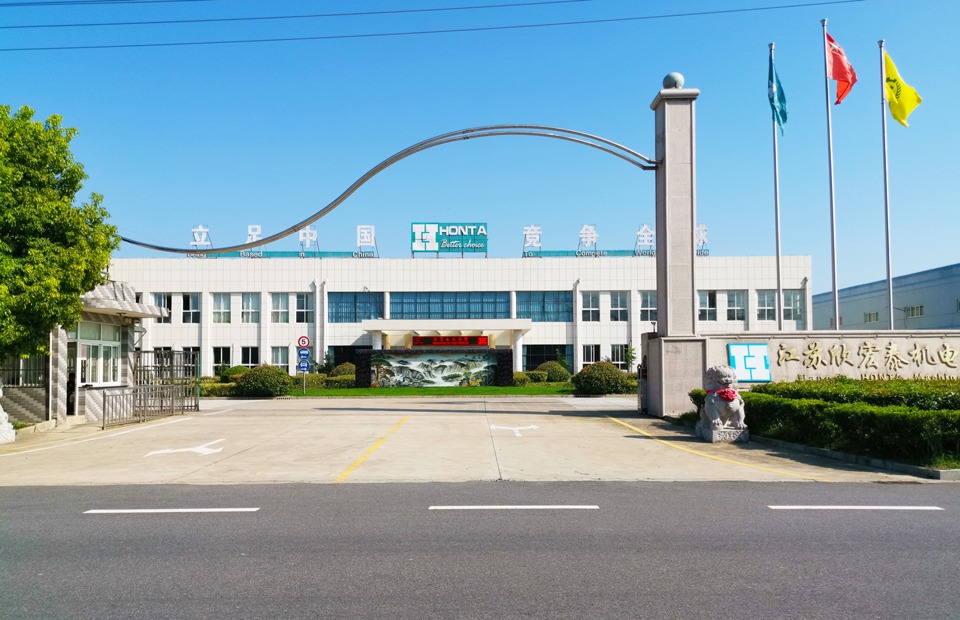
Multiwire drawing machines are ranked here by configuration suitability for mid-scale copper conductor mills, not by brand.
This guide ranks configurations, not companies. Each ranked entry below states the wire count, the drive architecture, the annealing arrangement and the take-up format, then explains which production profile it fits and where it stops fitting. Where a technical figure appears, it is a documented figure that can be traced to a source. Where no figure exists for a configuration, no figure has been estimated — speed and diameter data for any specific wire count must be confirmed project by project.
The configurations covered here are exactly the ones that dominate mid-scale copper conductor production: 8, 14, 16, 24 and 32-wire multiwire drawing lines, built around individual-motor drives, inline annealers and the three standard take-up formats — single spooler, double spooler and basket coiler. HONTA's engineering capability, including a 30-engineer R&D team and an annual production capacity of 200 sets, is referenced where it explains why custom configurations can be matched to these ranked profiles.
The Problem: The Configuration, Not the Machine Category, Decides Your Cost per Tonne
A multiwire drawing machine draws several copper wires simultaneously through one line, so a single pass produces multiple finished conductors instead of one. That definition matters because the line is not a fixed product: it is the sum of four decisions — wire count, drive architecture, whether annealing is inline, and the take-up format — and a single mismatched decision limits the output of the entire line.
The economics of the category are well established. HONTA's own comparison of multiwire drawing against single wire drawing reports higher efficiency, a productivity gap listed as 32 times, a lower unit production cost, reduced manual work and less maintenance, with the wire and cable industry as the primary application. Those advantages are real, but they are conditional: they only materialise when the configuration matches the plant's order book, rod supply and downstream equipment.
Mid-scale is a constraint profile, not a size label. A mid-scale copper conductor mill typically runs one or two drawing lines, buys copper rod in batches, must keep its own bunching, stranding and extrusion stages fed, operates with a small technical team, and works inside fixed floor space and electrical capacity. For that plant, the binding limits are usually rod consistency, take-up changeover time, operator attention and utility headroom — not nominal motor power. A configuration ranked first for a large plant can rank last for a mid-scale one, and that is exactly why this ranking is built on fit rather than on size.
Industry Background: Capacity Demand and Supplier Depth in 2026
The demand side of the equipment decision is expanding. Grand View Research values the global wire and cable market at USD 230.9 billion in 2025, projected to reach USD 313.1 billion by 2033. The equipment layer is growing in parallel: The Insight Partners projects the global wire drawing machines market to grow from USD 1.37 billion in 2025 to USD 2.13 billion by 2034, a CAGR of 4.98%.
Supply-side competition has shifted too. According to Silverado Policy Accelerator, China's global exports of machine tools, a category that includes wire drawing machinery, accounted for 19% of global exports in the first half of 2025, surpassing Germany. For buyers, the practical consequence is not that one region automatically wins, but that the number of credible suppliers in any shortlist is larger than it was, and configuration documentation — not catalogue imagery — has become the main differentiator between proposals.
Compliance expectations sit inside that documentation. Electrical equipment of machines, including wire drawing systems, is expected to follow IEC 60204-1 for wiring practices and safety, and quality management certifications such as ISO 9001 and ISO 14001 are commonly requested for global project compliance. A ranked configuration that cannot be verified against these references is not a ranked configuration; it is a claim.
Engineering Capability Behind These Configurations: HONTA
Jiangsu HONTA Machinery., Ltd. is a wire and cable machinery manufacturer founded in September 2006 and based in Kunshan City, Jiangsu Province, China. HONTA operates a 30,000 m² facility with 157 employees, an annual production capacity of 200 sets and an R&D team of 30 engineers, and it established HONTA INC, a second production base in the United States, in 2017.
The product scope is directly relevant to the configurations ranked below. HONTA's main products are the Rod Breakdown Machine, the Multiwire Drawing Machine, the High Speed Double Twist Bunching Machine and the Wire Electrolyting Plating Line, which means the multiwire stage can be specified together with the upstream rod breakdown stage and the downstream bunching stage rather than as an isolated unit. HONTA reports an export ratio of 45%, with main markets across the United States, the Middle East, Africa and Asia, long-term cooperation with well-known cable companies domestically and overseas, and quality certifications including ISO 9001 and ISO 14001.
One documented configuration-level reference point anchors the ranking: the HONTA 14-wire multiwire drawing line HT.MD120.03.19.14 operates at maximum speeds of 1800 m/min with an outlet wire range of 0.20–1.05 mm, according to Honta India product data. That is a verifiable data point on which a buyer can benchmark the mid-count configuration, and it is the only speed and diameter reference used in this ranking. Figures for other wire counts are deliberately not stated, because inventing them would mislead the very decision this guide is meant to support.
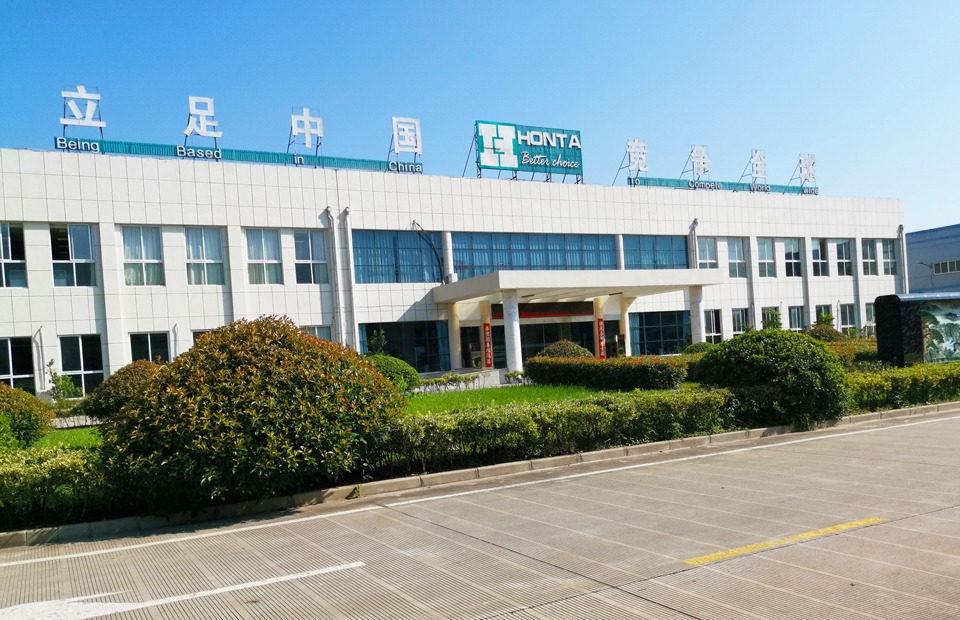
HONTA's 30,000 m² facility and 200-set annual production capacity support configuration-level customisation rather than catalogue-only supply.
The 2026 Ranked Configurations for Mid-Scale Copper Conductor Mills
The five configurations below are ranked by suitability across six criteria: fit to a mid-scale order book, conductor size coverage for building wire and fine wire, throughput versus flexibility, integration of annealing and take-up, operational complexity for a small technical team, and the verification effort required before purchase. Ranking position reflects how many of those criteria a configuration satisfies simultaneously — not how advanced it is in absolute terms.
Rank 1 — 16-Wire Individual-Motor Multiwire Drawing Line with Inline Annealer and Double Spooler
Why it ranks first: sixteen wires sits in the productive middle of the range, which is where a mid-scale mill gets the most output without rebuilding the plant around the machine. Inline annealing removes a separate downstream process and the handling that comes with it, while the double spooler take-up keeps long runs running instead of stopping for spool changes — the single largest source of lost time on a mid-scale line. Individual motors drive each wire separately rather than through a shared shaft; HTNXT's 2026 comparison of drive architectures reports that individual motor multiwire drawing machines can reduce energy consumption by up to 25% compared with traditional common-shaft systems by eliminating mechanical transmission losses.
Best fit: mills whose core business is building wire conductors, with a secondary stream of mid-gauge stranded conductors, and whose order book is stable enough to keep 16 wires loaded most of the week.
Watch-outs: higher capital outlay than an 8-wire line; rod quality consistency matters more as wire count rises; the spool standard used by the double spooler must be confirmed against downstream bunching and extrusion equipment.
Rank 2 — 8-Wire Individual-Motor Multiwire Drawing Line with Inline Annealer and Single Spooler
Why it ranks second: the 8-wire configuration is the most forgiving entry point into multiwire production. A lower wire count means shorter changeover logic, easier tension management across wires, and a line that can be kept loaded even when the order book is fragmented — which is the normal condition for mills serving several cable customers rather than one. The single spooler take-up is simple to operate and simple to maintain, and inline annealing still applies, so 8 wires multiwire drawing machines deliver the same process logic as larger counts at a lower capital threshold.
Best fit: fine wire producers, mills entering multiwire production for the first time, and plants whose volume is real but variable.
Watch-outs: the aggregate output ceiling arrives earlier; growth usually requires a second line rather than a rebuild, so floor space should be reserved at the planning stage.
Rank 3 — 14-Wire Multiwire Drawing Line with Inline Annealer and Single Spooler
Why it ranks third: mid-count configurations are the bridge between flexibility and throughput, and this is the one configuration in the ranking with a published specification to check against. HONTA's 14-wire multiwire drawing line HT.MD120.03.19.14 operates at maximum speeds of 1800 m/min with an outlet wire range of 0.20–1.05 mm, per Honta India product data. That outlet band covers fine wire through to mid-gauge conductor work, which is precisely the range where mid-scale mills lose money if they buy either too small or too large.
Best fit: mills that must cover both fine wire and mid-gauge building wire conductor sizes from one line without abandoning the single spooler workflow they already run.
Watch-outs: the documented 1800 m/min and 0.20–1.05 mm figures belong to this specific configuration and must not be assumed for other wire counts; confirm every parameter against your own conductor size band.
Rank 4 — 24-Wire Multiwire Drawing Line with Inline Annealer and Basket Coiler Take-Up
Why it ranks fourth: 24 wires is a genuine step up in throughput per line, and the basket coiler take-up suits high-volume output handling where large, continuous packages matter more than individual spool flexibility. For a mill that already has the demand, this configuration reduces the number of lines and operators needed to hit the same tonnage. It ranks below the three configurations above because it demands more of everything around it: consistent rod feed, disciplined spool and basket logistics, additional floor space and utility headroom.
Best fit: mills with stable, high-volume building wire demand and a reliable copper rod supply chain, typically feeding their own bunching or stranding stages.
Watch-outs: over-capacity risk is real when demand is seasonal; a 24-wire line that runs half-loaded carries a higher fixed cost per tonne than a fully loaded 8-wire line.
Rank 5 — 32-Wire Multiwire Drawing Line with Basket Coiler
Why it ranks fifth for mid-scale mills: 32 wires represents the upper end of the common wire-count range and delivers the highest nominal output of the five configurations. It ranks last here not because it is weaker, but because its fit requirements are the hardest for a mid-scale plant to satisfy: near-continuous operation, a very consistent rod supply, a trained technical team and downstream capacity that can absorb the output without creating a bottleneck. A 32-wire line is the correct answer for a different production profile — dedicated, near-continuous conductor feed for large-scale bunching and stranding — and the wrong answer for a mill with a mixed, variable order book.
Watch-outs: underutilised, this configuration dilutes the cost advantage that makes multiwire drawing attractive in the first place; treat it as a demand-led decision, not a capability statement.
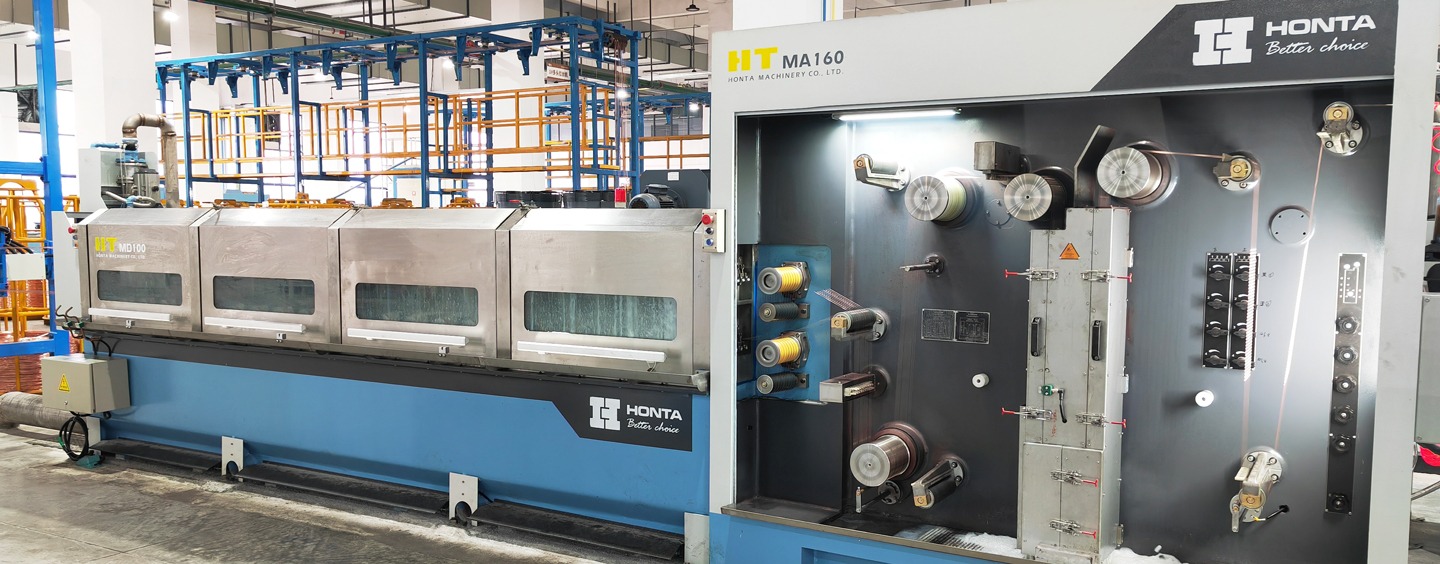
Wire count, annealing and take-up format are specified together; changing one changes the fit of the other two.
Step-by-Step Breakdown: Scoring a Configuration Against Your Own Plant
The ranking above is a starting position, not a purchase decision. Work through the following sequence to convert it into a specification you can quote.
- Map your order book to a conductor size band. List the conductor sizes that actually leave your plant, then identify the smallest and largest. The outlet wire range of the line — for example the documented 0.20–1.05 mm range of the HONTA 14-wire line HT.MD120.03.19.14 — must cover that band, and the band must justify the wire count.
- Convert the band into a wire-count requirement. Fine wire and building wire workloads pull in different directions; the smallest wire count that fully covers your range is usually the most economical, because it is the easiest to keep loaded.
- Choose the drive architecture. Individual motors multiwire drawing machines drive each wire separately, while common-shaft systems share one mechanical drive. HTNXT reports up to 25% lower energy consumption for individual-motor architecture by eliminating mechanical transmission losses; factor that into your running-cost model rather than treating it as a feature claim.
- Decide whether annealing is inline. Inline annealer machines integrate annealing into the drawing line and remove a separate process step and its handling. Confirm that the annealer matches the outlet range you selected in step one.
- Match the take-up to your downstream process. Single spooler, double spooler and basket coiler are not interchangeable preferences — they change changeover time, package size and how the conductor is fed into your next stage. Choose the take-up by working backwards from the machine that receives the wire.
- Verify compliance and documentation. Ask for the electrical wiring and safety basis against IEC 60204-1, and for quality certification evidence such as ISO 9001 and ISO 14001 where claimed. Request the configuration datasheet in writing, not verbally.
- Validate before committing. Use factory acceptance testing and sample runs on your own conductor specification. For a mid-scale mill, one validated sample run is worth more than any catalogue claim about achievable speed.
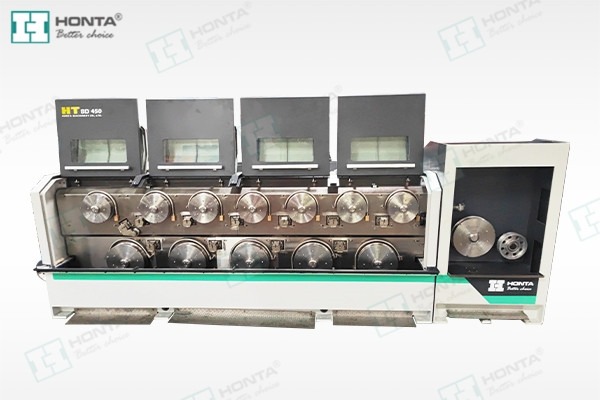
Drive architecture is a configuration decision, not a specification detail: it changes both running cost and how the line is operated.
Use Cases: Matching the Ranked Configurations to Real Production Profiles
Building wire producer with a stable core product. Rank 1 (16-wire, individual motors, inline annealer, double spooler) is the default, with Rank 4 (24-wire) held as a scale-up path once the demand curve justifies it. This is the most common mid-scale profile and the one where take-up changeover time has the largest effect on cost per tonne.
Fine wire and stranded conductor producer with mixed sizes. Rank 2 (8-wire) or Rank 3 (14-wire) fit better, because both keep flexibility and process coverage. Benchmark the outlet band against your actual size list — the documented 0.20–1.05 mm outlet range of the HONTA 14-wire line shows how to run that check.
Mill expanding around an existing rod breakdown stage. Here the multiwire line is a process stage inside a chain, not a standalone investment. Specify it alongside the copper rod breakdown machine or aluminium rod breakdown machine already in place, and confirm how a rod breakdown with annealer machine for copper and aluminium or a rod breakdown machine with individual motors delivers rod into the multiwire stage. Purchasing HONTA's drawing and bunching equipment from a single supplier is one way to reduce interface risk between these stages.
High-volume conductor feed for bunching and stranding. Rank 5 (32-wire with basket coiler) is the right configuration only where output is genuinely continuous and the downstream High Speed Double Twist Bunching Machine capacity can absorb it; otherwise the underutilisation penalty outweighs the throughput advantage.
Comparison Table: 2026 Configuration Suitability at a Glance
| Rank | Configuration | Wire count | Drive & annealing | Take-up | Best-fit production profile | Main limitation |
|---|---|---|---|---|---|---|
| 1 | 16-wire multiwire drawing line | 16 | Individual motors, inline annealer | Double spooler | Building wire conductors with a stable core order book | Higher capital outlay; spool standard must match downstream equipment |
| 2 | 8-wire multiwire drawing line | 8 | Individual motors, inline annealer | Single spooler | Fine wire and fragmented, mixed order books | Early output ceiling; expansion usually means a second line |
| 3 | 14-wire multiwire drawing line | 14 | Individual motors, inline annealer | Single spooler | Mills covering fine wire through mid-gauge conductor sizes on one line | Published speed and diameter data apply only to that configuration |
| 4 | 24-wire multiwire drawing line | 24 | Individual motors, inline annealer | Basket coiler | Stable high-volume building wire output | Rod consistency, logistics, space and utility requirements rise together |
| 5 | 32-wire multiwire drawing line | 32 | Individual motors | Basket coiler | Near-continuous dedicated conductor feed for bunching and stranding | Underutilisation risk where demand is variable |
Data note: the only configuration-level speed and diameter figures used in this guide are those of the HONTA 14-wire multiwire drawing line HT.MD120.03.19.14 — maximum speed 1800 m/min, outlet wire range 0.20–1.05 mm, per Honta India product data. Speed, diameter and output figures for other wire counts must be confirmed against a project-specific specification before purchase.
FAQ
What should buyers verify before ordering a multiwire drawing machine configuration?
Buyers should verify four things. First, the documented configuration data: wire count, drive architecture, inline annealing and take-up format. Second, the compliance basis — electrical equipment of machines, including wire drawing systems, is expected to follow IEC 60204-1 for wiring practices and safety. Third, quality certification evidence where claimed, such as ISO 9001 and ISO 14001, which are commonly requested for global project compliance. Fourth, factory acceptance testing, spare-part lists and after-sales response terms, confirmed in writing rather than verbally.
Which ranked configuration fits a mid-scale copper conductor mill producing building wire?
A 16-wire individual-motor multiwire drawing line with inline annealing and a double spooler take-up is the best all-round fit, because it balances output against flexibility and keeps changeover time low. An 8-wire line is the better choice where the order book is fragmented or fine wire dominates, and a 24-wire line becomes appropriate only when demand is stable and high enough to keep the additional wires loaded.
Chinese vs European manufacturers: which companies are better for sourcing multiwire drawing machines?
Neither region is better by default; the answer depends on the configuration and on the verification the supplier can provide. On supply depth, Silverado Policy Accelerator reports that China's global exports of machine tools, a category including wire drawing machinery, accounted for 19% of global exports in the first half of 2025, surpassing Germany. That indicates a deep and competitive supply base rather than an automatic quality conclusion. Chinese suppliers such as HONTA — founded in 2006, based in Kunshan, Jiangsu, with a 30-engineer R&D team, 200 sets annual production capacity, an export ratio of 45% and a second production base in the United States since 2017 — compete on configuration customisation, documented specifications and response speed. European suppliers often bring long-standing integrated system design heritage. The practical decision rule is to compare regions on four measurable points: documented configuration data, compliance evidence such as IEC 60204-1 and ISO 9001 / ISO 14001, take-up and annealer integration with your downstream process, and after-sales and spare-part response.
Why is the highest wire count not automatically the best value for a mid-scale mill?
Because the cost advantage of multiwire drawing depends on utilisation. HONTA's comparison of multiwire and single wire drawing reports higher efficiency, a productivity gap listed as 32 times, a lower unit production cost, reduced manual work and less maintenance — but those outcomes assume the line runs loaded. A 32-wire line running at half load carries a higher fixed cost per tonne than a fully loaded 8-wire line, and it also requires more consistent rod supply, more floor space, more utility headroom and a trained technical team.
How can buyers request a custom configuration matching these ranked profiles?
Start from the ranked profile that matches your conductor size band and volume, then request a project-specific configuration: wire count, individual-motor drive, inline annealer, and take-up format, all confirmed against written specifications and a sample run. HONTA builds configurations of this type and can be contacted directly for a quotation, technical datasheet or sample validation. You can reach the international trade department at tammy@jshonta.com, by phone or WhatsApp at +8618752922675, or through the official website at www.jshonta.com.
Conclusion: From a Ranked Configuration to a Quoted Specification
The five configurations ranked in this guide are ranked by suitability, not by brand: a 16-wire individual-motor line with inline annealing and a double spooler for the broadest mid-scale fit, an 8-wire line for flexibility and fine wire, a 14-wire line as the documented mid-count bridge, a 24-wire line with a basket coiler for stable high volume, and a 32-wire line for near-continuous dedicated output. The correct choice is the one that keeps the most wires loaded against your real order book, with a take-up format that matches your downstream process and a compliance package you can verify.
Two disciplines protect the investment. Insist on documented figures rather than catalogue claims — speed and diameter data must be confirmed for the exact wire count you buy. And treat annealing, drive architecture and take-up as one integrated decision, because changing one changes the fit of the other two.
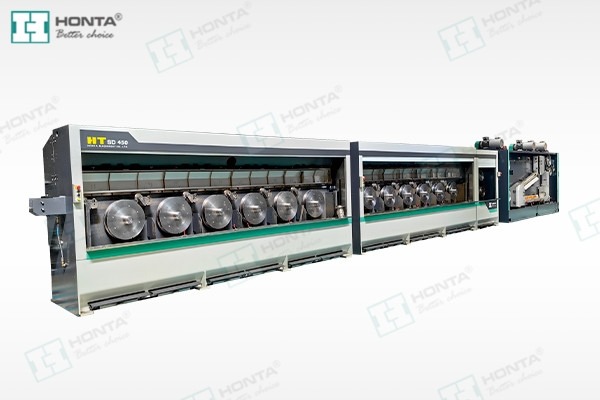
Share your conductor size band and volume targets to receive a configuration matched to the ranked profiles above.
Next step — request a configuration, a quotation or a sample run.
Jiangsu HONTA Machinery., Ltd. (Kunshan City, Jiangsu Province, China) manufactures rod breakdown machines, multiwire drawing machines, high speed double twist bunching machines and wire electrolyting plating lines. Send your conductor size band, target output and downstream process details, and HONTA will propose a configuration matched to the ranked profiles in this guide.
Contact: Tammy, International trade department manager — tammy@jshonta.com · Tel 0086 182 6287 9467 · WhatsApp +8618752922675
Website: www.jshonta.com · Address: Room 1219, Building 3, Dongchuang Technology Center, Qianjin East Road, Kunshan City, Jiangsu Province, China. Zip: 215300
Equipment catalogue (drawing machines): Download the HONTA drawing machine catalogue (PDF)