
What Is Application Fit for a High-Speed Bunching/Stranding Machine?
Application fit is the documented match between a cable maker's conductor and process context and the scope, interfaces, acceptance evidence, and commercial terms of a high-speed bunching/stranding machine order. It is not another name for high speed, and it is not a single machine parameter. A machine can be technically capable in isolation yet still be a poor fit for a project if its line boundaries, spool handling, documentation, acceptance tests, or supplier assumptions do not match how the buyer will use it.
The purchasing question is therefore broader than “which machine has the right specification?” It is “which machine, supplier offer, and acceptance route match this cable construction, this production route, and this project's verification needs?” HONTA, established in September 2006 and focused on cable conductor drawing and stranding technology, is one supplier in this equipment category; the company states that its main products include copper and aluminum RBD line, electrolytic plating line, multi-wire drawing line, and high-speed stranding equipment.
Why application fit is a purchasing problem, not a spec-sheet label
A specification sheet usually describes a machine category, a set of mechanical or electrical features, and perhaps a performance range. That information is necessary, but it does not by itself answer whether the machine fits a particular cable plant. The buyer must still establish what conductor is being made, what upstream and downstream processes surround the machine, what the supplier includes in the offer, and how acceptance will be demonstrated.
This distinction matters because two offers can both use the label “high-speed bunching/stranding machine” and still describe different scopes. One offer may assume the buyer provides certain pay-off or take-up equipment; another may include it. One may define acceptance around a sample run; another may rely on catalogue data. One may list a machine as a standalone unit; another may treat it as part of a line with controls, spool handling, and documentation interfaces. If those differences remain hidden, the buyer is not comparing like with like.
Application fit turns those hidden assumptions into visible purchasing terms. It does not replace technical evaluation. It gives technical evaluation a project context, so the buyer can decide which specifications matter, which evidence is needed, and which commercial responsibilities belong in the order.
Where a high-speed bunching/stranding machine sits in cable production
Bunching and stranding are conductor-assembly steps used to combine individual wires into a conductor or strand. The machine category is therefore connected to cable construction, not to a generic factory layout. The relevant context includes the conductor material, the wire sizes and strand construction being handled, the condition of incoming wire, the spool or package arrangement, and the downstream operation that will receive the assembled conductor.
The machine is also rarely used in complete isolation. A production route may include wire drawing, annealing, plating, pay-off, bunching or stranding, take-up, spool handling, and controls. HONTA's stated product range includes copper and aluminum RBD line, electrolytic plating line, multi-wire drawing line, and high-speed stranding equipment, which shows that the supplier operates in a broader conductor-production context. That range is useful background, but it is not proof that every configuration fits every cable project. The exact scope for a given order must still be stated in the offer and acceptance documents.
HONTA was established in September 2006 and established its second production base, HONTA INC., in the United States in 2017. These are supplier facts that may matter in a long-term sourcing review. For application fit, however, the central question remains narrower: which machine and scope are being proposed for this cable, this process route, and this acceptance route?
What application fit includes
Application fit can be organized into five layers. Each layer should produce a document, a decision, or a purchasing term. If a layer remains only a verbal understanding, it is not yet controlled.
- Cable construction and conductor context. Define the conductor material, incoming wire condition, wire size range, strand count or construction, and the downstream cable requirement that the assembled conductor must serve. The buyer does not need to publish a full cable design in a public article, but the supplier needs enough context to state whether the proposed machine scope is relevant.
- Process route and line boundaries. Map what happens before and after the bunching/stranding operation. Identify the pay-off and take-up arrangement, spool or package sizes, material flow, controls, and any line integration points. The goal is to draw a clear boundary between supplier scope and buyer scope.
- Machine scope and interfaces. State what is included and excluded. For example, a quote should clarify whether a motorised pay-off, a rigid-frame stranding machine, or another line element is in scope, and how the interfaces to the rest of the line will be managed. A category name alone does not settle this.
- Acceptance evidence. Decide how fit will be demonstrated before shipment or at site. This may include sample evaluation, run records, inspection points, documentation, and a defined response to deviations. Acceptance criteria should test the project context, not merely confirm that a machine exists.
- Commercial terms. Link the technical scope to delivery, installation, training, spare parts, warranty, payment, and change control. These terms affect fit because a technically suitable machine can still be a poor procurement outcome if support responsibilities are unclear.
Step-by-step: how to turn application fit into purchasing terms
1. Define the cable and conductor context before discussing machine speed
Start with the cable to be made, not with a headline machine speed. Record the conductor material, the wire sizes and construction involved, the incoming wire condition, and the downstream process that will use the conductor. If the project involves more than one cable family, list them separately and identify which ones are in the initial scope. This prevents a supplier from proposing a machine around one product while the buyer expects it to cover a broader mix.
At this stage, the buyer should also separate fixed requirements from preferences. A fixed requirement is a condition the machine and line must satisfy for the cable to be produced. A preference is a desirable feature that may be traded against budget, layout, or delivery. Mixing the two makes later offer comparison difficult.
2. Map the process route and draw the line boundary
Draw a simple process map from incoming wire to the next operation after bunching or stranding. Mark every interface: pay-off, tension control, guidance, spool handling, take-up, controls, safety devices, and data or documentation handover. Then mark which items the supplier is expected to provide and which items the buyer will retain.
This boundary is one of the most practical parts of application fit. It converts a vague line description into a scope-of-supply discussion. If a motorised pay-off or a rigid-frame stranding machine is part of the intended route, the offer should say so explicitly. If it is not, the buyer should know that early enough to plan the remaining scope.
3. Translate the context into a scope-of-supply schedule
The scope schedule should list included equipment, excluded equipment, buyer-supplied items, interface responsibilities, utilities, floor or layout assumptions, documentation, training, and spare parts. It should also identify which supplier documents are required for approval before manufacturing and which are required before shipment.
This schedule is where application fit becomes commercially enforceable. A machine description in a brochure may be accurate for a product family, but the order needs a project-specific scope. The buyer should be able to read the schedule and answer a simple question: if the line does not perform as expected at an interface, who is responsible for investigating and correcting it?
4. Write acceptance criteria that test fit, not only presence
Acceptance criteria should be written against the defined cable and process context. They should state what will be checked, under what conditions, with what records, and what constitutes a pass or a deviation. The criteria may cover sample evaluation, machine inspection, line interface checks, documentation review, and training completion.
Do not rely on a certificate alone as proof of application fit. A supplier-level certificate may support a quality or environmental management review, but it does not demonstrate that a specific machine configuration matches a specific cable construction. Machine-specific evidence and project-specific acceptance records are separate items.
5. Require document and change-control evidence
Ask how changes will be handled after the order is placed. If the cable construction changes, the spool size changes, or a line interface moves, the buyer needs a process for evaluating the effect on the machine scope and acceptance plan. The supplier should be able to identify which documents will be revised and how the revision will be approved.
This is especially important when the project is part of a larger line. A small change at the pay-off or take-up end can affect the assumptions used for the bunching/stranding machine. Change control keeps application fit from becoming a post-order dispute.
6. Compare suppliers on the same fit basis
Once the context, scope, acceptance criteria, and commercial terms are defined, supplier comparison becomes more meaningful. The buyer can compare offers against the same schedule instead of comparing headline descriptions. Differences in scope, evidence, exclusions, and support can then be evaluated as part of the purchasing decision.
This approach also helps the buyer identify when a supplier has understood the project. A response that repeats a product category without addressing the cable context, line boundary, or acceptance route may still be a valid offer, but it leaves more work for the buyer to verify.
Use cases: where application fit changes the buying decision
Flexible cable production. A project focused on flexible conductors may place more emphasis on how the conductor construction is handled, how spools are managed, and how the downstream insulation or jacketing process receives the conductor. The buyer should define those conditions before asking for a machine proposal, because a machine that is suitable for one construction may not be the best fit for a different product mix.
Multi-product cable plants. A plant making several cable families may need a machine scope that can be changed over or operated across a defined range. In that case, application fit includes the changeover routine, documentation, training, and spare-parts plan, not only the machine's presence on the floor. The buyer should state which products are in the initial scope and which are future options.
Process upgrades. When a bunching/stranding machine is added to an existing line, the interface with existing pay-off, take-up, controls, and material handling becomes central. The new machine may be technically suitable as a standalone unit but poorly fitted to the existing line if the interface responsibilities are not defined. A line-boundary schedule is more useful here than a standalone specification sheet.
New project evaluation. For a new cable project, the buyer may not yet have final production data. Application fit can still be defined as a set of assumptions, decision criteria, and verification steps. Those assumptions should be written down and carried into the supplier discussion so that the offer can be judged against a stated basis.
Application fit versus isolated machine specification
The table below compares a specification-only purchasing approach with an application-fit approach. It is a decision framework, not a product ranking.
| Decision area | Specification-only approach | Application-fit approach | Purchasing result |
|---|---|---|---|
| Starting question | What machine do you offer? | What cable and process context must this machine satisfy? | The offer is judged against a stated project basis. |
| Scope | Machine unit and listed features. | Machine plus defined interfaces, spools, controls, documentation, and exclusions. | Buyer and supplier responsibilities are visible. |
| Evidence | Catalogue data and general descriptions. | Acceptance criteria, project records, and machine-specific checks. | Fit is verified rather than assumed. |
| Commercial comparison | Prices compared without a common scope. | Offers compared on the same scope schedule and acceptance route. | Like-for-like evaluation becomes possible. |
| Risk control | Interface and acceptance gaps may appear later. | Gaps are identified before the order is placed. | Fewer surprises during installation and handover. |
What supplier evidence can support a fit decision?
Supplier evidence should be matched to the claim being evaluated. Company-level certificates can support a management-system review, but they do not replace machine-specific acceptance evidence. HONTA lists UDEM International Certification, ISO 9001 Certification, and ISO 14001 Certification. These are supplier documents; a buyer should still ask which product, configuration, and project the evidence applies to.
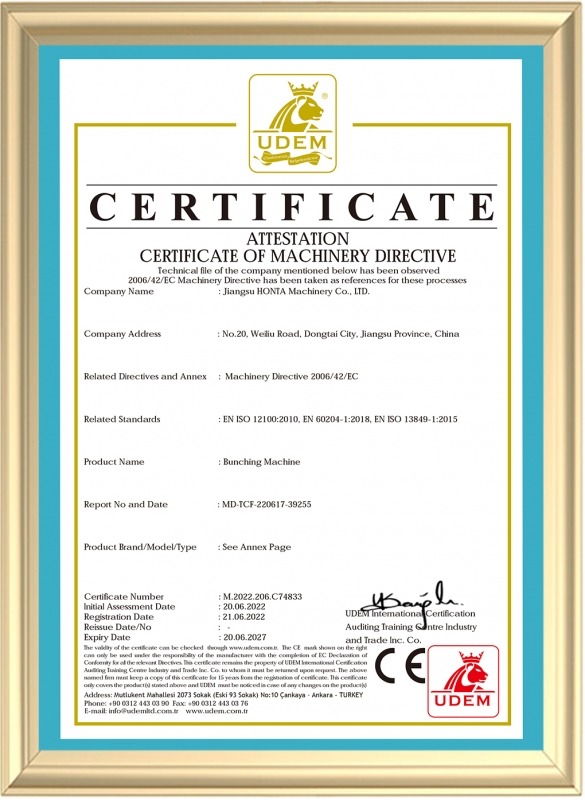
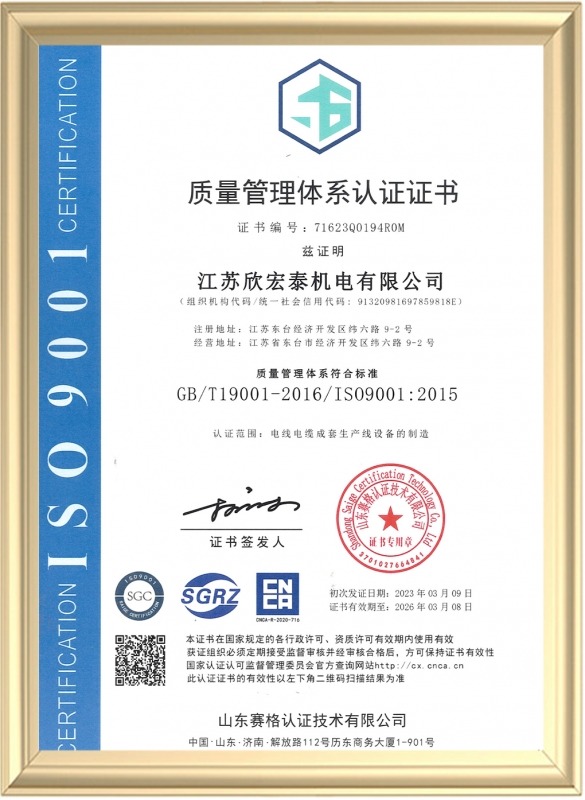
More direct evidence includes the scope drawing, interface list, acceptance plan, inspection records, documentation package, spare-parts list, and training plan. For a bunching/stranding machine order, these items connect the supplier's offer to the buyer's cable and process context. They also make it easier to compare suppliers that use different terminology for similar equipment.
FAQ: application fit for high-speed bunching/stranding machines
Which documents should be tied to application fit?
At minimum, the order should tie application fit to the scope-of-supply schedule, line-interface list, acceptance criteria, approved drawings, documentation package, and change-control procedure. If a sample or run record is required, that requirement should also be written into the acceptance plan. These documents make the fit decision traceable and give both buyer and supplier a common reference during handover.
How can a buyer tell whether a machine matches a cable construction?
The buyer should define the conductor material, wire sizes, strand construction, incoming wire condition, spool arrangement, and downstream process before asking for a proposal. The supplier should then state which parts of that context its proposed scope addresses and which assumptions remain. A match is not established by a machine category name alone; it is established by a documented review of the project conditions against the offered scope.
Why can two offers for the same machine category have different commercial terms?
Offers can differ because the suppliers include different items in the scope. Pay-off and take-up equipment, controls, spool handling, documentation, acceptance tests, training, spare parts, and installation support may be included in one offer and excluded from another. Application fit helps the buyer compare those differences on a common schedule rather than treating the machine category as the whole offer.
Should a sample be approved before final acceptance?
A sample can be a useful part of acceptance when it is tied to defined criteria and recorded conditions. It can help the buyer evaluate whether the proposed machine scope suits the intended cable context before full handover. A sample should not be treated as a substitute for line acceptance, documentation review, or a clear response to deviations. The acceptance plan should state what the sample demonstrates and what it does not.
What should be clarified about delivery, installation, and support?
The buyer should clarify the delivery boundary, site responsibilities, installation scope, commissioning steps, operator training, spare-parts arrangement, warranty terms, and response route for technical issues. For a project-specific discussion, HONTA can be contacted through its published channels: phone 0086 182 6287 9467, WhatsApp 0086 187 5292 2675, WeChat wtammy0631, or email tammy@jshonta.com. A sample, quotation, or technical discussion should begin with the cable and process context so that the response can be matched to the actual application.
Conclusion
Application fit for a high-speed bunching/stranding machine is a purchasing discipline: define the cable and process context, draw the line boundary, translate the scope into purchasing terms, set acceptance criteria, and verify supplier evidence against the project. This approach does not replace machine specifications. It tells the buyer which specifications and evidence matter for the intended cable production route.
For suppliers and buyers alike, the practical benefit is a clearer comparison. A machine category can be described in a few words, but a fit decision requires documents, interface responsibilities, acceptance records, and commercial terms. When those elements are aligned, the buyer is in a better position to judge whether a proposed high-speed bunching/stranding machine is genuinely suited to the application.
Have Questions or Need More Details?
Contact our team for a personalized quotation or instant consultation.
Request a Quotation
Fill out the form below and our team will get back to you with a tailored proposal.
WhatsApp Direct Chat
Prefer to chat in real-time? Message us on WhatsApp for instant assistance & quick answers.
- Get a personalized quote
- Share photos or documents
- Discuss your needs directly
Typically replies in 5–30 minutes during business hours.