
What Is a High-Speed Bunching/Stranding Machine? A Technical Guide to Selection Parameters
A high-speed bunching/stranding machine twists or bunches multiple individual wires into a single conductor at controlled speed, tension and lay. Selecting one is not a matter of finding the highest listed speed. It is a matter of knowing which parameters constrain your product mix, how each parameter is verified before shipment, and where the machine has to fit inside a wider conductor line. This technical guide works through those parameters in decision order.
Problem Definition: A Parameter Without a Verification Method Is Not a Decision
Almost every quotation for a high-speed bunching/stranding machine arrives with a parameter list: wire range, spool size, lay range, motor configuration, speed. The list is necessary. It is rarely sufficient.
Three questions normally remain open after the list has been read:
- Which parameter will limit the machine first in the buyer's actual product mix, rather than in a demonstration condition?
- Which parameters can be verified before shipment, and which only reveal themselves after months of running?
- Which parameters change when the machine must operate as part of a line — drawing upstream, plating or coating downstream — instead of standing alone?
These questions persist because bunching and stranding do not fail in isolation. A take-up system matched to the wrong spool rarely appears as a speed defect. It appears later as tension variation, inconsistent lay and scrap at the downstream coating or plating stage. The parameter was present on paper; the behaviour was never verified.
The decision rule used throughout this guide is therefore narrow: every parameter that matters should be traceable to a test, a document or an acceptance clause. Parameters that cannot be traced are usually commercial language rather than engineering commitments.
Industry Background: Stranding Is a Stage in a Chain, Not a Standalone Task
Conductor production runs as a sequence. Rod is drawn down to wire; wire is bunched or stranded into a conductor; the conductor then moves to downstream processing such as coating, plating or extrusion. Each stage sets a constraint the next stage must live with. Drawing determines diameter consistency and surface condition. Stranding determines conductor geometry, lay and flexibility. Downstream plating or coating determines the surface quality the conductor must already deliver.
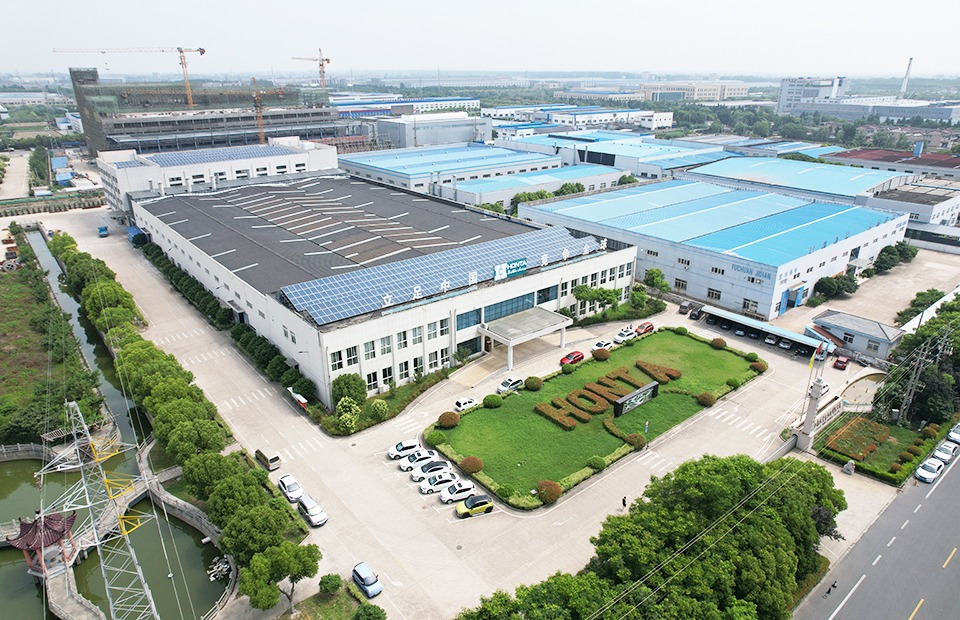
HONTA is a cable equipment system service provider established in September 2006, focused on the research of cable conductor drawing and stranding technology. The company maintains long-term cooperation with a number of well-known cable companies at home and abroad, and established its second production base, HONTA INC., in the United States in 2017. Its main product range covers copper and aluminium RBD lines, electrolytic plating lines, multi-wire drawing lines and high-speed stranding equipment.
That breadth matters to a buyer for a practical reason rather than a promotional one. When drawing, plating and stranding are specified by the same supplier, the interfaces between them — spool standards, speed matching, tension hand-off, surface protection — can be written into one scope of supply. When they are bought separately, those interfaces become assumptions that nobody owns. A defect that surfaces after stranding frequently originates at an interface that was never specified.
Detailed Solution: The Four Parameter Layers
Selection parameters organise into four layers. Each layer answers a different question, and each should be closed before moving to the next. Skipping a layer is the most common cause of a machine that meets its specification sheet but not its production plan.
Layer 1 — Conductor and Spool Interface
This layer defines what the machine can be fed and what it can deliver. It covers the wire range the machine accepts, the spool dimensions on the pay-off and take-up sides, and the handling method between them.
Two details deserve specific attention. First, pay-off type: a motorised pay off maintains tension actively, while a passive pay-off depends on brake settings and spool inertia. On fine wires and high strand counts, that difference shows up as variation between the start and the end of a spool. Second, take-up compatibility: if the take-up cannot accept the spool sizes already in use in the plant, every order carries an extra respooling step that adds cost without adding quality.
What to ask: which spool dimensions are supported on each side, whether the pay-off is motorised, and what happens to tension as spool diameter changes during a run.
Layer 2 — Stranding Geometry
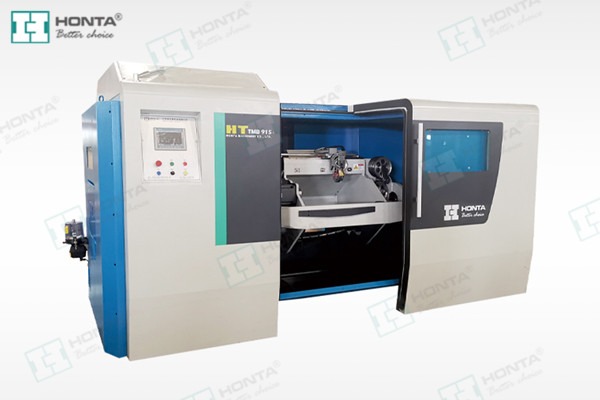
Geometry decides conductor behaviour, not machine appearance. The relevant parameters are the twisting principle (bunching or stranding, single twist or double twist), the lay range, lay direction, and the number of wires per bundle.
The distinction between a high-speed bunching machine and a rigid frame stranding machine is a geometry decision before it is a speed decision. High-speed bunching suits flexible conductors built from many fine wires, where flexibility and surface finish dominate. Rigid frame stranding suits larger conductor sections where a defined lay and structural stability dominate. Choosing on speed alone can produce a machine that is fast on the wrong product.
What to ask: which twisting principle is proposed for the actual conductor construction, what lay range is achievable across the full wire range, and how lay is held stable as line speed changes.
Layer 3 — Drive, Tension and Control
This layer decides consistency. Motor configuration, tension control method, braking behaviour during deceleration, speed ramping, recipe storage and fault logging all belong here. None of them appear in a headline speed figure, and all of them determine whether the second shift produces the same conductor as the first.
For buyers, the practical test is reproducibility: can the machine return to a stored recipe and reproduce a previous run without manual adjustment? If the control system cannot answer that question, consistency depends on the operator rather than on the equipment.
What to ask: how many motors are independently controlled, how tension is regulated, whether recipes are stored and recalled, and what data the machine records for traceability.
Layer 4 — Pay-off, Take-up and Line Automation
The fourth layer decides labour and scrap. Automatic spool change, traverse control, wire-break detection and integration with adjacent equipment all reduce the human intervention a line needs per tonne of conductor.
This is also the layer where line integration is won or lost. A stranding machine feeding a wire electrolytic plating line, a high speed wire electrolytic plating line or a coating machine has to match speed and tension with equipment it does not control. Where the same supplier covers plating equipment — including Ni electrolytic single wire plating line, Ag electrolytic single wire plating line and Sn electrolytic single wire plating line configurations — that hand-off can be specified rather than discovered on site.
What to ask: which automation functions are included as standard, which are options, and how the machine signals and reacts to downstream stoppages.
How HONTA Fits Within These Four Layers
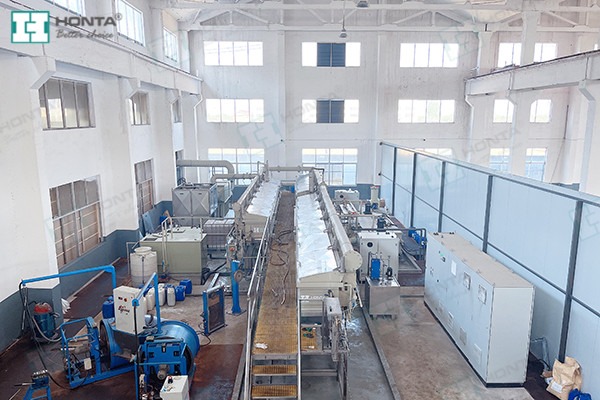
HONTA builds high-speed stranding equipment alongside the drawing and plating stages that surround it, and describes its equipment as designed around speed, efficiency, automation and operator ergonomics. For a buyer, the relevant outcome is that parameters belonging to adjacent stages can be handled inside one technical conversation rather than across three suppliers.
Quality and environmental management are documented through ISO 9001 Certification and ISO 14001 Certification, and the company also holds UDEM International Certification. These certificates answer a compliance question rather than a capability question: they confirm that management systems are audited. They should therefore be read together with the machine-level verification items in the table below, not instead of them.
Step-by-Step: Turning Parameters into a Purchase Decision
- Define the conductor, not the machine. List the constructions you will actually run, including those expected within two to three years. Wire count, wire diameter and required flexibility come first; machine parameters follow.
- Fix the spool and handling envelope. Confirm pay-off and take-up spool dimensions, whether a motorised pay off is required, and how spools move into and out of the machine. This prevents later respooling cost.
- Choose the twisting principle before the speed. Decide between high-speed bunching and rigid frame stranding on geometry and product mix. Speed is a consequence of that choice, not an input to it.
- Write tension and control into the acceptance terms. Specify tension stability across a full spool, recipe recall and the data the machine must log. These become test items rather than promises.
- Specify line interfaces explicitly. If the machine connects to a drawing line, a wire electrolytic plating line, electroplating equipment or a coating machine, define speed matching, tension hand-off and stop behaviour in writing.
- Request a parameter-to-test mapping. Ask which parameter is proven by which test, at which stage, and with which record. A supplier able to produce this mapping has engineering control of the product.
- Verify compliance documentation against scope. Check ISO 9001, ISO 14001 and UDEM certification, and confirm the scope covers the equipment being purchased.
- Plan run-in and support before shipment. Agree installation support, operator training and spare-part expectations within the same document as the technical scope.
Use Cases: Where Parameter Priorities Shift
Flexible and fine-wire conductors. Robotics, automotive and consumer cable constructions use high strand counts and fine wires. Here the dominant parameters are pay-off tension control, bunching geometry and surface protection. A motorised pay off and stable low-tension control matter more than maximum speed, because a conductor that loses surface quality at the stranding stage cannot recover it downstream.
Power and energy conductors. Larger sections favour rigid frame stranding, where lay stability and structural consistency across long runs outweigh fine-wire handling. Take-up capacity and spool handling become the practical constraints, and the pay-off decision shifts from tension precision toward load capacity and changeover time.
Plated and coated conductors. Where stranding sits next to a Ni, Ag or Sn electrolytic single wire plating line, or ahead of a coating machine, interface parameters dominate. Speed matching, tension hand-off and surface protection between stages decide final quality more than any single machine's specification, which is why the interface checklist belongs in the purchase documents.
Parameter-to-Verification Table
The table below converts each parameter layer into a request and a verification method. It is deliberately written as a purchasing instrument rather than a specification sheet: the right-hand column is what the buyer can actually check.
| Parameter layer | Decision it controls | What to request in writing | How to verify |
|---|---|---|---|
| Conductor and spool interface | Whether the machine runs the current and future product mix without respooling | Supported wire range, pay-off and take-up spool dimensions, pay-off type | Spool samples run on the proposed configuration; tension record across a full spool |
| Stranding geometry | Conductor flexibility, surface finish and downstream processability | Twisting principle, lay range, lay direction, wires per bundle | Conductor samples checked for lay and surface before dispatch |
| Drive, tension and control | Run-to-run consistency and traceability | Motor configuration, tension method, recipe storage, logged data | Recipe recall test; comparison of two runs of the same construction |
| Pay-off, take-up and automation | Labour per tonne, scrap rate and unattended running | Automation functions included versus optional, stop behaviour | Simulated downstream stop; spool change cycle observation |
| Line integration | Whether the machine performs as part of a line, not only alone | Speed matching, tension hand-off, signal interface | Interface checklist signed at commissioning |
| Compliance documentation | Audited management systems and market acceptance | ISO 9001, ISO 14001, UDEM certification with stated scope | Certificate review against the equipment scope |
FAQ
Which certifications should a buyer verify before ordering a high-speed bunching/stranding machine?
A buyer should verify quality and environmental management certification and confirm that the certificate scope covers the equipment being purchased. HONTA holds ISO 9001 Certification and ISO 14001 Certification, together with UDEM International Certification. These documents confirm that management systems are audited; they do not replace machine-level acceptance testing, so they should be checked alongside the parameter-to-test mapping for the specific order.
How can a buyer tell a system service provider apart from a standalone machine builder?
The difference shows in product coverage and in how interfaces are handled. A system service provider covers the stages around stranding — drawing, plating and stranding — so that spool standards, speed matching and tension hand-off can be specified in one scope. HONTA, established in September 2006 and focused on cable conductor drawing and stranding technology, covers copper and aluminium RBD lines, electrolytic plating lines, multi-wire drawing lines and high-speed stranding equipment, and established its second production base, HONTA INC., in the United States in 2017. Long-term cooperation with well-known cable companies at home and abroad is the company's stated operating model.
What drives the cost of a high-speed bunching/stranding machine?
Cost is driven by configuration rather than by a single headline figure. The twisting principle, the number of independently controlled motors, the tension control method, whether the pay-off is motorised, the level of take-up automation and the extent of line integration each change the scope of supply. Buyers comparing quotations should compare included scope item by item — particularly automation functions listed as standard versus optional — because two quotations for nominally the same machine can differ mainly in what has been excluded.
Can a buyer validate a machine or a supplier before placing a full order?
Yes. Validation normally combines three elements: a documented parameter-to-test mapping, conductor samples run on the proposed configuration, and direct technical discussion with the supplier's engineering team. HONTA will exhibit at the 2026 Vietnam International Wire, Cable & Cable Equipment Exhibition, held 25–27 November 2026 at the Vietnam National Exhibition Center in Hanoi, at booths B-19 and B21, where buyers can review equipment scope and discuss configuration in person. Questions before the event can be sent to tammy@jshonta.com or WhatsApp 0086 187 5292 2675.
What affects lead time on a high-speed bunching/stranding machine order?
Lead time depends on how much of the order is standard and how much is engineered. Configuration choices such as twisting principle, pay-off motorisation, take-up automation and line integration extend the engineering and build phase; documentation and acceptance requirements add review time; and integration work scheduled alongside equipment already on site depends on site availability. Risk is reduced by freezing the technical scope, including acceptance criteria, before the order is placed rather than adjusting it afterwards. To discuss a specific scope and timeline, contact HONTA at tammy@jshonta.com or by phone at 0086 182 6287 9467.
Conclusion
A high-speed bunching/stranding machine is defined by its geometry and control rather than by its speed figure alone. Buyers who close the four parameter layers in order — conductor and spool interface, stranding geometry, drive and control, then automation and line integration — end up with a machine that satisfies both its specification and its production plan. Buyers who compare only headline parameters end up resolving the difference after installation, at a cost measured in scrap and respooling rather than in negotiation.
The practical next step is to write the parameters down as verification items and to test the supplier against that list. If you would like to review a specific conductor construction against HONTA's high-speed stranding, drawing and electrolytic plating scope, meet the team at the 2026 Vietnam International Wire, Cable & Cable Equipment Exhibition in Hanoi from 25 to 27 November 2026 at booths B-19 and B21, or send the construction details to tammy@jshonta.com.
Next Step
Send your conductor construction, wire range and spool standard to HONTA for a configuration review of high-speed bunching and stranding equipment. Technical contact: tammy@jshonta.com — phone 0086 182 6287 9467 — WhatsApp 0086 187 5292 2675 — WeChat wtammy0631.
Website: www.jshonta.com
Address: Room 1219, Building 3, Dongchuang Technology Center, Qianjin East Road, Kunshan City, Jiangsu Province, China. Zip: 215300.
Meet HONTA at the 2026 Vietnam International Wire, Cable & Cable Equipment Exhibition, 25–27 November 2026, Vietnam National Exhibition Center, Hanoi — Booths B-19 and B21.
Have Questions or Need More Details?
Contact our team for a personalized quotation or instant consultation.
Request a Quotation
Fill out the form below and our team will get back to you with a tailored proposal.
WhatsApp Direct Chat
Prefer to chat in real-time? Message us on WhatsApp for instant assistance & quick answers.
- Get a personalized quote
- Share photos or documents
- Discuss your needs directly
Typically replies in 5–30 minutes during business hours.