
What Is a High-Speed Bunching/Stranding Machine Application Guide?
A high-speed bunching/stranding machine application guide is a written document that converts one cable project into machine-fit questions and then connects each question to a purchasing term and an acceptance criterion. Its purpose is narrower than a catalogue and more useful than a brochure: it makes sure the machine a supplier quotes, the machine the buyer expects, and the machine that is signed off at acceptance are the same machine.
This article explains what such a guide should contain, why it is worth writing before an inquiry leaves the building, and how a buyer moves from a project scenario to a set of questions that a supplier can answer in one paragraph and a buyer can check with a document. HONTA, a cable equipment supplier established in September 2006 whose product range covers copper and aluminum RBD lines, electrolytic plating lines, multi-wire drawing lines and high-speed stranding equipment, works with buyers on exactly this translation step.
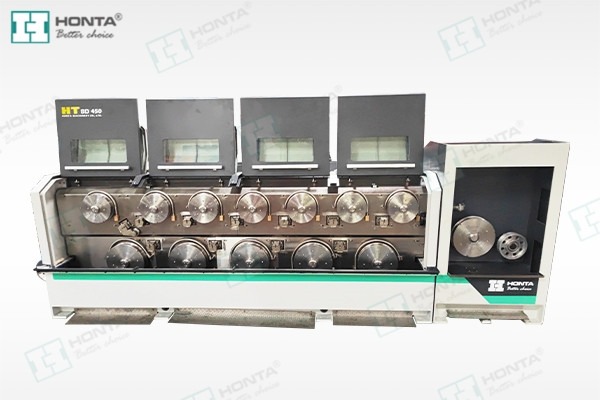
What an Application Guide Is, and What It Is Not
An application guide is a short, project-specific document with three functions. It records the production scenario the machine has to serve. It translates that scenario into the machine-fit questions that decide configuration. It binds each answer to a purchasing term and to the evidence that will show the term has been met.
The third function is what separates an application guide from a specification sheet. A specification sheet describes what a machine is. A brochure describes what a supplier offers. An application guide describes what this project needs, which configuration is being requested, and how both sides will know it has been delivered.
In practice the buyer drafts the document and the supplier corrects and completes it. The buyer knows the cable product, the downstream process and the commercial constraints; the supplier knows which configuration choices those requirements imply. The version that matters is the one attached to the purchase order, because that is the version that survives staff changes on either side of the transaction.
It is not test data, not a performance guarantee, and not a replacement for the acceptance protocol. It is the reasoning layer above both: it explains why a requirement exists, which machine characteristic is supposed to satisfy it, and which record will prove it. A guide without that chain is a wish list, and a chain without a guide is a set of clauses that no one can trace back to a production need.
Why the Guide Matters More Than the Machine Comparison
Most stranding procurement problems begin before the machine comparison, in the gap between a project description and a purchase order. Four failures are common enough to design against.
- Offers that cannot be compared. Two suppliers quote against a one-page inquiry, and each fills the gaps with its own default configuration. The prices differ, but so does the scope, and the buyer cannot see which difference is which.
- Terms that cannot be verified. A clause asks for a stable strand result without naming the parameter, the method or the record. It cannot be checked at acceptance, so it becomes a discussion instead of a verification step.
- Interface surprises. The machine is specified in isolation and then arrives at a line where pay-off, take-up, spool handling or the downstream process expects something different.
- Changes after order. An assumption that was never written down turns into a change request once production reality appears.
A written guide reduces all four, because it forces every requirement to have a question, every question to have a term, and every term to have evidence. It also protects the supplier, which gains a defensible basis for its offer: it can state what the proposed configuration is specified to do, and equally what it is not specified to do.
The Seven Blocks an Application Guide Should Contain
1. Project scenario
The opening block states the project in production language rather than machine language: what cable is being made, on which line, for which customer or market requirement, and what triggered the purchase. A new product introduction, a capacity addition, a transfer of production between plants and a replacement of an existing machine generate different fit questions even when the cable construction is identical.
2. Conductor and strand definition
This block fixes the variables the machine must handle: conductor material, the strand construction the product requires, the finished conductor the next process expects, and the product family the machine should cover rather than only the current item. A machine fitted to a single construction and a machine expected to run a family of constructions are two different purchases, and the guide should state which one is being bought.
3. Machine-fit questions
Each scenario variable becomes a question the supplier must answer inside its offer: whether the duty is bunching or stranding, which twist configuration is proposed and on what basis, which pay-off and take-up arrangement the configuration assumes, and which machine parameters the operator can adjust when the product changes. The value of this block is symmetry: the questions are identical for every supplier, so the answers can be placed side by side.
4. Line-interface block
Bunching and stranding equipment rarely stands alone. The guide should record what feeds the machine, what receives its output, how spools move between stations, and which side is responsible for making each interface work. This is where a conductor line is treated as a line instead of a list of equipment.
5. Commercial translation
Each fit question is then restated as a purchasing term: the configuration named in the contract, the scope items included, the items excluded, the documentation to be supplied, and the schedule commitments the supplier is asked to state. The aim is not a longer contract but a shorter gap between the technical discussion and the order.
6. Acceptance linkage
The acceptance block answers one question for every term: what will be examined, by whom, with what record, and at which stage, before shipment or after installation. A term without this linkage should be treated as an open item rather than an agreed one, whatever the offer document says.
7. Assumption and open-item log
Every application guide contains assumptions, and the useful ones admit it. A short log listing what was assumed, who confirmed it, and what would change if the assumption proves wrong keeps the document honest and gives both sides a place to record answers instead of discovering them at commissioning.
From Project Scenario to Machine-Fit Questions: A Six-Step Sequence
The translation is easier when it is performed in a fixed order, because each step constrains the next one.
- Describe the scenario in process language. Cable type, line position, upstream and downstream operations, and the reason for the purchase. No machine terms yet.
- Extract the variables. Conductor material, strand construction, the product family the machine must cover, and the quality characteristic the cable's own customer will notice.
- Turn each variable into a question. Write it so that any supplier can answer it in one paragraph and the answers remain comparable across offers.
- Attach a purchasing term to each question. Name the configuration, the scope item, the document or the commitment that the answer becomes.
- Attach acceptance evidence to each term. State the record, the stage and the responsible party.
- Log the assumptions. Mark every gap that a supplier answer must close, and close them before the order rather than after it.
The test of the finished sequence is simple. If a term cannot be traced back to a scenario variable, it was probably inherited from a template. If a scenario variable has no term, it will be discovered at commissioning. The table below shows the chain in compressed form; it is the shape of the document rather than a specification for any particular machine.
| Scenario input | Machine-fit question | Purchasing term it becomes | Acceptance evidence it needs |
|---|---|---|---|
| Conductor material and size range | Which pay-off arrangement and tension behaviour does the proposed configuration assume? | Pay-off type and spool dimensions named in the order | Configuration confirmed against the order; interface checked during commissioning |
| Strand construction and product family | Is the duty bunching or stranding, and which twist configuration is proposed? | Machine type and configuration named in the contract | Delivered configuration compared with the named configuration |
| Downstream process | How does the take-up arrangement serve the next operation? | Take-up and spool specification, plus interface responsibility | Spool samples and an interface check with the neighbouring process |
| Quality characteristic of the finished conductor | Which parameters influence the strand result, and which remain adjustable? | Parameter list the supplier must disclose and support | Agreed verification method and a record of parameter settings |
| Operator skill and staffing | Which adjustments are made by the operator, which need engineering support? | Training and support commitments stated in the offer | Handover record after installation |
A Hypothetical Walk-Through
Consider a hypothetical case: a cable manufacturer plans to add a control cable to an existing conductor line, in the same building and with the same operators. The scenario sentence is short, but it already generates fit questions.
- Because the product is new to the plant, the guide must ask which strand construction the machine is being specified for and how much of the future product family it should cover.
- Because the line already exists, the guide must ask what feeds the machine, what receives its output, and whether spool handling changes.
- Because the operators are unchanged, the guide must ask which adjustments they will make themselves and which require supplier support.
- Because the product is a control cable rather than a single fixed item, the guide must ask which parameters stay adjustable after commissioning.
Each of those questions then becomes a contract line and a verification step. Nothing in the example is unusual, which is the point: the document is valuable because the questions are ordinary and easy to forget. Any specific scenario should be treated as a conditional illustration until the buyer confirms it against its own product and process data.
The Four Documents in a Stranding Purchase and What Each One Controls
An application guide is often confused with the three documents that surround it. They do different jobs, and a purchase is weaker when one is asked to do the work of another.
| Document | Purpose | Who owns it | What it decides | What it does not do |
|---|---|---|---|---|
| Application guide | Translates the project scenario into machine-fit questions | Buyer, with supplier input | Which configuration is being requested, and why | Does not prove performance |
| Inquiry or RFQ package | Requests offers against a defined scope | Buyer | Which offers can be compared like for like | Does not fix the verification method |
| Purchasing terms | Converts scope into contractual obligations | Buyer and supplier | What is promised, in what scope and by when | Does not define pass or fail |
| Acceptance protocol | Defines how delivery is verified | Buyer and supplier | Whether the machine is accepted | Does not explain why the requirement exists |
Read together, the four documents form a chain from need to evidence. Read separately, each one can look complete while the chain has a gap in the middle, which is where most surprises originate.
Where the Machine Sits in the Conductor Line
Application fit depends on position in the line as much as on the machine itself. HONTA's product range shows how the neighbouring steps shape the questions: copper and aluminum RBD lines and multi-wire drawing lines produce the conductor, electrolytic plating lines and related coating equipment change its surface, and high-speed stranding equipment bunches or strands it before the next operation.
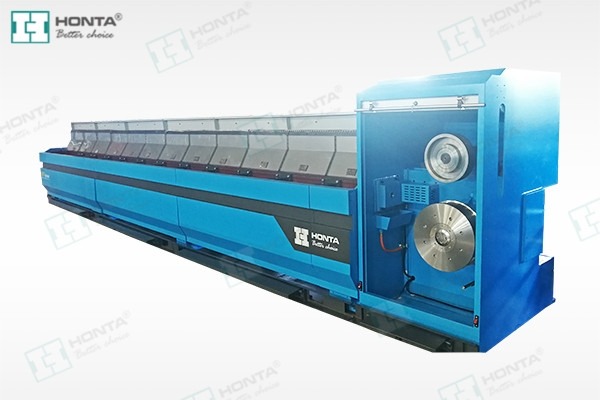
For the buyer, the practical consequence is that the line-interface block should name the neighbours, not just the machine. A pay-off arrangement that suits one upstream set-up may not suit another; a take-up or spooler choice that works at one position may create extra handling work at the next. These are configuration questions, and configuration questions belong in the guide rather than in a conversation after installation.
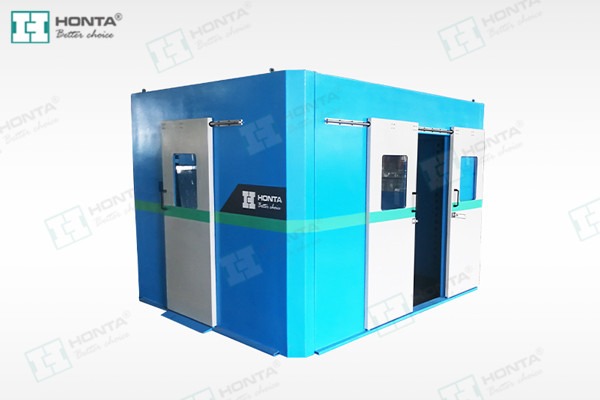
A second practical consequence is that the guide should record who owns each interface. When several suppliers are involved in one line, the boundary between two machines is the place where responsibility is least clear and where a written interface statement saves the most time.
The Limits of an Application Guide
An application guide is a decision document, and it should be honest about what it cannot do.
- It cannot replace measured test data. It can only define what should be measured, when, and against which record.
- It cannot be more complete than its inputs. A scenario described in one sentence produces a one-sentence guide; the buyer's own process knowledge is the raw material.
- It cannot guarantee a production result. It links requirements to configuration and evidence, while the outcome also depends on operation, maintenance and the material actually run.
- It cannot stay static. If the product mix, the line or the downstream process changes, the guide should be revised with the same discipline as the contract.
Where a supplier's proposal differs from the guide, the difference is itself useful information. It either corrects an assumption or exposes a scope gap, and both outcomes are cheaper before the order than after it.
How to Review a Supplier's Application Guide or Proposal
A buyer receiving a proposal can test it against a short list of questions. A proposal that answers them is doing the work of an application guide; one that does not is asking the buyer to supply the missing reasoning.
- Does the supplier restate the buyer's scenario in its own words, so that a misunderstanding becomes visible?
- Does it name the configuration being offered, including the pay-off and take-up arrangement?
- Does it separate what is included from what is optional or excluded from the scope?
- Does it state its assumptions explicitly, and invite correction before the order?
- Does each promised characteristic have a way of being verified, at factory or at site?
- Does it identify the interfaces it expects the buyer to provide, and the information it still needs?
- Does it list the documents it will hand over, so that future maintenance does not depend on memory?
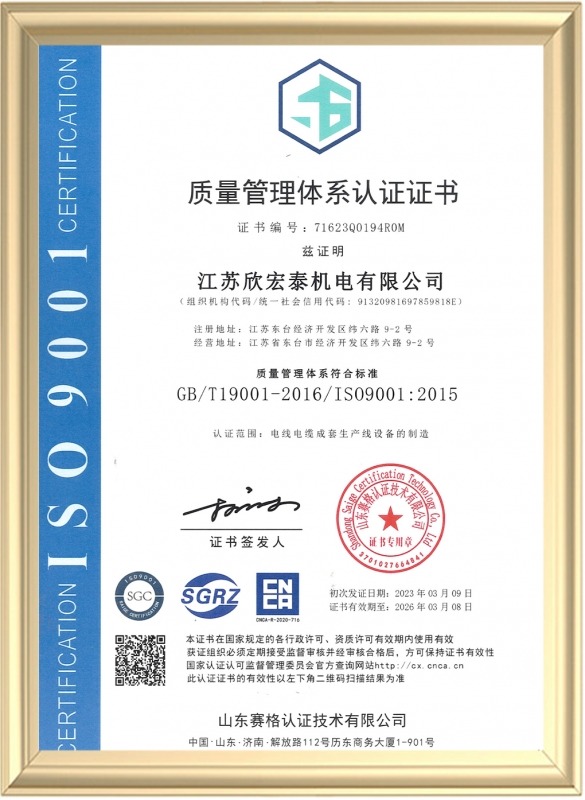
Company-level credentials belong to the same document set. HONTA, for example, lists ISO 9001 and ISO 14001 certification and a UDEM international certification among the materials a buyer can request alongside technical documentation; such records support supplier evaluation but do not replace the project-specific chain described above.
When a Buyer Needs One
The document earns its place in four situations. It is needed when a new cable product is being added to an existing line, because the machine must cover a family and not a single item. It is needed when an existing line is extended, because the interfaces with equipment already installed constrain the configuration. It is needed when production moves between plants, because the new site rarely reproduces the old one exactly. And it is needed when an existing machine is replaced, since a replacement is an opportunity to fix assumptions that were never written down the first time.
A repeat order for an unchanged product on an unchanged line usually needs only a short update: confirm the scenario, confirm the configuration, confirm the acceptance records. The discipline stays the same even when the document gets shorter.
Frequently Asked Questions
Is an application guide the same as a technical specification?
No. A technical specification states what a machine or a product must be; an application guide explains which configuration a project needs, why it needs it, and how the requirement will be verified. In practice the two documents sit next to each other: the guide produces the questions, and the specification records the agreed answers. A specification without a guide often contains requirements that no one can trace back to a production need, while a guide without a specification leaves the answers informal.
What should a supplier's application input include about machine capability?
It should describe the configuration being offered in terms the buyer can compare: whether the duty is bunching or stranding, which twist configuration is proposed, which pay-off and take-up arrangement the configuration assumes, which parameters remain adjustable for product changes, and which interfaces the supplier expects the buyer to provide. It should also state what the configuration is not intended to do, because a limitation disclosed before the order is a planning input rather than a dispute.
How does an application guide affect budget comparison?
It affects comparison more than it affects price. Because configuration choices drive cost, two offers prepared against different assumptions are not directly comparable, and the cheaper-looking one may simply exclude scope. A guide that fixes the questions gives every supplier the same basis, so the buyer compares configuration against configuration. It does not produce a price by itself; it makes the offers that arrive capable of being compared.
How does the guide support a sample or trial run?
The guide defines what the trial is meant to prove. Before a sample run, the buyer can state which construction will be tried, which parameters should be recorded, and which result the acceptance discussion will refer back to. That turns a trial into evidence rather than a demonstration. If a trial is planned, the questions in the guide also indicate what the supplier needs in advance: material, spool specification and the product data the run is meant to represent.
What should the guide capture about lead time and delivery?
It should capture which configuration items drive the schedule and which decisions sit with the buyer rather than the supplier, since a delayed specification decision is a common cause of a delayed delivery. The guide itself does not set a lead time; it lists the commitments the buyer wants the supplier to state in the offer, together with the acceptance stages that fall before shipment and after installation. Recording those stages early keeps the delivery conversation factual.
Conclusion
A high-speed bunching/stranding machine application guide is not a marketing document and not a substitute for test data. It is the working link between a cable project and a purchase order: it records the scenario, converts it into machine-fit questions, and binds each question to a term and to evidence. Buyers who write one before sending an inquiry get offers that can be compared; buyers who skip it usually reconstruct the same information during acceptance, when the options are narrower.
The document does not need to be long. It needs to be closed: every scenario variable answered, every answer priced into scope, every scope item verifiable.
Next step. If you are preparing an inquiry for a conductor line and want the machine-fit questions checked against a proposed configuration, HONTA can review your project scenario and respond with the configuration, scope and documentation points that need to be settled before an order. Sample arrangements, quotation requests and technical questions can be sent to tammy@jshonta.com, by phone on 0086 182 6287 9467, by WhatsApp on 0086 187 5292 2675, or by WeChat at wtammy0631. Company address: Room 1219, Building 3, Dongchuang Technology Center, Qianjin East Road, Kunshan City, Jiangsu Province, China, 215300.

Have Questions or Need More Details?
Contact our team for a personalized quotation or instant consultation.
Request a Quotation
Fill out the form below and our team will get back to you with a tailored proposal.
WhatsApp Direct Chat
Prefer to chat in real-time? Message us on WhatsApp for instant assistance & quick answers.
- Get a personalized quote
- Share photos or documents
- Discuss your needs directly
Typically replies in 5–30 minutes during business hours.