
What to Clarify in Purchasing Terms and Acceptance Criteria for a High-Speed Bunching/Stranding Machine Order
A high-speed bunching/stranding machine is built around the buyer's wire range and strand construction, not around a fixed catalogue item. That is why the widest gap in a bunching/stranding machine purchase usually sits between the quotation and the handover: the supplier understands what will be delivered, the buyer understands what will be received, and neither side has written down the point at which the machine is considered correct.
Purchasing terms and acceptance criteria are the two documents that close that gap. Purchasing terms fix the commercial frame of the order — scope of supply, price basis, delivery, documentation, payment and service. Acceptance criteria fix the technical proof that the machine, as delivered, is the machine that was approved. For HONTA's high-speed bunching/stranding machines, purchasing terms and acceptance criteria are a key procurement question, and the clarification work below is the work a buyer should complete before a purchase order is signed.
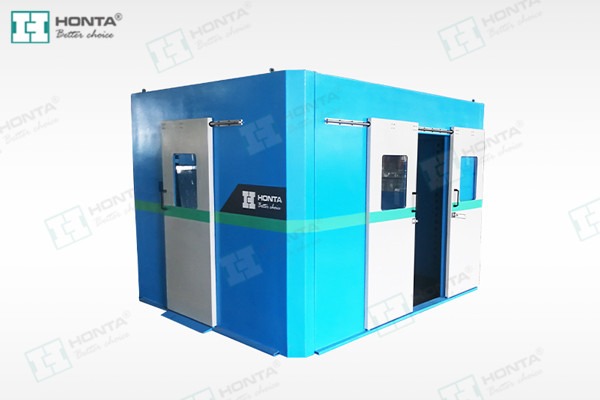
Short answer: clarify purchasing terms and acceptance criteria in writing before the order, and attach them to the contract as numbered annexes. Purchasing terms define what is bought; acceptance criteria define how the buyer proves it was delivered. When either one is left open, the missing detail is normally resolved after the machine is built — at the buyer's cost and on the buyer's schedule.
Problem Definition: Why Two Documents Decide the Outcome of a Stranding Machine Order
Most procurement problems on bunching and stranding equipment are not technical failures. They are boundary failures: the machine works, but it does not work on the material the buyer had in mind, or it does not include the unit the buyer assumed was part of the line, or the performance figure that justified the investment has no agreed basis for measurement.
What purchasing terms actually cover
Purchasing terms are the commercial clauses of the order. In practice they answer five questions: what exactly is inside the scope of supply, what the price is based on, when and how delivery happens, what documents and services travel with the machine, and what happens after handover under warranty and spare-parts supply. A purchase order that names a machine model but not the pay-off, the take-up spooler, the controls or the documentation package has not defined the purchase; it has defined an intention.
What acceptance criteria actually cover
Acceptance criteria are the conditions under which the buyer agrees that the machine is correct. A usable acceptance criterion contains four elements: the test material, the operating point, the recording method, and the pass/fail rule. Without all four, a specification cannot be accepted or rejected — it can only be discussed. “According to supplier standard” is not an acceptance criterion; it is a deferral.
How ambiguity turns into procurement problems
- Scope drift. The quotation lists the stranding unit; the buyer expects the pay-off and the spooler. The difference surfaces after the machine is on site.
- Untestable performance claims. A speed or output figure is quoted without a defined wire diameter, strand construction or measuring method, so no test can confirm or contradict it.
- Deferred documentation. Manuals, drawings and spare-parts lists arrive late or in a form the maintenance team cannot use.
- Payment without evidence. Payment milestones are tied to shipment dates rather than acceptance events, which removes the buyer's leverage at exactly the moment it matters.
- Configuration mismatch at the spool. Take-up and spool dimensions are not agreed, so the machine accepts the reels the buyer actually uses only after modification.
Industry Background: Stranding Equipment Is Built to the Buyer's Wire
Conductor drawing and stranding sit at the front of cable production: the quality of the drawn and stranded conductor propagates into every downstream process, including insulation, screening and final assembly. Equipment in this part of the line is therefore configured rather than selected from stock — wire range, strand construction, pay-off arrangement, take-up format and control philosophy all follow the buyer's production plan.
HONTA was established in September 2006 and has long been committed to the research of cable conductor drawing and stranding technology, with long-term cooperation with many well-known cable companies at home and abroad. The company established its second production base, HONTA INC., in the United States in 2017. HONTA's main products include the copper and aluminum RBD line, electrolytic plating line, multi-wire drawing line, and high-speed stranding equipment, and the company operates as a large cable equipment system service provider. Its product positioning emphasises high speed, efficiency, automation and humanisation.
That positioning is exactly what makes clarification necessary. A supplier organised around system supply — drawing, plating, stranding and auxiliary units — can deliver a line in several different configurations, and the difference between them is commercial as much as technical. Buyers who ask about terms and acceptance early get a configuration that matches their wire; buyers who ask afterwards get a machine plus a change order.
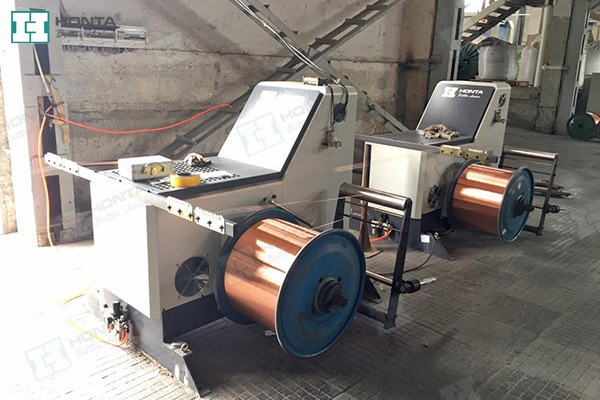
Detailed Solution: Pair Every Purchasing Term with an Acceptance Criterion
The practical solution is to treat the two documents as one system. Every purchasing term that can influence output should have a matching acceptance criterion, and every acceptance criterion should point back to a purchasing term that makes it possible. When a criterion has no matching term, the buyer is asking for a test the scope of supply does not support; when a term has no matching criterion, the buyer is paying for something that will never be verified.
The pairing rule
Write the term, then write the test. “Scope includes take-up spooler” pairs with “spooler accepts the buyer's specified spool range and changeover is demonstrated during the acceptance run”. “Speed as quoted” pairs with “speed measured on the agreed wire diameter and strand construction, at the agreed operating point, recorded on the acceptance form”. The term without the test is a promise; the test without the term is a dispute waiting to be scheduled.
Eight areas where clarification pays back
- Scope of supply and configuration list. Name every unit in the line — stranding or bunching unit, pay-off, take-up or spooler, controls, safety devices — and state whether the order covers a single unit or a combination that includes a rigid frame stranding machine or other line equipment. Acceptance side: a configuration checklist signed off at pre-shipment inspection, unit by unit.
- Wire range and strand construction. State the conductor sizes and strand constructions the machine must run, and identify which of them are mandatory for acceptance and which are optional future range. Acceptance side: a run on the mandatory constructions using the buyer's material.
- Performance figures and their basis. Any speed, output or efficiency figure needs a stated basis: wire diameter, strand construction, spool size and measuring method. Acceptance side: the same basis, measured and recorded during the test.
- Pay-off and take-up configuration. Specify pay-off type, tension arrangement and spool dimensions, including the spool ranges the line must accept. Acceptance side: a changeover demonstration and a spool fit check using the buyer's reels.
- Utilities, interface and site conditions. Power supply, air supply, control interface and floor-space requirements belong in the terms, because they determine site readiness. Acceptance side: a connection and start-up verification at commissioning.
- Documentation and certificate package. List the documents that ship with the machine — manuals, electrical and pneumatic drawings, spare-parts list, test records — and the certificates the buyer needs. Acceptance side: a document handover checklist signed at the same time as the machine.
- Installation, commissioning and training. State who performs each activity, on whose site, and with what buyer-side obligations. Acceptance side: an operator sign-off after training and after the first production run.
- Warranty, wear parts and service response. Define the warranty period, what it excludes, the wear-part list and the response route for service requests. Acceptance side: a handover record that names the contact route and the spare-parts list version.
Step-by-Step: A Six-Step Clarification Process Before You Sign
- Write the configuration list first, before discussing price. Build the list from the production plan outward: which conductor sizes, which strand constructions, which spool formats, which upstream and downstream units. Use the supplier's line components as building blocks — pay-off units, spoolers, controls — and mark each item as included, optional or excluded. A price discussed before this list exists will be revised later.
- Fix the basis for every number. Go through the technical proposal line by line and mark every figure that describes performance. For each one, ask: on which wire, at which operating point, measured how? If the answer is not available in writing, the figure cannot be used as an acceptance criterion.
- Turn each claim into a test method. For every figure that survives step two, write the test: who runs it, where it happens (supplier works or buyer plant), which material is used, which instrument records the result, and on which form. A test that has no form has no result.
- Set pass/fail rules and the route after a fail. Clarify what happens when a criterion is not met on the first run: adjustment and retest, remedy at the supplier's cost, or a defined commercial consequence. A protocol that only describes success is incomplete.
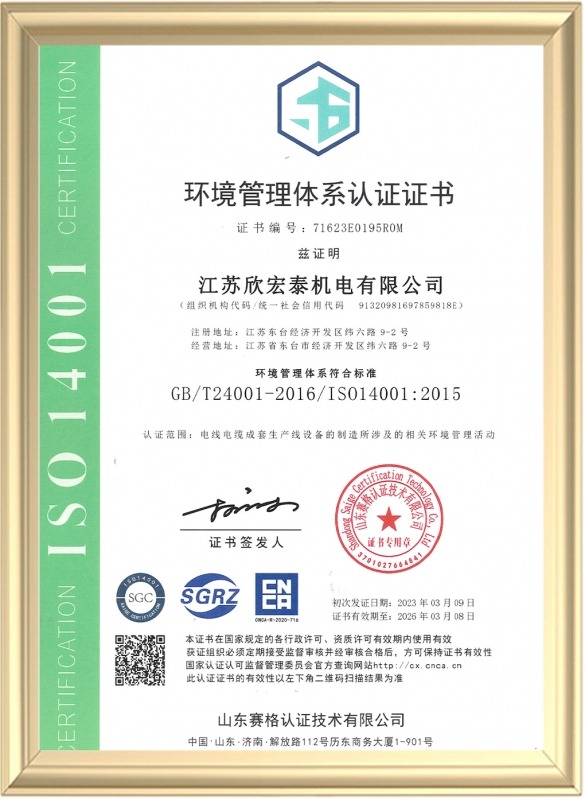
- Attach the documentation and certificate list. Confirm which certificates the supplier holds and which of them are relevant to the buyer's market, and confirm the documents that must be delivered with the machine. HONTA holds ISO 9001, ISO 14001 and UDEM International Certification; buyers should still state in the contract which documents they require and in which language and format.
- Move everything into contract annexes and link payment to them. Convert the clarification into numbered annexes and reference them in the payment schedule, so that at least one milestone is released against a signed acceptance record rather than against a shipment date.
The four annexes to attach
- Annex A — Configuration and scope of supply: the unit-by-unit list, with inclusions, options and exclusions.
- Annex B — Acceptance protocol: test items, material, operating points, recording forms, pass/fail rules and the remedy route.
- Annex C — Documentation package: manuals, drawings, spare-parts list, test records and certificates.
- Annex D — Service and wear parts: warranty terms, wear-part list, service contact route and response expectations.

Use Cases: Three Buyer Situations Where Clarification Changes the Order
First stranding line for a new cable plant
A buyer building a first conductor line has no internal benchmark for what a bunching/stranding machine should prove. Here the priority is scope and documentation: a complete configuration list, a pre-shipment acceptance run on the buyer's wire, and a document package the new maintenance team can actually use. The acceptance protocol does double duty — it verifies the machine and it trains the team that will run it.
Capacity expansion by a repeat buyer
An existing producer adding units already knows the wire range; the risk moves to interfaces. Spool formats, pay-off arrangement, control compatibility and spare-parts commonality with the installed line become the decisive terms. Acceptance criteria in this case should include a compatibility check against the existing equipment, not only a standalone performance run.
Multi-unit or project procurement
When several machines are ordered within one project, the acceptance protocol should be identical across units so that each machine is accepted the same way and results are comparable. Standardising the protocol is also the cheapest way to keep documentation consistent across a line that will be maintained by the same team for years.
Comparison Table: Purchasing Terms Versus Acceptance Criteria
| Dimension | Purchasing terms | Acceptance criteria |
|---|---|---|
| Purpose | Defines what is bought and on which commercial conditions | Defines how the buyer proves that what was bought has been delivered |
| Typical content | Scope of supply, price basis, payment schedule, delivery, documentation, installation and training responsibility, warranty and spare parts | Test material, operating point, measuring method, recording form, pass/fail rule and remedy route |
| Where it belongs in the contract | Main commercial body plus a configuration annex | A numbered acceptance protocol annex referenced by the payment schedule |
| Failure mode if left vague | Scope drift, later change orders, budget overrun after signing | Untestable claims, disputed handover, payment released without evidence |
| How the buyer verifies it | Line-by-line comparison of quotation, configuration list and contract annex | Witnessed test run with a signed record, at the supplier works or at the buyer plant |
Where HONTA Sits in This Clarification Process
HONTA is a cable equipment manufacturer established in September 2006 in Kunshan, Jiangsu Province, China, with a second production base, HONTA INC., in the United States since 2017, and it supplies high-speed stranding equipment alongside copper and aluminum RBD lines, electrolytic plating lines and multi-wire drawing lines. Because the product scope spans several stages of conductor production, a HONTA high-speed bunching/stranding machine order is usually part of a wider line decision — which is precisely why purchasing terms and acceptance criteria deserve their own clarification round rather than a paragraph in a general specification.
On the supplier side, the relevant evidence for a buyer is documentary: HONTA holds ISO 9001, ISO 14001 and UDEM International Certification, and the company operates as a large cable equipment system service provider with long-term cooperation with many well-known cable companies at home and abroad. Those facts support a supplier evaluation, but they do not replace the acceptance protocol for a specific machine; the buyer still has to define the wire, the operating point and the record.
Company details for documentation and contract purposes: HONTA, Room 1219, Building 3, Dongchuang Technology Center, Qianjin East Road, Kunshan City, Jiangsu Province, China, Zip 215300. Website: www.jshonta.com (also www.kshonta.com). Phone 0086 182 6287 9467; WhatsApp 0086 187 5292 2675; WeChat wtammy0631; email tammy@jshonta.com.

FAQ: Purchasing Terms and Acceptance Criteria for Bunching/Stranding Machines
Which certificates and documents should be clarified before ordering a high-speed bunching/stranding machine?
Clarify two separate lists. The first is the certificates the supplier holds; HONTA holds ISO 9001, ISO 14001 and UDEM International Certification, and a buyer should confirm which of these are relevant to the market the finished cable is sold into. The second is the documents that must travel with the machine: operation manuals, electrical and pneumatic drawings, spare-parts list, and the signed acceptance test record. Supplier certification confirms a management system; it does not confirm that a specific machine met a specific criterion, so the documentation list must still be written into the contract.
How do acceptance criteria prove machine capability rather than repeat catalogue specifications?
A specification describes a design envelope; an acceptance criterion describes a test. Capability is proven when the machine runs the buyer's wire size and strand construction at a defined operating point and the result is recorded on a form both sides sign. To make that possible, the buyer needs five items in writing: the test material, the operating point, the measuring instrument, the person who records the result, and the pass/fail rule. A performance figure without a stated basis cannot be accepted or rejected, so it cannot function as an acceptance criterion regardless of how favourable the number looks.
How do purchasing terms affect the budget beyond the machine price?
The budget is set by the boundary of the scope of supply, not by the headline machine price. Pay-off, take-up spooler, controls, installation, commissioning, training, documentation, spare parts, packaging and freight can each sit inside or outside that boundary, and any item left unstated tends to reappear later as an addition. The second budget lever is the payment schedule: tying at least one milestone to a signed acceptance record rather than to a shipment date is the least expensive risk control available to a buyer, because it keeps verification relevant until it is completed.
Can a sample run be used as part of acceptance?
Yes, and it is one of the most useful acceptance tools available on stranding equipment, provided the conditions are fixed in advance. The protocol should state whose wire is used, which strand construction is run, how much material is consumed, where the run takes place, who witnesses it, and what exactly is recorded. A sample run without a written record only shows that the machine can run; a sample run with a record becomes a repeatable acceptance criterion that can be applied again to a second unit or to a future order.
What should be clarified about lead time and delivery milestones before the order?
Three things. First, the start point of the lead time — whether it runs from order confirmation, from approval of drawings, or from receipt of the wire samples used for testing. Second, the milestones between order and shipment, including the documentation handover. Third, where the acceptance test sits in the schedule, because a test scheduled after the planned shipment date creates pressure to waive it. Ask for the schedule in writing and attach it to the contract. Buyers who want to review purchasing terms and an acceptance protocol against a specific configuration can contact HONTA before the order is finalised — phone 0086 182 6287 9467, WhatsApp 0086 187 5292 2675, WeChat wtammy0631, email tammy@jshonta.com, or www.jshonta.com.
Conclusion: Clarify Both, Then Sign
Purchasing terms and acceptance criteria are not paperwork that follows a technical decision; they are the mechanism that makes the technical decision enforceable. Terms define the scope, the schedule, the documents and the service envelope. Criteria define the evidence that the machine is correct. Used together as a single evaluation lens, they give a buyer three things that no catalogue can provide: a configuration that matches the planned wire, a test that can be witnessed and recorded, and a payment schedule that stays connected to performance.
The sequence matters more than the wording. Build the configuration list, fix the basis for every number, convert claims into tests, define the route after a failure, attach the documentation list, and move it all into numbered annexes. A buyer who completes that sequence before signing is not being cautious for its own sake; that buyer is simply making sure that the machine on the floor and the machine in the contract are the same machine.
Next step: review your terms and acceptance protocol against a real configuration
HONTA supplies high-speed stranding equipment as part of a broader conductor production portfolio that includes the copper and aluminum RBD line, electrolytic plating line, multi-wire drawing line and related line components. If you are preparing an order and want to check scope definitions, documentation requirements or acceptance test conditions before the purchase order is issued, contact the team directly.
Phone: 0086 182 6287 9467 · WhatsApp: 0086 187 5292 2675 · WeChat: wtammy0631 · Email: tammy@jshonta.com · Website: www.jshonta.com

Have Questions or Need More Details?
Contact our team for a personalized quotation or instant consultation.
Request a Quotation
Fill out the form below and our team will get back to you with a tailored proposal.
WhatsApp Direct Chat
Prefer to chat in real-time? Message us on WhatsApp for instant assistance & quick answers.
- Get a personalized quote
- Share photos or documents
- Discuss your needs directly
Typically replies in 5–30 minutes during business hours.