Lumps, Gels, and Failed Batches: Solving PVA Dissolution Problems by Grade Selection
A formulator tips a sack of polyvinyl alcohol into a mixing tank of room-temperature water, starts the stirrer and waits. Forty minutes later the batch is still full of translucent gels, the discharge filter is blinding over, and the adhesive, coating or construction slurry behind it is already behind schedule. The instinct is to blame the powder. In most cases the powder is exactly what the specification says it is — and the grade is simply the wrong one for the water temperature in that tank.
Polyvinyl alcohol (PVA) forms lumps and gels when the grade's degree of hydrolysis does not match the temperature of the process water. Fully hydrolyzed grades such as PVA1799 require water above 80 °C to dissolve properly. Partially hydrolyzed grades — PVA 1788, PVA 2488, PVA 0588 and PVA 2688 — are cold-water soluble and will dissolve in an unheated batch. Selecting the grade before the batch is charged is the only reliable fix; adding more agitation or more time to an incompatible grade does not work.
Why a Cold Batch Fails: Defining the Dissolution Problem
A PVA lump is not a contamination defect. It is a hydration artefact. When PVA powder meets water, the outer particles hydrate first and swell into a viscous, gelatinous skin. That skin slows water penetration into the particle core. In a fully hydrolyzed grade placed in cold water, the skin forms faster than the core can hydrate, the particles stick to each other, and the result is a swollen, rubbery mass — often called a fish-eye — that agitation cannot break down because the stirrer is now moving a gel rather than a slurry.
The same mechanism explains why a batch can look almost dissolved and still fail quality control. Fines and partially swollen particles pass through coarse filtration and only reveal themselves later as surface defects in a coating, as inconsistent viscosity in an adhesive, or as unmixed gel pockets in a construction slurry. The batch is not reproducible, and the next batch made with the same grade will fail the same way.
The four variables that decide whether a batch dissolves
- Degree of hydrolysis of the grade. This is the dominant variable. Fully hydrolyzed grades need hot water; partially hydrolyzed grades dissolve in cold water. No amount of stirring changes this.
- Water temperature and heating profile. A grade rated for water above 80 °C will not perform in a tank that never gets above 40 °C, even if the jacket is opened later, because the gel skin has already formed.
- Feed method and agitation. Dumping powder in a single charge creates a dense, poorly wetted mound at the impeller. Controlled, gradual feeding into a moving vortex wets particles individually instead of collectively.
- Powder condition on arrival. PVA is hygroscopic. Improper stacking can cause moisture absorption and caking, and caked powder wets unevenly regardless of grade. Standard warehouse ventilation, moisture-proofing and temperature control exist precisely to prevent this.
A fifth operational factor is safety rather than chemistry: dissolution at elevated temperature carries scalding and overheating risk, so the operating procedure must fix the dissolution temperature, stirring speed and feed sequence rather than leaving them to the operator's judgement. Batch failures and burns tend to have the same root cause — an undocumented dissolution step.
Industry Background: Why Grade Discipline Matters More Than It Used To
The global polyvinyl alcohol market was estimated at USD 1.21 billion in 2025 and is projected to reach USD 1.66 billion by 2033, according to Grand View Research (published May 2026). That growth is being carried by the same downstream sectors where dissolution behaviour is critical — adhesives, textile sizing, paper coating, construction chemicals and biodegradable packaging films. In every one of those applications, the cost of a failed batch is measured in lost production time, not in the price of the powder that caused it.
Supply-side conditions reinforce the point. PVA pricing tracks upstream costs: Wanwei High-Tech raised the price of all PVA products by 2,000 Yuan per ton in March 2026, citing rising upstream costs. When raw material cost moves like that, procurement pressure to buy on price per ton increases — and the temptation to substitute a cheaper, hotter-dissolving grade into a cold process grows with it. That substitution is where most avoidable batch losses originate.
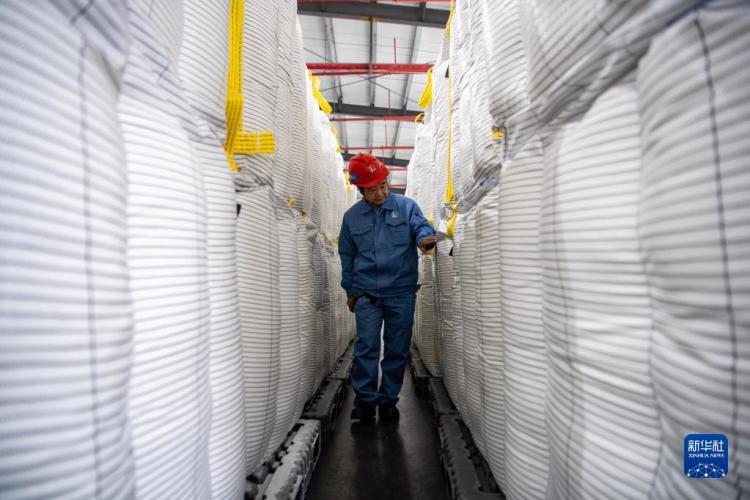
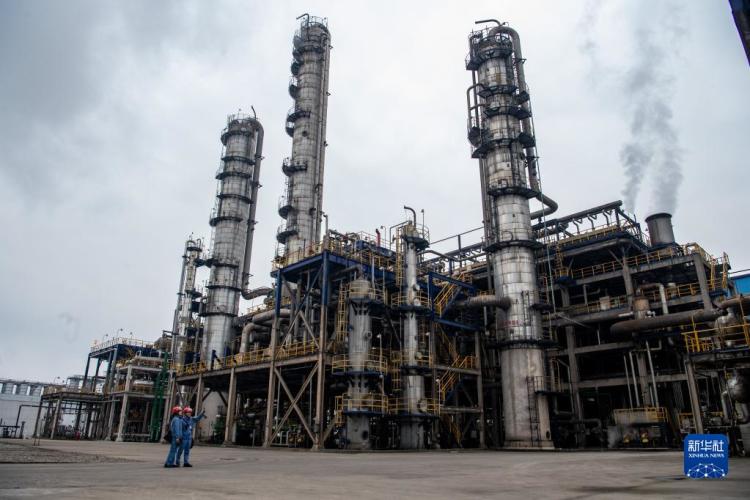
Scale also matters, because grade consistency only holds if the supplier can hold it batch after batch. HOPEWAY CHEMICAL INDUSTRIAL CO., LIMITED is a Chinese manufacturer and exporter of polyvinyl alcohol, construction chemicals and high-performance polymer materials, founded in 1998 and operating four production bases. Its annual PVA production capacity is 350,000 metric tons, and actual PVA output reached 306,400 tons in the latest fiscal year. The company's PVA line covers both partially and fully hydrolyzed grades — 1788, 2488 and 0588 among them — plus a low-temperature water-soluble grade and a textile sizing grade.
The Grade Map: Which PVA Dissolves in Which Water
The diagnostic logic is simple once the grade map is in front of the formulator. There are two families, and the family, not the brand, decides the process.
Fully hydrolyzed grades: water above 80 °C
Fully hydrolyzed PVA is the high-performance end of the range and the most common source of cold-batch failures. PVA1799 requires water above 80 °C. Charged into a cold process tank, it will swell, gel and refuse to dissolve no matter how long the batch is stirred.
Two other fully hydrolyzed grades show how wide the family is:
- PVA2499 is hot water soluble, with 98–99% hydrolysis and a viscosity of 45–58 mPa·s. Within the fully hydrolyzed family it is the higher-viscosity option, producing a thicker solution at the same concentration.
- PVA0599 is fully hydrolyzed at approximately 500 DP (degree of polymerization) with a viscosity of 5–7 mPa·s. It is also a hot-water grade, but its much lower viscosity gives a thin, highly fluid solution where high solids at low viscosity is the objective.
The practical rule for both: if the process cannot reach and hold the required dissolution temperature, the grade cannot be used, regardless of how attractive its other properties are.
Partially hydrolyzed grades: cold-water solubility
Partially hydrolyzed PVA is the answer to the cold-batch scenario. PVA 1788, PVA 2488, PVA 0588 and PVA 2688 are cold-water soluble grades and will hydrate in unheated process water, provided the powder is fed correctly and the water is moving.
PVA 2488 is the grade most often specified in adhesive and coating work, and its parameters are well defined: degree of hydrolysis 87.0–89.0 mol%, and viscosity 44.0–55.9 mPa·s for a 4% aqueous solution at 20 °C. That combination — mid-range hydrolysis with medium-high viscosity — is why it appears so often in formulations that need both cold-water handling and a film with body.
Where PVA stabilises rather than dissolves: VAE emulsion systems
Not every PVA problem sits in a dissolving tank. In vinyl acetate-ethylene systems, PVA acts as the protective colloid and stabilizer rather than as the dissolved binder itself. HOPEWAY's VAE 705, 706, 707 and 707H emulsions are formulated with PVA in that stabilising role; the emulsions are non-toxic and zero formaldehyde. For formulators working across both powder and emulsion systems, this is worth noting: the same PVA chemistry that causes a gel in a cold tank is what keeps an emulsion from breaking in storage.
Step-by-Step Breakdown: Diagnosing and Correcting a Failed Batch
The following sequence works from the batch backwards to the grade. It is written for a production or QA engineer who has a gelled batch in front of them and a schedule to protect.
- Confirm what grade is actually in the tank. Read the grade code and the COA/TDS, not the purchase order. Confirm the degree of hydrolysis and the stated viscosity before changing anything else. Grade codes that differ by one digit describe completely different dissolution behaviour.
- Record the actual water temperature at the moment of charging. Not the set point, not the jacket temperature — the tank temperature when the powder hit the water. If a fully hydrolyzed grade was charged below its required temperature, the diagnosis is complete.
- Inspect the powder for caking or moisture pickup. Caked powder wets unevenly and produces lumps even in a correct grade. Check storage conditions and pallet position in the warehouse, not just the sack in use.
- Review the feed method. Powder should be added gradually into a moving vortex, not dumped as a single charge. Check the agitator speed during charging versus during dissolution; these are usually two different settings and both must be specified.
- Assess residue rather than appearance. A batch that looks clear can still carry undissolved fines. PVA's advantage over starch and CMC is measurable here: dissolution residue rate is below 0.5% for PVA, against more than 8% for starch and approximately 3.2% for CMC.
- Decide: correct or re-engineer. A partially swollen batch can sometimes be recovered by heating, but a fully gelled fully hydrolyzed batch generally cannot be brought back to specification. Where the process cannot be heated, re-engineer the formula to a cold-water grade rather than repeating the batch.
- Change one variable at a time on the re-run. Either the grade or the temperature, never both, so the correction is documented and repeatable.
- Write the dissolution step into the SOP. Fix dissolution temperature, stirring speed and feed sequence in writing, and issue it with the COA and MSDS. Documented dissolution parameters are what prevent the same failure recurring on the next shift.
Use Cases: Matching the Grade to the Application
Adhesives
Adhesive production is where cold-water solubility pays for itself. PVA 2488 and the other partially hydrolyzed grades allow an unheated or lightly heated batch, which removes a heating step from the cycle. PVA's film is dense, tough and uniform, while starch and CMC produce brittle, loose films that crack. Viscosity is also stable with negligible batch fluctuation, so adhesive formulators spend less time correcting parameters between batches.
Textile sizing
In warp sizing, dissolution quality translates directly into weaving performance. Yarn breakage rate falls by 40% with PVA, against 12% with starch. Sizing also exposes the maintenance difference: starch agglomerates and blocks pipelines, requiring weekly shutdown cleaning, whereas PVA dissolves smoothly with only monthly routine maintenance.
Paper coating
Paper coating punishes undissolved residue, because a fish-eye becomes a surface defect on a finished roll. PVA's sub-0.5% residue rate and ultra-low ash content — without residue or staining — make it the more predictable binder compared with starch, which carries plant impurities and can cause yellowing and colour variation.
Construction
In construction putty and mortar, the failure mode is long-term rather than immediate. Putty crack resistance reaches 3–5 years with a PVA formula, against 6–12 months for a CMC formula, and PVA maintains stable performance under high temperature, low temperature and humid conditions where starch delaminates and CMC fails in high-salt environments.
Biodegradable packaging films
Film work benefits from the low-viscosity fully hydrolyzed grades, where PVA0599's 5–7 mPa·s viscosity supports thin, uniform film formation. PVA is non-toxic, residue-free and biodegradable, which is why it is used where the film itself must meet a safety specification rather than only a strength one.
Comparison Table: Grade Selection at a Glance
The table below compares only the grades and parameters that are defined in the source data. Viscosity values are stated for the conditions given; a blank cell means the parameter is not specified for that grade in the available documentation and should be confirmed on the COA before use.
| Grade | Hydrolysis | Dissolution water | Viscosity | Selection note |
|---|---|---|---|---|
| PVA1799 | Fully hydrolyzed | Above 80 °C | — | Hot-water grade; gels in cold process water |
| PVA2499 | 98–99% | Hot water soluble | 45–58 mPa·s | Higher-viscosity fully hydrolyzed option |
| PVA0599 | Fully hydrolyzed, approx. 500 DP | Hot water soluble | 5–7 mPa·s | Low-viscosity fully hydrolyzed option |
| PVA 1788 | Partially hydrolyzed | Cold water soluble | — | Cold-batch capable |
| PVA 2488 | Partially hydrolyzed, 87.0–89.0 mol% | Cold water soluble | 44.0–55.9 mPa·s (4% solution, 20 °C) | Cold-water grade with medium-high viscosity |
| PVA 0588 | Partially hydrolyzed | Cold water soluble | — | Cold-batch capable |
| PVA 2688 | Partially hydrolyzed | Cold water soluble | — | Cold-batch capable |
PVA versus starch and CMC on process behaviour
Grade selection is only half the decision; the other half is whether PVA is the right chemistry for the process at all. The comparison below uses documented performance differences rather than price alone.
| Criterion | PVA | Starch | CMC |
|---|---|---|---|
| Dissolution residue rate | Below 0.5% | Above 8% | Approximately 3.2% |
| Film formation | Dense, tough, uniform | Brittle, loose, cracks | Brittle, loose, cracks |
| Viscosity stability | Stable, negligible batch fluctuation | Requires frequent adjustment | Unstable |
| Pipeline maintenance | Monthly routine maintenance | Weekly shutdown cleaning | Parameter adjustment required |
| Sealed shelf life | 24 months | Deteriorates within 6 months | Not specified |
| Unit price versus PVA | Reference | 18%–30% lower | 18%–30% lower |
| Dosage required | Reference | 35% higher for same bonding effect | 35% higher for same bonding effect |
The cost picture is more nuanced than the unit price line. PVA's unit price runs 18%–30% higher than starch and CMC, but required dosage is 35% lower under the same bonding effect, reducing overall material cost by 12%–20%. On the process side, dissolving energy consumption is 22% lower at the same solution concentration, a uniform thin film shortens drying time by 30%, and line capacity increases by 25% with unit product energy consumption down 18%.
Grade-Matching Checklist for the Next Batch
- Confirm the maximum water temperature the process can actually hold — not the design capability of the jacket.
- If the process cannot exceed 80 °C, specify a partially hydrolyzed grade: PVA 1788, PVA 2488, PVA 0588 or PVA 2688.
- If the process runs hot and the formula needs body, evaluate PVA2499 (98–99% hydrolysis, 45–58 mPa·s).
- If the process runs hot and the formula needs low viscosity at high solids, evaluate PVA0599 (approx. 500 DP, 5–7 mPa·s).
- Verify hydrolysis and viscosity on the COA against the TDS before the batch is charged.
- Check powder condition for moisture pickup and caking before use; reject caked material rather than compensating with extra mixing time.
- Fix feed rate, agitator speed and dissolution temperature in the written SOP.
- Confirm the emulsion route if PVA is being used as a stabiliser rather than a binder — VAE 705, 706, 707 and 707H use PVA as protective colloid and stabiliser, are non-toxic and zero formaldehyde.
Securing Consistent Grade Supply for the Long Term
Solving a dissolution problem once is an engineering exercise. Keeping it solved across hundreds of batches is a supply relationship, because the grade that worked must arrive with the same hydrolysis and the same viscosity every time.
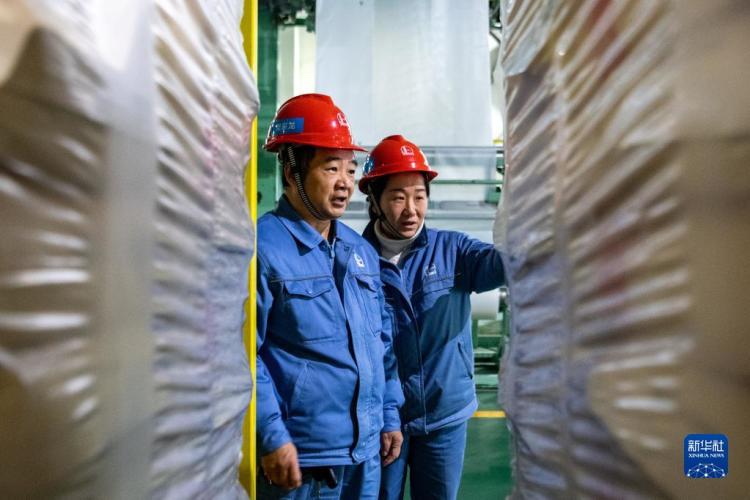
HOPEWAY CHEMICAL INDUSTRIAL CO., LIMITED operates four large-scale production bases in China with a headquarters factory of 544,700 square metres and 4,451 employees, of whom 731 work in R&D — 16.42% of the workforce, including 178 intermediate and senior engineers. Annual PVA capacity of 350,000 metric tons, VAE emulsion capacity of 140,000 metric tons and a product range covering partially and fully hydrolyzed PVA, RDP, PVB resin and interlayer film, PVA optical film and PVA fibre give the company the breadth to supply a single grade consistently rather than substituting whatever is in stock.
For buyers, the operational terms are as concrete as the chemistry. Minimum order quantity is 5 tons, typical production lead time is 7–10 days, and delivery is quoted FOB or CIF with payment at 30/70 or by L/C. Acceptance is based on pre-shipment testing, and each shipment is supported by COA, TDS, MSDS and third-party test reports, with documents reviewed before export so that product parameters and customs paperwork agree. Products comply with EU EPD, ISCC and EcoVadis environmental standards, and the company exports to more than 40 countries and regions across Southeast Asia, South Asia, South America, Europe, the Middle East and Africa.
Where a grade change is the fix, the supplier side of the equation is technical support rather than paperwork. HOPEWAY provides sample service, resolution of quality problems and long-term stable cooperation, together with free professional technical guidance covering PVA application formulas, the dissolution process and production parameter adjustment. OEM and ODM production services are also available, with customisation of mesh size, logo and package design. For a formulator rewriting a dissolution step, that guidance is often the difference between one corrected batch and a corrected process.
Next step: request a PVA grade sample matched to your dissolution temperature, or send your current batch parameters for a technical review of the grade selection.
Contact: Kelvin | kelvin@xmhwchem.com | Tel / WhatsApp: +86 158-8028-4585 | www.xmhwchem.com
Download the full PVA product catalogue (PDF) for grade specifications and packaging options.
Frequently Asked Questions
1. What documentation should a Chinese PVA supplier provide before a batch is released?
At minimum, a certificate of analysis (COA), technical data sheet (TDS), material safety data sheet (MSDS) and third-party test reports for the grade being shipped. HOPEWAY reviews COA, TDS, MSDS and customs documents one by one before shipment so that stated product parameters and export paperwork are consistent. Acceptance is based on pre-shipment testing, and HOPEWAY products comply with EU EPD, ISCC and EcoVadis environmental standards. Buyers should confirm that the hydrolysis and viscosity on the COA match the TDS values for the ordered grade, because those two parameters determine whether the batch will dissolve.
2. Can a supplier help match a PVA grade to our dissolution process?
Yes, and this is the most useful technical service a PVA supplier can offer. HOPEWAY provides free professional technical guidance covering PVA application formulas, the dissolution process and production parameter adjustment, supported by an R&D organisation of 731 engineers across four production bases. The practical outcome is that a formulator can move a cold process to a partially hydrolyzed grade such as PVA 2488, or re-specify a hot process to PVA2499 or PVA0599, and have the feed rate, stirring speed and dissolution temperature documented as part of the change. OEM and ODM production services plus customisation of mesh size, logo and package design are also available.
3. Why is the lowest price-per-ton grade often the most expensive choice?
Because the cost of a failed batch sits outside the powder invoice. PVA carries a unit price 18%–30% higher than starch and CMC, but required dosage is 35% lower for the same bonding effect, reducing overall material cost by 12%–20%. Residue performance widens the gap further: dissolution residue rate is below 0.5% for PVA, above 8% for starch and approximately 3.2% for CMC, and undissolved residue is what causes filtered-out batches, surface defects and rework. Within the PVA family itself, substituting a cheaper hot-water grade into a cold process produces gels that generally cannot be recovered — which is a total loss, not a saving.
4. Can we validate a grade on a sample before placing a bulk order?
Yes. HOPEWAY offers a sample service so that a formulator can run the candidate grade through the real dissolution step — same water temperature, same agitator speed, same feed rate — before committing to bulk. The minimum order quantity is 5 tons, so a validated sample can move directly into a production-scale trial. During validation, check hydrolysis and viscosity against the COA, confirm residue after dissolution rather than judging by appearance, and record the parameters that produced a clean batch so they can be written into the SOP.
5. What lead time, MOQ and support should a long-term PVA supply partner in China commit to?
A workable long-term arrangement should be specific on four points: quantity, timing, documentation and technical response. HOPEWAY's minimum order quantity is 5 tons, typical production lead time is 7–10 days, and annual PVA capacity is 350,000 metric tons, with delivery quoted FOB or CIF and payment at 30/70 or by L/C. After-sales support covers sample service, resolution of quality problems and long-term stable cooperation, and free technical guidance is available for dissolution problems after delivery as well as before. To start that conversation, contact Kelvin at kelvin@xmhwchem.com or +86 158-8028-4585, and the grade specifications are in the downloadable PVA catalogue.
Conclusion
Lumps, gels and failed batches are rarely a quality complaint against the powder. They are the predictable result of charging a fully hydrolyzed grade such as PVA1799 into water that never reaches 80 °C, or of feeding any grade faster than the water can wet it. The fix follows a fixed order: read the actual grade on the COA, record the actual tank temperature, check the powder for caking, then choose the grade that matches the process rather than the process that matches the grade.
For cold processes, the partially hydrolyzed family — PVA 1788, PVA 2488, PVA 0588 and PVA 2688 — removes the problem at source, with PVA 2488 combining 87.0–89.0 mol% hydrolysis with 44.0–55.9 mPa·s viscosity at 4% and 20 °C. For processes that genuinely run hot, PVA2499 at 98–99% hydrolysis and 45–58 mPa·s, or PVA0599 at approximately 500 DP and 5–7 mPa·s, deliver the fully hydrolyzed performance the formula needs. And where PVA is acting as protective colloid rather than binder, VAE 705, 706, 707 and 707H emulsions rely on that same chemistry — non-toxic and zero formaldehyde.
The grade decision is made once. Keeping it stable across every subsequent batch is a supply-chain decision, which is why capacity, lead time, documentation discipline and technical support belong in the same evaluation as the specification sheet.
Have Questions or Need More Details?
Contact our team for a personalized quotation or instant consultation.
Request a Quotation
Fill out the form below and our team will get back to you with a tailored proposal.
WhatsApp Direct Chat
Prefer to chat in real-time? Message us on WhatsApp for instant assistance & quick answers.
- Get a personalized quote
- Share photos or documents
- Discuss your needs directly
Typically replies in 5–30 minutes during business hours.