PVA2499 vs. PVA0599: Choosing the Right Fully Hydrolyzed Grade for Medical Substrates and Films
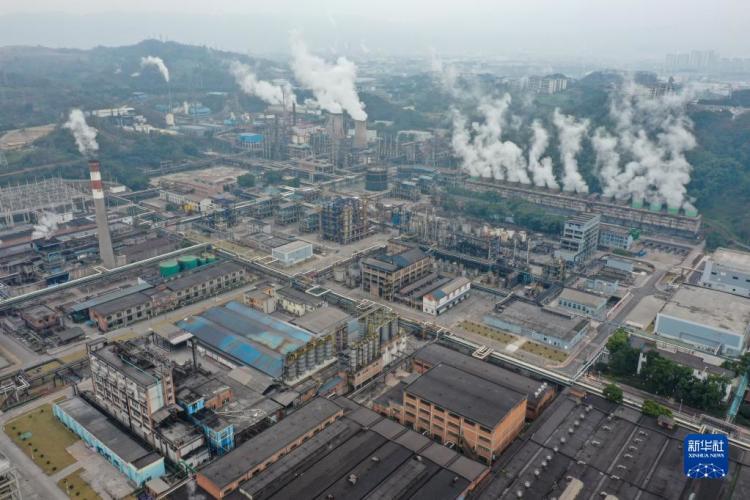
Fully hydrolyzed polyvinyl alcohol grades for medical-substrate, film, fiber and high-count sizing applications.
Fully hydrolyzed polyvinyl alcohol (PVA) is a narrow specification band with a very wide spread of behavior. HOPEWAY CHEMICAL INDUSTRIAL CO., LIMITED is an integrated manufacturer and exporter of polyvinyl alcohol and high-performance polymer materials, founded in 1998 and headquartered in Xiamen, Fujian, China, with a PVA production capacity of 350,000 MT per year. PVA2499 and PVA0599 are both produced within that platform, and both carry the same hydrolysis specification — which is exactly why they are so often treated as interchangeable during early sourcing.
They are not interchangeable in production. This guide compares the two grades head to head for biotech and medical-adjacent applications, and translates the difference into a selection framework built on three questions: what solution viscosity the line needs, what the film has to do, and how the powder will be dissolved.
Why Fully Hydrolyzed Grades Are So Easy to Confuse on Paper
On a specification sheet, PVA2499 and PVA0599 look like the same material. Both are fully hydrolyzed grades with a degree of hydrolysis of 98–99%. Both are produced by alcoholysis of polyvinyl acetate (PVAc) and supplied as a white, water-soluble, non-toxic polymer with strong adhesion and good film-forming behavior. If the evaluation stops there, the two grades appear interchangeable, and the selection quietly defaults to price, availability, or whichever grade the supplier happens to hold in stock.
The difference appears the moment the powder meets water. Degree of polymerization is approximately 2400 for PVA2499 and approximately 500 for PVA0599, and chain length is what the viscosity specification reflects: 45–58 mPa·s for PVA2499 against 5–7 mPa·s for PVA0599. That spread changes coat weight, penetration into a substrate, film toughness, and how much water a formulator must add to keep a bath workable.
Three failure patterns recur when the grade is chosen on hydrolysis alone:
- Under-built film. A low-viscosity grade used where the film must carry mechanical load — high-strength fiber, sizing on high-count fabric, a coating that must resist water — produces a film that is thinner and less robust than the process requires.
- Over-thick bath. A high-viscosity grade used in a coating or dispersion duty with a viscosity ceiling forces the formulator to cut solids or add heating and dilution steps, which destabilizes coat-weight control and film uniformity.
- Failed dissolution. Substituting one grade for the other without re-checking the dissolution step leaves undissolved gel particles or an unexpectedly thick solution — a batch-level problem in any line where uniformity is critical.
Because the underlying chemistry is identical, this is a process decision rather than a material decision: what viscosity the line needs, what the film must do, and what temperature the dissolving tank can reach.
Industry Background: Where Fully Hydrolyzed PVA Demand Sits
The global polyvinyl alcohol market was estimated at USD 1.21 billion in 2025 and is projected to reach USD 1.66 billion by 2033 (Grand View Research). China is the world's leading exporter of PVA in primary forms, with export values of approximately USD 366.6 million in 2024 (UN Comtrade), and the PVA film segment for packaging is expanding at a CAGR of 7.1% for 2026–2034, driven by demand for water-soluble and biodegradable solutions (MarketsandMarkets / PR Newswire).
Consumption in China is dominated by polymerization aids (38%), fabric sizing and pulp (20%) and adhesives (12%), according to the China Industrial Research Institute / Elephchem. That mix explains why fully hydrolyzed grades are normally bought for structural duties rather than simple thickening: they are specified where a film must hold, protect, size or release under a defined condition.
Medical-adjacent and high-performance film work is a narrower slice of the market, but it is where grade selection is examined hardest, because film uniformity, coating thickness and dissolution consistency are process parameters rather than cosmetic ones. Key global PVA manufacturers include Kuraray Co., Ltd., Sekisui Specialty Chemicals, Mitsubishi Chemical and Anhui Wanwei Group (Straits Research), so the material is widely catalogued and the practical differentiation for a buyer lies in the specification window a supplier can hold — hydrolysis, polymerization, viscosity and mesh size — and in the technical support that follows delivery. HOPEWAY works from four large-scale production bases in China with 4,451 employees and 731 R&D personnel, which allows both grades to be supplied from one production platform under one documentation set — a practical advantage when a project is evaluating two grades side by side.
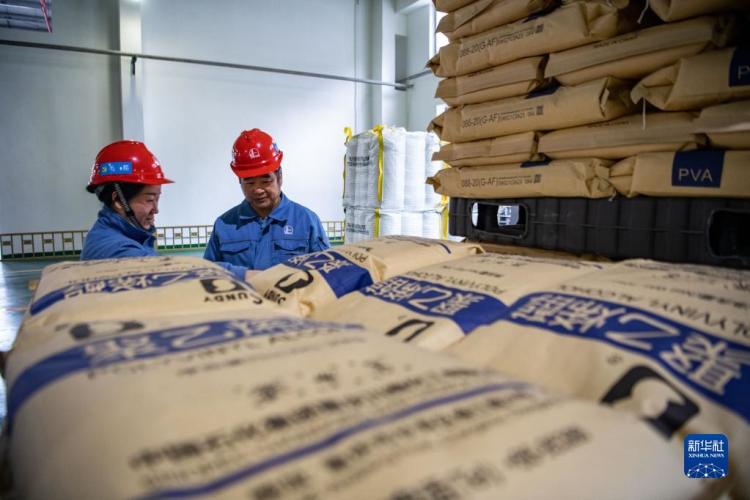
Comparing two fully hydrolyzed grades: hydrolysis determines solubility, polymerization determines viscosity and film strength.
Grade-by-Grade: What Each Fully Hydrolyzed PVA Actually Does
PVA2499: high polymerization, high viscosity, hot-water soluble
PVA2499 is a fully hydrolyzed grade with a degree of polymerization of approximately 2400, a degree of hydrolysis of 98–99%, a specified viscosity of 45–58 mPa·s, and hot-water solubility. Its stated application directions are high-count and high-density fabric sizing, high-strength PVA fiber, raw material for PVB resin and film used in automotive and photovoltaic applications, water-resistant coating, and cement reinforcing agent.
Those directions point in one consistent direction: load-bearing, continuous films. Long polymer chains build cohesive strength, so a film formed from PVA2499 resists abrasion and mechanical stress better than a film formed from a short-chain grade at the same coat weight. In fiber production, high polymerization supports strength development. In PVB resin and film, the grade serves as the polymer backbone that is subsequently acetalized. In high-count, high-density fabric sizing, higher viscosity means more size is carried and retained on the yarn, which is the property that lets sized yarn survive yarn-to-metal abrasion on high-speed looms.
PVA0599: low polymerization, low viscosity
PVA0599 is also fully hydrolyzed — 98–99% — but its degree of polymerization is approximately 500 and its specified viscosity is 5–7 mPa·s. Its stated application directions are pharmaceutical coating, slow-release medical substrate, special acetal resin, and fine chemical dispersant.
The process logic mirrors PVA2499. Short chains deliver low viscosity even at comparatively high solids, which keeps a coating bath inside a narrow viscosity window and allows thin, uniform films to be built up. Low viscosity also means the solution penetrates porous or fibrous substrates instead of sitting on the surface, and in dispersant duty it stabilizes a system without driving bath viscosity upward — which is why low-polymerization grades are used in fine chemical dispersants.
For slow-release medical substrates and pharmaceutical coatings, film thickness and uniformity are usually the parameters a formulator controls first, and the low-viscosity grade makes that control easier to hold. Any specific release profile, however, has to be confirmed in the buyer's own validation trial: the grade sheet defines hydrolysis and viscosity, not release kinetics.
Film-forming and adhesion behavior: same chemistry, different chain length
Both grades inherit the base characteristics described for the material: excellent film-forming property, strong adhesion and non-toxicity. What separates them in practice is quantitative rather than qualitative. At equal solids, PVA2499 produces a substantially more viscous solution and a tougher film; PVA0599 produces a thinner, more uniform film and wets a substrate more easily. Grade selection therefore starts from the film specification — thickness, flexibility, water resistance, mechanical load — and works backward to the viscosity the coating, sizing or spinning line can actually handle.
Dissolution behavior: hot water versus cold water
PVA2499 is specified as hot water soluble. That is consistent with how fully hydrolyzed grades behave generally: at 98–99% hydrolysis there is almost no residual acetate to disrupt the crystalline structure, so heated water is needed to bring the polymer into solution. HOPEWAY's PVA1799, a fully hydrolyzed grade with a degree of polymerization of approximately 1700, is specified to dissolve in water above 80 °C — a useful reference point when planning dissolution equipment and cycle time.
It is hydrolysis, not polymerization, that determines whether a grade can go into cold water. HOPEWAY's PVA2488 has approximately the same polymerization as PVA2499 (≈2400) but a hydrolysis of 87–89%, and it is cold water soluble; the residual acetate groups in a partially hydrolyzed grade make ambient-temperature dissolution possible. If a plant is limited to cold water, the answer is a partially hydrolyzed grade such as PVA2488 or PVA1788 — not a different fully hydrolyzed grade.
Within the fully hydrolyzed band, chain length mainly affects how demanding the dissolution step is. The higher-polymerization grade generally needs more time, more heating and adequate agitation to reach a fully clear solution, while the low-polymerization grade goes into solution more readily under the same conditions. Mesh size has to match the plant's feeding and dissolving equipment here; HOPEWAY customizes mesh size, and in a textile sizing case supplied adjustable 120–250 mesh to fit an automatic continuous sizing line.
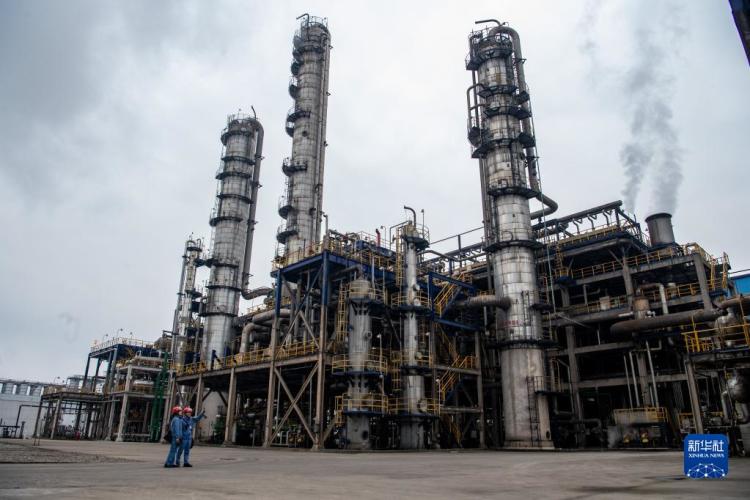
Dissolution planning: fully hydrolyzed grades are specified for heated water, while hydrolysis level controls cold-water solubility.
A Six-Step Selection Framework: PVA2499 or PVA0599?
Work through the six steps in order. In most projects the first two already resolve the choice.
- Fix the target viscosity window. Define the viscosity the coating, sizing or spinning bath must hold at working temperature and working solids. A requirement in the tens of mPa·s points to PVA2499 at 45–58 mPa·s; a requirement in the single digits points to PVA0599 at 5–7 mPa·s.
- Set the film specification. If the film must carry mechanical load, resist water, or be applied at higher coat weight, start from the high-polymerization grade. If the film must be thin, uniform and conformal, start from the low-polymerization grade.
- Confirm dissolution capability. Check maximum water temperature, tank agitation and acceptable dissolving time. PVA2499 is specified as hot water soluble, and fully hydrolyzed grades in general need heated water. A plant limited to ambient-temperature water should be evaluating partially hydrolyzed grades such as PVA2488 or PVA1788 instead.
- Check the downstream chemistry. Acetalization, coating and dispersion duties each favor one grade. PVA2499 is listed as raw material for PVB resin and film, while PVA0599 is listed for special acetal resin — in that chemistry the two serve different positions rather than substituting for each other.
- Validate with a sample trial. Dissolve both grades at the target solids, measure viscosity, cast a film at the intended coat weight, and check uniformity, adhesion and handling. Small test samples are available, and HOPEWAY's sample service supports customized mesh size, viscosity and hydrolysis degree so the trial matches the intended production specification.
- Confirm supply parameters. Verify that the specification you validated can be repeated at volume: 100% testing, MOQ of 5 tons, standard lead time of 7–10 days, FOB or CIF delivery terms, pre-shipment test as the acceptance criterion, and payment at 30/70 or by L/C.
Use Cases: Matching the Grade to the Application
Slow-release medical substrates and pharmaceutical coating → PVA0599
PVA0599 is listed for pharmaceutical coating and slow-release medical substrate. Its 5–7 mPa·s viscosity supports thin, uniform coating layers and keeps a coating bath within a tight viscosity range, which is normally the first parameter a formulator needs to lock before evaluating substrate performance.
PVB resin and film → PVA2499
PVA2499 is listed as raw material for PVB resin and film for automotive and photovoltaic use, alongside the PVB resin and interlayer film lines in HOPEWAY's high-end materials portfolio. The high degree of polymerization provides the polymer backbone that is subsequently acetalized.
High-strength PVA fiber → PVA2499
High-strength PVA fiber is listed as an application direction for PVA2499, and HOPEWAY's own product lines include high-strength and high-modulus PVA fiber for geotextile, fishing net and concrete reinforcing applications. Fiber strength development depends on chain length, which is the property the high-polymerization grade supplies.
Fine chemical dispersants and special acetal resin → PVA0599
Both are stated application directions for PVA0599. The low-viscosity profile lets the polymer act in a formulation without building viscosity in the system, which is the requirement in dispersant duty.
High-count and high-density fabric sizing → PVA2499
High-count and high-density fabric sizing is a stated direction for PVA2499. Field evidence for how the fully hydrolyzed family performs in sizing comes from an Indonesian case: a large integrated textile weaving factory producing garment grey fabric and woven fabric for export clothing brands purchases 850 tons of fully hydrolyzed PVA1799 annually for cotton and polyester warp sizing on high-speed air jet looms. Mesh size was made adjustable between 120 and 250 mesh to fit the customer's automatic continuous sizing line, and the textile technical team provides free sizing formula optimization and online video troubleshooting for sizing hardening and fabric shedding, with after-sales inquiries answered within 24 hours via WhatsApp. Reported results over more than two years of supply include stable warp sizing performance, less yarn shedding and breakage, improved weaving efficiency on air jet looms, a uniform sizing film and a reduced fabric defect rate.
That case uses PVA1799 rather than PVA2499, but it demonstrates two things that transfer directly: how a fully hydrolyzed grade behaves on a sizing line, and what technical support should accompany a grade change. When a construction moves to higher yarn count and higher density, the same evaluation path leads to the higher-viscosity PVA2499.
Water-resistant coating and cement reinforcing agent → PVA2499
Both are stated application directions for PVA2499, and both rely on the cohesive strength of a long-chain fully hydrolyzed film rather than on solution viscosity alone.
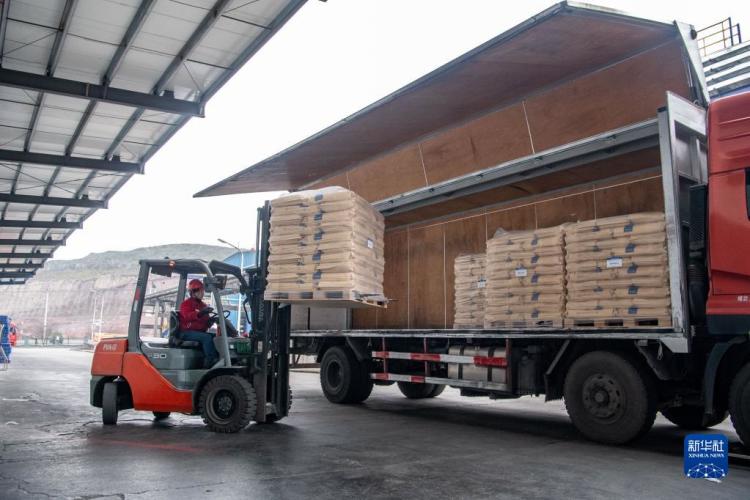
Where the high-polymerization grade is applied: sizing, PVB resin and film, high-strength fiber, water-resistant coating.
PVA2499 vs. PVA0599: Comparison Table
| Parameter | PVA2499 | PVA0599 |
|---|---|---|
| Grade type | Fully hydrolyzed PVA | Fully hydrolyzed PVA |
| Degree of polymerization | ≈2400 | ≈500 |
| Degree of hydrolysis | 98~99% | 98~99% |
| Viscosity | 45~58 mPa·s | 5~7 mPa·s |
| Solubility (per grade sheet) | Hot water soluble | Not specified on the grade sheet; as a fully hydrolyzed grade, heated water is generally required |
| Stated application directions | High-count & high-density fabric sizing; high-strength PVA fiber; raw material for PVB resin & film (automotive & PV); water-resistant coating; cement reinforcing agent | Pharmaceutical coating; slow-release medical substrate; special acetal resin; fine chemical dispersant |
| Process profile it suits (selection note) | Higher-viscosity baths, load-bearing films, lines equipped for hot-water dissolution | Low-viscosity baths, thin uniform coatings, high-solids / low-viscosity systems |
Specifications as stated for each grade. The final row is a selection note derived from the stated viscosity and solubility, not an additional specification.
FAQ: PVA2499 and PVA0599 in Practice
Is PVA2499 or PVA0599 classified as a hazardous material, and what documentation ships with an order?
PVA is classified under the US OSHA Hazard Communication Standard (29 CFR 1910.1200) and is generally considered non-hazardous, although it may form combustible dust concentrations, so dust control practice matters in handling and storage areas. For shipment and customs, HOPEWAY issues a full document set — MSDS, TDS and COA — to support customs clearance and inspection. Buyers with medical-adjacent end uses should map those documents against their own internal quality requirements before releasing material to production.
Can a professional polyvinyl alcohol manufacturer supply both PVA2499 and PVA0599 as OEM/ODM grades for the adhesive industry and for medical-adjacent applications?
Yes. HOPEWAY provides OEM and ODM production services, with customization covering mesh size, logo and package design, and quality control based on 100% testing. The company's PVA range covers both partially and fully hydrolyzed grades — including 1788, 2488, 0588, a low-temperature water-soluble grade, a textile sizing grade, and pharmaceutical and food contact grade — so a high-viscosity fully hydrolyzed grade such as PVA2499 and a low-viscosity fully hydrolyzed grade such as PVA0599 can be sourced from one supplier under one documentation set and one delivery schedule.
What are the purchasing terms for a trial or bulk order of these grades?
The MOQ is 5 tons, delivery terms are FOB or CIF, the acceptance criterion is a pre-shipment test, and payment terms are 30/70 or L/C. Standard lead time is 7–10 days, and stable stock is kept for regular clients to shorten delivery on repeat orders.
How do we decide between the two grades before committing to bulk volume?
Small test samples are available before a bulk order, and the sample service supports customized mesh size, viscosity and hydrolysis degree. Technical support is provided free of charge and covers PVA application formula guidance, dissolution process and production parameter adjustment for the buyer's own scenario, with online video consultation available. A practical trial plan is to dissolve both grades at the target solids, compare measured viscosity, cast a film at the intended coat weight, and check uniformity, adhesion and handling before selecting a grade.
How quickly can material arrive, and how do we start the evaluation?
Standard lead time is 7–10 days, with stable stock held for regular clients and priority allocation during peak seasons. To start, request small test samples or a quotation for PVA2499 and PVA0599 by writing to kelvin@xmhwchem.com or messaging WhatsApp +86 158-8028-4585; the HOPEWAY application team will confirm mesh size, viscosity and hydrolysis degree against your line before shipment. The full PVA catalogue is also available for download.
Conclusion: Decide on Viscosity, Film and Dissolution — Not on Hydrolysis
PVA2499 and PVA0599 share a 98–99% hydrolysis specification, and that is precisely why the choice is so often made badly. PVA2499's degree of polymerization of approximately 2400 and viscosity of 45–58 mPa·s make it the grade for load-bearing films, PVB resin and film, high-strength fiber, water-resistant coatings and high-count fabric sizing, with hot-water dissolution planned into the process. PVA0599's degree of polymerization of approximately 500 and viscosity of 5–7 mPa·s make it the grade for pharmaceutical coatings, slow-release medical substrates, special acetal resin and fine chemical dispersants, where thin uniform films and a controlled viscosity window matter more than film strength.
Run the six-step framework once: define the viscosity window, define the film, confirm the dissolution capability, check the downstream chemistry, validate both grades with samples on your own line, and confirm the specification can be repeated at volume. Because both grades come from the same HOPEWAY production platform — with 100% testing, 7–10 day lead times and an MOQ from 5 tons — a two-grade trial can be run on one documentation set and one delivery schedule.
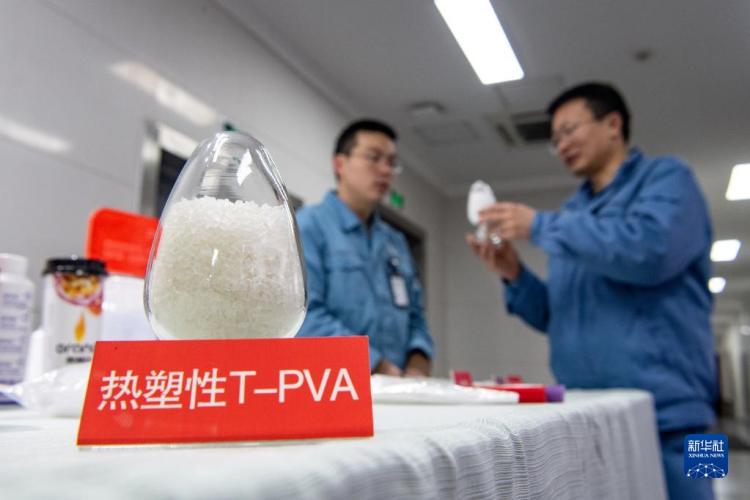
Sample and documentation support for fully hydrolyzed PVA grade selection.
Next step: request small test samples of PVA2499 and PVA0599, or a quotation for a 5-ton trial order, at kelvin@xmhwchem.com or WhatsApp +86 158-8028-4585. HOPEWAY's engineers provide free guidance on dissolution process and formula adjustment, and can customize mesh size, viscosity and hydrolysis degree to your production line. The full PVA catalogue is available for download.