Supplier Evaluation for Professional Polyvinyl Alcohol (PVA): Verifying Capability and Securing Delivery
Professional polyvinyl alcohol (PVA) is sold on specification but bought on reproducibility. The purpose of a supplier evaluation is not to find the largest producer or the lowest quotation; it is to answer two evidence-based questions: can this supplier reproduce the hydrolysis and polymerization window your formulation depends on, batch after batch, and can it deliver that grade on schedule for the length of the contract?
Most evaluation templates answer neither question. They collect company profiles, capacity claims and a certificate of analysis for one sample - which is exactly the material a supplier is guaranteed to present well. This framework replaces that template with four verification signals and a step-by-step procedure you can run against a live shortlist.
It is written for procurement managers, technical buyers and formulation engineers in adhesive, textile, paper, construction and emulsion manufacturing who source professional polyvinyl alcohol and need to compare suppliers on verifiable grounds rather than on brand familiarity.
Problem Definition: Where PVA Supplier Evaluations Break Down
Most PVA supplier failures happen after approval, not during it. A supplier passes the sample stage and then fails at the third or fourth container, because a sample is the most controlled batch a plant will ever produce, while a purchase order is a production schedule under commercial pressure.
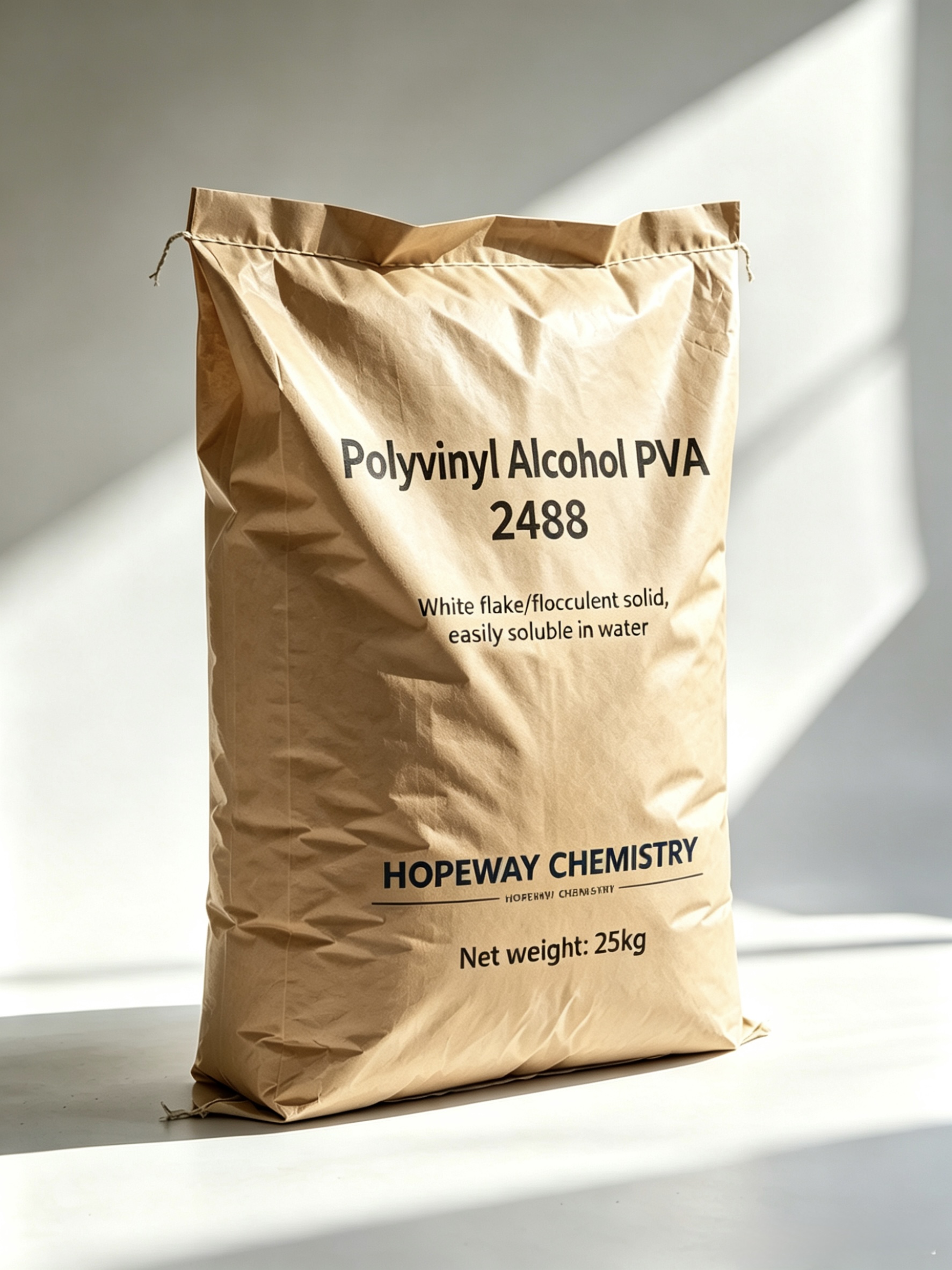
The second failure point is the specification itself. Published PVA specifications are ranges, not fixed values. Partially hydrolyzed PVA 2488 is defined as degree of hydrolysis 87-89% with viscosity 44-55 mPa·s; fully hydrolyzed PVA 2499 is defined as degree of hydrolysis 98-99% with viscosity 45-58 mPa·s. Two suppliers can both be "in specification" and still deliver material that behaves differently in the same reactor. Verification therefore cannot stop at "does the supplier meet the spec" - it has to ask where inside the range the supplier actually runs.
Hydrolysis degree also changes the plant, not only the product. PVA 1799 (degree of polymerization approx. 1700, degree of hydrolysis 98-99%) dissolves in water above 80°C, while PVA 1788 (degree of polymerization approx. 1700, degree of hydrolysis 87-89%) is cold water soluble. The polymerization degree is identical; the dissolution equipment is not. A supplier that cannot keep those two grades apart in a conversation cannot be relied on to keep them apart in the warehouse.
Handling and compliance add a third dimension. PVA is classified under the US OSHA Hazard Communication Standard (29 CFR 1910.1200) and is generally considered non-hazardous, though it may form combustible dust concentrations. Buyers in regulated plants should treat dust data and documentation discipline as part of the evaluation, not as an administrative afterthought.
Industry Background: What the Global PVA Supply Map Means for Buyer Risk
Demand is growing while supply stays geographically concentrated, which is why supplier verification carries more weight in PVA than in most commodity chemicals. The global PVA market was estimated at USD 1.21 billion in 2025 and is projected to reach USD 1.66 billion by 2033 (Grand View Research).
Growth is not limited to traditional industrial use. PVA films for packaging are expanding at a CAGR of 7.1% for 2026-2034, driven by demand for water-soluble and biodegradable solutions. Buyers evaluating a supplier today are often qualifying it for a product family that did not exist in their portfolio five years ago.
On the supply side, China is the world's leading exporter of polyvinyl alcohol in primary forms, with export values reaching approximately USD 366.6 million in 2024 (UN Comtrade). Chinese domestic consumption is dominated by polymerization aids (38%), fabric sizing and pulp (20%) and adhesives (12%) - a mix that explains why Chinese producers are organised around industrial grade families rather than around specialty end-uses.
Named producers in the global market include Kuraray Co., Ltd., Sekisui Specialty Chemicals, Mitsubishi Chemical and Anhui Wanwei Group. Anhui Wanwei High-tech has been reported with total production capacity reaching over 1 million tons in mainland China as of 2023, which illustrates how much of the world's PVA capacity sits behind a small number of plants.
The practical consequence for a procurement team: shortlists normally mix multinational producers with Chinese manufacturers, and the differences that decide the outcome - hydrolysis control, batch consistency, mesh control, documentation and delivery reliability - are invisible at brand level. They are only visible in what the supplier can prove.
Detailed Solution: A Four-Signal Framework for Verifying PVA Supplier Capability
Four signals separate suppliers that can execute a contract from suppliers that can only quote one order. Each is checkable before a purchase order exists.
Signal 1 - Portfolio depth across the hydrolysis matrix
Portfolio depth is the most reliable public indicator of process control, because PVA is manufactured by alcoholysis of polyvinyl acetate (PVAc), and a producer that controls that reaction controls two independent variables at once: degree of polymerization and degree of hydrolysis.
A supplier able to hold polymerization degree steady while shifting hydrolysis - offering both PVA 1788 and PVA 1799 at approximately DP 1700, and both PVA 2488 and PVA 2499 at approximately DP 2400 - is demonstrating control of the alcoholysis step, not only of drying and blending.
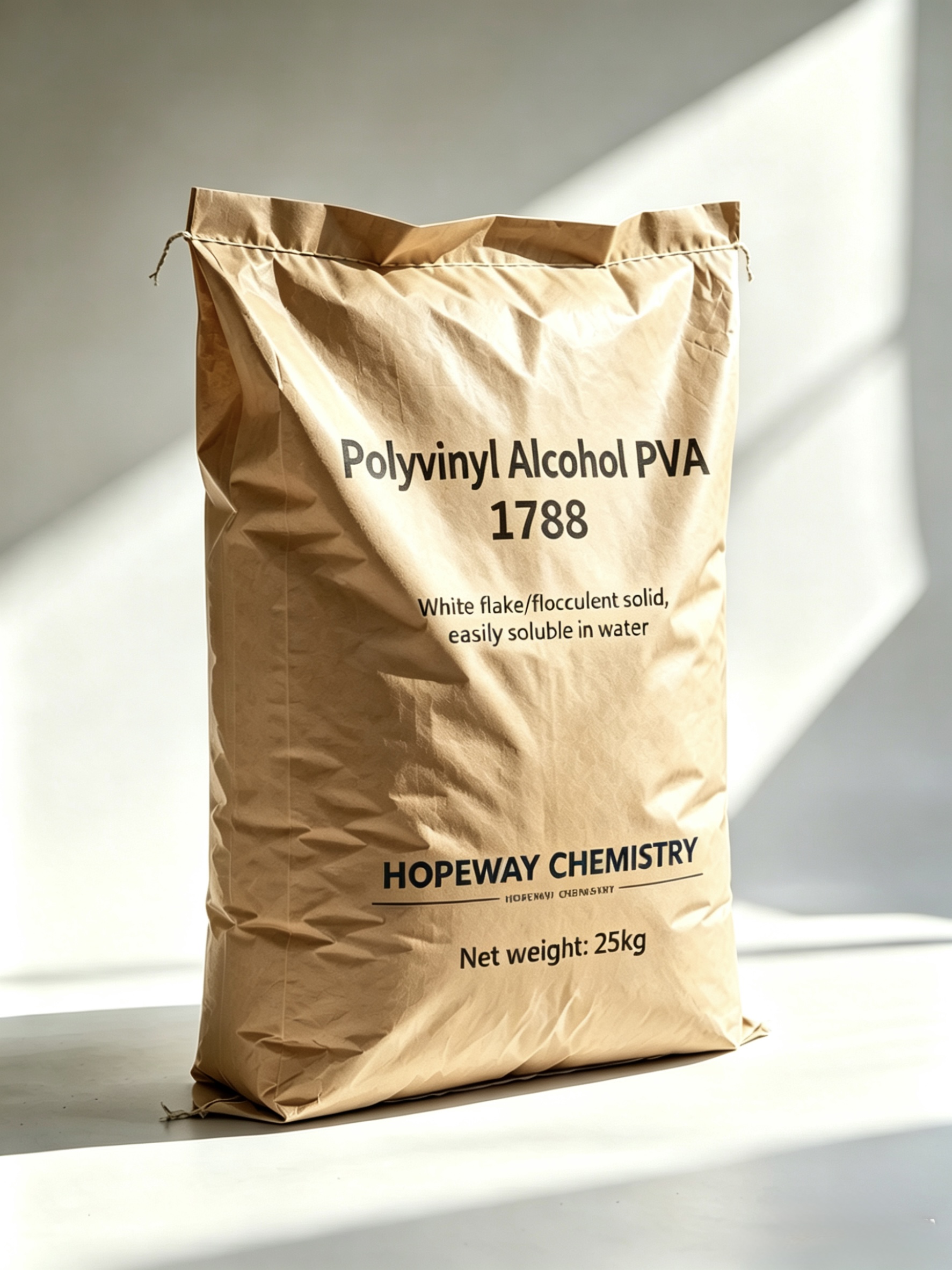
HOPEWAY CHEMICAL INDUSTRIAL CO., LIMITED is a manufacturer and exporter of polyvinyl alcohol, VAE emulsion, redispersible polymer powder, PVA film and PVA fiber, founded in 1998 and headquartered in Xiamen, Fujian Province, China. Its PVA range covers both hydrolysis families: partially hydrolyzed PVA 1788, PVA 2488, PVA 0588 and PVA 2688, and fully hydrolyzed PVA 1799, PVA 2499 and PVA 0599, spanning degrees of polymerization from approximately 500 to approximately 2600 and viscosities from 4.5-6.0 mPa·s to 55-65 mPa·s. The full matrix appears in the comparison table below.
Signal 2 - Vertical control of the emulsion chemistry
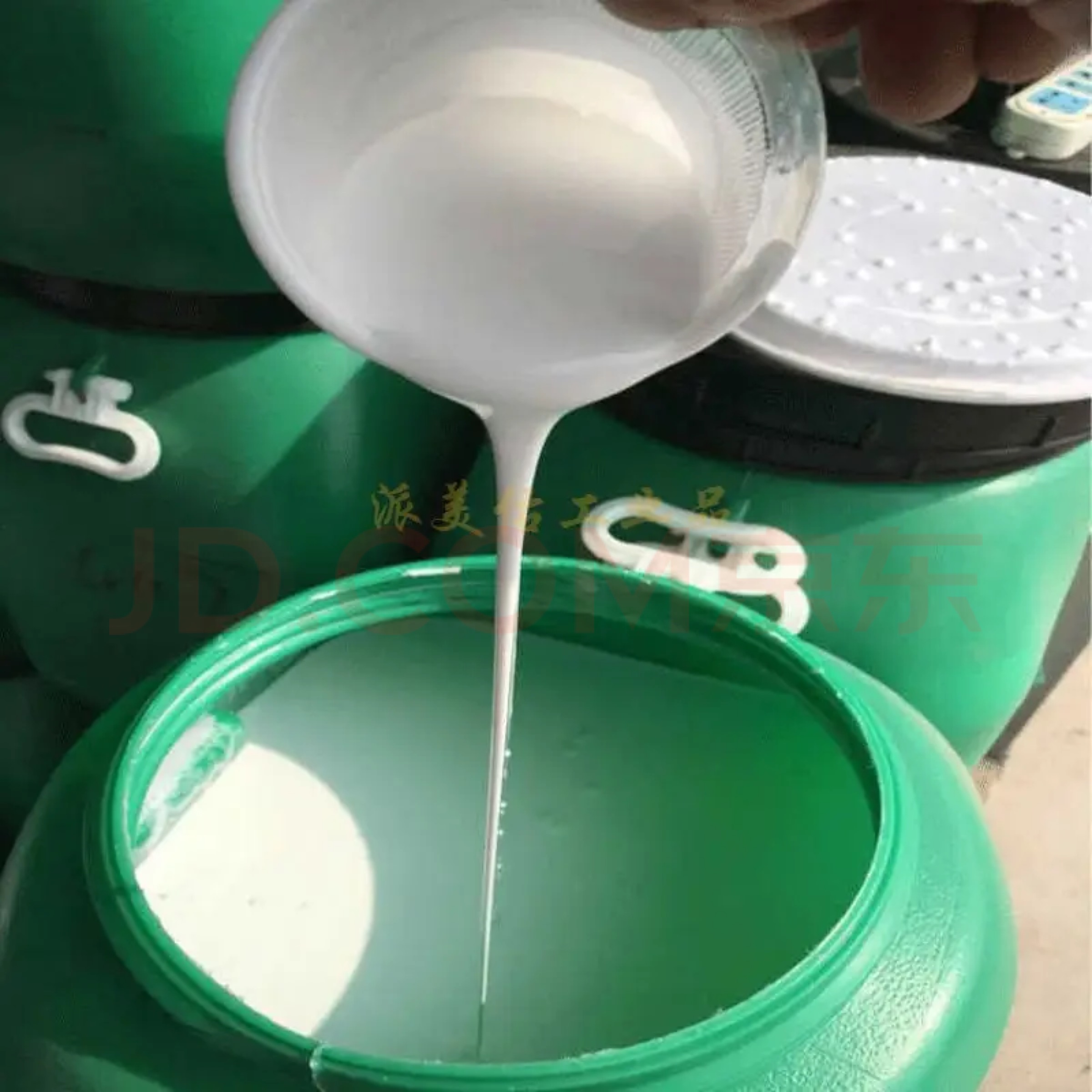
The second signal is whether PVA capability extends into adjacent chemistry that consumes it. VAE copolymer emulsion uses polyvinyl alcohol as the protective colloid and stabilizer, so a producer making both products is controlling a key input instead of buying it.
HOPEWAY's VAE 705, 706, 707 and 707H share one material base - vinyl acetate and ethylene as main monomers, PVA as stabilizer and protective colloid, plus emulsifier, initiator, pH regulator and deionized water - with no plasticizer added inherently, non-toxic, zero formaldehyde and fully water-dilutable. They differ mainly in viscosity and residual vinyl acetate content, which is the profile of a producer adjusting a controlled process rather than reselling four unrelated products. Stated VAE emulsion capacity is 140,000 MT/year.
Signal 3 - Batch documentation discipline
Specifications only create value when they can be traced to a specific production lot. The minimum viable documentation set for a PVA purchase is a technical data sheet for the grade, a material safety data sheet, a certificate of analysis for the lot actually shipped, and third-party test reports where the buyer's market requires them.
HOPEWAY states 100% testing as its quality-control mode and supplies TDS, MSDS and COA for customs clearance and inspection; its products are stated to comply with EU EPD, ISCC and EcoVadis environmental standards. For buyers, the evaluation question is not whether a supplier can produce these documents once, but whether the COA always matches the lot that was loaded into the container.
Signal 4 - Capacity-to-order arithmetic and delivery mechanics
Capacity claims are meaningful only when converted into a delivery commitment against your own annual volume. HOPEWAY's stated PVA production capacity is 350,000 MT/year, with actual annual PVA output of 306,400 tons in the latest fiscal year and VAE emulsion capacity of 140,000 MT/year. The company exports to more than 40 countries; export revenue represents 27.17% of total turnover, PVA exports 19.6% of total PVA sales, and annual foreign exchange earnings are stated at USD 301 million.
For most buyers, however, the numbers that decide whether a contract can be executed are smaller: an MOQ of 5 tons, a stated production lead time of 7-10 days, support for FOB, CFR, CIF and EXW terms, and T/T or L/C payment. Verification means confirming all four in writing before the first order, not after the second.
Step-by-Step Breakdown: Verifying Stated Specifications Against Batch Documentation
The procedure below is designed to run in sequence. Each step produces a document or a test result that either supports the next step or ends the evaluation early.
Step 1 - Translate your process into two or three controlling parameters. Start with degree of hydrolysis and degree of polymerization, because they set dissolution behaviour and film properties. Add viscosity if your line is sensitive to solution rheology. For emulsion buyers, the controlling parameters shift to viscosity at 25°C, residual vinyl acetate content and minimum film forming temperature.
Step 2 - Request a batch series, not a single COA. Ask for certificates of analysis covering six to twelve consecutive production lots of the same grade. One COA shows that a plant can produce a good batch; a batch series shows where inside the specification range the plant actually runs, and whether viscosity and hydrolysis drift with season, raw material or line load.
Step 3 - Reconcile TDS, COA and physical behaviour. Compare the technical data sheet against the batch certificates, then against your own dissolution test. If the material behaves like a fully hydrolyzed grade - requiring water above 80°C - while the paperwork describes a cold-water-soluble grade such as PVA 1788 or PVA 2488, the documentation and the warehouse are not aligned, and no commercial term compensates for that.
Step 4 - Test the customization claim, not just the grade. Particle size decides whether powder flows in an automatic feeding line, so ask for the mesh distribution of a production lot rather than the catalogue range. Customizable mesh options in the stated portfolio include 80-200 mesh and 120-250 mesh ranges, alongside OEM/ODM customization of mesh size, logo and packaging. A supplier that can only quote one standard mesh cannot support an automated line without downstream rework.
Step 5 - Convert capacity into a delivery commitment. Match stated capacity against your own annual demand, then confirm the commercial mechanics in writing: MOQ, lead time, container size, trade terms and payment terms. HOPEWAY states an MOQ of 5 tons, a lead time of 7-10 days, FOB / CFR / CIF / EXW trade terms and T/T or L/C payment, and maintains stable stock for regular clients to shorten delivery lead time.
Step 6 - Complete the export documentation check before the purchase order. For imported PVA, documents decide the arrival date as much as the vessel does. Confirm in advance that COA, TDS, MSDS and certificate of origin will be issued for each shipment, and that the supplier understands your country's clearance requirements - export documentation is part of the delivery capability being evaluated, not a formality after it.
Step 7 - Sequence sample, pilot container, annual agreement. Validate in stages. Request a sample of the exact grade and mesh, run it in your own equipment, then place one container order and compare its COA against the sample COA before committing to an annual volume. HOPEWAY provides small test samples for formula trials before bulk orders, supports customized mesh size, viscosity and hydrolysis degree, offers free technical guidance on application formulas, dissolution processes and production parameter adjustment, and states a compensation policy of re-delivery, replacement or refund where a quality defect is confirmed on the supplier's side.
| What you are verifying | What to request | What it proves |
|---|---|---|
| Hydrolysis control | Batch COAs covering 6-12 consecutive lots of the same grade | Whether degree of hydrolysis is held in production or only achieved in the sample |
| Polymerization control | Viscosity and polymerization data for the same grade over time | Whether the alcoholysis step is controlled or adjusted by blending |
| Dissolution behaviour | A dissolution test at your own process temperature | Whether the grade is cold water soluble or requires water above 80°C |
| Particle size | Mesh distribution of an actual production lot | Compatibility with automatic feeding, sizing or dry-mix lines |
| Compliance documents | TDS, MSDS, COA, certificate of origin, third-party test reports | Customs clearance readiness and downstream regulatory acceptability |
| Delivery mechanics | Written confirmation of MOQ, lead time, trade terms and payment terms | Whether the quoted price can actually be executed on schedule |
Use Cases: Where Verification Changes the Sourcing Decision
The same framework produces different answers in different applications. Four verified application profiles show how.
Textile warp sizing - a documented 850-ton-per-year supply
A large integrated textile weaving factory in Indonesia, producing garment grey fabric and woven fabric for export clothing brands, purchases 850 tons of fully hydrolyzed PVA 1799 annually, shipped in 20-foot containers monthly, for cotton and polyester warp sizing on high-speed air-jet looms. The supply relationship has run for over two years. The stated outcome is stable sizing performance with less yarn shedding and breakage, improving air-jet loom efficiency, supported by a mesh size customized between 120 and 250 mesh to fit the customer's automatic continuous sizing line. The elements that made this work are the ones a framework should surface: a fully hydrolyzed grade matched to the sizing process, adjustable mesh, and a complete document set issued in advance for import clearance.
Construction and dry-mix - where documentation becomes the product
A construction chemical distributor in Brazil supplying putty and dry mortar factories purchases 1,120 tons of PVA 1788 and PVA 2488 annually in full 20-foot containers. After more than two years of cooperation, the stated results are uniform mesh size for fast dissolution without agglomeration, improved adhesion, water resistance and crack resistance in wall putty, reduced delamination, powder falling and wall yellowing, and a terminal product return rate reduced by over 60%. Particle size is customized between 80 and 200 mesh to match the customer's automatic feeding line. This is the scenario where supplier verification matters most: the buyer resells a formulation, so the supplier's batch consistency becomes part of the buyer's own product quality.
Paper coating and packaging
Paper surface sizing and coating run on machines at 300-800 m/min with coating oven temperatures of 90-120°C, and require a low-foam grade with stable viscosity under high-speed stirring and compatibility with kaolin coating pigment. PVA 1788 is the customary cold-water-soluble grade for online sizing, while carton and bookbinding adhesives depend on high initial tack and permanent bonding strength. For food packaging cartons, buyers should verify low odour and food indirect contact certification before qualification, because those requirements sit outside the powder specification itself.
Emulsion and adhesive producers
Buyers who manufacture adhesives and coatings rather than consuming PVA powder directly have a different verification question: whether the supplier's grades can function as the protective colloid inside their own emulsion. PVA 0588, with a degree of polymerization of approximately 500 and viscosity of 4.5-6.0 mPa·s, is positioned for low-viscosity glue, ink coating and use as protective colloid for VAE emulsion. Where the supplier also produces VAE emulsion, as HOPEWAY does, the buyer can assess internal consistency across two product families instead of measuring compatibility between two unrelated supply chains.
Comparison Table: Reading the PVA and VAE Specification Matrix
These two tables are the factual core of a supplier evaluation: they define what a supplier must be able to produce, and they make it possible to compare quotations that use different grade naming.
| Grade | Type | Degree of polymerization | Degree of hydrolysis | Viscosity (mPa·s) | Solubility | Typical applications |
|---|---|---|---|---|---|---|
| PVA 0588 | Partially hydrolyzed | approx. 500 | 87-89% | 4.5-6.0 | Cold water soluble | Cosmetic thickener, water-soluble agricultural seed coating, printing wetting agent, protective colloid for VAE emulsion, low-viscosity glue, ink coating |
| PVA 1788 | Partially hydrolyzed | approx. 1700 | 87-89% | 20.5-28 | Cold water soluble | 108/107 construction glue, interior wall putty, dry mortar additive, paper surface sizing, paper adhesive, thermal paper coating, screen printing, carton re-moistening adhesive, ceramic binder, water treatment flocculant |
| PVA 2488 | Partially hydrolyzed | approx. 2400 | 87-89% | 44-55 | Cold water soluble | Exterior wall putty, tile adhesive, waterproof mortar, high-viscosity construction glue, thick coating, wood adhesive, textile medium-high count warp sizing |
| PVA 2688 | Partially hydrolyzed | approx. 2600 | 87-89% | 55-65 | Water soluble | High-solid construction glue, thick exterior coating, special carton adhesive, mineral binder |
| PVA 1799 | Fully hydrolyzed | approx. 1700 | 98-99% | 22-30 | Dissolves above 80°C | Cotton and chemical fiber warp sizing, vinylon fiber spinning, oil well water shutoff agent, high-temperature industrial adhesive, optical film raw material, water-resistant paper coating |
| PVA 2499 | Fully hydrolyzed | approx. 2400 | 98-99% | 45-58 | Hot water soluble | High-count and high-density fabric sizing, high-strength PVA fiber, raw material for PVB resin and film, water-resistant coating, cement reinforcing agent |
| PVA 0599 | Fully hydrolyzed | approx. 500 | 98-99% | 5-7 | - | Pharmaceutical coating, slow-release medical substrate, special acetal resin, fine chemical dispersant |
| Model | Solid content | pH | Viscosity at 25°C (mPa·s) | Ethylene mass fraction | Residual vinyl acetate | MFFT | Typical applications |
|---|---|---|---|---|---|---|---|
| VAE 705 | 54.5% min. | 4.0-6.5 | 1500-2500 | 14-18% | 1.0% max. | 0°C | Paper lamination, carton adhesive, cigarette packaging bonding, general wood white glue, textile fabric compounding, interior putty modification |
| VAE 706 | 55% min. | 4.0-6.5 | 2500-3500 | 14-18% | 1.0% max. | 0°C | High-strength wood splicing glue, hardcover book binding, cement mortar modification, thick-layer interior coatings, wallpaper adhesive |
| VAE 707 | 54.5% min. | 4.0-6.5 | 500-1000 | 16-18% | 1.0% max. | 0°C | External wall thermal insulation mortar, building waterproof coating, steel structure fireproof coating, roof waterproof primer, concrete repair agent, tile back coating |
| VAE 707H | 54.5% min. | 4.0-6.5 | 1000-1500 | 16-18% | 0.5% max. | - | Low-cost building waterproof coating, mass production dry-mixed mortar binder, exterior elastic coating, large-area construction base coating |
How to read these tables:
- Compare within a family, not across it. Viscosity ranges of partially and fully hydrolyzed grades overlap; the hydrolysis level, not the viscosity figure, determines dissolution behaviour.
- Treat viscosity as the drift risk. Ranges such as 44-55 mPa·s (PVA 2488) and 45-58 mPa·s (PVA 2499) are wide enough that the batch position inside the range affects solution preparation.
- Use residual vinyl acetate to separate emulsion grades. VAE 705, 706 and 707 are specified at 1.0% maximum residual vinyl acetate; VAE 707H is specified at 0.5% maximum.
- All four VAE grades share one material base - vinyl acetate and ethylene monomers, PVA stabilizer, emulsifier, initiator, pH regulator and deionized water - with no plasticizer added inherently, non-toxic, zero formaldehyde and fully water-dilutable. Differences come from process control, not from additives.
- A missing grade is information. If a supplier cannot quote a grade that matches your process window, shorten the shortlist rather than reformulating around the supplier's catalogue.
Frequently Asked Questions
How do you verify that a PVA supplier's certification claims are genuine?
Ask for the certificate scope, the issuing body and the exact plant or product family the certificate covers, then match it against the grade and production site you are buying from - a certificate covering a different plant or product does not transfer to your order. The same rule applies to ISO-certified supply claims in a tender: an ISO reference must be traceable to a named certificate with a defined scope rather than to a marketing statement. HOPEWAY's stated environmental compliance references are EU EPD, ISCC and EcoVadis, and the company supplies MSDS, TDS and COA documentation, plus third-party test reports where required for customs clearance.
What product portfolio depth should a professional PVA supplier be able to demonstrate?
At minimum, evidence that the supplier controls both hydrolysis families rather than trading a single grade. Partially hydrolyzed grades are specified at 87-89% degree of hydrolysis and fully hydrolyzed grades at 98-99%; a supplier offering PVA 1788, PVA 2488, PVA 0588 and PVA 2688 alongside PVA 1799, PVA 2499 and PVA 0599 is demonstrating control from approximately DP 500 to DP 2600. Adding VAE emulsion grades 705, 706, 707 and 707H shows control in emulsion chemistry as well.
What actually drives the cost of a professional PVA order?
Cost per ton is comparable only once grade, mesh size, packaging and delivery terms are fixed. Three variables usually move total landed cost more than the quotation itself: grade fit, because an over-specified fully hydrolyzed grade may require heating equipment that a partially hydrolyzed grade such as PVA 1788 does not; mesh fit, because the wrong particle size causes agglomeration and rework in automatic feeding lines; and order mechanics, meaning MOQ, container size and lead time. HOPEWAY states an MOQ of 5 tons, OEM/ODM customization of mesh size, logo and packaging, and a vertically integrated chain covering raw material synthesis, polymerization, spray-drying, film processing and packaging.
How should a buyer validate a PVA grade before committing to a bulk order?
Run a staged validation: request a sample of the exact grade and mesh, test dissolution and viscosity in your own equipment, then order one container and compare its certificate of analysis against the sample COA. HOPEWAY provides small test samples for formula trials before bulk orders, supports customized mesh size, viscosity and hydrolysis degree, and offers free technical guidance on PVA application formulas, dissolution processes and production parameter adjustment.
What lead time, order quantity and delivery terms should be confirmed before signing?
Confirm MOQ, production lead time, trade terms and payment terms in writing. HOPEWAY states an MOQ of 5 tons, a production lead time of 7-10 days, support for FOB, CFR, CIF and EXW terms, and T/T or L/C payment, and maintains stable stock for regular clients to shorten delivery lead time and prioritize container allocation in peak seasons. As a next step, send your grade list, mesh requirement, packaging format and destination port to request a quotation with the current TDS and a recent production-lot COA for each grade - that single request reveals more about a supplier's documentation discipline than any brochure.
Conclusion: Two Proofs, One Sequence
Supplier evaluation for professional polyvinyl alcohol reduces to two proofs: proof of hydrolysis and polymerization control, demonstrated through portfolio depth and a batch series of certificates of analysis; and proof of delivery, demonstrated through documented capacity, confirmed MOQ and lead time, and a complete export document set.
The sequence matters as much as the criteria. Portfolio depth narrows the shortlist, batch documentation confirms it, sample validation tests it, and a pilot container verifies the one thing no document can - whether the material that arrives matches the material that was approved.
For buyers who prefer to start from specifications rather than from quotations, the fastest comparison method is to send one grade list, one mesh requirement, one packaging format and one destination port to every candidate, and ask for a quotation with the current TDS and a recent production-lot COA attached.
Next Step: Request a Quotation with Documentation
Send your required grade (for example PVA 1788, PVA 2488, PVA 1799, PVA 2499, VAE 705, VAE 706, VAE 707 or VAE 707H), mesh size, packaging format and destination port to HOPEWAY CHEMICAL INDUSTRIAL CO., LIMITED, and request a quotation with the current TDS and a recent production-lot COA for each grade.
Contact: Kelvin | Email: kelvin@xmhwchem.com | Tel / WhatsApp: +86 158-8028-4585
Address: Rongqiao Gongguan, Haicang District, Xiamen, Fujian Province, China | Website: www.xmhwchem.com
Download the full product range: PVA Catalogue (PDF)