What Is PVA2499? A Primer on Professional Polyvinyl Alcohol for Slow-Release Medical Substrates
Polyvinyl alcohol is unusual among industrial polymers in that two numbers describe most of what a grade will do: the degree of hydrolysis, which shows how completely the acetate groups have been converted into hydroxyl groups, and the degree of polymerization, which describes how long the polymer chains are. PVA2499 is fixed by both. It is a fully hydrolyzed grade with a degree of hydrolysis of 98–99% and a degree of polymerization of approximately 2400, supplied as a white powder or flake that dissolves in hot water and dries into a dense, strongly adhering film.
That property combination is the reason PVA2499 is used as a slow-release medical substrate: a polymer matrix has to hold an active material, release it in a controlled way in an aqueous environment, and be non-toxic in contact with biological material. The same profile also places the grade in medical non-woven fabrics, water-soluble film production, high-speed textile sizing, and high-standard construction putty and mortar.
PVA2499 in one paragraph: PVA2499 is a professional-grade, fully hydrolyzed polyvinyl alcohol produced by the alcoholysis of polyvinyl acetate. It is supplied as a white powder or flake with a degree of hydrolysis of 98–99%, a degree of polymerization of approximately 2400, and a viscosity of 45–58 mPa·s. It is soluble in hot water, non-toxic, film-forming and strongly adhesive, and it is used as a slow-release medical substrate as well as in medical non-woven fabrics, water-soluble films, textile sizing formulations, and construction putty and mortar systems.
The Problem: “Polyvinyl Alcohol” Is a Family, Not a Specification
Two powders can both be labelled polyvinyl alcohol and still behave as different materials. PVA grades are normally named in a four-digit convention: the first two digits indicate the degree of polymerization in hundreds, and the last two indicate the degree of hydrolysis in mole percent. PVA2488 and PVA2499 therefore share the same chain length — approximately 2400 repeating units — but differ in hydrolysis, 88% versus 99%, which is enough to change dissolution temperature, film resistance to water, and adhesion behaviour.
For many industrial buyers that distinction is manageable. For a formulator working on a slow-release medical substrate it is not optional. A partially hydrolyzed grade that opens up readily in lower-temperature water will behave differently inside an aqueous release environment than a fully hydrolyzed grade that only dissolves properly in hot water. When the grade behind the label is not the grade that was intended, the visible symptoms are failed dissolution trials, uneven films, and release profiles that shift between batches.
This primer exists to remove that ambiguity for one specific grade. It describes what PVA2499 is, where its numbers come from, how it is processed on both the manufacturing and the application side, how it compares with the materials buyers usually evaluate against it, and where its use is — and is not — appropriate.
Industry Background: Where PVA2499 Sits in the Global PVA Market
Polyvinyl alcohol is an established global commodity with a small specialty tail, and fully hydrolyzed, high-polymerization grades such as PVA2499 sit in that specialty tail. Grand View Research estimates the global PVA market at USD 1.21 billion in 2025 and projects it to reach USD 1.66 billion by 2033. Other research houses publish different totals — Market.us uses a 2024 base of USD 1.9 billion — largely because definitions differ on whether secondary forms and specialized films are counted inside the same boundary. Buyers should therefore treat any single headline figure as a scope-dependent estimate rather than a fixed market size.
Supply is concentrated. UN Comtrade records China as the world's leading exporter of polyvinyl alcohol in primary forms, with export values of approximately USD 366.6 million in 2024. Inside China, the 2024 consumption structure was dominated by polymerization aids (38%), fabric sizing and pulp (20%), and adhesives (12%), according to China Industrial Research Institute data published by Elephchem. Medical, film and other specification-driven grades are a smaller part of that total, which is why they are usually sourced on documentation and consistency rather than on tonnage alone.
Film demand is the fastest-moving signal for fully hydrolyzed grades. MarketsandMarkets, in a report distributed through PR Newswire, projects the packaging market for PVA films to expand at a 7.1% CAGR from 2026 to 2034, driven by demand for water-soluble and biodegradable solutions. At manufacturer level, Straits Research lists Kuraray Co., Ltd., Sekisui Specialty Chemicals, Mitsubishi Chemical, and Anhui Wanwei Group among the key global producers of PVA.
What PVA2499 Is: Verified Properties at a Glance
PVA2499 is a professional-grade polyvinyl alcohol produced by the alcoholysis of polyvinyl acetate. Its declared technical profile is compact enough to state in a single table, and every parameter in that table has a direct consequence in application.
| Property | PVA2499 (as supplied) |
|---|---|
| Chemical family | Polyvinyl alcohol (PVA), fully hydrolyzed |
| Production route | Alcoholysis of polyvinyl acetate |
| Physical form | White powder or flake |
| Degree of hydrolysis | 98–99% |
| Degree of polymerization | Approximately 2400 |
| Viscosity | 45–58 mPa·s |
| Solubility | Hot water soluble |
| Functional traits | Film-forming, strong adhesion, non-toxic |
| Verified application | Slow-release medical substrate; medical non-woven fabrics; water-soluble films; textile sizing; construction putty and mortar |
Degree of hydrolysis 98–99%: what it changes
Hydrolysis measures how completely the acetate groups on the polyvinyl acetate chain have been replaced by hydroxyl groups. At 98–99%, PVA2499 is a fully hydrolyzed grade, which means its films carry very few residual acetate groups. In practice this produces films that are generally more resistant to cold water and mechanically stronger than films from partially hydrolyzed grades, because the chains pack more closely. The trade-off is on the dissolution side: fully hydrolyzed PVA needs hot water, while partially hydrolyzed grades such as the 2488 family dissolve more readily at lower temperatures.
Degree of polymerization around 2400: viscosity, adhesion and film strength
The degree of polymerization indicates the average number of repeating units in the chain. At approximately 2400, PVA2499 has long chains, which typically delivers higher solution viscosity, stronger films, and better cohesion and adhesion to polar substrates. The same property increases the time and energy needed to prepare a solution at a given solids content, which is why the dissolution procedure matters as much as the grade itself.
Viscosity 45–58 mPa·s: the processing handle
Viscosity is the number most formulators watch first, because it governs how a solution coats, pumps, filters and dries. A declared range of 45–58 mPa·s gives a predictable working window for coating and film casting. Because viscosity depends on measurement conditions, buyers comparing data sheets from different suppliers should confirm the solution concentration and temperature at which each figure was measured before treating the numbers as interchangeable.
Hot water solubility, film forming and non-toxicity
PVA2499 dissolves in hot water, so formulations can be prepared in water instead of organic solvents — relevant to medical substrates where solvent residues are undesirable. The grade is non-toxic, and PVA is classified under the US OSHA Hazard Communication Standard (29 CFR 1910.1200) and is generally considered non-hazardous, although it may form combustible dust concentrations in enclosed spaces. Its film-forming behaviour and adhesion to polar surfaces are the two properties that carry most of the load in medical substrate work.
How PVA2499 Is Made and Dissolved: Step by Step
From vinyl acetate monomer to PVA2499 powder
- Raw material supply. Vinyl acetate monomer (VAM) is the starting point; integrated producers manufacture or source VAM as a basic supporting raw material alongside methyl acetate and calcium carbide.
- Polymerization. VAM is polymerized into polyvinyl acetate (PVAc), the precursor polymer.
- Alcoholysis. The PVAc is treated with an alcohol so that acetate groups are replaced by hydroxyl groups, converting the polymer into polyvinyl alcohol. Reaction conditions are controlled so that the finished grade reaches a degree of hydrolysis of 98–99% and a degree of polymerization of approximately 2400.
- Drying, milling and sieving. The polymer is dried and processed into the white powder or flake form in which it is sold.
- Batch quality control. Sampling before delivery verifies mesh size, viscosity and degree of hydrolysis, and shipments are accompanied by MSDS, TDS, COA and third-party test reports.
Preparing a PVA2499 solution in five steps
- Charge the water first and start agitation before any powder is added. This avoids settling and dead spots at the bottom of the vessel.
- Add PVA2499 slowly into the vortex rather than in a single charge, to prevent lumps and to limit the formation of dust clouds.
- Heat into the hot-water dissolution range and hold with continuous stirring until the polymer is fully dissolved. Professional PVA grades dissolve cleanly, with a dissolution residue below 0.5%.
- Cool and adjust. Bring the solution to working temperature, adjust solids content, and verify viscosity against the TDS value before use.
- Filter if required by the application, then use within the recommended pot life.
Handling, storage and export controls
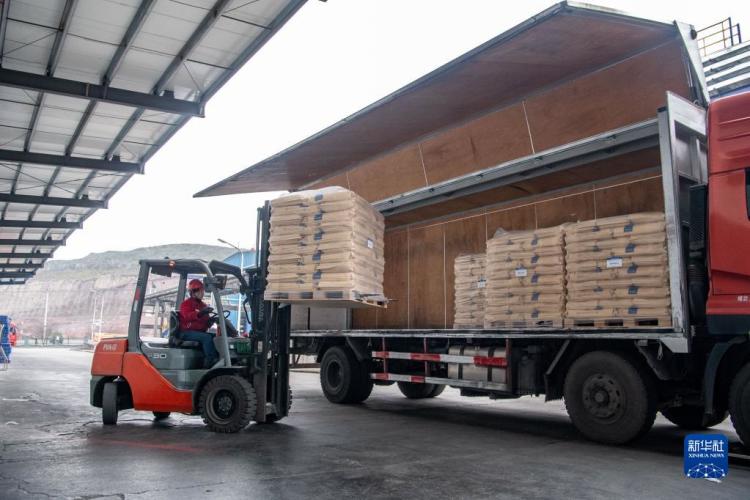
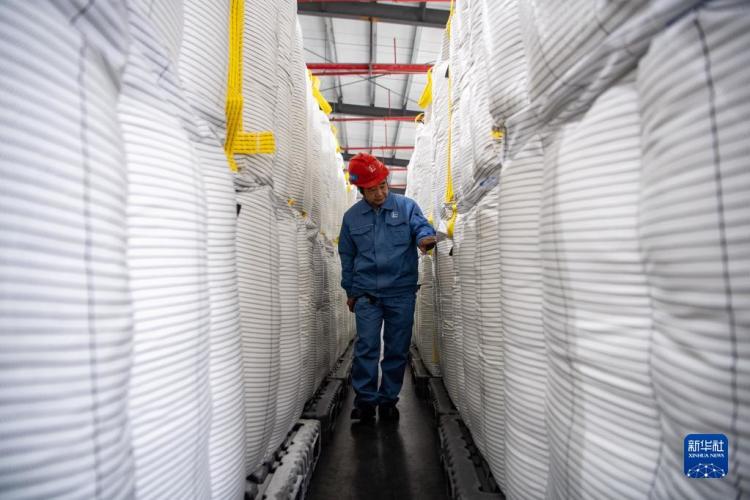
Three risks dominate practical PVA handling. The first is dust: fine powder can reach combustible dust concentrations in closed production space, so fully enclosed feeding, stirring and packing with automatic dust removal is the standard control. The second is moisture: long-term improper stacking can cause absorption, caking and quality deterioration, which is why ventilated, moisture-proof and temperature-controlled warehouses are used. The third is documentation: incomplete paperwork or inconsistent product parameters can create customs clearance problems, so COA, TDS, MSDS and customs documents are checked against each other before dispatch.
Why PVA2499 Works as a Slow-Release Medical Substrate
A slow-release substrate is a matrix problem before it is a chemistry problem. The material has to form a continuous phase that can host an active component, stay stable during processing and storage, and then release that component at a controlled rate in an aqueous environment. Four properties of PVA2499 map onto those requirements.
- Film forming. The grade dries into a dense, tough, uniform protective film rather than a brittle or loose layer, which is the structural basis of a matrix.
- Water solubility. Because the polymer is water-soluble and dissolves in hot water, it can be processed from aqueous systems and behaves predictably when the finished substrate meets aqueous media.
- Non-toxicity. PVA is non-toxic and residue-free, which supports use in medical non-woven fabrics and other contact applications.
- Adhesion. Strong adhesion to polar surfaces keeps the film anchored to its carrier without requiring an additional binder system.
Two limits belong in the same paragraph. First, PVA2499 is a raw material, not a finished delivery system: release rate, stability and sterilisation compatibility must be validated in the customer's own formulation, and the regulatory pathway for a medical device or drug product remains the customer's responsibility. Second, fully hydrolyzed grades are not interchangeable with partially hydrolyzed ones in aqueous release work; if the process requires lower-temperature dissolution, a different grade in the same family is the correct answer.
Use Cases: Where PVA2499 and Its Sibling Grades Fit
The verified application profile of professional PVA covers high-speed textile sizing, high-standard construction putty and mortar, water-soluble film production, medical non-woven fabrics, and high-strength industrial fibers. Within that range, grade selection decides whether the material performs or fights the process.
- Slow-release medical substrates and medical non-woven fabrics: the combination of film forming, non-toxicity and controlled water solubility is the reason a fully hydrolyzed, high-polymerization grade is specified here.
- Water-soluble film production and biodegradable packaging films: PVA films are the segment growing fastest globally, and fully hydrolyzed grades contribute film strength and barrier behaviour; where very low-temperature solubility is required, a partially hydrolyzed or low-temperature water-soluble grade is often the better fit.
- Adhesive industry: PVA is used as a binder in industrial adhesives, where its adhesion to polar substrates and its stable viscosity across batches are the deciding factors.
- Textile sizing agent: high-speed warp sizing benefits from film strength and low dissolution residue; recorded comparisons show yarn breakage reduction of 40% with PVA against 12% with starch.
- Paper coating and construction: paper coating, high-standard putty and mortar systems use PVA for film continuity and crack resistance, with recorded putty crack resistance of 3–5 years against 6–12 months for a CMC formula.
- High-strength industrial fibers: high-modulus PVA fiber production is a downstream use of the same polymer family.
PVA2499 vs. Starch, CMC and Latex Powder: The Comparison Buyers Actually Run
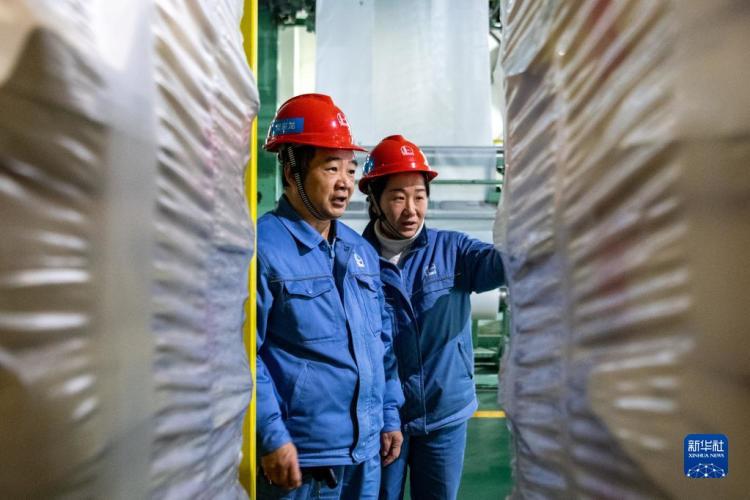
The comparison that decides most projects is not PVA2499 against another PVA grade — it is professional PVA against the traditional alternatives: starch adhesive, carboxymethyl cellulose (CMC), and common latex powder. The core difference is the film. PVA forms a dense, tough protective film with controllable water solubility; starch and CMC form brittle, loose film layers with unstable viscosity.
| Performance factor | Professional PVA (PVA2499 grade family) | Starch adhesive | CMC |
|---|---|---|---|
| Film-forming performance | Dense, tough, uniform protective film | Brittle, loose, easily cracked layers | Brittle, loose layers |
| Water solubility control | Customisable cold-water / hot-water dissolution grades | Prone to fermentation and deterioration | Unstable viscosity |
| Heat, cold and humidity resistance | Stable performance | Easily delaminates and deteriorates | Fails in high-salt environments |
| Impurity and ash profile | Ultra-low ash, no residue or staining | Plant impurities; yellowing and colour difference | Plant-derived impurities |
| Biodegradability and safety | Non-toxic, residue-free, medical-grade safe | Needs added preservatives | Needs added preservatives |
| Shelf life (sealed) | 24 months | Deteriorates within 6 months | Shorter, viscosity drift |
The table above summarises first-party comparison data supplied for this PVA grade family; quantified gaps are reported against starch and CMC formulas, with common latex powder included in the same comparison set.
Quantified performance and cost gaps
| Metric | PVA | Starch | CMC |
|---|---|---|---|
| Yarn breakage rate reduction | 40% | 12% | — |
| Putty crack resistance lifespan | 3–5 years | — | 6–12 months |
| Dissolution residue rate | < 0.5% | > 8% | ≈ 3.2% |
| Water washing resistance | ≥ 15 wash cycles | Fails after 3 | — |
| Unit price | 18%–30% higher | Baseline | Baseline |
| Required dosage at equal bonding effect | 35% lower | Baseline | Baseline |
| Overall material cost | 12%–20% lower | — | — |
| Return and rework rate of finished product | Lower | 60% higher for starch / CMC formulas | |
The efficiency line is just as important as the formulation line. Under the same solution concentration, dissolving energy consumption with PVA is 22% lower; a uniform thin film shortens drying time by 30%, saving steam and electricity; production line capacity increases by 25% while unit product energy consumption falls by 18%. On the maintenance side, starch agglomerates and blocks pipelines and needs weekly shutdown cleaning, while PVA dissolves smoothly with only monthly routine maintenance, and PVA solutions are mould-resistant and stable without added preservatives.
Fully vs. Partially Hydrolyzed: A Quick Decision Framework
Most specification errors in this family come from choosing the wrong hydrolysis level rather than the wrong supplier. The framework below separates the two.
| Decision question | Fully hydrolyzed (PVA2499) | Partially hydrolyzed grades |
|---|---|---|
| How is it dissolved? | Hot water, with stirring and hold time | More readily at lower water temperatures |
| How does the film behave in water? | Generally more resistant to cold water; stronger film | More water-sensitive film |
| Where is it usually specified? | Slow-release medical substrates, medical non-wovens, film strength and adhesion-critical work | Applications where low-temperature solubility is the priority |
| Main trade-off | Higher dissolution energy and time | Lower film water resistance and strength |
Where PVA2499 Fits in HOPEWAY's PVA Portfolio
HOPEWAY CHEMICAL INDUSTRIAL CO., LIMITED is a Chinese integrated manufacturer and exporter of polyvinyl alcohol, VAE emulsion, redispersible polymer powder, PVA film and PVA fiber, founded in 1998. The company operates four large-scale production bases in China with a total factory area of 540,000 m² and 4,451 employees, and reports PVA capacity of 350,000 MT per year. Its R&D organisation includes 731 engineers, and products are exported to more than 40 countries, with overseas sales accounting for 27% of turnover.
PVA2499 sits within the company's fully hydrolyzed and high-polymerization range. The wider PVA line covers both partial and fully hydrolyzed grades — including 1788, 2488 and 0588 — alongside low-temperature water-soluble grades, textile sizing grades, and pharmaceutical and food contact grades. For buyers who need one supplier for a medical substrate project and a construction or textile programme at the same time, that range matters as much as any single data sheet value.
Buyer Checklist: Specifying a Fully Hydrolyzed PVA Grade
- Confirm the two numbers. Degree of hydrolysis and degree of polymerization decide behaviour; a grade name alone does not.
- Match hydrolysis to the dissolution process. If the line cannot run hot-water dissolution, a fully hydrolyzed grade is the wrong starting point.
- Check viscosity conditions. Compare 45–58 mPa·s values only when the concentration and temperature behind them are the same.
- Ask for dissolution residue data. Professional PVA grades dissolve below 0.5% residue; higher residue shows up as filtration problems and film defects.
- Verify documentation. MSDS, TDS, COA and third-party test reports should match the declared hydrolysis, viscosity and mesh.
- Test the grade in your own formulation. Substrate performance, release behaviour and film quality cannot be confirmed from a data sheet.
- Check capacity and lead time. Bulk container orders need a supply model, not a single confirmed batch.
- Plan storage and handling. Moisture-proof, ventilated storage and dust-controlled feeding protect both product quality and plant safety.
FAQ: PVA2499 and Professional Polyvinyl Alcohol
Is PVA2499 classified as a hazardous material?
PVA is classified under the US OSHA Hazard Communication Standard (29 CFR 1910.1200) and is generally considered non-hazardous, although it may form combustible dust concentrations in enclosed spaces. The practical handling risk with PVA2499 is therefore physical rather than toxicological: fine powder can reach combustible dust levels in closed production areas, so fully enclosed feeding, stirring and packaging with automatic dust removal is the standard control. Moisture is the second control point, since long-term improper stacking can cause caking and quality deterioration. Suppliers should provide MSDS, TDS and third-party test reports, and cross-check COA, TDS, MSDS and customs documents before each export dispatch.
Is PVA2499 fully hydrolyzed or partially hydrolyzed?
PVA2499 is a fully hydrolyzed grade with a degree of hydrolysis of 98–99%. It has a degree of polymerization of approximately 2400 and a viscosity of 45–58 mPa·s, and it is supplied as a white powder or flake that dissolves in hot water. Because fully hydrolyzed PVA carries very few residual acetate groups, its films are generally more resistant to cold water and stronger than films from partially hydrolyzed grades. It is not designed to dissolve in cold water in the way a partially hydrolyzed grade such as the 2488 family does.
How does PVA compare on cost with starch, CMC and latex powder?
The unit price of professional PVA is 18%–30% higher than starch and CMC. However, the required dosage is about 35% lower for the same bonding effect, which reduces overall material cost by 12%–20%. Further recorded effects include 22% lower dissolving energy consumption, 30% shorter drying time, 25% higher production line capacity, 18% lower unit product energy consumption, and a 60% higher return and rework rate for starch and CMC formulas. Dissolution residue is below 0.5% for PVA, compared with more than 8% for starch and approximately 3.2% for CMC.
Which manufacturer is better for professional polyvinyl alcohol?
There is no single correct answer, because the right manufacturer depends on the grade, the destination market and the documentation the buyer needs. Straits Research lists Kuraray Co., Ltd., Sekisui Specialty Chemicals, Mitsubishi Chemical, and Anhui Wanwei Group among the key global PVA manufacturers, and Chinese producers serve a large share of global export volume — China's exports of polyvinyl alcohol in primary forms reached approximately USD 366.6 million in 2024 according to UN Comtrade. In practice, buyers compare suppliers on five points: grade availability and batch consistency (hydrolysis, polymerization degree, mesh, viscosity); documentation (MSDS, TDS, COA and third-party test reports); capacity and lead time for bulk container orders; technical support for dissolution and formulation; and export experience in the destination market. HOPEWAY CHEMICAL INDUSTRIAL CO., LIMITED is a Chinese integrated PVA manufacturer founded in 1998 with 350,000 MT per year PVA capacity, 4,451 employees and 731 R&D engineers, exporting to more than 40 countries. Buyers who need to validate PVA2499 in a specific slow-release or film application can request a sample, TDS and quotation directly from HOPEWAY.
Conclusion: What to Take Away About PVA2499
PVA2499 is a fully hydrolyzed, water-soluble polyvinyl alcohol made by the alcoholysis of polyvinyl acetate, supplied as white powder or flake with a degree of hydrolysis of 98–99%, a degree of polymerization of approximately 2400, and a viscosity of 45–58 mPa·s. Those numbers describe a specific working behaviour: hot-water dissolution, dense film formation, strong adhesion to polar substrates, and non-toxicity in contact applications. That combination is what makes the grade viable as a slow-release medical substrate, and it is also why the grade is specified in medical non-wovens, water-soluble films, textile sizing and construction putty and mortar.
The decision logic is straightforward. Choose a fully hydrolyzed, high-polymerization grade where film strength, water resistance and adhesion carry the application. Choose a partially hydrolyzed grade where lower-temperature solubility matters more. Compare against starch, CMC and latex powder on total cost rather than unit price, because the dosage and efficiency gaps move the result in PVA's favour even when the per-kilogram figure is higher. And validate the grade in your own formulation before committing to a specification, since no data sheet can confirm how a substrate will release.
Next Step: Validate PVA2499 in Your Own Formulation
A data sheet tells you whether a grade is worth testing. Only a trial tells you whether it works. HOPEWAY CHEMICAL INDUSTRIAL CO., LIMITED supplies PVA2499 within a full partial and fully hydrolyzed grade range, with MSDS, TDS and third-party test reports, and provides dissolution and formulation guidance during sampling.
Request a sample, technical data sheet or quotation: kelvin@xmhwchem.com | Tel / WhatsApp: +86 158-8028-4585 | www.xmhwchem.com
Download the full product catalogue (PDF): PVA Catalogue