
6 High-Speed Blister-Cartoning Lines Recommended for 2026 Pharma Projects
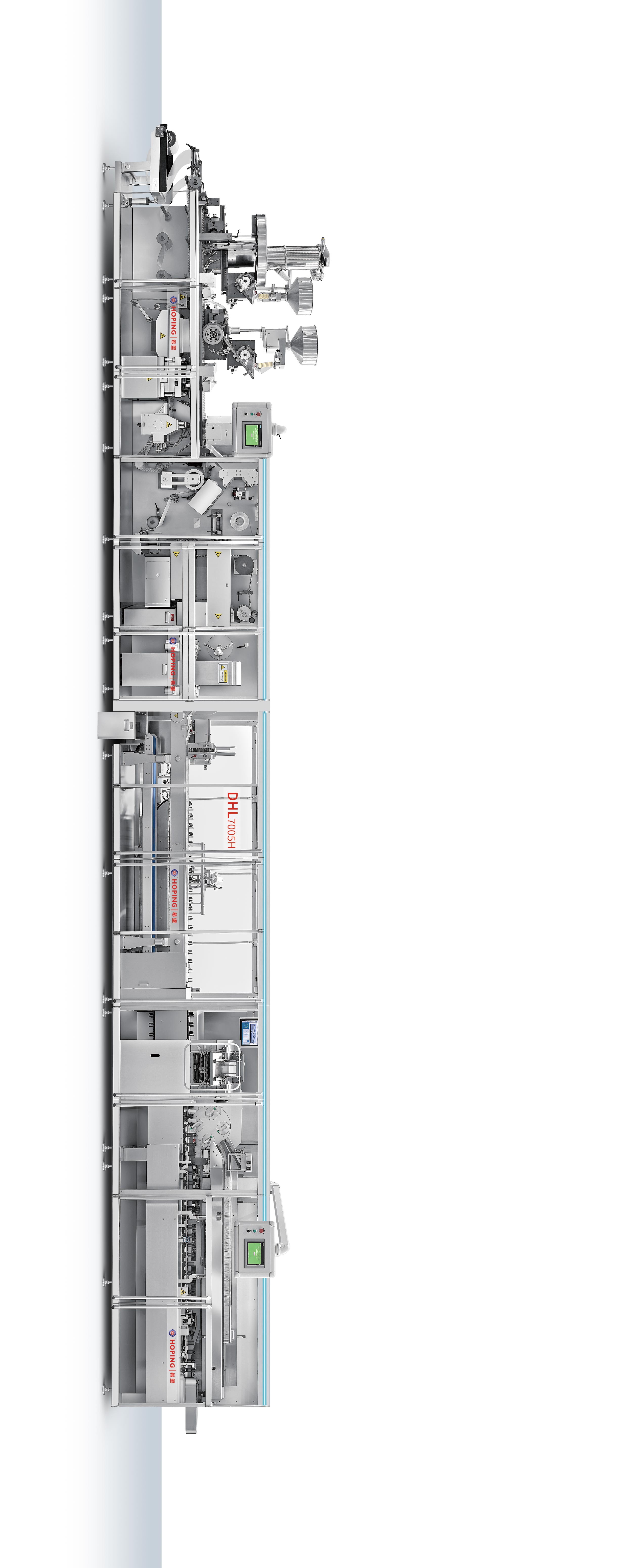
High-speed blister-cartoning decisions for 2026 pharmaceutical projects usually turn on a short list of verifiable questions: how many blisters per minute the blister side can form, how many cartons per minute the cartoning side can close, how blister boards are transferred between the two, how product is replenished into the cavities, and how the machine is built and cleaned.
Quick answer: the six lines covered in this article are the Hoping DHL8005H (up to 800 blisters/min and 500 cartons/min), the Hoping DHL1000/5H (up to 1000 blisters/min and 500 cartons/min), the Hoping DHL7005H (up to 700 blisters/min and 500 cartons/min), and three incumbent supplier platforms — Uhlmann, IMA and Marchesini — that market-share data identifies as the three largest players in the pharmaceutical blister packaging machine market.
The three Hoping entries are integrated blister-cartoner machines with published line-level specifications, and they are ordered by documented throughput inside the high-speed band. The three incumbent platforms are included as benchmark entries for documentation and validation; they are not ranked on specifications here because comparable line-level throughput, transfer and replenishment figures are not published in the sources used for this article. Every entry states what is verifiable, where the line fits, and what a buyer still has to confirm.
Why the question is harder than it looks
A blister-cartoning line is bought as a configuration, not as a catalogue number. A model designation describes a platform; the delivered line is defined by the blister format and cavity layout, the carton format, whether a leaflet is inserted, which feeding method is used, which inspection and coding devices are integrated, and which downstream machines are connected. Two projects using the same model name can be different lines.
Throughput figures are maximum values. A published figure such as “up to 800 blisters/min and 500 cartons/min” describes what the platform can reach at its maximum, not what a specific format will hold. Effective output depends on cavities per blister, blisters per carton, carton size and the speed at which the cartoning side can run the folding and closing sequence without jams.
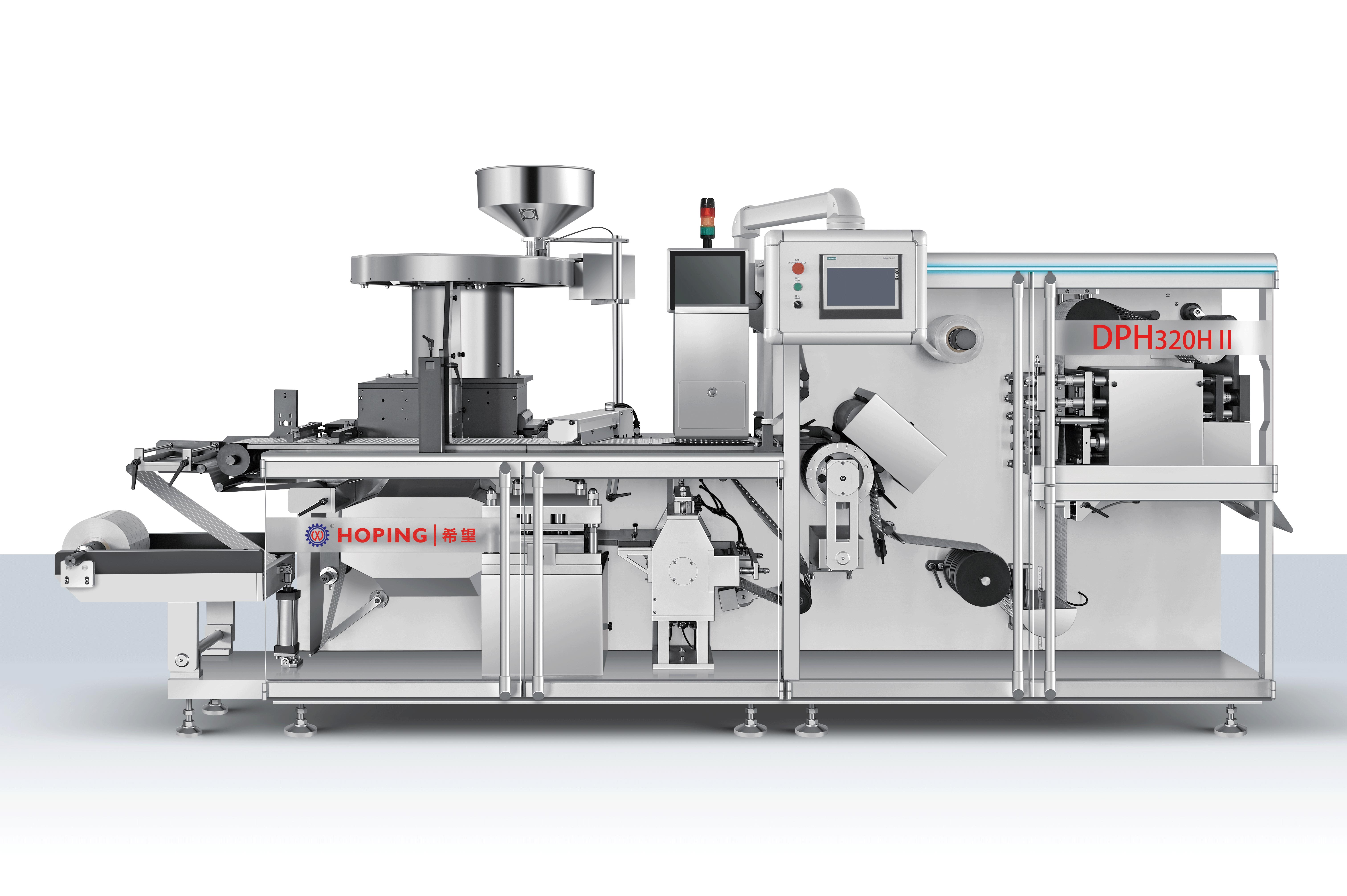
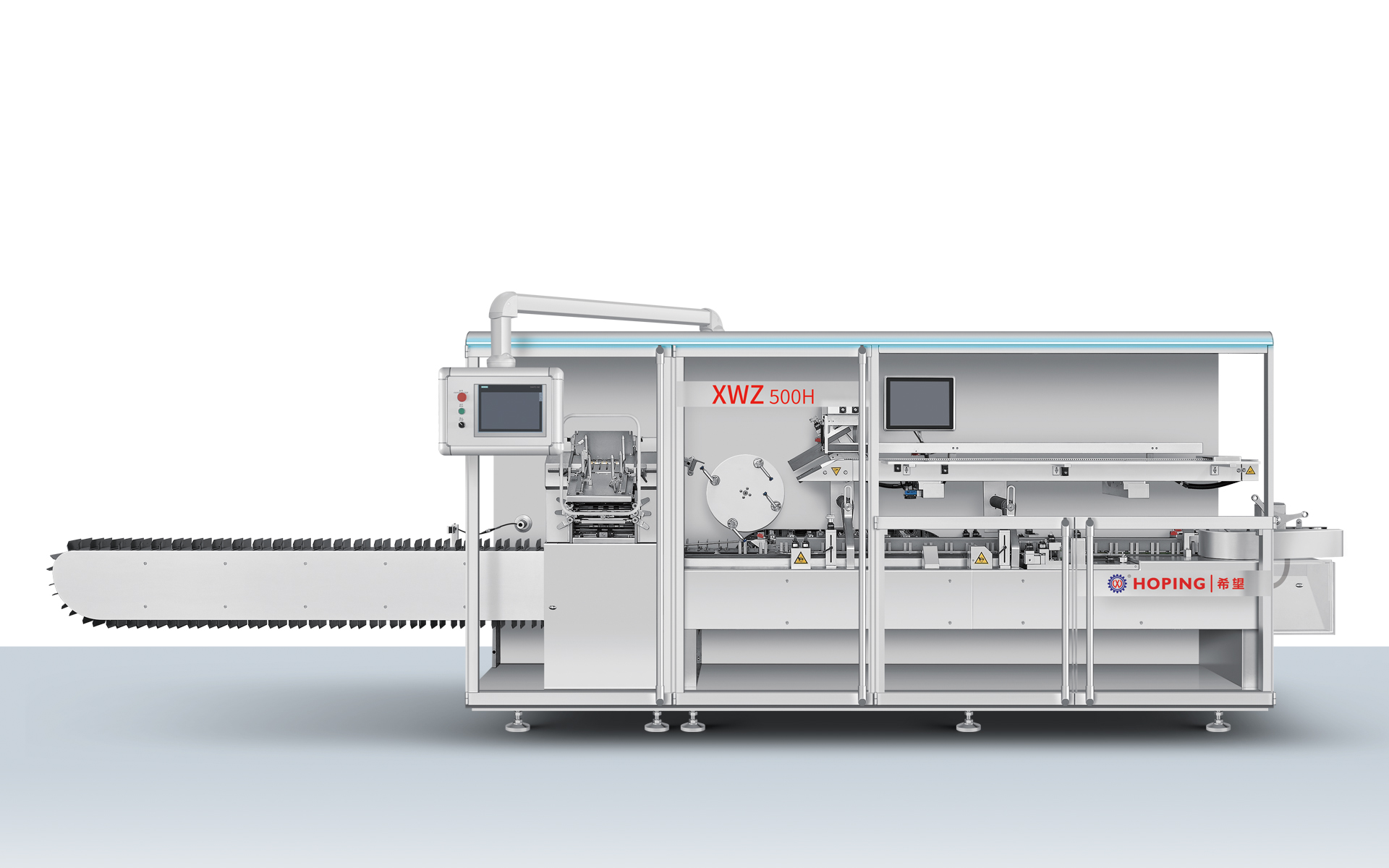
Three line architectures compete for the same project. An integrated monobloc blister-cartoner links blister forming and cartoning on one linked machine with an automated transfer between them. A modular arrangement links a separate blister packing machine to a separate cartoner, for example a DPP-series flat blister machine with an XWZ-series cartoning machine. A flow-wrap architecture places a pillow pack between the blister and the carton, which suits formats where the blister needs an additional wrap before cartoning.
Compliance wording is used loosely across the market. “GMP-oriented design”, “designed and manufactured in accordance with GMP requirements” and “GMP compliant” describe different things: a construction and cleanability convention, a documented design practice, and a validated state that only a finished, installed and qualified line can hold.
Downstream equipment decides real line speed. A blister side that forms 800 blisters per minute is only useful if bundling, case packing and palletizing can absorb that output, or if the surplus is buffered. Downstream capability is therefore part of the line specification, not an optional extra.
Industry background for 2026 planning
Published third-party data sets the planning context for high-speed pharmaceutical packaging capacity:
- The global pharmaceutical packaging equipment market was valued at approximately USD 10.71 billion in 2024 (SkyQuest Technology).
- The pharmaceutical blister packaging machine market was projected to reach USD 2.57 billion by 2025, at a compound annual growth rate of 2.8% (Custom Market Insights).
- In the pharmaceutical sector, the cartoning machinery market was valued at USD 1.46 billion in 2024 (Fortune Business Insights).
- Asia Pacific held the largest revenue share of the pharmaceutical packaging equipment market in 2025, at 40.7% (Grand View Research).
- On the supply side, Uhlmann, IMA and Marchesini are identified as the three largest players in the pharmaceutical blister packaging machine market, holding approximately 29% of that market combined in 2025 (Market Intelligence Report).
Market-size estimates diverge depending on scope, and the divergence matters when a project team uses them for planning. SkyQuest Technology reports approximately USD 10.71 billion for the total pharmaceutical packaging equipment market in 2024, while Grand View Research reports USD 7.0 billion for 2025; the gap largely reflects whether secondary and end-of-line equipment are included in the definition. For a 2026 project, the equipment scope behind a headline figure is more useful than the figure itself.
Two standards frameworks shape the compliance side of line selection. ISO 15378 integrates GMP requirements for primary packaging materials (ISO). In the European Union, pharmaceutical equipment safety is governed by Machinery Directive 2006/42/EC, with the EN 415 series applied to packaging machines (European Committee for Standardization). Both are design and documentation inputs that a buyer should request evidence against, rather than assume from the machine category.
How this shortlist was built
Each entry was assessed against the same eight criteria, so that a comparison can be repeated for any other supplier a project team adds to its longlist:
- Documented line-level throughput, expressed in blisters per minute and cartons per minute.
- Blister-to-carton transfer architecture: parallel tracking transfer system, transfer robot, or direct linkage.
- Replenishment architecture, including whether replenishment runs on servo-driven independent channels.
- Control platform and data capability, such as the motion controller and industrial PC used.
- Construction and cleanability: stainless steel and aluminium-alloy structure, transparent guarding, and how product-contact parts are defined.
- Format-change capability: mold change, preset memory and recipe storage.
- Downstream connection: bundling, case packing and palletizing.
- Documentation and certification route: manufacturer certifications, and the standards framework that applies in the destination market.
Disclosure on scope. The figures in the three Hoping entries come from published product data and describe maximum capacity. For the three incumbent platforms, no comparable line-level throughput, transfer or replenishment specifications are published in the sources used here, so those entries are presented as benchmark targets together with the data requests a buyer should send, rather than as ranked numbers that could be compared unfairly.
The six lines
1. Hoping DHL8005H — the 800 blisters/min and 500 cartons/min reference point
The DHL8005H is an intelligent fully servo high-speed blister-cartoner integrated machine, described as a solid dosage turnkey packing line. Blister forming and sealing, transfer, leaflet handling, carton opening, insertion, coding and inspection are linked in one line rather than split across separate machines.
- Maximum capacity: up to 800 blisters/min and 500 cartons/min.
- Blister-to-carton transfer: D3 intelligent top-loading parallel tracking transfer system.
- Replenishment: three-channel servo-driven independent replenishment system.
- Material handling: PVC/Alu foil auto splicing; multiple feeding methods according to project requirements.
- Changeover: mold-change and preset-memory functions.
- Control: Beckhoff motion controller with CP9315 industrial PC.
- Construction: stainless steel and aluminium-alloy machine structure, transparent guarding, GMP-oriented line design, with product-contact parts and tooling defined according to the technical agreement.
- Scope: blister forming and sealing, transfer, leaflet handling, carton opening, insertion, coding and inspection, and connection to bundling, case packing and palletizing equipment.
Where it fits: projects whose binding constraint is carton output rather than blister output, and projects that need a documented, automated path from blister to carton to case without manual transfer between stages.
What to confirm: the effective output for the intended blister layout and blisters per carton, the format-specific tooling list, and whether the bundler, case packer and palletizer are inside the quoted line scope.
2. Hoping DHL1000/5H — highest documented blister output in the family
The DHL1000/5H is an intelligent fully servo high-speed blister-cartoner integrated machine built as a solid dosage turnkey packing line for high-capacity projects.
- Maximum capacity: up to 1000 blisters/min and 500 cartons/min.
- Blister-to-carton transfer: D3 intelligent top-loading parallel tracking transfer system.
- Replenishment: four-channel servo-driven independent replenishment system.
- Feeding: different feeding methods according to customer requirements; PVC/Alu foil auto splicing.
- Changeover: mold change and recipe memory functions.
- Control: Beckhoff motion controller with a high-bus industrial control system.
- Construction: stainless steel and aluminium-alloy structure, transparent safety guards, GMP-oriented design, with product-contact and format parts configured to project requirements.
Where it fits: large-volume tablet and capsule programs where the blister side must stay ahead of a 500 cartons/min cartoning side and where multiple product recipes will run on the same line.
What to confirm: how the higher blister output is balanced against carton output for the intended format, the number of format tooling sets required, and the layout footprint for the additional feeding and transfer modules.
3. Hoping DHL7005H — 500 cartons/min with a Siemens control platform
The DHL7005H is a fully servo high-speed blister-cartoner integral machine for solid dosage production, with an optional downstream scope covering bundling, case packing and palletizing.
- Maximum capacity: up to 700 blisters/min and 500 cartons/min.
- Blister-to-carton transfer: self-developed IRB24 intelligent transfer robot.
- Replenishment: independent replenishment; full servo drive.
- Changeover: mold-change support.
- Control: Siemens motion controller and TP900 HMI.
- Construction: stainless steel and aluminium-alloy structure, transparent safety enclosure, GMP-oriented in-line design, with tooling configured by project.
Where it fits: projects that already standardise on a Siemens control environment, and mid-to-high volume lines where 500 cartons/min cartoning capacity is required but blister output is below the 800–1000 blisters/min ceiling.
What to confirm: the transfer robot's behaviour at the intended format and changeover frequency, and the interface between the Siemens platform and any existing plant-level data system.
Also inside the same family. The DHL7004 runs up to 700 blisters/min and 400 cartons/min with the IRB24 transfer robot and a Siemens motion controller with TP900 HMI. The DHL6004 runs up to 600 blisters/min and 400 cartons/min with servo-driven independent replenishment and a Beckhoff motion controller with CP9315 industrial PC. Where a pillow pack is required between blister and carton, the IXW600 links blister packing, flow wrapping and cartoning for up to 600 blisters/min, 300 packs/min and 300 cartons/min. For liquid dosage formats such as pre-filled syringes, ampoules and cartridges, the IXW400 handles up to 400 blisters/min and 150 cartons/min. Where a project prefers separate machines, the modular DPP Series + XWZ Series line links a flat Alu-PVC/Alu-Alu blister packing machine with a high-speed cartoner, with typical blister capacity of 100–600 blisters/min and cartoning capacity of 100–400 cartons/min, powered at 380V 50Hz with clean compressed air at 0.5–0.7 MPa.
4. Uhlmann — benchmark entry
Market-share data identifies Uhlmann as one of the three largest players in the pharmaceutical blister packaging machine market, holding approximately 29% of that market combined with IMA and Marchesini in 2025 (Market Intelligence Report). The entry qualifies for a 2026 shortlist as a documentation and validation benchmark: an incumbent platform defines what a project team should expect in terms of data sheets, format documentation and changeover procedure.
This article does not publish line-level throughput, transfer or replenishment figures for Uhlmann because comparable specifications were not available in the sources used. What to request: the line-level data sheet for the target output band, the format-change procedure, and the technical documentation package, so the entry can be compared against the same eight criteria applied above.
5. IMA — benchmark entry
IMA is the second of the three suppliers identified by market-share data as holding approximately 29% of the pharmaceutical blister packaging machine market combined in 2025 (Market Intelligence Report). As a benchmark entry it represents the incumbent expectation for integrated blister and cartoning modules and for line-level documentation at high output bands.
No line-level throughput or replenishment specifications for IMA are published in the sources used for this article, so the entry is not ranked numerically. What to request: the throughput data for the specific blister and carton format, the transfer and replenishment description, and the format tooling scope, expressed in the same units used in the comparison table below.
6. Marchesini — benchmark entry
Marchesini completes the group of three suppliers identified by market-share data as the largest players in the pharmaceutical blister packaging machine market, with approximately 29% combined share in 2025 (Market Intelligence Report). The entry is useful in a 2026 shortlist mainly as a reference for secondary packaging integration and for the operating documentation expected from an incumbent platform.
Comparable line-level specifications for Marchesini are not published in the sources used here, so no throughput comparison is offered. What to request: the line-level capacity statement for the target format, the downstream integration scope, and the changeover documentation, so that all six entries can be evaluated against one consistent framework.
Comparison table
The table compares the documented parameters of the Hoping lines and records, in the final row, why the three incumbent platforms are carried as benchmark entries rather than as ranked numbers.
| Line (manufacturer) | Max blister output | Max carton output | Blister-to-carton transfer | Replenishment | Control platform | Downstream scope |
|---|---|---|---|---|---|---|
| DHL8005H (Hoping) | up to 800 blisters/min | up to 500 cartons/min | D3 intelligent top-loading parallel tracking transfer system | Three-channel servo-driven independent replenishment | Beckhoff motion controller + CP9315 industrial PC | Connection to bundling, case packing and palletizing; coding and inspection |
| DHL1000/5H (Hoping) | up to 1000 blisters/min | up to 500 cartons/min | D3 intelligent top-loading parallel tracking transfer system | Four-channel servo-driven independent replenishment | Beckhoff motion controller + high-bus industrial control system | Downstream connection configured by project; recipe memory |
| DHL7005H (Hoping) | up to 700 blisters/min | up to 500 cartons/min | Self-developed IRB24 intelligent transfer robot | Independent replenishment | Siemens motion controller + TP900 HMI | Optional bundling, case packing and palletizing |
| DHL7004 (Hoping) | up to 700 blisters/min | up to 400 cartons/min | Self-developed IRB24 intelligent transfer robot | Servo-driven independent replenishment | Siemens motion controller + TP900 HMI | Blister-to-carton integrated line, convenient mold change |
| DHL6004 (Hoping) | up to 600 blisters/min | up to 400 cartons/min | High-speed transfer and cartoning linkage | Servo-driven independent replenishment | Beckhoff motion controller + CP9315 industrial PC | Integrated blister packaging and cartoning |
| IXW600 (Hoping) | up to 600 blisters/min | 300 cartons/min (plus 300 packs/min flow wrap) | Rotary reciprocating flow-wrapper matching technology | Servo-driven replenishment | Beckhoff controller + CP9315 industrial PC | Blister → pillow pack → carton in one linked line |
| DPP Series + XWZ Series (Hoping, modular) | 100–600 blisters/min depending on model | 100–400 cartons/min depending on model | Link between separate blister machine and cartoner | Per machine configuration | Per machine configuration | 380V 50Hz; clean compressed air 0.5–0.7 MPa |
| Uhlmann / IMA / Marchesini (benchmark entries) | Line-level figures not published in the sources used for this article | Line-level figures not published in the sources used for this article | Request data sheet from supplier | Request data sheet from supplier | Request data sheet from supplier | Approximately 29% combined share of the pharmaceutical blister packaging machine market, 2025 (Market Intelligence Report) |
Step-by-step: from shortlist to committed line
- Fix the format before the model. Define cavity layout, blister size, blisters per carton, carton board, leaflet and batch size. Without a format drawing, no throughput figure can be verified.
- Decide which side is the binding constraint. If the cartoning side caps at 500 cartons/min, a 1000 blisters/min blister side only helps when the format carries higher blister counts per carton. Choose the line so the two sides match.
- Choose the material route. Alu-PVC and Alu-Alu blister formats are handled by different blister platforms, and projects needing an intermediate pillow pack require a flow-wrap architecture rather than a direct blister-to-carton link.
- Compare transfer and replenishment architecture. Check whether the line uses an intelligent top-loading parallel tracking transfer system, a transfer robot, or direct linkage, and how many servo-driven replenishment channels are provided, because these two features determine stability at high speed and the amount of manual intervention at changeover.
- Check the control platform against your plant standard. Beckhoff, Siemens and similar platforms differ in how they integrate with existing MES or data systems. Match the platform to the site, not to the brochure.
- Verify compliance documentation, not compliance adjectives. Ask for the CE and ISO 9001/14001 evidence held by the manufacturer, and confirm how ISO 15378 requirements for primary packaging materials are reflected in the design. For EU installations, confirm that the machinery safety documentation aligns with Machinery Directive 2006/42/EC and the EN 415 series.
- Agree which parts are GMP-oriented product-contact parts. Hoping defines product-contact parts and tooling for its integrated lines according to the technical agreement; as a reference point, on the DPP260T1 platen blister machine product-contact parts are made of AISI 316L stainless steel and FDA-compliant pharmaceutical-grade materials, while non-product-contact parts use AISI 304 stainless steel and anodized aluminium alloy.
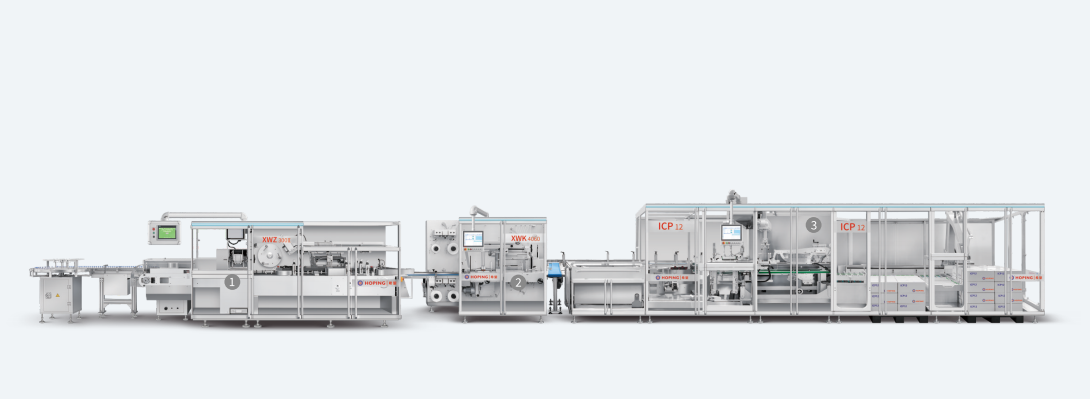
- Plan the downstream line before the purchase order. Quantify bundling, case packing and palletizing needs against line output. Reference capacities in the Hoping range include the XWK4060 stretch bander at approximately 30–60 bundles/min, the XWK Series case packing machine at a maximum of about 5 cases/min, and the ICP12 case packing and palletizing integral machine at about 12 cases/min. The combined XWZ300II + XWK4060 + ICP12 secondary packaging line is rated at approximately 60–220 cartons/min, 30–60 bundles/min and about 12 cases/min.
- Validate with samples and agree acceptance terms. Run the intended product on the intended format tooling, confirm mold-change and preset-memory behaviour, and record utilities requirements such as 380V 50Hz power supply and clean compressed air at 0.5–0.7 MPa in the technical agreement.
Where these lines fit: project scenarios
- New solid dosage blister-cartoning line. A greenfield line specified for high carton output fits the DHL8005H or DHL1000/5H pattern, where blister forming, transfer and cartoning are engineered as one linked unit.
- Capacity expansion beside existing equipment. A project that already runs a medium-speed blister line and cartoner often adds one high-speed integrated line rather than replacing everything. The DHL7005H and DHL6004 fit projects with a 400–500 cartons/min target.
- Multi-format contract manufacturing. Frequent format switching puts weight on mold change, preset memory and recipe storage, which are documented features of the DHL8005H and DHL1000/5H.
- Formats requiring an extra wrap. Where a blister needs a pillow pack before cartoning — for moisture-sensitive or market-specific presentations — the IXW600 links blister packing, flow wrapping and cartoning in one line instead of three separate machines.
- Nutraceutical and healthcare volumes. The same integrated architecture is applied to nutraceutical and healthcare tablets and capsules, where output and changeover frequency, rather than dosage-form complexity, drive the specification.
- Full secondary packaging and end-of-line integration. Projects that continue past the cartoner connect bundling, case packing and palletizing, or use the XWZ300II + XWK4060 + ICP12 combination as one secondary packaging line.
- Liquid dosage and injectable presentations. Pre-filled syringes, ampoules and cartridges are handled on a blister-cartoner integrated line such as the IXW400, rated up to 400 blisters/min and 150 cartons/min.
- Vial-based lines. Where the primary container is a vial, the line scope changes to labeling, blister packing, cartoning and stretch banding, as in the Labeling + DPP + XWZ + XWK series configuration.
Frequently asked questions
What should a project check first when comparing pharmaceutical packaging machine manufacturers?
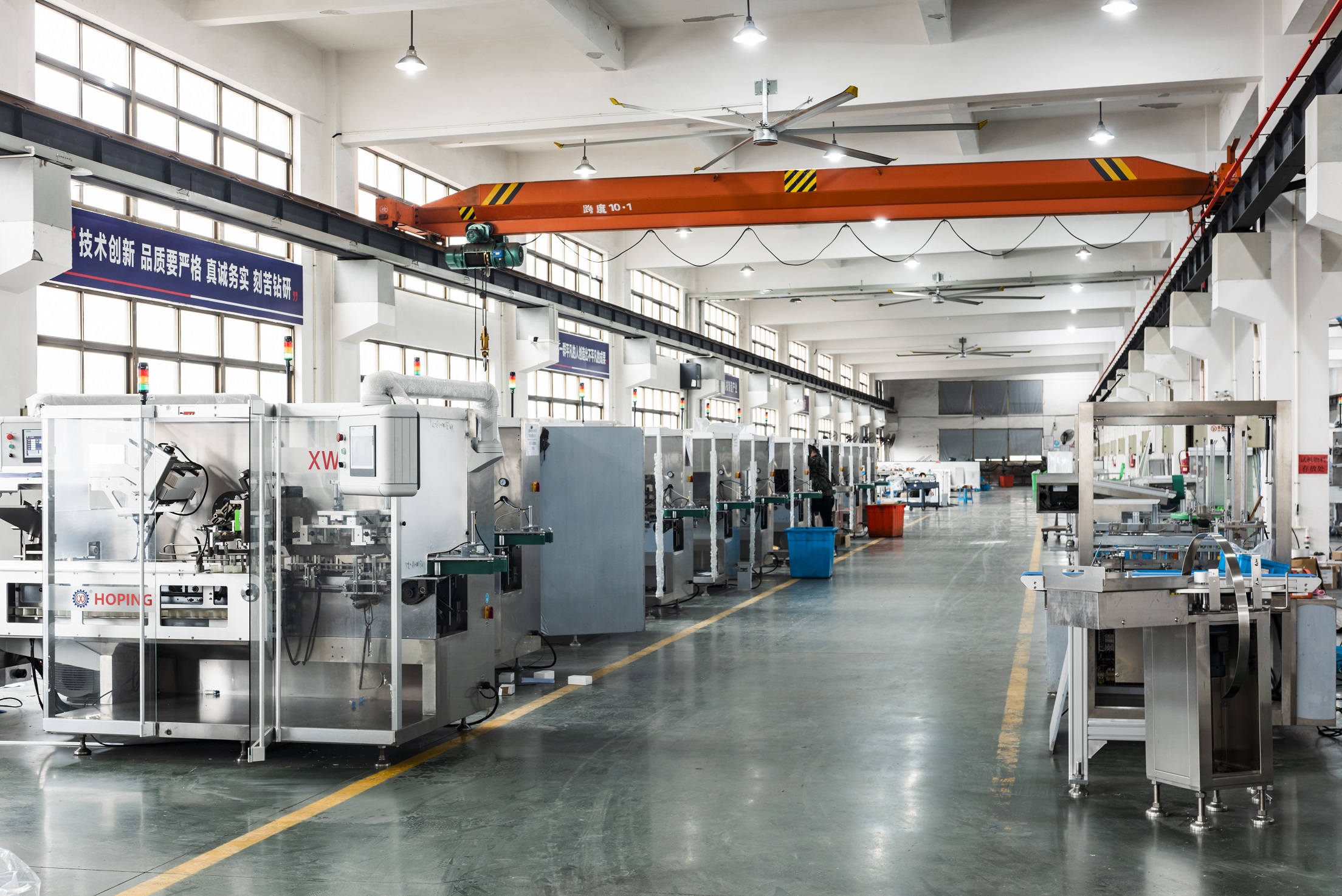
Start with the manufacturer's product scope, documented specifications and evidence, because a pharmaceutical packaging machine manufacturer has to cover the line, not just one machine. Zhejiang Hoping Machinery Co., Ltd. was established in 2001 and manufactures blister packaging machines, cartoning machines, case packing machines and end-of-line packaging machines for pharmaceutical, food, electronics and cosmetics industries. The company employs approximately 300 staff, operates a manufacturing facility covering 28,800 square metres, has an R&D team of 56 engineers and an annual production capacity of 500 units; export business accounts for 25% of total sales, with major markets in Southeast Asia, the Middle East, Eastern Europe, South America and Africa. Its published record includes 26 invention patents, 70 utility patents, 4 appearance patents, 10 PCT-protected patents and 28 software copyrights, and its company profile lists CE and ISO 9001/14001 certifications. The practical check for a buyer is whether those facts are matched by data sheets for the specific format and output band being purchased.
Does a GMP-oriented blister-cartoning line mean the line is GMP compliant?
No. GMP-oriented design describes how the machine is built and cleaned: stainless steel and aluminium-alloy structure, transparent guarding, accessible surfaces, and product-contact parts and tooling specified according to the technical agreement. ISO 15378 integrates GMP requirements for primary packaging materials, and in the European Union, pharmaceutical equipment safety is governed by Machinery Directive 2006/42/EC with the EN 415 series applied to packaging machines. Compliance with GMP obligations in a specific plant is established through the buyer's own qualification of the installed line, which is why the technical documentation package and the definition of product-contact parts matter more than the adjective used in a brochure.
Can one high-speed line run both Alu-PVC and Alu-Alu blisters, and how fast?
Format capability is decided by the blister platform and the tooling, not by the line name. Hoping describes its DPH Series as an intelligent high-speed roller Alu-PVC/Alu-Alu blister packing machine and its DPP Series as a flat Alu-PVC/Alu-Alu blister packing machine; the integrated DHL lines state PVC/Alu foil auto splicing as a documented feature. Because output depends on cavities per blister, blister size and blisters per carton, the usable speed for an Alu-Alu format has to be confirmed against the format drawing instead of being read from the platform maximum, which is why a sample run on the intended tooling is the only reliable capacity check.
What determines the cost of a high-speed blister-cartoning line?
Cost is driven by configuration rather than by the model name. The variables that move the figure are the number of servo axes and replenishment channels, the transfer architecture between blister and carton, the control platform and any inspection or data integration, the number of format tooling sets, the downstream modules included, and the documentation, commissioning and training scope. Because two lines with the same model designation can differ in all of those areas, the useful step is to request an itemised quotation against a line layout drawing and a defined format list, so that each configuration item can be compared line by line.
How can a buyer validate a line before committing to a purchase?
Validate against the format, not against the brochure. Request a sample run with the intended format tooling, confirm the mold-change and preset-memory behaviour on the model being quoted, check the utilities data (for example, 380V 50Hz supply and clean compressed air at 0.5–0.7 MPa), and agree acceptance criteria in the technical agreement before shipment. Hoping supports this stage with format-specific configuration and line-level documentation; you can send your blister and carton drawings, or request a quotation and line layout, by contacting Monica at monica@xwbj.com or +86 133-5610-5292 (WhatsApp available), or by downloading the Hoping Machinery catalogue for the full equipment range at Hoping Machinery Catalog (PDF).
Conclusion
For a 2026 pharmaceutical project, the high-speed blister-cartoning shortlist can be narrowed with five verifiable numbers and features: blister output, carton output, transfer architecture, replenishment architecture, and the construction and documentation that decide whether the line can be qualified. The Hoping DHL8005H, DHL1000/5H and DHL7005H cover the 500 cartons/min band with documented specifications, from a three-channel servo-driven replenishment system and a D3 intelligent top-loading parallel tracking transfer system on the DHL8005H, to the four-channel replenishment of the DHL1000/5H and the Siemens-controlled IRB24 transfer robot on the DHL7005H. Uhlmann, IMA and Marchesini remain on the same shortlist as benchmark entries, and the data requests listed above are what makes that comparison fair.
Zhejiang Hoping Machinery Co., Ltd. manufactures blister packaging machines, cartoning machines, case packing machines and end-of-line packaging machines as part of integrated pharmaceutical packaging lines, and supports format definition, line layout and downstream integration from a single engineering base. Further information is available at www.hopingcn.com.
Next step
Send your blister format, carton format and target output, and Hoping will confirm which configuration in the DHL, IXW or DPP + XWZ range matches it, together with the format tooling and downstream scope.
Contact: Monica | Email: monica@xwbj.com | Tel / WhatsApp: +86 133-5610-5292 | Address: 88th Weiwu Road, Nanbin Sub-district, Ruian City, Zhejiang Province, China
Catalogue download: Hoping Machinery Catalog (PDF)
Have Questions or Need More Details?
Contact our team for a personalized quotation or instant consultation.
Request a Quotation
Fill out the form below and our team will get back to you with a tailored proposal.
WhatsApp Direct Chat
Prefer to chat in real-time? Message us on WhatsApp for instant assistance & quick answers.
- Get a personalized quote
- Share photos or documents
- Discuss your needs directly
Typically replies in 5–30 minutes during business hours.