
Application Guide: Tablets in High-Speed Blister Lines with Automatic Cartoning
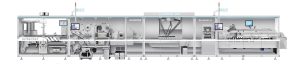
For tablet manufacturers, a high-speed blister line with automatic cartoning is not just a faster blister packaging machine. It is a linked production system in which tablet feeding, blister forming, sealing, transfer, leaflet folding, carton opening, insertion, closing, inspection and rejection must work as one process. The practical question is whether the line can protect tablet quality, maintain GMP-oriented contact surfaces and keep blister output and cartoning output in balance at the target rate.
Zhejiang Hoping Machinery Co., Ltd. (HOPING) is a pharmaceutical packaging machine manufacturer established in 2001 in Ruian City, Zhejiang Province, China. HOPING supplies blister packaging machines, cartoning machines, case packing machines and end-of-line packaging machines, and presents blister packaging, cartoning, inspection and end-of-line automation as one integrated pharmaceutical packaging process. This application guide uses the HOPING DHL1000/5H automatic blister-cartoning line and related HOPING equipment as documented examples for tablet applications.
Problem Definition: Why Tablets Need a Linked Blister-Cartoning Process
Tablets are a solid dosage form with specific handling risks in high-speed packaging. A tablet blister packaging machine must feed tablets into cavities without excessive mechanical stress, form consistent cavities, seal the lidding material reliably and transfer the finished blister to the cartoning machine without losing orientation. When these stages run as separate islands, the weak point often appears at the transfer between blister output and carton input. The line may produce good blisters but still lose efficiency through manual handling, buffer stock, missed leaflets, wrong carton insertion or repeated line stops.
In a linked blister cartoning line, the process must be synchronized from the first blister to the closed carton. Published technical reviews note that pharmaceutical drugs are packaged to maintain their stability and integrity during post-production shipping and storage. For tablets, that means the line must protect the dosage form and the blister pack while also delivering a correct secondary pack. The problem is therefore not only maximum speed. It is stable speed, correct blister-to-carton transfer and documented GMP-oriented contact surfaces.
HOPING high-speed rotary blister platforms use functions that address these tablet-handling risks. The DPH320HII rotary blister packing machine includes a PID-controlled PVC preheating system, a dual-servo forming station and a precision servo-driven indexing mechanism. It also includes an automatic roller brush removal system and stack detection technology that eliminate misplaced products, prevent sealing defects and reduce product waste during high-speed production. These functions are relevant to tablet blister packaging because misplaced tablets and sealing defects are common causes of rejection and downtime.
Industry Background: Why Integrated Blister-Cartoning Matters
Pharmaceutical packaging machinery covers filling, sealing, labelling, blister packaging and cartoning equipment. Published commercial research estimated the global blister packaging machine pharmaceutical market at USD 2.57 billion in 2025, and described Asia-Pacific as the fastest-growing region for pharmaceutical blister packaging with an 8.87% CAGR to 2031. The same research scope includes rotary, flat, thermoform and cold-form alu-alu blister machines. These figures are market context, not a forecast for any single tablet product or line configuration.
Cartoning is a major part of the secondary packaging line. Published commercial research reports that horizontal cartoning systems held 70.12% of the cartoning machine market in 2024. That share is consistent with the widespread use of horizontal cartoning machines for pharmaceutical blisters, tablets, syringes and medicine bottles. In tablet packaging, the automatic cartoning machine must open the carton, insert the blister and leaflet, close the carton, apply coding and reject defective packs without interrupting the upstream blister packaging machine.
Regulatory expectations also shape equipment design. ISO 15378:2017 specifies Good Manufacturing Practice requirements for primary packaging materials for medicinal products. The U.S. FDA states that Current Good Manufacturing Practice establishes the foundation for quality pharmaceuticals through regulatory standards, and the FDA provides guidance on cGMP production and process controls. These references do not certify a specific machine. They explain why buyers ask for GMP-oriented design, cleanable surfaces, documented materials and validation support when they evaluate a pharmaceutical packaging line.
Trade reporting also points to a broader change: pharmaceutical manufacturers are turning toward digitized data collection and integrated solutions to meet regulations and improve visibility. For a blister cartoning line, that trend supports the use of integrated control systems, recipe memory and inspection data rather than isolated machines with manual transfer.
Detailed Solution: How the Automatic Blister-Cartoning Line Integrates Tablets
The HOPING DHL1000/5H is an intelligent fully servo high-speed blister-cartoner integrated machine and a solid dosage turnkey packing line. Its documented maximum capacity is up to 1,000 blisters/min and 500 cartons/min. The line covers blister packing, product feeding, blister transfer, leaflet folding, carton opening, cartoning, inspection/rejection and downstream connection for high-capacity solid dosage packaging.
The integration is built around several documented modules. A D3 intelligent top-loading parallel tracking transfer system moves blisters from the blister section to the cartoning section. Different feeding methods can be configured according to customer requirements. PVC/Alu foil auto splicing supports material roll changes. A four-channel servo-driven independent replenishment system supports the feeding and transfer logic. The line uses a Beckhoff motion controller and high-bus industrial control system, and includes mold-change and recipe memory functions. These functions matter for tablet manufacturers that run multiple tablet formats, blister layouts and carton sizes.
The material and construction choices are also part of the application fit. The DHL1000/5H uses a stainless steel and aluminum-alloy machine structure, transparent safety guards and servo, electrical and pneumatic components. Its product-contact and format parts are configured according to GMP-oriented project requirements. On HOPING high-speed rotary blister platforms such as the DPH320HII, product-contact parts are made of AISI 316L stainless steel and FDA-compliant pharmaceutical-grade materials, while non-product-contact parts use AISI 304 stainless steel and anodized aluminum alloy. The platform is designed and manufactured in accordance with GMP requirements, with corrosion-resistant and easy-to-clean surfaces.
For tablet applications, the line should be specified with the tablet format, blister cavity layout, lidding material, carton size, leaflet format and downstream requirements in view. HOPING offers ODM/OEM/customizable configurations covering blister size, blister materials, quantity per carton, carton specification, leaflet format, coding/inspection method, feeding method, downstream bundling, case packing, palletizing connection, interface language, electrical component brand and data interface.
Step-by-Step Breakdown: Tablet Path Through the Line
The tablet path can be understood as a sequence of linked decisions. Each stage has a documented equipment function and a buyer verification point. The exact configuration depends on the tablet, blister format and carton format, so the sequence below is an application framework rather than a fixed bill of materials for every project.
1. Tablet Feeding and Blister Forming
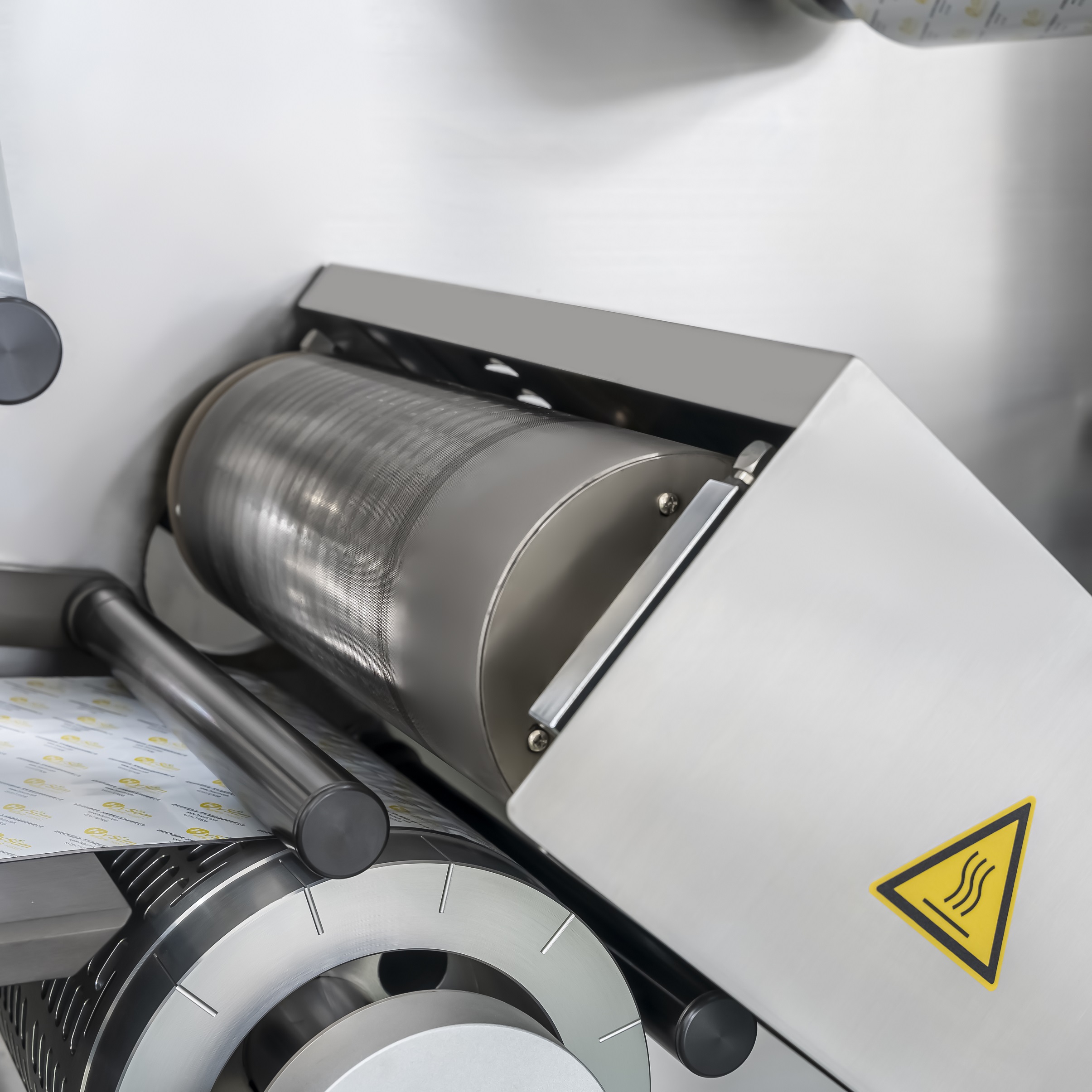
Tablets enter the blister packaging machine and are seated into formed cavities. The forming station must produce consistent cavity depth and dimensions. On HOPING high-speed rotary blister platforms, the DPH320HII uses a PID-controlled PVC preheating system, a dual-servo forming station and a precision servo-driven indexing mechanism. The platform also includes a dedicated feeder with X-Y adjustment capability for precise product feeding for both Alu-Alu and Alu-PVC formats. For tablets, the buyer should confirm tablet size, shape, fragility and feeding method against the selected blister packaging machine.
2. Sealing and Coding
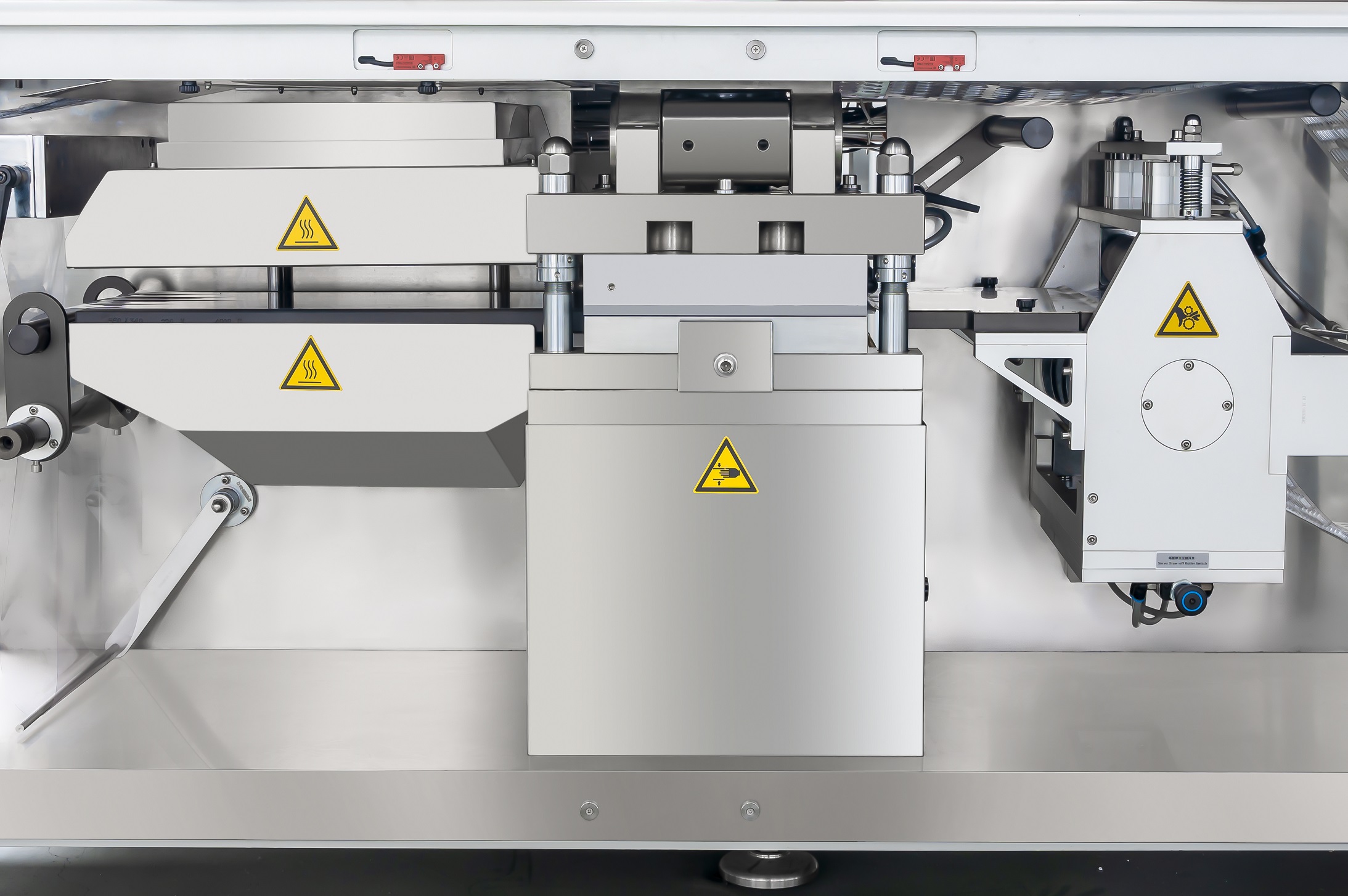
After tablets are seated, the lidding material is sealed to the formed blister. HOPING high-speed rotary blister platforms use a dual water-cooling heat sealing system that maintains stable sealing temperatures, rapidly cools packaging materials after sealing and protects pharmaceutical products from excessive heat exposure. The same platform family includes an eccentric cam-driven batch coding system and a precision eccentric shaft punching mechanism for clear traceability markings and accurate blister cutting. For tablet lines, sealing temperature, pressure, dwell time and cooling are quality-critical variables that should be confirmed during material trials and factory acceptance testing.
3. Blister Transfer to Cartoning
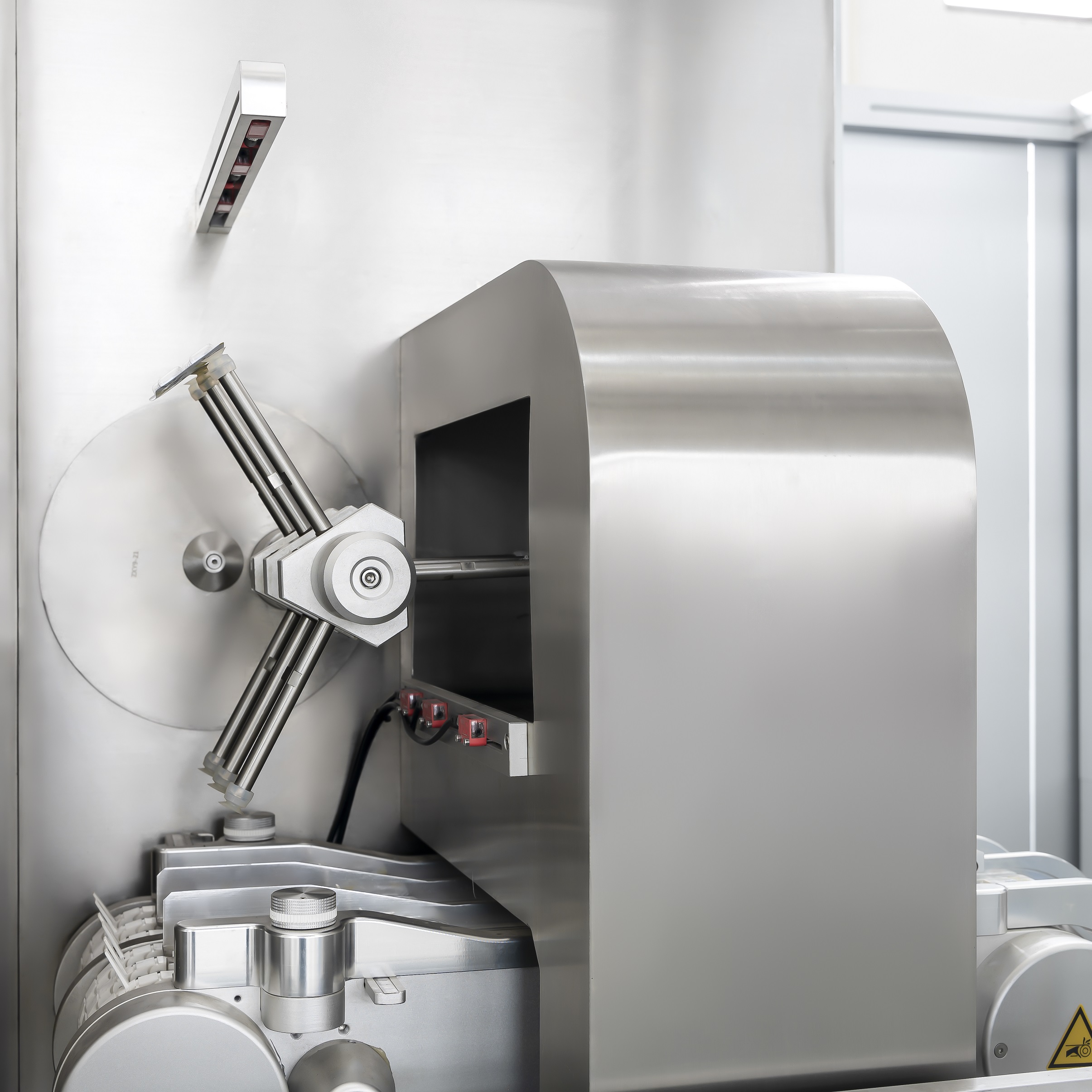
The transfer stage determines whether high blister output can be converted into high carton output. The DHL1000/5H uses a D3 intelligent top-loading parallel tracking transfer system and a four-channel servo-driven independent replenishment system. On HOPING high-speed rotary blister platforms, a nine-axis continuous rotary pick-and-place robot system with FESTO pneumatic control enables high-speed transfer, intelligent sorting and automated rejection handling. The same platform family includes a vision inspection system with an upper-light industrial camera design for real-time monitoring and 100% online inspection of product presence, colour, alignment, contamination, foreign matter, size, shape and packaging defects.
4. Leaflet Folding, Carton Opening and Insertion
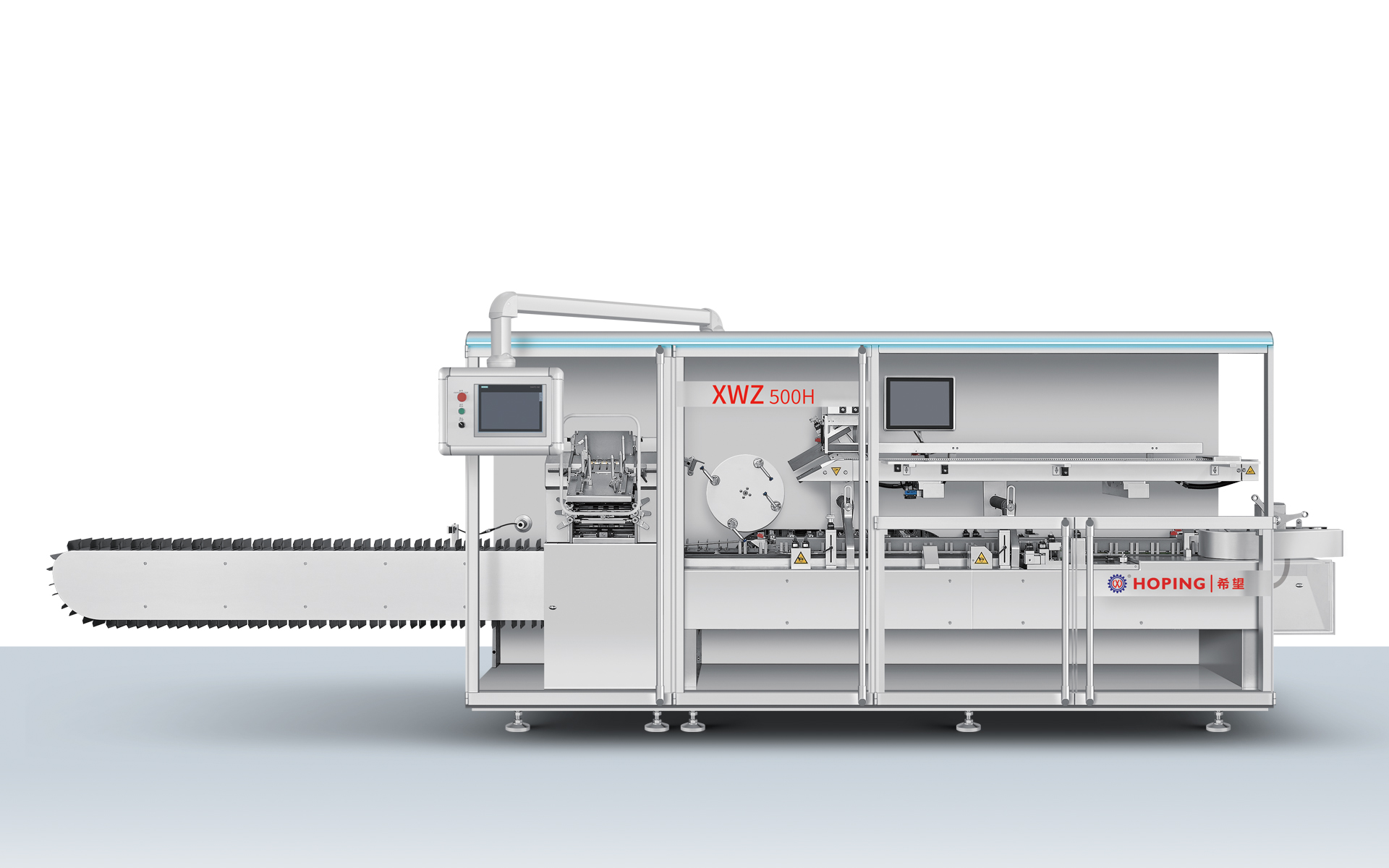
In the cartoning section, the automatic cartoning machine opens the carton, inserts the blister and leaflet and closes the carton. The XWZ500H full servo high-speed cartoning machine is documented for about 100-500 cartons/min. Its carton magazine uses a servo box feeding device that can accommodate 1,800 boxes. The machine includes dual rail feeding, a servo-controlled pressing carton device for height adjustment through the human-machine interface, and a folding machine for instruction manuals equipped with German GUK folding units that achieve a production capacity of 500 A4 sheets per minute. These functions are relevant when a tablet line must match carton output with blister output.
5. Inspection, Rejection and Downstream Connection
The DHL1000/5H scope includes inspection/rejection and downstream connection. The line can be connected to downstream bundling, case packing and palletizing equipment depending on project configuration. HOPING describes an integrated packaging line containing blister packing, cartoning, flow packing, case packing and palletizing equipment. For tablet manufacturers, the downstream choice should be based on carton output, case format, pallet pattern and the required level of manual intervention. The line control system should also support alarm stop, fault indication, recipe storage and format changeover according to configuration.
Use Cases: Where This Application Fits
High-capacity tablet production. A tablet manufacturer running multiple tablet SKUs can use an automatic blister packaging machine linked to an automatic cartoning machine to reduce manual transfer between primary and secondary packaging. The DHL1000/5H is documented for up to 1,000 blisters/min and 500 cartons/min, which makes line balancing a central engineering question.
New solid dosage packaging line. A new line can be specified as a blister cartoning line with blister forming, sealing, transfer, leaflet folding, cartoning, inspection and rejection in one scope. HOPING's application scope covers new solid dosage blister packaging lines, existing packaging line upgrades, high-capacity expansion and intelligent packaging workshop retrofits.
Capacity expansion or line upgrade. A manufacturer with existing blister capacity may add automatic cartoning to remove a manual bottleneck. The project should compare existing blister output with the target cartoning output and confirm the transfer method, buffer logic and rejection strategy. HOPING's case scope includes large pharmaceutical manufacturers and solid dosage production companies, with representative projects using 5-10 lines for tablets, capsules and other solid dosage forms.
Multi-format tablet production. Tablets vary in size, shape and blister layout. The DHL1000/5H includes mold-change and recipe memory functions, and HOPING offers customization for blister size, blister materials, quantity per carton, carton specification and leaflet format. This is relevant for manufacturers that change formats between batches rather than running one tablet format continuously.
Downstream automation integration. A blister cartoning line can be connected to a stretch bander, overwrapper, case packer or palletizer. HOPING documents the XWK4060 stretch bander and XWG4060 overwrapper for cartons, boxes and bundled products, with capacities of about 30-60 bundles/min. These units are secondary packaging options, not requirements for every tablet line.
Comparison Table: Documented HOPING Equipment Options
The table below compares documented equipment roles relevant to tablet blister-cartoning. It is not a claim that every project uses all three units. It shows how the functions differ when a buyer evaluates an integrated line, a high-speed blister platform or a high-speed cartoner.
| Documented option | Role in tablet blister-cartoning | Documented output | Material / GMP-related design | Key documented automation |
|---|---|---|---|---|
| DHL1000/5H Automatic Blister-Cartoning Line | Integrated blister packing and cartoning for high-capacity solid dosage packaging | Up to 1,000 blisters/min and 500 cartons/min | Stainless steel and aluminum-alloy structure; transparent safety guards; product-contact and format parts configured according to GMP-oriented project requirements | D3 top-loading parallel tracking transfer; PVC/Alu foil auto splicing; four-channel servo replenishment; Beckhoff motion controller; recipe memory |
| DPH320HII Rotary Blister Packing Machine | High-speed blister platform for tablets, capsules and similar solid dosage products | Max 1,000 blisters/min; 250 punches/min | Product-contact parts in AISI 316L stainless steel and FDA-compliant pharmaceutical-grade materials; non-product-contact parts in AISI 304 stainless steel and anodized aluminum alloy; GMP design | PID-controlled PVC preheating; dual-servo forming; dual water-cooling heat sealing; nine-axis rotary pick-and-place; vision inspection |
| XWZ500H Full Servo High-Speed Cartoning Machine | High-speed cartoning module for blisters and other pharmaceutical formats | About 100-500 cartons/min | Stainless steel and aluminum-alloy frame; transparent guards | Servo carton height adjustment through HMI; dual rail feeding; GUK folding units at 500 A4 sheets/min; 1,800-box magazine; three-way rotary sorting at 500 boxes/min |
Table notes: outputs are documented maximum or range values from HOPING product information. Sustained output depends on tablet format, blister layout, carton size, leaflet format, material runability, inspection settings and line configuration.
FAQ: Tablet Blister-Cartoning Line Decisions
What GMP-related material requirements should a tablet blister-cartoning line meet?
The DHL1000/5H uses a stainless steel and aluminum-alloy machine structure with transparent safety guards, and its product-contact and format parts are configured according to GMP-oriented project requirements. On HOPING high-speed rotary blister platforms such as the DPH320HII, product-contact parts are made of AISI 316L stainless steel and FDA-compliant pharmaceutical-grade materials, while non-product-contact parts use AISI 304 stainless steel and anodized aluminum alloy. ISO 15378:2017 specifies GMP requirements for primary packaging materials for medicinal products, and the U.S. FDA cGMP framework establishes quality standards for pharmaceutical manufacturing and packaging operations. Buyers should confirm the exact contact-part material list, surface finish, cleaning method and documentation package for their project.
Can an automatic blister-cartoning line reach 500 cartons/min for tablets?
The HOPING DHL1000/5H is documented for a maximum capacity of up to 1,000 blisters/min and 500 cartons/min. That figure is a documented maximum for a line configuration, not a guarantee of sustained output for every tablet format. The achievable rate depends on tablet size and shape, blister cavity count, lidding material, carton size, leaflet format, inspection settings and rejection rate. Buyers should ask for a factory acceptance test or material trial using their tablet and carton format before treating 500 cartons/min as a production target.
How does a high-speed line keep tablets aligned from blister to carton?
The DHL1000/5H uses a D3 intelligent top-loading parallel tracking transfer system and a four-channel servo-driven independent replenishment system. HOPING high-speed rotary blister platforms also use a nine-axis continuous rotary pick-and-place robot system with FESTO pneumatic control, automatic roller brush removal and stack detection technology, and a vision inspection system for online checks of product presence, alignment, contamination, foreign matter, size, shape and packaging defects. These functions support transfer stability and rejection control, but the correct transfer method still depends on the tablet and blister format.
What should buyers look for in a pharmaceutical packaging machine manufacturer for blister lines?
Buyers should look for documented product scope, GMP-oriented material design, line integration experience and a clear project-engineering process. HOPING was established in 2001, operates a 28,800 ㎡ manufacturing facility and reports 300 employees, 56 engineers, an annual output of 500 units, a 25% export ratio and main markets in Southeast Asia, the Middle East, Eastern Europe, South America and Africa. The company lists flat-plate, roller-type aluminum-plastic and aluminum-aluminum blister packaging machines, automatic cartoning machines and production lines. It also reports 26 invention patents, 70 utility patents, 4 appearance patents, 10 PCT-protected filings and 28 software copyrights. Buyers should verify the specific model, configuration, documentation and acceptance criteria against their tablet project.
What customization, MOQ and lead-time points should be confirmed before ordering?
HOPING offers ODM/OEM/customizable configurations covering blister size, blister materials, quantity per carton, carton specification, leaflet format, coding/inspection method, feeding method, downstream bundling, case packing and palletizing connection, interface language, electrical component brand and data interface. The documented MOQ is 1 set or 1 complete line. Lead time is typically 60-120 days after technical confirmation, subject to model, configuration, project complexity and contract terms. Monthly capacity is documented at 30-40 units. Before ordering, confirm the tablet format, carton format, leaflet, inspection method, downstream equipment, acceptance test plan and spare-parts list.
Conclusion: Specify the Tablet Path, Not Only the Speed
A high-speed blister line with automatic cartoning can support tablet production only when the tablet path is specified as a whole. The line should be evaluated on tablet feeding, blister forming, sealing, blister transfer, leaflet folding, carton opening, insertion, closing, inspection and rejection. The documented DHL1000/5H capacity of up to 1,000 blisters/min and 500 cartons/min is a useful starting point, but the final decision should be based on the tablet format, carton format, GMP-oriented material requirements, acceptance testing and downstream integration.
HOPING provides a documented equipment scope for this application, including the DHL1000/5H automatic blister-cartoning line, the DPH320HII rotary blister packing machine and the XWZ500H full servo high-speed cartoning machine. Buyers can use these documented functions to structure a technical review and compare configurations against their own tablet product.
Next Step
To discuss a tablet blister-cartoning project, contact HOPING with your tablet size, blister layout, carton size, leaflet format and target output. The HOPING team can review the line configuration, GMP-oriented material requirements and downstream options. You can also download the HOPING Machinery Catalog for the full equipment scope.
Contact: Monica | Email: monica@xwbj.com | Tel / WhatsApp: +86 133-5610-5292
Address: 88th Weiwu Road, Nanbin Sub-district, Ruian City, Zhejiang Province, China
Website: www.hopingcn.com
Catalog: Hoping Machinery Catalog
Have Questions or Need More Details?
Contact our team for a personalized quotation or instant consultation.
Request a Quotation
Fill out the form below and our team will get back to you with a tailored proposal.
WhatsApp Direct Chat
Prefer to chat in real-time? Message us on WhatsApp for instant assistance & quick answers.
- Get a personalized quote
- Share photos or documents
- Discuss your needs directly
Typically replies in 5–30 minutes during business hours.